Unknown's avatar

“Be Still My Soul”

Lake“O LORD, I am not proud; I have no haughty looks. I do not occupy myself with great matters, or with things that are too hard for me. But I still my soul and make it quiet, like a child upon its mother’s breast; my soul is quieted within me.” —Psalm 131:1-3

Many among us engage in a kind of “activist spirituality” which is big on moving and shaking, planning and doing, and making things happen. And much that is good comes out of this style, but in time it can leave the constant doer a bit threadbare around the edges of the soul.

Today’s passage is a humble little one I have never really noticed before. I love that about Scripture, when new gems previously overlooked shine for us.

This one seems the perfect antidote to the dangers of an “activist spirituality.” The Psalmist approaches God humbly, with no claims or complaints, asking for nothing except a still and quiet soul “like a child upon its mother’s breast.”

There is a time to move and shake, a time to plan and do. But there are also times in our faith journey when it is important to wait quietly and let God still our tattered souls, refreshing us for whatever comes next.

Prayer: O God, amid our busy lives grant us some Sabbath moments when we ask for nothing but You to quiet and still our souls, in Jesus’ name.

((This my Daily Devotional for today in Re-Lent, the 2015 Lent Devotional from the UCC STILLSPEAKING Writer’s Group)

(Photo: R. L. Floyd. Rocky Mountain National Park, 2010)

Unknown's avatar

What I Love about the Gospel of Luke

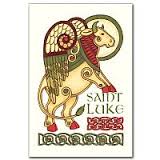
St LukeFor our Lenten adult study we have been looking at each of the four Gospels and Brent (our pastor) has asked me to share briefly with you what I love about the Gospel of Luke.

Each of the Gospels has features about it I love. Like many Christians my idea of the Gospel of Jesus Christ is a mixed-upped conflation in my mind of all four Gospels.

When I started studying the Bible as a young man I began noticing how each Gospel tells the story in a somewhat different way, and something about that bothered me. I wondered, “Where they differ what is the truth of the story?”

One of my teachers helped me with this by having me imagine a beloved mother with four children, and upon her death each child wrote a remembrance of her. Each child’s remembrance of their mother would be different, but they would all be true.

Another helpful analogy I heard was that the Gospel is like a diamond, when you turn the diamond the light catches different facets of the precious stone. Each of the four Gospels is a different facet of the one Gospel of Jesus Christ.

It was in the Christmas story where I first noticed the differences in the several Gospels. Mark and John say nothing about the birth of Jesus. Only in Matthew do we hear about the visit of the Magi, their meeting with Herod and his slaughter of the innocents, and Mary and Joseph’s flight to Egypt.

But it is especially Luke we think of most often at Christmas time. Only Luke has the annunciations to Elizabeth and Mary, Mary’s Magnificat, and only in Luke do we have the choir of angels addressing the shepherds.

And so these early chapters of Luke might be a good place for me to start to tell you what I especially love about Luke. Continue reading

Unknown's avatar

“Just as I am”

ABBY“Our iniquities you have set before you, and our secret sins in the light of your countenance.” —Psalm 90: 8.

Having the light of God’s countenance shine on us sounds like a good thing, but today’s passage has the unsettling implication that we have no secrets from God.

Who among us can feel entirely comfortable with that kind of scrutiny? Is God really like a Santa Claus character who “sees you when you’re sleeping” or a prying parent who stalks your Facebook page?

The Scriptures again and again refer to God’s closeness and intimacy with our lives. Psalm 137 asks rhetorically, “Where can I go from your spirit? Or where can I flee from your presence?”

I don’t know about you but I do a bit of hypocritical compartmentalization in my spiritual life. I want God to be close, but I don’t want God to see the less pleasant aspects of my life, what the Psalmist calls “secret sins” (and some are not so secret.)

I once saw a prayer that said, “O God, help me to be the person my dog thinks I am.”

But the good news is that God doesn’t love just our idealized selves, the dog’s view of us, or our well-crafted on-line persona. God loves us just as we are, and loves us too much to let us stay that way.

Prayer: You have searched me and known me, O God. Let your unconditional love change me into the person you want me to be.

(This my Daily Devotional for today in Re-Lent, the 2015 Lent Devotional from the UCC STILLSPEAKING  Writer’s Group)

Unknown's avatar

“The Message of the Cross” A Sermon on 1 Corinthians 1:23-25

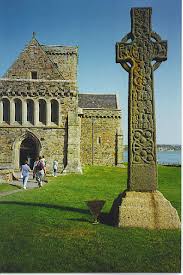
Iona crossA minister friend and mentor of mine, Herb Davis, once told me that every preacher has only one sermon in him, or her. According to Herb, every Sunday the preacher serves up that one sermon in a variety of ways. It may look like a different sermon, but at the heart of it, there’s just the one!

When I was growing up my family always had some sort of a roast at Sunday dinner, which was usually served in the middle of the day after we came home from church. Then the remains of that roast would reappear in various guises throughout the week. For example, let’s say it was a pork roast. The roast might reappear on Monday night in a soup, and on Tuesday night as my Dad’s signature roast pork chop suey and so on. So is that really the way it is? Do the people of God get fed leftovers every Sunday?

I hope not. I think what Herb was saying is that every preacher’s one basic sermon provides the core convictions out of which that preacher delivers the Gospel. And if Herb is right about the one-sermon theory, than I suppose today’s epistle lesson would have to be the text for my one sermon. Let’s hear it again: Paul writes, “We preach Christ crucified, a stumbling block to Jews and folly to Gentiles, but to those that are called, both Jews and Greeks, Christ the power of God and the wisdom of God. For the foolishness of God is wiser than human wisdom, and the weakness of God is stronger that human strength.” (I Corinthians 1: 23-25)

This is what Paul calls the message of the cross. Paul believed that Jesus was the Jewish Messiah and that God raised him from the dead. The cross on which Jesus had died became for him the symbol of that Good News of God’s vast unconditional love for all humankind. Paul believed that in Christ’s dying and rising two important new things had occurred. First, there was now a new age of God’ activity, and, secondly, there was now a new community, the church, made up of both Jews and Gentiles. Continue reading

Unknown's avatar

Ash Wednesday: “You won’t despise a broken heart!”

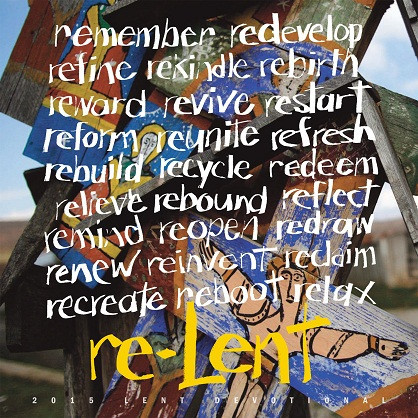
Re-Lent_-_web_large

“The sacrifice acceptable to God is a broken spirit; a broken and contrite heart, O God, you will not despise.” Psalm 51:17

The ashes of Ash Wednesday remind us of our mortality; the one pre-requisite for resurrection is death, something we will all face in time.

But literal death is not all there is to death. Throughout the New Testament “death” is not merely the cessation of mortal life, but also a power that insinuates itself into the living of our days.

Lent is the season that invites us to consider the spaces and places in our lives that are dead. To ask ourselves where has this “power of death” touched us? What is dead in our relationships, in our church, in our society? What is dead within us, where we once had life?

This kind of scrutiny is never easy. It is painful to acknowledge death and the denial of death is strong within us.

To see the dead places within and without us can break our hearts. But our text today says that this very condition of heartbrokenness is a sacrifice acceptable to God.

Because once we open our eyes to the ways the power of death has hold over us, and feel sorrow and remorse (which is what contrition means) God meets us there and can begin to ready us for the promised new life.

Prayer: Accept our broken spirits and contrite hearts, O God, as an acceptable offering to you, and take away the power of death from our lives.

(This is from Re-Lent the United Church of Christ Daily Devotional for Lent 2015. I also wrote a Lenten hymn of the same name which can be found here.)

(Picture. The cover to Re-Lent is also a poster available for purchase that can be ordered here.)

Unknown's avatar

Can the Church Survive the Decline in Worship?

KazMy Massachusetts colleague Kazimierz Bem, Pastor and Teacher of the First Church in Marlboro, doesn’t think so.

He had a wise and thoughtful post yesterday on faith street.com called Christianity Cannot Survive the Decline in Worship.

Here’s an excerpt:

The church is not made holy by the work it does — Protestants should understand that better than anyone. Rather, it is Jesus Christ and his cross that make us holy. Our service can never replace it, copy it, or perfect it. Our service can only be our response in gratitude for what God has done for us. As the great Congregational theologian Peter T. Forsyth once wrote: “The greatest product of the Church is not brotherly love but divine worship. And we shall never worship right nor serve right till we are more engrossed with our God than even with our worship, with His reality than our piety, with his Cross than with our service.”

For the whole article go here. I heartily recommend it. Kaz even quotes P.T. Forsyth. Well done!

Unknown's avatar

My Top Ten Posts of 2014

Winter header 3

As the old year passes and the new year beckons, it is my custom to look back at my popular posts of the year. Here are the most visited new posts from 2014:

Norwood Days: We All have to Start Out Somewhere
Some Lenten Reflections on Forgiveness
The Calling of Disciples: A Sermon on Vocation
Remembering Willis Elliott: theologian and gadfly
On Holy Ground: A Sermon on Genesis 3:1-15
“Words to Live By” The King James Bible and its Legacy to the English Language
Braised Lamb Shanks with Cardamom, Garlic and Prunes
“By Their Groups Ye Shall Know Them”: Celebrating Max L. Stackhouse
The Christmas Tree in the Passing Lane: A Reflection on Advent
The Cross and Forgiveness

And these were the ten all-time most visited posts on this blog, which I began in 2009:

Why did Jesus refer to Herod as “That fox” in Luke 13:32?
“Confused? Interpreting Your Congregation’s Numbers”
Prayer for a Retired Pastor
“Rejoice! Rejoice!” A Sermon for the Third Sunday of Advent
“God Gives the Growth:” A Retirement Sermon
“There is nothing to be afraid of!” A sermon on Psalm 27:1-2
“The Lord Will Provide:” A Sermon on Genesis 22
An Ordination Sermon: “The Secret Sauce of Ministry. A Recipe in Two Parts”
“Behind Locked Doors” A sermon on John 20:24-29
A book review of Elizabeth Strout’s “Abide with Me”

Thanks so much for dropping by, and keep visiting in 2015.

Unknown's avatar

“A Chorus of Trees”

“Then shall all the trees of the forest sing for joy before the Lord; for he is coming” –Psalm 96: 12, 13.

“What are these excitable trees singing and clapping about? They are celebrating the coming of God, a coming worth getting excited about, full of promise for the restoration, judging, cleansing and healing of all things. And this coming will not be only for people and nations, but for all that belongs to the Creator, “the whole earth and everything in it. Which means that our Advent hope for the coming of God is not a private “spiritual” matter, but a hope of quite cosmic proportions.” (From “Tear Open the Heavens” Advent Devotion 2014. The United Church of Christ)

This devotional of mine for December 22  from the UCC Advent Devotionals was made into a very moving YOUTUBE video. Thanks to Katherine Schofield for this. I tried to put the eschatology back into Advent, and I think she captured it.

Unknown's avatar

Norwood Days: We All have to Start Out Somewhere

OLYMPUS DIGITAL CAMERAWe all have to start out somewhere.

I was reminded of that today when a friend sent me a funny clip about church from Saturday Night Live and I immediately recognized that it had been filmed at the little church I grew up in.

I had seen rumblings about this on the Norwood Facebook page, that there had been a film crew at the Church of The Holy Communion, a beautiful Episcopal church in Norwood, a small town in Bergen County, NJ.

Both my parents were raised in Congregational churches (and my Mom was for a time a Methodist), but when my Mom beat the dust of the Midwest off her heels and moved to New York City she became an Episcopalian. Both my parents were, for a time, librarians at General Theological Seminary, an Episcopal school in the Chelsea section of Manhattan.

They lived on the Upper West Side when I was born, which is how I came to be baptized at the Cathedral of St John the Divine, which if you’re keeping track of things like this, is the world’s largest Gothic cathedral.

Before I started school we moved to Closter, New Jersey, a little town in Bergen County across the George Washington Bridge from Manhattan. My Dad was a commuter at the time, working downtown as the photo and caption editor for the Religious News Service, the public relations arm of the old National Conference of Christians and Jews.

While in Closter we attended the little church in Norwood, where my brother Bill was baptized, a very early memory of mine. My father, never baptized, was then a grumpy agnostic, and from him I learned to take both faith and doubt very seriously. My mother was devout and active in the church.

We moved to Norwood when I was in fifth grade, and then were within walking distance of our church.

I am sure there was sin, gossip, and the sundry pettiness that plagues every congregation of humans, but I felt loved and accepted there, and the fact that I ultimately became a Christian minister speaks well of their care and nurture for and of me.

The rector was a gentle, ancient man, Mr. (always “Mr.” as he was low church) John Foster Savidge. He had an odd way of speaking that I assumed was some kind of special ecclesiastical patois. Only years later did my Dad tell me he had CP and a resulting speech impediment. He was very kind to me, and one time when I was about 11 he came to call and neither of my parents were home. He treated me with great respect and dignity, and told me about his trips to England. Years later I had my own times living in Oxford and Cambridge.

His successor was The Reverend Robert Maitland, who was ironically more blue collar but also more high church and always “Father” Maitland.

It was under his care that I was confirmed. He was a very down-to-earth guy, much a contrast from the patrician Mr. Savidge.

When I was in high school my mother was diagnosed with colon cancer. In those days cancer was an unmentionable and few adults talked to me about the prospect of her impending death. One was my beloved basketball coach, John Shine, and the other was Father Bob Maitland. He took me to lunch at the Red Coach Inn (any Bergen County folks remember that?). He showed me what a minister could be.

My Mom did die during my first weeks at college at the age of 53. Fr. Maitland presided at the service at the Church of the Holy Communion, to a packed house as only those who die too young can bring out. I was having none of this God who snatched away the most important person in my life.

But years later after a long and arduous faith pilgrimage (which is another story for another day) I came back to the church and to a calling as a minister, although in a different franchise.

So the Church of the Holy Communion remains one of my landmarks, a holy place. And since I always (usually) love SNL the confluence of these two made my day.

The little clip was a trip down memory lane. I took voice lessons from the organist, Walter Witherspoon, and saw the organ near where I stood for my first recital. I saw the lovely stained-glass windows. I wrote recently about the window dedicated to a  Sunday School classmate of mine who died in a sledding accident when I was in the second grade.

It has been years since I have been back there, but I thank God for the place and the people, mostly now in the church triumphant, that were there in my growing-up days.

Unknown's avatar

The Christmas Tree in the Passing Lane: A Reflection on Advent

winter scene 3

On Saturday we drove home from my brother’s house in Maine where we had celebrated Thanksgiving with our family, or at least the part of it that could make it this year.

It was a calm and friendly few days. We ate some turkey and tucked into various lovely pies. There were numerous board games that lasted into the wee hours, and, yes (I won’t deny it) we watched a football game or two.

It had snowed enough during Wednesday’s storm that we were able to do some good snowshoeing on Friday at a local forest preserve. All in all, it was a good Thanksgiving.

I was especially aware that this year we had much to be thankful for. Somehow “the simple fact of being together made the time holy.” (From my Daily Devotional for Thanksgiving, to read it all go here.)

I often find the season from Thanksgiving to the New Year to be a wistful and bittersweet time. When I was a young minister I became aware what a sad time it was for many of my older congregants, who remembered happier, healthier times, when they and their families were young.

I understand that better now, as my own children are grown, and many of the original participants in my early holiday memories are gone.

The church is often wiser than we are in how it marks the time. A good example of this is the season of Advent, which captures the mood of the darkening days with its texts of waiting and hoping and its hymns in minor keys.

The expectation that the holidays will be better and brighter than our ordinary time can be a burden that weighs us down. I think some of the excessive consumerism we see this time of year is our attempt to keep the long dark days at bay. But there are some things money can’t buy, even at full price, such as health and wholeness, faith, hope and love.

On the way home the day was sunny with a high blue sky, and the traffic on the Maine Turnpike wasn’t nearly as heavy as on the way up in the storm.

As we crossed the river into New Hampshire, there was a freshly cut Christmas tree in the middle of the left-hand lane that had fallen off the roof of someone’s car. It made me suddenly sad, December sad. It must be time for Advent, I thought, and the next day it was.

Good, I thought, I need a little Advent.


(Photo by R. L. Floyd. “Black Brook Preserve, Windham Maine Land Trust.”)