This is a great comfort food meal you can make in the morning and have it ready when you come home from an evening meeting. Serve it over tubular pasta or polenta.
Ingredients
2 TBS extra Virgin olive oil
4-6 bone-in skin-on chicken thighs
2 yellow onions, sliced
2 carrots peeled and chopped
2 stalks celery, washed and chopped.
1 red bell pepper, cored and sliced
8 oz. white mushrooms
8 oz. Kalamata olives, pitted
3 TBS tomato paste
½ cup dry white wine
1 14oz. can chopped tomatoes
2 cups chicken stock or broth
1 TBS Worchester Sauce
2 tsp each of thyme, oregano, rosemary, basil
Salt and pepper to taste
chopped parsley for garnish
Recipe
I have a browning setting in my slow cooker. If you don’t, you will need to do the first part on the stove with a skillet.
Salt and pepper the chicken. Brown the chicken in the olive oil, and remove to a plate. Add the chopped onions, carrots and celery to the pan and stir over medium high heat until they take on some color. Add the peppers and mushrooms keep stirring for a few minutes.
Add the tomato paste and stir it in. Stir in the herbs. Stir in the wine and keep stirring for several minutes. Add the chicken stock and the tomatoes and stir for a minute or two until in simmers. Put the chicken pieces and their juices on top of the vegetable and put the lid on the slow cooker. Set it on LOW for up to 10 hours (8 is fine). Serve over pasta or polenta.
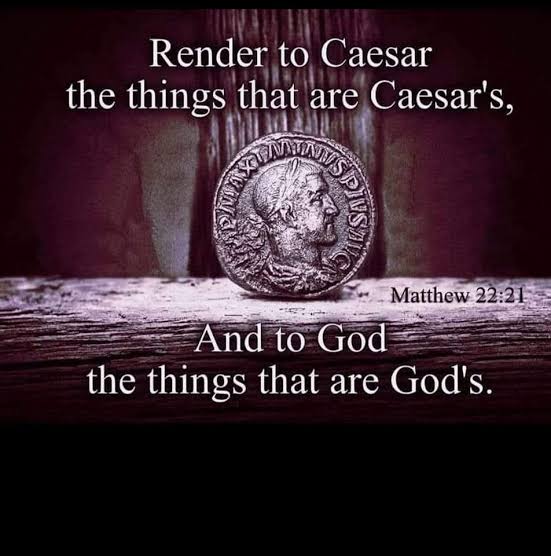
When the Pharisees trap Jesus by asking him if it is lawful to pay taxes to Caesar, they are asking him about the limits of the law. Law tells you only what you must do, or face a penalty. Jesus raises the stakes on their question, by asking an even more important question of them, “To whom do you belong?”
“Show me a coin,” he says, which in and of itself would have embarrassed the Pharisees, as they fumbled in their purses for a denarius. These hated Roman coins were considered objects of blasphemy. “Whose image is on it?” Jesus asks them. “Caesar’s!” they reply. “Ok,” Jesus says, “if it has Caesar’s image on it, it must belong to Caesar, so give it to him. But give to God that which belongs to God.”
The Pharisees would not have missed his meaning. While the money was made in the image of Caesar, they were made in the image of God, and it was to God that they belonged. When Jesus is put to the challenge, he often ends up being the challenger. And in this story Jesus challenges us.
Like the Pharisees, we look for the limits of our responsibilities, the boundaries of the allowable. “What can I get away with” is as far as many people go when it comes to framing their relationship to the rest of society. And some understand their faith as a matter of doing the minimum they must do for God.
The state has claims on the Christian. We follow the laws, we pay taxes, we vote, we do jury duty, we may be called to serve in the armed forces in times of war. These are the responsibilities of citizenship. The Christian is a citizen, and as such, follows the laws of the state. Even when Christians intentionally break the law out of conscience, as some tax resisters, non-violent demonstrators, and conscientious objectors do, they acknowledge the right of the state to exact punishment according to its laws.
Honoring the claims of the state, however, is hardly enough to give life meaning. If I ask you where you look for identity and meaning in your life, I doubt that you would answer that you find it by not going through red lights and by paying the IRS on time. No, you would look elsewhere: to the things you hold dear, to higher loyalties, to commitments and promises you have made, to people you love and who love you.
So Jesus doesn’t deny the claims of Caesar, but he refuses to get caught in the trap that has been laid for him. If he had said don’t pay taxes to Caesar, he would have pacified the Pharisees, but the Romans would have arrested him. If he had merely said, “Pay Caesar!” he would have appeased the Romans, but alienated the crowd, who resented and hated Rome. Jesus knew well that these pious Pharisees believed the doctrine that human beings were made in the image of God. By equating the image of God that people bear with the image of Caesar that Roman money bore, Jesus contrasted a lesser and a greater loyalty. In effect, Jesus is saying, “The money may belong to Caesar, but you belong to God.”
You belong to God. What does that mean? It means that the mystery that is your life is a gift of God. That the air you breathe, the earth you walk upon, the people God has given you to love and be loved by, are all a gift. One of the root causes of so much human agony is that people are trying to find themselves apart from God. St. Augustine said to God, “You have made us for yourself, and we find no rest until we rest in you.”
To be made in the image of God is a wonderful gift, but many people have never opened it, and it sits on the table all wrapped up in ribbons with a card. If they would only open the card it says, “I love you!” “For God so loved the world, that he gave his only Son” and whatever humankind knew before about their identity, they now know something else: that the image of God that they bear looks like Jesus. That is what God has provided for us: a name and a face to help us know our true identity. Jesus is the human face of God, a face we can now see in countless human faces every day.
You belong to God. And the claims of God on you are not the claims of law but the claims of love. The Christian is driven, not by the desire to find the minimum that is required of us, but by gratitude. The claims of God are the claims of a lover. They are not the things we must do to escape penalty, but the things we want to do after we say “Yes” to God.
The claims of God are the claims of gratitude and grace. When you say, “Yes!” to God, and acknowledge his incarnate Son, you know not only that you belong to God; you belong to others who also bear the image of God. And others belong to you; you cannot live your life alone, but are part of a human network of love. All around you are people who bear the image and likeness of God, and your destiny and theirs are inter-related. “No man is an island,” said John Donne, and he is right.
To see the human face of God in Jesus Christ and to learn to recognize it in those around you is one of the tasks of the Christian, and also one of the keys to finding the true meaning of your life. It also pretty well defines the mission of the church. When you inventory the activities and programs of this congregation that reach out to others, like “Eat for Heat,” Christian Center luncheons, Habitat for Humanity, and Stephen Ministry, you see a basic pattern. Heat, food, lodging, and personal care-giving: these are gestures of connectedness and compassion given by one human being to another, who share a common identity as those who bear the image of God.
So, the Christian faith is truly subversive not in that it challenges the claims of the state. No, as I said, the Christian is a citizen. And often a better citizen than one who feels no responsibility to the state, who doesn’t vote and ducks jury duty because it is inconvenient, and turns a blind eye to the law. And often a better citizen than the unthinking patriot with the “my country right or wrong” bumper sticker.
A Christian patriotism may include dissent to the policies of the state. Someone needs to tell the President that expressing dissent is not giving comfort to the enemy, but one of the responsibilities of the conscientious citizen.
But the real subversive aspect of Christian faith is not dissent. It is the belief that we do not live for ourselves, that we do not get meaning from the things we acquire and possess, that we do not find happiness by running our own lives in blissful autonomy, or believing that we belong to ourselves.
We belong to God, body and soul. That is good news to those who can hear it, but it calls into serious question our rampant consumerism, our conspicuous consumption, our reliance on violence and control to get our way, our ignoring of the invisible poor and dispossessed, and our national arrogance toward the rest of the world. Because we belong to God, and we belong to each other. So yes, by all means, “Give to Caesar the things that belong to Caesar, but give to God the things that belonged to God.”
That’s what Jesus said! “When the Pharisees heard this, they were amazed, and left him and went away.” Amen.
(I preached this sermon on October 20, 2002 at First Church of Christ in Pittsfield, Congregational in Pittsfield, Massachusetts)
“1 If, then, there is any comfort in Christ, any consolation from love, any partnership in the Spirit, any tender affection and sympathy, 2make my joy complete: be of the same mind, having the same love, being in full accord and of one mind. 3Do nothing from selfish ambition or empty conceit, but in humility regard others as better than yourselves. 4Let each of you look not to your own interests but to the interests of others. 5 Let the same mind be in you that was in Christ Jesus,
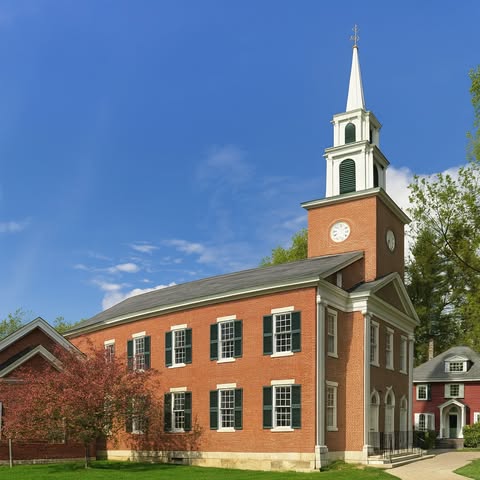
I want to thank you for inviting me to preach in this faithful, historic church. I have known this church since my Andover Newton days more than half a century ago, and I have known and admired several of your former pastors. You are a flourishing congregation with lively engaging worship. I often livestream your services. In Rebecca and Martha, you have two gifted, faithful preachers and worship leaders. I love your music. You are richly blessed and I give thanks for you,
This Pad Thai is relatively easy stir-fry to make, but it requires a bit of time for chopping and prep.
Ingredients
12 oz wide rice sticks
3 TBS peanut Oil
2 cloves garlic, finely chopped or put through a garlic press
4 scallions cut in 2 in. pieces
½ TBS finely chopped fresh ginger
1 lb. large shrimp, shelled and deveined
2 Eggs, beaten
4 oz snow peas
½ sliced red bell pepper
1 cup bean sprouts, rinsed and drained
½ cup chopped roasted peanuts (for garnish)
½ cup of chopped cilantro (for garnish)
Lime wedges (for serving)
Red pepper flakes to taste (optional)
Sauce
1 TBS fish sauce
1 TBS tamarind paste
1 TBS Chinese cooking wine or dry sherry
Recipe
Place the rice sticks in a large bowl and cover with hot tap water for 30 minutes. Chop the garlic, scallions and ginger and place on a small plate and set aside. Slice the bell pepper and set aside. Bring a small pot of water to a boil, poach the snow peas for one minute, drain and spray with cold water. Set aside. Beat the eggs and set aside.
In a small bowl mix the fish sauce, tamarind paste, and cooking wine and set aside.
You may use a wok, but I prefer to use my 12 in. stainless-steel skillet. Heat oil in the pan over medium high heat. When the oil is hot, toss in the ginger, garlic and scallions and stir fry for 30 seconds. Toss in the red pepper. Toss in the shrimp and stir-fry until pink, about 3 minutes. Stir in the sauce and mix well. Reduce heat to medium low and add the drained rice noodles and toss and fold them into the pan. Repeat with the drained bean sprouts. Keep stir-frying for several minutes until everything is coated with the sauce and is hot. Turn the Pad Thai into a warm serving dish and top with the peanuts and cilantro. Serve with lime wedges. An Alsatian Riesling or an Asian beer would go nicely with it.
These ten were the top visited posts and pages in 2025. None of them were written this year, and most of them are sermons from the archives. Although I am posting less frequently these days, the old stuff remains much visited. The Ferlinghetti poem had an impressive 20, 774 hits. If you read it you will know why it is a poem for our time.
Back in 2013 I wrote this article for the “Still Speaking Magazine.” Recently a friend of mine asked for permission to translate it into Polish for the Polish Reformed Church. I couldn’t find it anywhere in my files, but a helpful archivist at UCC headquarters sent me this PDF.
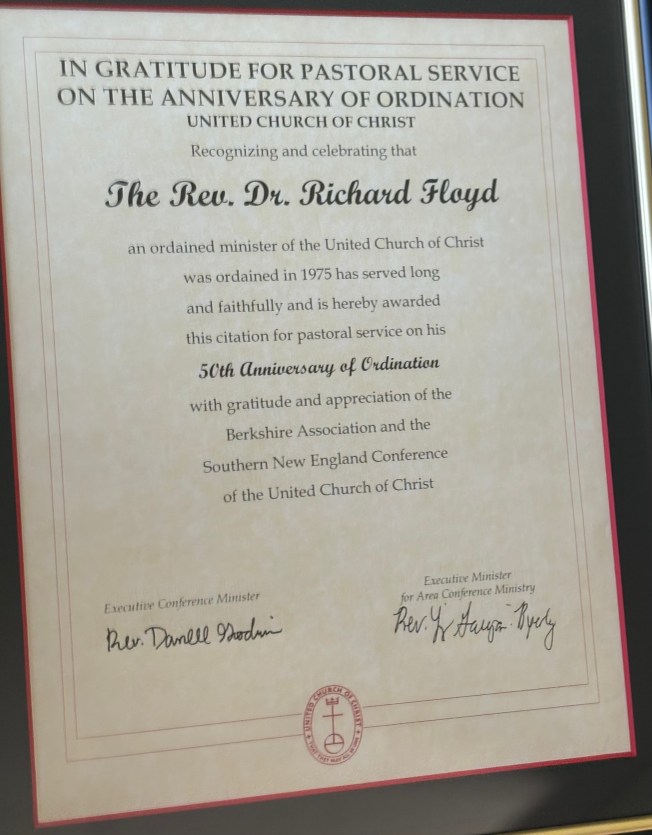
On this day fifty years ago, September 21, 1975, I was ordained into the Christian Ministry of Word and Sacrament at the Newton Highlands Congregational Church, United Church of Christ, in Newton Highlands, Massachusetts. I was 26.
I had had my ecclesiastical council weeks before and waited for a call for a church before I could be ordained. Late in the summer it came. I was called to be the pastor of the Congregational Churches of Limerick and West Newfield, a “Two-point charge” serving two small congregations nine miles apart in the Northwest corner of York County, Maine. I had preached my neutral pulpit sermon in nearby Fryeburg, and a candidating sermon in each of the two churches.
I remember my ordination vividly. The church secretary, Irene Fultz, had designed. printed and mailed out the invitations. My family was there. My Associate Conference Minister, Oliver Powell, was there. The Reverend Joanne Hartunian, represented the Metropolitan Boston Association. The Reverend Meredith (Jerry) B. Handspicker, presided over the Laying on of Hands, and gave the Prayer of Ordination (after the ordained ministers were assembled he invited the whole congregation to participate, the first time I had seen this. It is commonplace now in the UCC.) The Reverend Walter Telfer, Director of Field Education, gave a Charge to the Congregation. The Reverend Michael J. Maguire led the congregation in a prayer of Confession. I presided at Holy Communion and gave the Benediction for the first time. The Reverend Dudne M. Breeze, our pastor, gave the sermon. He admonished me to be a Minister of the Word of God. I now know how wise that counsel was and how hard it would be.
I served those two little churches for four years and have never been happier. I married Martha while there and those churches threw us a big party. I trained as an EMT and became a firefighter.
Next, we went to Bangor, where I was Chaplain at Bangor Theological Seminary and Associate Pastor of the Hammond Street Church, United Church of Christ. There I ministered to students and congregants. I was a founder of Maine Clergy and Laity Concerned (CALC) a national anti-war organization. I chaired the Social Justice Committee of the Maine Council of Churches.
Finally, I came to Pittsfield, Massachusetts, in 1982 to be the Pastor of the First Church of Christ in Pittsfield. I had three sabbaticals from there: Oxford (1989), St Andrews (1995) and Cambridge (2000). I studied and wrote articles and books while on those wonderful respites from active ministry.
I stayed in Pittsfield for twenty-two years and would have stayed longer if I hadn’t sustained a traumatic brain injury (TBI) in a bicycle accident and had to retire early on disability. That crash was exactly 25 years ago and equally divides my ministry into before and after my disability.
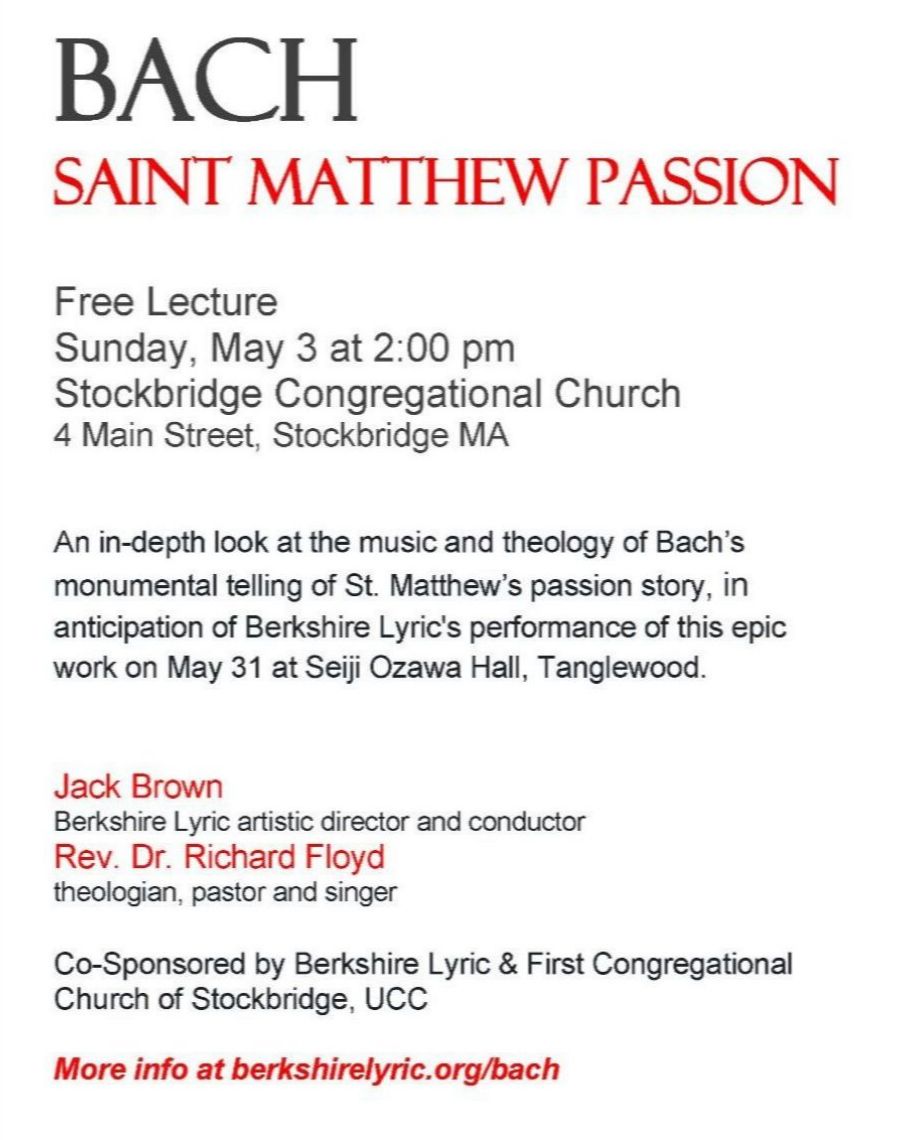
I eventually discovered a new chapter in my life. I started writing. I wrote hymns. I started this blog, I wrote devotions for the United Church of Christ’s Daily Devotional, and I found a new ministry of the Word in my words. I became active in the First Congregational Church of Stockbridge.
So, there you have it. Here I am 50 years later. I once kept count of how many weddings I officiated at, but I have lost count well into several hundred. The same for baptisms, confirmations. I can’t count the hospital visits, the funerals and graveside committals I was part of. I’ve held people’s hands in Rehab Facilities and Psychiatric Wards. I’ve put my arms around people in overwhelming grief. I’ve been humbled by theses encounters.
I have heard numerous confessions. I have listened to more kinds of human consternation and misery than you can imagine. I have also been privileged to be part of people’s lives at some of their more poignant moments. I have shared many joys and sorrows. I have “wept with those who weep, and rejoiced with those who have rejoiced.” (Romans 12:15)
I have led countless Bible Studies and other courses for adults. I have authored “A Course in Basic Christianity” for adults. I think of it as a course to teach you “everything you should have learned in Confirmation Class, but probably didn’t because you had your mind on other things.”
I’ve valued the relationships of my clergy friends and colleagues in the United Church of Christ and other Christian denominations. I served the Massachusetts Conference of the United Church of Christ as their representative to the Massachusetts Commission on Christian Unity for twelve years. There, I made many friends and came to appreciate the richness of the “Great Church” of Jesus Christ.
I have also treasured the relationships I have had with my Jewish brothers and sisters in the clergy. We have become trusted friends and interlocators, and in that safe space of friendship have had rich and deep conversations about both what unites and divides us. It was a great honor that the family of my dear friend Rabbi Harold Salzmann asked me to speak at his funeral at Temple Anshe Amunin in Pittsfield.
I’ve witnessed people’s lives changed by their confrontation with the Gospel of Jesus Christ. And I, myself, have been profoundly changed by a life-long engagement with Jesus and his Gospel of freedom and grace. Jesus is still the most interesting and engaging part of our faith, and after fifty years he is still the one with whom I have to deal in thought and deed and prayer.
I have struggled to be faithful to the truth as I have known it. My reach has exceeded my grasp. I have pondered the deep things of the faith and have written countless articles, papers, and three and a half books. I have spent years trying to reform my denomination and restore its historic theological and ecumenical vision through leadership in such activities as the Confessing Christ movement, the Mercersburg Society, and the Craigville Colloquies.
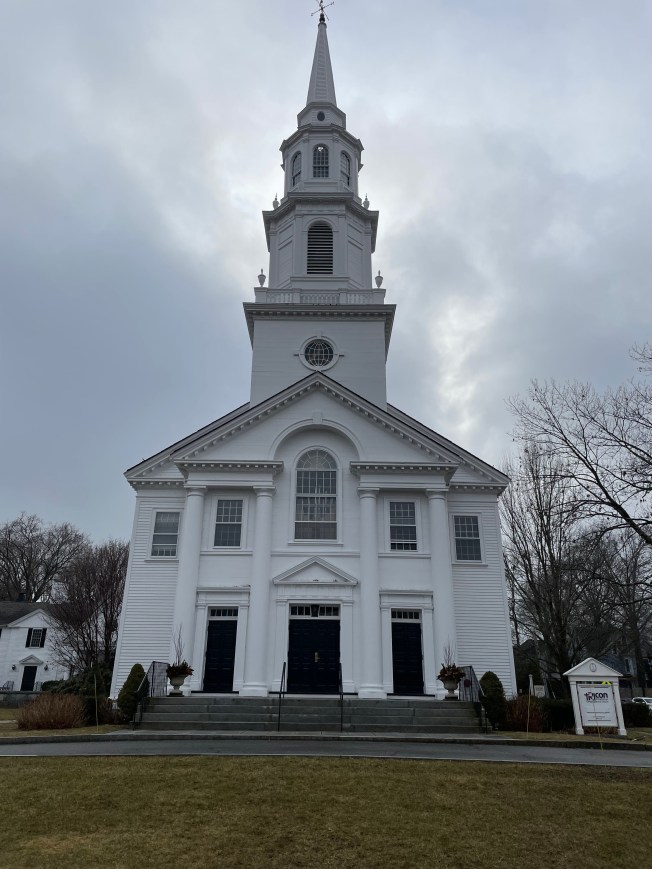
I have also, to be quite honest, been a leader throughout my fifty year ministry, in an enterprise that is in decline in institutional vigor and societal esteem. The schools where I received my masters and my doctorate are no longer there. The mainline church in whose rocky vineyard I have labored is smaller, poorer, and less respected than it was before I began. My last church, where I served for 22 years, sold its grand gothic meeting house to another congregation, and merged with a nearby UCC church.
But I do not despair about this. God will not be left without witnesses. The church of the future, I believe, will be smaller, leaner, and more faithful. People won’t go because it’s “the thing to do” as it once was.
They’ll go because they have found something of great value to which they are committed. Or they will go because they are searching for something important that seems missing in their lives, something more durable, something deeper than the shallow seductions and distractions of our consumer culture that values having more than being.
And society needs the church to model a community that welcomes and values all of God’s children. A space where love is stronger than hate, faith stronger than fear, and kindness and compassion are shown to the vulnerable among us, which is all of us.
So, while I have regrets about my failings and limitations as a minister, I have none about choosing this calling and living it out for five decades. My daughter has chosen to be a pastor, and I watch with awe at how gifted and faithful she is. It is young clergy such as she who give me much hope for the church of the future. I thank God for sustaining me through this long calling, and for calling me in the first place despite my manifold frailties and failures. To God be the glory.
“Now to him who by the power at work within us is able to accomplish abundantly far more than all we can ask or imagine, to him be glory in the church and in Christ Jesus to all generations, forever and ever.” Amen. —Ephesians 3:20-21.
(This morning in worship, The First Congregational Church of Stockbridge blessed me by prayer and the laying on of hands. A livestream of the service is available on the church’s website.)
“For freedom Christ has set us free. Stand firm, therefore, and do not submit again to a yoke of slavery. For you were called to freedom, brothers and sisters; only do not use your freedom as an opportunity for self-indulgence, but through love become enslaved to one another. For the whole law is summed up in a single commandment, “You shall love your neighbor as yourself.” If, however, you bite and devour one another, take care that you are not consumed by one another. Live by the Spirit, I say, and do not gratify the desires of the flesh. For what the flesh desires is opposed to the Spirit, and what the Spirit desires is opposed to the flesh, for these are opposed to each other, to prevent you from doing what you want. But if you are led by the Spirit, you are not subject to the law. Now the works of the flesh are obvious: sexual immorality, impurity, debauchery, idolatry, sorcery, enmities, strife, jealousy, anger, quarrels, dissensions, factions, envy, drunkenness, carousing, and things like these. I am warning you, as I warned you before: those who do such things will not inherit the kingdom of God. By contrast, the fruit of the Spirit is love, joy, peace, patience, kindness, generosity, faithfulness, gentleness, and self-control. There is no law against such things. And those who belong to Christ have crucified the flesh with its passions and desires. If we live by the Spirit, let us also be guided by the Spirit.” (Galatians 5:1, 13-25)
Prayer: May the words of my mouth, and the meditations of our hearts, be acceptable in your sight, O Lord, our Rock and our Redeemer. Amen.
”There’s a sweet, sweet Spirit in this place, and I know that it’s the Spirit of the Lord.“ I want to thank Sean for picking that good old hymn and getting us started on our Spirit-filled worship. We had quite a Spirit-filled Pentecost three weeks ago, didn’t we? with streamers floating above our heads and everyone dressed in red. But it’s still Pentecost, which is a season and not just a day, a season to explore with some of the implications of being a Spirit-filled people. More particularly I want to explore with you the idea of being guided by the Spirit in our lives. Continue reading →