Unknown's avatar

“Just as I am”

ABBY“Our iniquities you have set before you, and our secret sins in the light of your countenance.” —Psalm 90: 8.

Having the light of God’s countenance shine on us sounds like a good thing, but today’s passage has the unsettling implication that we have no secrets from God.

Who among us can feel entirely comfortable with that kind of scrutiny? Is God really like a Santa Claus character who “sees you when you’re sleeping” or a prying parent who stalks your Facebook page?

The Scriptures again and again refer to God’s closeness and intimacy with our lives. Psalm 137 asks rhetorically, “Where can I go from your spirit? Or where can I flee from your presence?”

I don’t know about you but I do a bit of hypocritical compartmentalization in my spiritual life. I want God to be close, but I don’t want God to see the less pleasant aspects of my life, what the Psalmist calls “secret sins” (and some are not so secret.)

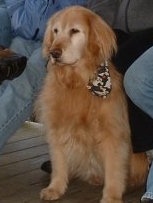
I once saw a prayer that said, “O God, help me to be the person my dog thinks I am.”

But the good news is that God doesn’t love just our idealized selves, the dog’s view of us, or our well-crafted on-line persona. God loves us just as we are, and loves us too much to let us stay that way.

Prayer: You have searched me and known me, O God. Let your unconditional love change me into the person you want me to be.

(This my Daily Devotional for today in Re-Lent, the 2015 Lent Devotional from the UCC STILLSPEAKING  Writer’s Group)

Unknown's avatar

“The Message of the Cross” A Sermon on 1 Corinthians 1:23-25

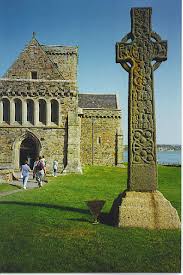
Iona crossA minister friend and mentor of mine, Herb Davis, once told me that every preacher has only one sermon in him, or her. According to Herb, every Sunday the preacher serves up that one sermon in a variety of ways. It may look like a different sermon, but at the heart of it, there’s just the one!

When I was growing up my family always had some sort of a roast at Sunday dinner, which was usually served in the middle of the day after we came home from church. Then the remains of that roast would reappear in various guises throughout the week. For example, let’s say it was a pork roast. The roast might reappear on Monday night in a soup, and on Tuesday night as my Dad’s signature roast pork chop suey and so on. So is that really the way it is? Do the people of God get fed leftovers every Sunday?

I hope not. I think what Herb was saying is that every preacher’s one basic sermon provides the core convictions out of which that preacher delivers the Gospel. And if Herb is right about the one-sermon theory, than I suppose today’s epistle lesson would have to be the text for my one sermon. Let’s hear it again: Paul writes, “We preach Christ crucified, a stumbling block to Jews and folly to Gentiles, but to those that are called, both Jews and Greeks, Christ the power of God and the wisdom of God. For the foolishness of God is wiser than human wisdom, and the weakness of God is stronger that human strength.” (I Corinthians 1: 23-25)

This is what Paul calls the message of the cross. Paul believed that Jesus was the Jewish Messiah and that God raised him from the dead. The cross on which Jesus had died became for him the symbol of that Good News of God’s vast unconditional love for all humankind. Paul believed that in Christ’s dying and rising two important new things had occurred. First, there was now a new age of God’ activity, and, secondly, there was now a new community, the church, made up of both Jews and Gentiles. Continue reading

Unknown's avatar

Norwood Days: We All have to Start Out Somewhere

OLYMPUS DIGITAL CAMERAWe all have to start out somewhere.

I was reminded of that today when a friend sent me a funny clip about church from Saturday Night Live and I immediately recognized that it had been filmed at the little church I grew up in.

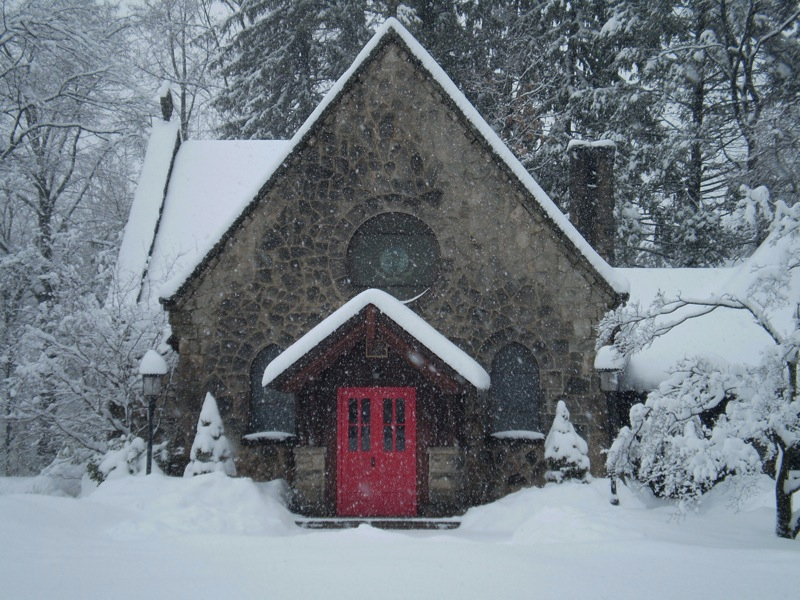
I had seen rumblings about this on the Norwood Facebook page, that there had been a film crew at the Church of The Holy Communion, a beautiful Episcopal church in Norwood, a small town in Bergen County, NJ.

Both my parents were raised in Congregational churches (and my Mom was for a time a Methodist), but when my Mom beat the dust of the Midwest off her heels and moved to New York City she became an Episcopalian. Both my parents were, for a time, librarians at General Theological Seminary, an Episcopal school in the Chelsea section of Manhattan.

They lived on the Upper West Side when I was born, which is how I came to be baptized at the Cathedral of St John the Divine, which if you’re keeping track of things like this, is the world’s largest Gothic cathedral.

Before I started school we moved to Closter, New Jersey, a little town in Bergen County across the George Washington Bridge from Manhattan. My Dad was a commuter at the time, working downtown as the photo and caption editor for the Religious News Service, the public relations arm of the old National Conference of Christians and Jews.

While in Closter we attended the little church in Norwood, where my brother Bill was baptized, a very early memory of mine. My father, never baptized, was then a grumpy agnostic, and from him I learned to take both faith and doubt very seriously. My mother was devout and active in the church.

We moved to Norwood when I was in fifth grade, and then were within walking distance of our church.

I am sure there was sin, gossip, and the sundry pettiness that plagues every congregation of humans, but I felt loved and accepted there, and the fact that I ultimately became a Christian minister speaks well of their care and nurture for and of me.

The rector was a gentle, ancient man, Mr. (always “Mr.” as he was low church) John Foster Savidge. He had an odd way of speaking that I assumed was some kind of special ecclesiastical patois. Only years later did my Dad tell me he had CP and a resulting speech impediment. He was very kind to me, and one time when I was about 11 he came to call and neither of my parents were home. He treated me with great respect and dignity, and told me about his trips to England. Years later I had my own times living in Oxford and Cambridge.

His successor was The Reverend Robert Maitland, who was ironically more blue collar but also more high church and always “Father” Maitland.

It was under his care that I was confirmed. He was a very down-to-earth guy, much a contrast from the patrician Mr. Savidge.

When I was in high school my mother was diagnosed with colon cancer. In those days cancer was an unmentionable and few adults talked to me about the prospect of her impending death. One was my beloved basketball coach, John Shine, and the other was Father Bob Maitland. He took me to lunch at the Red Coach Inn (any Bergen County folks remember that?). He showed me what a minister could be.

My Mom did die during my first weeks at college at the age of 53. Fr. Maitland presided at the service at the Church of the Holy Communion, to a packed house as only those who die too young can bring out. I was having none of this God who snatched away the most important person in my life.

But years later after a long and arduous faith pilgrimage (which is another story for another day) I came back to the church and to a calling as a minister, although in a different franchise.

So the Church of the Holy Communion remains one of my landmarks, a holy place. And since I always (usually) love SNL the confluence of these two made my day.

The little clip was a trip down memory lane. I took voice lessons from the organist, Walter Witherspoon, and saw the organ near where I stood for my first recital. I saw the lovely stained-glass windows. I wrote recently about the window dedicated to a  Sunday School classmate of mine who died in a sledding accident when I was in the second grade.

It has been years since I have been back there, but I thank God for the place and the people, mostly now in the church triumphant, that were there in my growing-up days.

Unknown's avatar

The Christmas Tree in the Passing Lane: A Reflection on Advent

winter scene 3

On Saturday we drove home from my brother’s house in Maine where we had celebrated Thanksgiving with our family, or at least the part of it that could make it this year.

It was a calm and friendly few days. We ate some turkey and tucked into various lovely pies. There were numerous board games that lasted into the wee hours, and, yes (I won’t deny it) we watched a football game or two.

It had snowed enough during Wednesday’s storm that we were able to do some good snowshoeing on Friday at a local forest preserve. All in all, it was a good Thanksgiving.

I was especially aware that this year we had much to be thankful for. Somehow “the simple fact of being together made the time holy.” (From my Daily Devotional for Thanksgiving, to read it all go here.)

I often find the season from Thanksgiving to the New Year to be a wistful and bittersweet time. When I was a young minister I became aware what a sad time it was for many of my older congregants, who remembered happier, healthier times, when they and their families were young.

I understand that better now, as my own children are grown, and many of the original participants in my early holiday memories are gone.

The church is often wiser than we are in how it marks the time. A good example of this is the season of Advent, which captures the mood of the darkening days with its texts of waiting and hoping and its hymns in minor keys.

The expectation that the holidays will be better and brighter than our ordinary time can be a burden that weighs us down. I think some of the excessive consumerism we see this time of year is our attempt to keep the long dark days at bay. But there are some things money can’t buy, even at full price, such as health and wholeness, faith, hope and love.

On the way home the day was sunny with a high blue sky, and the traffic on the Maine Turnpike wasn’t nearly as heavy as on the way up in the storm.

As we crossed the river into New Hampshire, there was a freshly cut Christmas tree in the middle of the left-hand lane that had fallen off the roof of someone’s car. It made me suddenly sad, December sad. It must be time for Advent, I thought, and the next day it was.

Good, I thought, I need a little Advent.


(Photo by R. L. Floyd. “Black Brook Preserve, Windham Maine Land Trust.”)

Unknown's avatar

“To Sing and Love as Angels Do”: Singing our Faith

Singing“To sing and love as angels do” is a line from one of Isaac Watts’ hymns (he wrote over seven hundred). I love the phrase. It places singing right up there with loving as one of those activities that pleases God. I have long pondered the central place singing holds in worship, and its importance to the worshiper. Here is an excerpt of an article I wrote about “the worshiping self:”

“In hymn singing the worshiping self experiences transcendence as one among many within a congregation. There, in worship, God the other is addressed by the singer, not in isolation, but as one voice among many others. The hymn singer uses the body as well as the intellect in an integrated act of worship engaging the whole self. Hymn singing also roots the worshiping self within the life of the congregation among whom the singer works and plays, rejoices and weeps. Since the congregation is the local embodiment of the church catholic (what P. T. Forsyth called “the great church”), the hymn singer is part, not only of the congregation physically present, but also the great congregation, both the ecumenical church in its geographical breadth, and the communion of saints in its temporal length across ages and generations.

Additionally, the hymn is a repository of the tradition of the great church, and the faithful learn scripture and doctrine from singing as much as they do from sermons and catechesis. Finally, and most significantly, the singer of hymns not only addresses God, but is, at the same time, addressed by God, so that hymn singing becomes an event of grace. The singer is addressed as a forgiven and justified sinner, and it is often in the singing of the hymns, that the worshiping self is able to experience the grace of justification, and respond with faith and obedience.” (“The Worshiping Self” in Persons in Community: Theological Voices from the Pastorate. Edited by William H. Lazareth. Eerdmans, 2004.)

I also believe that music in general and singing in particular can give us access to the divine presence as no other medium can, which is why even non-believers often are lovers of Bach’s great religious works. Even though my writing is primarily theological and devotional, I have sometimes turned to writing hymns because there is something I want to express that I can in no other way (to see some of my hymns go here.)

I recently wrote:

Singing can help faith, for sometimes we can sing words that we are not yet able to say. I have often noticed singers in choirs who would not call themselves believers belting out sacred music as if they meant it.

Perhaps they do mean it. Who is to say that a singer singing out “And he shall reign for ever and ever” in Handel’s Messiah is not expressing a faith and hope that he or she might have trouble putting into spoken words? (From my Still Speaking Daily Devotional, to see it all go here)

Singing binds us together and reminds us we are not alone. “Our personal faith may wax and wane, but the church’s faith goes on from generation to generation. I like to think of it as a great choir, where each part supports and strengthens every other part, creating something beautiful and harmonious. ”

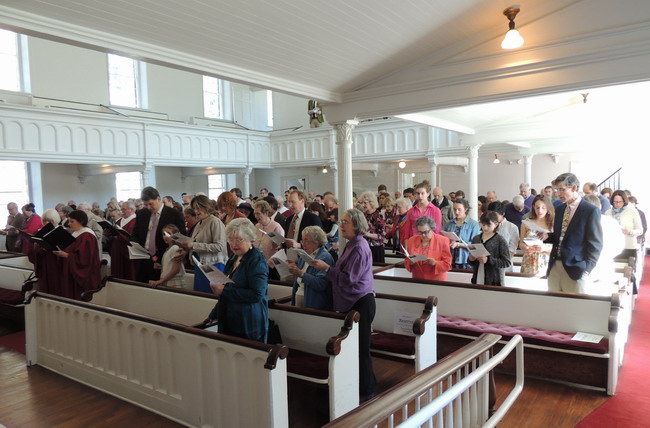
(Photo: Easter Sunday, 2014, at the First Congregational Church UCC of Stockbridge, MA, where I am a member.)

Unknown's avatar

On Holy Ground: A Sermon on Exodus 3:1-15

Burning bushOne of the accepted truths of our faith is that God is everywhere. But here and there, now and then, the Bible tells us about a particular in-breaking of the Divine Presence into someone’s life in a most extraordinary manner.

One of the best known and most important of these stories is the encounter we just heard about between God and Moses on Mt. Horeb.

The back-story to this event starts with the migration of Hebrews to Egypt during and after the time of Joseph, where they increased in number and flourished.

But a new Egyptian king, or pharaoh, came to power who hadn’t known Joseph, and he was threatened by the presence of the Hebrews and he subjected them to slavery.

This is the world Moses is born into, a world where his people are oppressed, and his own life is in danger. This paranoid king orders the Hebrew midwives to kill all the Hebrew boy babies, but in an act of revolutionary daring they disobey him.

You all know the story of how the baby Moses was hid in the bulrushes along the Nile River, and was discovered by Pharoah’s daughter. And how when Moses grew up she adopted him, and he was treated like an Egyptian prince.

So Moses escapes the plight of his people, but not for long. One day he saw an Egyptian overseer beating a Hebrew slave, and Moses rushed to defend the slave and in the ensuing fight he killed the man.

Fleeing for his life he ends up far away on Mt Horeb, where he settles down with a wife and tends the goats for his father-in- law.

That brings us to our story for today. It is not a very promising story, Moses wanted for murder, running away from his home and his people. And he knows that his people suffer terribly under the authority of pharaoh, who is the king of the most powerful empire in the world. Moses may have just been relieved to get out of town with his life.

So it’s just another ordinary workday for Moses, keeping an eye on the flocks as they forage for food on the side of the mountain. And then, suddenly, the ordinary day is transformed by this extraordinary sight, a flaming bush that seems to burn but is not consumed. And there is a divine messenger in the fire, for that is what an angel is. The angel never speaks, but the voice of God speaks directly to Moses, calling him by name, “Moses, Moses.”

Moses knows he is the presence of something or Someone much greater than he, and so he says, “Here am I.” Then God warns Moses to come no closer: “Take off your shoes, for you are standing on holy ground!”

What makes it holy ground? It is holy ground because God is present there. God is holy, and where God is present it is holy ground. Did you know that the Latin word, sanctus, meaning holy, is where we get our word sanctuary? A sanctuary means “a container for holy things.” This room is called a sanctuary because it has been set apart as a place where we may know the presence of God. There is nothing intrinsically holy about this room, or Mt. Horeb, for that matter. They only become holy ground because God becomes present there.

I need to say a word about mountains. The ancients often viewed mountains as holy places where the gods or the larger powers dwelt. They were places best left alone. I recently learned that there are very few Native American artifacts on the tops of mountains. For example, Darby Field, who was the first European to climb Mt Washington in NH in 1642, could convince only one of his 26 Indian scouts to approach the summit with him.

They discerned that holy ground can be dangerous ground. Something Moses sensed as well. On Mt Horeb he finds himself suddenly on holy ground, that sacred space where heaven and earth meet.

One of the things I love about scripture is that I notice new details every time I read a passage, even a familiar one like this. Here’s what I noticed about this one: first, it doesn’t say that God is invisible. On the contrary, Moses turns his face in submission to that which is greater than he. The belief was if you looked at God you would die. Later in Exodus, after a long and complicated relationship, Moses gets bolder, but here he turns his face away from God.

The other detail I had never noticed before was the angel. And why doesn’t the angel speak? That’s their job as intermediators. But here it is God who speaks directly to Moses.

Think about it. This encounter with God must have been both terrifying and amazing, both awesome and awful, two words that used to be synonyms but have evolved to being opposites to show the tension that exists in any encounter with God’s presence. Was it awesome? Or was it awful? Both.

There’s an old hymn that captures the former use of awful, “Before Jehovah’s awful throne.”

So Moses finds himself on holy ground, and knows there are dangers. What are some of the dangers of holy ground?

  1. The first is that you are on holy ground but don’t know it. The great English poet Gerard Manley Hopkins, wrote: “The world is charged with the grandeur of God . . .” and it is true. You may not see a burning bush, but if you are paying attention something of the grandeur of God is everywhere apparent. But you might be busy or distracted and miss it. You were on holy ground and never knew it.
  2. A second danger is that you are on holy ground and you do know it, find it awesome, but then don’t want to leave it. This is the punch-line of the Transfiguration story, when Peter’s answer to the divine encounter is to want to pitch his tent right there and stay. Recall how Jesus said, “No. We’ve got to go down from the mountain. We have work to do. I have a cross to face.”

And that is the essential truth about all divine-human encounters. They always come for a reason and a purpose. They are always attached to a call. They are not information about God, but an invitation into the work and will of God. We don’t discover God, like the New Yorker cartoons where the pilgrim climbs a mountain to find the solitary guru to tell him the truth about God. Our God is not a God we can discover, but a God who reveals himself to us, for a purpose, the divine purpose.

That’s what makes these encounters so dangerous. Moses recognizes that this invitation is fraught, because God’s work is not safe. This is why Moses offers excuses and alibis to get out of it. And I love that God never refutes his excuses and alibis, but simply ignores them.

It’s a great story, but is it our story? I think it is. And here’s what I think we may need to hear from this story. Moses is going about his day job, and he thinks he is autonomous and answerable to no one. In that way he is like us, because that is the great myth of our time: that we are both autonomous and accountable to no one.

So on this ordinary day on the mountain God breaks into Moses life, calls him by name and tells him he has a job for him. The sudden presence of God, the bush, the angel, the voice, make it clear to Moses that he is not autonomous, that there is something, Someone, greater than he with whom he is in relationship, and he is accountable, he is called. In the face of the divine presence and before the divine authority Moses realizes he has a vocation, and that his own fate is closely linked with the fate of his people, who are enslaved. The very people he has run away from.

Something else I noticed for the first time in this story. In the beginning of Exodus Moses’s people are called “the Hebrews.” But here there is a shift. God says to Moses, “The cry of “the Israelites” has come to me.” This naming creates a new identity. I am reminded of the line from the 1 Peter 10:2: “Once you were not a people, but now you are God’s people.”

So Moses wants to know who is this God? We assume monotheism, but in Moses time there were lots of gods around. God says this is who I am, and discloses the divine name: Yahweh, which means I am who I am. “Tell the Egyptians I am sent you.”

And now that God has identified the Hebrews as Israelites, recall that Jacob’s name became Israel, he explicitly identifies himself as not any old god, but the same God who made covenant with the ancestors. “I am the God of Abraham, Isaac, and Jacob.”

This is the central story that constitutes a people, Israel, and by extension the church. It is not the end of the story by any means; later on this very same mountain God will give Moses the Ten Commandments. The book of Exodus tells us God bestows on his people Presence, Law, and Covenant as the abiding features of a new community set apart to be holy. They are to be slaves no longer, but to live for his will and way on behalf of the whole world.

And on every Passover Jewish families repeat this story at the Seder table. They don’t say, “when our ancestors were slaves in Egypt.” They say, “When we were slaves in Egypt.” In doing so they collapse the time from then to now.

In much the same way when we Christians hear this story and think about this story we know that it is our story too. It is a story of liberation. It is the Passover from slavery to freedom. It is the Easter from death to new life.

The story reminds us that we are neither autonomous nor accountable to no one. That is a lie our society tells itself. But it is not true. On the contrary, our God sees, hears, knows, calls us by name, and invites us to share the divine work of liberation from every form of bondage, and every structure of oppression, whether it is personal or societal.

The bush still burns. The call still comes. “Who will speak for me? Who will hear and respond to the invitation to work for my will and way?” Amen.

I preached this sermon on August 31, 2014 at the First Congregational Church of Stockbridge, Massachusetts. To hear a podcast of the service that contains this sermon go here.

Unknown's avatar

Max L. Stackhouse and Public Theology


Max Stackhouse Flyer

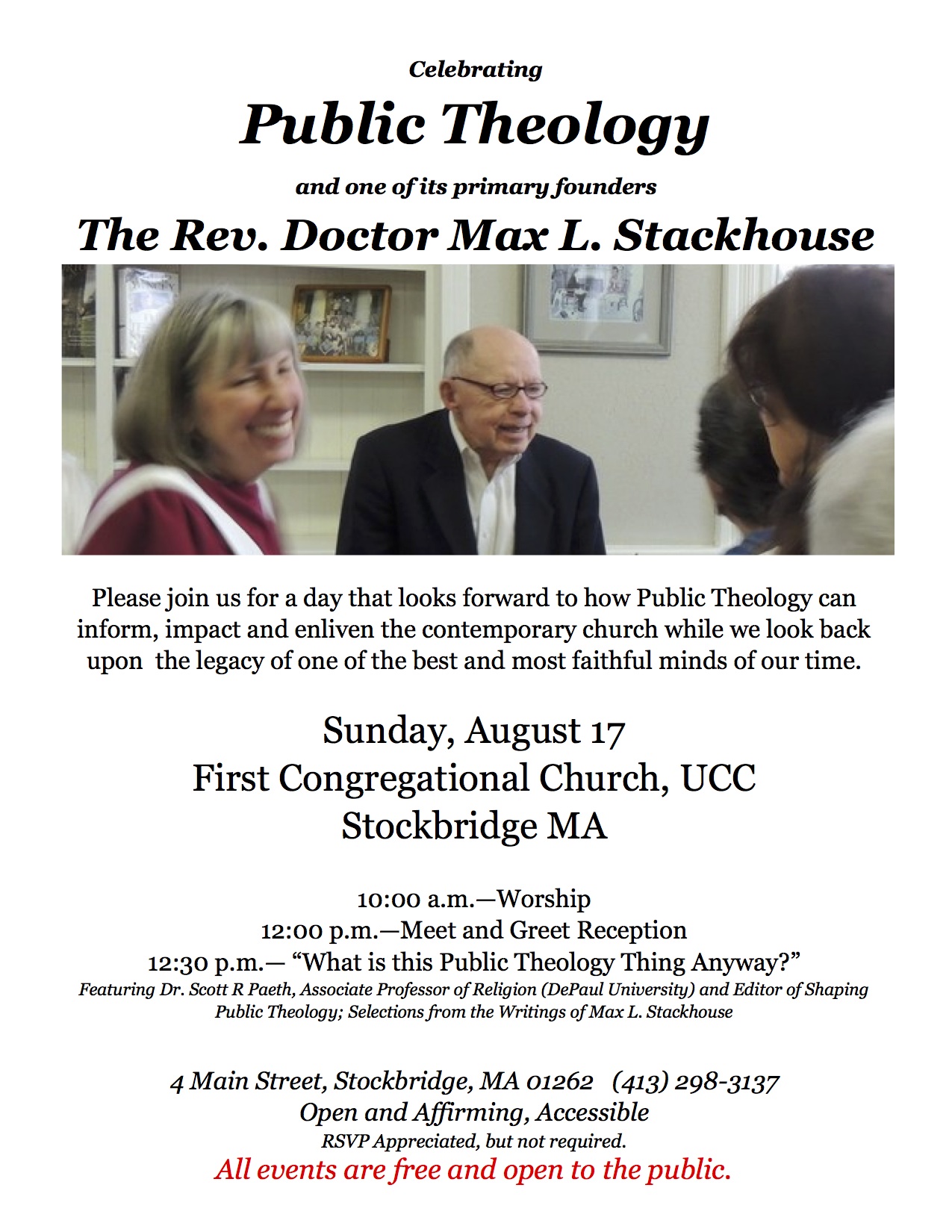
 My teacher, mentor, colleague,  friend and Berkshire neighbor Max Stackhouse, one of the primary founders of Public Theology, will be celebrated at our church in Stockbridge on Sunday. (see flyer below)

Dr. Scott Paeth, one of the editors of a new book of Max’s writings, Shaping Public Theology (Eerdmans, 2014) will give a presentation after morning worship.

Several years ago I posted on Max’s  “God and Globalization.” You can find that here. In Max’s body of writings he has persistently challenged the dominate economic view of society (whether capitalist or socialist) as reductionist.For example, here is an excerpt from a letter he sent us back in 2009:

The economies in each area (of his several travels in the world) have some things in common, such as whether people have little or much, they want more, and in all contexts the laws of supply and demand operate. But, what people want more of and why they want what they want, and what they are able to supply and what they demand for what reasons are quite different. These things differ according to their view of and experiences in family life, political power, legal systems, educational opportunities, medical conditions and technological capabilities. In other words, economics is less an independent cause in social stability or change, than a result of the cultural and civilizational fabric. And, here is the main point, these are all deeply influenced by the dominant religion as shaped by the professional leaders of that religion — the clergy, intellectuals, theologians, and charismatic leaders who appeal to the core of the faith and relate it to the social realities the civilization faces. Under the influence of the secularization hypothesis, religion is a by-product of economic (and psychological) factors. (For the whole letter go here.)


If you are in the area join us for this celebration of Max and his important contributions to Public Theology:


Max Stackhouse Flyer

Unknown's avatar

More reflections on worry: “The Peace of Wild Things”

Berry Pond

I recently posted “Are you choking? A reflection on worry” and a friend sent me this poem by Wendell Berry called “The Peace of Wild Things.” As always Berry is deeply insightful about the ways of the world and the human soul.

“The despair of the world” is great these days with wars and rumors of wars and it easy to let fear run away with us. We fear, as Berry puts it, “of what my life and my children’s lives may be.” We worry about the Middle East and Ukraine,  about Ebola outbreaks in Africa, about the tragedy of children on our borders fleeing violence. We worry about the stock market, rising income inequality, and the loss of jobs that cast a shadow over our children’s futures. With the 24/7 news cycle and the relentless posts on social media the fodder for worry is inexhaustible.

One of the features of our humanity is an awareness of the past and an anticipation of the future. It is a mixed blessing, for the cause of much of our anxiety is rooted in what Berry calls “forethought of grief.” We know that we will suffer and one day die, or as the basketball player/philosopher Charles Barkley aptly put it, “Father Time is still undefeated.”

When Jesus admonished his listeners to “be not anxious,” he told them to consider the birds of the air and the lilies of the field. This is “the peace of wild things” that Berry suggests can free us from our anxiety for a time and let us be.

The Peace of Wild Things

When despair for the world grows in me
and I wake in the night at the least sound
in fear of what my life and my children’s lives may be,
I go and lie down where the wood drake
rests in his beauty on the water, and the great heron
feeds.

I come into the peace of wild things
who do not tax their lives with forethought
of grief. I come into the presence of still water.
And I feel above me the day-blind stars
waiting with their light. For a time
I rest in the grace of the world, and am free.
– Wendell Berry

(Photo by R.L. Floyd. Berry Pond at the Pittsfield State Forest, Pittsfield, Massachusetts)