Unknown's avatar

Coming Soon: A New Bible Study on Romans

RomansP1I am pleased to announce that the Bible study on Romans that Mike Bennett and I have been working on for so long can now be ordered through UCC Resources and will ship on March 1.

Romans, Part 1, Romans 1-8 and Romans, Part 2, Romans 9-16 are titles in the United Church of Christ’s LISTEN UP! Bible Study series.

Romans, Parts 1 and 2 are not ground-breaking new works of original Biblical scholarship, but rather teaching tools to be used by small groups in Bible studies. A leader’s guide is included in every workbook.

Mike and I together bring over a half-century of experience as pastors leading Bible studies in local congregations. Romans Part 1 and 2 brings our knowledge of how to make Bible study come alive.

Behind these studies we bring our own understanding of Romans from a lifetime of engagement with this important book. Mike has been influenced by two important commentaries on Romans by Professors at his alma mater Yale Divinity School, Leander Keck and David Bartlett. Mike is also a contributor to the Feasting on the Word series. Continue reading

Unknown's avatar

“Holy Weeping” A Sermon on Romans 12: 9 -18 and Revelation 21:1-4

CryOur two scripture readings today both speak about crying. The first reading speaks to the church on earth today, what I was taught as a child to call the church militant, and the second reading speaks to the church in heaven, what I was taught to call the church triumphant. Perhaps those terms are too martial for us today, but by whatever names it is the distinction between the church here and the church hereafter.

In the first reading Paul admonishes the Roman Christians on how to be the church now, and one of the things he tells them they need to do is to “rejoice with those who rejoice and to weep with those who weep.”

The second reading is from the Revelation of St John the Divine. I have a soft spot for the writings of St John the Divine, as I was baptized at the Cathedral of St John the Divine in New York, which is the world’s largest gothic cathedral (so I come by my high church inclinations honestly.)

In this beautiful passage from Revelation, St. John describes the holy city, the New Jerusalem at the end of time and history. He says then there will be no more crying there because God will “wipe away every tear from their eyes.”

So in engaging these two texts about the here and the hereafter, I started thinking about the function of crying in our lives, and especially in the church. I did a little research on crying, and discovered that we don’t know all that much about it. There are several competing theories about why humans cry, including those theories of evolutionary biologists who think it may have some social function. Continue reading

Unknown's avatar

“The God of the Far Off” Toward the Ministry of Inclusion

Prodigal sonWhat an extraordinary week this has been for our country! The great Swiss theologian Karl Barth liked to admonish the church that it must read both the Bible and the newspaper, because we Christians live in the world.

And what a week of news it was! There were two historic Supreme Court decisions that will change our national life in significant, and in my opinion, profoundly positive, ways.

On Thursday, by a 6-3 decision, the Court upheld the Affordable Care Act, which makes health care available to all Americans.

And on Friday, by a 5-4 decision, Marriage Equality became the law of the land.

The reason I am here before you instead of our pastor Brent Damrow is that he is in Cleveland at the General Synod of the United Church of Christ, representing the Massachusetts Conference. I am sure he will have stories to tell about the celebrations taking place there, as our national church has been a long and tireless advocate for equal rights for the LGBT community and a supporter  of marriage equality.

I believe that these two historic Supreme Court decisions share a common idea, and that is the idea of “inclusion.”

And a third extraordinary event in our national life also happened on Friday. President Obama climbed into the bully pulpit in Charleston, South Carolina to give the eulogy for the Honorable Reverend Clementa Pinckney, the pastor of the Emmanuel AME Church who, along with eight of his congregants, was murdered by a gunman while attending a Bible study at the church on June 17.

President Obama gave a stirring eulogy for Pastor Pinkney, but he was addressing not only those present, but also the nation. I’d like to share with you some excerpts of his eulogy:

The alleged killer could not imagine how the city of Charleston . . . .the state of South Carolina, how the United States of America would respond — not merely with revulsion at his evil act, but with big-hearted generosity and, more importantly, with a thoughtful introspection and self-examination that we so rarely see in public life.

Blinded by hatred, he (the alleged murderer) failed to comprehend what Reverend Pinckney so well understood — the power of God’s grace . . .

This whole week, I’ve been reflecting on this idea of grace . . .

According to the Christian tradition, grace is not earned. Grace is not merited. It’s not something we deserve. Rather, grace is the free and benevolent favor of God as manifested in the salvation of sinners and the bestowal of blessings. Grace.

As a nation, out of this terrible tragedy, God has visited grace upon us, for he has allowed us to see where we’ve been blind. He has given us the chance, where we’ve been lost, to find our best selves. We may not have earned it, this grace, with our rancor and complacency, and short-sightedness and fear of each other — but we got it all the same. He gave it to us anyway. He’s once more given us grace. But it is up to us now to make the most of it, to receive it with gratitude, and to prove ourselves worthy of this gift.

Martha and I were driving to Onota Lake in Pittsfield for a walk on Friday when the President’s eulogy came on the radio. We got to the parking lot at the boat ramp, but we didn’t get out of the car. We sat in the car until it was over, and when it was over I had tears streaming from my eyes.

The President was addressing the painful facts of racial relations in today’s America. He mentioned that in response to the massacre at the church the Confederate flag had been taken down in the South Carolina capitol and elsewhere. That flag, he said, was a symbol of our nation’s “original sin,” slavery.

The president had both the Bible and the newspaper in mind as he gave this incandescent speech. I don’t know of such a theologically astute presidential address since Abraham Lincoln’s second inaugural.

And once again I would argue that inclusion is the big idea that binds all these events together. Inclusion.

I believe in the power of ideas to shape societies, and, as my teacher, mentor and friend, Max Stackhouse taught me, to examine where they come from and what they mean. So I want to do a little bit of that with you today about the idea of inclusion. Continue reading

Unknown's avatar

What I Love about the Gospel of Luke

St LukeFor our Lenten adult study we have been looking at each of the four Gospels and Brent (our pastor) has asked me to share briefly with you what I love about the Gospel of Luke.

Each of the Gospels has features about it I love. Like many Christians my idea of the Gospel of Jesus Christ is a mixed-upped conflation in my mind of all four Gospels.

When I started studying the Bible as a young man I began noticing how each Gospel tells the story in a somewhat different way, and something about that bothered me. I wondered, “Where they differ what is the truth of the story?”

One of my teachers helped me with this by having me imagine a beloved mother with four children, and upon her death each child wrote a remembrance of her. Each child’s remembrance of their mother would be different, but they would all be true.

Another helpful analogy I heard was that the Gospel is like a diamond, when you turn the diamond the light catches different facets of the precious stone. Each of the four Gospels is a different facet of the one Gospel of Jesus Christ.

It was in the Christmas story where I first noticed the differences in the several Gospels. Mark and John say nothing about the birth of Jesus. Only in Matthew do we hear about the visit of the Magi, their meeting with Herod and his slaughter of the innocents, and Mary and Joseph’s flight to Egypt.

But it is especially Luke we think of most often at Christmas time. Only Luke has the annunciations to Elizabeth and Mary, Mary’s Magnificat, and only in Luke do we have the choir of angels addressing the shepherds.

And so these early chapters of Luke might be a good place for me to start to tell you what I especially love about Luke. Continue reading

Unknown's avatar

“The Message of the Cross” A Sermon on 1 Corinthians 1:23-25

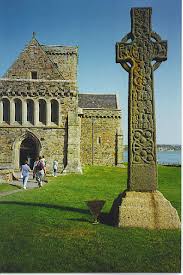
Iona crossA minister friend and mentor of mine, Herb Davis, once told me that every preacher has only one sermon in him, or her. According to Herb, every Sunday the preacher serves up that one sermon in a variety of ways. It may look like a different sermon, but at the heart of it, there’s just the one!

When I was growing up my family always had some sort of a roast at Sunday dinner, which was usually served in the middle of the day after we came home from church. Then the remains of that roast would reappear in various guises throughout the week. For example, let’s say it was a pork roast. The roast might reappear on Monday night in a soup, and on Tuesday night as my Dad’s signature roast pork chop suey and so on. So is that really the way it is? Do the people of God get fed leftovers every Sunday?

I hope not. I think what Herb was saying is that every preacher’s one basic sermon provides the core convictions out of which that preacher delivers the Gospel. And if Herb is right about the one-sermon theory, than I suppose today’s epistle lesson would have to be the text for my one sermon. Let’s hear it again: Paul writes, “We preach Christ crucified, a stumbling block to Jews and folly to Gentiles, but to those that are called, both Jews and Greeks, Christ the power of God and the wisdom of God. For the foolishness of God is wiser than human wisdom, and the weakness of God is stronger that human strength.” (I Corinthians 1: 23-25)

This is what Paul calls the message of the cross. Paul believed that Jesus was the Jewish Messiah and that God raised him from the dead. The cross on which Jesus had died became for him the symbol of that Good News of God’s vast unconditional love for all humankind. Paul believed that in Christ’s dying and rising two important new things had occurred. First, there was now a new age of God’ activity, and, secondly, there was now a new community, the church, made up of both Jews and Gentiles. Continue reading

Unknown's avatar

Daily Devotional: “Once We Were Strangers”

“Once We Were Strangers”

Richard L. Floyd

“You shall also love the stranger, for you were strangers in the land of Egypt.” —Deuteronomy 10:19

The various summaries of the law in the Bible include strangers as people to be especially cared for. Whether we call them sojourners, immigrants or aliens they need help because they are frequently socially powerless.

So God’s people are commanded to care for these special ones. Our passage today reminds the Israelites that they had once been strangers in the land of Egypt. They knew how it felt to be treated unfairly. This memory was an abiding feature of their identity as a people, and they were admonished never to forget it.

My own family is a microcosm of our nation of immigrants. My forbears fled here to escape persecution or sometimes just to seek a better life. My grandfather’s people, French Huguenots, fled religious violence in the 17th century. My wife’s Greek grandparents escaped “ethnic cleansing” in Turkey. Her Jewish grandfather was a Holocaust survivor, and his family came here after the war. Such refugees were called “displaced persons” or DP’s.

These are our stories, not merely here in America, but throughout the world. There are still many “displaced persons” among the human family. They face unique challenges every day.

God regards them with special care and so should we, for we too were once strangers, far from home.

Prayer: Let us love the strangers among us as you do, O God, and never let us forget that we were once like them.

R.L. FloydAbout the Author 
Richard L. Floyd is Pastor Emeritus of First Church of Christ (UCC) in Pittsfield, Massachusetts, and author of A Course In Basic Christianity and When I Survey the Wondrous Cross: Reflections on the Atonement. He blogs at richardlfloyd.com. This is from the United Church of Christ StillSpeaking electronic Daily Devotional. The original can be found here. To subscribe for free and receive these daily by e-mail go here.

Unknown's avatar

Ash Wednesday: “You won’t despise a broken heart!”

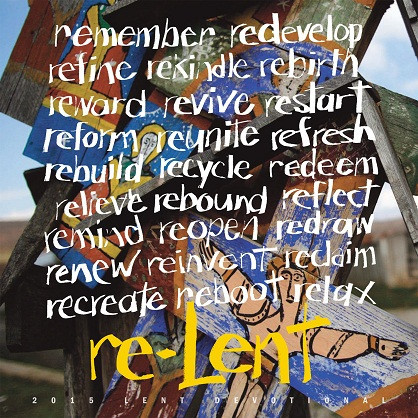
Re-Lent_-_web_large

“The sacrifice acceptable to God is a broken spirit; a broken and contrite heart, O God, you will not despise.” Psalm 51:17

The ashes of Ash Wednesday remind us of our mortality; the one pre-requisite for resurrection is death, something we will all face in time.

But literal death is not all there is to death. Throughout the New Testament “death” is not merely the cessation of mortal life, but also a power that insinuates itself into the living of our days.

Lent is the season that invites us to consider the spaces and places in our lives that are dead. To ask ourselves where has this “power of death” touched us? What is dead in our relationships, in our church, in our society? What is dead within us, where we once had life?

This kind of scrutiny is never easy. It is painful to acknowledge death and the denial of death is strong within us.

To see the dead places within and without us can break our hearts. But our text today says that this very condition of heartbrokenness is a sacrifice acceptable to God.

Because once we open our eyes to the ways the power of death has hold over us, and feel sorrow and remorse (which is what contrition means) God meets us there and can begin to ready us for the promised new life.

Prayer: Accept our broken spirits and contrite hearts, O God, as an acceptable offering to you, and take away the power of death from our lives.

(This is from Re-Lent the United Church of Christ Daily Devotional for Lent 2015. I also wrote a Lenten hymn of the same name which can be found here.)

(Picture. The cover to Re-Lent is also a poster available for purchase that can be ordered here.)

Unknown's avatar

On Holy Ground: A Sermon on Exodus 3:1-15

Burning bushOne of the accepted truths of our faith is that God is everywhere. But here and there, now and then, the Bible tells us about a particular in-breaking of the Divine Presence into someone’s life in a most extraordinary manner.

One of the best known and most important of these stories is the encounter we just heard about between God and Moses on Mt. Horeb.

The back-story to this event starts with the migration of Hebrews to Egypt during and after the time of Joseph, where they increased in number and flourished.

But a new Egyptian king, or pharaoh, came to power who hadn’t known Joseph, and he was threatened by the presence of the Hebrews and he subjected them to slavery.

This is the world Moses is born into, a world where his people are oppressed, and his own life is in danger. This paranoid king orders the Hebrew midwives to kill all the Hebrew boy babies, but in an act of revolutionary daring they disobey him.

You all know the story of how the baby Moses was hid in the bulrushes along the Nile River, and was discovered by Pharoah’s daughter. And how when Moses grew up she adopted him, and he was treated like an Egyptian prince.

So Moses escapes the plight of his people, but not for long. One day he saw an Egyptian overseer beating a Hebrew slave, and Moses rushed to defend the slave and in the ensuing fight he killed the man.

Fleeing for his life he ends up far away on Mt Horeb, where he settles down with a wife and tends the goats for his father-in- law.

That brings us to our story for today. It is not a very promising story, Moses wanted for murder, running away from his home and his people. And he knows that his people suffer terribly under the authority of pharaoh, who is the king of the most powerful empire in the world. Moses may have just been relieved to get out of town with his life.

So it’s just another ordinary workday for Moses, keeping an eye on the flocks as they forage for food on the side of the mountain. And then, suddenly, the ordinary day is transformed by this extraordinary sight, a flaming bush that seems to burn but is not consumed. And there is a divine messenger in the fire, for that is what an angel is. The angel never speaks, but the voice of God speaks directly to Moses, calling him by name, “Moses, Moses.”

Moses knows he is the presence of something or Someone much greater than he, and so he says, “Here am I.” Then God warns Moses to come no closer: “Take off your shoes, for you are standing on holy ground!”

What makes it holy ground? It is holy ground because God is present there. God is holy, and where God is present it is holy ground. Did you know that the Latin word, sanctus, meaning holy, is where we get our word sanctuary? A sanctuary means “a container for holy things.” This room is called a sanctuary because it has been set apart as a place where we may know the presence of God. There is nothing intrinsically holy about this room, or Mt. Horeb, for that matter. They only become holy ground because God becomes present there.

I need to say a word about mountains. The ancients often viewed mountains as holy places where the gods or the larger powers dwelt. They were places best left alone. I recently learned that there are very few Native American artifacts on the tops of mountains. For example, Darby Field, who was the first European to climb Mt Washington in NH in 1642, could convince only one of his 26 Indian scouts to approach the summit with him.

They discerned that holy ground can be dangerous ground. Something Moses sensed as well. On Mt Horeb he finds himself suddenly on holy ground, that sacred space where heaven and earth meet.

One of the things I love about scripture is that I notice new details every time I read a passage, even a familiar one like this. Here’s what I noticed about this one: first, it doesn’t say that God is invisible. On the contrary, Moses turns his face in submission to that which is greater than he. The belief was if you looked at God you would die. Later in Exodus, after a long and complicated relationship, Moses gets bolder, but here he turns his face away from God.

The other detail I had never noticed before was the angel. And why doesn’t the angel speak? That’s their job as intermediators. But here it is God who speaks directly to Moses.

Think about it. This encounter with God must have been both terrifying and amazing, both awesome and awful, two words that used to be synonyms but have evolved to being opposites to show the tension that exists in any encounter with God’s presence. Was it awesome? Or was it awful? Both.

There’s an old hymn that captures the former use of awful, “Before Jehovah’s awful throne.”

So Moses finds himself on holy ground, and knows there are dangers. What are some of the dangers of holy ground?

  1. The first is that you are on holy ground but don’t know it. The great English poet Gerard Manley Hopkins, wrote: “The world is charged with the grandeur of God . . .” and it is true. You may not see a burning bush, but if you are paying attention something of the grandeur of God is everywhere apparent. But you might be busy or distracted and miss it. You were on holy ground and never knew it.
  2. A second danger is that you are on holy ground and you do know it, find it awesome, but then don’t want to leave it. This is the punch-line of the Transfiguration story, when Peter’s answer to the divine encounter is to want to pitch his tent right there and stay. Recall how Jesus said, “No. We’ve got to go down from the mountain. We have work to do. I have a cross to face.”

And that is the essential truth about all divine-human encounters. They always come for a reason and a purpose. They are always attached to a call. They are not information about God, but an invitation into the work and will of God. We don’t discover God, like the New Yorker cartoons where the pilgrim climbs a mountain to find the solitary guru to tell him the truth about God. Our God is not a God we can discover, but a God who reveals himself to us, for a purpose, the divine purpose.

That’s what makes these encounters so dangerous. Moses recognizes that this invitation is fraught, because God’s work is not safe. This is why Moses offers excuses and alibis to get out of it. And I love that God never refutes his excuses and alibis, but simply ignores them.

It’s a great story, but is it our story? I think it is. And here’s what I think we may need to hear from this story. Moses is going about his day job, and he thinks he is autonomous and answerable to no one. In that way he is like us, because that is the great myth of our time: that we are both autonomous and accountable to no one.

So on this ordinary day on the mountain God breaks into Moses life, calls him by name and tells him he has a job for him. The sudden presence of God, the bush, the angel, the voice, make it clear to Moses that he is not autonomous, that there is something, Someone, greater than he with whom he is in relationship, and he is accountable, he is called. In the face of the divine presence and before the divine authority Moses realizes he has a vocation, and that his own fate is closely linked with the fate of his people, who are enslaved. The very people he has run away from.

Something else I noticed for the first time in this story. In the beginning of Exodus Moses’s people are called “the Hebrews.” But here there is a shift. God says to Moses, “The cry of “the Israelites” has come to me.” This naming creates a new identity. I am reminded of the line from the 1 Peter 10:2: “Once you were not a people, but now you are God’s people.”

So Moses wants to know who is this God? We assume monotheism, but in Moses time there were lots of gods around. God says this is who I am, and discloses the divine name: Yahweh, which means I am who I am. “Tell the Egyptians I am sent you.”

And now that God has identified the Hebrews as Israelites, recall that Jacob’s name became Israel, he explicitly identifies himself as not any old god, but the same God who made covenant with the ancestors. “I am the God of Abraham, Isaac, and Jacob.”

This is the central story that constitutes a people, Israel, and by extension the church. It is not the end of the story by any means; later on this very same mountain God will give Moses the Ten Commandments. The book of Exodus tells us God bestows on his people Presence, Law, and Covenant as the abiding features of a new community set apart to be holy. They are to be slaves no longer, but to live for his will and way on behalf of the whole world.

And on every Passover Jewish families repeat this story at the Seder table. They don’t say, “when our ancestors were slaves in Egypt.” They say, “When we were slaves in Egypt.” In doing so they collapse the time from then to now.

In much the same way when we Christians hear this story and think about this story we know that it is our story too. It is a story of liberation. It is the Passover from slavery to freedom. It is the Easter from death to new life.

The story reminds us that we are neither autonomous nor accountable to no one. That is a lie our society tells itself. But it is not true. On the contrary, our God sees, hears, knows, calls us by name, and invites us to share the divine work of liberation from every form of bondage, and every structure of oppression, whether it is personal or societal.

The bush still burns. The call still comes. “Who will speak for me? Who will hear and respond to the invitation to work for my will and way?” Amen.

I preached this sermon on August 31, 2014 at the First Congregational Church of Stockbridge, Massachusetts. To hear a podcast of the service that contains this sermon go here.

Unknown's avatar

“We are storied creatures!” A reflection on Psalm 139:16

StoryAs I approach the forty year mark of my ministry I more and more appreciate that one’s life is part of a story. Over that span of years I spent many of my days in the give and take of pastoral ministry while at the same time I was marinating in Scripture preparing to give a good word on Sunday. Here’s a reflection on what it means to have such a storied life:

“We are storied creatures. There is no essential “I” apart from the story I am living, which is populated with a multi-generational cast of thousands. It is quite a story. It begins “in the beginning,” and ends only in God’s own good Time. And, praise be! God has written me into it, giving me a part to play, and, oh look, you have one too!” (From my Daily Devotional for today. See the whole post here.

Unknown's avatar

“Are you choking?” A reflection on worry.

Thorns“As for the seed that was sown among thorns, this is the one who hears the word, but the cares of the world and the lure of wealth choke the word, and it yields nothing.” – Matthew 13:22

“I’ve never been particularly susceptible to the lure of wealth, but I am an expert on “the cares of the world.” It may be in my genes. My grandmother, Irma Grace, was what the family called a “worrywart,” a word you don’t hear much anymore, but one that means “a person who worries too much or who worries about things that are not important.”

My grandmother was the Babe Ruth of worrying. She had long lists of things to worry about, and if one worry got resolved the next one would quickly move to the top of the list. (From my Daily Devotional for today. See more here)