Unknown's avatar

“The God of the Far Off” Toward the Ministry of Inclusion

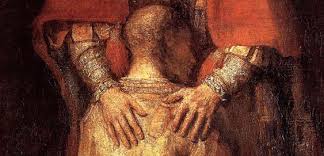
Prodigal sonWhat an extraordinary week this has been for our country! The great Swiss theologian Karl Barth liked to admonish the church that it must read both the Bible and the newspaper, because we Christians live in the world.

And what a week of news it was! There were two historic Supreme Court decisions that will change our national life in significant, and in my opinion, profoundly positive, ways.

On Thursday, by a 6-3 decision, the Court upheld the Affordable Care Act, which makes health care available to all Americans.

And on Friday, by a 5-4 decision, Marriage Equality became the law of the land.

The reason I am here before you instead of our pastor Brent Damrow is that he is in Cleveland at the General Synod of the United Church of Christ, representing the Massachusetts Conference. I am sure he will have stories to tell about the celebrations taking place there, as our national church has been a long and tireless advocate for equal rights for the LGBT community and a supporter  of marriage equality.

I believe that these two historic Supreme Court decisions share a common idea, and that is the idea of “inclusion.”

And a third extraordinary event in our national life also happened on Friday. President Obama climbed into the bully pulpit in Charleston, South Carolina to give the eulogy for the Honorable Reverend Clementa Pinckney, the pastor of the Emmanuel AME Church who, along with eight of his congregants, was murdered by a gunman while attending a Bible study at the church on June 17.

President Obama gave a stirring eulogy for Pastor Pinkney, but he was addressing not only those present, but also the nation. I’d like to share with you some excerpts of his eulogy:

The alleged killer could not imagine how the city of Charleston . . . .the state of South Carolina, how the United States of America would respond — not merely with revulsion at his evil act, but with big-hearted generosity and, more importantly, with a thoughtful introspection and self-examination that we so rarely see in public life.

Blinded by hatred, he (the alleged murderer) failed to comprehend what Reverend Pinckney so well understood — the power of God’s grace . . .

This whole week, I’ve been reflecting on this idea of grace . . .

According to the Christian tradition, grace is not earned. Grace is not merited. It’s not something we deserve. Rather, grace is the free and benevolent favor of God as manifested in the salvation of sinners and the bestowal of blessings. Grace.

As a nation, out of this terrible tragedy, God has visited grace upon us, for he has allowed us to see where we’ve been blind. He has given us the chance, where we’ve been lost, to find our best selves. We may not have earned it, this grace, with our rancor and complacency, and short-sightedness and fear of each other — but we got it all the same. He gave it to us anyway. He’s once more given us grace. But it is up to us now to make the most of it, to receive it with gratitude, and to prove ourselves worthy of this gift.

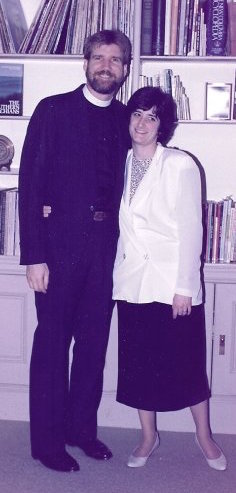
Martha and I were driving to Onota Lake in Pittsfield for a walk on Friday when the President’s eulogy came on the radio. We got to the parking lot at the boat ramp, but we didn’t get out of the car. We sat in the car until it was over, and when it was over I had tears streaming from my eyes.

The President was addressing the painful facts of racial relations in today’s America. He mentioned that in response to the massacre at the church the Confederate flag had been taken down in the South Carolina capitol and elsewhere. That flag, he said, was a symbol of our nation’s “original sin,” slavery.

The president had both the Bible and the newspaper in mind as he gave this incandescent speech. I don’t know of such a theologically astute presidential address since Abraham Lincoln’s second inaugural.

And once again I would argue that inclusion is the big idea that binds all these events together. Inclusion.

I believe in the power of ideas to shape societies, and, as my teacher, mentor and friend, Max Stackhouse taught me, to examine where they come from and what they mean. So I want to do a little bit of that with you today about the idea of inclusion. Continue reading

Unknown's avatar

“The Cross and the Church: The Soteriology and Ecclesiology of P. T. Forsyth”

Forsyth(Note: This article first appeared in the Andover Newton Review in 1992 (Vol 3, No. 1). It is the fruit of essays I wrote for my tutor the Revd. Donald Norwood during my 1989 sabbatical at Mansfield College, Oxford. I want to thank Professor Max Stackhouse for inviting me to submit it. This is the first time it is available on the Internet. RLF)

Part 1 The Church and Our Redemption

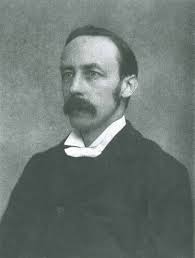
 The British Congregationalist P. T. Forsyth, 1848-1921, is above all a theologian of the cross, and it is this soteriological focus that dominates his understanding of the church. The church was created by the saving work of Christ, and, therefore, for Forsyth, it has no other principle or foundation. Everything in, of and about the church is informed by the work of Christ; questions of polity, ecumenism, church and state, ethics, the ministry, the sacraments, all these are seen through the lens of Christ’s atonement. Since Forsyth’s view of the atonement is profoundly corporate and universal, so too his understanding of the church is corporate and universal. This understanding of a corporate and universal church created by a divine act in the atoning cross of Christ gives Forsyth’s theology a truly catholic and truly evangelical character and accounts for his continued appeal to several branches of the church as a significant ecumenical theologian for our time. Continue reading

Unknown's avatar

“The Message of the Cross” A Sermon on 1 Corinthians 1:23-25

Iona crossA minister friend and mentor of mine, Herb Davis, once told me that every preacher has only one sermon in him, or her. According to Herb, every Sunday the preacher serves up that one sermon in a variety of ways. It may look like a different sermon, but at the heart of it, there’s just the one!

When I was growing up my family always had some sort of a roast at Sunday dinner, which was usually served in the middle of the day after we came home from church. Then the remains of that roast would reappear in various guises throughout the week. For example, let’s say it was a pork roast. The roast might reappear on Monday night in a soup, and on Tuesday night as my Dad’s signature roast pork chop suey and so on. So is that really the way it is? Do the people of God get fed leftovers every Sunday?

I hope not. I think what Herb was saying is that every preacher’s one basic sermon provides the core convictions out of which that preacher delivers the Gospel. And if Herb is right about the one-sermon theory, than I suppose today’s epistle lesson would have to be the text for my one sermon. Let’s hear it again: Paul writes, “We preach Christ crucified, a stumbling block to Jews and folly to Gentiles, but to those that are called, both Jews and Greeks, Christ the power of God and the wisdom of God. For the foolishness of God is wiser than human wisdom, and the weakness of God is stronger that human strength.” (I Corinthians 1: 23-25)

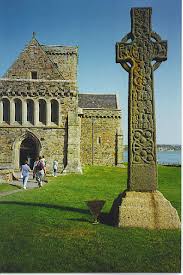
This is what Paul calls the message of the cross. Paul believed that Jesus was the Jewish Messiah and that God raised him from the dead. The cross on which Jesus had died became for him the symbol of that Good News of God’s vast unconditional love for all humankind. Paul believed that in Christ’s dying and rising two important new things had occurred. First, there was now a new age of God’ activity, and, secondly, there was now a new community, the church, made up of both Jews and Gentiles. Continue reading

Unknown's avatar

Can the Church Survive the Decline in Worship?

KazMy Massachusetts colleague Kazimierz Bem, Pastor and Teacher of the First Church in Marlboro, doesn’t think so.

He had a wise and thoughtful post yesterday on faith street.com called Christianity Cannot Survive the Decline in Worship.

Here’s an excerpt:

The church is not made holy by the work it does — Protestants should understand that better than anyone. Rather, it is Jesus Christ and his cross that make us holy. Our service can never replace it, copy it, or perfect it. Our service can only be our response in gratitude for what God has done for us. As the great Congregational theologian Peter T. Forsyth once wrote: “The greatest product of the Church is not brotherly love but divine worship. And we shall never worship right nor serve right till we are more engrossed with our God than even with our worship, with His reality than our piety, with his Cross than with our service.”

For the whole article go here. I heartily recommend it. Kaz even quotes P.T. Forsyth. Well done!

Unknown's avatar

Norwood Days: We All have to Start Out Somewhere

OLYMPUS DIGITAL CAMERAWe all have to start out somewhere.

I was reminded of that today when a friend sent me a funny clip about church from Saturday Night Live and I immediately recognized that it had been filmed at the little church I grew up in.

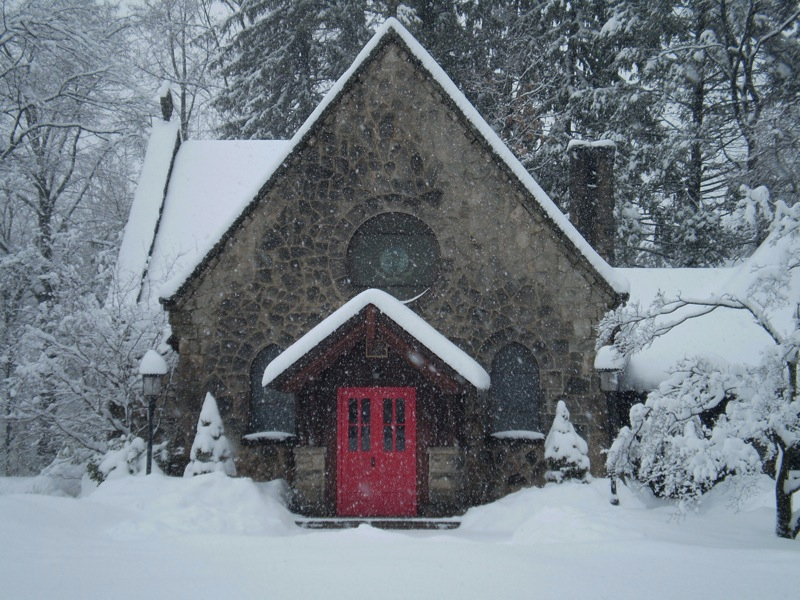
I had seen rumblings about this on the Norwood Facebook page, that there had been a film crew at the Church of The Holy Communion, a beautiful Episcopal church in Norwood, a small town in Bergen County, NJ.

Both my parents were raised in Congregational churches (and my Mom was for a time a Methodist), but when my Mom beat the dust of the Midwest off her heels and moved to New York City she became an Episcopalian. Both my parents were, for a time, librarians at General Theological Seminary, an Episcopal school in the Chelsea section of Manhattan.

They lived on the Upper West Side when I was born, which is how I came to be baptized at the Cathedral of St John the Divine, which if you’re keeping track of things like this, is the world’s largest Gothic cathedral.

Before I started school we moved to Closter, New Jersey, a little town in Bergen County across the George Washington Bridge from Manhattan. My Dad was a commuter at the time, working downtown as the photo and caption editor for the Religious News Service, the public relations arm of the old National Conference of Christians and Jews.

While in Closter we attended the little church in Norwood, where my brother Bill was baptized, a very early memory of mine. My father, never baptized, was then a grumpy agnostic, and from him I learned to take both faith and doubt very seriously. My mother was devout and active in the church.

We moved to Norwood when I was in fifth grade, and then were within walking distance of our church.

I am sure there was sin, gossip, and the sundry pettiness that plagues every congregation of humans, but I felt loved and accepted there, and the fact that I ultimately became a Christian minister speaks well of their care and nurture for and of me.

The rector was a gentle, ancient man, Mr. (always “Mr.” as he was low church) John Foster Savidge. He had an odd way of speaking that I assumed was some kind of special ecclesiastical patois. Only years later did my Dad tell me he had CP and a resulting speech impediment. He was very kind to me, and one time when I was about 11 he came to call and neither of my parents were home. He treated me with great respect and dignity, and told me about his trips to England. Years later I had my own times living in Oxford and Cambridge.

His successor was The Reverend Robert Maitland, who was ironically more blue collar but also more high church and always “Father” Maitland.

It was under his care that I was confirmed. He was a very down-to-earth guy, much a contrast from the patrician Mr. Savidge.

When I was in high school my mother was diagnosed with colon cancer. In those days cancer was an unmentionable and few adults talked to me about the prospect of her impending death. One was my beloved basketball coach, John Shine, and the other was Father Bob Maitland. He took me to lunch at the Red Coach Inn (any Bergen County folks remember that?). He showed me what a minister could be.

My Mom did die during my first weeks at college at the age of 53. Fr. Maitland presided at the service at the Church of the Holy Communion, to a packed house as only those who die too young can bring out. I was having none of this God who snatched away the most important person in my life.

But years later after a long and arduous faith pilgrimage (which is another story for another day) I came back to the church and to a calling as a minister, although in a different franchise.

So the Church of the Holy Communion remains one of my landmarks, a holy place. And since I always (usually) love SNL the confluence of these two made my day.

The little clip was a trip down memory lane. I took voice lessons from the organist, Walter Witherspoon, and saw the organ near where I stood for my first recital. I saw the lovely stained-glass windows. I wrote recently about the window dedicated to a  Sunday School classmate of mine who died in a sledding accident when I was in the second grade.

It has been years since I have been back there, but I thank God for the place and the people, mostly now in the church triumphant, that were there in my growing-up days.

Unknown's avatar

“To Sing and Love as Angels Do”: Singing our Faith

Singing“To sing and love as angels do” is a line from one of Isaac Watts’ hymns (he wrote over seven hundred). I love the phrase. It places singing right up there with loving as one of those activities that pleases God. I have long pondered the central place singing holds in worship, and its importance to the worshiper. Here is an excerpt of an article I wrote about “the worshiping self:”

“In hymn singing the worshiping self experiences transcendence as one among many within a congregation. There, in worship, God the other is addressed by the singer, not in isolation, but as one voice among many others. The hymn singer uses the body as well as the intellect in an integrated act of worship engaging the whole self. Hymn singing also roots the worshiping self within the life of the congregation among whom the singer works and plays, rejoices and weeps. Since the congregation is the local embodiment of the church catholic (what P. T. Forsyth called “the great church”), the hymn singer is part, not only of the congregation physically present, but also the great congregation, both the ecumenical church in its geographical breadth, and the communion of saints in its temporal length across ages and generations.

Additionally, the hymn is a repository of the tradition of the great church, and the faithful learn scripture and doctrine from singing as much as they do from sermons and catechesis. Finally, and most significantly, the singer of hymns not only addresses God, but is, at the same time, addressed by God, so that hymn singing becomes an event of grace. The singer is addressed as a forgiven and justified sinner, and it is often in the singing of the hymns, that the worshiping self is able to experience the grace of justification, and respond with faith and obedience.” (“The Worshiping Self” in Persons in Community: Theological Voices from the Pastorate. Edited by William H. Lazareth. Eerdmans, 2004.)

I also believe that music in general and singing in particular can give us access to the divine presence as no other medium can, which is why even non-believers often are lovers of Bach’s great religious works. Even though my writing is primarily theological and devotional, I have sometimes turned to writing hymns because there is something I want to express that I can in no other way (to see some of my hymns go here.)

I recently wrote:

Singing can help faith, for sometimes we can sing words that we are not yet able to say. I have often noticed singers in choirs who would not call themselves believers belting out sacred music as if they meant it.

Perhaps they do mean it. Who is to say that a singer singing out “And he shall reign for ever and ever” in Handel’s Messiah is not expressing a faith and hope that he or she might have trouble putting into spoken words? (From my Still Speaking Daily Devotional, to see it all go here)

Singing binds us together and reminds us we are not alone. “Our personal faith may wax and wane, but the church’s faith goes on from generation to generation. I like to think of it as a great choir, where each part supports and strengthens every other part, creating something beautiful and harmonious. ”

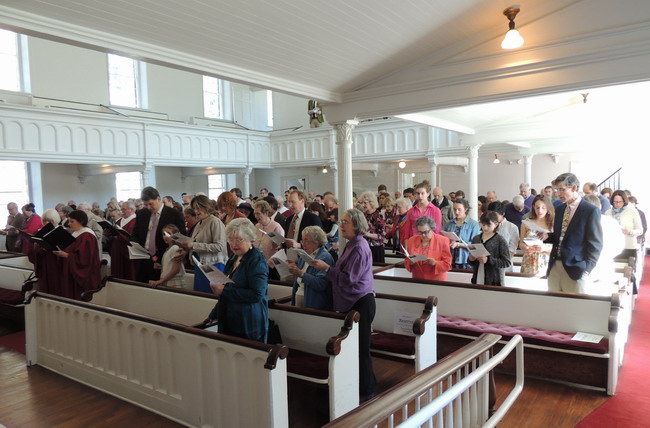
(Photo: Easter Sunday, 2014, at the First Congregational Church UCC of Stockbridge, MA, where I am a member.)

Unknown's avatar

Remembering Andrew F. Wissemann (1928-2014)

Andrwe F. WissemanMartha and I went down to Springfield on Monday for the funeral of our friend Andrew Wissemann. I had not talked to him recently and so his death caught me very much by surprise. The Service of Thanksgiving at Christ Church Cathedral was quite lovely and would please him.

Before he became bishop he was my colleague next door at St Stephen’s Church in Pittsfield, where he was rector. I came to be the pastor of First Church of Christ, Congregational, in Pittsfield on December 1, 1982. I was taking books out of boxes and putting them on shelves in my new study when a lively bearded gentleman in clericals appeared at my door. He introduced himself and welcomed me and before he left the room we were friends.

We started an ecumenical study group at St Stephen’s that met in the late afternoon on Tuesdays and then we would all go to the chapel for Evening Prayer. We would read the assigned texts from the lectionary and talk about them to prepare for our sermons. I felt such joyful collegiality from that group. There was Fr. Fran the Roman priest, Julie the Methodist, Ed the Lutheran, and Andrew, David and Tom the Episcopalians. We had frank and spirited discussions and then we would pray together. I don’t know how many other churches anywhere had a ecumenical rota of ministers leading Evening Prayer in an Episcopal church but we did over 30 years ago.

Andrew had gravitas, but he also loved to laugh and as he aged the smile lines in his face grew more profound. He was not a big man, more thin and spry, but he had a great big laugh that took over his body.

And he loved to make others laugh. One day we followed him into the chapel and he was standing straight with his back against the wall and his hands folded at his chest as if he were a statue of a saint or an apostle. He had put an offering plate behind his head like a halo. He cracked us up.

In 1983 he was elected bishop, and in 1984 he was consecrated. He called me and asked if I would do him a favor. Would I come forward with the bishops and ask an ecumenical question in addition to the several canonical questions the bishops would be asking? He had secured permission from the Presiding Bishop to have this done. Andrew said the consecration would be in a Roman Catholic Church and it was an important ecumenical sign for there also to be someone there from the Reformed side of the family.

I was honored. And so it came to pass that I lined up with the Presiding Bishop of the Episcopal Church and (was it 5?) other bishops. I, in my black Geneva gown, and they splendidly arrayed in copes and mitres. I felt a crow among peacocks. My wife Martha took communion from Andrew’s hand. She was nine months pregnant, my daughter Rebecca arriving a few days later. It was just thirty years ago in April and Rebecca herself is now an ordained minister.

Andrew was my model of a faithful parish minister, hardworking, diligent, prayerful, and loving. He brought those habits and qualities to his episcopacy. For years we would meet to have lunch in Springfield (at the Student Prince) or in Lee (at the Morgan House.) We talked theology and ministry and shared personal joys and challenges. Since we weren’t in the same franchise he could be more priest and confessor to me than my own leaders.

He was one of the first people to tell me about P.T. Forsyth, for which I am most grateful. He claimed he wasn’t a scholar, just a good reader and he loved to read (and buy) books. He once joked, “of the buying of books there is no end.”

When I had to leave my pastorate for health reasons ten years ago he came to my goodbye service and spoke at the dinner.

Last week my friend and colleague Jane Dunning sent me the news that Andrew had died, and I called her and asked if it was OK for me to vest and process. She said, “Of course.”

So I did. I vested on Monday and processed with the clergy, and I am especially glad I did, because I think I may have been the only one in the procession who wasn’t an Episcopalian. That sense of what Forsyth called the “Great Church” was so important to Andrew, and an essential part of his belief in the life we share in Jesus Christ.

Before we entered the cathedral Bishop Fisher had a prayer with us. He prefaced it by asking us all to speak one word that came to mind about Andrew. Mine was “kind.”

I could have added many others. One is “humble.” He and I once drove to Hartford to hear N.T. Wright, with whom I studied briefly at Oxford years before. After the seminar I wanted to introduce him to Tom Wright, but he demurred.

Another time we were together at an ecumenical banquet for the judicatory heads from Massachusetts, an annual event for the Massachusetts Commission on Christian Unity (MCCU.) I was the United Church of Christ’s representative. We wanted to sit together and he led me to the far end of the table. He looked around at all the clerical dignitaries and said, sotto voce, “When you are invited to a feast, take the lowest place, so that when your host comes, he will say to you, ‘Friend, move up to a better place.” (from Luke 12) He smiled that twinkly smile.

Andrew always wrote these encouraging notes in his fine handwriting. I have a bunch of them which I treasure. Rebecca got one last year at her ordination. His fine hand was still the same.

I am blessed to have many dear friends, but Andrew’s death leaves a certain hole in my life, for he was such an extraordinary person and so good at being a friend. He had such a steady faith that I would dishonor him by only grieving, for he believed, as I do, that “we do not sorrow as those who have no hope.”

So I give thanks to God that he was my friend. I give thanks for him. May he rest in peace, and rise in glory.


Unknown's avatar

“By Their Groups Ye Shall Know Them”: Celebrating Max L. Stackhouse

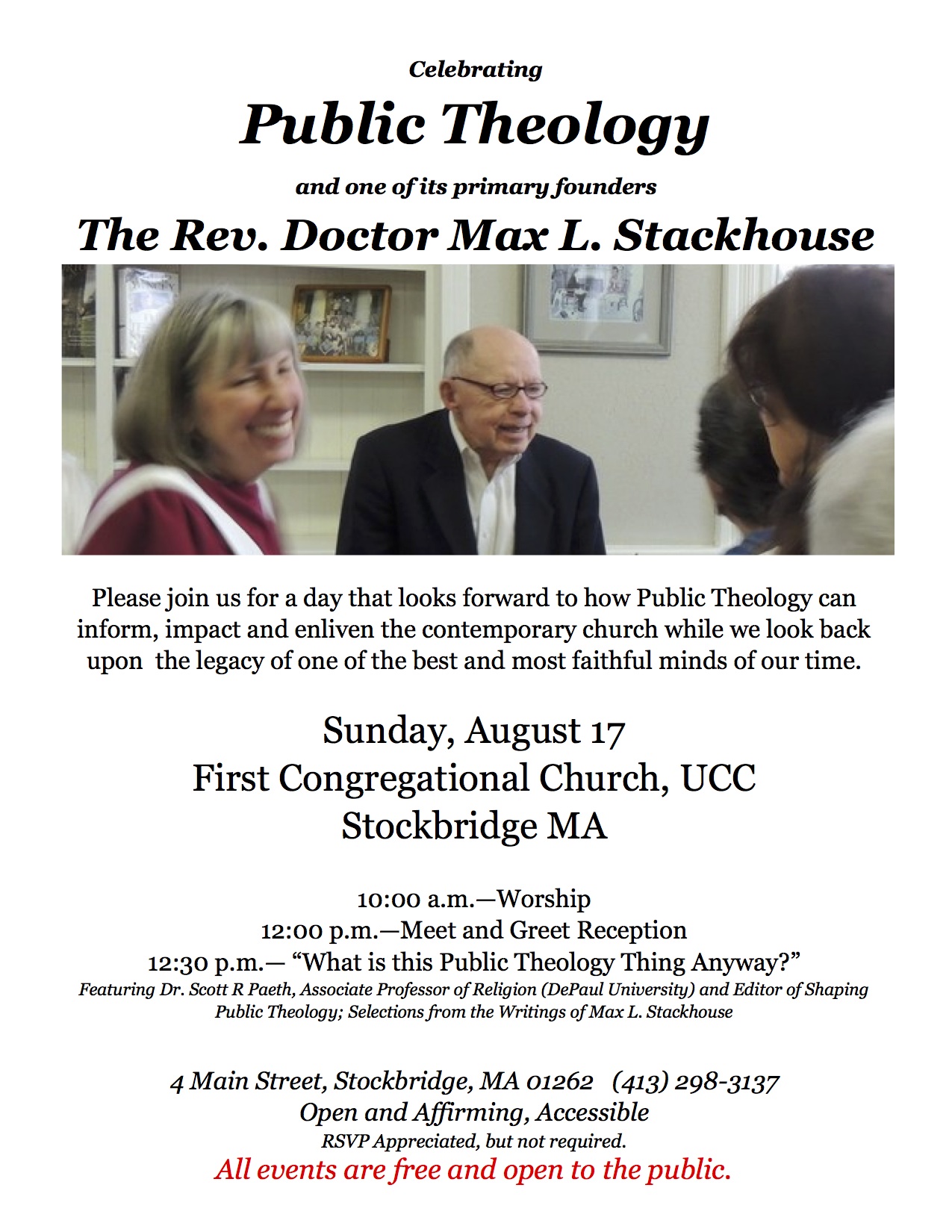
Max Stackhouse FlyerWe had a very moving day today, as we celebrated Max Stackhouse at First Congregational Church, United Church of Christ,  in Stockbridge, Massachusetts, first in our morning worship, then followed by a first-rate public lecture on Public Theology by his former student, Dr. Scott Paeth, one of the editors of a new anthology of Max’s writings, Shaping Public Theology (Eerdmans, 2014). It was not lost on many of us that we were hearing about Public Theology in the congregation where Jonathan Edwards was the second pastor and Reinhold Niebuhr was a member.

Max, and his wife Jean, are well-loved, long-time members of this congregation, and many friends, former students, and colleagues were there. There was very special music from some of Jean’s colleagues at the New England Conservatory, and a beautiful letter/tribute was read from Yo Yo Ma, a board member of BITA, who was unable to be there because he was performing in Cleveland. It was a red letter day. Thanks to my pastor Brent Damrow for putting it all together and for giving me the opportunity to say a few words. Here they are:

“By their fruits ye shall know them.”

Matthew 7:20

 Max’s mentor, James Luther Adams, liked to expand on Jesus’s words “By their fruits ye shall know them” to say, “By their groups ye shall know them.” For me to list all the groups, societies, and institutions Max has founded or been active in would use up all my allotted time this morning

So I’d like to highlight two groups that Max and Jean created here in the Berkshires. When they moved here they planned monthly gatherings of the United Church of Christ clergy and their families in their home on Sunday nights. We’d all share a potluck supper, and then the children would retire to watch a video (Willy Wonka and the Chocolate Factory was a favorite), and the weary pastors and spouses would go to the living room and enjoy friendship and good conversation.

The very first time we went there I firmly instructed my kids during the car ride to address Max and Jean as “Dr. and Mrs. Stackhouse.” When Max greeted us at the front door he knelt down low and said to them “We lived in India, and in India the children call grown-ups Auntie or Uncle, so you can call me Uncle Max.” Andrew nodded soberly and said, “OK, Dr. Stackhouse.” Those gatherings were a blessing to me and to my family, and to many clergy colleagues.

You all know about Max and Jean’s wonderful organization The Berkshire Institute for Theology and the Arts (BITA) that brought together artists, lay people, pastors and scholars for discussions, performances and fellowship. Again Max and Jean opened their home for a meal to the participants.

I mention these to illustrate the commitment that Max (and Jean, too) have to bringing people together to think and talk about important matters, and to share their life with others. Wherever they have lived or traveled around the world, and that list is also huge, they have made deep friendships and countless connections with all sorts of people.

I must confess that in addition to being my teacher, mentor, colleague, and friend, Max is also “a voice in my head.” I think Scott (Paeth) and other former students of Max will recognize how the Stackhousian voice lingers long after the studies are over.

What does this voice say? Well, to take just one example, Max, who is the son and grandson of Methodist preachers has an allergy to hyper-individualistic religion. “Pietism” is the word he uses to describe such impulses.

“Pietism” is a perennial danger for Christians and a regular feature of American religion, where the emphasis is on me: my faith, my experiences. So the Stackhousian voice in my head sometimes says things to me like, “Be careful, Rick, that your faith doesn’t become too individualistic, too private, because faith, though personal, is not private. Your faith is about you, but it’s not all about you.”

Some view a congregation as a collection of beautiful cut flowers collected as in a vase. The beauty is in the individual spirituality, which each person brings to make a beautiful bouquet.

Max, or at least the Stackhousian voice in my head, rejects that view. For Max participation in a congregation is more corporate and organic than that. He might prefer to think of us more like a tree with common roots.

He wants us to think of ourselves as bound together by shared covenants and commitments that are thicker and more transcendent than the sum total of our individual spiritualities. Which is to say that our personal faith is shaped, formed, strengthened and enriched in life together as a congregation.

He wants us to always be asking big questions, such as, “What does it mean to live life together under God?” “What does it mean to be the body of Christ?” He wants us to think about important words such as covenant and vocation.

He believes that out of this shared life and these deep conversations comes a world-transforming Christianity, like that of our Reformed and Puritan forbears, that helps shape our larger community and society.

You can read in Max’s many books the arc of his Christian Social Ethics, but you can also clearly see in his life and commitments the embodiment of his thinking, the caring for peoples and societies by attending to the way they organize themselves and by how they think about who they are together under God.

I give thanks to God for Max’s part, and Jean’s too, in my life and the lives of my family, and also in the life of this congregation. Amen.

(For a podcast of the whole service go here)

Unknown's avatar

Max L. Stackhouse and Public Theology


Max Stackhouse Flyer

 My teacher, mentor, colleague,  friend and Berkshire neighbor Max Stackhouse, one of the primary founders of Public Theology, will be celebrated at our church in Stockbridge on Sunday. (see flyer below)

Dr. Scott Paeth, one of the editors of a new book of Max’s writings, Shaping Public Theology (Eerdmans, 2014) will give a presentation after morning worship.

Several years ago I posted on Max’s  “God and Globalization.” You can find that here. In Max’s body of writings he has persistently challenged the dominate economic view of society (whether capitalist or socialist) as reductionist.For example, here is an excerpt from a letter he sent us back in 2009:

The economies in each area (of his several travels in the world) have some things in common, such as whether people have little or much, they want more, and in all contexts the laws of supply and demand operate. But, what people want more of and why they want what they want, and what they are able to supply and what they demand for what reasons are quite different. These things differ according to their view of and experiences in family life, political power, legal systems, educational opportunities, medical conditions and technological capabilities. In other words, economics is less an independent cause in social stability or change, than a result of the cultural and civilizational fabric. And, here is the main point, these are all deeply influenced by the dominant religion as shaped by the professional leaders of that religion — the clergy, intellectuals, theologians, and charismatic leaders who appeal to the core of the faith and relate it to the social realities the civilization faces. Under the influence of the secularization hypothesis, religion is a by-product of economic (and psychological) factors. (For the whole letter go here.)


If you are in the area join us for this celebration of Max and his important contributions to Public Theology:


Max Stackhouse Flyer

Unknown's avatar

Remembering Willis Elliott: theologian and gadfly

Willis ElliottMy dear friend and colleague Willis Elliott has died. Scott Paeth’s FB post today captures some of the essence of Willis:

“For those who did not know him, he was the often-insightful/often-infuriating gadfly of the United Church of Christ, and a long-time participant in the Confessing Christ group. He died old and full of years”

I met Willis at the very first Craigville Colloquy back in 1984. He spoke at dinner about the “Christian Connection,” the often overlooked piece of the four-church merger that became the United Church of Christ. I thought, “Who is this guy?” Smart, articulate, funny, and insightful. He had a full white beard like Santa Claus, and I thought he was really old, but that was thirty years ago so what did I know?

Later we had him at my congregation as a speaker and with his wife Loree a guest in our home. He was a brilliant, multi-lingual polymath, a former fundamentalist, and at times as difficult and uncompromising as Jeremiah. If there had been a shop that sold iron yokes, Willis might have purchased one. But he could also be an encouraging mentor. Years ago I did a presentation at the MA Conference annual meeting and afterward he made a point to come up and thank me. He also said, “I didn’t know you had it in you!” That was Willis.

In the 1990’s he was one of the founders of Confessing Christ in the United Church of Christ, along with Gabe Fackre, Fred Trost, Jim Gorman, Leslie Zeigler, Barbara Clemons, Bennie Whiten, Herb Davis, Andy Lang, Ted Trost, myself and many others. “Confessing Christ” was an invitation to “joyous theological reflection and serious theological work” on behalf of the ministry and mission of the United Church of Christ.

For years we had our Confessing Christ annual meeting at the church I was serving in Pittsfield, MA, and I got to know Willis well. He was one of the least compromising people I have ever known, and the least career oriented. He had been the librarian and Old Testament Professor at New York Theological Seminary, and before that had served on the national staff of the UCC.

He was a deeply committed Christian, reading the Bible every day in the original languages. His “Think-Sheets,” free of an editorial hand, were challenging, quirky, often brilliant, and, just as often, maddening. They always made you think.

In his latter years his eyesight waned, but he kept up a lively correspondence and participation on the Confessing Christ list-serve conversation.

The “thickness” of the conversation in the United Church of Christ, and the great church, will now be poorer for the loss of his voice, but he had no doubt, and neither do I, that he is now numbered among the great cloud of witnesses. I thank God for him.