Unknown's avatar

A tribute to Max L. Stackhouse

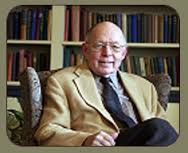
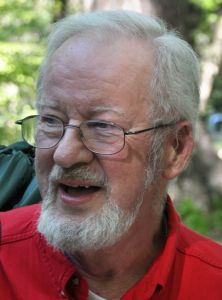
MAx 2(Yesterday our church, the First Congregational Church UCC of Stockbridge, Massachusetts, had a grand celebration for the life of Max L. Stackhouse. Our pastor, Brent Damrow, presided gracefully over a beautiful mosaic of spoken and musical offerings to remember and honor Max. Family, friends and colleagues shared their thoughts. There was a half hour of Bach organ prelude music by the Reverend Tim Weisman, Yo Yo Ma played a cello introit, an expanded choir sang an anthem under the direction of Tracy Wilson, and a choral benediction conducted by Joseph Flummerfelt. God was glorified and the promises of God were proclaimed. I was privileged to make some remarks. Here they are:)

I have been blessed to know Max for most of my adult life. I met him in 1971, when I started my studies at Andover Newton Theological School, where he was my teacher. Our paths have crossed ever since.

For three years I was a seminary intern at the church where Max and Jean and their family belonged. I was Dave’s 3rd grade church-school teacher. I must confess that I had one of those “Come to Jesus” moments when I realized that Professor Max Stackhouse’s child was in my class!

Eventually both Max and I ended up here in the Berkshires. Max was a frequent lecturer and guest preacher at the church I served in Pittsfield. After I retired we became fellow church members here in Stockbridge. Stockbridge was theological “holy ground” for Max, as two of his heroes, Jonathan Edwards and Reinhold Niebuhr, had lived here. Continue reading

Unknown's avatar

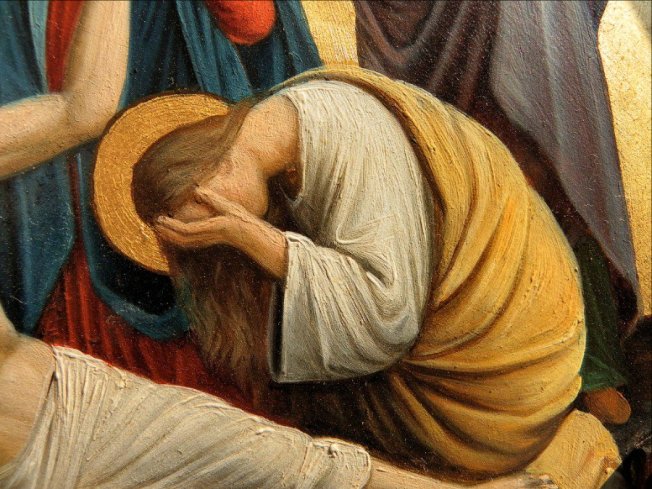
“Holy Weeping” A Sermon on Romans 12: 9 -18 and Revelation 21:1-4

CryOur two scripture readings today both speak about crying. The first reading speaks to the church on earth today, what I was taught as a child to call the church militant, and the second reading speaks to the church in heaven, what I was taught to call the church triumphant. Perhaps those terms are too martial for us today, but by whatever names it is the distinction between the church here and the church hereafter.


In the first reading Paul admonishes the Roman Christians on how to be the church now, and one of the things he tells them they need to do is to “rejoice with those who rejoice and to weep with those who weep.”

The second reading is from the Revelation of St John the Divine. I have a soft spot for the writings of St John the Divine, as I was baptized at the Cathedral of St John the Divine in New York, which is the world’s largest gothic cathedral (so I come by my high church inclinations honestly.)

In this beautiful passage from Revelation, St. John describes the holy city, the New Jerusalem at the end of time and history. He says then there will be no more crying there because God will “wipe away every tear from their eyes.”

So in engaging these two texts about the here and the hereafter, I started thinking about the function of crying in our lives, and especially in the church. I did a little research on crying, and discovered that we don’t know all that much about it. There are several competing theories about why humans cry, including those theories of evolutionary biologists who think it may have some social function. Continue reading

Unknown's avatar

“Thin Places”

CWwWLrbU8AAomxb.jpg-large

“Then Jacob woke from his sleep and said, ‘Surely the Lord is in this place—and I did not know it!’”—Genesis 28: 16

In Jacob’s dream he sees a stairway to heaven with angels ascending and descending it. He named the place Bethel, “the place of God.” The ancient Celts called such spots “thin places,” where the distance between heaven and earth collapses.

Thin places can be famous holy spots such as the Isle of Iona or the Cathedral de Notre Dame, but more often than not they are ordinary places, such as Bethel, or a dusty road on the way to Damascus.

You can search for thin places, but, as with Jacob, it is more likely that they will find you.

Such unexpected encounters with the Holy seem to happen in times of crisis: Jacob running away from home, Saul on his way to persecute the church.

Is it the place itself that allows for these glimpses of the advent of God? Or is it some special state of mind and heart? Either way there are times and places when the ordinarily reliable distinction between heaven and earth gets erased.

Even if we see no burning bush or ladder to heaven, nor hear the voice of Jesus, we are no less certain that we have come upon a thin place, and can say, as Jacob did, “Surely the Lord is in this place—and I did not know it!”

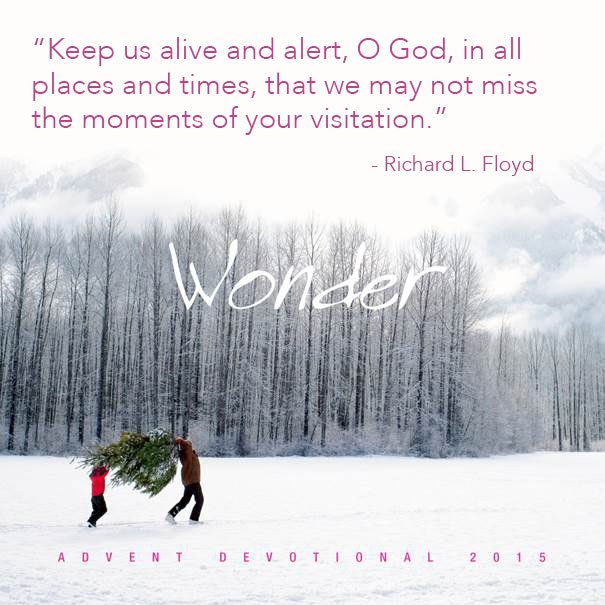
Prayer: Keep us alive and alert, O God, in all places and times, that we may not miss the moments of your visitation.

(This is my daily devotional for today from “Wonder,” the United Church of Christ’s 2015 Advent Devotional booklet. Photo meme by Pilgrim Press)

Unknown's avatar

Preparing for Christmas with a prayer from Karl Barth

Finish

On this Fourth Sunday of Advent my pastor picked this prayer from Karl Barth as part of the prayers of the people for this morning. Barth wrote it in the middle of the last century, but it struck me as eerily contemporary. It helped me sort out some of what I need to do to prepare for Christmas, and so in that spirit, I share it with you:

Lord, our God and Father, give to many, to all, and to us as well, that we may celebrate Christmas like this: that in complete thankfulness, utter humility and then complete joy and confidence we may come to the One whom you have sent, and in whom you yourself have come to us. Clean out the many things in us that now that the hour has come have become impossible for us, can no longer belong to us, may, must, and will fall away from us, by virtue of your Son, our Lord and Savior, entering into our midst and creating order.

Have mercy on all of those who either do not yet or do not fully know you and your kingdom, who perhaps once knew everything and have either forgotten, misunderstood or even denied it! Have mercy on all of humankind, who today are once again especially plagued, threatened and haunted by so much foolishness. Enlighten the thoughts of those in both the East and the West, the South and the North who are in power and who, as appears to be the case, are today in complete confusion and despair. Give the rulers and representatives of the people, the judges, teachers, and bureaucrats, give even the media in our homeland the insight and sobriety that are necessary for their responsible work. Place the right, necessary and helpful words on the lips of those who have to preach during this Christmas Season, and open then also the ears and hearts of those who hear them. Comfort and encourage those who are sick, both in body and spirit, in hospitals, as well as prisoners, and those who are distressed, abandoned or despairing. Help them with what alone can truly help them and all of us: the clarity of your Word and the quiet work of your Holy Spirit.

We thank you that we are permitted to know that we do not pray and will never pray to you in vain. We thank you that you have let your light rise, that it shines in the darkness, and that the darkness will not overcome it. We thank you that you are our God and that we may be called your people, through Jesus Christ our Lord. Amen.”

(Photo: R. L. Floyd, 2015)

Unknown's avatar

“He will come like child.” Rowan Williams’ “Advent Calendar”

Last fall's leaf

I have long been an admirer of the estimable Rowan Williams, the 104th archbishop of Canterbury, since the time I saw him give an awkward, brilliant, and humble paper in 1989 in Oxford. Since then I have read with profit his thoughtful theological books and essays. But I just learned that he also has written poetry. I came across this fine Advent poem today. It is from his first collection of poems: After Silent Centuries (Oxford, 1994), and is now available in The Poems of Rowan Williams’ (Oxford, 2002 and Grand Rapids MI, 2004).

Advent Calendar

He will come like last leaf’s fall.
One night when the November wind
has flayed the trees to the bone, and earth
wakes choking on the mould,
the soft shroud’s folding.

He will come like frost.
One morning when the shrinking earth
opens on mist, to find itself
arrested in the net
of alien, sword-set beauty.

He will come like dark.
One evening when the bursting red
December sun draws up the sheet
and penny-masks its eye to yield
the star-snowed fields of sky.

He will come, will come,
will come like crying in the night,
like blood, like breaking,
as the earth writhes to toss him free.
He will come like child.

© Rowan Williams

(Photo by R. L. Floyd, 2015, “Autumn leaf after the rainstorm,” Ashuwillticook  Rail Trail, Lanesborough, MA.)

Unknown's avatar

“Lost in Wonder, Love, and Praise”

Wonder

“Finish, then, Thy new creation!”

“We know that the whole creation has been groaning in labor pains until now; and not only the creation, but we ourselves, who have the first fruits of the Spirit, groan inwardly while we wait for adoption, the redemption of our bodies.”— Romans 8: 22-23

The Advent hope recognizes that there is something unfinished about God’s creation. In today’s passage Paul employs the metaphor of childbirth, the “whole creation groaning in labor pains,” to describe the ongoing process of creation.

Our United Church of Christ Statement of Faith testifies to the two calls of God, the original creation (‘God calls the worlds into being”), and the new creation in Jesus Christ (“God calls us into the church”).

It is humbling to imagine that we have some part to play in the completion of God’s work, in our lives, in our communities, and on this earth we share with all God’s other creatures.

The Advent hope invites us to actively share in the reconciling, restoring, healing and saving activity of the living God. Such hope points to a promised future when the whole creation will finally be completed, a vision captured by the last verse of the great Charles Wesley hymn, “Love Divine, All Loves Excelling:”

“Finish, then, Thy new creation;

Pure and spotless let us be.

Let us see Thy great salvation

Perfectly restored in Thee;

Changed from glory into glory,

Till in Heav’n we take our place,

Till we cast our crowns before Thee,

Lost in wonder, love, and praise.”

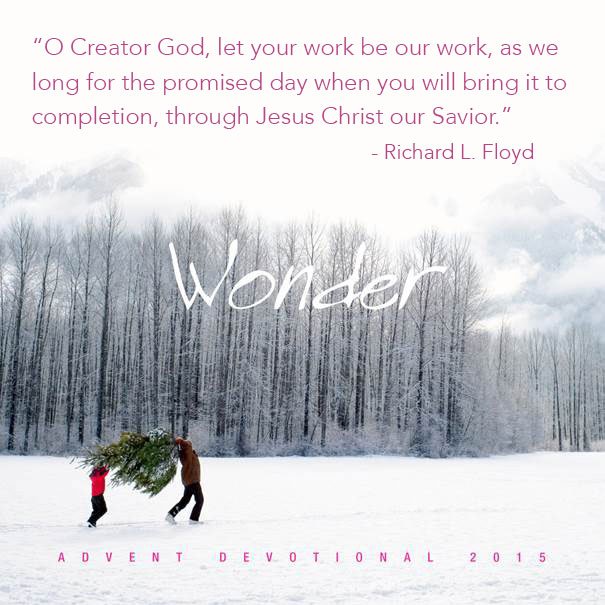
Prayer: O Creator God, let your work be our work, as we long for the promised day when you will bring it to completion, through Jesus Christ our Savior. Amen.

(This is my devotional for today from “Wonder” the 2015 Advent Devotional from the United Church of Christ’s Stillspeaking Writers’ Group. Photo: The Pilgrim Press, 2015)


Unknown's avatar

Ruminations on Advent

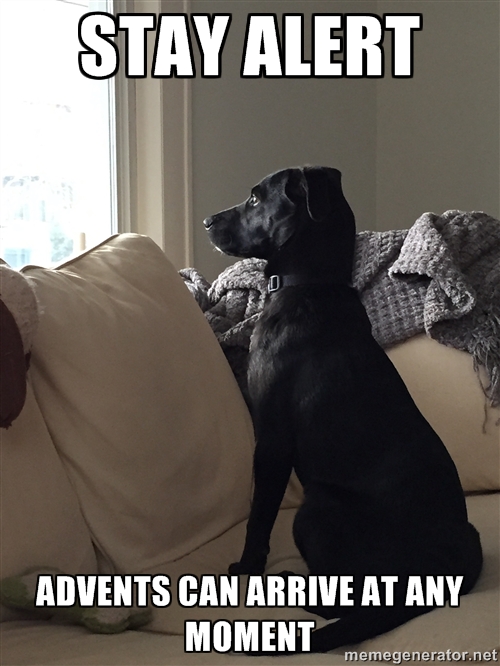
Advent dog

“There is something beautiful and mysterious about Advent, but there is, at the same time, something unsettling, darkly anxious, almost threatening about it. The Advent mood is hard to put into words. It is often captured better by its hymns, which are often dark and brooding, sung in a minor key.

The scripture lessons for Advent set the tone with their continued prophetic calls for repentance, the dire warnings to “wait and watch,” the urgency of preparation for what is coming. We hear about those who are unprepared for God, tenants who are surprised by the sudden appearance of their long-absent landlord, sleepy bridesmaids waiting with their empty oil-lamps for the bridegroom to come.” (Excerpt from “Rejoice! Rejoice! A Sermon for the Third Sunday of Advent”)

Over the years I have posted many of my Advent rumination and reflections. I have gathered up some of them here:

The Christmas Tree in the Passing Lane

“A Chorus of Trees” (Video)

Anticipation: A Sermon for the First Sunday of Advent

Rejoice! Rejoice! A Sermon for the Third Sunday of Advent

“God With Us” A Sermon for the Fourth Sunday of Advent

And here is the hymn I wrote for Advent in 2000, after 9/11:

“In Such Sad Times We Look Ahead” A Hymn for Advent

(Photo by R.L. Floyd, 2014. The dog is Onyx, our grand-dog.)

Unknown's avatar

“Retirement, Aging, Loss and Change” My Interview on WSBS’s Religious Roundtable

WSBS2_slide06

Tune in to WSBS radio tomorrow morning, September 13 at 8:30, and listen to my interview on “Retirement, Aging, Loss and Change.” The Reverend John Wightman, a retired United Church of Christ minister, interviews me on behalf of the Religious Roundtable, a weekly Sunday morning radio show hosted by the Southern Berkshire Clergy Association.

John and I have a good discussion about the resources of faith in times of loss and change, including aging, illness and retirement.

Can’t get up that early or have choir practice? You can download the podcast of the interview here.

Roundtable


Unknown's avatar

“Praying from the depths”

Out of the depths“Out of the depths I cry to you, O Lord!” — Psalm 130: 1

In the prayer book I grew up with each Psalm had a Latin title, which was always the first line of that Psalm. The only one that I distinctly recall was “De Profundis,” the Latin title of Psalm 130, which begins, “Out of the depths.”

I’m not sure what it was about that title that was so intriguing to me. Perhaps it reminded me of the English word “profound.” I know now that “profound” is derived from the Latin “profundus” which means literally “at the bottom.”

As I have lived out my life through the decades there have been some difficult, even desperate, times when I have cried out to God from somewhere pretty close to the bottom. We have phrases that describe such times. We say someone has “hit bottom” or is “bottoming out.”

But it is not only in these desperate times that we can pray from the depths. We can always pray from the very deepest part of our selves, from the very “bottom of our hearts.” Sometimes we are able to find the words, other times our silent prayers are, as Paul described them, “sighs too deep for words” (Romans 8:26). Either way, our God, who is Lord of the depths as well as the heights, hears our prayers.

Prayer:

O God, your love fills the world, help us to fathom the depth of the love you have for us in Jesus Christ.

(This is my Daily Devotional for June 11, 2015. To see the original go here. To subscribe (for free) to this daily e-mail service go here.)

Unknown's avatar

“Taking the Long View” Reflections of a Retired Pastor

Presiding(This is a talk I gave to “The Saints” which is the United Church of Christ retired clergy group in the Connecticut Conference of the UCC. The talk was in Cromwell, CT on May 14, 2015)

I’d like to thank you for inviting me to be with you today. I have great respect for ministry as a high and holy calling, and I enjoy the company of ministers. I am proud to be a minister, and this year is the 40th anniversary of my ordination. And it is good to be in the Connecticut Conference. I never served here, but my daughter, Rebecca Floyd Marshall, is an ordained minister here in CT, serving in Westport. If you bump into her at a Conference meeting introduce yourself.

My talk today is entitled “Taking the Long View” which was the title of a UCC STILL SPEAKING Daily Devotional I wrote for March 14 of last year. I see it was re-printed in your newsletter. I’m going to share with you some of my personal back-story behind the writing of this particular devotional.

I began the devotional with an anecdote about Ralph, a congregant of mine in my first church, who owned an apple orchard: “I drove over to see Ralph at his hilltop orchard a week after I had presided over his wife’s funeral and burial. He was well into his nineties and they had been married for seven decades. I was all of twenty-seven. It took me awhile to find him, because he was out planting apple trees. He seemed glad to see me and said, “You may wonder why I am planting trees that I will never live to see bear fruit. But it’s what I have always done, and I am not going to stop now. There were apple trees in this orchard when I came here that somebody else had planted, and there will be apple trees here after I’m gone.”

I’ve held onto Ralph’s words for forty years, and lately they have helped me as I think about what it means to be a retired minister. That hasn’t been easy for me. Because when I left my role as a pastor it seemed, at first, and for a long while, like the loss of my calling as a minister. Now I have come to realize that, although I am no longer a pastor of a congregation, I am still a minister. When I turned 65 the UCC Pension Boards mailed me a good little book by Paul Clayton entitled Called for Life (Perhaps you all got one, too). I love the play on words in the title, and I do believe we are “called for life” in both senses of the phrase.  Continue reading