Unknown's avatar

The Use and Misuse of Faith in Politics

On Tuesday I wrote this on my Facebook wall:  “I want all my Facebook friends to know that as a committed Christian I deplore the political hijacking of my faith by ignorant, intolerant, racist and misogynistic extremists.”

As of this morning I have received 34 “likes” and about a dozen approving comments.  But I was uneasy about it.  Those of you who know me know that though I rant pretty easily about this and that I do my best to avoid self-righteousness.  And part of what I deplore these days is the tone of political discourse, and I worried that my frank cry of the heart was yet another ideology-driven screed.

I am no happier when liberal Christians become “the left wing of the Democratic party at prayer” than I do when evangelicals become “the right wing of the Republican Party at prayer.”

I was also pleased to see that some of my “likes” came from conservative evangelical friends.  And many of them came from young adults in my children’s generation.  That is heartening.

My sister-in-law Annette, a faithful Roman Catholic, wrote this comment:

I gather that you love the sinners but hate the sins of willful ignorance, intolerance, racism and misogyny. But do we really love these sinners? And what do we do, as faithful, for or with these sins? We are sinners, too, by other measures. I’m feeling confused. It’s Lent and I’m breaking this down for my daughter with an intellectual disability and some things don’t add up when I look at the fundamentals.

She got right to my uneasiness, because I know myself to be a sinner as well, and not only by other measures, but even by the very sins I deplore in “the extremists.”

“Love the sinner, but hate the sin” is the proper Christian admonition, but here Annette is savvy, too, as she knows how hard this is to do with any consistency.

To keep such self-awareness from becoming a counsel of despair I find comfort in the Reformation insight simul justus et peccator, that we are at the same time sinners and justified by God. “Redeemed sinners” is the way I like to think of it.

And something I had to learn in three decades of pastoral ministry is that there are some people who are just plain unlovable, so you have to turn them over to God who does love them.

But where I come down in the end is that just because we know we are sinners too, and perhaps share in some of the same sins, we are not exempt from speaking out about the things we deplore.

And I would assert that intolerence, racism and misogyny should be deplored by all people of good will, religious or otherwise, liberal or conservative, Republican or Democrat.  And the use of these sins to raise fears for political gain is a double sin.

Unknown's avatar

Happy St. David’s Day: Cymru am byth!

Like many Americans whose families have been around for generations I am of mixed national ancestry.  But my surname, Floyd, is Welsh. It is the same name as Lloyd, which is a variation of the Welsh word llwyd or clwyd, which means “grey.” The double-L represents “the voiceless alveolar lateral fricative of Welsh,” and was sometimes also represented as fl, yielding the name Floyd. It is not a sound you can make in English.  It sounds something like a soft cough or gently clearing your throat.

Did you know that?  Now you do, and since we are talking about Wales let me wish you a happy St. David’s Day with one of St. David’s graceful admonitions:

“Be joyful, and keep your faith and your creed. Do the little things that you have seen me do and heard about. I will walk the path that our fathers have trod before us.”

St. David was a sixth century Welsh bishop who became the patron saint of Wales.  I have been to the charming cathedral named for him in St. David’s, Pembrokeshire.  It was built in a hollow near the sea so the Vikings couldn’t see its spire from their ships.

Tonight I will raise a glass to St. David and that estimable Welshman Rowan Williams, the Archbishop of Canterbury, and one of our best contemporary theologians.  The Welsh do make a single malt, Penderyn, but since I have none I will be raising Scotch.

Unknown's avatar

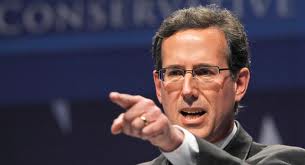
The Curious Protestantism of Rick Santorum

The other night I watched the Republican Primary debate from Arizona and was struck by the incongruity of two Roman Catholics and a Mormon fighting to be the standard bearer for what has become the party of American conservative evangelicalism.  Even a cursory knowledge of American history will remind you that one of the (nasty) features of American Protestantism right up to the late 20th century was a virulent anti-Catholocism.  And in the 19th century Mormons were run and burned out of town in Illinois (and elsewhere) by Protestant mobs. Well, if that particular form of bigotry has changed all for the good.

But the more I listen to Rick Santorum, the more Protestant he sounds, and perhaps this is his appeal to conservative Protestants.  So I was pleased to find in today’s on-line New Yorker a knowledgeable exegesis of Rick Santorum’s remarks the other day about President Obama’s “theology.”

The article, called “Senator Santorum’s Planet,” is by James Wood.  He writes, “If Rick Santorum is so staunch a Catholic, why does he often sound such a Protestant, not to say puritanical, note?” You can tell Wood has some pew-sitting in his past (he admits as much), and he clearly understands the subtle nuances of biblical and theological talk.  He says,

“I know the theological weight of that word, “steward.” When I was a boy, my mother, in the grip of her Scottish evangelical Protestantism, used to chide me for my untidy bedroom, adding that, as a Christian, it was an example of “poor stewardship.” Everything is the Lord’s, and our brief role on earth is merely to husband it in a right way, a way that gives the Lord His due.”

Wood sees in Santorum an apocalyptical ascetism more obviously associated with Protestantism than Roman Catholicism and I think that is just right.  Santorum may be a conservative Catholic, but his theology has heavy overtones that come not out othe native soil of his own faith, but from a particular brand of American evangelicalism.  This is at the heart of his objection to the President’s “theology,” which he identifies with an extreme form of environmentalism that the President’s critics on the left must find confounding.

Wood concludes:

When Santorum says that we must be good stewards of the earth, there is religious zealotry behind the sweet words. He is proposing, in effect, that the earth is dispensable but that our souls are not; that we will all outlive the earth, whether in heaven or hell. The point is not that he is elevating man above the earth; it is that he is separating man and earth. If President Obama really does elevate earth over man (accepting Santorum’s absurd premise for a moment), then at least he believes in keeping man and earth together. Santorum’s brand of elevation involves severing man from man’s earthly existence, which is why it is coherent only within a theological eschatology (a theology of the last days). And he may well believe that man cannot actually destroy the earth through such violence as global warming, for the perfectly orthodox theological reason that the earth will come to an end (or be renewed) only when Christ comes again to judge the living and the dead. In other words, global warming can’t exist because it is not in God’s providential plan: the Lord will decide when the earth expires. This is Santorum’s “theology,” phony or otherwise.

The great irony in all this is that  among the viable contenders in the coming election the only actual Protestant in the race is President Obama.

Unknown's avatar

Do ministers work for the church?

I have written before about my mixed feelings about the “professionalization” of the clergy. The relationship was once more like a marriage covenant than a job.  Lately I notice more and more that the relationship between clergy and congregation is construed as a contractual one borrowed from the corporate world.  And I also note with sadness that this model is at the heart of much clergy/congregation conflict when one or both parties feel aggrieved that the contract is not being properly carried out.  A covenant has room for forbearance and forgiveness; a contract does not.

When I was ordained, the preacher (Dudne Breeze) admonished me to be a minister of the Word of God.  He didn’t admonish me to be the CEO or the COO, or even to be a faithful employee of the congregation.  My job I knew was not to make the congregation flourish but to make the Gospel real.

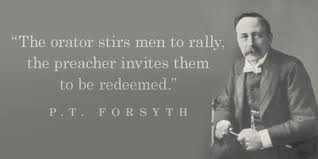
There were times in my ministry when I had to stand against the majority will of the congregation on behalf of the Gospel.  This is no fun when you have come to love your congregation. Years ago I came across this great letter that P.T. Forsyth (1848-1921) wrote to his new congregation in Cheetham Hill, England.

He made it plain that although they had called him he had a prior and higher call. Can you imagine a beleaguered pastor saying something like this today to an angry board of trustees?

“You have called and I have answered gladly. But it is not your call that has made me a minister. I was a minister before any congregation called me. My election is of God. Paul speaks of ‘a faithful minister of the new covenant’ … The minister of this covenant, therefore, the minister of Christ, has his call, first, in the nature of God and God’s Truth; second, in the nature of man and man’s need. We have on one side the divine Gospel; we have on the other the cry of the human. His call is constituted both by the divine election and the requirements of human nature. Would that some who are sure of their election by God, were as sure of their election by man, and their fitness to adapt God’s truth to human nature. It is not therefore the invitation of any particular congregation that makes a man a minister. It is a call which on the human side proceeds from the needs rather than from the wishes of mankind, from the constitution of human nature as set forth in Christ, rather than from the appointment by any section or group of men. I am here, not to meet all your requisitions, but to serve all your needs in Jesus Christ. You have not conferred on me my office, and I am Christ’s servant more than yours, and yours for His sake. The minister is not the servant of the Church in the sense of any special community or organization. The old Latin theologians used to subscribe themselves V.D.M., Minister of the Word of God,—Minister not of the Church, but of that Christian human nature which our particular views and demands so often belie. A minister may, on occasion, never be so much of a minister as when he resists his congregation and differs from it.” (“The Pulpit and the Age”)

The church could user fewer employees and more ministers..

Unknown's avatar

Confused? Interpreting Your Congregation’s Numbers

One of the besetting sins of today’s American mainline church is a morbid preoccupation with the numbers; number of members (AKA “pledging units”) and number of dollars.

Such a preoccupation is understandable given the decline of these numbers over the past decades, but the result is the continuing demoralization of leaders and members, and a misreading of the real strengths and weaknesses of the congregation and its leaders.

I would not suggest that we do away with the bookkeeping, but I do suggest that we bring better interpretive tools to bear on the numbers.  Numbers without interpretation can be just as dangerous for the church’s well-being as scripture texts without interpretation.

Here in New England we have many historic (often downtown) churches that hit their numerical high water mark in both members and dollars somewhere between the late 1950’s and mid 1960’s.

Those numbers without interpretation might lead one to believe that those times of plenty were a golden age of the church, and in the minds of many older members they were.  But to use them as the template for what is normative makes everything that has followed appear to be failure.

A deeper look tells a more complicated story.  There was a boom in church life in the years after World War Two.  I call it a boom and not a revival, because it lacked many of the features of earlier religious awakenings, and that is part of the story of the subsequent decline.

It was a heady time of great optimism. America and its allies had won the war at great cost of people and treasure. There was an atmosphere of thanksgiving that the war was over.  The returning troops settled down, got married and created the great “Baby Boom” of the late forties into the fifties.

But it was not all optimism. The new Cold War with the Soviet Union and the specter of a nuclear exchange put fear into the mix.  And because the religiosity of America stood in stark contrast to the official atheism of the Soviets church-going seemed patriotic.

Many returning troops went to college on the GI bill and made their way into a rising middle class that fueled a housing boom.

These demographic and cultural factors grew churches.  Many new churches were built, new additions were added, and Sunday Schools were bursting at the seams with the young boomers.

Although there was some robust theology in the academy (the Niebuhrs, Karl Barth, and Paul Tillich come to mind) that theology hadn’t made its way to the congregations.  The life of the church was largely a pretty generic Culture Protestantism which identified itself with the American way of life.  There were Catholic and Jewish versions of this identity as Will Herberg described in his important book of the time Protestant, Catholic, Jew.

This (necessarily) simplistic sketch sets the stage for what happened in the 1960’s.  The Boomers grew up and out of the church.  Their mostly inadequate Christian education had not prepared them for the profound cultural changes that took place during this time.  The Civil Rights movement, the war in Vietnam, and the rise of the Boomer counter-culture all called into question the moral legitimacy of established authority, including the church.

The rise of neo-fundamentalism gave those looking for a more robust Christian experience an alternative place to go.

The mainline churches retained an important place in American life (and still do) but their numerical glory days were past and the decline continued as the older generation died off and the younger generation (numerically smaller than the Boomers) didn’t take their place.  That accounts for the loss of members and partly for the loss of dollars.

When new members did come in they often had less money than the generation they were replacing and lacked the habits of good stewardship and commitment to institutions that their elders had had.

Regional demographics come into play as well.  Areas losing population, the “Rust Belt” states, saw more rapid declines than growing states in the South and West.

Changes in the economy, in employment and investment markets, also come into play.

All this is to say that there are macroeconomic factors at work over which church leaders have little or no control that impact the numbers that appear in their annual reports.  If they see declining pledge income during a recession with high unemployment (such as the one we are presently in) it doesn’t mean their leaders are incompetent (although they might be.)

Lay leaders faced with rising costs and diminishing income often panic, slashing vital programs, and blaming their ordained leadership for the bad numbers.

The preoccupation with the numbers often means other important features of congregational life are overlooked.  A pastor may preach excellent sermons, foster a vital congregational group life, encourage faithful mission, oversee life-changing Christian education and still find herself under the gun for the continuing bad numbers.  Good evangelism and church growth strategies are important for congregations, but the fact is that in many locations the demographic realities limit the number of prospective new members.

There can be no doubt that continued changes are in store.  Some congregations will have to abandon historic buildings to be more efficient in their mission.  Other congregations will join together in new configurations.  Some will have to find graceful ways to live out their mission before dying.  But most congregations will not be doing these things and will move along from year to year as best they can.

They will have to discover imaginative and creative approaches to their changing realities.  But this is nothing new.  The church has always had to adapt to the world in which it finds itself.  And the myth of the prosperous church of 1958 needs de-mythologizing if we are to deal faithfully with our own time.  Let us stop longing for the good old days that never were.

Because we don’t live in the past, we live now, and in the midst of all these challenges and obstacles it is easy to overlook how much faithful and energetic ministry still goes on every day in our congregations.

By all means keep an eye on the numbers.  But be aware that a preoccupation with the numbers may obscure what God is up to in our life together.  And that is hardly worthy of a faith that believes in resurrection.

Unknown's avatar

Ruminations on the Perplexing Task of Ministry: Arnold Kenseth’s “Ordination”

I have been ordained now nearly thirty-six years, and although I can rattle off a pretty coherent explanation of the meaning of ordination my own has never entirely lost a sense of mystery and wonder about it.

My daughter is presently in her final year of divinity school and about to present her ordination paper this week, and I think it was reading hers that got me ruminating on my own.

Being a minister of the church is a living conundrum, as Karl Barth describes it so well in his section on “the Task of Ministry”: “As ministers we ought to speak of God. We are human, however, and so cannot speak of God. We ought therefore to recognize both our obligation and our inability and by that very recognition give God the glory. This is our perplexity. The rest of our task fades into insignificance in comparison’ (The Word of God and the Word of Man, p. 186).

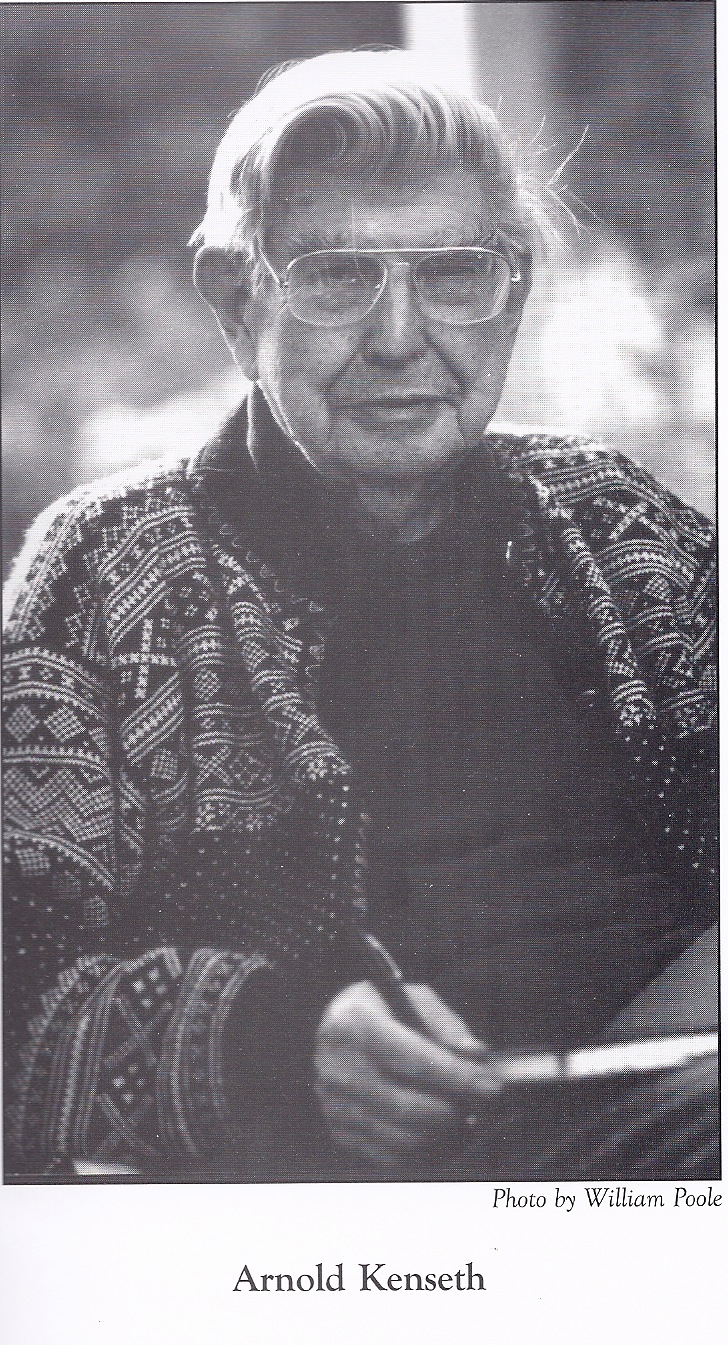
Where prose fails to capture this paradox poetry frequently does better.  I have often turned to the poetry of my friend Arnold Kenseth, who died in 2003, especially the collection of poems he entitled “Reflections of an Unprofitable Servant.” Here’s one of my favorites:

Ordination

I was anointed. A fire. Yes, I tell you.
An adazzle. His rare thump numbed me, awed
Me down to size and up to Him. Prayed, pawed
By the laying on of hands, myself anew
And aloft; I became lion to roar Him,
Eagle to lift Him, donkey to bear Him. I,
In that sunburst, languaged with seraphim,
Promised myself to be (Ha!) His emissary.

I did not, friends, manage much. True, I found
Fluency, but not roar. I have been sparrow;
And though jackass as most, I could not be least
Even for Him.  He was scarlet and vast
And radiant and restful. He sang such sound
I heard the earth unloose itself from sorrow.

(Arnold Kenseth, Seasons and Sceneries, Windhover Press, 2002)

Unknown's avatar

My Most Popular Blogposts of 2011

This was a big year for my blog.  First of all I changed the name from “Retired Pastor Ruminates” to “When I Survey . . .” This better describes the eclectic nature of this blog, and reflects my new belief that I am not retired but merely self-unemployed.

Most of my surveying takes place out the back porch (or back windows in cold weather) and I change the header picture to reflect what it is I see as I look out over the marsh behind my house.

This year I also purchased the domain name “richardlfloyd.com” and made the change from Blogger to WordPress with help from my antipodean friend Jason Goroncy who came to visit in June.  Thanks Jason.

Alas, it took awhile for folks and search engines to find the new site and name and I fell off of most of the blogrolls I was on.  The redirect to the new site only sends you to the home page, so it was harder for people to find specific posts from the past.  Time will take care of this.

One of the highlights of the year was an eight-week series of guest blogs on hope I did for Darkwood Brew, which describes itself as “a renegade exploration of Christian faith for the modern world which blends ancient contemplative practices with cutting-edge interactive web technology, world-class music, arts, biblical scholarship, and special guests from around the globe via Skype.”)  Some of these posts on hope were among the most popular of the year.

So here are the most popular posts of the year:

  1. The Future of Newspapers:  The Third Annual Martin Langeveld Interview
  2. Chicken Little Theology
  3. Meeting an on-line friend in the flesh: My travels with Jason
  4. I am not optimistic, but I am hopeful
  5. Hope and the Spirit
  6. Rejoice! Rejoice!  A Sermon for the Third Sunday in Advent
  7. Be careful what you write for
  8. Reflections on the New Century Hymnal
  9. Ruminations on hermeneutics for adult Christian Education
  10. Ruminations about the the end of the world on May21: Howard Camping and William Miller

On the all-time list and among the most visited this year are my two cris de coeur on clergy burnout and abuse, The Ministry and its Discontents:  Pastors in Peril, and Ten Highly Effective Strategies for Crushing your Pastor’s Morale.

Thanks for visiting and drop by again from time to time in 2012.

Unknown's avatar

“Rejoice! Rejoice!” A Sermon for the Third Sunday of Advent

There is something beautiful and mysterious about Advent, but there is, at the same time, something unsettling, darkly anxious, almost threatening about it. The Advent mood is hard to put into words. It is often captured better by its hymns, which are often dark and brooding, sung in a minor key.

The scripture lessons for Advent set the tone with their continued prophetic calls for repentance, the dire warnings to “wait and watch,” the urgency of preparation for what is coming. We hear about those who are unprepared for God, tenants who are surprised by the sudden appearance of their long-absent landlord, sleepy bridesmaids waiting with their empty oil-lamps for the bridegroom to come.

In short, it’s an expectant season, a season of being primed and pumped, and there is a nervous edge to the waiting. Lauren Winner, in her charming book Girl Meets God says of Advent, “The waiting is meant to be a little anxious. I picture Jane Austen heroines. They never are quite sure that their intended will come.”

But the Advent mood undergoes a dramatic change today, on this Third Sunday of Advent. The lessons lose their menace and begin to dance a bit. Suddenly, the warnings turn into promises. We hear of deserts blossoming, the seas exulting, and the trees of the field clapping their hands, so that if there were one word to capture the new mood it would have to be joy!

Traditionally this Third Sunday of Advent is called Gaudete Sunday, from the Latin for joy, and it is a day for rejoicing.

But perhaps some of you don’t feel like rejoicing. Perhaps your own mood is more like the rest of Advent, darker, more anxious, somewhat unsettled, for any number of reasons, not least of which might be the state of the world.

The news of the world is always a distressed word, a word full of sadness and anger, a word tinged with fear and heavy with regret. Perhaps that is why the darker mood of the Advent season speaks to us at times more authentically than its more joyous mood. Because the news of the world in which we live is so often itself such a dark unsettled word.

Whether we recognize it or not we come to church to hear a counter-Word. We come burdened by our occupations and pre-occupations, weighed down by both the demands of daily living and the larger societal and global worries that clamor for our attention. We often think we have things pretty much figured out, but there are nagging areas of uncertainty about our fate and future.

We come perhaps unsure how reliable even the words we hear in church might be. The New Yorker last week had a cartoon in which a man is shaking hands with a minister at the door of a church.  “Good sermon, Reverend,” he says, “but that God stuff is pretty far-fetched.”

Yes, it is. To the ears of the world the Good News often sounds like too-good-to be-true news. And a weekly hour’s religious interlude away from the world’s worries may not be enough to get us ready for rejoicing.

Nevertheless, on this Third Sunday in Advent we are admonished to rejoice. And in its wisdom the church has placed this rejoicing season in the midst of the heavier Advent mood, has placed today’s major key joyfulness amid the plaintive longing of the rest of the season, whose words are not words of hope and promise so much as words of warning, dire words that leave us judged.

And you can see the transition in today’s Old Testament lesson, which starts out in the usual Advent minor key in the first chapters.

But then listen to these words from Chapter three:
“Sing aloud, O daughter Zion;

“Shout, O Israel!
“Rejoice and exult with all your heart,

O daughter Jerusalem!

The Lord has taken away the judgments against you . . .

“The Lord your God is in your midst,

“He will rejoice over you with gladness

“He will renew you in his love;

“He will exult over you with loud singing as on a day of festival.”

So how does the story get from Chapter 1 to Chapter 3, from judgment to mercy; from wrath to tender forgiveness; from fear to rejoicing, from death to life?

The answer is that the God who comes to be our judge is the same God who comes to be our Savior. This is what holds the waiting and rejoicing moods of Advent together.

God has taken the sentence that we deserve and has taken it upon himself. In Christ our judgment has been removed and the enemy has been turned away at the gates. We can rejoice as prisoners who have received a stay of execution. The Good News is like a governor’s pardon that arrives by the last post.

Such a reprieve is cause for rejoicing. Those who would have been given over to death by the word of the law are now brought to life by the life-giving word of the Gospel. God turns our death into life, our shame into praise. No wonder St. Paul commands us to rejoice!

But the rejoicing is not just on our part. We are not the only ones rejoicing this Advent. God rejoices along with those whose sentence he has overturned. Even God sings,

Because God is a lover and invites us to love him in return. The Christian story is above all a love story. It is not about something called religion, but it is all about the love God has for us. God wants us for himself. He wants us as lovers. This is the God who heals and saves, the God who gives meaning and hope to the downcast and new life to the dead. This is God, the Father of our Lord Jesus Christ and our Father, the God worth waiting for, and working for, and praying to and rejoicing with.

This is the God that our ancestors have worshipped in this building since 1853 and in two previous meetinghouses on this site going back to 1764. This is the God we pray will bring many to himself in this place in the years to come, so that in this place 150 years from now people, will hear the Good News of his love.

And so we rejoice and sing.

The Reverend Dr. Richard L. Floyd.
A sermon given at First Church of Christ in Pittsfield, Massachusetts on
December 14, 2003.

Unknown's avatar

Hope and the Spirit

“The wind blows wherever it pleases,” Jesus once said to Nicodemus, “You hear its sound, but you cannot tell where it comes from or where it is going.”  (John 3:8  NIV)

As I am writing this I look out the window and watch the last of the lovely New England leaves falling down in the face of a stiff wind along with the occasional batch of snow flurries. I cannot see the wind, but I can see the trees swaying from its power and the leaves coming down.

By analogy (and not a pristine one, I admit) we cannot see God’s Spirit, but we can (and do) see the effects of it in our lives and our world.

Both the Hebrew word and the Greek word for “spirit” also mean “wind” and “breath,” all very real but unseen.  Like the wind God’s free activity is real but unseen.  But unlike the wind, God’s activity is not impersonal.

It is a temptation to imagine the Spirit of God as impersonal, something like “the Force” in Star Wars, but that would be a misrepresentation of God, at least of the Christian God revealed in Jesus Christ.

If we stay with the wind analogy we can see that God’s Spirit acts on both us, and our world, in unseen but real ways from outside ourselves.  So we cannot possess the Spirit of God, which presents a real problem for contemporary Americans because we are so very much into possessing.

We have even turned the word “spiritual” (a word that should be approached with great caution) into a human attribute, something we possess.  But if we think of God’s Spirit as like the wind, the truly spiritual person would be the one not possessing some intrinsic attribute, but the one most open to being moved by the unseen but real activity of God.

We might call this openness to the unseen activity of God “faith.”  If we project this openness into the future we might call it “hope.”  And this is where I think that the Spirit is a resource for hope.

Going back to my first post on hope eight weeks ago I named a faithless attitude “functional atheism,” which refers to the belief that it all depends on us.  I wrote that this attitude is even alive and well in the church.  Of course, you can go too far in the other direction.

Which is what I like about imagining the Spirit’s activity to be “wind-like;” we are not pressed into a kind of determinism that robs us of our freedom.  The opposite of “functional atheism” might be ideas of God that understand us to be mere marionettes that God moves around at will as if by strings.  A God of holy love does not coerce us!

When I am hopeless about the future it is often because I am projecting the way things are (in myself, in my society, and in the world) into an imagined future that is more or less the same (or worse!)

But openness to God’s Spirit means that the future is not just the present projected into the future.  The unseen but very real personal activity of the living God is working in us and around us to insure a far different future than we could ever imagine from looking at our present.

Faith is not just passively waiting for that future to appear, but to be actively working (as best we know how) for it to come about.  This is why Christians pray, “Thy will be done, on earth as it is in heaven.”

Who knows where the fresh winds of God’s Spirit will be made manifest?  That gives me hope.

(This is the eighth and final guest post I am blogging for an eight-week series called: “Hope-A Pessimist’s Guide” on Darkwood Brew, which describes itself as “a renegade exploration of Christian faith for the modern world which blends ancient contemplative practices with cutting-edge interactive web technology, world-class music, arts, biblical scholarship, and special guests from around the globe via Skype.”)

Unknown's avatar

Beauty and Time

Scott Russell Sanders tells a charming story about his daughter’s wedding.  He is in the vestibule of the church with the wedding party. “Clumsy in my rented finery—patent leather shoes that are a size too small and starched shirt and stiff black tuxedo—I stand among these gorgeous women like a crow among doves. I realize that they are not gorgeous because they carry bouquets or wear silk dresses, but because the festival of marriage has slowed time down until any fool can see their glory.”  (Hunting for Hope, p 140)

Time doesn’t really slow down, of course, but we all know what he means. New Testament Greek is better at this than English since it has two words for time.  There is chronos, which is sequential time, “clock time” we might say, and kairos, which is special time, “the fullness of time.”  Chronos is quantitative and kairos is qualitative.

Sanders’ perception of the beauty of the wedding party is a moment of kairos, and his image of time slowing down is wonderfully descriptive of how kairos feels.

It is also apt that Sanders links this imagined slowing down of time with beauty, because the New Testament Greek word for beautiful derives from the word for hour.  To be beautiful was to be “in one’s hour.”  Ripe fruit was considered beautiful, and a young person trying to appear older or an older person trying to appear younger was an offense against beauty,

Another place where time can seem to slow down is in worship, when the distance between time and eternity is collapsed, and we get a sense of being part of a great company of saints living and dead across the span of time and space: the “mystic sweet communion with those whose rest is won.”

These moments of kairos, whether at a marriage or at a church service or eating a ripe peach, are gifts of insight that help us make sense of the rest of our time, the quotidian chronos of living.

Christians have long imagined themselves as participants in God’s greater story, with its trajectory through time from Creation to Consummation.  Along the way there are wonderful moments of kairos, such as the coming of Christ, described beautfully here in the first verse of Carl Daw’s Advent/Christmas hymn:

When God’s time had ripened,
Mary’s womb bore fruit,
scion of the Godhead,
sprung from Jesse’s root:
so the True Vine branches
from the lily’s stem,
the Rose without blemish
blooms in Bethlehem.

(This is the seventh guest post I am blogging for an eight-week series called: “Hope-A Pessimist’s Guide” on Darkwood Brew, which describes itself as “a renegade exploration of Christian faith for the modern world which blends ancient contemplative practices with cutting-edge interactive web technology, world-class music, arts, biblical scholarship, and special guests from around the globe via Skype.”)