Unknown's avatar

My Most Popular Blogposts of 2011

This was a big year for my blog.  First of all I changed the name from “Retired Pastor Ruminates” to “When I Survey . . .” This better describes the eclectic nature of this blog, and reflects my new belief that I am not retired but merely self-unemployed.

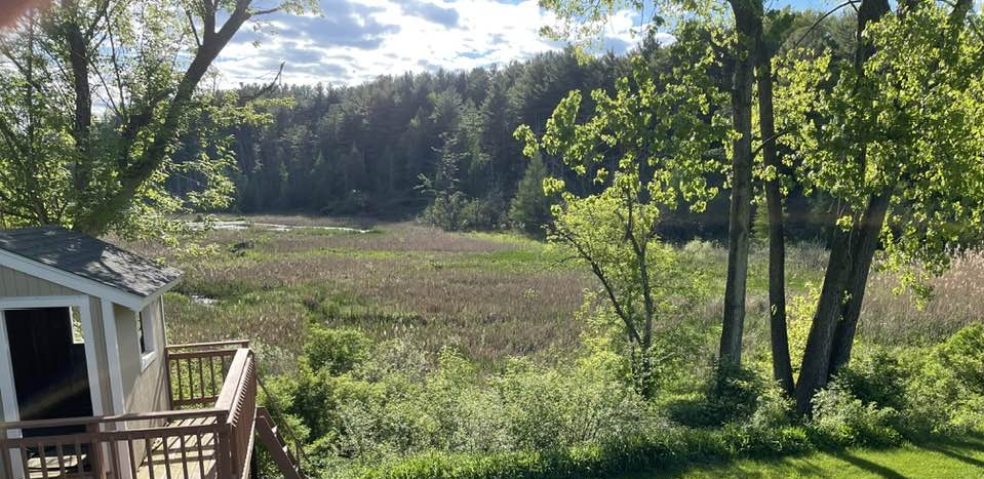
Most of my surveying takes place out the back porch (or back windows in cold weather) and I change the header picture to reflect what it is I see as I look out over the marsh behind my house.

This year I also purchased the domain name “richardlfloyd.com” and made the change from Blogger to WordPress with help from my antipodean friend Jason Goroncy who came to visit in June.  Thanks Jason.

Alas, it took awhile for folks and search engines to find the new site and name and I fell off of most of the blogrolls I was on.  The redirect to the new site only sends you to the home page, so it was harder for people to find specific posts from the past.  Time will take care of this.

One of the highlights of the year was an eight-week series of guest blogs on hope I did for Darkwood Brew, which describes itself as “a renegade exploration of Christian faith for the modern world which blends ancient contemplative practices with cutting-edge interactive web technology, world-class music, arts, biblical scholarship, and special guests from around the globe via Skype.”)  Some of these posts on hope were among the most popular of the year.

So here are the most popular posts of the year:

  1. The Future of Newspapers:  The Third Annual Martin Langeveld Interview
  2. Chicken Little Theology
  3. Meeting an on-line friend in the flesh: My travels with Jason
  4. I am not optimistic, but I am hopeful
  5. Hope and the Spirit
  6. Rejoice! Rejoice!  A Sermon for the Third Sunday in Advent
  7. Be careful what you write for
  8. Reflections on the New Century Hymnal
  9. Ruminations on hermeneutics for adult Christian Education
  10. Ruminations about the the end of the world on May21: Howard Camping and William Miller

On the all-time list and among the most visited this year are my two cris de coeur on clergy burnout and abuse, The Ministry and its Discontents:  Pastors in Peril, and Ten Highly Effective Strategies for Crushing your Pastor’s Morale.

Thanks for visiting and drop by again from time to time in 2012.

Unknown's avatar

“Rejoice! Rejoice!” A Sermon for the Third Sunday of Advent

There is something beautiful and mysterious about Advent, but there is, at the same time, something unsettling, darkly anxious, almost threatening about it. The Advent mood is hard to put into words. It is often captured better by its hymns, which are often dark and brooding, sung in a minor key.

The scripture lessons for Advent set the tone with their continued prophetic calls for repentance, the dire warnings to “wait and watch,” the urgency of preparation for what is coming. We hear about those who are unprepared for God, tenants who are surprised by the sudden appearance of their long-absent landlord, sleepy bridesmaids waiting with their empty oil-lamps for the bridegroom to come.

In short, it’s an expectant season, a season of being primed and pumped, and there is a nervous edge to the waiting. Lauren Winner, in her charming book Girl Meets God says of Advent, “The waiting is meant to be a little anxious. I picture Jane Austen heroines. They never are quite sure that their intended will come.”

But the Advent mood undergoes a dramatic change today, on this Third Sunday of Advent. The lessons lose their menace and begin to dance a bit. Suddenly, the warnings turn into promises. We hear of deserts blossoming, the seas exulting, and the trees of the field clapping their hands, so that if there were one word to capture the new mood it would have to be joy!

Traditionally this Third Sunday of Advent is called Gaudete Sunday, from the Latin for joy, and it is a day for rejoicing.

But perhaps some of you don’t feel like rejoicing. Perhaps your own mood is more like the rest of Advent, darker, more anxious, somewhat unsettled, for any number of reasons, not least of which might be the state of the world.

The news of the world is always a distressed word, a word full of sadness and anger, a word tinged with fear and heavy with regret. Perhaps that is why the darker mood of the Advent season speaks to us at times more authentically than its more joyous mood. Because the news of the world in which we live is so often itself such a dark unsettled word.

Whether we recognize it or not we come to church to hear a counter-Word. We come burdened by our occupations and pre-occupations, weighed down by both the demands of daily living and the larger societal and global worries that clamor for our attention. We often think we have things pretty much figured out, but there are nagging areas of uncertainty about our fate and future.

We come perhaps unsure how reliable even the words we hear in church might be. The New Yorker last week had a cartoon in which a man is shaking hands with a minister at the door of a church.  “Good sermon, Reverend,” he says, “but that God stuff is pretty far-fetched.”

Yes, it is. To the ears of the world the Good News often sounds like too-good-to be-true news. And a weekly hour’s religious interlude away from the world’s worries may not be enough to get us ready for rejoicing.

Nevertheless, on this Third Sunday in Advent we are admonished to rejoice. And in its wisdom the church has placed this rejoicing season in the midst of the heavier Advent mood, has placed today’s major key joyfulness amid the plaintive longing of the rest of the season, whose words are not words of hope and promise so much as words of warning, dire words that leave us judged.

And you can see the transition in today’s Old Testament lesson, which starts out in the usual Advent minor key in the first chapters.

But then listen to these words from Chapter three:
“Sing aloud, O daughter Zion;

“Shout, O Israel!
“Rejoice and exult with all your heart,

O daughter Jerusalem!

The Lord has taken away the judgments against you . . .

“The Lord your God is in your midst,

“He will rejoice over you with gladness

“He will renew you in his love;

“He will exult over you with loud singing as on a day of festival.”

So how does the story get from Chapter 1 to Chapter 3, from judgment to mercy; from wrath to tender forgiveness; from fear to rejoicing, from death to life?

The answer is that the God who comes to be our judge is the same God who comes to be our Savior. This is what holds the waiting and rejoicing moods of Advent together.

God has taken the sentence that we deserve and has taken it upon himself. In Christ our judgment has been removed and the enemy has been turned away at the gates. We can rejoice as prisoners who have received a stay of execution. The Good News is like a governor’s pardon that arrives by the last post.

Such a reprieve is cause for rejoicing. Those who would have been given over to death by the word of the law are now brought to life by the life-giving word of the Gospel. God turns our death into life, our shame into praise. No wonder St. Paul commands us to rejoice!

But the rejoicing is not just on our part. We are not the only ones rejoicing this Advent. God rejoices along with those whose sentence he has overturned. Even God sings,

Because God is a lover and invites us to love him in return. The Christian story is above all a love story. It is not about something called religion, but it is all about the love God has for us. God wants us for himself. He wants us as lovers. This is the God who heals and saves, the God who gives meaning and hope to the downcast and new life to the dead. This is God, the Father of our Lord Jesus Christ and our Father, the God worth waiting for, and working for, and praying to and rejoicing with.

This is the God that our ancestors have worshipped in this building since 1853 and in two previous meetinghouses on this site going back to 1764. This is the God we pray will bring many to himself in this place in the years to come, so that in this place 150 years from now people, will hear the Good News of his love.

And so we rejoice and sing.

The Reverend Dr. Richard L. Floyd.
A sermon given at First Church of Christ in Pittsfield, Massachusetts on
December 14, 2003.
Unknown's avatar

Hope and the Spirit

“The wind blows wherever it pleases,” Jesus once said to Nicodemus, “You hear its sound, but you cannot tell where it comes from or where it is going.”  (John 3:8  NIV)

As I am writing this I look out the window and watch the last of the lovely New England leaves falling down in the face of a stiff wind along with the occasional batch of snow flurries. I cannot see the wind, but I can see the trees swaying from its power and the leaves coming down.

By analogy (and not a pristine one, I admit) we cannot see God’s Spirit, but we can (and do) see the effects of it in our lives and our world.

Both the Hebrew word and the Greek word for “spirit” also mean “wind” and “breath,” all very real but unseen.  Like the wind God’s free activity is real but unseen.  But unlike the wind, God’s activity is not impersonal.

It is a temptation to imagine the Spirit of God as impersonal, something like “the Force” in Star Wars, but that would be a misrepresentation of God, at least of the Christian God revealed in Jesus Christ.

If we stay with the wind analogy we can see that God’s Spirit acts on both us, and our world, in unseen but real ways from outside ourselves.  So we cannot possess the Spirit of God, which presents a real problem for contemporary Americans because we are so very much into possessing.

We have even turned the word “spiritual” (a word that should be approached with great caution) into a human attribute, something we possess.  But if we think of God’s Spirit as like the wind, the truly spiritual person would be the one not possessing some intrinsic attribute, but the one most open to being moved by the unseen but real activity of God.

We might call this openness to the unseen activity of God “faith.”  If we project this openness into the future we might call it “hope.”  And this is where I think that the Spirit is a resource for hope.

Going back to my first post on hope eight weeks ago I named a faithless attitude “functional atheism,” which refers to the belief that it all depends on us.  I wrote that this attitude is even alive and well in the church.  Of course, you can go too far in the other direction.

Which is what I like about imagining the Spirit’s activity to be “wind-like;” we are not pressed into a kind of determinism that robs us of our freedom.  The opposite of “functional atheism” might be ideas of God that understand us to be mere marionettes that God moves around at will as if by strings.  A God of holy love does not coerce us!

When I am hopeless about the future it is often because I am projecting the way things are (in myself, in my society, and in the world) into an imagined future that is more or less the same (or worse!)

But openness to God’s Spirit means that the future is not just the present projected into the future.  The unseen but very real personal activity of the living God is working in us and around us to insure a far different future than we could ever imagine from looking at our present.

Faith is not just passively waiting for that future to appear, but to be actively working (as best we know how) for it to come about.  This is why Christians pray, “Thy will be done, on earth as it is in heaven.”

Who knows where the fresh winds of God’s Spirit will be made manifest?  That gives me hope.

(This is the eighth and final guest post I am blogging for an eight-week series called: “Hope-A Pessimist’s Guide” on Darkwood Brew, which describes itself as “a renegade exploration of Christian faith for the modern world which blends ancient contemplative practices with cutting-edge interactive web technology, world-class music, arts, biblical scholarship, and special guests from around the globe via Skype.”)

Unknown's avatar

Beauty and Time

Scott Russell Sanders tells a charming story about his daughter’s wedding.  He is in the vestibule of the church with the wedding party. “Clumsy in my rented finery—patent leather shoes that are a size too small and starched shirt and stiff black tuxedo—I stand among these gorgeous women like a crow among doves. I realize that they are not gorgeous because they carry bouquets or wear silk dresses, but because the festival of marriage has slowed time down until any fool can see their glory.”  (Hunting for Hope, p 140)

Time doesn’t really slow down, of course, but we all know what he means. New Testament Greek is better at this than English since it has two words for time.  There is chronos, which is sequential time, “clock time” we might say, and kairos, which is special time, “the fullness of time.”  Chronos is quantitative and kairos is qualitative.

Sanders’ perception of the beauty of the wedding party is a moment of kairos, and his image of time slowing down is wonderfully descriptive of how kairos feels.

It is also apt that Sanders links this imagined slowing down of time with beauty, because the New Testament Greek word for beautiful derives from the word for hour.  To be beautiful was to be “in one’s hour.”  Ripe fruit was considered beautiful, and a young person trying to appear older or an older person trying to appear younger was an offense against beauty,

Another place where time can seem to slow down is in worship, when the distance between time and eternity is collapsed, and we get a sense of being part of a great company of saints living and dead across the span of time and space: the “mystic sweet communion with those whose rest is won.”

These moments of kairos, whether at a marriage or at a church service or eating a ripe peach, are gifts of insight that help us make sense of the rest of our time, the quotidian chronos of living.

Christians have long imagined themselves as participants in God’s greater story, with its trajectory through time from Creation to Consummation.  Along the way there are wonderful moments of kairos, such as the coming of Christ, described beautfully here in the first verse of Carl Daw’s Advent/Christmas hymn:

When God’s time had ripened,
Mary’s womb bore fruit,
scion of the Godhead,
sprung from Jesse’s root:
so the True Vine branches
from the lily’s stem,
the Rose without blemish
blooms in Bethlehem.

(This is the seventh guest post I am blogging for an eight-week series called: “Hope-A Pessimist’s Guide” on Darkwood Brew, which describes itself as “a renegade exploration of Christian faith for the modern world which blends ancient contemplative practices with cutting-edge interactive web technology, world-class music, arts, biblical scholarship, and special guests from around the globe via Skype.”)

Unknown's avatar

‘Tis the gift to be simple

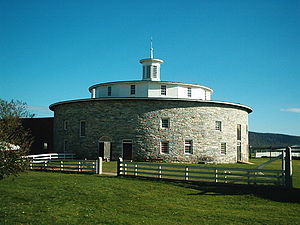
Just down the road from my home in Pittsfield, Massachusetts is the Hancock Shaker Village, a living history museum on the site of a former Shaker community.  It is a beautiful spot, with oft-photographed buildings such as this Round Stone Barn.  Both my children worked there during their teen years, and my son was a costumed interpreter for a couple summers.

The Shakers who once lived here at Hancock were part of a 19th Century utopian community.  They practiced racial and gender equality, pacifism, celibacy (which was their undoing), and what they called “simplicity.”  Simplicity meant placing a higher value on people’s spiritual life than on their possessions or achievements.

This attitude is beautifully expressed in their best-known song, “Simple Gifts,” written in 1848 by Shaker Elder Joseph and put to music by Joseph Brackett:

‘Tis the gift to be simple, ’tis the gift to be free
‘Tis the gift to come down where we ought to be,
And when we find ourselves in the place just right,
‘Twill be in the valley of love and delight.
When true simplicity is gain’d,
To bow and to bend we shan’t be asham’d,
To turn, turn will be our delight,
Till by turning, turning we come ’round right.

The turning refers to movements in a dance, for the Shakers were known for their use of dance in worship.

The lyric begins ‘Tis the gift to be simple, ‘this the gift to be free . . .” and there is a deep truth in these words.  In a consumer society such as ours it becomes far too easy for us to derive our identities from our possessions.  The irony is that in giving so much value to our possessions we let them possess us.

The Shakers put more emphasis on being than on having.  One of their axioms was “hands to work, and hearts to God.”

They understood there was something deeply spiritual about simplicity.  That less is sometimes more.  That quality is more important than quantity.

Can we learn from the Shakers ways of living and acting in simplicity that are, in today’s jargon, sustainable?   In this regard the Shakers were ahead of their time, in knowing how to live simply in ways that were kind to the planet and help to insure a hopeful future for it and it’s citizens.

(This is the sixth guest post I am blogging for an eight-week series called: “Hope-A Pessimist’s Guide” on Darkwood Brew, which describes itself as “a renegade exploration of Christian faith for the modern world which blends ancient contemplative practices with cutting-edge interactive web technology, world-class music, arts, biblical scholarship, and special guests from around the globe via Skype.”)

Unknown's avatar

Is there room in our hope for justice?

I try to imagine the prophet Amos at a fancy cocktail party.  He would be that guy, who seeing your new Mercedes in the driveway, would be compelled to go into detail about global warming from greenhouse gases, then move on without a breath to discuss the appalling inequalities of wealth between the richest and the poorest.

As you try to escape his conversational grip to enjoy that first sip of your martini, he would remind you of how much grain goes into making spirits that could be used to feed the hungry.

Such imaginings are pure fancy, of course, since people like Amos, obsessed with justice and injustice, never get invited anywhere because they are too depressing to be around.

And his hard words seem even more dire when you realize that Amos’ warnings aren’t merely grumpy pronouncements, but were understood as the Word of God delivered by the prophet.

So listen to what God says about religious practices:

I hate, I despise your religious festivals;
your assemblies are a stench to me.
Even though you bring me burnt offerings and grain offerings, I will not accept them.
Though you bring choice fellowship offerings,
I will have no regard for them.
Away with the noise of your songs!
I will not listen to the music of your harps.
But let justice roll on like a river,
righteousness like a never-failing stream!

If we picture the twin pillars of Jesus’ summary of the law, love of God and love of neighbor, as the vertical dimension and the horizontal dimension, why is it that our conceptions of Christian hope are almost exclusively focused on the vertical?

How many of our questions about the future are about our individual relationship with God? “What happens to me after I die?”  “Will I be saved?”

Do not passages such as this one from Amos remind us that God is very much concerned not only with what we might call our religion or spirituality, but also with justice and righteousness; not only about the health of the individual soul, but also about the health of the shared life in community?

And so our imaginings about Christian hope would be more biblical and faithful if they included a social dimension, as we think about both here and hereafter.

There is plenty of rich imaginative material in the Bible to work with.  For example, in Revelation 21 the future in the end time is a city, a New Jerusalem, described like this:

Look! God’s dwelling place is now among the people, and he will dwell with them. They will be his people, and God himself will be with them and be their God.  ‘He will wipe every tear from their eyes. There will be no more death’ or mourning or crying or pain, for the old order of things has passed away.

It is a vision of a community with God at the center, where God’s love has overcome all that afflicts our world including injustice.  And one interesting feature of this new community is that there is no temple in it.  That’s right, no need for religion, which apparently is God’s provisional strategy to get us from here to there.

So in the meantime, we need to ask ourselves as we imagine the future of our world, “Is there room in our hope for justice?”

(This is the fifth guest post I am blogging for an eight-week series called: “Hope-A Pessimist’s Guide” on Darkwood Brew, which describes itself as “a renegade exploration of Christian faith for the modern world which blends ancient contemplative practices with cutting-edge interactive web technology, world-class music, arts, biblical scholarship, and special guests from around the globe via Skype.”)

Photo: R.L. Floyd

Unknown's avatar

All my hope on God is founded

I’ve been ruminating on this week’s Darkwood Brew theme of “faithfulness,” and its relationship to hope.

When a movie, based on a book, is made, we ask “Is it faithful to the original?”  Or when a copy of a work of art is reproduced its quality is judged by its faithfulness.

This is how I like to think about our faith, as an imperfect reproduction of the perfect faithfulness of God.  This way of thinking puts the focus where it properly belongs, on God.

There is a lovely English hymn with a text by the poet Robert Bridges called  “All my hope on God is founded.”  On one of my English study sabbaticals I first heard it sung by a boys choir in one of the Oxford colleges, and it has been a favorite of mine ever since.

The first verse of the hymn gives expression to what I have been saying about our faith reproducing God’s faithfulness.  The verse says:

“All my hope on God is founded;
he doth still my trust renew,
me through change and chance he guideth,
only good and only true.
God unknown,
he alone
calls my heart to be his own.”

The final line, “calls my heart to be his own,” captures the idea that God’s perfect faithfulness invites us to faith, however imperfect ours must ever be.

William Ames, the great exiled English Puritan of the early seventeenth century, put it like this:

“Faith is the virtue by which, clinging-to the faithfulness of God, we lean upon him, so that we may obtain what he gives to us.”

Or as the hymn says, “(God) doth still my trust renew.” Think of faith as a renewable resource, an everlasting stream flowing from the perfect faithfulness of God.  Through “change and chance” God guides us, and invites us to be full of faith.

(This is the fourth guest post I am blogging for an eight-week series called: “Hope-A Pessimist’s Guide” on Darkwood Brew, which describes itself as “a renegade exploration of Christian faith for the modern world which blends ancient contemplative practices with cutting-edge interactive web technology, world-class music, arts, biblical scholarship, and special guests from around the globe via Skype.”)

(Photo: R.L. Floyd)

Unknown's avatar

Leaning into God’s Future

In my post a couple of weeks ago I wrote about a kind of “functional atheism” (even in the church) that thinks the future depends entirely on us. Pastor Eric Elnes made this comment:

The term “functional atheism” resonates. Nothing against atheists. It’s just that Christians should be leaning into the trust in God’s existence, power, love, grace, and ability to connect with us more than they often do.

I’ve been ruminating on Eric’s graceful use of the word “leaning” as a useful way to think about Christian hope.

In one sense Christian hope is easy; it is firmly rooted in Jesus Christ.  This was the theme of The Second World Council of Churches assembly meeting in Evanston, IL in 1954: ”Christ— the Hope of the World.”  This was the only WCC assembly ever held here in the United States, and it was at the height of the Cold War. Hope, then as now, was in short supply.

But if there is wide agreement among Christian that our hope lies in Christ, there is disagreement about just what that means.  When I coined the phrase “functional atheism,” I was thinking of my own mainline tribe, who sometimes act as if we can do it all by ourselves if we just try hard enough,  if we work hard enough for peace and justice and the environment.  

That’s all good stuff, but the fact is we can’t make the future by ourselves, and in trying to do so, will eventually burn out and become discouraged.  The problem is that we want the kingdom, but not the king. We think you can somehow distill the teachings of Jesus into a set of values, but you can’t. We need to remember that the first Christians not only prayed, “Thy kingdom come, thy will be done, on earth as it is in heaven” but also “Come Lord Jesus!”

But there is a different danger in Christian hope that wants to abandon this world for a better future one.  That somehow God will just take care of everything without us.  A quick look at the Scriptures should remind us that our God’s activities are mediated through people, willing and unwilling, and do not drop from the sky.  And to abandon God’s good earth is a sin against the Creator.

So some of us hope for too little from God and some hope for too much (or at least the wrong things.)  This is where I think the phrase “leaning into God’s future” is useful.  In the Bible, and especially in the book of Isaiah, the idea of “waiting on the Lord” is a recurring feature.  This sounds pretty passive, and might be mistaken for the position I just described.  But “waiting” in Isaiah is anything but passive.  

In Chapters 40 to 55 Isaiah speaks to a people who have every right to be hopeless.  They have just lost the three defining marks of their mission and identity: their land, their temple, and their king.  They are exiles in a foreign land.  Yet, Isaiah tells them to wait on the Lord. This waiting involves continuing to worship, study and pray. Continuing to be a community that listens for God’s Word and tries to live out the truth as they know it in faith, hope, and love.

Isaiah invites them to “lean into God’s future.”  And that is good advice for people of faith in any age.  In Eric’s words: “Christians should be leaning into the trust in God’s existence, power, love, grace, and ability to connect with us more than they often do.”

(This is the third guest post I am blogging for an eight-week series called: “Hope-A Pessimist’s Guide” on Darkwood Brew, which describes itself as “a renegade exploration of Christian faith for the modern world which blends ancient contemplative practices with cutting-edge interactive web technology, world-class music, arts, biblical scholarship, and special guests from around the globe via Skype.”)

Unknown's avatar

Chicken Little Theology

In his Skype conversation with Eric on Darkwood Brew, author Scott Russell Sanders said that one of the main reasons we so need to hunt for hope today is because it is so easy to become hopeless in this information age.

He made reference to the proliferation of news that stresses us and helps create a climate in which hope is difficult.  There is so much news, and so much of it is bad, because he said, quoting the old newspaper adage, “If it bleeds, it leads.”

I think he is quite right about this, and it got me ruminating on my many years in the church when I experienced what I came to call “Chicken Little” theology.

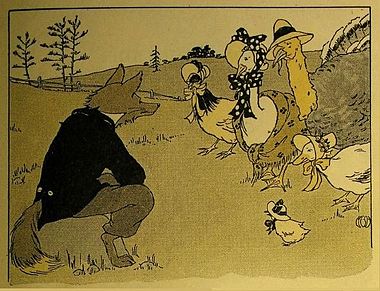
You will recall the folktale, which is told in many versions around the world, about a chick named Chicken Little who gets hit on the head by an acorn and believes that “the sky is falling.” This is clearly not the smartest creature that ever lived, but is a chick of action. Chicken Little decides to go warn the king and on the way meets a variety of other animals with funny rhyming names like Henny Penny and Turkey Lurky, and convinces them all that “the sky is falling.”  In the original versions the animals usually come to a bad end, as in being lured into a fox’s den and eaten, but this was deemed not suitable for small children so in the current versions they are rescued.

Many years ago, in the days before the Great Recession, I was sitting in a church meeting, and I can’t remember for the life of me whether it was a budget meeting or a stewardship meeting, but it doesn’t matter to my story, because either can induce the kind of hopelessness that I began sensing in the room.

Now these were good people, the kind that give generously of their time and their money to make the world a better place, so I want to be clear that the world is not divided into the hopeless and the hopeful.  All of us are prone to bouts of hopelessness at times, but the point I want to make, and I think it is what Sanders was saying, is that hopelessness is often a social phenomenon.

And this is where Chicken Little comes in.  I was sitting at this meeting with all these faithful church people, and the more people talked the more fear there was in the room.  You could sense it, you could almost smell it.  Fear for the future, fear for the congregation’s prospects.

And sometimes a pastor’s job is to remind people who we are and whose we are, so I spoke up and said, “The first words in the preamble to our church (The United Church of Christ) are:  ‘Jesus Christ is the sole head of the church,’ but the way we’ve been talking you might think it was Chicken Little.”  This became known as my “Chicken Little” speech, and after many years the old hands on the committees waited with amusement for it every fall when we did our budget and pledging. 

Chicken Little theology is bad theology.  It misinterprets experience and makes faulty plans based on them.  Chicken Little theology is turning a fallen acorn into the end of the world.  

It is true that some of the things we have to worry about are not trifles like a fallen acorn. That is one of the things I am enjoying as I read Sanders’ book; that he doesn’t flinch at the world’s problems in his hunt for hope.

My first Chicken Little speech came at a time when the economy was robust and the church was getting over twenty percent return on our invested funds. And I remember saying, “If we are talking like this now, what will be saying when times are actually hard?”

And sadly, I was prophetic, because times are now hard.  We have seen that things can collapse such as the stock market and the housing market and the Boston Red Sox (sorry to mention it, but it just happened and is on my mind.)

But such collapses are not the final word about the future.  The prognosticators have a very low batting average when it comes to predicting the future.  One needs a better theology than Chicken Little theology if one is to live one’s life, in all circumstances, full of hope.

(This is the second guest post I am blogging for an eight-week series called: “Hope-A Pessimist’s Guide” on Darkwood Brew, which describes itself as “a renegade exploration of Christian faith for the modern world which blends ancient contemplative practices with cutting-edge interactive web technology, world-class music, arts, biblical scholarship, and special guests from around the globe via Skype.” The book referred to is “Hunting for Hope” by Scott Russell Sanders)

Unknown's avatar

I am not optimistic, but I am hopeful

When my children were teenagers they got hold of my yearbook from senior year in high school and got a big chuckle when they saw that I had been named “class optimist.” They recognize me more as a Murphy’s Law, cup half-empty, kind of guy.  If I were a Winnie The Pooh character I would have to be Eeyore, the gloomy stuffed donkey.

I had forgotten about being class optimist, and to this day it mystifies me how I was chosen.  Perhaps the yearbook staff was being ironic.  I had, then as now, a dark sense of humor.  My favorite movie back then was a Peter Seller’s cynical Cold War comedy called “The Mouse that Roared” about a doomsday atomic bomb shaped like a football.

That year my Mom was dying of cancer, my Dad was losing his business, the town was taking our historic old house by eminent domain to build a school addition.  So there wasn’t much to be optimistic about, and although my lines have often landed in pleasant places in the decades that have followed, I remain always ready for the other shoe to drop.

To make matters worse I have carefully and painfully honed my lack of optimism since high school by becoming a long-time Boston Red Sox fan, the team that is currently in one of the most historic end-of-season collapses in baseball history (as I expected).

So you could safely say that in general I am not naturally optimistic.

But I am hopeful.  And the reason I am hopeful has nothing at all to do with my disposition but has everything to do with God’s character, the God who has chosen to be with us and for us (and I mean all of us), the God revealed in Jesus Christ.

Those of you who know me know that my Christian faith is a cross-centered faith.  Perhaps because of the setbacks of my adolescence when I came back to the faith as a young adult it was through the cross.  It made sense of my life and my world. There on the cross we humans, in the name of religion and politics, murdered the Lord of Glory.

But he didn’t stay dead.  God raised him up, and because of that we Christians now view the hopelessness of Good Friday in Easter light, with the 20/20 hindsight of faith.

We still live in a Good Friday world, as any perusal of the day’s news makes clear, but I am hopeful nonetheless, because I have an Easter faith that God is alive and real and Lord of the future.

We need more hope in the world (and in the church.)  There is a sort of functional atheism, even in the church, that believes it is all up to us, and that is a pretty hopeless thought. We certainly all have our parts to play, but the God who raised Jesus from the dead is the God who is always doing a new thing, so who ever knows what might happen next?  I certainly never expected the Iron Curtain to fall, or apartheid to end in South Africa, not that those incandescent moments in history solved all the problems of their regions or led us to the kingdom of God.  Still, they seem to me signs of unexpected grace.

Optimism, as a sort of hoping for the best, can be a denial of the real. But Christian hope faces the real.   Our hope springs from trust that in the future God will be the same God we have known in the past.  I am always curious to see what God might do next.

So when people ask me how I feel about the future, I say in truth, “I am not optimistic, but I am hopeful.”

(This is the first of eight guest posts I am doing in an eight-week series called: “Hope-A Pessimist’s Guide” on Darkwood Brew, which describes itself as “a renegade exploration of Christian faith for the modern world which blends ancient contemplative practices with cutting-edge interactive web technology, world-class music, arts, biblical scholarship, and special guests from around the globe via Skype.”)