Unknown's avatar

Can we know enough about God from observing the creation? Ruminations on a General Revelation

DriftwoodI was preparing this morning to lead Romans using the new small group study book that Mike Bennett and I wrote for the UCC’s “Listen Up!” Bible Study Series.
I came across that vexing section of Romans 1, no not that one, this one: “For what can be known about God is plain to them, because God has shown it to them. Ever since the creation of the world his eternal power and divine nature, invisible though they are, have been understood and seen through the things he has made.” (Romans 1: 19-20).

These verses have often been employed to put forth one or another versions of the idea of General Revelation, so I paid attention when a short while later, while I was wasting time on Twitter, I came upon a thoughtful blog post by J. Scott Jackson entitled Got General Revelation? Well, Isn’t that Special! Continue reading

Unknown's avatar

“Of Fig Trees and Second Chances” A Sermon on Luke 13:6-9

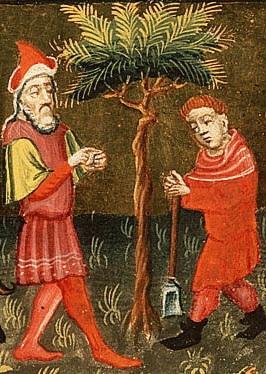
266_AlexanderMstrJHlsCrppWmnPrblBrrnFigKoninklijke_BibliotheekTheHague1430CROP-1Author T. C. Boyle has an intriguing short story entitled “Chicxulub.” Chicxulub is the name of an enormous asteroid (or perhaps a comet) that collided with the earth sixty-five million years ago on what is now the Yucatan peninsula, leaving an impact crater one hundred and twenty miles across, and twelve miles deep.

Boyle’s short story intersperses such episodes of catastrophic natural disasters with a story of one night in the life of one family. The main characters are a husband and wife, parents of a 17-year old daughter named Maddy. They receive a phone call from a hospital: “There’s been an accident!”

Apparently Maddy has been hit by a drunk driver while walking home from the Cineplex. They head to the hospital in that dream state of shock that overtakes those in the midst of disaster. At the hospital they are unable to get much information out of the staff. They are told she is in surgery. They wait and wait. Finally a young doctor comes out and speaks to them. He drops his eyes. “I’m sorry,” he tells them.

When I first read the story I was deeply moved, even though I knew it was a work of fiction. But Boyle was toying with his readers. He was toying with me. Because in the end we learn that Maddy is not dead. The dead girl on the gurney is a sixteen year old friend of hers, Kristi, who borrowed Maddy’s I.D. to get into an NC-17 movie in the next theater. Maddy gets another chance. Continue reading

Unknown's avatar

Coming Soon: A New Bible Study on Romans

RomansP1I am pleased to announce that the Bible study on Romans that Mike Bennett and I have been working on for so long can now be ordered through UCC Resources and will ship on March 1.
Romans, Part 1, Romans 1-8 and Romans, Part 2, Romans 9-16 are titles in the United Church of Christ’s LISTEN UP! Bible Study series.

Romans, Parts 1 and 2 are not ground-breaking new works of original Biblical scholarship, but rather teaching tools to be used by small groups in Bible studies. A leader’s guide is included in every workbook.

Mike and I together bring over a half-century of experience as pastors leading Bible studies in local congregations. Romans Part 1 and 2 brings our knowledge of how to make Bible study come alive.

Behind these studies we bring our own understanding of Romans from a lifetime of engagement with this important book. Mike has been influenced by two important commentaries on Romans by Professors at his alma mater Yale Divinity School, Leander Keck and David Bartlett. Mike is also a contributor to the Feasting on the Word series. Continue reading

Unknown's avatar

“Holy Weeping” A Sermon on Romans 12: 9 -18 and Revelation 21:1-4

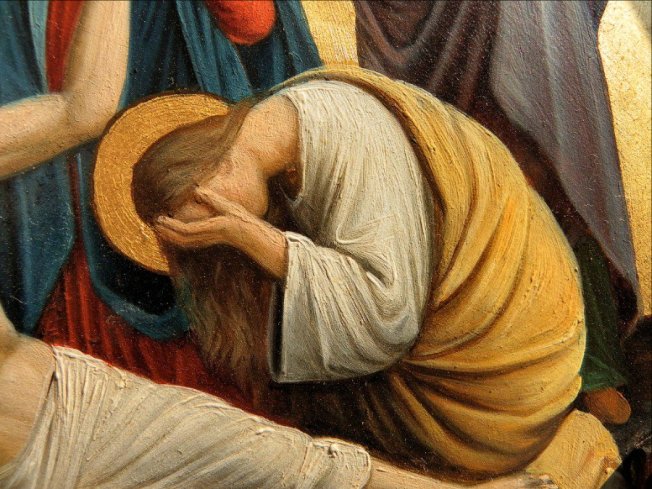
CryOur two scripture readings today both speak about crying. The first reading speaks to the church on earth today, what I was taught as a child to call the church militant, and the second reading speaks to the church in heaven, what I was taught to call the church triumphant. Perhaps those terms are too martial for us today, but by whatever names it is the distinction between the church here and the church hereafter.

In the first reading Paul admonishes the Roman Christians on how to be the church now, and one of the things he tells them they need to do is to “rejoice with those who rejoice and to weep with those who weep.”

The second reading is from the Revelation of St John the Divine. I have a soft spot for the writings of St John the Divine, as I was baptized at the Cathedral of St John the Divine in New York, which is the world’s largest gothic cathedral (so I come by my high church inclinations honestly.)

In this beautiful passage from Revelation, St. John describes the holy city, the New Jerusalem at the end of time and history. He says then there will be no more crying there because God will “wipe away every tear from their eyes.”

So in engaging these two texts about the here and the hereafter, I started thinking about the function of crying in our lives, and especially in the church. I did a little research on crying, and discovered that we don’t know all that much about it. There are several competing theories about why humans cry, including those theories of evolutionary biologists who think it may have some social function. Continue reading

Unknown's avatar

“The Miracle of Christmas” A Hymn for the Feast of the Incarnation

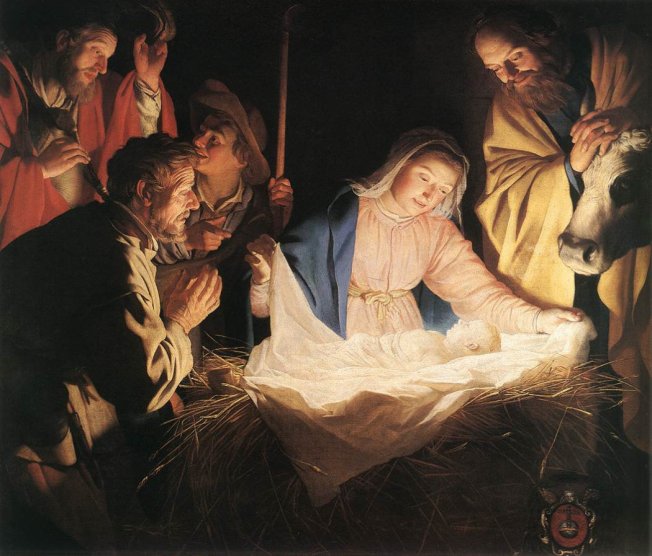
The Adoration of the Shepherds

The Miracle of Christmas
C.M.

He came to earth that winter night
to share our human frame.
A choir of angels took to flight
to glorify his name.

Some shepherds in a field nearby
were summoned to his birth,
And heard the angels raise the cry
of peace upon the earth.

They went to where the babe did lay,
and found a manger bare.
Some sheep and oxen in the hay,
and Mary, Joseph, there.

O mysteries no eye has seen,
no human ear has heard,
That God should come to such a scene,
and we should call him Lord.

The world’s vast empires rise and fall,
great Caesar lost his claim,
But Mary’s babe is all in all,
and Jesus is his name.

© 2001 Richard L. Floyd

Suggested tune: “Winchester Old”

(Photo: “Adoration of the Shepherds” by Gerard van Honthorst)

Unknown's avatar

“He’s Back!” A Christmas Story with a Happy Ending

Screen Shot 2015-12-23 at 2.55.33 PM

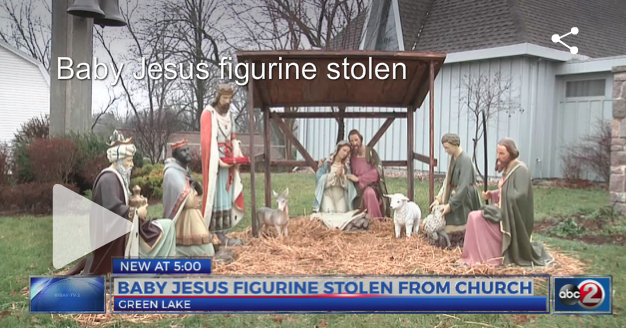
My friend and former Pittsfield colleague Karen Gygax Rodriguez is the Pastor of the Federated Church of Green Lake, Wisconsin. On the Second Sunday of Advent, December 6, the baby Jesus figurine was stolen from the church’s nativity scene.

The police investigated, but had no leads. They speculated that the thief was from outside Green Lake, since “everybody knows everybody here, and it would have been returned by now.” Continue reading

Unknown's avatar

Preparing for Christmas with a prayer from Karl Barth

Finish

On this Fourth Sunday of Advent my pastor picked this prayer from Karl Barth as part of the prayers of the people for this morning. Barth wrote it in the middle of the last century, but it struck me as eerily contemporary. It helped me sort out some of what I need to do to prepare for Christmas, and so in that spirit, I share it with you:

Lord, our God and Father, give to many, to all, and to us as well, that we may celebrate Christmas like this: that in complete thankfulness, utter humility and then complete joy and confidence we may come to the One whom you have sent, and in whom you yourself have come to us. Clean out the many things in us that now that the hour has come have become impossible for us, can no longer belong to us, may, must, and will fall away from us, by virtue of your Son, our Lord and Savior, entering into our midst and creating order.

Have mercy on all of those who either do not yet or do not fully know you and your kingdom, who perhaps once knew everything and have either forgotten, misunderstood or even denied it! Have mercy on all of humankind, who today are once again especially plagued, threatened and haunted by so much foolishness. Enlighten the thoughts of those in both the East and the West, the South and the North who are in power and who, as appears to be the case, are today in complete confusion and despair. Give the rulers and representatives of the people, the judges, teachers, and bureaucrats, give even the media in our homeland the insight and sobriety that are necessary for their responsible work. Place the right, necessary and helpful words on the lips of those who have to preach during this Christmas Season, and open then also the ears and hearts of those who hear them. Comfort and encourage those who are sick, both in body and spirit, in hospitals, as well as prisoners, and those who are distressed, abandoned or despairing. Help them with what alone can truly help them and all of us: the clarity of your Word and the quiet work of your Holy Spirit.

We thank you that we are permitted to know that we do not pray and will never pray to you in vain. We thank you that you have let your light rise, that it shines in the darkness, and that the darkness will not overcome it. We thank you that you are our God and that we may be called your people, through Jesus Christ our Lord. Amen.”

(Photo: R. L. Floyd, 2015)

Unknown's avatar

“Lost in Wonder, Love, and Praise”

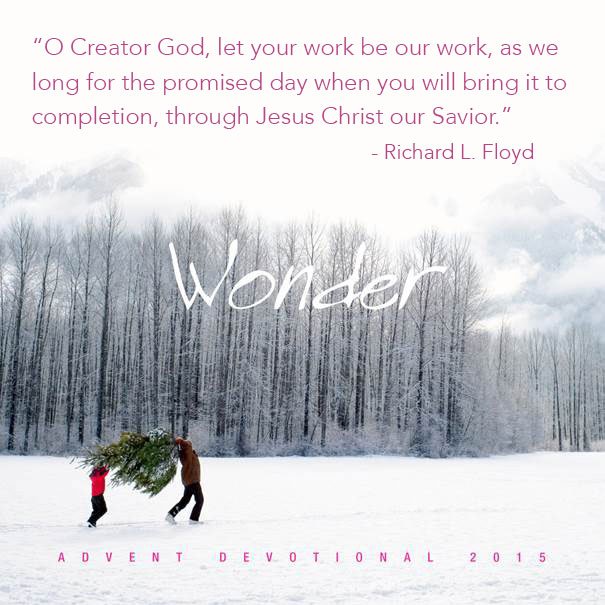
Wonder

“Finish, then, Thy new creation!”

“We know that the whole creation has been groaning in labor pains until now; and not only the creation, but we ourselves, who have the first fruits of the Spirit, groan inwardly while we wait for adoption, the redemption of our bodies.”— Romans 8: 22-23

The Advent hope recognizes that there is something unfinished about God’s creation. In today’s passage Paul employs the metaphor of childbirth, the “whole creation groaning in labor pains,” to describe the ongoing process of creation.

Our United Church of Christ Statement of Faith testifies to the two calls of God, the original creation (‘God calls the worlds into being”), and the new creation in Jesus Christ (“God calls us into the church”).

It is humbling to imagine that we have some part to play in the completion of God’s work, in our lives, in our communities, and on this earth we share with all God’s other creatures.

The Advent hope invites us to actively share in the reconciling, restoring, healing and saving activity of the living God. Such hope points to a promised future when the whole creation will finally be completed, a vision captured by the last verse of the great Charles Wesley hymn, “Love Divine, All Loves Excelling:”

“Finish, then, Thy new creation;

Pure and spotless let us be.

Let us see Thy great salvation

Perfectly restored in Thee;

Changed from glory into glory,

Till in Heav’n we take our place,

Till we cast our crowns before Thee,

Lost in wonder, love, and praise.”

Prayer: O Creator God, let your work be our work, as we long for the promised day when you will bring it to completion, through Jesus Christ our Savior. Amen.

(This is my devotional for today from “Wonder” the 2015 Advent Devotional from the United Church of Christ’s Stillspeaking Writers’ Group. Photo: The Pilgrim Press, 2015)


Unknown's avatar

Ruminations on Advent

Advent dog

“There is something beautiful and mysterious about Advent, but there is, at the same time, something unsettling, darkly anxious, almost threatening about it. The Advent mood is hard to put into words. It is often captured better by its hymns, which are often dark and brooding, sung in a minor key.

The scripture lessons for Advent set the tone with their continued prophetic calls for repentance, the dire warnings to “wait and watch,” the urgency of preparation for what is coming. We hear about those who are unprepared for God, tenants who are surprised by the sudden appearance of their long-absent landlord, sleepy bridesmaids waiting with their empty oil-lamps for the bridegroom to come.” (Excerpt from “Rejoice! Rejoice! A Sermon for the Third Sunday of Advent”)

Over the years I have posted many of my Advent rumination and reflections. I have gathered up some of them here:

The Christmas Tree in the Passing Lane

“A Chorus of Trees” (Video)

Anticipation: A Sermon for the First Sunday of Advent

Rejoice! Rejoice! A Sermon for the Third Sunday of Advent

“God With Us” A Sermon for the Fourth Sunday of Advent

And here is the hymn I wrote for Advent in 2000, after 9/11:

“In Such Sad Times We Look Ahead” A Hymn for Advent

(Photo by R.L. Floyd, 2014. The dog is Onyx, our grand-dog.)

Unknown's avatar

“The God of the Far Off” Toward the Ministry of Inclusion

Prodigal sonWhat an extraordinary week this has been for our country! The great Swiss theologian Karl Barth liked to admonish the church that it must read both the Bible and the newspaper, because we Christians live in the world.

And what a week of news it was! There were two historic Supreme Court decisions that will change our national life in significant, and in my opinion, profoundly positive, ways.

On Thursday, by a 6-3 decision, the Court upheld the Affordable Care Act, which makes health care available to all Americans.

And on Friday, by a 5-4 decision, Marriage Equality became the law of the land.

The reason I am here before you instead of our pastor Brent Damrow is that he is in Cleveland at the General Synod of the United Church of Christ, representing the Massachusetts Conference. I am sure he will have stories to tell about the celebrations taking place there, as our national church has been a long and tireless advocate for equal rights for the LGBT community and a supporter  of marriage equality.

I believe that these two historic Supreme Court decisions share a common idea, and that is the idea of “inclusion.”

And a third extraordinary event in our national life also happened on Friday. President Obama climbed into the bully pulpit in Charleston, South Carolina to give the eulogy for the Honorable Reverend Clementa Pinckney, the pastor of the Emmanuel AME Church who, along with eight of his congregants, was murdered by a gunman while attending a Bible study at the church on June 17.

President Obama gave a stirring eulogy for Pastor Pinkney, but he was addressing not only those present, but also the nation. I’d like to share with you some excerpts of his eulogy:

The alleged killer could not imagine how the city of Charleston . . . .the state of South Carolina, how the United States of America would respond — not merely with revulsion at his evil act, but with big-hearted generosity and, more importantly, with a thoughtful introspection and self-examination that we so rarely see in public life.

Blinded by hatred, he (the alleged murderer) failed to comprehend what Reverend Pinckney so well understood — the power of God’s grace . . .

This whole week, I’ve been reflecting on this idea of grace . . .

According to the Christian tradition, grace is not earned. Grace is not merited. It’s not something we deserve. Rather, grace is the free and benevolent favor of God as manifested in the salvation of sinners and the bestowal of blessings. Grace.

As a nation, out of this terrible tragedy, God has visited grace upon us, for he has allowed us to see where we’ve been blind. He has given us the chance, where we’ve been lost, to find our best selves. We may not have earned it, this grace, with our rancor and complacency, and short-sightedness and fear of each other — but we got it all the same. He gave it to us anyway. He’s once more given us grace. But it is up to us now to make the most of it, to receive it with gratitude, and to prove ourselves worthy of this gift.

Martha and I were driving to Onota Lake in Pittsfield for a walk on Friday when the President’s eulogy came on the radio. We got to the parking lot at the boat ramp, but we didn’t get out of the car. We sat in the car until it was over, and when it was over I had tears streaming from my eyes.

The President was addressing the painful facts of racial relations in today’s America. He mentioned that in response to the massacre at the church the Confederate flag had been taken down in the South Carolina capitol and elsewhere. That flag, he said, was a symbol of our nation’s “original sin,” slavery.

The president had both the Bible and the newspaper in mind as he gave this incandescent speech. I don’t know of such a theologically astute presidential address since Abraham Lincoln’s second inaugural.

And once again I would argue that inclusion is the big idea that binds all these events together. Inclusion.

I believe in the power of ideas to shape societies, and, as my teacher, mentor and friend, Max Stackhouse taught me, to examine where they come from and what they mean. So I want to do a little bit of that with you today about the idea of inclusion. Continue reading