Unknown's avatar

“God With Us” A Sermon for the Fourth Sunday of Advent

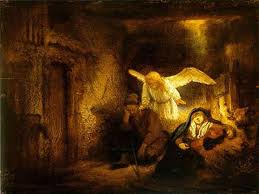
Joseph and the angelIn Luke’s gospel it is Mary who is front and center in the story of the nativity of Jesus, and in our minds I think that is where she stays.  But in Matthew we get more of a glimpse of Joseph.  Joseph is a shadowy figure in the pages of scripture; he is introduced in the genealogy as the “husband of Mary, of whom Jesus was born, who is called the Messiah.”  We see him in this story about Jesus’ birth and again briefly in the events of Jesus’ childhood, the circumcision at the temple, the flight to Egypt to escape Herod, and in a small story about Jesus as a twelve year old when he gets separated from his parents on a trip to Jerusalem and turns up at the temple, teaching the elders. Then Joseph disappears from the story, except for references to Jesus as the carpenter’s son.

But though Joseph seems to be what is called a supporting character, without him the drama of salvation could not have taken place, and I would submit that that is just the way God works, with supporting characters who appear for a little bit and do what needs to be done and then disappear from the story. But they are always a part of the story and the story wouldn’t be complete without them.

And it seems safe to say that without Joseph, Jesus could never have become who he became.  Joseph must have played an important forming and nurturing part in the life of Jesus.  There has been much speculation about Jesus’ upbringing in the carpenter shop in Nazareth.  The scriptures tell us nothing, but if Joseph lived until Jesus was at least twelve, as Matthew indicates, then Joseph becomes the primary male role model for the young Jesus.

One noted scholar speculates that Mary and Joseph were from the ranks of the humble and pious multitudes, the kind of people who loved God and maintained the law as best they could, but without the means to carry it out to the letter in all its intricacy.  If this is true it would go far in explaining Jesus’ attack on the Pharisaic understanding of religion and his quest for a new freedom to live for God.

In any case, in the story of Jesus’ birth Joseph is most remarkable in the way he responded to this crisis in his life. The young woman to whom he is betrothed is found to be pregnant. This is more than a matter of divorce, the law demands her life by stoning for adultery, for betrothal carried the weight of marriage in those days. So Joseph dismissing her quietly to avoid public disgrace was an act of integrity. But what is even more remarkable is that when he has this strange dream, in which an angel of the Lord appears to him and tells him not to be afraid to take Mary as his wife for the child conceived in her is from the Holy Spirit, he believes the angel and does what the angel said to do.

The angel said something else about this child: they are to name him Jesus, for he will save his people from their sins, and that all this fulfills what Isaiah had written: “Behold, a virgin shall conceive and bear a son, and he shall be called Emmanuel,” which means, “God is with us.”

Let me invite you to consider this Christmas the statement that God is with us.  Consider that God is with us not just in high moments of religious insight, in worship and in prayer, or some mystical moment when all seems clear, but rather in the ordinary events that befall us in this life.

One of the implications of the Christian doctrine of the Incarnation of God in Jesus Christ is that God is no longer remote, but is with us in ordinary life and that our story is inextricably wrapped up with God’s story. There is more to it than that to be sure; there is a cross as well as a cradle and we need Easter to interpret Christmas, and perhaps Pentecost to interpret them both for without the Holy Spirit it all becomes just a story from long ago that can touch the heart, but not change the life.

But God is with us now, because of Jesus Christ. We can see his human face and know that there is something of him in the other human faces we see. God is with us in our exalted moments of joy, when we get glimpses of the joy God wants for us.  Perhaps a sunset does it for you, or a sunrise (I’m told they are pretty.)  Or perhaps watching a child at play, or a fresh snowfall.

I saw a fine movie this week called “A River Runs Through It” in which fly-fishing becomes the entranceway into a realm of pure awe and wonder in the midst of some very tragic human life.  To know that our story and God’s story touch and intertwine can transfigure some pretty ordinary stuff into something special. Perhaps it is only as story that we understand our lives, which otherwise remain rather elusive.

In “A River Runs through It” the writer’s father, who is a minister, asks him a question that made Norman wonder if he understood his father at all “You like to tell true stories, don’t you? he asked, and I answered, “Yes, I like to tell stories that are true.”  Then he asked, “After you have finished your true stories some time, why don’t you make up a story and the people to go with it?  Only then will you understand what happened and why.  It is those we live with and love and should know that elude us.”

So it is that our own personal stories may only be understood in the light of this vaster story that begins at the moment of creation and will end in glory in God’s own good time and finds its center around two poor Palestinian peasants wondering what the birth of this child might mean.  That the angel promised that the child means “God is with us” must have addressed their perplexity as it can address ours.

For it means God is with us not just in those fleeting moments of joy, but in moments of confusion and despair, of faithlessness and doubt, the kind that comes to all of us at one time or another.  Emmanuel means God is with us as we try to get our minds around what happened on a Monday night in a neighboring community, as we struggle to understand the incomprehensible fact that an eighteen year old boy walked into a sporting goods store in our community and legally bought an assault rifle and used it to kill people.  The God of Good Friday who is also the God of Christmas was with us as Wayne Lo began killing people, and the first tear that was shed at Simon’s Rock was God’s tear, not only for the dead and wounded and their families but for a world which still makes such moments possible.

So “God with us” is not the stuff of Kodak commercial sentimentality; it means God really with us in all the grandeur and misery of human life, in Bosnia and India and Somalia and the homeless mean streets of our cities as well as by the Christmas tree in the warmth of our living room. The mystery of the Incarnation puts God right in the thick of it all.  For God did not stay remote, high above the heavens, but ventured into the precarious life of an infant born into a marginal family in a precarious political situation.  That should give us pause from turning the Christian religion into something ethereal and apart from human life.  As Frederick Buechner remarked wryly, “One of the blunders religious people are particularly fond of making is the attempt to be more spiritual than God.”

This Christmas I invite you to discover God in the everyday ebb and flow of your life, in the ones you love as well as the ones who drive you up a wall, in your moments of consternation as well as in your high moments of joy.  Take the time this Christmas to take it all in.  If you spend all your time in frenzied preparation, you may just not be paying attention, and miss the time of your visitation, and never learn, as Joseph did, what supporting role you are called to play in this great big story of which our story is valued as an important part by the God who, whatever else he may be, is most assuredly with us, through Jesus Christ our Lord. Amen.

I preached this sermon at First Church of Christ in Pittsfield, Congregational, twenty years ago this week, December 20, 1992, after a gun slaying at a school, in nearby Simon’s Rock College on December 14. I posted this after the Sandy Hook School slayings in Newtown, CT, which were on the 20th anniversary to the day. Lord have mercy.

Unknown's avatar

Christian Teachings about Life after Death: A Pastor Ruminates

stream 2I have been asked to speak about “Christian teachings about the after-life.” This is final installment in a series of helpful presentations on preparing for death. There have been presentations on wills and bequests, end of life care, grieving and the like. And once again Max (Stackhouse) has asked me to bat clean-up and talk about theology.

One of my friends in the church said to me last week, “Oh, your talk is theology, so it won’t be practical.” She was kidding, I think, but let me respond to her remark by suggesting that a theology about death and what comes after it may be the most practical aspect of all for the Christian preparing for death. It is a shame how theology has come to have a bad name, even in the church.

Because theology is not some specialty for professional theologians, but simply the way we talk about God. That is what theology means, the logos of the theos, the word about God. And everybody has a theology, at least implicitly, so the more we can make it examined and explicit the more chance we will get it better rather than worse.

So right off the bat let me suggest a better title for what I hope to do here. I much prefer the phrase “life after death” to the term “afterlife,” because I think the former rightly expresses the Christian belief in the reality of death, while the latter can obscure the boundary between death and whatever comes after it.

I want to explore with you four ideas or concepts: 1. The reality of death, 2. Immortality of the soul, 3. Resurrection of the body, and 4. Eternal Life. Finally, I want to summarize the features of an adequate Christian theology of life after death, and the promises of the Gospel that are our hope in the face of death.

1.The Reality of Death

The first concept to ponder is the reality of death.  Some of the earliest thinking about death in the Bible is about its not only ending one’s natural life, but also severing our relationship with God. For Israel human purpose was to praise God, and death put an end to it. This relational view was visualized in spatial terms, so that places like Sheol and “the Pit” were places far from God.

Christianity inherited this relational view of life with God, and sees death as its cessation and the opposite of the fullness of life that God intends for us. So unlike some other religions that view death as an illusion or an escape, for Christians, death is real, as are the sense of loss and grief that accompany death, which are also real and nothing to ashamed of or denied. I have said at countless funerals: “There is nothing unchristian about grief; Jesus himself cried at the grave of his friend Lazarus.”

Moreover, Jesus himself died, and his own death provides a template for thinking about this. The creeds say quite simply, “He died and was buried.”

So accepting the reality of death is an important first step in thinking about it properly as Christians. In my nearly forty years of ministry I sometimes counseled people who wanted to deny or blunt this reality. People often asked for much-loved sentimental poems to be read at the funeral. I would gently suggest something more appropriate, but I was pastorally sensitive enough to allow their selection to be read if they insisted, knowing that I would get up and say something quite contradictory in my homily.

Let me give you some examples of poems that deny or minimize the reality of death, and I apologize in advance if these are your favorites.

Here’s a line from A. L. Frinks’ the Rose Beyond the Wall:

“Shall claim of death cause us to grieve
And make our courage faint and fall?
Nay! Let us faith and hope receive–
The rose still grows beyond the wall,”

Another and even better known poem about death is James Whitcomb Riley’s Consolatio:

“I cannot say, and will not say
that he is dead. He is just away.
With a cheery smile, and a wave of the hand,
he has wandered into an unknown land.”

“We do not sorrow as those who have no hope” (1 Thess. 4:13), but we do sorrow. So while as Christians we have much more to say than death is real, it is where we must start, reminding ourselves that Jesus, in his human nature, really did die, as all human beings do.

To make this point I once began an Easter sermon years ago by saying that “On Good Friday Jesus was as dead as a doornail.” I wasn’t trying to be shocking, but I was surprised by how many people took offense to this statement.

I know something of death. Both my parents died too young, I have worked in a funeral home, been an EMT, and a minister for nearly four decades. I have been present at many deaths, and each time I have been struck by how clear the line is between the living and the dead. And yet everything I know about death is on this side of it, as it is for us all. But  one thing I do know about death: it is real.

So if the first theme is the reality of death, how shall we properly think and talk about what comes after?

2. Immortality of the Soul.

One very prevalent idea of life after death is immortality of the soul. I would like to explore this popular idea with you, and show you why it is an inadequate view for Christians, admitting that in my early years it was my own view.

Let me share something about that with you. My own theology of death and what comes after it was shaped, at least in part, by my childhood bedtime prayer, a somewhat terrifying one from the New England Primer:

“Now I lay me down to sleep,
I pray the Lord my soul to keep,
If I should die before I wake,
I pray the Lord my soul to take. Amen.”

I didn’t know it at the time, but in my child’s imagination I had adopted a somewhat Platonic dualism about the human person, separating body and soul into the perishable and imperishable.

My own children, at the insistence of my wife, had a more sanitized version of that prayer that didn’t get them pondering sudden death in the nighttime. Whether they are better off for this is open for discussion. But in my own early thought-processes I figured that if such a sad event as my childhood death did take place, it would only be my physical body, and this invisible spiritual thing “the soul” would go swiftly to God. This is the essence of the idea of immortality of the soul.

I was taken aback to be told that this view, while widely held, was not particularly Christian. I learned in seminary that the Hebrew word translated as “soul,” nephesh, more rightly means “self,” in other words, the whole person.  Harrell Beck, my wonderful Old Testament professor, liked to say that your fingernails are as much a part of your soul as any other part, which is to say human selves are embodied. Or as I like to think of it: we don’t have a body so much as we are a body.

It is from the Greeks, and especially from Plato, that we get the notion of a disembodied soul housed in a physical body, an idea that still clings to many Christian ideas about an afterlife.

These ideas were ambient in the ancient Near East and in the Hellenistic world in which the New Testament was written, and they lived in uneasy tension with the more holistic Hebraic views of personhood. We even get a whiff of Greek dualism in the New Testament, such as in First Corinthians, one of the undisputed letters of Paul. He writes in 1 Corinthians 5:1:

For we know that if the earthly tent we live in is destroyed, we have a building from God, a house not made with hands, eternal in the heavens.

So if the disembodied immortal soul flying away from the perishable body is not the Christian theology of life after death, how are we to think about it?

3. The Resurrection of the Dead

Resurrection of the dead is the cardinal Christian idea of life after death. It is rooted in the resurrection of Jesus, which pervades all New Testament thinking. In Jesus’ resurrection God has vindicated the humiliated and crucified Jesus, and begun the eschatological process of the salvation of humanity and the world, a process to be completed at the end of history, when Christ comes in glory to judge the living and the dead.

This distinguishes Christian theology from other views that see life after death as something intrinsic to the human person. Resurrection of the dead, on the other hand, is about the discontinuity between life and life after death. The rupture of death is overcome only from God’s side by God’s action. So resurrection of the dead is not resuscitation, but a new creation analogous to the first creation. It is not resurrection of the flesh, but resurrection of the body, a new kind of life that we can only guess at. When Paul  speculated on what kind of body we would have in the new life he employed the oxymoron “spiritual body” to refer to what form are we raised.

There are clues to this mystery in the post-resurrection appearances of Jesus. After Jesus is raised he appears to the disciples in bodily form; he is the same, but also transfigured in some way. The accounts contain mysteries: sometimes he is recognized, but other times he is not, as in the road to Emmaus story, when the disciples only know him when he breaks bread. Yet he still bears the marks of the Roman nails in his hands and feet.

However we want to take these narratives they point to the consistent conclusion that the new life postmortem is embodied life.  The Christian belief in the resurrection of the dead is a theological interpretation based on the death and raising of Jesus. The expectation of a resurrected body also emphasizes the continuity of personality and the integrity of personhood. I said that Christian views stress discontinuity between life and life after death, but here we see continuity of personality after death. So we have both discontinuity and continuity as the person really dies, but in the new life is the same person as before death, although changed. So it is not some spiritual part of you that lives the new kind of life; it is you, embodied and recognizable to God as you. This contrasts to various views of a disembodied postmortem existence, such as immortality of the soul and reincarnation.

It is important to remind ourselves that, while we are not surprised by the claim of Jesus’ resurrection and have difficulty with the idea of a general resurrection, for the people at the time of Jesus death it was just the opposite. A general resurrection vindicating Israel involving a Davidic messiah or the Son of Man was part of the general religious imagination. The resurrection of an individual however was not, which is why the raising of Jesus was understood as the beginning of the eschaton, the final reckoning, restoration and vindication of God and his faithful. We hear this in the language of Jesus being the first-fruits and the forerunner.

The raising of Jesus then is the primary theological template by which all things are measured, including death and life after death. Consistently in the New Testament death is viewed through the lens of the resurrection of Jesus Christ. In 75 places in the New Testament the principle Greek adjective that means “dead,” nekros, is the object of either egeiro “to awaken” or anastasis, “to raise.

This raising from the dead makes Christianity an Easter faith, and so the Christian sees death in Easter light. Because Jesus is raised we too will be raised with him. This is a far different idea than immortality of the soul. Let us take a few moments to contrast them.

The great scholar Oscar Cullmann wrote an important book in 1956 called Immortality of the Soul or Resurrection of the Dead in which he starkly contrasted these two views. Some of his critics have complained that he contrasted them too sharply. They may be right, but the book remains an important one for understanding the predominant Christian views.

Cullmann’s thesis is, and I quote, “The widely accepted idea of ‘The immortality of the soul’ is one of the greatest misunderstandings of Christianity. The concept of death and resurrection is anchored in the Christ-event, and hence is incompatible with the Greek belief in immortality.”

Cullmann deftly illustrates his point by looking at the death of Socrates in contrast to the death of Jesus. He writes:

The death of Socrates (as described by Plato) is a beautiful death. Nothing is seen here of death’s terror. Socrates cannot fear death, since indeed it sets us free from the body. Whoever fears death proves that he loves the world of the body, that he is thoroughly entangled in the world of sense. Death is the soul’s great friend. So he teaches; and so, in wonderful harmony with his teaching, he dies — this man who embodied the Greek world in its noblest form.

Cullmann then turns to the death of Jesus:

In Gethsemane He knows that death stands before Him, just as Socrates expected death on his last day. The Synoptic Evangelists furnish us, by and large, with a unanimous report. Jesus begins ‘to tremble and be distressed’, writes Mark (14:33). ‘My soul is troubled, even to death.’ . . .

In Luke 12:50 it is completely impossible to explain away the ‘distress’ in the face of death, and also in view of the fact that Jesus is abandoned by God on the Cross [Mark 15:34], it is not possible to explain the Gethsemane scene except through this distress at the prospect of being abandoned by God, an abandonment which will be the work of Death, God’s great enemy.)Jesus is afraid, though not as a coward would be of the men who will kill Him, still less of the pain and grief which precede death. He is afraid in the face of death itself. Death for Him is not something divine : it is something dreadful. . . .

Here (in Jesus’ death) is nothing of the composure of Socrates, who met death peacefully as a friend. To be sure, Jesus already knows the task which has been given Him: to suffer death; and He has already spoken the words: ‘I have a baptism with which I must be baptized, and how distressed (or afraid) I am until it is accomplished’ (Luke 19:50). Now, when God’s enemy stands before Him, He cries to God, whose omnipotence He knows: ‘All things are possible with thee; let this cup pass from me’ (Mark 14:36). And when He concludes, ‘Yet not as I will, but as thou wilt’, this does not mean that at the last He, like Socrates, regards death as the friend, the liberator. No, He means only this: If this greatest of all terrors, death, must befall Me according to Thy will, then I submit to this horror. Jesus knows that in itself, because death is the enemy of God, to die means to be utterly forsaken. Therefore He cries to God; in face of this enemy of God He does not want to be alone. He wants to remain as closely tied to God as He has been throughout His whole earthly life. For whoever is in the hands of death is no longer in the hands of God, but in the hands of God’s enemy. (Oscar Cullmann, Immortality of the Soul or Resurrection of the Dead)

Here Cullmann has eloquently expressed the New Testament view of death as the enemy of God. For another example we can turn to Paul, who calls death “the last enemy.” Because death in the New Testament is not merely the end of biological life, it is also a power that insinuates itself into our living of these days. I’ll say more about this now as we turn to the idea of eternal life.

4. Eternal Life.

The final concept I want to explore is eternal life. One of the problems we have as moderns in understanding the world of the New Testament is its conception of time. There is a persistent eschatology that sees events both in the present and the future. Theologians refer to this as “the already and the not yet.”

Advent is a good time to talk about this, for while we have too often boiled Advent down to merely preparing for celebrating the birth of Christ, it is also a season of anticipating Christ’s second coming.

We see this in the memorial acclamations of many Christian liturgies: “Christ has died, Christ is risen, Christ will come again. ”

Eternal life is one of those concepts that sits in an eschatological frame, or to put it another way, has an “already but not yet” quality about it. In early Christian preaching Jesus is said to offer eternal life to his followers, not just post-mortem, but now before death. In John 5:24, for example, Jesus says. “The one who hears my word . . . has eternal life: he does not come unto judgment, but has passed from death to life.”

But this realized aspect of eternal life does not take away from the reality of death, and the promise is that eternal life in its fullness lies on the other side of the resurrection.

The words said at many graveside committal services speak of “the resurrection to eternal life.” For example, this one from the Book of Common Prayer:

“In sure and certain hope of the resurrection to eternal life
through our Lord Jesus Christ, we commend to Almighty
God our brother or sister N.; and we commit his or her body to the ground;
earth to earth, ashes to ashes, dust to dust.”

Notice the reality of death here expressed in the ashes and dust.

As I mentioned earlier, death in the New Testament is more than the final cessation of biological life, but also a power that can insinuate itself into our living. In some sense the realized eternal life in Christ is the opposite of the power of death, which Christ defeated by his cross and resurrection.

And eternal life is not an individualistic state. Eternal life is life with Christ and in Christ and by extension a life in community, in the church, which is his body. Many contemporary speculations about life after death are very individualistic, but the Christian hope is a corporate and communal hope, the hope to join the communion of saints.

There is a wonderful sermon by Jonathan Edwards, the second pastor of this church, on 1 Corinthians 13: 8-10, called Heaven is a World of Love in which Edwards explores the metaphor of the communion of saints as a heavenly choir.

How many of you know it? (No hands) I wish it were better known because it is a better example of the essential Edwards than the terrifying Enfield sermon, Sinners in the Hands of an Angry God, which everybody seems to know.

In Heaven is a World of Love Edwards begins by beautifully describing heaven and all its social arrangements, and in so doing puts forth a protest against the social arrangements that we know so well on earth; for in Edward’s heaven there is no pride or jealously, there is decency and wisdom, and an equal prosperity among all. He says, “Love (poured out from God) resides and reigns in every heart there.” And then he says: “Every saint there is as a note in a concert of music which sweetly harmonizes with every other note, and all together employed wholly in praising God.” So life after death is life in community.

5. What then can we say about life after death?

Having said all this, and leaving much more out in my brief time today, what can the Christian cling to in the theologies of life after death? I’ll sum up my main points:

  • Christians understand life after death through the lens of the resurrection of Jesus Christ.
  • For the Christian, death is not an illusion or an escape, but a reality. Death is God’s enemy, yet God has overcome it through the cross and the raising of Jesus from the dead.
  • Life after death is not intrinsic to the human person, but a gift of God in the raising of Jesus Christ.
  • Life after death is bodily life with continuity of personality and integrity of personhood. It is not a part of you that lives the new life, but you.
  • Life after death is relational and communal, where we join in the communion of saints across all times and places.
  • Life after death is relational and imagined  as spatial, nearer or farther to God.
  • The purpose of life after death is for the praise of God. In the words of the Shorter Catechism, “The chief end of men and women is to love God and enjoy him forever.”
  • Both the living and the dead live between the times, in “the already but not yet” between the first and second coming, as we wait with the church on earth and the church in heaven for the Day when Christ comes in glory at the consummation of all things.

The basis for all this is, of course, faith in the God we know here and now, the God revealed in Jesus Christ.  In Don Hammond’s (the outgoing interim pastor) graceful ministry among us he has said again and again in a variety of ways something like this, “Whoever you are, whatever you have done, know that you are truly and forever loved.”

The Christian hope for this life and the next is rooted in this Gospel truth about the love of God, that God’s grace is greater than our sin, that God’s love is stronger than anything else in the world, even death, the last enemy, which God defeated on the cross.

There are numerous eloquent witnesses to this love in the New Testament, but none is better than this by the Apostle Paul in Romans 8 and I will close with it:

If God is for us, who is against us? 32 He who did not withhold his own Son, but gave him up for all of us, will he not with him also give us everything else? 33 Who will bring any charge against God’s elect? It is God who justifies. 34 Who is to condemn? It is Christ Jesus, who died, yes, who was raised, who is at the right hand of God, who indeed intercedes for us. 35 Who will separate us from the love of Christ? Will hardship, or distress, or persecution, or famine, or nakedness, or peril, or sword? 36 As it is written, “For your sake we are being killed all day long; we are accounted as sheep to be slaughtered.” 37 No, in all these things we are more than conquerors through him who loved us. 38 For I am convinced that neither death, nor life, nor angels, nor rulers, nor things present, nor things to come, nor powers, 39 nor height, nor depth, nor anything else in all creation, will be able to separate us from the love of God in Christ Jesus our Lord.

Amen.

I delivered this paper at the First Congregational Church of Stockbridge, MA on December 9, 2012, the Second Sunday of Advent.

Unknown's avatar

“Witnesses to the Resurrection” Church scandals and the faithful who stay


My friend Tony Robinson, author, speaker, preacher, and peripatetic traveler for the good of the church, is an acute observer of what is going on in our world.

I heartily recommend his website Anthony B. Robinson, and especially the page called “What’s Tony Thinking?”  A few days ago he posted some good thoughts from Peggy Noonan on the Roman Catholic clergy sex abuse story.  He wrote:

“I am becoming a fan of Peggy Noonan’s Saturday columns in the Wall Street Journal. This week she wrote on the Catholic clergy sex abuse troubles concluding by saying, “There are three great groups of victims in this story. The first and most obvious, the children who were abused, who trusted, were preyed upon and bear the burden through life. The second group is the good priests and good nuns, the great leaders of the church in the day to day, who save the poor, teach the immigrant, and literally, save lives. They have been stigmatized when they deserve to be lionized. And the third group is the Catholics in the pews–the heroic Catholics of America and now Europe, the hardy souls who in spite of what has been done to their church are still there, still making parish life possible, who hold high the flag, their faith unshaken. No one thanks those Catholics, sees their heroism, respects their patience and fidelity. The world thinks they are stupid. They are not stupid, and with their prayers they keep the world going, and the old church too.

One might say the same of many “heroic laypeople” in all sorts of congregations and communities of faith amid failures of leadership and scandals and disarray among higher ups. So many good people keep on keeping on in the face of disappointment, deceit and challenge. They are the witnesses to the resurrection.”


That last observation is a particularly wise one, I think.  I can remember sometimes looking out at the congregations I have served after a particularly nasty fight over something ephemeral and wondering, “Why do they even bother to come back every Sunday?  There must be more here than meets the eye.”  And, of course, the answer is that there is!

As somebody once said about Noah’s ark: “If it wasn’t for the storm outside,  one couldn’t stand the stench inside.”   Still, Tony is just right.  These faithful are living witnesses to the resurrection.

Unknown's avatar

“The Stones Would Cry Out!” Palm Sunday Ruminations on the Cradle and the Cross


At which end of Jesus’ life should we look for the reason we call him “Lord and Savior?” My friends in the Mercersburg Society put heavy stress on the Incarnation.  Others, such as P. T. Forsyth, insist that we only can understand the Incarnation backwards in time, from the perspective of Christ’s death and resurrection. (See, for example, on this point, a great quote from Forsyth here.)

From my teacher and friend Gabriel Fackre, one of the early and still best narrative theologians, I have learned to be careful not to take any episode of the story to represent the whole.

But I must confess I do agree here with Forsyth, though he has sometimes been criticized as being so focused on the cross that he neglects other parts of Jesus’ life and work.

So what is the relationship between the cradle and the cross?  If one were to only read Marks’s Gospel, the answer is simple, since he has no infancy narratives at all and begins with Jesus’s adutlt ministry.

But for many of us, this is the year of Luke in our lectionaries, and it is well to remember that of all the Evangelists, it is Luke who includes the most infancy material: “the Annunciation,” “the Visitation,”  shepherds and heavenly choirs, etc.  It is no accident we all read Luke at our services on Christmas Eve.  If we read Mark, we’d get home much earlier.

I heard somewhere, I can’t recall where, that “the wood of the cradle is the same wood as the wood of the cross.”  There is much theological truth in that.

So once again I turn to a poet to express deep truths that may elude the prose of the theologians.

Richard Wilbur (1921-) is one of my favorite poets (I have many), and although I have never met him, is my Berkshire County neighbor and a sometimes worshipper at the congregation where I now mostly worship.

A two time Pulitzer Prize winning poet and former Laureate, Wilbur has made a startling but brilliant connection between Christ’s Incarnation and Cross in his poem A Christmas Hymn.

It is often sung to one of several musical settings at Christmas, but the refrain is right from Luke’s Palm Sunday story, and the concluding verse reminds us of the reason for Christ’s vocation that led to Good Friday.  Such a good reminder to keep the whole arc of the story in view when looking at the any of the parts:

A stable-lamp is lighted
Whose glow shall wake the sky;
The stars shall bend their voices,
And every stone shall cry.
And every stone shall cry,
And straw like gold shall shine;
A barn shall harbor heaven,
A stall become a shrine.

This child through David’s city
Shall ride in triumph by;
The palm shall strew its branches,
And every stone shall cry.
And every stone shall cry,
Though heavy, dull, and dumb,
And lie within the roadway
To pave his kingdom come.

Yet he shall be forsaken,
And yielded up to die;
The sky shall groan and darken,
And every stone shall cry.
And every stone shall cry
For stony hearts of men:
God’s blood upon the spearhead,
God’s love refused again.

But now, as at the ending,
The low is lifted high;
The stars shall bend their voices,
And every stone shall cry.
And every stone shall cry
In praises of the child
By whose descent among us
The worlds are reconciled.

(A Christmas Hymnby Richard Wilbur, New and Collected Poems, 1988, Harcourt, Brace, Jovanovich, 1988.)

Unknown's avatar

Arnold Kenseth: A New England Poet of the Sacred

Arnold M. Kenseth, who died in 2003, was a Congregational minister and poet. He wrote in 1989,
 “Among the clergy, I’m known as a poet, and among the poets I’m clergy. But by being in New England, being where there are birds and trees and meadows, there’s a very natural marriage between religion and poetry.”

I met Arnold in 1977, when I was still a pastor in Maine. Martha and I were on vacation in Canada, and were camping at Fundy National Park in New Brunswick, which is one of the most beautiful spots in the world. On Sunday we left our tent to find the nearest church and found a United Church of Canada parish in the little fishing village of Alma, right outside the park. The pastor was a Scot and had a bit of a brogue. But the highlight of the morning was when the pastor called up a distinguished looking gentleman from the congregation to give the pastoral prayer.I had never heard anything like this before in my life. The prayer was dignified and reverent and not showy, but the words were so beautifully chosen that I imagined the man must be a poet, as indeed it turned out he was. At coffee hour we approached him and introduced ourselves. It was Arnold. We discovered that we were both pastors in the United Church of Christ in the United States. He served the South Congregational Church in Amherst, Massachusetts, the pretty little town near the University of Massachusetts, where he also taught poetry. I asked Arnold where I could get a copy of some of his prayers and poems, and he told me about Sabbaths, Sacraments and Seasons, published by Pilgrim Press in 1969.

As soon as I got back to Bangor I ordered a copy and it has been a treasured resource ever since. On the back page was some information about the author. It indicated that Arnold had graduated from Bates College. My father graduated from Bates as well, so I asked him if he knew Arnold. Sure enough, they were both in the class of 1937.

Five years later I left Maine to accept a call to be the Pastor of The First Church of Christ in Pittsfield in Western Massachusetts. It wasn’t too long before I attended an event in Amherst, and there was Arnold. I reminded him of our meeting in Alma, and told him how much I loved his prayers and poems. I also mentioned my Dad, and Arnold remembered him warmly (my Dad died shortly after that.) That meeting was the beginning of a friendship with Arnold that involved lunches and long phone conversations and exchanges of letters. He would from time to time send me copies of new poems and books. After he retired I had him come to Pittsfield and preach for me several times.

He told me how he had become a minister. After graduating from Bates with a degree in English, he went to Harvard University as curator of the Harvard College Library Poetry Room. There, he cared for the Edwin Arlington Robinson collection and the Amy Lowell collection. He wanted to write about the relationship between poetry and religion.

It was there that he met the Reverend Samuel H. Miller, another minister once known for his lovely and moving prayers. Miller later became dean of Harvard Divinity School. It was Miller who got Arnold interested in the ministry, and he enrolled in the Harvard Divinity School and received a bachelor’s of sacred theology in 1944. He received his master’s degree in English in 1950, also from Harvard.

He was friends with many of the poets of his generation, including Robert Frost. I have always heard intimations of Gerard Manley Hopkins in Arnold’s poems, but his influences were wide and deep. For his 50th Bates College Reunion, he wrote, “I rejoice in Van Gogh, Henry Adams, Dostoyevski, Chopin, J.S. Bach, Saint Francis, T.S. Eliot, Wallace Stevens, Isaiah, the Gospel of Luke, and Mother Teresa – the light bearers.”

He served as Pastor of the South Congregational Church for 40 years, and was a model for me of a gracious long pastorate. I was privileged to have a visit with Arnold just days before his death, and he was still lucid and gentle and full of hope. If you don’t know this man’s writings I highly recommend them to you. Here’s a sample:

On Easter the great tower of me falls.
I had built it well; my mind had planned it
After being schooled; my will had special wit
To dig me deep foundations, solid walls,
Blocks of moral toughness, windows to see
The enemy, the friend; large rooms, I thought
For light; and storey upon storey me
I raised, and famously my fame I sought.
So driven to prove the world with my estate.
I had not heard Christ on Good Friday die,
His body crooked, broke, and all friends fled.
I had not wept his cause in my carouse.
But now bold bells scatter against the sky,
And Christ is shattering my death, my pride;
As walls, blocks, windows, rooms, my silly penthouse
Spill into the dust I am, my narrow fate.
At last set free from virtue, knowledge, strife,

I mourn, then praise my God, and enter life.

(“Easter” by Arnold Kenseth)

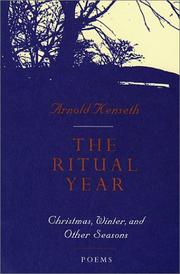
The Ritual Year, Amherst Writers and Artists Press, 1993)
Unknown's avatar

Where I Ruminate on Faith as Following

For me the big one was the bad bike accident, but it could have been any number of other events. Because I think most of us have had at some point the disconcerting realization that our life is not under our control. As a pastor for thirty years I spent a lot of time with people after they had this realization.

A spot shows up on our X-Ray. Our business goes bankrupt. Someone we love gets sick and dies. Someone breaks into our house. Suddenly, we become acutely aware that the world with all its possibilities for beauty and happiness and meaning is also fraught with unexpected shocks, temptations and difficulties.

That is where faith comes in. It seems to me that faith is not primarily belief but trust. Faith is the recognition that we are not in control of our lives, and we can not foresee all the places where our journey will go, but we trust God to lead us and to be with us wherever it goes.

So faith is not self-reliance (that American idol) but God-reliance. It is trusting that the journey has meaning and purpose even when we can not see what it might be. Kierkegaard rightly wrote that “Life can only be understood backwards; but it must be lived forwards.”

Faith, then, is not a possession or a quality we have in and of ourselves. Faith is a trusting relationship we have with the one who does control our lives and who knows where our journey will lead. Barbara Brown Taylor says that faith is “a dangling modifier.” It needs an object to complete it. Faith is always in something or somebody.

So faith looks to God in trust. Abraham is a model for such faith, because he left his comfortable home and went where God led him. He followed the promise even when he couldn’t see the outcome. He trusted the promise-maker to be a promise-keeper. His journey in faith led to him being the father of a great nation, and the one from whose family the redeemer of the world would someday be born. Abraham couldn’t know this, of course, couldn’t see ahead into the future, but still he followed. He trusted God to lead and he would follow.

Likewise the followers of Jesus didn’t know where their lives’ journeys would take them, only that it would take them with him. And when it led to his cross they could see no future, but later came to know that his future and theirs were on the other side of the cross, against all expectations.

So faith follows. We come to God in need with empty hands. The great theologians of the Reformation saw clearly that we are not saved by our virtue or our good works, not by any righteousness we may have, but only by faith. “Faith is the humility of obedience,” says Karl Barth. Faith knows that we are not in control, that we do not know where we are going, that by ourselves we are lost and afraid. When my children were small and we were in a crowded place, they would instinctively reach for my hand. They knew I could be trusted to lead them and keep them safe

So faith trusts God to lead us, not necessarily to comfort and to happiness, for the life of faith is not insulated from life’s pains. On the contrary, we may be led to suffering we might otherwise avoid. But to follow in faith is the only true way to find life’s path, and reach journey’s end as we are meant to do.

Barbara Brown Taylor employs the image of a rope bridge to speak about the journey of faith (I imagine it as one of those scary ones from the Indiana Jones‘ movies):

“Faith is not a well–fluffed nest, or a well-defended castle high on a hill. It is more like a rope bridge over a scenic gorge, sturdy but swinging back and forth, with plenty of light and plenty of air but precious little to hang on to except the stories you have heard: that it is the best and only way across, that it is possible, that it will bear your weight. All you have to do is believe in the bridge more than you believe in the gorge, but fortunately you do not have to believe all by yourself. There are others to believe it with you, and even some to believe it for you when your own belief wears thin. They have crossed the bridge ahead of you and are waiting on the other side. You can talk to them if you like, as you step into the air, putting one foot ahead of the other.” (The Preaching Life, p. 94)

I take comfort that we don’t take that walk alone over the gorge. Abraham is undoubtedly there on the other side. And Sarah, and Peter and James and John, and Mary Magdalene, and St. Francis and Julian of Norwich. I picture Calvin and Luther and Pope John XXIII, Dorothy Day and Mother Theresa. And many others, some of whom I have known myself, that history will never recall. They weren’t perfect, just ordinary men and women who trusted in God and followed him into their future together.

“It takes a lot of courage to be a human being, but if Jesus was who he said he was, the bridge will hold. Believing in him will not put us in charge, or get us what we want or even save us from all harm, but believing in him, we may gradually lose our fear of our lives.” (Taylor, p. 94)

We will no longer fear, even though we know we are not in control of our lives, even though our journey is going to unknown, unseen places. Because he can be trusted with our lives we needn’t fear, only follow.

Unknown's avatar

Where I Ruminate on the Perils of a Palm Sunday Faith in a Good Friday World

There is a kind of decaffeinated Christianity that wants to quickly slide by Good Friday and get right to Easter, as if Good Friday is a morbid and somewhat unfortunate episode that is dwelt upon only by the morbid and masochistic. Or to put it another way, we are tempted to have a Palm Sunday faith, a faith based on a misunderstanding of who Jesus is.

Like the crowd at the first Palm Sunday we are tempted to see Jesus not as he is, but as a projection of our own hopes and desires. We can do this in a number of ways. We can turn Jesus into the supporter of our personal goals, or the upholder of our national ambitions, or our politics, or other ways where he becomes who we want him to be instead of who he really is. “Palm Sunday faith” is when we want a Jesus without a cross so we can have a faith without a cross, a faith without challenge or sacrifice, a faith without testing or struggle. When we do that we turn God into a kind of talisman or lucky charm to bless our projects and our aspirations, when in fact the God of the Bible is a God with his own sovereign purposes.

The problem with a Palm Sunday faith is that we live in a Good Friday world.I believe that Christian faith is essentially a joyful enterprise, but it is a joyful enterprise that doesn’t turn or flinch from the hard truths of the world’s harsh brutalities. So Christian faith without a cross does not show God’s full power to deal with human sin and death. And a faith without a cross will be found feeble and wimpy when the chips are really down.

What do I mean when I say it is a Good Friday world? There is a certain heartbreaking aspect of living that comes to us all. Often we only see it from a distance, as in the war in Iraq, where we have seen pictures both of dead and injured civilians and dead servicemen and women. But to the families of those individuals that heartbreak has come “up close and personal.” And some heartbreak comes to every human life sooner or later.

It is not just in wartime that the powers of sin and death do their heartbreaking work. Which is why there is so much comfort for us in worshipping a God who himself “became a man of sorrows and acquainted with grief.”

And that is exactly it. Our God knows the whole truth about human life. Knows not just the Sunday veneer and the masks of propriety but the dark and sad parts of it all. Knows that life is not a bowl of cherries. And this God not only knows the worst the world has to offer, but he has done something about it. His love is not sentimental love; it is holy love, a love that moves and acts to deal with love’s enemies.

A God who merely comforted the afflicted and bound up the wounded would not be a God who takes on the power of sin and death and evil. That is what the cross of Jesus is all about. God himself confronting human life at is very worst, at its most irredeemable, at a pitiful state execution, where the most powerful forces in the world humiliated and destroyed this humble innocent man.

He took it all on himself, the whole weight of the world’s hate and violence, its guilt and shame, all of it there on the hill at Golgotha. For us: you and me, and not just for us, but for everyone, across the ages. And not just for humans, but for himself, because his own holiness could not tolerate the world’s sin without atonement. And so he made it, not with the blood of rams at the temple, but making the sacrifice himself, spilling his own life out.

And why? Because that is what love does. By its very nature love spills itself out. In the letter to the Philippians Paul says that Jesus even gave up his own rightful claim to divinity, emptying himself, taking the form of a slave, for the cross was a slave’s death.And because of this humble obedience the Father has highly exalted him, and has given him God’s own name. Because “Lord” is the name Israel gave to their God, and to no one else.

But now Jesus is called “Lord.”When we call Jesus “Lord” and take the full measure of his love we will be moving toward a faith that can meet life’s darkest hours and toughest spots. A faith that is able to stand at the foot of the cross. And the world desperately needs people like that with faith like that: faith in Jesus, and in the power of his cross.