Unknown's avatar

Some Lenten Reflections on Forgiveness

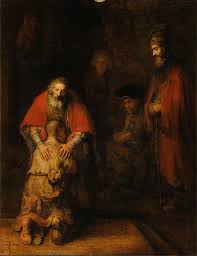
Prodigal son by RembrandtThe idea of forgiveness is so ingrained in our cultural and religious traditions that it is easy for us to overlook what an extraordinary idea it is. Although we tend to separate out “forgiving” and “forgetting” the biblical notion of forgiveness is literally “a forgetting,” in that after the act of forgiveness “it is as if ” the grievance never happened.

It is only the aggrieved party who can do the forgiving, and the act of forgiveness “wipes away” the memory of the grievance so that it no longer has any influence on the relationship. So it is that the phrase “I will remember their sins no more” appears again and again in the Bible, for example, in Isaiah, Jeremiah, and Hebrews.

Before this idea of forgiveness took hold there was simply “revenge,” in which affronts were met with retribution, often disproportionate to the original wrong. These “family feuds,” if we want to call them that, could go on for generations, and still do, as we see sometimes, for example, in the Middle East, where memories of affronts are long.

A moral advance on such indiscriminate retribution was the lex talionis, the “law of retaliation,” which prescribed that the response had to be equal to the offense, as, for example, “an eye for an eye and a tooth for a tooth.”

But the idea of forgiveness moves social relationships into a whole new key, and goes beyond mere justice. Indeed, forgiveness is an affront to justice, which is one of the perpetual accusations made against the Gospel by its critics.

Israel’s God is a god who forgives, but we may recall that the first covenant in the Bible is the covenant with Noah, and in that story God’s forgiveness has limits. “The Lord saw that the wickedness of humankind was great on the earth, and that every inclination of the thoughts of their hearts was only evil continually.” (Genesis 6:5)

So God does not forgive the people and punishes them with a flood. God shows some mercy, enough to save a remnant in the ark, the blameless Noah and his family, and the several species of animals. But God repents of his action, viewing it as a dry run (if you’ll excuse the pun), and promises never to do it again, laying down his arms (so to speak,) and leaving his bow in the sky to remind him.

In Exodus there’s a seeming change in the character and identity of God, in which mercy becomes a key quality. In preparing for today I took two volumes of the Anchor Bible Dictionary, the M volume for “mercy,” and the F volume for “forgiveness.” When I found the entry for “mercy” it said, “see LOVE.”

In Exodus we have a particularly important passage for subsequent Jewish and Christian understandings of God’s identity and character. It is Exodus 34:6-7, when God tells Moses to go up Mt. Sinai with two stone tablets. As you recall, God descended in the cloud, revealed the divine name to Moses, and then proclaimed to him:

“The Lord, the LORD,
a God merciful and gracious,
slow to anger,
and abounding in steadfast love and faithfulness,
keeping steadfast love for the thousandth generation,
forgiving iniquity and transgression and sin,
yet by no means clearing the guilty,
but visiting the iniquity of the parents
upon the children
and the children’s children,
to the third and fourth generation.”

Now this passage is really packed with things to ponder, but I want to highlight three for you.

1. First, this is a big moment in the history of God and his people. The revealing of the divine name tips us off to it, and right after this is the giving of the law and the Sinai covenant. To reveal one’s name is to be in relationship. God chooses to be in relationship with Israel, and renews the previous covenants.

2. Second, while we in our day tend to focus on the individual, and on individual sins, notice that here the emphasis is collective to the people as a people.

3. Third, the relationship is not only collective it is trans-generational, the promise applying across multiple generations.

I would guess that most of what we talk about in this Lenten study over the next few weeks will be about individual acts of forgiveness applied to willful, intentional sins. But the early understandings of forgiveness in the Bible were almost always collective, and almost always for inadvertent sinning.

So I need to say a word about why divine forgiveness was a necessary condition for God and Israel to be in relationship. This is a little hard for us to get our minds around because we tend to think of sin as a moral category, and it was also for Israel. But sin was frequently, perhaps even more frequently, thought about not as morality, but as purity.

God was understood to be holy and humans were not, the creator and the creatures were in different categories. And so we see the development of the elaborate holiness codes in Leviticus, which were designed to produce ritual purity in people so as not to offend God. Even so, it was impossible to keep all the myriad laws required.

Remember I said most sins that needed to be forgiven were inadvertent. So it wasn’t flagrant sinning like robbery, murder, or adultery, the ones we think of in moral categories, which needed to be forgiven so much as the infractions against ritual purity.

This is part of the backstory behind some of Jesus’ conflict with the scribes and the Pharisees who were zealous for the law, the maintaining of ritual purity.

I don’t think I am stating it too strongly to say that our very humanity makes us in need of forgiveness from the God who is holy. And that is why when God chooses to be a forgiving God it is a precondition for us to be in relationship with God at all.

And again, I think if we look at the grand arc of the whole Christian Story in the scriptures of the Old and New Testaments we see how the very identity of God can be understood in terms of forgiveness, the fruits of mercy and love.  So much so that, after Good Friday and Easter, the early disciples of Jesus, all of them Jewish, as he was Jewish, came to call him “Lord,” the name previously reserved for God alone. It is quite remarkable. They saw in his love, mercy, and forgiveness congruence with the character and indenty of their God.

Before I move on to focus on the New Testament I need to mention something else relevant to the idea of forgiveness that will come into play later: that is that the priestly cult in Israel saw one way to blot out the memory of sins was through a blood sacrifice of an animal as an atonement or expiation. The people around Jesus’ had either participated, witnessed, or at least knew about such ritual blood sacrifices from the daily operations of the Jerusalem temple. So when we talk about Jesus’ death as atonement for sin, we are missing the original referent of the metaphor, which is partly why the idea is so hard for us. It’s a dead metaphor. I’ve written a book about all this if you want to know more (see When I Survey the Wondrous Cross: Reflections on the Atonement, Wipf and Stock, 2010)

All these understandings about God’s holiness get carried into the Christian era, so the New Testament also understands sin as an offense against God’s holy law or against another human being. As in the Old Testament forgiveness involves the wiping from memory of the offense by the one affronted so as restore harmony in the relationship.

The seriousness of sin is one of the chief preoccupations of the New Testament. Humans cannot by themselves avoid God’s condemnation. So Jesus says, in the Sermon on the Mount, “Unless your righteousness exceeds that of the scribes and the Pharisees you can not enter the kingdom of heaven.” (Matthew 5:20) And St. Paul flatly declares in his letter to the Romans: “All have sinned and fallen short of the glory of God.” (Romans 3:23)

This is the predicament of the human condition, and the context of Jesus’ ministry. In the retrospective look of the apostolic age it was understood that, as it says in 1Timothy 15, “Christ Jesus came into the world to save sinners.”

Our best example of forgiveness at work is in “The Parable of the Prodigal Son,” (Luke 15:11-32) which I know some of you have been studying. One of the key features of that story is the father’s eagerness to restore his relationship with his lost son. Notice the father forgives the prodigal before the son even has time to deliver his little repentance speech. We should recall that the whole purpose of forgiveness is the restoration of the broken relationship. And in this parable the older brother, who didn’t leave, didn’t sin, and kept all the rules, thinks it is unfair that his deadbeat brother is restored. And it is unfair, because forgiveness is driven not by justice but by love. The older brother thinks he has earned his father’s love by his own achievements. But you don’t earn love. The father loves the prodigal not because he is good, but because he is his.

I’d like to quickly point to two more features of the New Testament idea of forgiveness. The first I have mentioned already: the death of Jesus, which in miniature focuses the whole gospel story. Here the sinless faithful Messiah, betrayed, denied, and abandoned by sinful humanity, obediently goes to his death with forgiveness on his lips, praying to his Father for forgiveness for those who killed him. It is a loving act of atonement.

The second feature, which will come up in our questions, is the way Jesus taught his disciples to pray about forgiveness in the Lord’s Prayer: “forgive us our trespasses (debts, sins), as we forgive those who trespass against us.” Here, and elsewhere, Jesus is saying that the capacity to receive forgiveness is somehow intimately connected to our capacity to forgive. In Matthew 5:23-24, for example, Jesus says, “So when you are offering your gift at the altar, if you remember that your brother or sister has something against you, leave your gift there before the altar and go; first be reconciled to your brother or sister, and then come and offer your gift.” It is as if only those who can forgive can understand it enough to receive it.

( I gave this Lenten Study presentation on March 9, 2014, at the First Congregational Church (UCC), Stockbridge, Massachusetts.)

Picture: The Prodigal Son by Rembrandt

Unknown's avatar

Problems Facing the Idea of Substitutionary Atonement

Anselm(On St Anselm of Canterbury’s feast day I thought I would honor him by addressing some of the issues that have troubled people about various “theories” of substitutionary atonement. Anselm himself is often blamed for views he never held. This article is excerpted from an essay which was later included, in an edited form, in my book on atonement, When I Survey the Wondrous Cross: Reflections on the Atonement. Wipf and Stock, 2010}

Even if one accepts that the interpretation of Christ’s death as a substitutionary atonement is thoroughly biblical, there remain any number of problems and objections to understanding it this way, especially if one is putting forth a view that claims for the cross both objective divine activity and universal implications for human salvation. I turn to the following works which lay out some of the criticisms of substitutionary atonement theories:  Vernon White, Atonement and Incarnation: An Essay in Universalism and Particularity, (Cambridge: Cambridge University Press, 1991) Gerald O’Collins, The Calvary Christ (London:  SCM Press, 1977), especially Chapter VI, Atonement for All, and Richard Bauckham, “Criticisms of Penal Substitution”(unpublished paper, no date).

A theology that claims that universal reconciliation came about through an historically particular event  or person faces many difficulties from outside as well as from within the Christian faith.  The expanded view of the universe in the Twentieth Century makes the universal claims of the Christ event incredible to many people. Widespread travel and world-wide communications make religious pluralism a fact of modern life and put a human face on the previously abstract “unsaved heathen” (now our neighbors) of former centuries.  In addition, the conceptual difficulties of ideas like atonement and incarnation puts pressure from within theology to abandon its traditional claims. The tendency in much recent theology is to solve these problems and objections by giving ground on both objectivity and universality. These theologies counter the outside pressures facing atonement by proposing that atonement is merely illustrative of rather than constitutive for salvation, and that salvation is particular and limited rather than universal in scope.  White summarizes from Maurice Wiles The Remaking of Christian Doctrine to give a typical example of a theology that has  responded to these pressures:

 (Wiles) proposes that there need be no more to the meaning of the passion of Christ than the following: first, a revelation of the character of God; secondly, an historical phenomenon effective in the transformation of people’s lives.  Thus he has no wish to deny that it concerns only the comparatively small proportion of mankind which has heard of and responded to the preaching of the cross; to claim anything more would be “chasing a will o’the whisp”. (White, p 3)

White himself offers an atonement theory that attempts to preserve objectivity  on God’s part and the universal implications of God’s act by using the language of recreation  rather than retribution. White wants to answer the modern objection to a theology that claims universal implications from a particular event.  He phrases the question he wants to answer thus:  “What is it about any particular act that could constitute possibilities for the effectiveness of every other act the agent untertakes in relation to other agents throughout time and space?” He rightly notes that such a form safeguards both the universality of divine action and the uniqueness of the particular event.  (p 52)  As White’s title implies, it is an incarnational Christology that provides the locus for divine activity with universal human implications. To support his view he points to Paul’s soteriology, expressed in terms such as “one , in “one spirit”, “Christ’s” and “in Christ”, referring to E.P. Sanders recent work on participation in Pauline atonement theory. (p 58)

White draws attention also to C.F.D. Moule’s writings on corporate personality  and to the Patristic idea of recapitulation as articulated by Irenaeus, where Christ is understood to be the representative of the whole human race. (p  `59) White’s soteriology here hangs on his Christology: “It requires that the man Jesus and the eternal God share a common personal identity, as subject of the same incarnational experiences.” He sees that “the life, death and resurrection of Jesus Christ constitute a particular experience for God which is then offered throughout all time and space with the potential to “save” all peoples. (p 87) The cross then, as here construed,  is primarily an event in God’s “life” and only secondarily an act in history. That lack of historical grounding shows elsewhere in White’s essay, as for example, in the implications of his theory for personal faith and for the church, which seem strangely irrelevant. Since his position needs no human agency (such as the church) to witness to the Christ event, which seems to have accomplished all that is necessary  in eternity, he avoids any charge of religious imperialism in the face of the world religions. To his credit he holds fast to the two elements that one wants in an atonement  doctrine, objectivity and universalism, and tries to deal with the pressures facing atonement from the modern world.

But these more general pressures on theology from the corrosive effects of the “acids of modernity” are not the only  objections faced by an atonement doctrine. There are objections from within theology as well.  There are any number of ways to organize these.  Gerald O’Collins, for example, summarizes these objections in three categories:  (1) God misrepresented,  (2) Christ misrepresented, (3) mankind misrepresented.  Let us look at each in turn: (1)  O’Collins wants to distance himself from atonement views in which God’s character or nature is misrepresented. For example, some articulations of the atonement  can too easily  speak of God as a vindictive punisher. For O’Collins, Christ death on the cross is better understood as retributive suffering freely undertaken for others rather than punishment imposed by God as a substitute for guilty humanity. (2)  Similarly, O’Collins thinks Christ is misrepresented by substitution language which inclines toward the impersonal and lacks the intentionality of the language of “representation.”

Representation implies conscious acceptance by free moral agents on both sides. He also wants to carefully limit the way we talk of sacrifice, avoiding talk of an expiatory sacrifice that propitiates the anger of God and wins forgiveness for humankind. He admits that Paul uses sacrificial language (as in 1 Cor. 5:7;11:25; Romans 3:24f) but  claims that Paul doesn’t make much of it as either an expiatory sacrifice or as a sacrifice that brings a new covenant with God. The reason for this reluctance is because Paul see God as the initiator of the Christ event. It was God who “put forward” his Son to expiate human sins and usher in the “new covenant.” Once we see the crucifixion as an act of God toward mankind, we can hardly turn round and speak of God sacrificing to himself.  Likewise, any stress on Calvary’s consequences “for us” tends to exclude the theme if its consequences “for God” and hence its sacrificial quality.  Paul knows the cross to be an effect of God’s saving will,  not  its cause.  And that belief restrains the apostle’s readiness to proclaim Good Friday as an atoning sacrifice which establishes a new relationship between God and Man.. (O’Collins, p 108) Paul’s understanding of Christ’s role in the crucifixion  includes both obedience to the Father and suffering undertaken for humankind.  In two senses, then, he acted as our representative, becoming obedient unto death (Philippians 2:8) and dying for us (Galatians 3:13). (p 108-109) (3) Finally, O’Collins wants to avoid articulations of the atonement  in which mankind is misrepresented in regard to human involvement.  He asks, “Does belief in atonement (i) fail to produce a sense of commitment and (ii) suggest a world that smells of masochism?” (p 109)  These are in fact opposite problems. In the first, believers in atonement reverently refer to amends made in the past by Christ and become complacent about the world around them, and in the second case, a neurotic preoccupation with self-inflicted suffering is fostered.  This latter is similar to the criticisms of the cross offered by some feminists, that it fosters a victim mentality among those already prone to victimization.  While admitting that atonement theories can go wildly astray, O’Collins concludes that

. . . a healthy atonement theology invites well-founded action and acceptance.  Just as the reconciliation and liberation brought by Christ impels believers to act in genuinely reconciling and liberating ways, so the atonement he made on our behalf should alert us to our responsibility for the good state of the moral order.  (p 109)

While O’Collins’ caveat about the language of substitution is a good one in the light of the many impersonal and mechanical atonement theories that have been proposed, and his highlighting of the language of representation reminds us of important and often neglected dimensions of Christ’s solidarity and identification with us and his freely-chosen way of obedience, I am not persuaded that we can dispense with substitution language altogether. Christ’s death is a death for us and does for us what we cannot do for ourselves. That is substitution. Representation adds some important notes, but it cannot carry the whole melody.

Likewise, O’Collins’ warnings about expiation are helpful in protecting against a notion that Jesus was sacrificed to the Father in some way , yet again I think expiation language is biblical and retains a place in any doctrine of atonement as  long as we keep in view O’Collins’ reminder that God is the initiator and not the vindictive punisher whose anger gets assuaged by the act. I wonder too about O’Collins’ statement, “Paul knows the cross to be an effect of God’s saving will and not its cause.” On one hand, that is right, that the cross can be seen in retrospect to be entirely consistent with God’s nature and character as seen throughout the biblical narrative to that point. On the other hand, to speak of the cross as an “effect” of God’s saving will could be construed to support an illustrative soteriology rather than one in which the cross is understood as constitutive for salvation. Richard Bauckham’s paper outlines the four classical criticisms of the doctrine of penal substitutionary atonement as put forward by Socinus (Fausto Sozzini, 1539-1604), who was criticising the logic of the Reformers. The four criticisms are (1) Satisfaction and forgiveness are incompatible, (2)  Substitution is unjust, (3) Christ’s sufferings are not equivalent to the punishment that sinners deserve, (4) Substitution fosters antinomianism.

Bauckham notes that Socinus makes his criticisms apart from the context of the Reformer’s theologies and that he neglects two significant aspects of the Reformers views of the atonement, (a) that the work of Christ is not the activity of a third party, but rather the divine Son of God become man, who has come into the world to do the Father’s will for human salvation, and (b) that the purpose of the atonement was not merely to save sinners, but to reconcile them to God.  He then discusses each criticism in reverse order. (4)  Substitution ought to lead to antinomianism.

Bauckham notes that this charge ignores (b) above, that the atonement puts sinners into relationship with God, thereby not leaving them unchanged. Such criticisms stem from a moralistic misunderstanding of Christianity. We do not first need to be good, we need first to be in a right relationship with God. (3) Christ’s sufferings are not equivalent to the punishment required.  Bauckham concedes that this charge is unanswerable, that attempts to answer it have failed in the past, and that if anything like penal substitution is to be retained it must be shown that this quantifying of amounts of punishment is unnecessary. (2)  Substitution is unjust. Socinus says that substitution is doubly unjust in that the guilty party goes unpunished, and an innocent party is punished undeservedly. Socinus did not believe in the incarnation, but according to it, it is not that God spares sinners and inflicts their penalty on an innocent third party, but rather in Christ, God himself takes on the suffering instead of inflicting it on sinful humanity. This answers Socinus’ charge about punishing the innocent, but leaves the charge that the guilty go unpunished. Some sort of articulation of Christ’s identification or solidarity with the sinner goes part way to meeting this objection and most atonement theories have elements of this in them, but by the standards of human law courts to which Socinus refers, these motifs of identification cannot be strong enough to fully overcome his criticism.

Bauckham refers to  Wolfhart Pannenburg’s defence of this criticism where he charges Socinus with excessive ethical individualism. Bauckham goes on to illustrate this point by drawing an analogy from human courts of law. We can see in the criminal justice system, for example, how the punishment of an individual in some very real way punishes their family. In some cases this shared suffering, through active sympathy, might even be considered a kind of vicarious suffering of punishment that we could consider to not be unjust. This is outside the competence of the courts, of course, where “each person must bear the penalty he deserves” is the proper ideal for administering justice. But in real life the interdependence of humanity is such that the innocent do as a matter of fact suffer for the crimes of others. Though sometimes we see this as evil and seek to prevent it as far as possible, in other cases we applaud it. The cases in which we applaud it are those of voluntary fellow-suffering in love. We recognise at this point that love goes beyond the ethical individualism in which the courts must largely deal, and that the vicarious suffering of love may and can go beyond the ethical individualism of the courts because it corresponds more fully to the reality of human life and relationships than the justice of the courts is able to do. (p 8) To speak of Christ bearing our punishment is only possible because God in Christ goes beyond the justice of human law courts. Since Socinus’ criticism stays within the analogy of human courts, those theories of atonement that have accepted that framework are most vulnerable to his criticism. But if God’s justice in the cross transcends the justice of human law courts than the criticism is avoided.

Bauckham says that he has hinted at how this happens by his description of what he has called “the voluntary fellow-suffering of love.” “God’s love in Christ enables him to accomplish what, as a judge in a human law court, he could not accomplish.” (p 10)  To do this means going beyond the merely retributive understanding of justice which both Socinus and his opponents shared. (1)  Satisfaction and forgiveness are incompatible. Socinus uses the analogy of a debt, where if the debt is paid, the creditor is obliged to renounce any claim on the debtor. Neither mercy nor forgiveness come into play. Again, Socinus takes no account of the incarnation. Since it is not a third party but God himself who pays the debt, he balances the books, so to speak, by paying himself off, at a cost to himself. For Socinus, God is free to do as he wills in response to human sin: justice and mercy are seen as alternatives. Penal substitutionary theory, however, makes two points against this view of God’s freedom:  (a) God is not free without cost to himself, and (b) The cost is necessary because God does not set aside justice when he exercises mercy; rather he forgives in such a way as to satisfy justice. Justice and mercy are not alternatives, and in the cross, God administers both without contradiction.

To sum up, the problems and objections to a substitutionary atonement theory come from both  the outside world of modernity, and from within the theological circle. The former seem either to be conceptual, such as how the particular can impact the universal, or socio-political, such as the “imperialism ” of universal religious claims or the negative impact of such views on victims or on people’s mental health. These outside pressures need to be addressed in formulating an adequate atonement theory, but, in my view, they are not decicisive and must not be allowed to pre-empt the discussion. The modern theologies that have  responded to these external pressures by giving ground on important features of traditional soteriology are uniformly unsatisfactory  and in the end raise as many questions as they answer.

More  challenging, I think, are the criticisms from within the theological circle.  An attempt to make a credible case for an atonement theory that does justice to both the nuances of the biblical narrative and the experience of real people is difficult at best.  Some of the pitfalls we have reviewed are as follows: views of God which are morally offensive, that see him as a vindictive punisher (or, on the other hand, failing to deal with sin and evil, which we did not mention); views which emphasize retributive justice at the expense of other elements; views which emphasize sacrifice so as to imply that  Christ died to propitiate God’s anger;  views which separate God’s justice from God’s mercy; views that are moralistic or legalistic; views in which substitution language is used mechanically and impersonally, neglecting the intentionality of the cross and the dimensions of Christ’s obedience; views which either emphasize the finished nature of atonement so strongly that they invite human moral complacency, or, conversely, views which develop a morbid preoccupation with self-inflicted suffering.   To read this list is to quickly realize that there are partial truths imbedded within all these various misconceptions and distortions.  The complexity of the biblical materials insures that no one theory will be comprehensive.  But  awareness of the problems prepares us for the important task of asking which elements are profitable for a credible atonement theory and which should be avoided.

Unknown's avatar

“I Crucified Thee!” A Sermon for Palm/Passion Sunday

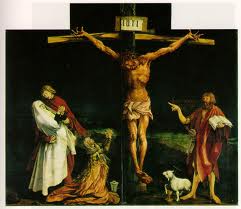
Crucifixion(As we prepare for Holy Week I offer this sermon of mine from 2004, my last year (as it turned out) as pastor at First Church in Pittsfield. Mel Gibson’s controversial film Passion of the Christ had brought the issues of the cross into the public view, and provided an opportunity to address this (quite literally) “crucial” subject.)

“This year  more than other years, there has been interest in the meaning of the passion of Christ because of the new Mel Gibson movie. I am not going to talk about the movie very much since I haven’t seen it. Seth Rogovoy from the Berkshire Eagle asked me to see it and be on a panel, but I said I wasn’t going to see it. But I had read the book!

I haven’t seen it for two reasons. The first is the same reason I have never seen Schindler’s List or Saving Private Ryan. I’m a wimp. I experience film as a powerful medium, and I am emotionally effected by movie violence. Somehow I can deal with battles between hobbits and orcs, but the depiction of historical violence I find very disturbing.

The second reason I haven’t seen it is subtler, and perhaps harder to understand. It is my feeling that there are some things that shouldn’t be put on film, and I personally feel that the death of Jesus is one of them. That may seem hypocritical since I have a reproduction of Matthias Grünwald’s Crucifixion on the wall of my study. Artists have always depicted biblical events. Why not film artists? For me, it is the appearance of reality about film, that “You Were There” quality that makes it so powerful.

I know people who have loved this movie and people who have hated it, people who have felt their life changed by it and people who have walked out of it. I have spoken to people who felt the movie was anti-Semitic and people who didn’t. It seems the movie for some people has served as a kind of cinematic Rorschach test for beliefs people already hold.

However accurate the film is, there is at least one sense in which the movie is not quite biblical, and that is in its detailed depiction of the event. None of the Gospels really describe the crucifixion. There is a restraint about the Gospel accounts, a kind of modesty before the obscenity and horror of the event. Of course, the harsh truth is that none of the Evangelists needed to be told what a crucifixion was like. Whether they wanted to or not most of them had seen crucified slaves along the roads. Tens of thousands of the enemies of Rome, real or perceived, were crucified in the first century AD, so Jesus’ crucifixion was just another one of those.

When the movie came out the cover of Newsweek asked in boldface type: “Who really killed Jesus?” That question arises out of a long and shameful history of Christian anti-Semitism. The foundation of this anti-Semitism has been the attempt to attach historical blame for the crucifixion to the Jews. For centuries in Christian Europe violence toward Jews frequently took place on Good Friday.

We must acknowledge the sad truth that for Jews the cross has been an emblem of persecution just as for Islam it has been an emblem of the Crusades. To admit this is not to apologize for the cross, but it is to apologize for the reprehensible acts that have been done in its name.

The truth is that the responsibility for Jesus’ death lies at the feet of all humankind. That the characters in the Gospel accounts of the Passion were Romans or Jews is incidental to the significance of the cross. We must never forget that Jesus and all his followers were Jewish. Let us remember, too, that “Second Temple Judaism” was not monolithic, but had parties and factions, and some of them were hostile to Jesus.

We do know that crucifixion was never a Jewish method of execution; that would have been death by stoning. A cross was a Roman device, and his executioners were Roman soldiers. So from a strictly historical point of view it must be said that Jesus was the victim of a Roman state execution.

But to the question, “Who killed Jesus? The better answer must be, “I didYou didWe did.”  Which is to say that it was human sin that killed Jesus. He not only died for our sins, he died because of our sins. That is expressed in the second verse of the hymn “Ah, holy Jesus,” which asks:

“Who was the guilty? Who brought this upon thee?

Alas, my treason, Jesus, hath undone thee!

Twas I, Lord Jesus, I it was denied thee;

I crucified thee.”

And the second station of the cross in the Roman Catholic Church prays: “My Jesus, this cross should be mine, not Thine; my sins crucified Thee.”

How can this be? How can a man who died two thousand years ago in Jerusalem have anything to do with me? How can I be guilty? In much the same way church members have sometimes told me that they don’t feel like the confession of sin in our service relates to them. They don’t feel as if they have done any of the things we confess, such as being unjust to their neighbors, or fouling the environment, or what have you.

I try to explain to them that a general confession is just that, general. The prayer speaks for a broader constituency that any of us, or even all of us within the congregation. For when we come before God we don’t come merely as individuals, we come as part of the human family. And as part of the human family we participate in vast social, political and economic networks, many of them unjust and even evil.

Which is to say, that to some extent, we all have blood on our hands, although none of us likes to think about it. In Dostoevsky’s profound novel The Brothers Karamazov, he tells the story of “The Grand Inquisitor.” Christ comes back again to earth, and who he is and what he stands for are too threatening to the status quo for him to be allowed to live. The question is asked, “If Christ walked among us again, would we kill him again?”

John Thomas has written, “Our fingerprints on the nails are easy to overlook, but they are there. Holy Week presses us to see that we too, are violators. Some years ago,” he writes, “I watched a documentary on the Holocaust, titled “Shoah,” which included expected scenes of horror. But for me, the most disturbing portrait of evil was the benign face of an elderly man who had worked for the German state railroad. His job was to issue tickets to Jews forced into cattle cars for transport to the gas chambers. This bewildered-looking man couldn’t comprehend that his bureaucratic job had anything to do with the horror of the Holocaust. He didn’t shoot Jews or toss them in the ovens. He just issued tickets.”  Thomas concludes, “You and I don’t flay the skin off Jesus. But we do issue tickets. Our complicity in evil is real and often profoundly undramatic. Until we face that reality, the Passion is little more than a tragic movie, and we will miss the truth of our own profound need for the redemption of Easter.” (United Church News, April 2004)

But at the foot of the cross we can be set free to recognize ourselves among the guilty. We can identify ourselves among the crowd, both on Palm Sunday when they cried, “Blessed is he who comes in the name of the Lord,” and on Good Friday, when they shouted “Crucify him.” A disappointed angry mob is dangerous, probably not all that different from the crowd that mutilated the bodies of the slain American workers in Fallujah in Iraq this week. Such shameful acts of violence and horror take place all the time, not just in the past, not just “in history.” At the foot of the cross can we acknowledge that even the very best of us bears some resemblance to the worst of us? Can we recognize ourselves as sinners in need of redemption?

Can we put aside the tendency to blame “the other” for human sin and evil? Can we leave behind the need to point an accusing finger at those who are not like us, whether they are poor, or black, or Muslim or Jewish, so that we don’t have to confront our own sin?

This sounds like a grim exercise, but it is a necessary one. Because the Gospel is often bad news before it is able to be Good News. God’s judgment and mercy are two sides of the same coin. And so when we admit our sin, and the sin of the human family of which we are a part, we can then receive the forgiveness God wants for us. At the foot of the cross we can see that Jesus died not only because of our sins, but also for our sins, to take them away and free us for new life with him and for each other.

And this is only possible because Jesus’ death is not just any death. No, the incredible claim we make is that “In Christ, God was reconciling the world to himself.” If Jesus had been just another man, even a very good man, then he is, at best, an example to us of the power of sacrifice, and, at worst, just another martyr to human violence. Then his death is merely a tragedy. Because suffering is never, in and of itself, redemptive. Just ask anyone who suffers. To believe otherwise is masochism.

But why is his death redemptive? Why is Jesus’ death different from all the other tragic deaths in history? Why is his death different from all the other men who ended up on Roman crosses? The answer is not that he suffered more. Others have suffered more, even at the hand of Christians.

So what is it that makes his death different, and makes his cross not a symbol of shame, but a symbol of faith? The full story will be told next Sunday on Easter. It is the resurrection that makes the difference. It is the resurrection that transforms the cross from an emblem of horror into an emblem of God’s wondrous love.

To the eyes of Easter faith the bitter cross is viewed as an act of Israel’s God, consistent with who God had been in the past, a God who rescues and saves, who liberates and reconciles. So the cross is transformed into an atoning, redeeming, reconciling divine act of grace. God in Jesus Christ gives up his life in humble obedience. He takes our sin and the judgment that goes with it and puts it to death on the cross with himself. That is how the cross becomes the symbol of Christian faith, not as a way to blame others for sin, but to admit our own sin and marvel at the lengths that God will go to take it away.

If you want to know what God is like, look to Jesus, and him crucified! There you will see the very nature of God. As C. S. Dinsmore once wrote, “There was a cross in the heart of God before there was one planted on the green hill outside Jerusalem.”

The cross tells us that God’s grace is bigger than our sin. The extent of that love should humble us. As Isaac Watts penned, “When I survey the wondrous cross, on which the prince of glory died, my richest gain, I count but loss, and pour contempt on all my pride.”

That is what the cross stands for, the vast love of God, and our humble contrition before it when we consider the weight of our now-forgiven sins. To turn the cross into a symbol of Christian triumphalism, or of a Crusade, or of persecution is to betray its meaning. To make the cross an emblem of hate like the twisted crosses of Nazism or the Ku Klux Klan is to crucify Christ all over again.

But to admit “I crucified Thee” is not an empty pious gesture. Nor is it mere breast-beating. It is an honest admission of our need to have our sins forgiven, and not only ours but the sins of the whole world, our need to be reconciled to God and to our neighbors. The Good News that we preach is that God has already accomplished this for us through the cross. We need only take what he gives us, and we will find that when we turn to him, he is already coming to meet us.

So let us come to his table today in humility and contrition as those who need forgiveness, as those who need God’s grace.  And let us find in him, whose body was broken for us, and whose blood was shed for us, both bread for the journey and food for eternal life.  Amen.

(I preached this sermon on Palm/Passion Sunday, April 4, 2004 at First Church of Christ, Congregational in Pittsfield, Massachusetts)

(Painting: “Crucifixion” by Matthias Grunewald)

Unknown's avatar

Aurora and the violence that breaks God’s heart

I briefly considered ruminating on the Aurora shootings here and then quickly backed away from what is already a media show of vast proportion. After all, what is there to say?

But then I came upon a little pastoral and theological reflection that said everything (and more) that I would have wanted to say.

My friend and United Church of Christ colleague Howard H. (Skip) McMullen has written a poignant and moving reflection on the love and solidarity of God with human suffering on his fine blog To Speak Now of God.

Here’s an excerpt:

“The Christian faith is built upon the conviction that God has acted, and continues to act in the midst of humankind’s repeated lapses into senseless violence.  God joins us in our tears and grief, yes.  The first heart broken on Friday morning was God’s.  But God has done more than that, physically bearing the worst that humanity can dish out, and rising from it, to make a way for us to withstand the darkness and become bearers of the light.”

I hear echoes of P.T. Forsyth here. Skip’s cross-centered theology comes from his long years of pastoral experience. To read the whole post go here.

Unknown's avatar

The Cross and Violence: A Rumination

Is the cross of Jesus Christ implicated in the violence of our world? More specifically, does the church’s theology of the cross, expressed in its various views of atonement, contribute to fostering violence?

The English word “atonement” was made up by the pioneering translator, William Tyndale, when he translated the Bible into English. It was retained by the King James Bible translators and has made its way into common usage. It literally means “at-one-ment,” the bringing together of that which was separated. It translates several Hebrew and Greek words that are also often translated as “reconciliation,” depending on the context. And that which was separated and needed to be brought together was twofold, the estrangement of enemies needed to be reconciled, and the estrangement of the holy God with the sinful and broken world. The way the cross functions to effect these reconciliations is the Christian idea of atonement.

But do ideas of the atonement foster violence? It is a question that arises out of my own experience in the church. In 1995 when I was living in St Andrews, Scotland, and working on what would later become my book on the atonement, “When I Survey The Wondrous Cross:” Reflections on the Atonement, I wrote an essay on some of the objections to the idea of substitutionary atonement. At the end of the chapter I made note that there were some critics who felt that the cross itself was an emblem of violence, but I didn’t really address this view in depth, because frankly, I thought it was a fringe view without much merit. I still do.

But the view that the cross itself is a cause of violence has been gaining traction in the last decade or so. There have been a spate of books addressing the issue, and in recent years I am hearing ordinands and new ministers repeating these views to the effect that the cross is not, as the church has always claimed, “good news,” but is instead “bad news.”

Let me share a couple of anecdotes. The first was at an ecclesiastical council a few years ago. The candidate told us that she didn’t believe in substitutionary atonement. “Fair enough,” I replied, since there have been some dubious ideas under that banner. “But what do you then make of the death of Christ?” “Christ’s death,” she said, “was the price he paid at the hands of the powerful for his advocacy of an inclusive community.” Admitting that it is at least that, I asked, “Then does the cross have any meaning for salvation?” “No!” she said.

My second anecdote took place in a seminar on the atonement I gave several years ago to United Church of Christ (USA) ministers. During the Q and A time it became clear to me that many of the ministers were uncomfortable with talk of the cross, and some found it offensive. One young man, a bright newly-minted UCC minister said, with some passion, “No good thing came from the cross.”

This rejection of the cross is not new; there have always been critics of the cross as far back as the New Testament. For example, Paul wrote to the Corinthians: “We proclaim Christ crucified, a stumbling-block to Jews and foolishness to Gentiles, but to those who are the called, both Jews and Greeks, Christ the power of God and the wisdom of God.” (1 Corinthian 1:23)

But what is troubling to me is that the attacks on the cross in recent years come from within the church. It comes from seminary professors, and increasingly from pastors. This should concern us, as such teaching and preaching against the cross confuses the faithful and saps the church of the vital nerve center of the faith that is so needed to meet the challenges of our age, including the problem of violence.

That violence has been done in the name of the cross cannot be denied. It isn’t hard to conjure up images of the misuse of the cross as a symbol of violence: the crusaders’ cross on the tunics of invading soldiers in the Middle Ages, the Good Friday pogroms of Eastern Europe and Russia where mobs of Christians would periodically terrorize Jewish neighborhoods, or the burning crosses of  the Ku Klux Klan in the American South.

These and other examples would seem to implicate the cross in the world’s violence, and in racism, anti-Semitism, and imperialism.

But the whole argument against the cross hinges on the important distinction between whether the cross, in and of itself, is a cause of violence, or whether when violence is done in the name of the cross, it is a betrayal of the cross’s true meaning.

I will be arguing for the latter, that where the cross is used to justify or induce violence it is a betrayal of the cross, which is the very center of God’s story of redeeming love to humankind.

Jesus’ crucifixion itself is, of course, a horrific act of violence, but Christian faith, from its early days, has interpreted it as a divine act of reconciliation. My own view, influenced by my St Andrew’s tutor Richard Bauckham, is that the first Christians understood Jesus’ death from the very beginning as an atoning, sacrificial death, and that was expressed in the earliest church’s pre-Markan proclamation that then shaped the written Gospels we have today. This view runs counter to the often-received line that Paul hijacked the faith and created a theology of the cross that was missing from the church’s earliest proclamation.

I argued in my atonement book that ideas of sacrifice and substitution are both biblical and necessary to fully express the radical nature of this divine act of love. Now there are various nuanced and sophisticated discussions about the precise nature of the atonement, and for that I would refer you to my book. My more focused mission when I speak in congregations has been as a witness to the cross in the mainline church, where the crucial center of the Christian story is in danger of being lost.

For we need to keep the whole Christain story in view when we look at any part of it, and I think that is one of the problems that some of the critics of the cross have, in that they focus on the cross, wrenched out of its larger narrative.

So while I am interested in theories of atonement, and want stronger rather than weaker arguments around the “what” of the cross, I want always to view it within the larger Christian story. In that story Jesus Christ, who died on the cross “for us and for all humanity,” must be seen as the One who is “the same, yesterday, today and tomorrow,” and who, as the divine Word, was at the beginning of creation, and will be at the end, on the Day he comes to judge the living and the dead.

But let us be clear that the cross is not just any part of the Christian story, but the very center and climax. And by the cross I mean more than just Golgotha, but, like Paul, I use “the cross” as a kind of theological shorthand to describe the whole saving center of the story as shown in the life, passion, death and resurrection of Jesus.

In that story I see an act of God, who does for us what we cannot do for ourselves, saving us from sin and death. Therefore, my view is that the work of Christ on the cross is constitutive for salvation and not merely illustrative of it. And it is this high view, with its lineage back to St. Anselm, which is particularly under attack from the critics of the cross.

So let me briefly share with you the views of those who consider the cross bad news, then let me to tell you why I think that they are wrong, and finally let me tell you why the word of the cross is good news indeed.

Why some critics of the cross consider it to be “bad news”.

As I have said, I believe that those who do violence in the name of the cross misunderstand and betray it’s true meaning. But I also consider the critics of the cross to misunderstand its true meaning as described in scripture and tradition.

The chief criticism is that the cross is an act of violence against Jesus by God. One of the chief proponents of that view is Professor Dolores Williams of Union Theological Seminary in New York. She has argued that the church should replace the cross with the mustard seed as the primary Christian symbol, because she views the cross as a symbol of violence, especially violence against woman and children.

Mennonite theologian Denny Weaver, another critic of the cross, sums this view up it like this: “The motif of Jesus as the substitute object of punishment, which assumes the principle of retribution, is the particular image that feminists and womanists have found very offensive. It portrays God as the chief exacter of retribution. God punishes — abuses — one of God’s children for the sake of the others. And the Jesus of this motif models passive submission to innocent and unjust suffering for the sake of others.” (Weaver, Violence)

The objection here, so the argument goes, is that Jesus’ obedience to God the Father in accepting the cross demonstrates passivity and submission, and in so doing encourages the acceptance of violence against women by men.

A related charge made by some liberation theologians, such as James Cone, link substitutionary atonement specifically to defenses of slavery and colonial oppression, using ideas of submission, passivity and sacrifice to keep oppressed people in their place.

“Delores Williams calls the Jesus of substitutionary atonement, the “ultimate surrogate figure.” After depicting numerous ways in which black women were forced into a variety of surrogacy roles for white men and women and black men, Williams says that to accept satisfaction or substitutionary atonement and the image of Jesus that it supplies is to validate all the unjust surrogacy to which black women have been and still are submitted. ”

“Such examples show that atonement theology that models innocent, passive suffering does have specific negative impact in the contemporary context.” (Weaver, Violence)

Why the critics are wrong

These views seem to me to say more about the suspicions of the writers than the actual biblical narrative and the atonement theories that are their conceptual representations. After all, if you are looking in the wrong end of the telescope, everything will look small. They are looking at the social consequences of the misuse of Biblical and theological texts, but they are not looking at the texts themselves.

So what I think is needed is a theological interpretation of the cross that takes seriously the complexity of the scriptures. To do that there are some features that are necessary that I find missing or inadequate in the views of the critics of the cross. I have identified 7.

1. Many of the critics do not have a robust view of sin. It was human sin that caused Jesus’ death and Jesus himself “became sin” to save us from sin. That is, he who was sinless died a sinner’s death by the law of his own people, for according to Deuteronomy 21:23 “cursed be the one who hangs from a tree,” a verse Paul quotes in Galatians 3:13.

So it was human sin that killed Jesus, the same sin that we all know in our own lives. Condemned by the twin pillars of the highest civilization of the time, Roman law and Jewish religion, Jesus was crucified by humanity, not at its worst, but at its best.

So the crucifixion wasn’t an aberration, but the kind of event that happens routinely in our fallen sinful world. And this is why the endless debate over who killed Jesus misses the point of the narrative, for when the fingers get pointed, the great Lenten chorale Herzleibster Jesu has it just right, “I it was denied thee, I crucified thee.”

Lest you think this is a gloomy view let me be quick to say that I believe that God’s grace is greater than our sin, but that is no excuse to pretend that sin is not real or powerful. Many pastors have had to defend the prayer of confession in their liturgy against those who say, “I don’t feel I am a sinner.”

Toward the end of my ministry I started replying to that, “Well, then the Gospel is a solution for a problem you don’t believe you have.” In much the same way, many of the critics of the cross see only evil structures and systems, but they do not see the human sin in all of us that is complicit in them. So God’s act of redeeming love on the cross to save us from sin and death is a solution to a problem they don’t recognize.

2. The critics often conflate violence with evil. A good deal of the world’s violence is evil, and I agree that it would be a better world if we tried non-violent solutions to most problems. I ceased to be a pacifist many years ago as Max will attest, but I still have what I call “a preferential option for the non-violent.”

But as Reinhold Niebuhr taught us, there are times and places when only force will stay the hand of evil against the innocent victim. For example, in 1995 if the 400 armed Dutch UN peacekeepers in the so called “safe zone” at Srebrenica had been authorized to use force against the Serb ethnic cleansers, the genocidal murder of 8000 Bosnian men and boys might well have been prevented. Which reminds us that sometimes even non-violence can be complicit with evil.

3. In a similar vein many of the critics of the cross romanticize non-violence. Denny Weaver, author of The Non-violent Cross, raises non-violence to such an exalted place in his theology that it becomes, in Willis Elliott’s phrase, “Salvation by non-violence.” Here the principle of non-violence is used to judge even God’s behavior, so that the violence of Jesus’ cross rules it out as a loving act of God.

This romanticism of non-violence is utopian. It doesn’t take account of the facts on the ground, which is the power of sin and death. God’s victory doesn’t come cheap. God defeated sin and death on the cross at great cost to himself. The horrific violence of Jesus’ cross reflects the real world we live in. In a utopian world, a letter to The New York Times might have fixed it. But in our world, it took considerably more.

4. The critics don’t take Jesus’ Jewishness seriously enough. When we look at the cross theologically we must keep before us that it is Christ who died for our sins, not just any man, but the Jewish messiah. We need to be reminded that Christ is not Jesus’ last name, but the title given him by his followers, a title previously reserved for the figure of God’s anointed, the messiah.

The pre-Markan proclamation that lies behind the New Testament is a thoroughly Jewish interpretation of the death and resurrection of Jesus. That is why the New Testament has so many echoes from the Old Testament.

Why is Jesus’ cross different? Crucifixions were a commonplace in the ancient Roman world, but the significance of this particular cross was the claim that it was God’s anointed who suffered and died. It was their own traditions that allowed these Jews to understand Jesus’ death as an atoning sacrificial death. For example, one of our earliest passages in the New Testament is 1 Cor. 15: 3ff where Paul rehearses the gospel that had been handed down to him that “Christ died for our sins in accordance with the scriptures.”

And the reason it could be understood thus was because the Hebrew scriptures contained stories such as the binding of Isaac in Gen. 22, the description of a suffering servant in the Servant Psalms in Isaiah, especially Isaiah 53, and passages like Psalm 22, which is the source of Jesus’ words from the cross, “My God, my God, why has thou forsaken me? Without this Jewish context the cross is hard to understand properly.

5. The critics don’t take the Trinity seriously. Doctrines are “conceptual redescriptions of the biblical narrative” (Frei).  The doctrine of the Trinity understands the whole Christ event within the inter–dependence of the divine persons. Jesus’ very human experience of being abandoned by the God he called Father, in which he endures the condition of the sinner before God, can be viewed as arising from a Trinitarian act in history, an act to which the Father intentionally sent him and which in obedience Jesus accepted. The cross is, therefore, a Trinitarian act of mutual consent in love between the Father and the Son in the Holy Spirit.

This goes a long way to countering the charge that the cross is a symbol of violence, exploitation or even child abuse.  If you start with a big G god and a human Jesus you have a nnitarian god. But Christians do not know such a god without Jesus. And such a unitarian God, one who requires the sacrifice of the human Jesus is problematic, to say the least. But if we understand the obedient death of the Son as in some real sense a loving act in which it is God who dies for us, we move away from these problems.

The critics also say that substitutionary atonement means God is punishing Jesus. P. T. Forsyth made an important distinction here. He says the cross is penal, in that Jesus, though innocent, voluntarily takes on the sentence that we deserve. But though the cross is penal, it is not punishment, since Jesus is innocent. “For what would the Father punish him? And how could the Father punish the Son, with whom he is always well pleased.”? (Forsyth)

6. The critics have too limited a canon. Like Marcion, the second century heretic who made up his own canon, Luke is their favorite Gospel. Marcion had one Gospel and ten letters of Paul, and no Old Testament, since he believed the God of the Old Testament was a different (and not very nice) God.

The modern critics of the cross often share Marcion’s love for Luke, but not for Paul, who (after God the Father) is their chief villain, for Paul’s cross-centered Gospel. We all have favorite Gospels, and I love Luke as much as the next person, but the thickness of the biblical story is partly a result of the richness and complexity of the canon.

7. Finally, the critics have an inadequate eschatology of the cross. Again we must understand the cross within the framework of Second Temple Jewish monotheism, with its energetic eschatological expectations for a future return of God and his messiah.

The God of Israel was expected to act in the future. Second Isaiah, for example, expects a new exodus, which will show decisively God’s identity as creator and ruler of all things. The first Christians, who had experienced this new exodus in Jesus, understood that God was continuing the story, and “a new narrative of God’s acts becomes definitive for his identity.” (Bauckham, p 71.) The God who acted in the Exodus had now acted again in the cross and resurrection of Jesus.

When the church included Jesus, a human being, humiliated and exalted, into the identity of God, they were saying something radically new about the identity of God. In the dying and rising of Jesus, God had done a new thing that could only be adequately described in the language of Old Testament eschatology. It was the restoration from exile, the new creation, the healing of the rift between God and Israel and more. The sign that Pilate put over Jesus’ head on the cross read, “King of the Jews.” Who could the king of the Jews be other than the messiah of God? Meant by Pilate as a joke, the church could see the truth of it in light of their new faith that in Jesus Christ God had once again acted decisively as expected.

Why the cross is “good news”

1. The cross is the death of ideology. It provides the critical principle which de–centers our preoccupation with both individual and corporate concerns. It calls into question any ideology that would use the Gospel to further its own ends.

The cross provides the church with a anti-ideological bias that protects the Gospel from being blown about by any number of contemporary cultural winds, or co–opted by any number of alternative faiths, religious and secular. The cross also protects the church from both utopianism and cynicism, because it keeps in view that the resurrected one remains the crucified one.

Likewise, the cross helps the church to understand its life and discipleship in other ways than by the canons of success and power that the world so values. It teaches the church to recognize its true hope in the God who raised the dead from the illusory hopes the world holds out for both individuals in the face of death and for human history in the face of futility.

So the church is able to live in real hope only because the cross has taught it where properly to look for hope. Christian hope lies beyond all human endeavors and accomplishments and beyond all possibilities inherent in the natural world. Christians love the world God made and for which his Son gave his life, and we work and pray to make it more like the kingdom to come. At the same time, we know that our true hope lies only in the God who raised the crucified, who is the God who raises the dead. Such hope transcends both personal death and cosmic futility.

2. The cross shows God’s solidarity with all human suffering including suffering caused by human violence. On the cross Jesus suffers an agonizing death, but perhaps more than his physical suffering was the anguish he experienced by the total abandonment of the One he called Father, which he expresses when he cries out from the cross, “My God, my God, why have you forsaken me.” (Psalm 22:1, Matthew 27:46))

In this experience of abandonment Jesus knows solidarity with all human suffering, and if we take his divine nature seriously then God knows this, too, and in some sense experienced it on our behalf, and by doing so redeemed it, which we can only see in Easter hindsight. So not only did Jesus suffer (which is what passion means) but his suffering and death are not incidental to the glorious story of divine atonement and human redemption but quite literally crucial.

Now some of the critics charge that the cross exalts human suffering, and encourages people to accept it. We must admit that suffering, in and of itself, is not redemptive, and so we should be careful not to romanticize suffering. But suffering is such a universal feature of the human condition that surely it must be good news to know that our God understands our suffering, and in Jesus, was himself “a man of sorrows and acquainted with grief.” (Isaiah 53)

3. The cross models forgiveness. From the cross Jesus prays, “Father forgive them, they know not what they do,” and in doing so embodies the loving mercy of God.

This radical forgiveness is the only power that can break the cycles of revenge and retribution that fuel so much of our world’s violence. One of the most powerful moments of Christian witness in my lifetime was when Pope John Paul the Second forgave the man who had shot him, Mehmet Ali Agca. The Pope was shot and seriously wounded in 1981. In 1983 he visited his assailant in prison and spoke privately with him for about 20 minutes. He later said, “What we talked about will have to remain a secret between him and me. I spoke to him as a brother whom I have pardoned and who has my complete trust.”

How ironic it seems to me that the word of the cross is being accused of causing violence, when its message judges and condemns violence

4. The cross is all about God’s love. When we look at the passages in Scripture that speak of God’s love, they more often than not reference the cross as the chief evidence. For example, John 3:16: “For God so loved the world, that he gave his only begotten Son, that whosoever believeth in him should not perish, but have everlasting life.” Or Romans 5:8: “God demonstrates His own love toward us, in that while we were yet sinners, Christ died for us.” Or Romans 8:31, 32: “If God is for us, who can be against us? He who did not spare his own Son, but gave him up for us all—how will he not also, along with him, graciously give us all things?”

And not just in Scripture, but in our traditions, too, we see a cross-centered understanding of God’s love. So the Heidelberg Catechisms beloved first question, “What is your only comfort in life and death?” is answered thus: “That I belong– body and soul, in life and in death—not to myself, but to my faithful Savior, who at the cost of his own blood has fully paid for all my sins…so that everything must fit his purpose for my salvation… he also assures me of eternal life….”

Far from being the cause of violence the word of the cross is God’s love at work, and only that love offers healing and wholeness to our broken world.

It is true that the word of the cross is not a word everyone will hear. As Paul wrote to the Corinthians: “For the message about the cross is foolishness to those who are perishing, but to us who are being saved it is the power of God . . . For Jews demand signs and Greeks desire wisdom, but we proclaim Christ crucified, a stumbling-block to Jews and foolishness to Gentiles, but to those who are the called, both Jews and Greeks, Christ the power of God and the wisdom of God. For God’s foolishness is wiser than human wisdom, and God’s weakness is stronger than human strength.” (1 Cor. 1:23ff)

(Note: This address was given at the First Congregational Church UCC in Stockbridge, Massachusetts on Palm/Passion Sunday, April 1, 2012. It is essentially a re-working of my paper “The Cross and Violence: Is the Word of the Cross Good News, or is it Bad News?” delivered at the 25th Craigville Theological Colloquy, July 2008. I have shortened it and edited it for a lay audience, eliminating most citations and footnotes. The original can be found here.

(The photo is of the burnt wooden cross at Coventry Cathedral after it was burned by bombing in WWII)

Unknown's avatar

Was Christ’s atoning death an expiation or a propitiation? Ruminations on the cross.

One of the perennial questions about the meaning of Christ’s atoning death is “was it an expiation or a propitiation?”  In other words, was the atonement performed towards us, or towards God?  Both  “expiation” and “propitiation” are terms used of sacrifice, but expiation implies a sacrificial taking away of some sin or offence (i.e. “Christ died for our sins”), whereas propitiation implies assuaging the anger or injured honor, holiness, or some other attribute of God.

An expiation changes us, taking away our sin, whereas a propitiation changes God, satisfying whatever needed to be satisfied.  These are not mutually exclusive, obviously, but different atonement theories will stress one or the other.  For example,  in Abelard’s theory, nothing is offered to God, the atonement is a demonstration of God’s eternal love, whereas in Anselm’s theory the atonement is an offering to God, reconciling sinful humanity to God.   The former risks, among other things, falling into subjectivism and failing to take God’s anger, honor, or justice seriously enough.  The latter is criticized chiefly for turning the anger, honor or justice of God into a third thing beyond the Father and the Son, a necessity to which God is somehow obligated.

A further criticism of propitiation language is that it promotes views of atonement that have elements of punishment in them, thereby making its view of God morally objectionable.  There is always a danger when the justice or wrath of God is separated from God’s love.

But do we have to choose between expiation and propitiation?  Aren’t they both rightly part of a full-orbed understanding of the cross?  Theologian George Hunsinger seems to think so, and in his fine book on the Eucharist, offers this useful analysis:

“God’s wrath is the form taken by God’s love when God’s love is contradicted and opposed. God’s love will not tolerate anything contrary to itself. It does not compromise with evil, or ignore evil, or call evil good. It enters into the realm of evil and destroys it. The wrath of God is propitiated when the disorder of sin is expiated. It would be an error to suppose that “propitiation” and “expiation” must be pitted against each other as though they were mutually exclusive. The wrath of God is removed (propitiation) when the sin that provokes it is abolished (expiation). Moreover, the love of God that takes the form of wrath when provoked by sin is the very same love that provides the efficacious means of expiation (vicarious sacrifice) and therefore of propitiation.”  (George Hunsinger, The Eucharist and Ecumenism: Let us Keep the Feast. Cambridge: Cambridge University Press, 2008: 173-4.

It also keeps us from a careless separation of God’s love and wrath, and helps us realize that God’s love is not some avuncular tolerance, but holy love.  God doesn’t tolerate our sins, but takes them away.

(Some of the above is excerpted from my When I Survey the Wondrous Cross:  Reflections on the Atonement ,  Pickwick, 2000, Wipf and Stock, 2010)

(Picture:  Matthias Grunewald’s Crucifixion from the Isenheim Alterpiece)
Unknown's avatar

Atonement: P.T. Forsyth on the Finished Work of Christ


Among all the historic disagreements and discussions on the meaning of Jesus Christ’s atoning death, a pivotal issue is whether the “work of Christ” is a finished work, or whether some level of human participation is necessary to complete it.  One of the theological sins of certain brands of evangelicalism is more of an emphasis on what we do (a conversion, a decision, being born again, etc.) than on what God has already done for us (and for all.)

I ran across this passage in P.T. Forsyth’s Work of Christ in which he parses the issue quite clearly and cleverly, making no mistake that the “work” is finished, but also referencing the role of the Holy Spirit in the church.

“You are afraid of God,” you hear easy people say; “it is a great mistake to be afraid of God. There is nothing to be afraid of. God is love.” But there is everything in the love of God to be afraid of. Love is not holy without judgment. It is the love of holy God that is the consuming fire. It was not simply a case of changing our method, or thought, our prejudices, or the moral direction of our soul. It was not a case of giving us courage when we were cast down, showing us how groundless our depression was. It was not that. If that were all it would be a comparatively light matter.

If that were all, Paul could only have spoken about the reconciliation of single souls, not about reconciliation of the whole world as a unity. He could not have spoken about a finished reconciliation to which every age of the future was to look back as its glorious and fontal past. In the words of that verse which I am constantly pressing, “God was in Christ reconciling the world unto Himself.” Observe, first, “the world” is the unity which corresponds to the reconciled unity of “Himself”; and second, that He was not trying, not taking steps to provide means of reconciliation, not opening doors of reconciliation if we would only walk in at them, not labouring toward reconciliation, not (according to the unhappy phrase) waiting to be gracious, but “God was in Christ reconciling,” actually reconciling, finishing the work. It was not a tentative, preliminary affair (Romans xi. 15).

Reconciliation was finished in Christ’s death. Paul did not preach a gradual reconciliation. He preached what the old divines used to call the finished work. He did not preach a gradual reconciliation which was to become the reconciliation of the world only piecemeal, as men were induced to accept it, or were affected by the gospel. He preached something done once for all–a reconciliation which is the base of every souls reconcilement, not an invitation only. What the Church has to do is to appropriate the thing that has been finally and universally done. We have to enter upon the reconciled position, on the new creation. Individual men have to enter upon that reconciled position, that new covenant, that new relation, which already, in virtue of Christ’s Cross, belonged to the race as a whole . . . The first thing reconciliation does is to change man’s corporate relation to God. Then when it is taken home individually it changes our present attitude. Christ, as it were, put us into the eternal Church; the Holy Spirit teaches us how to behave properly in the Church.  (P.T. Forsyth, The Work of Christ, p 86-87.)

I am struck by the last line.  Would that more people would learn how to behave properly in the Church! I always thought it was a behavioral issue, but apparently it is a theological one as well.

Unknown's avatar

Willis Elliott on Atonement vs. Reconciliation


My friend and Confessing Christ co-conspirator Willis Elliot, who is a polymath, Biblical language scholar, churchman, provocateur, nonagenarian, and a long-time interlocutor, is the guest poster today.

I asked, somewhat rhetorically, in an earlier post why so many in the church like the word reconciliation, but do not like the word atonement, even though they translate the same Greek word (Katallage)?  My answer was that reconciliation is something that we need to do, and atonement is something only God does, and that we tend to prefer the things we have control over rather over the work of God in Christ, not that they are in any way unrelated.

Willis’ response (on the Confessing Christ Open Discussion), as per usual, was thick with insightful word study, and is not for the faint of heart.  But you atonement scholars and fans who visit this blog, and you know who you are, will find his insights useful.
Willis writes:

“ON TARGET, man!  “Reconciliation is something that we need to do, and atonement is something only God does.”

Katallage – the word you mention as for both – had, as its street-meaning, money-exchange. No matter how high & wide a plant grows, it never loses the reality of its SOIL: no matter how diversified the meanings of a word (its “semantic domain”) become, it never loses its contact with the STREET (by which I mean its origin in common, earthly life).

Now, Rick, I’m probably about to tell you nothing you (an “atonement” scholar) don’t know. I’ll call it “How to access [enter into] a word.”

1
Back to the plant metaphor: first, I want to know the ROOT(s) of the word. Kat[a]-all-ag-e is the action (ag) of interchange (kata) with another (all-os). Second, I want to know the STREET meaning(s): (1) money-exchange, commerce, business; (2) the change from enmity to friendship; reconciliation, restoration. Finally, I want to know the CHURCH meaning(s) – “church” in the broad sense of special, particular.

2
The Greek general & Christian lexicons note a special Christian meaning of katallage: reconciliation with God through Christ, at the divine initiative (“by God alone,” & therefore “received” [*lamban-*] as a gift by believers – believing receivers). / But I found none using “atonement”: that technical word seems limited to Greek theological dictionaries. The Eng. wd. (says Mer.-Web. Online) – earliest, 1513 – meant “reconciliation” (now obsolete); means “the reconciliation of God and humankind through the sacrificial death of Jesus Christ”; & (3rd meaning), “reparation, satisfaction.”

3
Synonomies expand from verbal “semantic domains” to conceptual domains answering the question What word-group relates the word-meanings to what “central truth” (the phrase on p271 of R.C.Trench’s Synonyms of the NT (1854; my copy, 1906). In article lxxvii, he’s discussing apolytrosis/katallage/hilasmos– “three grand circles [or ‘families’] of images” of the Cross’ verbally “inestimable benefits.” “Scripture . . . approach(es) the central truth from different quarters,” which “supply the deficiences of one another.”

The article is six pages, assumes a reading knowledge of Latin, & uses extensively the Greek & Latin Fathers. Here, I’ll only mention the first word (redeeming from captivity through payment of a ransom; cessation of bondage from sin as slavery) & the last (Christ as both “priest and sacrifice” propitiation: it’s “richer” than katallage – which states only THAT we enemies have become God’s friends: hilasmos explains HOW this came about [“satisfaction, propitiation, the Daysman, the Mediator, the High Priest”]). / Now for the middle word, KATALLAGE – reconciliation (“the making up of a foregoing enmity”); “atonement” in its original sense (but it has come to have the full meaning of hilasmos: propitiation). (For the meaning-change, Trench refers to Skeat’s Etymological Dictionary of the English Language.)  Rick, I’ve hit the high spots of Trench’s article, which uses Greek/Latin/German. A classic widely-deeply researched & profoundly thought through, written while carrying on his day-work as an Anglican archbishop!

4
Trench’s article fights those who want so to translate these words as to delete “the wrath of God.” Today, we have to fight what you well call a “bloodless theology.” Not just “God is love,” but (as a Methodist pastor, a niece of mine, wrote me a few days ago), “God is only love” (her description of the theology of the BOM [Board of Ordained Ministry] on which she serves). Said she to me, “when [against that narrowness] I mentioned obedience, sacrifice, and accountability,” there was “only silence.” “Few speak on behalf of the Scriptures, . . . honoring the Lord, who has so graciously given them [the Scriptures] to us.” / If God is “only love,” he’s not fully personal, with the full moral sense & full range of emotions. Note how Trench (156 years ago!) insists that without God’s wrath, theology trivializes sin, which is no longer an enmity against God setting God in enmity against sinners.

In katallage, God “laid aside his holy anger against our sins, and received us into favour, a reconciliation effected for us once for all by Christ upon his cross” (p273; the “secondary” meaning is that we are “daily,” “under the operation of the Holy Spirit,” to dispose of “the enmity of the old man [within us] toward God”: “‘Be ye reconciled with God‘ [2Cor.5.20]”). The anti-wrath-of-God crowd make the secondary meaning primary “to get rid of the reality of God’s anger against the sinner,” & “sin as a state of enmity (echthra) with God (Ro.8.7; Eph.2.15; Jam.4.4), and sinners as enemies to Him and alienated from Him (Ro.5.10; Col.1.21; which sets forth Christ on the cross as the Peace, and the maker of peace between God and man (Eph.2.14; Col.1.20).” On pp275-6, Trench goes into detail (with a flood of texts!) on the NT deleting of blood sacrifice for the appeasement of deity: “priest and sacrifice,” previously divided, were “united in Him, the sin-offering by and through whom the just anger of God against our sins was appeased, and God, without compromising his righteousness, enabled to show Himself propitious to us once more. All this the word hilasmos, used of Christ, declares.” (Hilasmos is sacral, its context sacrificial; katallage is only reconciliation-restoration, without the later sacral meaning of “atonement.”)

(Thank you Willis. Used by his permission.)

Unknown's avatar

Can Judas be saved? Ruminations on his role in the drama of Redemption.

Judas Iscariot, one of the Twelve Apostles, and the one who betrayed Jesus with a kiss, has become a byword in English for a betrayer.

None of us is a stranger to betrayal.  It is a particularly painful experience because it comes at the hand of someone we trusted; someone we thought would look out for us;  someone we loved, and believed loved us.  We must consider that one of the sufferings that constitute Jesus’ passion must have been that he was betrayed by one of his close friends, a member of his inner circle.

For my Holy Week devotions this year I have been reading At The Cross:  Meditations on People Who Were There by Richard Bauckham and Trevor Hart (IVP, 1999), two fine scholars from the University of St Andrews.  I highly recommend it.

Their meditation on Judas is particularly insightful.  Although they admit that Judas’ deed was a dark one (“there is no getting Judas off the hook”), they assert the paradox that his betrayal was a necessary act:  “The structure of the Gospel plot demands it.”

And it is quite true that Jesus speaks repeatedly, not only that he will experience death, but that he will “be given up” to death.  So Judas is the instrument of that happening, and therefore an important player in the narrative of the passion, what I like to call “the drama of redemption.”

But though Judas plays his part in the drama, the Christian tradition has pretty consistently painted him to be an utterly despicable character. I have been ruminating on this, since it raises many questions, some of which I will leave to others to address.

But with the help of Bauckham and Hart, I have two thoughts to share about his role.

The first is Judas’ solidarity with all of humanity.   We are all, to some degree or another, betrayers.  There are the big betrayals, of course, like marital infidelity or financial shenanigans like the recent ones by Bernie Madoff.  But there are also the little daily betrayals where we break trust with those we love and care for, and in this case Judas is not so different from all of us.  His sin is different in degree and not in kind.

My second thought follows from the first, and that is whether Judas can be saved?  The Christian tradition has generally said no.  Perhaps I have fallen under the spell of Karl Barth’s alleged universalism, but I believe in a God whose mercy is so vast that there might be a place for Judas in it.

I don’t make the move to dogmatic universalism, because the separating of the “sheep from the goats” is God’s job and not mine. I think I have also been influenced by a fine dissertation I read this summer by Jason Goroncy, in which he asserts convincingly that the trajectory of P. T. Forsyth’s theology should (but doesn’t) lead him toward dogmatic universalism, a belief that all will ultimately be saved.  I still don’t know whether I am there yet, but I have been ruminating about the “love that will not let me go.”  As a theologian of the cross and the atonement I would be the last to limit its power and scope.  Who can say where the saving work of Jesus Christ ends?

Is this another scandal of the cross?  It just might be.  Have you noticed that in many of our theological discussions about who is in and who is out with God, we naturally gravitate toward the extreme cases: Hitler, Stalin, and, of course, Judas.  This lets us off the hook.  But it shouldn’t.  “All have sinned and fallen short of the glory of God.”

One of the most powerful and poignant moments for me every Holy Week is when I come to the line in the passion hymn Herzliebster Jesu where the congregation sings, “I it was denied thee, I crucified thee.”  That pretty much settles for me the ever vexing question of who killed Jesus.  Yes, the Romans, but they were stand-ins for all of humanity.  Still, from the cross Jesus forgives his murderers, and by extension, us.

So if I can be saved, can Judas be saved?  I am not the one to say, but I am intrigued by what Bauckham and Hart do in their meditation. They end with a poem that speaks to this very point, an “imaginative construal between Judas and Jesus in death, which ironically brought Judas much closer to his master than any of the other disciples, as they hung on their respective trees.”  I am reassured that I am not the only one who sometimes has to turn to a poet when the language of theology reaches its outer limit:

The  Ballad of the Judas Tree

In Hell there grew a Judas Tree
Where Judas hanged and died
Because he could not bear to see
His master crucified
Our Lord descended into Hell
And found his Judas there
For ever hanging on the tree
Grown from his own despair
So Jesus cut his Judas down
And took him in his arms
“It was for this I came” he said
“And not to do you harm
My Father gave me twelve good men
And all of them I kept
Though one betrayed and one denied
Some fled and others slept
In three days’ time
I must return
To make the others glad
But first I had to come to Hell
And share the death you had
My tree will grow in place of yours
Its roots lie here as well
There is no final victory
Without this soul from Hell”
So when we all condemn him
As of every traitor worst
Remember that of all his men
Our Lord forgave him first

by D. RUTH ETCHELLS

These mediations are particularly significant to me since they were developed for a Good Friday service at St. Andrew’s, St. Andrews, Scotland, very near to where we lived, and where we sometimes worshipped, during our sojourn there in the Spring and Summer of 1995.  Alas, we left a year too early to hear them there, as they were done in 1996 and 1997.

(At The Cross:  Meditations on People Who Were Thereby Richard Bauckham and Trevor Hart, InterVarsity Press, 1999)

Unknown's avatar

More Palm/Passion Sunday Ruminations: Have we preachers asked people to believe too little?


This Sunday may be the best opportunity of the Church year for a preacher to get at the fundamental questions of Jesus’s identity and its correlate Christian identity.  Many Churches read the entire Passion Narrative tomorrow, and that should give the preacher plenty of grist for his or her homiletical mill.  It is an opportunity not to be squandered.

The simplest answer to these big questions is to look to Jesus Christ, but like all simple answers there is more to be said. The variety of witnesses to Jesus in the Bible create a complex and intriguing portrayal for the serious inquirer. But it is more like a portrait gallery than a single portrait.

Where among the various portraits shall we look for our answer? Do we look to the Incarnate One, the baby Jesus in Mary’s arms as the Word made flesh? Or do we look to the wise rabbi of the Synoptic Gospels who teaches his followers with wise and paradoxical parables? Or to the pre-existent Christ of St. John’s prologue, the Son of the Father who was at the beginning of creation, and through whom all things were made? Or do we look to the healing Jesus who made the lame walk, and gave the blind their sight? Or to the prophetic Jesus who wept over Jerusalem, threw the money changers out of the temple, and said he came not to bring peace but a sword? Or to the “Alpha and Omega” the beginning and the end, the Son of man coming from the clouds to bring a new heaven and a new earth to our fallen world at the end of history, as Jesus is depicted in the book of Revelation?

And the answer is of course “Yes!” to all of these, for they are found in the church’s book and all of them together with many other aspects give us our portrayal of this figure who is our living Lord and Savior, and who is more even than all these things, more than even the scriptures that witness to him, or the creeds, confessions and doctrines that give articulation to the truth about him, more even than all the experiences of the faithful who have known him in Word and Sacrament as well as in other experiences: in prayers, visions, dreams and high moments of personal revelation.

But who Jesus Christ is goes beyond all these. His is “the name above every name, the name before whom every knee should bend and every tongue confess that he is Lord.” And why is that?

Is it his teachings? There is a school of thought that says the thing that was the most distinctive about Jesus was his teachings and that we should regard him as a great teacher, indeed the greatest teacher ever, and that what he has left to posterity was his unique teachings. There is a partial truth here, for his teachings have their place in our hearts, but his teachings alone do not make him who he is for us. P. T. Forsyth puts it like this:

The difficulty we have to face, if Christ was mainly a teacher, or even but a personal influence, is this . . . He was a failure with those who came under him at first hand. His personal influence through his doctrine averted neither his unpopularity, his desertion, nor his cross. It did not prevent the people it was turned on from disowning him, nor the disciples from leaving him, nor the authorities from killing him. Indeed, it provoked all three.” (The Preaching of Jesus and the Gospel of Christ, p. 14)

No, it was not what Jesus said that makes him who he is, it is what Jesus did. It is not the words of Jesus, but the act of Jesus who is himself God’s Word to us. It is above all else Jesus’ obedience unto death, in short it is his cross, where he died for the sins of the whole world, including yours and mine, and where he unleashed a power that still today is changing the world, in fact the whole creation.

It wasn’t the wisdom of his message or the eloquence of his preaching or the drama of his miracles that led his early followers to go out and change the world as if their lives depended on it, which in fact it often did.

No, it was the personal power of his cross, the cross that judged and redeemed their nation and indeed the whole world, the cross that set them free from bondage to sin and death, the cross that had made them right with God and with one another, the cross which had seemed to be the deadest of dead ends, but in fact turned out to be the divine strategy for overcoming the lost sin-sick world that could do nothing for itself.

Unfortunately the modern church has often been embarrassed by the cross and has sought to improve the manners of the Gospel so that it is an offense to no one. As long ago as 1915 Forsyth wrote,

We have gone too far . . . in the attempt to put Jesus into modern categories, and make him the grand agent and congenial denizen of modern culture . . . The present state of the Church, the poverty of its influence on the world . . . shows that we have gone much too far in the effort of liberalism to interpret Him as the expression and patron of what is best in the world, as the tutelar of civilization, at the cost of his work in renouncing, challenging, overcoming, and so commanding, the world. The Jesus of the cross has succumbed, even within the Church, to the Jesus of society, the Jesus of culture, or the Jesus of the affections. We are trying to act on men [people] with a Jesus of distinguished religion, or a Jesus the sanest of all the deep saints, with Jesus the historic character, or the fraternal, or the pietist, rather than with Jesus the Gospel power, the living dynamic of the Kingdom of God. And the result on the world is disappointing.” (The Preaching of Jesus and the Gospel of Christ, p. 43)

I am convinced that the problem is not that we have asked people to believe too much about Jesus.  Rather we have asked them to believe too little. A good man, an inspiring preacher, a wise teacher, a moral example, even a martyr held up as the highest example of sacrifice; none of these will do to save us. None of these are deserving of our worship, and none of these do justice to the biblical story of what Jesus was all about. But in the cross of Christ we see both the power and wisdom of God, “For God’s foolishness is wiser than human wisdom, and God’s weakness is stronger than human strength.” (1 Corinthians 1:25)