Unknown's avatar

Some Lenten Reflections on Forgiveness

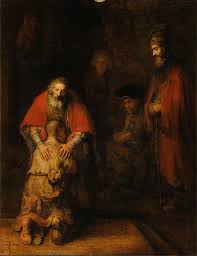
Prodigal son by RembrandtThe idea of forgiveness is so ingrained in our cultural and religious traditions that it is easy for us to overlook what an extraordinary idea it is. Although we tend to separate out “forgiving” and “forgetting” the biblical notion of forgiveness is literally “a forgetting,” in that after the act of forgiveness “it is as if ” the grievance never happened.

It is only the aggrieved party who can do the forgiving, and the act of forgiveness “wipes away” the memory of the grievance so that it no longer has any influence on the relationship. So it is that the phrase “I will remember their sins no more” appears again and again in the Bible, for example, in Isaiah, Jeremiah, and Hebrews.

Before this idea of forgiveness took hold there was simply “revenge,” in which affronts were met with retribution, often disproportionate to the original wrong. These “family feuds,” if we want to call them that, could go on for generations, and still do, as we see sometimes, for example, in the Middle East, where memories of affronts are long.

A moral advance on such indiscriminate retribution was the lex talionis, the “law of retaliation,” which prescribed that the response had to be equal to the offense, as, for example, “an eye for an eye and a tooth for a tooth.”

But the idea of forgiveness moves social relationships into a whole new key, and goes beyond mere justice. Indeed, forgiveness is an affront to justice, which is one of the perpetual accusations made against the Gospel by its critics.

Israel’s God is a god who forgives, but we may recall that the first covenant in the Bible is the covenant with Noah, and in that story God’s forgiveness has limits. “The Lord saw that the wickedness of humankind was great on the earth, and that every inclination of the thoughts of their hearts was only evil continually.” (Genesis 6:5)

So God does not forgive the people and punishes them with a flood. God shows some mercy, enough to save a remnant in the ark, the blameless Noah and his family, and the several species of animals. But God repents of his action, viewing it as a dry run (if you’ll excuse the pun), and promises never to do it again, laying down his arms (so to speak,) and leaving his bow in the sky to remind him.

In Exodus there’s a seeming change in the character and identity of God, in which mercy becomes a key quality. In preparing for today I took two volumes of the Anchor Bible Dictionary, the M volume for “mercy,” and the F volume for “forgiveness.” When I found the entry for “mercy” it said, “see LOVE.”

In Exodus we have a particularly important passage for subsequent Jewish and Christian understandings of God’s identity and character. It is Exodus 34:6-7, when God tells Moses to go up Mt. Sinai with two stone tablets. As you recall, God descended in the cloud, revealed the divine name to Moses, and then proclaimed to him:

“The Lord, the LORD,
a God merciful and gracious,
slow to anger,
and abounding in steadfast love and faithfulness,
keeping steadfast love for the thousandth generation,
forgiving iniquity and transgression and sin,
yet by no means clearing the guilty,
but visiting the iniquity of the parents
upon the children
and the children’s children,
to the third and fourth generation.”

Now this passage is really packed with things to ponder, but I want to highlight three for you.

1. First, this is a big moment in the history of God and his people. The revealing of the divine name tips us off to it, and right after this is the giving of the law and the Sinai covenant. To reveal one’s name is to be in relationship. God chooses to be in relationship with Israel, and renews the previous covenants.

2. Second, while we in our day tend to focus on the individual, and on individual sins, notice that here the emphasis is collective to the people as a people.

3. Third, the relationship is not only collective it is trans-generational, the promise applying across multiple generations.

I would guess that most of what we talk about in this Lenten study over the next few weeks will be about individual acts of forgiveness applied to willful, intentional sins. But the early understandings of forgiveness in the Bible were almost always collective, and almost always for inadvertent sinning.

So I need to say a word about why divine forgiveness was a necessary condition for God and Israel to be in relationship. This is a little hard for us to get our minds around because we tend to think of sin as a moral category, and it was also for Israel. But sin was frequently, perhaps even more frequently, thought about not as morality, but as purity.

God was understood to be holy and humans were not, the creator and the creatures were in different categories. And so we see the development of the elaborate holiness codes in Leviticus, which were designed to produce ritual purity in people so as not to offend God. Even so, it was impossible to keep all the myriad laws required.

Remember I said most sins that needed to be forgiven were inadvertent. So it wasn’t flagrant sinning like robbery, murder, or adultery, the ones we think of in moral categories, which needed to be forgiven so much as the infractions against ritual purity.

This is part of the backstory behind some of Jesus’ conflict with the scribes and the Pharisees who were zealous for the law, the maintaining of ritual purity.

I don’t think I am stating it too strongly to say that our very humanity makes us in need of forgiveness from the God who is holy. And that is why when God chooses to be a forgiving God it is a precondition for us to be in relationship with God at all.

And again, I think if we look at the grand arc of the whole Christian Story in the scriptures of the Old and New Testaments we see how the very identity of God can be understood in terms of forgiveness, the fruits of mercy and love.  So much so that, after Good Friday and Easter, the early disciples of Jesus, all of them Jewish, as he was Jewish, came to call him “Lord,” the name previously reserved for God alone. It is quite remarkable. They saw in his love, mercy, and forgiveness congruence with the character and indenty of their God.

Before I move on to focus on the New Testament I need to mention something else relevant to the idea of forgiveness that will come into play later: that is that the priestly cult in Israel saw one way to blot out the memory of sins was through a blood sacrifice of an animal as an atonement or expiation. The people around Jesus’ had either participated, witnessed, or at least knew about such ritual blood sacrifices from the daily operations of the Jerusalem temple. So when we talk about Jesus’ death as atonement for sin, we are missing the original referent of the metaphor, which is partly why the idea is so hard for us. It’s a dead metaphor. I’ve written a book about all this if you want to know more (see When I Survey the Wondrous Cross: Reflections on the Atonement, Wipf and Stock, 2010)

All these understandings about God’s holiness get carried into the Christian era, so the New Testament also understands sin as an offense against God’s holy law or against another human being. As in the Old Testament forgiveness involves the wiping from memory of the offense by the one affronted so as restore harmony in the relationship.

The seriousness of sin is one of the chief preoccupations of the New Testament. Humans cannot by themselves avoid God’s condemnation. So Jesus says, in the Sermon on the Mount, “Unless your righteousness exceeds that of the scribes and the Pharisees you can not enter the kingdom of heaven.” (Matthew 5:20) And St. Paul flatly declares in his letter to the Romans: “All have sinned and fallen short of the glory of God.” (Romans 3:23)

This is the predicament of the human condition, and the context of Jesus’ ministry. In the retrospective look of the apostolic age it was understood that, as it says in 1Timothy 15, “Christ Jesus came into the world to save sinners.”

Our best example of forgiveness at work is in “The Parable of the Prodigal Son,” (Luke 15:11-32) which I know some of you have been studying. One of the key features of that story is the father’s eagerness to restore his relationship with his lost son. Notice the father forgives the prodigal before the son even has time to deliver his little repentance speech. We should recall that the whole purpose of forgiveness is the restoration of the broken relationship. And in this parable the older brother, who didn’t leave, didn’t sin, and kept all the rules, thinks it is unfair that his deadbeat brother is restored. And it is unfair, because forgiveness is driven not by justice but by love. The older brother thinks he has earned his father’s love by his own achievements. But you don’t earn love. The father loves the prodigal not because he is good, but because he is his.

I’d like to quickly point to two more features of the New Testament idea of forgiveness. The first I have mentioned already: the death of Jesus, which in miniature focuses the whole gospel story. Here the sinless faithful Messiah, betrayed, denied, and abandoned by sinful humanity, obediently goes to his death with forgiveness on his lips, praying to his Father for forgiveness for those who killed him. It is a loving act of atonement.

The second feature, which will come up in our questions, is the way Jesus taught his disciples to pray about forgiveness in the Lord’s Prayer: “forgive us our trespasses (debts, sins), as we forgive those who trespass against us.” Here, and elsewhere, Jesus is saying that the capacity to receive forgiveness is somehow intimately connected to our capacity to forgive. In Matthew 5:23-24, for example, Jesus says, “So when you are offering your gift at the altar, if you remember that your brother or sister has something against you, leave your gift there before the altar and go; first be reconciled to your brother or sister, and then come and offer your gift.” It is as if only those who can forgive can understand it enough to receive it.

( I gave this Lenten Study presentation on March 9, 2014, at the First Congregational Church (UCC), Stockbridge, Massachusetts.)

Picture: The Prodigal Son by Rembrandt

Unknown's avatar

A Son’s Remembrance of His Mother on her Birthday: Frances Irene Floyd. March 4, 1914-September 18, 1967

Frances Irene Floyd

(I first published this in 2010, but thought the 100th birthday warranted a repeat)

Today is my mother’s birthday. She was born on this day in 1914, and died on September 18, 1967 at the age of 53 from cancer. She died too young. She would have been 96 today.

Her older sister outlived her by 40 years. She’s died now too, as has my Dad, so there is hardly anyone who even remembers her. But I do.

She most likely wouldn’t have died in this day of regular diagnostic tests and improved cancer treatments. But in the 1960’s cancer was considered by most people to be a death sentence, and usually was.  Her doctor told us she had it, but asked us not to tell her, because the news would be so emotionally devastating she might lose hope.  So in addition to having to deal with her dying, we had to lie to her.  She was a smart woman and finally figured it out and made us tell her.

I was eighteen when she died. She was told by her doctor in September of 1966 that she had about three months to live, and she said  “Nonsense, I will live to see my daughter and son graduate (from college and high school,  respectively) next spring, and she did, although she was in a wheelchair.  My sister was engaged to be married, and the date was moved up to early September in the hopes she could participate. She couldn’t, since she was in the hospital dying.

That day, my Dad, my younger brother, and I left immediately after the reception, still in our morning suits, full of champagne punch (at least I was), to visit her in the hospital with a fist full of Polaroid photos to show her of the wedding.  She was delighted, but didn’t have much energy to enjoy them.

A few days later I said my goodbyes to her (though far too much remained unsaid) and then I traveled 1400 miles away to go to college.

Two weeks later she died, and I came home for the funeral. No single event in my life as her early death has had such an impact on the rest of my life.

I often think of her on March 4. She said it was the only day of the year that was a command (“march forth!”), and when she was a kid she thought she was a big deal because she was born on Inauguration Day, but Congress moved that to January in 1933, so she lost that distinction.

Though I often think of her on her birthday, it sometimes isn’t until later in the day. Some years I have forgotten it completely, and later in the week realized that I was sad on that day for seemingly no reason. But the heart often knows better than the mind.

Mostly I think about what she missed. She never knew my wife, and my son and daughter. She never knew I graduated from college or became a minister. She never met any of her seven grandchildren or my brother’s wife. She was cheated.

Her short life was in many ways remarkable for a woman of her generation. She was born in Oklahoma City and grew up in Wichita, Kansas, where she went to college, a rare thing for women in the 1930’s. She became a librarian, one of the few vocations open to women back then, along with teachers and nurses. After graduation she got a job at the Wichita Public Library.

She was a dreamer and what we once called a “bookworm.” She always had her nose in a book, and expanded her rather conscribed universe through her imagination. Her parents were good people, pious Midwestern Protestants, and she lived at home with them throughout her mid-twenties, as unmarried women were expected to.

But she wanted more out of life. She dreamed about far off places she had read about in books. She dreamed of the England of Jane Austen and Dorothy Sayers. And like many Americans in her day from the cultural hinterlands she dreamed of New York City, then in its heyday, where Dorothy Parker and James Woolcott could exchange bon mots in the Algonquin Club. It was a far cry from Wichita.

By her late twenties she was considered an “old maid,” most likely never to be married. She wasn’t accepting any of this.

So she decided to change her life. Against her parents’ wishes she applied to Columbia Library School (now sadly gone),  arguably the best in the country, and when she got in, she went.  She packed her suitcase and took the train by herself to New York, and got a room at the International House near Riverside Church and never looked back.

She loved New York. Like so many people who go there she had big dreams. She wanted to be a writer, and scribbled short stories in her spare time.  I have many of them. They are not particularly good, overly self-conscious and somewhat formal in style, but they are interesting and really not bad.  She was a good writer, but she tried others’ voices and never found her own.  She used to joke that she had rejection slips from all the best periodicals. One of her grandsons is a writer and won an O’Henry Award a few years ago for one of the years’ best short stories. She would have liked that.

When she graduated from Columbia she got a job at the New York Public Library on Forty-Second Street, and went to work every day between the storied lions. There she got such a good reputation for cataloguing books that she was asked from time to time to do it for the Library of Congress.

She became an Episcopalian, which I expect didn’t go down too well with her folks back in Wichita, in a day when anti-Catholicism was still an ugly feature of much of Protestantism, though to be fair, I never heard any of it from them.

She met my Dad, a handsome intellectual Bostonian, while she was working at a summer job at the University of New Hampshire, where he was teaching while a Ph.D. candidate back at Columbia. They discovered they both lived in New York, and when they got back to the City they started dating, and eventually married.

I am the second of their three children. My sister and I were born in New York City and my kid brother was born in New Jersey, where we moved when my parents realized that New York wasn’t a terrific place to raise kids, especially when you had limited means.

Church was important to my mother and she was on the altar guild and worked on the annual bazaar, and baked pies for the Bake Sale, and if we were lucky she might make one for us.

I thought of her the other day when I was in church. It was an Episcopal  Church and the rector, who was celebrating, is a woman, as is the  associate priest, as were the two acolytes. So the communion table was surrounded by women, and no one thought a thing about it. My mother would have liked that, although in her day it would have been a complete flight of fancy to imagine it.

She was a proto-feminist in a quiet way. My sister went to Vassar when it was a women’s college, and my mom was very proud of her. Nearly thirty years later my own daughter graduated from Wellesley College, and I thought of my mother on that day, too, although she would have been equally proud of my son’s graduation, for she was nothing if not fair.  And what would she make now of my daughter going to divinity school?

When we were growing up in the suburbs she took a job as a librarian in a middle school nearby. Her students loved her and she encouraged them all to read, read, read. I suspect she often quietly overlooked a library fine on an overdue book if it was a hardship for the student’s family to pay it.

Last spring I wrote a paper about my love of mystery novels, another passion she passed on to me. I mentioned her in it and got this remarkable anonymous comment: “If your mother was the Mrs. Floyd who was the Wandell librarian in the ’60s, I remember her! She was wonderful. In fact, I use FLOYD as a password on book-related websites (what greater homage?).”

I have now outlived her by 7 years, and she has been gone from my life for so long I can’t recall her voice, and I can remember her appearance mostly from old pictures. I sometimes glimpse something of her in the faces of my daughter and my two nieces, and see inklings of her ways when they labor at crossword puzzles or slaughter one another at Scrabble.

I woke up in the wee hours this morning and started thinking of her and tears welled up in my eyes, even though she has been gone 43 years. So I guess I still grieve.

But mostly I am grateful for the years I had with her. She gave me words, books, music, a dry sense of humor and above all, faith. She also gave me a lively sense of the communion of saints, and makes me acutely aware of our connection to those who have gone before us and help make us who we are.

So here’s to you Mom. Happy Birthday!

Unknown's avatar

Some Winter Posts Worthy of your Time

Winter scene

In my peregrinations around the blogosphere I came across two very wise and well-written posts by ministerial colleagues of mine. I hope you will check them out.

First, the incomparable Mary Luti, whose blog, sicut locutus est, should be on your blogroll, wrote “Why I Teach.” Here’s a sample:

I want students to take someone else’s wisdom for a serious test drive. I want them to rent with an option to buy; to suspend suspicion and develop a bias toward faith in the considered opinions of others; to respect the authority of authorities instead of keeping up the fiction that all ideas have equal value and that all opinions count the same.

Secondly, Emily Heath, a Vermont pastor and top-notch blogger, has a beautiful and bravely personal post called “Falling: Recovery, Silence and the Church.”  Here’s an excerpt:

But the more I thought about it (new Boston mayor Marty Walsh’s openly talking about his recovery during the campaign), the more I felt sad for the church. If an admission of being in recovery can actually help someone in the hardball world of politics, why is it so feared in the very place where redemption should be celebrated? Why aren’t we, people who talk about grace and forgiveness and new life, in the business of teaching people what to do when they fall? Why don’t we acknowledge these things so that we can help people know where to turn when they need help to get back up?

There are mountains of ephemera in the blogosphere, but well-written wisdom, like gold, is where you find it.

(Photo by R.L. Floyd, 2014)

Unknown's avatar

Thoughts and a Prayer on Martin Luther King Day

MLK Memorial(Last month I was visiting my son in Washington, D.C., and I revisited the Lincoln Memorial where Martin Luther King gave his “I Have a Dream Speech.” I also visited the Martin Luther King Memorial for the first time. It was dedicated in 2011, and this was my first time in Washington since then. I was deeply moved by both monuments, and struck by how much of Dr. King’s Dream, especially around economic justice, is still unfulfilled. People often forget that he was not only a tireless worker for civil rights, but also for peace, and the rights of workers and the poor.

This prayer of invocation is from our local Martin Luther King Service from a decade ago.)

“Lord God, we give you thanks for the blessings you have so generously lavished upon us, for all the ways you provide for our life with both daily bread and spiritual nourishment. It may be cold outside, but let us be warm in here, warmed by the presence of this congregation, warmed by the memory of Martin Luther King, and warmed by the power of your Holy Spirit, whose fire kindles our courage, and makes us bold for your kingdom and its righteousness.

Forgive us those times and places when we have let you down, when we have not answered to the better angels of our nature, when we have danced to the world’s tune and listened to the seductive voices of the powerful and privileged as if their voice was your voice, and worshiped the manifold idols of our own imaginations. Turn us again to you and your righteousness. Keep us from the temptations of an easy virtue and a pious complacency.  Remind us that the commitments to righteousness, justice and peace for which Dr. King lived and died are still not accomplished.

So be about us and within us and among us this afternoon as we worship you and remember your servant Martin.  Be especially with our preachers and speakers and singers and musicians.  And let this time together be precious time, let it be your time, that we may catch a glimpse of your new heaven and new earth, when all the deferred dreams of many generations will be finally fulfilled, when all, from the least to the greatest, will see you and know you, when war will be no more, and prejudice and oppression shall cease, and none shall be afraid.  Amen”

(Dr. Floyd’s invocation from the Martin Luther King Memorial service at Second Congregational Church (UCC), Pittsfield, Massachusetts on January 19, 2003)

Unknown's avatar

The Calling of Disciples: A Sermon on Vocation

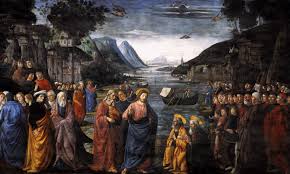
Ghirlandaio

John 1:29-42

 What is vocation? We typically think of vocation as our job or profession, but the idea is much larger and richer than that, so let’s take a look at it, starting with a little word study.

Vox is the Latin word for “voice,” as in Vox Populi, the “voice of people.” The Latin verb “to call” is vocare, as it still is in Italian. The noun form is vocatio.

There is a whole cluster of English words that have these Latin words as their root, words that refer to voice, to speaking and calling. For example, when we “speak out” we are being “vocal.” The whole collection of words we use to speak is our “vocabulary.” And, of course, a person’s calling is his or her “vocation.”

In Christianity (and its mother Judaism) our God is a God who has a voice, a God who speaks and calls.

But God’s speaking is different than our human speaking in an important way. We make a distinction between human speech and action.

But for God there is no such distinction: the Word of God doesn’t just say something, it does something. So, for example, in Genesis 1, God creates the worlds with a word. Recall how God said, “Let, there be light! And there was light.”

And recall also how God says in Isaiah 55, “My word will not return to me empty, but will accomplish that which I purpose.” Isaiah himself is an example of a prophet, a person called by God to speak for Him, so that when the prophet speaks, his words are heard by the people as the Word of God.

Likewise in John’s Gospel, we see that Jesus is called “the Word of God.”  John 1: “In the beginning was the Word” intentionally mirrors Genesis 1, “In the beginning God created the heavens and the earth.”

But to say that Jesus is “the Word of God” is to say more than that he speaks the Word of God, as Isaiah did or the other prophets did.

No, in Jesus, we see this intimate connection between speech and act, between word and deed. Because Jesus is both the one who speaks the Word of God, and he is also the one who accomplishes it, by his life death, and resurrection.

And so we see in today’s Gospel from John, at the very beginning of Jesus’ ministry, the calling of the first disciples, which sets in motion the drama of the rest of the Gospel.

Why does Jesus call disciples? To answer that we need some background on what Jesus’ ministry was all about. First of all, Jesus comes into a time and place where God was expected. The people had been waiting, longing, hoping for the coming of God’s reign in the form of his anointed one, which is the word “messiah” in Hebrew, and “Christ” in Greek.

The role of John the Baptist in the story is important because many at the time thought that John the Baptist was a figure like Elijah. Elijah was often thought to be the one who would come before the messiah, a forerunner figure.

Many people saw John the Baptist in this same light, and his appearance in the wilderness raised expectations for the coming of the Messiah. When Jesus shows up preaching and teaching many thought he was the expected One.

In our reading today the evangelist describes Andrew and Peter as disciples of John the Baptist, who leave him to follow Jesus.

So Jesus calls disciples for a very particular reason, which is hinted at by his calling twelve of them. This mirrors the twelve tribes of Israel. This is just one of many indications that Jesus understood himself to be the carrier of God’s special calling of Israel.

And what was Israel’s special calling? We get an inkling of it in our Old Testament reading today, where God says to Israel, “I will give you as a light to the nations, that my salvation may reach to the end of the earth.” (Isaiah 49:1-7)

In theological terms we refer to this special calling as “election.” In the Bible election is never for itself. No, election is always to accomplish the purposes of God.

The “chosen people,” whether we are referring to Israel or the church or both, are not called because they are better than others, but because God has use for them. And if we pay careful attention to the stories of the people God calls in scripture, it becomes quite clear that God doesn’t call the qualified, but rather qualifies the called. Think of Abraham and Sarah, well past their prime, Jacob, the liar and thief, Moses, the murderer, and Mary the poor teenage unwed mother. These are people like us and people we know.

So once again, you may be thinking, “Well, that’s really interesting Rick, and we’re glad you got to use your high school Latin, but what’s all this got to do with us?”

And the answer to that is that it has everything to do with our identity as a congregation and our understanding of our mission. In other words, our vocation informs both “who we are” and “what we do.”

I am talking about our vocation as church. We don’t just come to church, we are called to be the church. There’s a difference.

Here’s a hint about our calling. In the Call to Worship for this morning I referenced the UCC Statement of Faith several times. Twice it refers to God’s call. The first call is in the beginning: “God calls the worlds into being.” There’s Genesis 1 again.

The second call from God is through Jesus, “He calls us into his church to accept the cost and joy of discipleship.”

So the church is called as an instrument of God’s purposes, and those purposes are the same as in the original creation.

To begin to think about ourselves that way, as being called for God’s purposes, will change both our identity and mission. We are not merely a voluntary association of individuals with a benevolent and spiritual focus, although we are that.

But we are more than that, we are called, we have a vocation.

This concept of vocation was very important to our Puritan forbearers here in New England. We talked about this in our Men’s Book Group on Wednesday. Before the Reformation vocation was understood to be only for the religious life, for the monk, nun, or priest.

The Reformers changed that. Luther and Calvin believed that there was a general calling to repentance and a godly life for all Christians, and there were particular callings to life’s several vocations, as we understand them today.

So calling was no longer just for the clergy, and it still isn’t. Calling is for us all, and what are we called to be? Disciples of Jesus. And what is a disciple? A disciple is quite simply a follower or a student. One who hears the call of Jesus.

Jesus called those first disciples by asking them, “What are you looking for?” And later he invites them to “Come and see!”

And they might not have known what they were looking for, as many of us do not, but they knew it when they saw it. And they said, “We have seen the Messiah.”

They heard the call and answered it.

I want to talk now about the power of words as it relates to our callings, and I can think of no better example than Martin Luther King, who was a very important influence on me, and on my own call to ministry.

I was fourteen when Dr. King gave his “I Have a Dream Speech” in Washington, D.C. at the Lincoln Memorial. I was there last month and felt as if I was standing on holy ground.

I had grown up in the church, but in Dr. King’s speech I heard a new power in some familiar words. Dr. King’s father was a minister, and Martin grew up in the thought-world and language-world of the church.

The African-American church had retained the moral grammar of the faith that had been largely lost in the mainline church, the language of justice and righteousness, and in the civil rights movement Dr. King and others gave it back to the whole country as a gift in their words.

When I first heard Dr. King’s words they rang true. They had behind them such moral force. His use of familiar scripture, such a Isaiah 40, “Every valley shall be exalted,” and of shared national language such as the words of “My Country ‘tis of Thee” re-awakened the moral imagination of much of the country.

In Dr. King’s speech fifty years ago I became awakened to the power of words to shape the life of individuals and societies, and years later I discerned a call, there’s that word again, a call to the ordained ministry.

And throughout my long ministry I have often pondered the power of words, to heal or hurt, to inspire or dampen the spirit, to free or repress. And I believe that a society that de-values words is at risk, because it ceases to know when it is lying to itself, and can’t recognize truth when it hears it.

But the right word at the right time can change a life or change a society.

I invite you to recall such moments in your own life. Perhaps you were listening to a sermon, or the words to a hymn, or a scripture reading, and suddenly those words were not something you were just overhearing, but words that were addressed to you.

And it is in such moments that “vocation” takes place; when you hear the voice of God calling. And when that happens there is no turning back, because the Word of God has a life of its own in your life.

You know how Brent (our pastor) often begins worship with the words “No matter who you are, or where you are on life’s journey, you’re welcome here.” This language is part of what we in the United Church of Christ call “the extravagant welcome of our God.”

These are good words. The purpose of this welcoming language is to create no barriers that will keep people away from our life together here, and several people have told me how reassuring it is to them.

But, in the interest of full disclosure, I need to tell you there is danger in all this extravagant welcome, and it should come with a warning label.

Because once you say to yourself, “I feel welcome here. This could be my church,” a new thing may happen. You are very likely to have one of those moments I just described, when the words you hear become the Word of God that feel as if they were directly addressed to you. Then you hear the call of God and recognize your vocation. Then you move from attendance to discipleship, from observing Jesus to following him. Then you accept “the cost and joy of discipleship.”

Those moments will change your life.

So what is God calling you to do? Who is God calling you to be?

What is God calling us to do? Who is God calling us to be?

And let the people say: Amen.

I preached this sermon at my home congregation, the First Congregational Church (UCC) in Stockbridge, Massachusetts on January 19, 2014.

(Picture: The Calling of the Apostles by Ghirlandaio)

Unknown's avatar

My Top Ten Posts from 2013

cropped-winter-11 As the old year passes and the new year beckons, it is my custom to look back at the popular posts of the year. Here are the most visited posts from 2013: Saving Thanksgiving from the Retailers An Ordination Sermon: The Secret Sauce of Ministry. A Recipe in Two Parts Unity in The United Church of Christ: A Theological Reflection Clergy Evaluations and Why They are a Bad Idea Ministry is not a Commodity and Ministers are not Appliances: An Installation Sermon Hearing God’s Word From Unexpected Places “What’s the Point?” Reflections on Christian Eschatology “From Here to There and Back Again” The Journey from Text to Sermon “The Towers we Build? or God our Strong Tower? A Sermon on Psalm 46 “We Give Thee but Thine Own” A Stewardship Sermon And these were the top ten posts of all time: Confused? Interpreting Your Congregation’s Numbers Why did Jesus refer to Herod as “That fox” in Luke 13:13-32 Prayer for a Retired Pastor “Rejoice! Rejoice!” A Sermon for the Third Sunday in Advent “God Gives the Growth.” A Retirement Sermon There is Nothing to be Afraid of!” A sermon on Psalm 27:1-2 “Behind Locked Doors” A Sermon on John 20:24-29 A book review of Elizabeth Strout’s “Abide with Me” The Lord Will Provide.” A Sermon on Genesis 22 The Ministry and its Discontents: Pastors in Peril Thanks for dropping by, and keep visiting in 2014.

Unknown's avatar

“We Give Thee but Thine Own” A Stewardship Sermon

Wheat“The earth is the Lord’s and everything in it.” (Psalm 24:1)

In late summer Brent (Damrow, our pastor) called me and ask me to preach today as “a witnessing steward.” He said the concept, which was used at Old South Church when he was there, was to have someone with an outsider’s view help the congregation think about stewardship.

I said I would glad to do it, but I didn’t know how much of an outsider’s view it would be since Martha and I had decided to join the church the next time new members were received. Brent assured me that it would be all right, but little did I know it would be on the very same day. Later in this service I will remove my robe and join the other new members. So in these last minutes of my outsider status let me share with you some thoughts about stewardship.

I have preached many stewardship sermons, but this is the first time I have ever preached one where I wasn’t the pastor, and I have to tell you it is very liberating. Since the pastor’s salary is typically one of the largest items in a congregation’s budget, as it should be, we ministers sometimes feel sheepish about preaching on stewardship, as if people might think we have an ulterior motive. So here I am; I don’t need a job or seek a raise. I come to you as one without guile.

But I do have an agenda, and since I come without guile, I’ll tell you what it is. I want to accomplish two things in this sermon. The first thing I want to do is give you a clear understanding of what Christian stewardship is. And the second thing I want to do is to share ideas that will help you be a Christian steward.

So, first things first. What is stewardship? Both Claire and Joanne, in their eloquent testimonies the past two Sundays about what this congregation means to them, expressed that their dictionaries weren’t much help in explaining stewardship. I figured out the problem: they needed a Bible dictionary, and I just happen to have one, two, actually.

Here’s what I found. The principal Greek word for steward is oikonomos. It has the same root from which we get our English words “economy” and “economics.”

The oikonomos was the servant, typically a slave in Jesus’ time, who took care of any household of note. He was entrusted to take care of what belonged to the master. In the Book of Genesis Joseph was steward to Potiphar’s household in Egypt. Everyone in Jesus’s day would have known the term, a house manager who takes care of what belongs to the master.

Now our English word steward is what we call a dynamic equivalent translation. There wasn’t a word in English that meant exactly what oikonomos meant in Greek. So when Tyndale and the other early translators of the Bible were casting about for an equivalent they came up with steward, which originally comes from the Old English “stie-weard.”  “Sty” is the pen where the pigs were kept, pigsty being one of my mother’s favorite metaphors for my room when I was a teenager. And we know “ward” from words like warden, the one in charge. So “a sty-ward,” a steward is literally “the keeper of the pigpen” Not very elegant, but there it is.

Are you still with me?  Good! So we’ve established that the steward is entrusted to look after the master’s possessions. A Christian steward is entrusted with the things that belong to God.

So what belongs to God? This is where we need a good refresher course in theology 101, and especially a good doctrine of creation. And here I turn to the beginning of Psalm 24. “The earth is the Lord’s, and everything in it.” Or for you old timers who grew up on the King James Version, as I did, “The earth is the Lord’s, and the fullness thereof.” Either way, what belongs to God? (Someone shouts out “everything!”) That’s right, everything!

The great creeds of the church say the same thing, “We believe in God Almighty, maker of heaven and earth, and of all things, visible and invisible.”

So you see the weight of these important words, steward and stewardship. They mean the taking care of everything of God’s, and I could preach a whole sermon on the environmental and ecological implications of Christian stewardship, but that’s a sidebar for you to muse on. I expect Brent will do that at some point.

I want to say one more thing about stewardship before I get practical with you and it is this. The steward is expected to make good use of the things with which he or she is entrusted. The keeper of the pigs doesn’t just sit there and watch them in the pigsty. No, the steward must feed them, protect them from predators, and see that they are healthy.

There is an active quality to stewardship. We see that in the reading you just heard, the Parable of the Talents. The servant who buried his money in a field was untrustworthy, not worthy of trust, because he passively protected the money and didn’t actively seek to make it prosper.

So stewardship is the active tending of everything God entrusts to us, which is everything.

And the steward is the one who does it.

You can see it’s a pretty big job! So Part Two of this sermon is to give you some guidance on how to be a trustworthy steward.

But you may be asking, “OK, Rick, I get it, but if stewardship is such a big category and means taking care of everything of God’s, the air, the water, the earth, our health, why in the church does it always lead to talking about money?”

And that’s a great question. And I have a great one-word answer for that: Jesus.

Did you know that Jesus talked about money more than any other topic except the kingdom of God. Why do we think that is? Because he knew the symbolic power of money, and its perils and risks for the disciple. “You can’t serve God and money,” he once said, and he meant not just the physical money, but mammon, who is the personification of wealth, the god of money.

Because Jesus knew money could be an idol. Remember the rich young ruler who went away sorrowful from Jesus because he was too attached to his money, and the rich fool who built bigger barns to store his wealth? These stories and parables Jesus tells are warnings about spiritual health. Because he knew that money can be a bar to discipleship.

Or it can be a bridge. Jesus also said, “Where you treasure is there will your heart be also.” So we have too often sold stewardship backwards when we say, “the church needs your money,” since the more important need is for you to give money to the church.

So the crucial stewardship question for each of us is not, “How much of what I possess shall I give to God?” The crucial stewardship question for each of us is, “How much of everything God has entrusted to me will I keep for myself?.”

And I promised you I would help you with some ideas on how to be a Christian steward, and now I will.  Let us think on what are the values or attributes of Christian stewardship that we find in the Bible. I can identify several:

  • Christian stewardship is intentional. You need a plan. If you wait to look into your purse or wallet in the parking lot to see what’s in there for God, you need to work on that. That is why we will provide you with a pledge card that is simply a written record of your intention for the year.
  • Christian stewardship is regular. Now you have a plan, you need to follow it. To give each week in worship will also remind you of what you are doing; you are being a trustworthy steward.
  • Christian stewardship is generous. In many mainline churches such as our UCC the average pledge is somewhere between 1 and 2 percent of income. It will be hard for a congregation to flourish with poor stewardship like that, and again, I’m not talking about the budget, but about the level of discipleship. Whatever your level of giving it needs to be generous.
  • Christian stewardship means giving God our best: the first fruits of what we have received. We don’t give to God the leftovers; we give off the top. In the agricultural world of the Bible the first fruits meant bringing the early crop to God as a thanksgiving, and a reminder where it had come from. The farmers consecrated the crop before God, and likewise we can consecrate our life and work before God. The great J. S. Bach wrote the Latin words soli Deo Gloria on every piece of music he ever wrote, sacred or secular, because to him his work was for the glory of God. He consecrated his work before God.
  • Christian stewardship is proportional. Remember the widow’s mite? Nowhere in the Bible does it say, “Give fifty-two bucks.” What it does say is “give in proportion to what you have received.” The Biblical tithe, or ten percent, is the most obvious example, but for some a tithe would be easily done and for others, impossible. Whatever we give it should be proportional to our ability to give and to that which God has entrusted to us.
  • I saved the best for last.  Christian stewardship is cheerful. “The Lord loves a cheerful giver.” (2 Corinthians 9:7) When we change the way we think about stewardship from a theology of scarcity to a theology of abundance, something mysterious happens. Giving becomes a personal act of faith for each of us, and a shared act of the compassionate community for all of us. God has provided us with plenty. And if we can enlarge the pie of our available resources by faithful stewardship we can then do more for the glory of God, more for our church, more for our communities, and more for the world. Because God wants more for us and for this congregation than mere survival. God wants us to flourish, and has provided us with more than enough to do so.

So, in conclusion, if I’ve done my job here, you know what a steward is, and you know how to be one. I invite you to enjoy the process of thinking and praying about how you will use all that the master has given.

And as you do so, recall those words that Jesus said the master spoke to the good stewards: ‘Well done, good and trustworthy servants. You have been faithful over a little; I will set you over much. Enter into the joy of your master.’ Amen.

I preached this sermon at First Congregational Church UCC, Stockbridge, Massachusetts on October 27, 2013.

(Photo: R.L. Floyd. Somewhere in NW Iowa)

Unknown's avatar

Saving Thanksgiving from the Retailers

TurkeyThanksgiving is the only holiday that Americans of all religions can share, because it isn’t a religious holiday, although one can celebrate it as such if you choose. It is also the one holiday that many Americans gather as extended families. It is the only holiday on which I see my brother and sister and their families, along with my own children and their significant others.

But what if you have to work on Thanksgiving? More and more retailers, not content with the immense profits they make on so-called “Black Friday,” are opening on Thanksgiving. You and I can choose not to shop on Thanksgiving, but the workers in these stores won’t have that choice. Yesterday I received a letter from a UCC colleague in which she addressed this issue. I have asked her if I can share it on this blog, and she has given me permission:

Dear Group:

While driving down the road and listening to WBZ the other day, I heard a story from the consumer reporter. The reporter said that this year we will have a record number of retailers open on Thanksgiving…”no longer do we have Black Friday but now we will have Black Thursday.” This has just irritated me to no end. Yesterday, I asked the members of my congregation to send letters to our local retailers letting them know that Thanksgiving is a day to give thanks, spend time with our families and reflect upon the goodness of life and the bounty of our earth. Thanksgiving is not a time to shop. I asked my congregation to consider all of the people who will not be able to spend time with their children and families because Macy’s, Walmart, J.C.Penney’s, Target ( just to name a few) will be requiring their workers to be on the job. Jesus calls us to be disciples and to speak up and be people of faith. Therefore, I am asking all of you to consider joining me and my congregation in writing letters to retailers to politely let them know that you will not be shopping on Thanksgiving, instead you will be giving thanks with your family and friends. Please invite them to honor this holiday by doing the same. We have lost Sundays to soccer, football, basketball  etc……let’s not simply stand by and  let Thanksgiving become another casualty.

Peace: Victoria

Rev.Victoria Snow
First Congregational Church
Sutton, Massachusetts

Victoria’s got it just right, that it will take pressure from consumers to keep us from losing this holiday to the idol of consumerism. Let’s push back.

(Photo: R.L. Floyd, who also cooked the turkey)

Unknown's avatar

The Towers we build? or God our Strong Tower? A Sermon on Psalm 46

strong towerGod is our refuge and strength,

a very present help in trouble.

Therefore we will not fear . . .  (Psalm 46)

 In ancient Israel strong fortifications offered security against the inevitable sweep of vast armies attacking from the North.  For hundreds of years Israel knew a succession of invaders:  Hittites, Assyrians, Babylonians, Persians, Greeks, Romans.  Years or even decades of peace could not erase the memories of long generations who knew what it meant to suffer at the hands of an invading army, or the fear that attends such memories.

Around 700 B.C. King Hezekiah of Judah created an alliance among his fortified cities with the help of Phoenician, Philistine and South Syrians states to stand up to the Assyrian King Sennacherib.  In preparation for the inevitable response Hezekiah beefed up his fortifications and even drilled a tunnel for the stream of Siloam to bring water to Jerusalem in case of a siege.

When Sennacherib did finally come in 701 the coastal cities fell quickly to his powerful army and he was soon able to bring the full power of his wrath to bear on Jerusalem.  This was during the time of the Prophet Isaiah of Jerusalem and you can read about this episode in the first part of the Book of Isaiah and also in the eighteenth and nineteenth chapters of the Book of Kings.

At the worst hour Jerusalem was completely surrounded by the enemy and the people were full of fear. Their official spokesman, standing on the wall talking to the Assyrian emissaries, begged them to speak in Aramaic rather than in the Hebrew that could be understood so as not to demoralize the doomed people within the walls.  It was dawning on many of them that their strong towers had failed to provide the security that had been promised.

But when morning dawned the Assyrian army was gone, vanished, leaving only thousands of their dead at the camp.  How they died remains a mystery.  Somehow, by the grace of God, Jerusalem had been saved just as Isaiah had prophesied.  “God is in the midst of the city; it shall not be moved; God will help it when the morning dawns.” (Psalm 46:5)

This event has traditionally been thought to be the original setting for Psalm 46, although it is always tricky to try to reconstruct a genuine historical setting from a psalm, “as if one could write the history of England on the basis of the Methodist hymn book!” (Brevard S. Childs, Introduction to the Old Testament as Scripture,Philadelphia: Fortress Press, 1979, 509.)

Whatever its original setting this psalm speaks to our perennial human inclination to rely on strong towers of our own making rather than on God, who is “our  refuge and strength, a very present help in trouble.” No one builds a tower without counting the cost, said Jesus, but, O, the cost of these towers we build, from the tower of Babel to the tower of Siloam that fell and killed eighteen men. (Genesis 11:4–5; Luke 14:28; Luke 13:4)  So Hezekiah was neither the first nor the last to attempt to secure himself from harm by fortifying his defenses, as booming gun sales will confirm in our day.

That his provisions failed Israel but that God’s did not, may or may not have been the occasion for Psalm 46, but such an event is typical of Israel’s experience of the living God who provides the only real security they ever knew.  Many Psalms reflect this faith.  Gerhard Van Rad called his work on the Psalms Israel’s Answer to indicate that the Psalter is the community of faith’s response to it’s ongoing relationship to the living God.

The setting of the Psalm is a world turned upside down:

“Therefore we will not fear though the earth should change,

though the mountains shake in the heart of the sea;

though its waters roar and foam,

though the mountains tremble with its tumult.”

This is not just trouble, this is TROUBLE!  The language is the language of cosmic upheaval.  The waters above and the waters below that God pushed back on the third day of creation threaten to flood back in. “Water,” writes Karl Barth,

has a part in all the force of the human world which is hostile to Israel and therefore opposes the interests and glory of Israel’s God, but which is nevertheless ruled and guided and used by Him.”. . . [The existence of the waters of the upper as well as the lower cosmos] “demonstrates that the will of God will be fulfilled in a history which takes place in the sphere of His creation, and that what God does with the waters is no more and no less than a preliminary indication, indeed an anticipation of this history in its character as a divine triumph.” (Church Dogmatics,3.1, 149)

The roaring and foaming waters are more than a storm, they are chaos, a sign of all that threatens God’s order.

Likewise the mountains that shake in the heart of the sea are not just any mountains but the mountains which hold up the world, the foundations which are being shaken.  This mythologized cosmic TROUBLE is of a kind with all the trouble that “flesh is heir to”:  the test reports come back positive; an earthquake or riot shakes your neighborhood; you lose your job, or your spouse, or your faith, or your self–respect; Sennacherib and all his army waits outside your gates.

Trouble is often the beginning of faith in God who is our refuge and strength, for only when we have the “props of self–assertion” (Barth) knocked out from under us are we ready for the Word of God.  The therefore  that comes before “we will not fear” refers to God our refuge and strength.  Our lack of fear is conditional; it is trust in God alone, rather than some easy calm of our own devising.  Hear Calvin on this, in his commentary on Psalm 46:

It is an easy matter to manifest the appearance of great confidence, so long as we are not placed in imminent danger: but if, in the midst of a general crash of the whole world, our minds continue undisturbed and free of trouble, this is an evident proof that we attribute to the power of God the honor which belongs to him.  When the sacred poet says, “We will not fear”, he is not to be understood as meaning that the minds of the godly are exempt from all solicitude or fear, as if they were destitute of feeling, for there is a great difference between insensibility and the confidence of faith. John Calvin, “Commentary on the Book of Psalms, Volume 2”, Calvin’s Commentaries, Volume 5, Grand Rapids: Baker Book House,1979, 196.

This confidence of God is captured in Martin Luther’s marvelous hymn based on Psalm 46: “Ein feste Burg ist unser Gott” which was then put into English by Thomas Carlyle as “A safe stronghold our God is still” and, better known in America, as “A Mighty Fortress is our God” by Frederick Hedge.  In any version of the hymn God the fortress stands in contrast to all strongholds built with hands.

We see in the Psalm another contrast, that between the roaring, tumultuous waters of chaos and the “river whose streams make glad the city of God.”  Where before God restrains the water, here God sends the water for a life–giving purpose.  Like Ezekiel 47:1-12, where a river is described that encircles the temple and gets deeper and deeper, bringing forth trees “whose leaves do not fade nor fruits fail” till finally it reaches the Dead Sea and desalinates it, here in Psalm 46 is a river of life.  These passages “speak of a river of life which first blesses the earthly sanctuary chosen and established by God, and then the whole face of the earth, fructifying it, quenching its thirst, healing its wounds, refreshing and renewing all creation.  This is what has become of the universally destructive chaos–element of water in the second creation saga.  This is what it now attests and signifies.  It is no longer the water averted and restrained but the water summoned forth by God.  It is no longer now the suppressed enemy of man but his most intimate friend.  It is no longer his destruction but his salvation.  It is not a principle of death, but of life.” (Barth, CD 3.1,280)

This river of life is now no longer geographically localized in Jerusalem, just as God’s dwelling place gets unfixed from the earthly Zion.  The statements in the Psalms about the dwelling place or throne of God are made of the place which can not be found on any map.

So where can God, who is our refuge and strength, be found?  In the Old Testament there is, of course, always a dwelling place that can be found on a map, but the freedom of God prohibits a simple equation of God with any place.  This is the point of Jesus’s conversation with the Samaritan woman (John 4:20), when she notes that the Jews worship in Jerusalem and the Samaritans on Mt. Gerizim.   Jesus’s declaration to her that God is to be worshipped “in Spirit and in truth” and that he himself is the expected Messiah who will “tell us all things” shows us where God has now chosen to reside:

“The opposite of Jerusalem and Gerizim and all temples made with hands—and we can apply it and say the opposite of Rome, Wittenberg, Geneva, and Canterbury—is not the universe at large, which is the superficial interpretation of Liberalism, but Jesus.” (Barth, CD, 2.1, 481)

What Israel once looked for in Zion is now found in Jesus Christ, the one Word of God. The God who speaks this Word in the flesh of Jesus is the One who calls back the waters of chaos and calls forth the waters of life; who conquers the forces of evil, the sources of trouble (“one little word shall fell him”, Luther says of the devil”) who “makes wars to cease to the end of the earth”

John the Divine’s vision of the river of life describes it as flowing from the throne of God and the Lamb.  “Then the angel showed me the river of the water of life, bright as crystal, flowing from the throne of God and of the Lamb through the middle of the street of the city.” (Revelation  22:1,2a)

Although the heavenly city can not be strictly identified with any earthly city, those who pray daily, “thy will be done on earth as it is in heaven”  do well to practice its life–giving imperatives in every earthly city, even the contemporary cities of wrath where the enemy lies not without the walls but within.  The one who piles up the weapons for burning (Psalm 46:9) reminds us to “Be still, and know that I an God!  I am exalted among the nations, I am exalted in the earth.”

Commentator J. Clinton McCann, Jr. suggests that “Be still, and know that I am God!” is not a good translation. “Contemporary readers almost inevitably hear it as a call to meditation or relaxation, when it should be heard in light of verse 9 as something like ‘Stop!’ or ‘Throw down your weapons!’ In other words, depend on your God instead of yourselves.”

Depend on God, our refuge and strength, a fortress never failing. A strong tower, God causes the towers built by our hands to fall, as in this Easter poem by Arnold Kenseth:

On Easter the great tower of me falls.

I had built it well; my mind had planned it

After being schooled; my will had special wit

To dig me deep foundations, solid walls,

Blocks of moral toughness, windows to see

The enemy, the friend; large rooms, I thought

For light; and storey upon storey me

I raised, and famously my fame I sought.

So driven to prove the world with my estate.

I had not heard Christ on Good Friday die,

His body crooked, broke, and all friends fled.

I had not wept his cause in my carouse.

But now bold bells scatter against the sky,

And Christ is shattering my death, my pride;

As walls, blocks, windows, rooms, my silly penthouse

Spill into the dust I am, my narrow fate.

At last set free from virtue, knowledge, strife,

I mourn, then praise my God, and enter life.

“Easter” by Arnold Kenseth

The Ritual Year, Amherst Writers and Artists Press, 1993

I preached this on April 8, 1994 at First Church of Christ (UCC) in Pittsfield, Massachusetts 01201.

Unknown's avatar

“From Here to There and Back Again” The Journey from Text to Sermon

On the other hand

“For as the rain and the snow come down from heaven,

   and do not return there until they have watered the earth,

making it bring forth and sprout,

   giving seed to the sower and bread to the eater,

so shall my word be that goes out from my mouth;

   it shall not return to me empty,

but it shall accomplish that which I purpose,

   and succeed in the thing for which I sent it.”  (Isaiah 55:10-11)

The title for today’s gathering was announced as “Getting from There to Here.” As I reflected on it I wondered if perhaps “getting from here to there” might be more apt. “Here” being the text in front of you, to “there, ” the sermon. That works.

But as I thought more about it I saw the wisdom of  “from there to here.” From “there,” “the strange new world of the Bible,” to “here,” the world we live in. And I thought of some of the various locutions we have used over the years to capture this movement from text to sermon, such as “from text to context” or “from Word to world.”

Then I considered the many ways I have approached the writing and preaching of sermons, and I realized this movement from text to sermon was more dialectical and less linear than any of these ways of speaking about it.

As I thought about it, the more I liked the sub-title of The Hobbit, which as you may know is “There and back again.” So perhaps “here to there and back again” is more like it.

From here to there and back again describes a journey that is not just a straight line, but rather more like a journey without a  map or even a predetermined end. And I like this way of thinking, because it captures how I have experienced sermon preparation in my four decades as a preacher.

I start with a Biblical text, and then I live with that text throughout the week on my journey, revisiting it and wrestling with it and worrying it until I begin to hear something of the voice of God in it, and by then the contours of the journey begin to show themselves, as do even the purpose of the journey and it’s destination.

The process seems to take on a life of its own, which is another way of saying that the Word of God is alive. I like today’s Isaiah text where God uses the agricultural metaphor of rain and snow watering the earth and making it produce to describe the way his Word works, “It shall not return to me empty, but it shall accomplish that which I purpose, and succeed in the thing for which I sent it.”

And I want to say a bit about what I mean when I say “the Word of God,” which can mean one thing or another, even sometimes one thing and another, or even three things depending on the context.

One way of thinking about this that has helped me comes from Karl Barth. He wrote about the threefold understanding of the Word of God.  First, there are the written words of the Bible, then there are the spoken words of the preacher, and finally, and most importantly, there is the living Word, Jesus Christ.

This living Word is mediated through both the written words and the spoken words. The prayer I began my sermon with today is based on this idea: “Through the written word, and the spoken word, may we behold the living Word, even Jesus Christ our Lord.”

And that is not to say every text needs to be understood Christologically (although it can be), as in the text we have from Isaiah today. But to say there is a living Word is to say that whenever we hear the Word of God as direct address to us, it is the same Word of the same God, who came to us and for us and became the Word made flesh.

So when I talk about the Word of God in sermon preparation, it may be a reference to the text itself, the words, or to the proclamation in the form of a sermon, the Word preached, or to both, but the goal of the journey is, through the finite human words of the text, and the finite human words of the preacher, to transcend this finitude to hear the living Word of God. And I believe this is the primary task and challenge of preachers, and of the church, for that matter.

Let me say a little bit more about the words of the text and the words of the preacher as the Word of God. I think of them by analogy to the doctrine of the two natures of Christ. Jesus is truly human and truly divine, not half and half or some other percentage.

And in much the same way (although not identically) the words of our Scriptures, the Old Testament and the New Testament, are truly human and truly divine. Human in every way, written (and edited) by human beings, and truly divine through the agency of the Holy Spirit of God who inspired the writers to write them, the same Holy Spirit the church invokes when we read them.

And the same thing can be said about the words of the preacher. A sermon is not written in some special spiritual words, but in the same human words that we use in everyday speech. Since everyone in this room is a preacher I don’t have to belabor the point that we are all human, even all-too human. Yet the Holy Spirit that inspired the writers of Scripture is the same Holy Spirit that inspires the preacher, and the same Holy Spirit that the church invokes and invites as it prepares to hear the Living Word of God from the frail words of scripture and the frail words of the preacher.

This is admittedly a high view of preaching, and some might say it claims too much for the preacher. I would say quite the opposite. It is the views of preaching that put emphasis on the personality and performance of the preacher that claim too much for the preacher.

The claim that the preacher is to be a minister of the Word of God is much like the church’s understanding of the celebrant at the eucharist. The principal was established early in the church during the Donatist controversy. The Donatists were heretics, so the question arose whether the baptisms they performed were valid. And the church agreed that “the efficacy of the sacrament does not depend on the sanctity of the celebrant.” So the preacher may be more or less gifted with the homiletical arts, but it is not those gifts that are decisive. What is decisive for the preacher is that he or she has been set apart to deliver the church’s proclamation, so that the church may hear in it the living Word of God. It is not about the preacher. It is about the church hearing the Word of God.

This is a (nearly) sacramental view of preaching, that the preacher should say what the sacrament shows. And in both cases neither the preacher nor the celebrant has control over the Holy Spirit of God, as if we somehow could control God. No, Christ is not truly present in the sacrament nor truly alive in the preached Word because we invoke his name, but rather because he himself commanded us to do these things and promised to be present with us when we did.

So with this high view before us, and a text in front of us, how do we get from there to here or from here to there and back again?

The first thing I want to say about approaching a text is the expectation that God will speak through it. Which is to say that the high view I propose operates out of trust. I think it was Richard Hayes who wrote about a “hermeneutic of trust.” For decades we have been talking and hearing about “a hermeneutic of suspicion,” and that has had its place as an corrective to the Scriptures being misused as instruments of oppression and injustice, “texts of terror,” as my teacher Phyllis Trible so eloquently called them. But there has been a heavy price to pay for the widespread “hermeneutic of suspicion” that has so pervaded the academy for decades, in that many preachers now reflexively distrust the texts.

And I think it is sometimes necessary and appropriate to distrust a text, but it shouldn’t be where we start. Sometimes distrusting a text along the way will lead you to the Word of God.

So the text is in front of us. Perhaps it is an assigned text from the lectionary. I like that, because I can be a lazy sinner who is inclined to make my favorite texts do tricks for me, but that is just me.

Perhaps the Bible is open on our desk, perhaps it is on our computer screen or smartphone, but there it is. First things first: read the text.

Read it in expectation that God’s Word can be heard in it, but don’t rush to decide what it means or even what it has to say. Texts need time. They need to be listened to. I have always described my sermon preparation as inhabiting a text. Living in it.

Another good way to think about it is to “stand under” the text so as to understand it. And the preacher stands under the text along with the rest of the church.

I am really talking about hermeneutics now more than the homiletical side of things. So you all know the various ways to worry a text into view. Read it in the original languages if you have them. Read it in several translations. Look up any key words or phrases in a Bible Dictionary. Take a stroll through some commentaries. Find out its genre and its original context. In other words do your homework. I once preached a sermon that involved Herod, and added “you remember him from the Christmas story.” My dear friend Luther Pierce, a retired UCC minister, shook my hand at the door and said, “Good sermon, Rick, but you conflated Herod the Great with Herod Antipas. Different Herod.” Oops!

So once you’ve done your due diligence and you have the text in your grasp, reflect on the context. Those of you who were preaching in the weeks after 9/11 may recall that the Common Lectionary texts were from Jeremiah and Lamentations, texts we had all avoided in the past because they are horrible cries of despair for the destruction of Jerusalem. All of a sudden after 9/11 texts about the city of devastation and the burning tower became eerily contemporary.

Which is to say contexts change. The immediate context of any preacher is the life of the congregation, and when I talk of inhabiting a text, I am referring to going about one’s pastoral duties with the text in mind. From here to there and back again.

Then there are the larger contexts of the communities in which we live and the country and world we are a part of. Sometimes contexts demand our attention.

We rarely get the kind of compelling clarity about the relationship between text and context that we got after 9/11, but keeping the text in mind as we think about the multiple contexts will often show us the way to go, the particular context that needs to be addressed by the Word of God.

The dialectic of the journey of text to context and context to text means straddling two worlds with the hope we can find in them the same story.

I had the privilege of preaching my daughter’s ordination sermon back in June, and afterwards Mary Luti said, “I like the way you went back and forth from the story in the scriptures to your story now.” And her comment made me realize that I preach that way because to me it is the same story.

I immediately thought of Hans Frei’s The Eclipse of Biblical Narrative, a wonderful and important book. Frei’s thesis is that prior to the Enlightenment Christians inhabited the Biblical Story. They understood it as their story. They were part of it. The Enlightenment changed that as we held the story at arm’s length like any other observable phenomenon.

The task of the preacher is to repair the breach; to make the Christian Story our story again. I am reminded of Bruno Bettelheim’s book, The Uses of Enchantment, where he argues for the re-enchantment of the world for children through fairy tales.

Letting the words of scripture and the words of the preacher be the Word of God for God’s people requires a similar kind of re-enchantment. It means the church realizing that the Story isn’t just back there, but is still going on and we are characters in it.

Let’s look quickly at our Isaiah text for today to see how this might be done. The text is from Isaiah of the Exile and the context is a people who have no reason to be hopeful, since they have lost the three pillars of their identity, their temple, their land and their nation.

The promises made to their ancestors Abraham, Isaac and Jacob seem null and void. Their prospects seem dim, their possibilities few.

Into this context God speaks through the prophet. “My ways are not your ways, my thoughts are not your thoughts.” “You know that rain and snow we sometimes get in the desert? That is what my word is like. It will not come up empty. It will make happen that which I promised.”

And that is what the Word of God sounds like.

And when we hear this story, can it speak to us, where our prospects seem dim and our possibilities few? Can it speak to a declining church too often eager to call it a day? Can it speak to a nation full of grave injustices and inequalities? Can it speak to a world of death and terror?

When Isaiah speaks the Word of God to the exiles he lets them see what can’t be seen, and makes them believe what they can only know by trust in the one who speaks to them. The Word makes them part of the story again, the story that began at the beginning when God said “light” and there was light, the story that saw their ancestors freed from bondage, the story that seemed to come to an end, but now God says to them, “No, it’s not ending. Not at all. I will lead you through the desert of your journey into my own future.” And what will it be like? It will be like this:

“You shall go out in joy, and be led back in peace; the mountains and the hills before you shall burst into song, and all the trees of the field shall clap their hands. Instead of the thorn shall come up the cypress; instead of the brier shall come up the myrtle; and it shall be to the Lord for a memorial, for an everlasting sign that shall not be cut off.”

And let the people say: Amen.

I preached this sermon at the New England Pastor’s Meeting of Confessing Christ, West Boylston, Massachusetts, on September 26, 2013.