Unknown's avatar

“God’s Good Pleasure”

Cherry blosoms

“Work out your own salvation with fear and trembling; for it is God who is at work in you, enabling you both to will and to work for God’s good pleasure.”— Philippians 2:12-13

This passage reminds me of those jokes in which someone asks, “I’ve got some good news and some bad news. Which do you want to hear first?”

I’m inclined by temperament to want the bad news at once, so the bad news from Paul comes first: “Work out your own salvation with fear and trembling.” Uh oh! This sounds to me like a counsel of despair, for who among us has the power to save ourselves? Is this the ultimate bad self-help advice? And that “fear and trembling” part is scary.

So what’s the good news? The good news is that Paul knows this salvation process is a collaboration with God “who is at work in you.”

That’s sounds much better, because only with God at work in us can we ever choose and accomplish the things that please God.

And what pleases God? Today’s passage follows directly after a beautiful hymn that describes how Jesus, in humble obedience to God, emptied himself of privilege and power to become a servant. Apparently that is the sort of thing that contributes to God’s “good pleasure.”

Prayer: O Jesus, before your name every knee should bend on heaven and earth, help us day by day to follow in your way, that both our will and our works may please God.

(This is my Daily Devotional for April 27, 2015. To subscribe to the UCC STILLSPEAKING Daily Devotional go to:http://www.ucc.org/feed-your-spirit/daily-devotional/

(Photo: R. L. Floyd, 2015)

Unknown's avatar

Veal chops with mushroom Marsala sauce

Vealchops

I saw these beautiful veal loin chops at my local market. One of my wife’s go-to meals in a good Italian restaurant is veal Marsala, which is made from very thin scallops of veal. Why not use these same wonderful flavors for chops? This recipe is for two, but it can be easily doubled.

Ingredients

2 TBS unsalted butter (divided)

1 TBS extra virgin olive oil

2 veal loin chops, about an inch thick.

Flour for dredging.

8 OZ white button mushrooms, quartered.

¾ cup dry Marsala wine.

½ cup beef stock

Salt and pepper.

Recipe

Start heating a no-stick pan over high heat. While you heat the pan dry the chops with paper towels and salt and pepper them. When the pan is hot add 1 TBS olive oil and 1 TBS butter.

When the butter and oil foam, dredge the chops in flour, and put in pan. You want to brown them but not burn them. When they are a golden brown remove to a plate and put in your mushrooms and saute’ them until they give up their juices. Splash in the Marsala and the stock, stir and keep them simmering for a minute or two to reduce a little.

Return the chops to the pan and cover. Turn down the heat. You want a gentle simmer to finish cooking the chops. Depending on the thickness of your chops and the heat source this will take between 8 and 12 minutes. You can flip them over about half way through.

When they are done remove them to a plate. Turn up the heat and reduce the sauce for a few minutes until it thickens a bit and is almost syrupy. Turn the heat off and add the remaining TBS of butter and stir. When it is blended into the sauce pour it over the chops and serve.

I served this over buttered noodles with a tossed green salad and a nice red wine from Italy.

Unknown's avatar

“The Cross and the Church: The Soteriology and Ecclesiology of P. T. Forsyth”

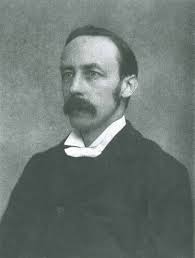
Forsyth(Note: This article first appeared in the Andover Newton Review in 1992 (Vol 3, No. 1). It is the fruit of essays I wrote for my tutor the Revd. Donald Norwood during my 1989 sabbatical at Mansfield College, Oxford. I want to thank Professor Max Stackhouse for inviting me to submit it. This is the first time it is available on the Internet. RLF)

Part 1 The Church and Our Redemption

 The British Congregationalist P. T. Forsyth, 1848-1921, is above all a theologian of the cross, and it is this soteriological focus that dominates his understanding of the church. The church was created by the saving work of Christ, and, therefore, for Forsyth, it has no other principle or foundation. Everything in, of and about the church is informed by the work of Christ; questions of polity, ecumenism, church and state, ethics, the ministry, the sacraments, all these are seen through the lens of Christ’s atonement. Since Forsyth’s view of the atonement is profoundly corporate and universal, so too his understanding of the church is corporate and universal. This understanding of a corporate and universal church created by a divine act in the atoning cross of Christ gives Forsyth’s theology a truly catholic and truly evangelical character and accounts for his continued appeal to several branches of the church as a significant ecumenical theologian for our time. Continue reading

Unknown's avatar

“Be Still My Soul”

Lake“O LORD, I am not proud; I have no haughty looks. I do not occupy myself with great matters, or with things that are too hard for me. But I still my soul and make it quiet, like a child upon its mother’s breast; my soul is quieted within me.” —Psalm 131:1-3

Many among us engage in a kind of “activist spirituality” which is big on moving and shaking, planning and doing, and making things happen. And much that is good comes out of this style, but in time it can leave the constant doer a bit threadbare around the edges of the soul.

Today’s passage is a humble little one I have never really noticed before. I love that about Scripture, when new gems previously overlooked shine for us.

This one seems the perfect antidote to the dangers of an “activist spirituality.” The Psalmist approaches God humbly, with no claims or complaints, asking for nothing except a still and quiet soul “like a child upon its mother’s breast.”

There is a time to move and shake, a time to plan and do. But there are also times in our faith journey when it is important to wait quietly and let God still our tattered souls, refreshing us for whatever comes next.

Prayer: O God, amid our busy lives grant us some Sabbath moments when we ask for nothing but You to quiet and still our souls, in Jesus’ name.

((This my Daily Devotional for today in Re-Lent, the 2015 Lent Devotional from the UCC STILLSPEAKING Writer’s Group)

(Photo: R. L. Floyd. Rocky Mountain National Park, 2010)

Unknown's avatar

What I Love about the Gospel of Luke

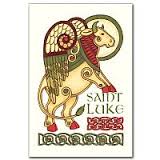
St LukeFor our Lenten adult study we have been looking at each of the four Gospels and Brent (our pastor) has asked me to share briefly with you what I love about the Gospel of Luke.

Each of the Gospels has features about it I love. Like many Christians my idea of the Gospel of Jesus Christ is a mixed-upped conflation in my mind of all four Gospels.

When I started studying the Bible as a young man I began noticing how each Gospel tells the story in a somewhat different way, and something about that bothered me. I wondered, “Where they differ what is the truth of the story?”

One of my teachers helped me with this by having me imagine a beloved mother with four children, and upon her death each child wrote a remembrance of her. Each child’s remembrance of their mother would be different, but they would all be true.

Another helpful analogy I heard was that the Gospel is like a diamond, when you turn the diamond the light catches different facets of the precious stone. Each of the four Gospels is a different facet of the one Gospel of Jesus Christ.

It was in the Christmas story where I first noticed the differences in the several Gospels. Mark and John say nothing about the birth of Jesus. Only in Matthew do we hear about the visit of the Magi, their meeting with Herod and his slaughter of the innocents, and Mary and Joseph’s flight to Egypt.

But it is especially Luke we think of most often at Christmas time. Only Luke has the annunciations to Elizabeth and Mary, Mary’s Magnificat, and only in Luke do we have the choir of angels addressing the shepherds.

And so these early chapters of Luke might be a good place for me to start to tell you what I especially love about Luke. Continue reading

Unknown's avatar

“Just as I am”

ABBY“Our iniquities you have set before you, and our secret sins in the light of your countenance.” —Psalm 90: 8.

Having the light of God’s countenance shine on us sounds like a good thing, but today’s passage has the unsettling implication that we have no secrets from God.

Who among us can feel entirely comfortable with that kind of scrutiny? Is God really like a Santa Claus character who “sees you when you’re sleeping” or a prying parent who stalks your Facebook page?

The Scriptures again and again refer to God’s closeness and intimacy with our lives. Psalm 137 asks rhetorically, “Where can I go from your spirit? Or where can I flee from your presence?”

I don’t know about you but I do a bit of hypocritical compartmentalization in my spiritual life. I want God to be close, but I don’t want God to see the less pleasant aspects of my life, what the Psalmist calls “secret sins” (and some are not so secret.)

I once saw a prayer that said, “O God, help me to be the person my dog thinks I am.”

But the good news is that God doesn’t love just our idealized selves, the dog’s view of us, or our well-crafted on-line persona. God loves us just as we are, and loves us too much to let us stay that way.

Prayer: You have searched me and known me, O God. Let your unconditional love change me into the person you want me to be.

(This my Daily Devotional for today in Re-Lent, the 2015 Lent Devotional from the UCC STILLSPEAKING  Writer’s Group)

Unknown's avatar

“The Message of the Cross” A Sermon on 1 Corinthians 1:23-25

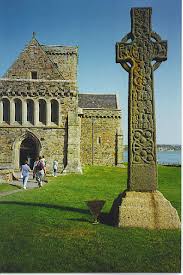
Iona crossA minister friend and mentor of mine, Herb Davis, once told me that every preacher has only one sermon in him, or her. According to Herb, every Sunday the preacher serves up that one sermon in a variety of ways. It may look like a different sermon, but at the heart of it, there’s just the one!

When I was growing up my family always had some sort of a roast at Sunday dinner, which was usually served in the middle of the day after we came home from church. Then the remains of that roast would reappear in various guises throughout the week. For example, let’s say it was a pork roast. The roast might reappear on Monday night in a soup, and on Tuesday night as my Dad’s signature roast pork chop suey and so on. So is that really the way it is? Do the people of God get fed leftovers every Sunday?

I hope not. I think what Herb was saying is that every preacher’s one basic sermon provides the core convictions out of which that preacher delivers the Gospel. And if Herb is right about the one-sermon theory, than I suppose today’s epistle lesson would have to be the text for my one sermon. Let’s hear it again: Paul writes, “We preach Christ crucified, a stumbling block to Jews and folly to Gentiles, but to those that are called, both Jews and Greeks, Christ the power of God and the wisdom of God. For the foolishness of God is wiser than human wisdom, and the weakness of God is stronger that human strength.” (I Corinthians 1: 23-25)

This is what Paul calls the message of the cross. Paul believed that Jesus was the Jewish Messiah and that God raised him from the dead. The cross on which Jesus had died became for him the symbol of that Good News of God’s vast unconditional love for all humankind. Paul believed that in Christ’s dying and rising two important new things had occurred. First, there was now a new age of God’ activity, and, secondly, there was now a new community, the church, made up of both Jews and Gentiles. Continue reading

Unknown's avatar

“Cymru am byth!” A Blessed St. David’s Day to You!

Wales

Today is St. David’s Day.

So who was St. David? He was a sixth century bishop who became the patron saint of Wales.

My surname, Floyd, is Welsh. My dad always told me his people way back came from Wales.

Along the way I discovered that Floyd is the same name as Lloyd, which is a variation of the Welsh word llwyd or clwyd, which means “grey.”

The double-L represents, and I quote: “the voiceless alveolar lateral fricative of Welsh,” and was sometimes also represented as fl, yielding the name Floyd. It is not a sound you can make in English. It sounds something like a soft cough or gently clearing your throat.

When we first lived in the UK we saw many signs on offices for people named Cloyd, which was yet another attempt to capture the strange Welsh sound of the name.

So I am related in some way to all you Lloyds and Cloyds and Floyds.

I wish all of you in the tribe (and everybody else) a very blessed St. David’s Day. And I share with you one of St. David’s graceful admonitions:

“Be joyful, and keep your faith and your creed. Do the little things that you have seen me do and heard about. I will walk the path that our fathers have trod before us.”

In 1989 we visited the charming cathedral named for him in St. David’s, Pembrokeshire, UK.

Typically cathedrals were built on a hill so that their architectural  glory could shine upon the surrounding countryside.

Not so for St. David’s Cathedral. Rather, it was built in a hollow near the sea so the Vikings couldn’t see its spire from their ships.

It is worth a trip.


Unknown's avatar

Daily Devotional: “Once We Were Strangers”

“Once We Were Strangers”

Richard L. Floyd

“You shall also love the stranger, for you were strangers in the land of Egypt.” —Deuteronomy 10:19

The various summaries of the law in the Bible include strangers as people to be especially cared for. Whether we call them sojourners, immigrants or aliens they need help because they are frequently socially powerless.

So God’s people are commanded to care for these special ones. Our passage today reminds the Israelites that they had once been strangers in the land of Egypt. They knew how it felt to be treated unfairly. This memory was an abiding feature of their identity as a people, and they were admonished never to forget it.

My own family is a microcosm of our nation of immigrants. My forbears fled here to escape persecution or sometimes just to seek a better life. My grandfather’s people, French Huguenots, fled religious violence in the 17th century. My wife’s Greek grandparents escaped “ethnic cleansing” in Turkey. Her Jewish grandfather was a Holocaust survivor, and his family came here after the war. Such refugees were called “displaced persons” or DP’s.

These are our stories, not merely here in America, but throughout the world. There are still many “displaced persons” among the human family. They face unique challenges every day.

God regards them with special care and so should we, for we too were once strangers, far from home.

Prayer: Let us love the strangers among us as you do, O God, and never let us forget that we were once like them.

R.L. FloydAbout the Author 
Richard L. Floyd is Pastor Emeritus of First Church of Christ (UCC) in Pittsfield, Massachusetts, and author of A Course In Basic Christianity and When I Survey the Wondrous Cross: Reflections on the Atonement. He blogs at richardlfloyd.com. This is from the United Church of Christ StillSpeaking electronic Daily Devotional. The original can be found here. To subscribe for free and receive these daily by e-mail go here.

Unknown's avatar

Ash Wednesday: “You won’t despise a broken heart!”

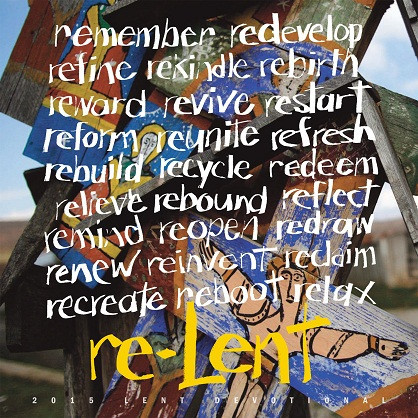
Re-Lent_-_web_large

“The sacrifice acceptable to God is a broken spirit; a broken and contrite heart, O God, you will not despise.” Psalm 51:17

The ashes of Ash Wednesday remind us of our mortality; the one pre-requisite for resurrection is death, something we will all face in time.

But literal death is not all there is to death. Throughout the New Testament “death” is not merely the cessation of mortal life, but also a power that insinuates itself into the living of our days.

Lent is the season that invites us to consider the spaces and places in our lives that are dead. To ask ourselves where has this “power of death” touched us? What is dead in our relationships, in our church, in our society? What is dead within us, where we once had life?

This kind of scrutiny is never easy. It is painful to acknowledge death and the denial of death is strong within us.

To see the dead places within and without us can break our hearts. But our text today says that this very condition of heartbrokenness is a sacrifice acceptable to God.

Because once we open our eyes to the ways the power of death has hold over us, and feel sorrow and remorse (which is what contrition means) God meets us there and can begin to ready us for the promised new life.

Prayer: Accept our broken spirits and contrite hearts, O God, as an acceptable offering to you, and take away the power of death from our lives.

(This is from Re-Lent the United Church of Christ Daily Devotional for Lent 2015. I also wrote a Lenten hymn of the same name which can be found here.)

(Picture. The cover to Re-Lent is also a poster available for purchase that can be ordered here.)