Unknown's avatar

If life gives you basil, make pesto!

PestoWe had about as perfect a day as we ever get here in the Berkshires. Not too hot, not too cold, not humid, not windy, lots of sunshine and birdsong, and to top it all off, my little herb garden was yielding the first crop of basil. Welcome summer!

I have made more than my share of pesto in a variety of ways, and they all taste pretty great. The key is fresh basil and good olive oil and cheese.

Here’s my basic recipe, which works with a pound of pasta. I have used many different pasta shapes. My favorite is fettuccine, which I have learned is traditional in Genoa, where pesto originates (they call it trenette there).

Recipe:

2 cups basil leaves, the bigger ones torn in pieces

1/2 cup of extra virgin olive oil

2 TBS pine nuts

1-2 cloves of peeled and lightly crushed garlic (according to taste)

Salt to taste

1/2 cup freshly grated Parmigiano Reggiano cheese

3 TBS freshly grated Pecorino Romano cheese

1 LB pasta of your choice


Bring a large pot of water to boil, add salt and cook your pasta al dente

Meanwhile, put the first 5 ingredients in the food processor and  puree them.

Pour them into a large bowl and add the two grated cheeses, blending them with a wooden spoon.

As you cook the pasta save a few TBS of the cooking water and use it to thin out the pesto. Toss it all together and grind some black pepper on it. If you want to get fancy throw  1 or 2 TBS of softened butter into it just before you serve it.

Any crisp dry white wine will taste great with it. We had an Argentinian Sauvignon Blanc with it tonight, because that was what was in the fridge. Enjoy!

(Photo: R. L. Floyd )

Unknown's avatar

“What do you know about being God?” Reflections on Job

Blake“Where were you when I laid the foundation of the earth?” – Job 38:4

My friend Andy and I had just finished a prayer for the needs of the world when we started lamenting how endless those needs always are.

“If I were God . . .” Andy said, and stopped himself. “Always be suspicious,” he said, “of any sentence that begins, ‘If I were God!'”

We were not the first people to question the troubling gap between what we believe about our God and the immense suffering in our world. The Bible is full of just such questions.

Some of the very best of these questions are found in the Book of Job, which is the story of a good man enduring unbearable suffering. Job desperately wants to know why? His three “friends” offer him their pious answers, which are variants of “You had it coming!”

Their view that suffering is always deserved lingers: “What goes around comes around.”

But what if it isn’t true? What if the divine mystery is more complex than that? What if bad things do happen to good people? What if the punishment doesn’t always fit the crime? Read more. (From my Daily Devotional for today)

Unknown's avatar

“The Church of the Troubled Hearts”

heart3I have seen congregations named “The Church of the Redeemer” and “The Church of the Good Shepherd” and “The Church of All Souls,” but I have never seen a church named “The Church of the Troubled Hearts.” It might not attract a big following, but it would name who we are. Because our hearts are troubled, troubled about our future, our finances, our children, our health, our relationships, our congregations and our faith.

(from my Daily Devotional for today) Read more


Unknown's avatar

The Shepherd Window: “Lost and Found”

church-window4-224x300

When I was growing up my family went to the Church of the Holy Communion in Norwood, New Jersey. It was a little church, built in the neo-Gothic style so beloved by Episcopalians. It had a cloister that connected the church with the parish house. Years later, when I had sabbaticals at Oxford and Cambridge, I felt right at home among the grand stone piles.

When I was in second grade a classmate of mine died in a sledding accident, and his family donated a memorial window to the church in his memory. That window helped shape both my faith and my theology.

Here is a piece I wrote about it for today for the United Church of Christ’s Still Speaking Daily Devotional:


“Lost and Found”

By Richard L. Floyd

“Which one of you, having a hundred sheep and losing one of them, does not leave the ninety-nine in the wilderness, and go after the one who has been lost until he finds it? When he has found it he lays it upon his shoulders and rejoices.” – Luke 15:4,5

When I was in the second grade a boy in my Sunday school class named Kim was killed when he overshot the mark on his sled, went into the road, and was hit by a car. Nobody I knew had ever died before and his death left quite an impression on me. I remember my mother and father sitting me down and telling me the sad news.” Read more

Unknown's avatar

“Words to Live By” The King James Bible and its Legacy to the English Language

JamesThe story I want to tell is the story of the creation of the King James Bible, and its enormous influence on the English language. For over 400 years this was the Bible for the English-speaking world, the best selling book of all time, and still the most frequently purchased translation.

It lasting legacy to English is incalculable. It is the Bible that Abraham Lincoln learned to read with, and its sounds and rhythms can be heard in his Gettysburg Address and Second Inaugural Address, as it can in Melville’s Moby Dick, the poetry of Walt Whitman, and the speeches of Martin Luther King, Jr.

How did we get this extraordinary work of literary art that has made such a place in the story of English? It was published in 1611, but there is considerable backstory that needs to be shared before we get there, and so we need to go way back. The English still refer to it as the Authorised Version (AV), but I will use the more popular American title, the King James Version and its abbreviation (KJV.)  Continue reading →

Unknown's avatar

“The Cross and Forgiveness”

Lent 2014As we enter Holy Week and look ahead to Easter I would like to reflect on some of the threads of our Lenten study these past few weeks in the light of the cross and resurrection.

You will recall that forgiveness means a wiping away from memory of the offense, so that it is as if it never happened, leading to restoration of the relationship.

At the very first meeting we reflected on how extraordinary the idea of forgiveness is, since the human impulse for retribution and revenge runs very deep.

So if forgiveness is such a hard thing for us, what explains the amazing stories we saw and heard, first about Desmond Tutu and the South African Truth and Reconciliation Committees, and then the story of Louis Zamperini forgiving his Japanese captors decades after his imprisonment? (As told in Laura Hillenbrand’s best-selling book Unbroken). Continue reading →

Unknown's avatar

Some Lenten Reflections on Forgiveness

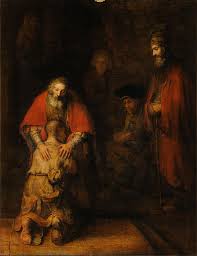
Prodigal son by RembrandtThe idea of forgiveness is so ingrained in our cultural and religious traditions that it is easy for us to overlook what an extraordinary idea it is. Although we tend to separate out “forgiving” and “forgetting” the biblical notion of forgiveness is literally “a forgetting,” in that after the act of forgiveness “it is as if ” the grievance never happened.

It is only the aggrieved party who can do the forgiving, and the act of forgiveness “wipes away” the memory of the grievance so that it no longer has any influence on the relationship. So it is that the phrase “I will remember their sins no more” appears again and again in the Bible, for example, in Isaiah, Jeremiah, and Hebrews.

Before this idea of forgiveness took hold there was simply “revenge,” in which affronts were met with retribution, often disproportionate to the original wrong. These “family feuds,” if we want to call them that, could go on for generations, and still do, as we see sometimes, for example, in the Middle East, where memories of affronts are long.

A moral advance on such indiscriminate retribution was the lex talionis, the “law of retaliation,” which prescribed that the response had to be equal to the offense, as, for example, “an eye for an eye and a tooth for a tooth.”

But the idea of forgiveness moves social relationships into a whole new key, and goes beyond mere justice. Indeed, forgiveness is an affront to justice, which is one of the perpetual accusations made against the Gospel by its critics.

Israel’s God is a god who forgives, but we may recall that the first covenant in the Bible is the covenant with Noah, and in that story God’s forgiveness has limits. “The Lord saw that the wickedness of humankind was great on the earth, and that every inclination of the thoughts of their hearts was only evil continually.” (Genesis 6:5)

So God does not forgive the people and punishes them with a flood. God shows some mercy, enough to save a remnant in the ark, the blameless Noah and his family, and the several species of animals. But God repents of his action, viewing it as a dry run (if you’ll excuse the pun), and promises never to do it again, laying down his arms (so to speak,) and leaving his bow in the sky to remind him.

In Exodus there’s a seeming change in the character and identity of God, in which mercy becomes a key quality. In preparing for today I took two volumes of the Anchor Bible Dictionary, the M volume for “mercy,” and the F volume for “forgiveness.” When I found the entry for “mercy” it said, “see LOVE.”

In Exodus we have a particularly important passage for subsequent Jewish and Christian understandings of God’s identity and character. It is Exodus 34:6-7, when God tells Moses to go up Mt. Sinai with two stone tablets. As you recall, God descended in the cloud, revealed the divine name to Moses, and then proclaimed to him:

“The Lord, the LORD,
a God merciful and gracious,
slow to anger,
and abounding in steadfast love and faithfulness,
keeping steadfast love for the thousandth generation,
forgiving iniquity and transgression and sin,
yet by no means clearing the guilty,
but visiting the iniquity of the parents
upon the children
and the children’s children,
to the third and fourth generation.”

Now this passage is really packed with things to ponder, but I want to highlight three for you.

1. First, this is a big moment in the history of God and his people. The revealing of the divine name tips us off to it, and right after this is the giving of the law and the Sinai covenant. To reveal one’s name is to be in relationship. God chooses to be in relationship with Israel, and renews the previous covenants.

2. Second, while we in our day tend to focus on the individual, and on individual sins, notice that here the emphasis is collective to the people as a people.

3. Third, the relationship is not only collective it is trans-generational, the promise applying across multiple generations.

I would guess that most of what we talk about in this Lenten study over the next few weeks will be about individual acts of forgiveness applied to willful, intentional sins. But the early understandings of forgiveness in the Bible were almost always collective, and almost always for inadvertent sinning.

So I need to say a word about why divine forgiveness was a necessary condition for God and Israel to be in relationship. This is a little hard for us to get our minds around because we tend to think of sin as a moral category, and it was also for Israel. But sin was frequently, perhaps even more frequently, thought about not as morality, but as purity.

God was understood to be holy and humans were not, the creator and the creatures were in different categories. And so we see the development of the elaborate holiness codes in Leviticus, which were designed to produce ritual purity in people so as not to offend God. Even so, it was impossible to keep all the myriad laws required.

Remember I said most sins that needed to be forgiven were inadvertent. So it wasn’t flagrant sinning like robbery, murder, or adultery, the ones we think of in moral categories, which needed to be forgiven so much as the infractions against ritual purity.

This is part of the backstory behind some of Jesus’ conflict with the scribes and the Pharisees who were zealous for the law, the maintaining of ritual purity.

I don’t think I am stating it too strongly to say that our very humanity makes us in need of forgiveness from the God who is holy. And that is why when God chooses to be a forgiving God it is a precondition for us to be in relationship with God at all.

And again, I think if we look at the grand arc of the whole Christian Story in the scriptures of the Old and New Testaments we see how the very identity of God can be understood in terms of forgiveness, the fruits of mercy and love.  So much so that, after Good Friday and Easter, the early disciples of Jesus, all of them Jewish, as he was Jewish, came to call him “Lord,” the name previously reserved for God alone. It is quite remarkable. They saw in his love, mercy, and forgiveness congruence with the character and indenty of their God.

Before I move on to focus on the New Testament I need to mention something else relevant to the idea of forgiveness that will come into play later: that is that the priestly cult in Israel saw one way to blot out the memory of sins was through a blood sacrifice of an animal as an atonement or expiation. The people around Jesus’ had either participated, witnessed, or at least knew about such ritual blood sacrifices from the daily operations of the Jerusalem temple. So when we talk about Jesus’ death as atonement for sin, we are missing the original referent of the metaphor, which is partly why the idea is so hard for us. It’s a dead metaphor. I’ve written a book about all this if you want to know more (see When I Survey the Wondrous Cross: Reflections on the Atonement, Wipf and Stock, 2010)

All these understandings about God’s holiness get carried into the Christian era, so the New Testament also understands sin as an offense against God’s holy law or against another human being. As in the Old Testament forgiveness involves the wiping from memory of the offense by the one affronted so as restore harmony in the relationship.

The seriousness of sin is one of the chief preoccupations of the New Testament. Humans cannot by themselves avoid God’s condemnation. So Jesus says, in the Sermon on the Mount, “Unless your righteousness exceeds that of the scribes and the Pharisees you can not enter the kingdom of heaven.” (Matthew 5:20) And St. Paul flatly declares in his letter to the Romans: “All have sinned and fallen short of the glory of God.” (Romans 3:23)

This is the predicament of the human condition, and the context of Jesus’ ministry. In the retrospective look of the apostolic age it was understood that, as it says in 1Timothy 15, “Christ Jesus came into the world to save sinners.”

Our best example of forgiveness at work is in “The Parable of the Prodigal Son,” (Luke 15:11-32) which I know some of you have been studying. One of the key features of that story is the father’s eagerness to restore his relationship with his lost son. Notice the father forgives the prodigal before the son even has time to deliver his little repentance speech. We should recall that the whole purpose of forgiveness is the restoration of the broken relationship. And in this parable the older brother, who didn’t leave, didn’t sin, and kept all the rules, thinks it is unfair that his deadbeat brother is restored. And it is unfair, because forgiveness is driven not by justice but by love. The older brother thinks he has earned his father’s love by his own achievements. But you don’t earn love. The father loves the prodigal not because he is good, but because he is his.

I’d like to quickly point to two more features of the New Testament idea of forgiveness. The first I have mentioned already: the death of Jesus, which in miniature focuses the whole gospel story. Here the sinless faithful Messiah, betrayed, denied, and abandoned by sinful humanity, obediently goes to his death with forgiveness on his lips, praying to his Father for forgiveness for those who killed him. It is a loving act of atonement.

The second feature, which will come up in our questions, is the way Jesus taught his disciples to pray about forgiveness in the Lord’s Prayer: “forgive us our trespasses (debts, sins), as we forgive those who trespass against us.” Here, and elsewhere, Jesus is saying that the capacity to receive forgiveness is somehow intimately connected to our capacity to forgive. In Matthew 5:23-24, for example, Jesus says, “So when you are offering your gift at the altar, if you remember that your brother or sister has something against you, leave your gift there before the altar and go; first be reconciled to your brother or sister, and then come and offer your gift.” It is as if only those who can forgive can understand it enough to receive it.

( I gave this Lenten Study presentation on March 9, 2014, at the First Congregational Church (UCC), Stockbridge, Massachusetts.)

Picture: The Prodigal Son by Rembrandt

Unknown's avatar

A Son’s Remembrance of His Mother on her Birthday: Frances Irene Floyd. March 4, 1914-September 18, 1967

Frances Irene Floyd

(I first published this in 2010, but thought the 100th birthday warranted a repeat)

Today is my mother’s birthday. She was born on this day in 1914, and died on September 18, 1967 at the age of 53 from cancer. She died too young. She would have been 96 today.

Her older sister outlived her by 40 years. She’s died now too, as has my Dad, so there is hardly anyone who even remembers her. But I do.

She most likely wouldn’t have died in this day of regular diagnostic tests and improved cancer treatments. But in the 1960’s cancer was considered by most people to be a death sentence, and usually was.  Her doctor told us she had it, but asked us not to tell her, because the news would be so emotionally devastating she might lose hope.  So in addition to having to deal with her dying, we had to lie to her.  She was a smart woman and finally figured it out and made us tell her.

I was eighteen when she died. She was told by her doctor in September of 1966 that she had about three months to live, and she said  “Nonsense, I will live to see my daughter and son graduate (from college and high school,  respectively) next spring, and she did, although she was in a wheelchair.  My sister was engaged to be married, and the date was moved up to early September in the hopes she could participate. She couldn’t, since she was in the hospital dying.

That day, my Dad, my younger brother, and I left immediately after the reception, still in our morning suits, full of champagne punch (at least I was), to visit her in the hospital with a fist full of Polaroid photos to show her of the wedding.  She was delighted, but didn’t have much energy to enjoy them.

A few days later I said my goodbyes to her (though far too much remained unsaid) and then I traveled 1400 miles away to go to college.

Two weeks later she died, and I came home for the funeral. No single event in my life as her early death has had such an impact on the rest of my life.

I often think of her on March 4. She said it was the only day of the year that was a command (“march forth!”), and when she was a kid she thought she was a big deal because she was born on Inauguration Day, but Congress moved that to January in 1933, so she lost that distinction.

Though I often think of her on her birthday, it sometimes isn’t until later in the day. Some years I have forgotten it completely, and later in the week realized that I was sad on that day for seemingly no reason. But the heart often knows better than the mind.

Mostly I think about what she missed. She never knew my wife, and my son and daughter. She never knew I graduated from college or became a minister. She never met any of her seven grandchildren or my brother’s wife. She was cheated.

Her short life was in many ways remarkable for a woman of her generation. She was born in Oklahoma City and grew up in Wichita, Kansas, where she went to college, a rare thing for women in the 1930’s. She became a librarian, one of the few vocations open to women back then, along with teachers and nurses. After graduation she got a job at the Wichita Public Library.

She was a dreamer and what we once called a “bookworm.” She always had her nose in a book, and expanded her rather conscribed universe through her imagination. Her parents were good people, pious Midwestern Protestants, and she lived at home with them throughout her mid-twenties, as unmarried women were expected to.

But she wanted more out of life. She dreamed about far off places she had read about in books. She dreamed of the England of Jane Austen and Dorothy Sayers. And like many Americans in her day from the cultural hinterlands she dreamed of New York City, then in its heyday, where Dorothy Parker and James Woolcott could exchange bon mots in the Algonquin Club. It was a far cry from Wichita.

By her late twenties she was considered an “old maid,” most likely never to be married. She wasn’t accepting any of this.

So she decided to change her life. Against her parents’ wishes she applied to Columbia Library School (now sadly gone),  arguably the best in the country, and when she got in, she went.  She packed her suitcase and took the train by herself to New York, and got a room at the International House near Riverside Church and never looked back.

She loved New York. Like so many people who go there she had big dreams. She wanted to be a writer, and scribbled short stories in her spare time.  I have many of them. They are not particularly good, overly self-conscious and somewhat formal in style, but they are interesting and really not bad.  She was a good writer, but she tried others’ voices and never found her own.  She used to joke that she had rejection slips from all the best periodicals. One of her grandsons is a writer and won an O’Henry Award a few years ago for one of the years’ best short stories. She would have liked that.

When she graduated from Columbia she got a job at the New York Public Library on Forty-Second Street, and went to work every day between the storied lions. There she got such a good reputation for cataloguing books that she was asked from time to time to do it for the Library of Congress.

She became an Episcopalian, which I expect didn’t go down too well with her folks back in Wichita, in a day when anti-Catholicism was still an ugly feature of much of Protestantism, though to be fair, I never heard any of it from them.

She met my Dad, a handsome intellectual Bostonian, while she was working at a summer job at the University of New Hampshire, where he was teaching while a Ph.D. candidate back at Columbia. They discovered they both lived in New York, and when they got back to the City they started dating, and eventually married.

I am the second of their three children. My sister and I were born in New York City and my kid brother was born in New Jersey, where we moved when my parents realized that New York wasn’t a terrific place to raise kids, especially when you had limited means.

Church was important to my mother and she was on the altar guild and worked on the annual bazaar, and baked pies for the Bake Sale, and if we were lucky she might make one for us.

I thought of her the other day when I was in church. It was an Episcopal  Church and the rector, who was celebrating, is a woman, as is the  associate priest, as were the two acolytes. So the communion table was surrounded by women, and no one thought a thing about it. My mother would have liked that, although in her day it would have been a complete flight of fancy to imagine it.

She was a proto-feminist in a quiet way. My sister went to Vassar when it was a women’s college, and my mom was very proud of her. Nearly thirty years later my own daughter graduated from Wellesley College, and I thought of my mother on that day, too, although she would have been equally proud of my son’s graduation, for she was nothing if not fair.  And what would she make now of my daughter going to divinity school?

When we were growing up in the suburbs she took a job as a librarian in a middle school nearby. Her students loved her and she encouraged them all to read, read, read. I suspect she often quietly overlooked a library fine on an overdue book if it was a hardship for the student’s family to pay it.

Last spring I wrote a paper about my love of mystery novels, another passion she passed on to me. I mentioned her in it and got this remarkable anonymous comment: “If your mother was the Mrs. Floyd who was the Wandell librarian in the ’60s, I remember her! She was wonderful. In fact, I use FLOYD as a password on book-related websites (what greater homage?).”

I have now outlived her by 7 years, and she has been gone from my life for so long I can’t recall her voice, and I can remember her appearance mostly from old pictures. I sometimes glimpse something of her in the faces of my daughter and my two nieces, and see inklings of her ways when they labor at crossword puzzles or slaughter one another at Scrabble.

I woke up in the wee hours this morning and started thinking of her and tears welled up in my eyes, even though she has been gone 43 years. So I guess I still grieve.

But mostly I am grateful for the years I had with her. She gave me words, books, music, a dry sense of humor and above all, faith. She also gave me a lively sense of the communion of saints, and makes me acutely aware of our connection to those who have gone before us and help make us who we are.

So here’s to you Mom. Happy Birthday!

Unknown's avatar

Some Winter Posts Worthy of your Time

Winter scene

In my peregrinations around the blogosphere I came across two very wise and well-written posts by ministerial colleagues of mine. I hope you will check them out.

First, the incomparable Mary Luti, whose blog, sicut locutus est, should be on your blogroll, wrote “Why I Teach.” Here’s a sample:

I want students to take someone else’s wisdom for a serious test drive. I want them to rent with an option to buy; to suspend suspicion and develop a bias toward faith in the considered opinions of others; to respect the authority of authorities instead of keeping up the fiction that all ideas have equal value and that all opinions count the same.

Secondly, Emily Heath, a Vermont pastor and top-notch blogger, has a beautiful and bravely personal post called “Falling: Recovery, Silence and the Church.”  Here’s an excerpt:

But the more I thought about it (new Boston mayor Marty Walsh’s openly talking about his recovery during the campaign), the more I felt sad for the church. If an admission of being in recovery can actually help someone in the hardball world of politics, why is it so feared in the very place where redemption should be celebrated? Why aren’t we, people who talk about grace and forgiveness and new life, in the business of teaching people what to do when they fall? Why don’t we acknowledge these things so that we can help people know where to turn when they need help to get back up?

There are mountains of ephemera in the blogosphere, but well-written wisdom, like gold, is where you find it.

(Photo by R.L. Floyd, 2014)

Unknown's avatar

Thoughts and a Prayer on Martin Luther King Day

MLK Memorial(Last month I was visiting my son in Washington, D.C., and I revisited the Lincoln Memorial where Martin Luther King gave his “I Have a Dream Speech.” I also visited the Martin Luther King Memorial for the first time. It was dedicated in 2011, and this was my first time in Washington since then. I was deeply moved by both monuments, and struck by how much of Dr. King’s Dream, especially around economic justice, is still unfulfilled. People often forget that he was not only a tireless worker for civil rights, but also for peace, and the rights of workers and the poor.

This prayer of invocation is from our local Martin Luther King Service from a decade ago.)

“Lord God, we give you thanks for the blessings you have so generously lavished upon us, for all the ways you provide for our life with both daily bread and spiritual nourishment. It may be cold outside, but let us be warm in here, warmed by the presence of this congregation, warmed by the memory of Martin Luther King, and warmed by the power of your Holy Spirit, whose fire kindles our courage, and makes us bold for your kingdom and its righteousness.

Forgive us those times and places when we have let you down, when we have not answered to the better angels of our nature, when we have danced to the world’s tune and listened to the seductive voices of the powerful and privileged as if their voice was your voice, and worshiped the manifold idols of our own imaginations. Turn us again to you and your righteousness. Keep us from the temptations of an easy virtue and a pious complacency.  Remind us that the commitments to righteousness, justice and peace for which Dr. King lived and died are still not accomplished.

So be about us and within us and among us this afternoon as we worship you and remember your servant Martin.  Be especially with our preachers and speakers and singers and musicians.  And let this time together be precious time, let it be your time, that we may catch a glimpse of your new heaven and new earth, when all the deferred dreams of many generations will be finally fulfilled, when all, from the least to the greatest, will see you and know you, when war will be no more, and prejudice and oppression shall cease, and none shall be afraid.  Amen”

(Dr. Floyd’s invocation from the Martin Luther King Memorial service at Second Congregational Church (UCC), Pittsfield, Massachusetts on January 19, 2003)