Unknown's avatar

“Breathe on Me, Breath of God” A Sermon for the Fifth Sunday in Lent

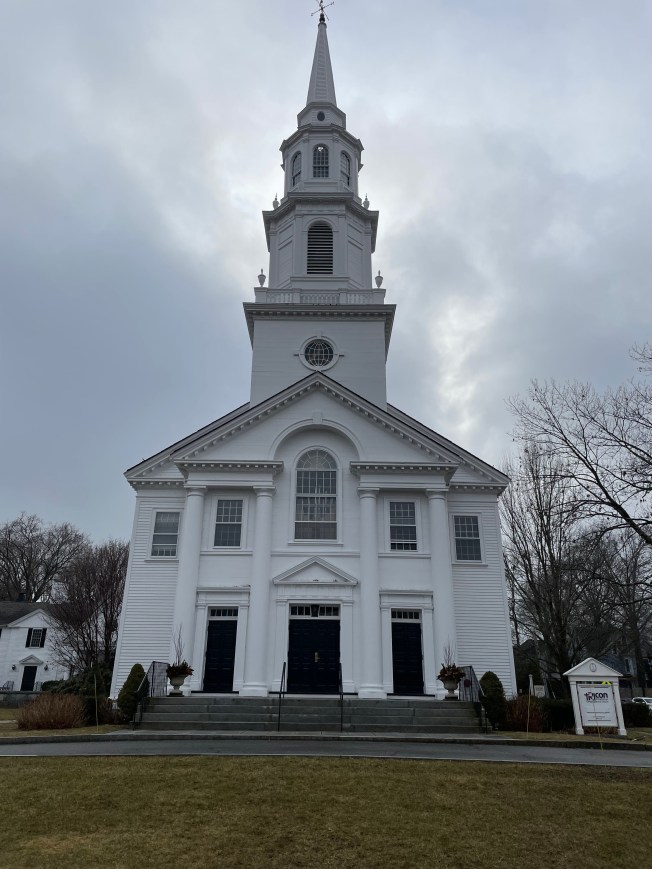
I want to thank you for inviting me to preach in this faithful, historic church. I have known this church since my Andover Newton days more than half a century ago, and I have known and admired several of your former pastors. You are a flourishing congregation with lively engaging worship. I often livestream your services. In Rebecca and Martha, you have two gifted, faithful preachers and worship leaders. I love your music. You are richly blessed and I give thanks for you,

Let us pray: May the words of my mouth and the meditations of our hearts, be acceptable in your sight, O Lord, our Rock and our Redeemer. Amen.

Rebecca tells me you’ve been reading “Searching for Sunday” by Rachel Held Evans. I love her writings, and I loved that book.

As you may know, both words for breath in the Bible, ruak in Hebrew, and pneuma in Greek, can also mean wind and spirit, a wonderful ambiguity. I like ambiguity in the Bible; it makes you think.

Rachel Held Evans wrote this about breath: “The Spirit is like breath, as close as the lungs, the chest, the lips, the fogged canvas where little fingers draw hearts, the tide that rises and falls, twenty-three thousand times a day in a rhythm so intimate we forget to notice until it enervates or until a supine yogi says pay attention and its fragile power awes us again. Inhale, exhale, expand, release. In the beginning God breathed.”

We start today with Ezekiel’s vision of the valley of the dry bones. They were dry. (I’m thinking of Johnny Carson and Ed McMahon on the Tonight Show) “How dry were they?” They were very dry. They had no breath in them, no life in them, no possibilities. 

No possibilities. That’s what I want to reflect with you on today as we stand peering over the edge of Lent into the coming marking of the Passion and Death of our Lord Jesus Christ.

Let’s reflect on what it means to have no possibilities. Stanley Hauerwas once said, “The only requirement for resurrection is to be dead.”

So, in our readings for today the bones are dead, and Lazarus is dead.

Let’s start with these dry bones. Who was Ezekiel and what was going on during his time? Let me fill in some of the backstory. Since ancient Israel figures so prominently in our Biblical story it is easy for us to forget that it was never a great power, but a tiny nation perpetually stuck between rising great powers to its north and south. Israel did have a brief heyday under the monarchies of King David and his son Solomon, but after that it was pretty much downhill. The kingdom split in two and had a tragic succession of more or less corrupt kings.

Finally, in 587 BC, after a long and horrific siege, the powerful Babylonian Empire conquered Jerusalem. And they did a very thorough job of extinguishing the national flame of Israel. The three foundations of Israel’s identity at the time were 1. The monarchy. 2. The Temple. and 3. The land.

So, first the Babylonian conquerors murdered the king’s sons before his eyes, put his eyes out and took him captive to Babylon to live out his days. Then they burned the Temple to the ground, along with most of the rest of Jerusalem, and they took ten thousand of the most important surviving citizens in chains back to Babylon, where they stayed in exile for 50 years.

And it is out of this dire period, which we call the Exile, that some of the most profound theology in the Bible was forged, as Israel wrestled with the question of what kind of God must this be who allowed (or perhaps even made) such things to take place. 

From this period, we get the Book of Job’s profound wrestling with the question of evil, we get a handful of our favorite Psalms, and perhaps, most of all, we get Isaiah of the Exile, who didn’t know at the time that he was writing a good bit of the libretto for Handel’s Messiah. And we get the prophet Ezekiel and his vivid vision of the valley of the dry bones.

So, Israel in Exile had all the necessary conditions for resurrection. It was dead. It had no possibilities. Their important things were lost and gone. They had lost their land. They had no monarchy. They had no place to worship. They were in exile, far from home, far from their beloved Zion, which is both the name of the mountain on which the temple had stood, and a nickname for Jerusalem.

Psalm 137, made famous as a song in Godspell, expresses their lament for their lost life:

“By the rivers of Babylon—

there we sat down and there we wept

when we remembered Zion.

On the willows there

we hung up our lyres.

For there our captors

asked us for songs,

and our tormentors asked for mirth, saying,

“Sing us one of the songs of Zion!”

But how could we sing the Lord’s song

in a foreign land?”

That is the context in which God speaks to (or through) the prophet Ezekiel who is in exile up in Babylon with his wife. The dry bones are the house of Israel. They had lost everything.

Did you ever lose everything, or thought you did?

I did. I’m here to tell you another story of the loss of possibilities. It is partly my story, mostly God’s story, and before I am finished, I hope you can recognize it in some sense as your story, too. It is a story about discovering God in one’s losses. It is a story about grace, and gratitude. It is a story of reversals.

The story I want to tell today begins twenty-six years ago on a warm August morning when I had a catastrophic bicycle accident while riding in a century ride, a hundred-mile ride. I went over the handlebars of my bike and hit my head. I suffered a Traumatic Brain Injury (TBI) that left me profoundly disabled. I had trouble sleeping. I had a constant ringing in my ears. I had been a choral singer since the age of six, but I couldn’t even listen to music. My brain couldn’t process it. Music was just noise. I had trouble praying (and I’m a praying guy). God seemed remote if not entirely. absent

I had a nearly a decade of very poor health, including suffering  from a severe clinical depression. Because of my accident and illness, I suffered a series of losses. In addition to losing my health, I eventually had to give up my pastorate, and so, I lost, all at once, my job, my vocation, my community and my home, since we lived in a parsonage. 

And an accident or chronic illness is a family affair. It doesn’t just affect you, but also those around you. At one point I asked my wife, Martha, why she didn’t leave me. She said, “I would never leave you!” I said, “I would leave me if I could.” Rebecca was a junior in High School at the time.

So, we had some very difficult years, and then about nine years later something remarkable happened. I got better. I went off all my medications. I was no longer a depressed guy with a brain injury, just a guy with a brain injury, which I can assure you is a big improvement. 

And gradually even my brain injury improved some. Neurologists used to believe that when parts of the brain died the functions they controlled were lost forever. Now they are learning through MRI brain imagining that other parts of the brain can restore lost functions. It’s called neuroplasticity. As a former basketball player, I like to think of it as if other parts of the brain “come off the bench” to help out the team. We don’t use the word recovery, but I did gradually improve and got some of my life back.

My story would be a more typical American success story if I could tell you I did something really heroic or courageous to get better, but I didn’t. I didn’t pull myself up by my spiritual bootstraps. No, but I had lots of help, especially from my family, but also from the church we joined.

And I began writing again and preaching again now and then, something I couldn’t have done before. And in 2010 I started singing again, and I’m now in my 16th year singing with  the fabulous Berkshire Lyric Chorus, and on May 31, I will be singing St Matthew Passion by J. S. Bach in Ozawa Hall at Tanglewood. And on August 7, we are singing in the Shed with the Boston Symphony Orchestra and opening for YoYo Ma. How cool is that? And here I am!

So, I live in gratitude for this unexpected chapter in my life. I’m grateful to be alive, and to enjoy my two children and my four grandchildren. I’ve had my losses. My Mom died when I was 18, and my Dad died when I was 34. I treasure each new day I am given.

I’ve been reading about J. S. Bach’s time at the cusp of the Enlightenment when the pseudo-science of alchemy claimed that with something called a “philosopher’s stone,” one could turn lead into gold. It isn’t true, but In my experience the real magic is turning suffering and loss into faith, hope and love.

And so, this is where I hope you find this big story that is mostly God’s story and partly my story to be something of your story, too. To accept that you can be honest in admitting that our world is broken, and that in some sense, you are broken as well. That you can realize that your own vulnerabilities and neediness are not flaws, but the very conditions for recognizing and receiving the gracious generosity of God, who loves us with a vast love through Jesus Christ our Savior.

I often find that people in the recovery community are better at understanding this than many Christians. Their first step is to admit that in themselves, they are powerless; lacking in possibilities of their own making. The turn to a “higher power” One of my favorite writers is Anne Lamott, herself in recovery. Do you know her writing? If not, you should. She writes, “The difference between you and God is that God doesn’t think He’s you.”

The Bible is a story about a God who makes a way when there is no way. God breathes into the dry bones and they live. Jesus tells Lazarus, four days dead, to come out, and he does. Jesus said to Martha, “I am the resurrection and the life, he that believes in me, though he were dead, yet shall he live; and whosoever lives and believes in me shall never die.”

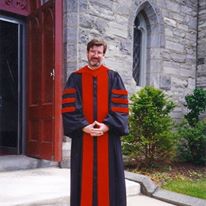
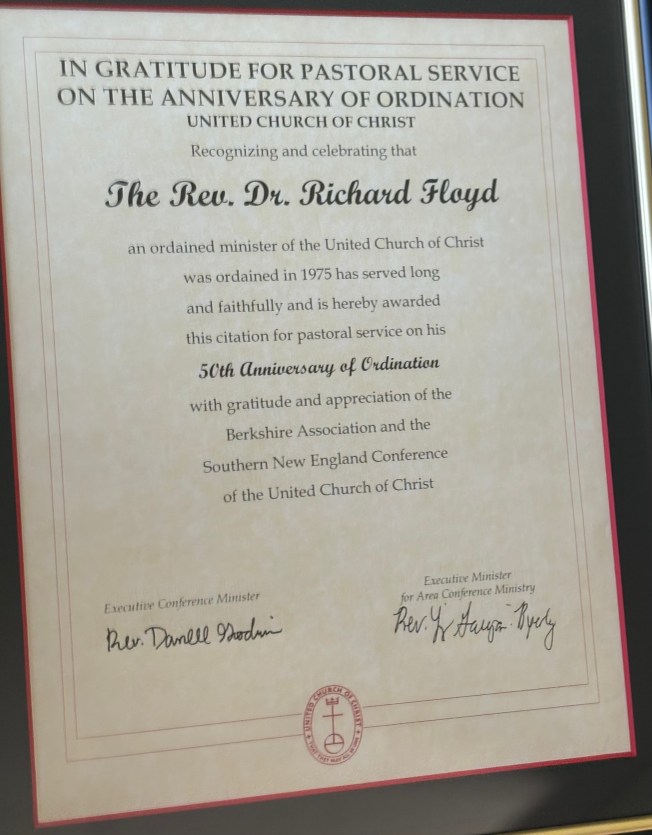
I was ordained fifty years ago last September 21st in the Newton Highlands Congregational Church by the Metropolitan Boston Association of the United Church of Christ. Hands were laid upon me, and the Holy Spirit of God was invoked over me. 

Since that day, I have stood at countless pulpits and at countless gravesides, and I have repeated those words of Jesus over the bodies of the dead. “I am the resurrection and the life, saith the Lord; he that believeth in me, though he were dead, yet shall he live; and whosoever lives and believes in me shall never die.” “Can these bones live?” Can Lazarus live? Can we live? Catch your breath, and walk with the church from Lent into Holy Week, in confident faith in the God whose Spirit still hovers over creation, and whose breath still revives that which had been dead, and who makes a way where there appears to be no way. Amen.

(I preached this sermon on March 22, 2026 at the Trinitarian Congregational Church in Concord, Massachusetts, where my daughter is the Senior Minister. To watch a YouTube video of this sermon go to https://www.youtube.com/watch?v=dbdxoEpKmYA&t=1237s)
Unknown's avatar

The Ten Most Popular Posts in 2025

These ten were the top visited posts and pages in 2025. None of them were written this year, and most of them are sermons from the archives. Although I am posting less frequently these days, the old stuff remains much visited. The Ferlinghetti poem had an impressive 20, 774 hits. If you read it you will know why it is a poem for our time.

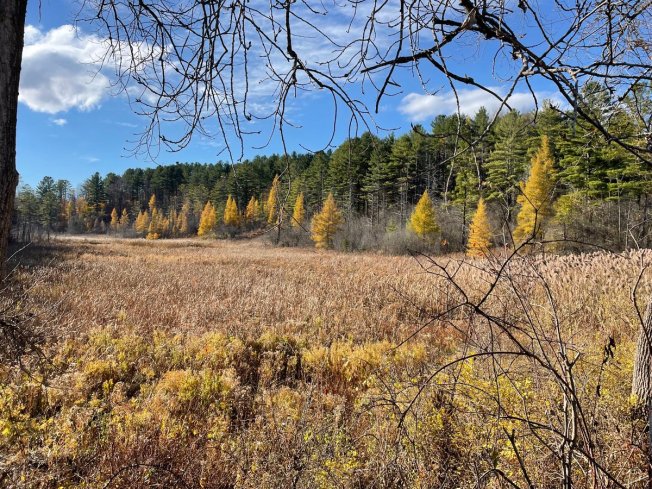
Just a friendly reminder that this is an open-source free site, and you are free to share content with attribution. But remember “Thou shalt not steal!” I appreciate your support. Thanks for coming by and come again in 2026. (Photo: Tierney Wildlife Refuge in Pittsfield, Massachusetts. © R.L. Floyd)

“Pity the Nation” A Poem for our Time by Lawrence Ferlinghetti  

Why did Jesus refer to Herod as “That fox” in Luke 13:32”?  

“Distracted by Many Things” A Sermon on Luke 10:38-42  

“Breaking chains, Opening Doors” A Sermon on Acts 16:16-34    

“Ask, Search, Knock.” A Sermon on Luke 11: 1-13

“The God who Still Speaks” A Sermon on John 16

“Building Bigger Barns” A Sermon on Luke 13-21

“Growing Up” A Sermon on Galatians 3: 23-29

The Healing Touch” A Sermon on Mark 1: 40-45

“Of Fig Trees and Second Chances” A Sermon on Luke 13:6-9

Unknown's avatar

I Was Ordained Fifty Years Ago Today

On this day fifty years ago, September 21, 1975, I was ordained into the Christian Ministry of Word and Sacrament at the Newton Highlands Congregational Church, United Church of Christ, in Newton Highlands, Massachusetts. I was 26.

I had had my ecclesiastical council weeks before and waited for a call for a church before I could be ordained. Late in the summer it came. I was called to be the pastor of the Congregational Churches of Limerick and West Newfield, a “Two-point charge” serving two small congregations nine miles apart in the Northwest corner of York County, Maine. I had preached my neutral pulpit sermon in nearby Fryeburg, and a candidating sermon in each of the two churches.

I remember my ordination vividly. The church secretary, Irene Fultz, had designed. printed and mailed out the invitations. My family was there. My Associate Conference Minister, Oliver Powell, was there. The Reverend Joanne Hartunian, represented the Metropolitan Boston Association. The Reverend Meredith (Jerry) B. Handspicker, presided over the Laying on of Hands, and gave the Prayer of Ordination (after the ordained ministers were assembled he invited the whole congregation to participate, the first time I had seen this. It is commonplace now in the UCC.) The Reverend Walter Telfer, Director of Field Education, gave a Charge to the Congregation. The Reverend Michael J. Maguire led the congregation in a prayer of Confession. I presided at Holy Communion and gave the Benediction for the first time. The Reverend Dudne M. Breeze, our pastor, gave the sermon. He admonished me to be a Minister of the Word of God. I now know how wise that counsel was and how hard it would be.

I served those two little churches for four years and have never been happier. I married Martha while there and those churches threw us a big party. I trained as an EMT and became a firefighter.

Next, we went to Bangor, where I was Chaplain at Bangor Theological Seminary and Associate Pastor of the Hammond Street Church, United Church of Christ. There I ministered to students and congregants. I was a founder of Maine Clergy and Laity Concerned (CALC) a national anti-war organization. I chaired the Social Justice Committee of the Maine Council of Churches.

Finally, I came to Pittsfield, Massachusetts, in 1982 to be the Pastor of the First Church of Christ in Pittsfield. I had three sabbaticals from there: Oxford (1989), St Andrews (1995) and Cambridge (2000). I studied and wrote articles and books while on those wonderful respites from active ministry.

I stayed in Pittsfield for twenty-two years and would have stayed longer if I hadn’t sustained a traumatic brain injury (TBI) in a bicycle accident and had to retire early on disability. That crash was exactly 25 years ago and equally divides my ministry into before and after my disability.

I eventually discovered a new chapter in my life. I started writing. I wrote hymns. I started this blog, I wrote devotions for the United Church of Christ’s Daily Devotional, and I found a new ministry of the Word in my words. I became active in the First Congregational Church of Stockbridge.

So, there you have it. Here I am 50 years later. I once kept count of how many weddings I officiated at, but I have lost count well into several hundred. The same for baptisms, confirmations. I can’t count the hospital visits, the funerals and graveside committals I was part of. I’ve held people’s hands in Rehab Facilities and Psychiatric Wards. I’ve put my arms around people in overwhelming grief. I’ve been humbled by theses encounters.

I have heard numerous confessions. I have listened to more kinds of human consternation and misery than you can imagine. I have also been privileged to be part of people’s lives at some of their more poignant moments. I have shared many joys and sorrows. I have “wept with those who weep, and rejoiced with those who have rejoiced.” (Romans 12:15)

I have led countless Bible Studies and other courses for adults. I have authored “A Course in Basic Christianity” for adults. I think of it as a course to teach you “everything you should have learned in Confirmation Class, but probably didn’t because you had your mind on other things.”

I’ve valued the relationships of my clergy friends and colleagues in the United Church of Christ and other Christian denominations. I served  the Massachusetts Conference of the United Church of Christ as their representative to the Massachusetts Commission on Christian Unity for twelve years. There, I made many friends and came to appreciate the richness of the “Great Church” of Jesus Christ.

I have also treasured the relationships I have had with my Jewish brothers and sisters in the clergy. We have become trusted friends and interlocators, and in that safe space of friendship have had rich and deep conversations about both what unites and divides us. It was a great honor that the family of my dear friend Rabbi Harold Salzmann asked me to speak at his funeral at Temple Anshe Amunin in Pittsfield.

I’ve witnessed people’s lives changed by their confrontation with the Gospel of Jesus Christ. And I, myself, have been profoundly changed by a life-long engagement with Jesus and his Gospel of freedom and grace. Jesus is still the most interesting and engaging part of our faith, and after fifty years he is still the one with whom I have to deal in thought and deed and prayer.

I have struggled to be faithful to the truth as I have known it. My reach has exceeded my grasp. I have pondered the deep things of the faith and have written countless articles, papers, and three and a half books. I have spent years trying to reform my denomination and restore its historic theological and ecumenical vision through leadership in such activities as the Confessing Christ movement, the Mercersburg Society, and the Craigville Colloquies.

I have also, to be quite honest, been a leader throughout my fifty year ministry, in an enterprise that is in decline in institutional vigor and societal esteem. The schools where I received my masters and my doctorate are no longer there. The mainline church in whose rocky vineyard I have labored is smaller, poorer, and less respected than it was before I began. My last church, where I served for 22 years,  sold its grand gothic meeting house to another congregation, and merged with a nearby UCC church.

But I do not despair about this. God will not be left without witnesses. The church of the future, I believe, will be smaller, leaner, and more faithful. People won’t go because it’s “the thing to do” as it once was.

They’ll go because they have found something of great value to which they are committed. Or they will go because they are searching for something important that seems missing in their lives, something more durable, something deeper than the shallow seductions and distractions of our consumer culture that values having more than being.

And society needs the church to model a community that welcomes and values all of God’s children. A space where love is stronger than hate, faith stronger than fear, and kindness and compassion are shown to the vulnerable among us, which is all of us.

So, while I have regrets about my failings and limitations as a minister, I have none about choosing this calling and living it out for five decades. My daughter has chosen to be a pastor, and I watch with awe at how gifted and faithful she is. It is young clergy such as she who give me much hope for the church of the future. I thank God for sustaining me through this long calling, and for calling me in the first place despite my manifold frailties and failures. To God be the glory.

“Now to him who by the power at work within us is able to accomplish abundantly far more than all we can ask or imagine, to him be glory in the church and in Christ Jesus to all generations, forever and ever.” Amen. —Ephesians 3:20-21.

(This morning in worship, The First Congregational Church of Stockbridge blessed me by prayer and the laying on of hands. A livestream of the service is available on the church’s website.)

Unknown's avatar

Richard L. Floyd: “Prophetic” pastors who don’t love the church

(This article first appeared on the Faith and Leadership blog of Duke Divinity School on on March 17, 2010.)

If the main reason you become a pastor is to promote some cause, then your soul is in danger, and so is the congregation’s.

Continue reading

Unknown's avatar

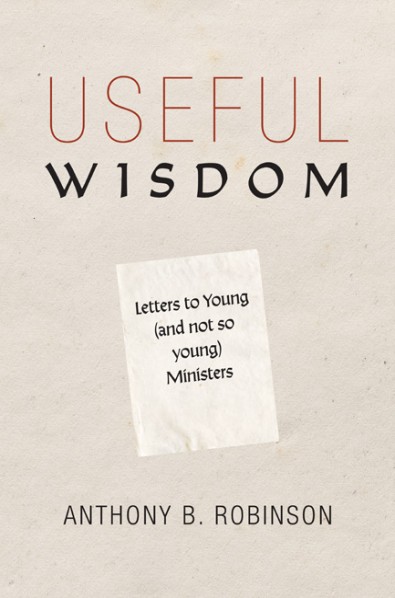
Book Review: “Useful Wisdom: Letters to Young (and Not-So-Young) Ministers” by Anthony B. Robinson

Book Review: “Useful Wisdom: Letters to Young (and Not-so-Young) Ministers” by Anthony B. Robinson, Cascade Books, 2020. (Link to the book at Wipf and Stock here.)

By Richard L. Floyd

This little book is well-titled, for it is both useful and wise. In the interest of transparency, let me say that I have known Tony Robinson as a friend and interlocutor for decades. During that time, I have admired his many writings, which are clearly and concisely written, and grow out of his pastoral experience and long years as a church consultant. Continue reading

Unknown's avatar

A Reflection on Forty-Five Years of Ordained Ministry

On this day forty-five years ago, September 21, 1975, I was ordained into the Christian Ministry of Word and Sacrament at the Newton Highlands Congregational Church, United Church of Christ, in Newton Highlands, Massachusetts. I was 26. Continue reading

Unknown's avatar

“Taking on the Mantle” A Sermon for The Third Sunday after Pentecost, Year C

2 Kings 2:1-2, 6-14

Luke 9:51-62

Who is Jesus? Albert Sweitzer famously said “looking for Jesus is like looking down a well. You see only your own reflection: that Jesus remains a stranger and an enigma; there will never be one answer to this question.” (The Search of the Historical Jesus). But there are things we do know about him that can help us understand his purpose and ministry. Continue reading

Unknown's avatar

“Breaking chains, Opening Doors” A Sermon on Acts 16:16-34

Today is the Seventh and final Sunday in Easter and we have had several readings from the Book of Acts that emphasize the power of Jesus’ resurrection during the rise of the early church. Continue reading

Unknown's avatar

“Superpowers” A Devotion on Acts 5: 14-15

“Yet more than ever believers were added to the Lord, great numbers of both men and women, so that they even carried out the sick into the streets, and laid them on cots and mats, in order that Peter’s shadow might fall on some of them as he came by.” —Acts 5: 14-15 (NRSV)

Sometimes when I read from The Acts of the Apostles I am envious. I read about the extraordinary signs and wonders the Apostles accomplished in Jesus’ name, the great crowds they brought into the church, and the numerous people they healed. Continue reading

Unknown's avatar

“Unfinished Business” A Devotion on 1 Corinthians 3: 6

“I planted, Apollos watered, but God gave the growth.”—1 Corinthians 3: 6

At the beginning of my ministry I taught myself to cook. I was serving two small congregations in rural Maine. I was single then and rattling around the parsonage, so to keep myself occupied (and fed) I started reading various cookbooks and trying out different recipes. Continue reading