
 Bill Holladay died last week and his funeral was yesterday. He was Samuel Edgar Lowry Professor of Old Testament, Emeritus, at Andover Newton Theological School in Newton, Massachusetts. Continue reading

Bill Holladay died last week and his funeral was yesterday. He was Samuel Edgar Lowry Professor of Old Testament, Emeritus, at Andover Newton Theological School in Newton, Massachusetts. Continue reading
 “Hilkiah (the high priest) and those the king had sent with him went to speak to the prophet Huldah, who was the wife of Shallum son of Tokhath, the son of Hasrah, keeper of the wardrobe.” —2 Chronicles 34:22
The prophet Hulda gets a scant 9 lines in the Bible, and in them we learn more about her husband than we do about her.
Nonetheless, she must have been impressive, for when King Josiah needed a prophet to authenticate the Word of God, it was to Hulda that he turned. Continue reading
 I heard two items of news last week that started me recollecting about events in my life when I was a young man.
The first item of news was that the members of the South Deerfield Congregational Church voted last Sunday to close the church by the end of the year. The second item of news was that peace activist Fr. Daniel Berrigan had died at the age of 94.
I will try to tell a story that connects these seemingly unrelated news items. To tell it right I have to go back a few years. Continue reading
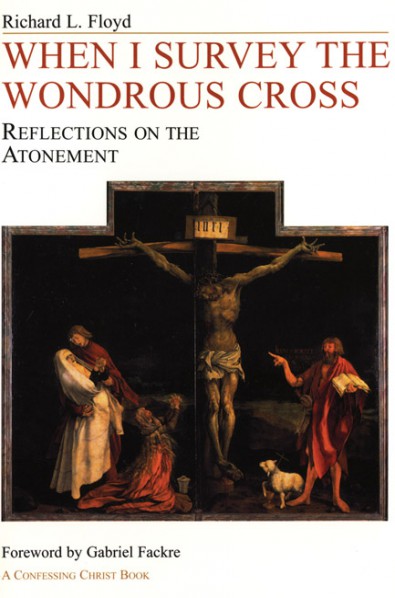 The Christian doctrine of Atonement has long been a theological preoccupation of mine, which may seem strange since I didn’t come out of an Evangelical background, where this is a central concern.
I was blessed to have sabbaticals from the pastorate at three iconic British universities, Oxford, St Andrews, and Cambridge, where I read and wrote about this subject.
Out of those experiences came a number of journal articles and this book of essays. I have been heavily influenced by the thought of the British theologian P.T. Forsyth, and many of the chapters in this book focus on his theology.
The book was published in 2000 by Pickwick Press, which later became part of Wipf and Stock Publishers, who re-issued the book in 201o, for which I am grateful. It is a humble little book that traces my attempt to come to grips with this vexing doctrine. It has an extraordinary foreword by the estimable Gabriel Fackre, which I think alone makes the book worth having.
Wipf and Stock is currently having a 40% off sale until May 1, so if you are interested in obtaining this book, now is the time. You can go to the link here.
“All we like sheep have gone astray; we have all turned to our own way.” —Isaiah 53:6
 There is a magnificent chorus in Handel’s Messiah based on this text from Isaiah. Near the end of it there is a long series of intricate fugues among the several voices that keep repeating the line “We have turned.” The effect is striking, as the music describes in sound everyone turning and turning (like sheep) in new and different directions (but always astray).
One of the earliest and most abiding Christian insights about human nature is that we were made for God, but keep turning away. Just as flowers are “heliotropic”, designed to turn toward the sun, so we humans are “theotropic,” designed to turn toward God.
But somehow our natural theotropism has become faulty and broken. We are more likely to go astray, to turn to our own way, than to turn toward God.
But the Good News is we have a still-seeking God who does not give up on us. It is true that we are “prone to wander.” The phrase comes from Robert Robinson’s powerful hymn “Come, Thou fount of every blessing.”
In that hymn Robinson also wrote this: “Jesus sought me when a stranger, wandering from the fold of God.” He knew that though we turn to our own way again and again, God keeps bringing us back.
Prayer: Seek us and find us, Still Seeking God, and turn us back to you, the source of our life.
(This is my United Church of Christ Daily Devotional for April 19, 2016. To see the original go here. To subscribe to the Daily Devotional and receive it every day by e-mail go here. The photo is of the Lyons memorial window at the Church of the Holy Communion, Norwood, NJ. For more about this window see my post here.)
 “But we have this treasure in clay jars, so that it may be made clear that this extraordinary power belongs to God and does not come from us.” —2 Corinthians 4:7
After I retired from active pastoral ministry my wife and I were ecclesiastically homeless for a few years. We went to church, but we couldn’t commit to one.
We sometimes felt like Goldilocks at the Bears’ residence. One congregation had good preaching, but not so great music. Another had terrific music, but the sermons were on the light side.
This period was an unhappy time in our lives, for we are serious “church nerds” and needed a church home. We knew there was something unfaithful about “church shopping” and being, to use Eugene Peterson’s phrase, “tourists and not pilgrims.”
The problem was there was no perfect church. Thomas More coined the word Utopia in 1516 to describe a perfect society on a fictional island in the Atlantic Ocean. Utopia in Greek means “not a place.”
There has never been and there never will be Utopia. There is no perfect congregation, just the ones we’ve got, full of imperfect people that God loves and calls to be the church. And we knew ourselves well enough to realize that if we ever found the perfect church, as soon as we joined it, it wouldn’t be perfect anymore.
Prayer: Holy One, bless us all in your church with your extraordinary power, that through your imperfect people, your perfection may shine brightly for the world to see.
(This is my United Church of Christ Daily Devotional for April 9, 2016. To see the original go here. Meme is used courtesy of the UCC.)
 Risotto is a nice change from pasta, and it is not hard to make if you are attentive during the half hour or so you need to watch and stir the rice. For special events we make a rich and decadent Risotto ala Milanese with our Osso Bucco. This recipe is a bit of a lighter tweak on that, without the Parmesan cheese and extra butter. If you use frozen shrimp and peas this can be pulled out of the larder, and you can make it in under an hour on a weeknight. And it is very good! Continue reading
 I was preparing this morning to lead Romans using the new small group study book that Mike Bennett and I wrote for the UCC’s “Listen Up!” Bible Study Series.
I came across that vexing section of Romans 1, no not that one, this one: “For what can be known about God is plain to them, because God has shown it to them. Ever since the creation of the world his eternal power and divine nature, invisible though they are, have been understood and seen through the things he has made.” (Romans 1: 19-20).
These verses have often been employed to put forth one or another versions of the idea of General Revelation, so I paid attention when a short while later, while I was wasting time on Twitter, I came upon a thoughtful blog post by J. Scott Jackson entitled Got General Revelation? Well, Isn’t that Special! Continue reading
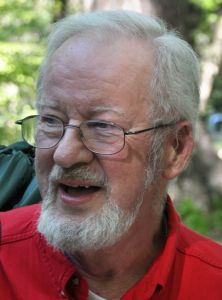 (We had a beautiful and moving Service of Celebration and Thanksgiving for the life of Jerry Handspicker this afternoon at the Second Congregational Church, UCC, of Bennington, Vermont. The Pastor, the Reverend Mary H. Lee-Clark, presided and delivered a fine homily. Jerry was Professor of Practical Theology at Andover Newton Theological School for 36 years, my former teacher, colleague and a family friend. I was asked to give one of the remembrances. Here are my remarks:)
I’m Rick Floyd. Jerry was my teacher, my colleague and my friend. I knew Jerry for 45 years through many ups and downs and changing experiences of life.
I met him when I arrived at Andover Newton in 1971. That very first week I applied for a field education position, running a coffee house (that dates me!), at the Newton Highlands Congregational Church. There were two token youths on the search committee, Amy Handspicker and her best-friend Martha Talis. By Amy’s telling they judged I was hip enough for the job, and convinced the skeptical grown-ups that I was their man.
Thus began a long association with that congregation, where Jerry was the associate pastor, and with the Handspicker family. Jerry and Dee embodied what today we would call “radical hospitality,” and I had many a dinner with them and Amy, Jed and Nathan. I once briefly lived in their attic! (And I wasn’t the only one.) Continue reading
 Author T. C. Boyle has an intriguing short story entitled “Chicxulub.” Chicxulub is the name of an enormous asteroid (or perhaps a comet) that collided with the earth sixty-five million years ago on what is now the Yucatan peninsula, leaving an impact crater one hundred and twenty miles across, and twelve miles deep.
Boyle’s short story intersperses such episodes of catastrophic natural disasters with a story of one night in the life of one family. The main characters are a husband and wife, parents of a 17-year old daughter named Maddy. They receive a phone call from a hospital: “There’s been an accident!”
Apparently Maddy has been hit by a drunk driver while walking home from the Cineplex. They head to the hospital in that dream state of shock that overtakes those in the midst of disaster. At the hospital they are unable to get much information out of the staff. They are told she is in surgery. They wait and wait. Finally a young doctor comes out and speaks to them. He drops his eyes. “I’m sorry,” he tells them.
When I first read the story I was deeply moved, even though I knew it was a work of fiction. But Boyle was toying with his readers. He was toying with me. Because in the end we learn that Maddy is not dead. The dead girl on the gurney is a sixteen year old friend of hers, Kristi, who borrowed Maddy’s I.D. to get into an NC-17 movie in the next theater. Maddy gets another chance. Continue reading
 When I Survey . . .