

Since the ancient city of Nineveh in Assyria is located in modern Iraq, and we are preparing for a possible war with Iraq, the story of Jonah caught my eye. I know many of us get nervous when religion and politics get mixed up with each other. Many believe that religion and politics should be kept completely separate, which is pretty much what Jonah believed, so perhaps this story has more to tell us than we first imagined. Jonah wanted it both ways: to worship Yahweh, and hate the Ninevites. So Jonah would just as well see Nineveh burn as repent. Jonah’s theology was good, but one can have correct theology and still not know the ways of God. Jonah said “I knew that you are a gracious God and merciful, slow to anger, and abounding in steadfast love.” But for Jonah this was not an affirmation, but a complaint. The Ninevites were his enemy, and he liked it that way. That is why he ran away from God when God called him to preach to the Ninevites.
Jonah just doesn’t have enough imagination to understand the Ninevites as anything but the object of his hatred. Through the instruments of sea and storm and living creatures, most notably the famous vomiting whale, God brought Jonah to Nineveh. God commanded Jonah to walk through Nineveh and tell the people, “Forty days and Nineveh will be overthrown!” And that suited Jonah just fine. But then things went wrong for Jonah. Because the Ninevites actually did repent. They put on sackcloth and ashes, even the animals, which makes for a somewhat comical picture.
It’s amazing. Jonah uttered seven or eight words of the Lord, depending on your translation, and the people believed God, and repented. Would that all preaching were so easy! But Jonah was not happy. He has predicted the destruction of Nineveh, and it didn’t happen. So he became angry with God.
Jonah’s anger at God is more like childish disappointment. There is something almost innocent about it, but no less dangerous for being so. Getting angry with God is a time-honored biblical practice. Moses, Job, David, and Peter all did it. And we do it, too. Maybe not in so many words, but often we prepare for the worst with a kind of relish, and are surprised when it doesn’t happen. That is what happened to Jonah. He is angry with God because he has been surprised by grace.
Jonah’s sin is a common sin—because God is more merciful than we are. At some level, humans like to hate. It is hard for us to admit it, but there is something darkly delicious about hating an enemy. And whom do we hate? Usually we hate those who are different from us. They are “the other” who conjures up in us fear. That is why the terrorists hate us. We are different and a threat to their way of life. Real security can never be merely military, but will arrive only when hatred and fear are overcome by respect and understanding. That takes time and patience. It takes generations. War doesn’t help the process.
Now our current enemy, Saddam Hussein, is a bad character. He unleashed chemical weapons against the Kurds in the north of his country. His sin is treating his own people as things that are expendable, as abstractions toward political ends, chiefly his own power and glory.
>Now we as a nation must be alert to the danger of being drawn into a similar mind set, of turning the Iraqi people into abstractions. The so-called “regime change” we are demanding is an abstraction that permits us to deny the horrible truth that tens of thousands of Iraqis, and who knows how many Americans, would most likely die making that happen. We employ euphemisms to make such harsh realities easier to face. For example, “collateral damage” means the injury or death of innocent civilians during war. But collateral damage is not an abstraction if it’s your loved ones who are killed. Since we are engaged in a long-term battle for the hearts and minds of a generation of young Muslims, it would seem to me that we would want to avoid inflaming passions with an ill-considered war with murky objectives.
I am not a pacifist, and I am not one of those people who believe America is always wrong. I know that there are times when, sadly, one must fight against evil and tyranny. It could be Saddam Hussein’s threat to the world is so grave we must go to war to stop him. But that argument has not been made persuasively, at least not to me. I have many questions: Why him? There are other unsavory dictators we could pick, some with weapons of mass destruction. Why now? We left him in power after the Gulf War because we thought a weakened Hussein was better than the alternatives. But do we really expect a leader with Jeffersonian principles to take over? Some of Hussein’s chief domestic opponents are Islamists sympathetic to Al Queda. Is that what we want to take his place? Isn’t Al Queda the actual enemy we face? With Pakistan and Afghanistan so precarious, do we really want to destabilize the region with an attack? Do we want to be the first Americans in history to go to war without being attacked first? Why not let UN inspectors go in and see what they can find! Can we afford to act unilaterally against the consent of our allies and in the face of world opinion? What will war do to our already staggering economy? Can we afford the 100 to 200 billion dollars that this war will cost? Who is asking these questions?
But, in the end, if we must go to war, I want us to be morally aware that it is a sin, even if a necessary sin to stop a greater evil. And as a Christian, I do not want us to go to war because we hate. For hate mongering always seems to accompany war mongering. First you make your enemy an abstraction, and then you can feel justified in the killing. After Pearl Harbor my father said that he could fight, but he wouldn’t hate, while he watched the whole country being drawn into hatred of all Japanese.
Notice how the enemy we hate changes over time. When I was a boy we hated and feared the Russians; now they are our friends. The Iraqis were our friends when they were fighting Iran, and we gave them weapons. The Islamists who spawned Al Queda were our allies against the Soviet Union in Afghanistan. Do these people change? Does their national character go through a great shift? Do we turn a switch and suddenly enemies become friends? Why is it that so many of our foreign policy decisions fall victim to the law of unintended consequences?
I believe that many of the world’s problems are a failure of imagination, the same failure of imagination that made it impossible for Jonah to rejoice in the salvation of the Ninevites. If we can only see people as abstractions to hate and fear, then all problems seem to require a military solution. Rowan Williams, the new Archbishop of Canterbury, said recently: “If all you have are hammers, everything begins to look like a nail.”
Jonah had his theology straight, but he was clueless about the ways of God, of the largeness of God’s love, the wideness of God’s mercy. He saw everything through the eyes of Jonah. But God had a different plan and a different program. Let us beware of seeing the world only through the eyes of America. Let us beware of worshiping an idol of our own making, a national god who blesses only America. Let us allow the true God to open our eyes to experiences of amazing grace as we let the idols we worship fall away.
For that is where we often experience grace, in the gap between our little gods, and our narrow little plans, and the merciful God and his wide and vast plan. Jonah is angered because his little bush dies, and God says, “You are concerned about a bush . . . and should I not be concerned about Nineveh, that great city of a hundred and twenty thousand, and also many animals.” God’s care and concern is for the whole creation over which he has sovereignty and exercises freedom.
Let us not fool ourselves about war: the loss of life, the environmental degradation, the horror and cost involved. And what about the moral cost? I have said since 9/11 that our real enemy is hate. Let us pray that we will not succumb to hate those whom God counts as his children, and who fall under his concern and care every bit as much as we do.

Why I love Wisconsin
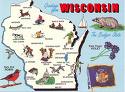
Thanks to Google Analytics and other widgets and whistles I can see where the visitors to my blog come from. On days when I have too much time on my hands (like when the Red Sox don’t advance in the playoffs, for example) I can entertain myself by analyzing the patterns of visits.
The state with the most visits is, as one might expect, Massachusetts, where I live and move and have my being, as do many of my friends and family. Other states with good representation include some of the adjacent New England states, Maine, especially, where my brother and his family live.
But one demographic that has been a surprise is the number of visitors I get from Wisconsin. Now I do have some family in Wisconsin, and a number of friends, which might account for some of it. But I have another theory about why I get so many visits from Wisconsin. My blog is mostly about theology and secondarily about food, and Wisconsinites apparently like both theology and food.
Here’s the evidence. I first noticed a big spike in Wisconsin traffic after I posted my first recipe (for chicken enchiladas) and I figured this was because it was laden with cheese. I don’t think of Wisconsin as a hotbed of Tex-Mex cusine, but apparently the cheese carries the day, for the same thing happened when I posted my shrimp saganaki recipe (also laden with cheese.) Two of my Facebook friends reposted the saganaki recipe, both from Wisconsin. Coincidence? I don’t think so. So food in general and cheese in particular seem to be a factor. Not much Wisconsin traffic on my mussels recipe, but then again, not many mussels there either.
Now I know that Wisconsin folks like their chow, and they have some good chow to like. And it is not just the cheese, although that is a wonderful thing. They have a whole pork fat love thing going for them, too. I once went to Mader’s, a German restaurant in Milwaukee, and ate a pork shank that could be barely contained on a platter nearly as big as home plate. And for Christmas my Wisconsin in-laws sent us this applewood smoked bacon from Nueske’s that makes it hard to eat any other bacon ever again (but I force myself.)
I’ve been visiting Wisconsin since my college days in the sixties when I went to Coe College in nearby Iowa. My first trip was with the Coe choir, when we did a concert in Janesville. We stayed with host families, and my roommate and I stayed with some lovely people of modest means, and it was clear that the bed we shared was our hosts’ and they had slept on a couch to extend us hospitality. That kind of hospitality impressed me, and I still think of Wisconsin as a hospitable place.

Anyway, I think my theory about food and theology makes a certain sense. First of all, Wisconsin is a farming state, and so good food is an important part of it’s life. To celebrate this they have lots of “fests” in Wisconsin: Oktoberfest, Summerfest, German Fest, Irish Fest, Festa Italiana, not to mention Cheese Days, and the ever-popular Brat Days in Sheboygan.
And the interest in theology makes sense, too, as 85% of the population are Christian, of which 55% are Protestant and 29% are Roman Catholic. And the Christians in Wisconsin aren’t theologically lazy latitudinarians like so many of us here in New England, but folks who approach doctrine with a certain rigor, like the Lutherans, who make up 23% of the population. Lutherans care enough about doctrine to split over it sometimes, so there are three good-sized Lutheran tribes there.
Even my own United Church of Christ, which comprises but 2% of the population of Wisconsin, displays significantly more interest in theology there than in most places I know.
So to all my Wisconsin blog readers who enjoy good food and good theology, thank you for your support, and keep up the good work. On Wisconsin!
A George Herbert Poem about PRAYER
 The Welsh Metaphysical poet George Herbert (3 April 1593 –-1 March 1633) is one of my favorite poets who deals with religious themes, my other favorites being Isaac Watts, John Donne, and Gerard Manley Hopkins.
Herbert was a well-educated man who became an accomplished poet and noted orator. He served in parliament for two years, but in his late thirties gave up secular life to take holy orders in the Church of England. He spent the rest of his short life as the rector of a small parish, Fugglestone ST Peter with Bemerton St Andrew, in Wiltshire near Salisbury.
He was known as a faithful pastor to his flock, unfailing in his care of the sick, to whom he brought the sacrament, and to the poor, to whom he provided food and clothing. He himself was in poor health and died of tuberculosis just three years after his ordination. Here is one of his poems about prayer:
PRAYER the Churches banquet, Angels age,
Gods breath in man returning to his birth,
The soul in paraphrase, heart in pilgrimage,
The Christian plummet sounding heav’n and earth;
Engine against th’ Almightie, sinner’s tower,
Reversed thunder, Christ-side-piercing spear,
The six daies world-transposing in an hour,
A kinde of tune, which all things heare and fear;
Softnesse, and peace, and joy, and love, and bliss,
Exalted Manna, gladnesse of the best,
Heaven in ordinarie, man well dress,
The milkie way, the bird of Paradise,
Church-bels beyond the stars heard, the souls blood,
The land of spices, something understood.
(Herbert, George. The Poetical Works of George Herbert. New York: D. Appleton and Co., 1857. 61-62.)
Prayer for a Retired Pastor
 In the several months since I started this blog I have had quite a number of visits from people doing a Google search for “Retired Pastor.” Many of them are looking for things to say at a retirement for their pastor, a farewell sermon or a prayer. Instead they have found things like long treatises on eschatology, rants about the Red Sox, and borscht recipes.
Never being one to want to disappoint I decided to write a prayer for a retired pastor. I may be retired, but I can still write a prayer. So here it is. I started out writing a rather generic one with (name) and (his/her), but it came out eerily disembodied. So I fell back on an ancient practice, and called my retiring pastor Theophilus, the addressee of Luke’s Gospel and the Book of Acts, a name that translates from the Greek roughly as “friend of God,” or “beloved of God.” Since I never knew Theophilus I just wrote the kind of things that I would have liked to have been prayed when I retired, so in a sense this prayer is, at least partly, for myself.
Prayer for a Retired Pastor
Almighty and ever-living Father, before whose face the generations rise and fall, we give you thanks and praise for all the blessings of this day, and for all the ways, in season and out of season, that you provide for us.
In this season, on this day, we invoke your Holy presence upon this congregation as it gathers in memory and hope to thank and bless this, your servant, Theophilus, at the conclusion of his active ministry.
We give you thanks for those early promptings of your gentle Spirit that stirred his heart to consider this holy calling. As “young men shall see visions and old men shall dream dreams,” we praise you for the persistent vision that led him through long years of service as a minister of your Word.
We thank you for bestowing the necessary graces upon him for carrying out the work to which you called him. Through trials and temptations your eternal presence strengthened and comforted him. In the dry seasons you provided him with living waters to restore his soul. Your unseen hand supported him with the courage needed for the struggles to make real the love of Jesus Christ by word and deed. In the face of disappointments you surprised him again and again with unexpected joy.
Lord God, without whose daily grace none could stand, we earnestly entreat you now to forgive Theophilus all his shortcomings and failures in your service, and to endow him with a calm mind and a peaceful heart as he concludes his days of active service. Remind him that your ways are not our ways, and your thoughts are not our thoughts, and that the seeds he sowed and planted and watered during his ministry often only bear fruit in your good time, unseen and unknown except by you.
Our times are in your hands, O God. Bless Theophilus now in this new season of his life and this new chapter in his calling, that his remaining years may be full and fruitful, and assure him of his place, by your grace, among the great cloud of witnesses, living and dead, who have witnessed to your truth and lived out your love. And when his days come to an end grant him the gift of peace and the assurance of everlasting life, through Jesus Christ our Lord. Amen.
When life gives you beets, make borscht!
>
At the farmers’ market the green things have all been replaced by root vegetables. The other day Martha came home with five lovely beets, and some beautiful carrots. So it was time to make borscht.
There are innumerable recipes for borscht and endless debates about whether it should have meat in it, and whether it should be served hot or cold. There is no right answer to these questions, and I think it depends on the season, but when it gets cold outside I want my borscht hot and with meat.
So here’s my take on a hot, meaty borscht. Our moms would have used a shin bone or a short rib, let it cool, and skimmed the fat off it, but I just use lean chuck. You could buy it already cut up for stew, but I prefer to buy a small roast and cut my own.
5 beets
1 lb. beef chuck, trimmed of fat, and cut in 1and 1/2 inch cubes
All-purpose flour for dredging meat
3 Tbs vegetable oil
1 32 oz. container of good beef broth or your own stock
1 28 oz. can of whole plum tomatoes
1 medium carrot, peeled and sliced into rounds
1 stalk celery, sliced
1 medium yellow onion, coarsely chopped
½ small head of cabbage (I used green but red is nice, too) shredded.
1 bay leaf
3 Tbs red wine vinegar
Salt and pepper to taste
Sour cream for garnish
Snipped fresh dill for garnish
Preheat oven to 400 degrees. Trim and scrub (but don’t peel) the beets. Wrap them each in aluminum foil, place them on a cookie sheet (they’ll leak), and cook in the oven for 70 minutes.
While the beets are roasting prepare the rest of the soup. I make this in my big cast-iron Dutch oven, but any heavy-bottomed pot big enough to hold the soup will do. Heat the pot over medium high heat. Add the oil. Dredge the beef cubes in flour and add and stir, watching the heat so you don’t burn the flour, until the cubes are all nice and brown. Add the stock or broth and the tomatoes and bring to a boil, stirring and scraping up the brown bits on the bottom. Break up the tomatoes with the back of a wooden spoon. Reduce heat to gentle simmer and cover. Cook for 30 minutes, stirring occasionally.
Stir in carrots, celery, onion, cabbage and bay leaf to the pot, cover and cook for 1 hour, stirring occasionally.

Stir the beets into the pot with the vinegar and cook for 30 minutes or until the beets are tender, but still have some firmness to them. You may have to add some more stock or water to thin it out.

When the beets are tender, remove bay leaf, taste for salt and pepper, then put the borscht into bowls, add a generous dollop of sour cream, and garnish with snipped fresh dill. My friend Bev Langeveld, who with her husband Martin, once years ago ran a country inn here in the Berkshires told me that they made borscht once there and stirred in the sour cream and nobody would eat it because it came out the color of Pepto Bismol. So with that cautionary tale in mind let each diner stir in his or her own. Serve with crusty bread, and enjoy!

(Photos: R.L. Floyd)
Three Blogs I like and Why I Like Them
 Like my blog itself my Blogroll of favorites is pretty eclectic. I have some heavy-hitting theology blogs, such as Jason Goroncy’s magisterial Per Crucem ad Lucem. Jason teaches theology in New Zealand and started this blog when he was a graduate student at the University of St. Andrews in Scotland, where I did one of my sabbaticals. He is also a P.T. Forsyth scholar and has done the world a great service by making that great man’s corpus available on the web. I have described this as a theology site on steroids. Jason posts almost every day, has a faithful cadre of insightful commentors, and for theologs and ministers it is well worth visiting.


My Top Ten Suggestions for Red Sox Fans with Time on their Hands
>
The Boston Red Sox failure to advance from the divisionals means some of us suddenly have time on our hands. So here’s my Lettermanesque top ten things to do with your time:
Remember that book you always wanted to read, but never did? Then they made it into an iconic movie, and you didn’t want to see the movie until you’d read the book, but never did? Now’s your chance. I’m reading The Remains of the Day.
3. Climb a mountain. Around here Mt. Greylock, while technically not a mountain, is pretty impressive this time of year.
4. Watch a Python movie. We rented Holy Grail the other night and it is still funny, although the VHS from Blockbuster quit about 3/4ths of the way through.
5. Make chili. Here’s a recipe.
6. Read a good blog. My blogroll is over on the right, and it has some good choices. No farther down. Yeah, there.
7. Go to Nejaime’s, the best wine store in the Berkshires, or your local equivalent, and buy a mixed case without any cabernet or chardonnay in it. Try the Spanish reds. That’s the sweet spot these days.
8. Work on a political campaign. They always need help and this is the time of year.
9. Support efforts to get a Berkshire Bike Path from Connecticut to Vermont. We can do it. And should do it.
10. Catch up on your magazines. Never made it through the summer’s New Yorkers? Now is the time. Perhaps a poor choice in this context. How about Field and Stream?
Marilynne Robinson writes: “I miss civilization and I want it back.”
 Marilynne Robinson may be as close as we get these days to an old fashion person of letters. She has produced three astonishingly good novels, Housekeeping, Gilead (for which she won the Pulitzer Prize), and Home.
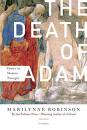
“It seems to me that there is now the assumption of an intrinsic fraudulence in the old arts of civilization. Religion, politics, philosophy, music are all seen by us as means of consolidating the power of the ruling elite, or something of the kind. I suspect this is a way of granting these things significance, since we are still in the habit of attending them, though they are no longer to be conceded meaning in their own terms. If they have, by their nature, other motives than the ones they claim, if their impulse is not to explore or confide or question but only to manipulate, they cannot speak to us about meaning, or expand or refine our sense of human experience. Economics, the great model among us now, indulges and deprives, builds and abandons, threatens and promises. Its imperium is manifest, irrefragable—as in fact it has been since antiquity. Yet suddenly we act as if the reality of economics was reality itself, the one Truth to which everything must refer. I can only suggest that terror at complexity has driven us back on this very crude monism. We have reached a point where cosmology permits us to say that everything might in fact be made of nothing, so we cling desperately to the idea that something is real and necessary, and we have chosen, oddly enough, competition and market forces, taking refuge from the wild epic of cosmic ontogeny by hiding our head in the ledger.I want to overhear passionate arguments about what we are and what we are doing and what we ought to do. I want to feel that art is an utterance made in good faith by one human being to another. I want to believe that there are geniuses scheming to astonish the rest of us, just for the pleasure of it. I miss civilization and I want it back.”(The Death of Adam: Essays of Modern Thought, Picador, 1998, p. 3, 4)
Where I Ruminate on the “The Shortness and Misery of Life”
 Today would have been my father’s 95th birthday. Lawrence Clifford Floyd was born in Quincy, Massachusetts, on October 12, 1914, and died in Ocean Park, New Jersey, on July 14, 1983 at the age of 69. He is buried in the Quaker Cemetary in Shrewsbury, New Jersey, along with my mother Frances Irene, who died in 1967 at the age of 53.
It occurred to me that both my parents fell shy of the biblical three score and ten lifespan.
There was a time not long ago, before Bruce Springsteen and Susan Sarandon were on the cover of AARP magazine, before orthotics, artificial knees and hips, Botox and Viagra, Prozak and Ativan, when life was understood, not merely as the pursuit of quality and longevity, but as a short and challenging span full of temptation and sadness that was preparation for another life. Here, for example, is the incomparable Puritan poet, Isaac Watts:
The Shortness and Misery of Life
 Life for most people on earth is both less short and miserable than it was in Dr. Watts’ time, and for that we can be grateful. Still, that is one of Dr. Watts’ hymn texts that won’t be appearing in any of the newer hymnals. But to my lights it is closer to the truth of things than the glossy version of life spun out by Madison Avenue, and it is so starkly framed in an eternal context “where years of long salvation roll, and glory never dies.” How much more blessed to look forward to that than to declining days in a nursing home as our final stop.
Where I Ruminate on the Name of My Blog

I picked the name out of thin air, and thought it was ever so clever with the two R’s. Ironically, to ruminate means to think deeply about a subject, but I didn’t think deeply at all about the name of the blog.
Yesterday my sister-in-law Annette from Madison, Wisconsin, wrote on my Facebook page: “I like your blog. I dislike the word “ruminates.” Here in Wisconsin we associate this word with cows, or ruminant animals. And, locally there is some concern environmentally about the digestion of ruminants and byproducts in terms of gas emissions and nitrogen. Add the issues of industrial farming/dairy operations vs. organic growers, etc. and this is a common topic around here–with farmers and environmentalists at odds. When you post to Facebook the first thing I read is the definition of ruminate, and I giggle every time imagining a cow “thinking.” And, really, who wants to know what you think? Give us a headline that has some action. Keep going, but stop ruminating.” I answered her, “How about Bloviates?” “That is my blog,” she replied (she can be very funny).
Maybe she’s right. Perhaps Retired Pastor Ruminates is just a bad name for a blog. Or worse, somehow environmentally incorrect, taking up too big a carbon footprint in the blogosphere. And who wants to think about cows and methane gas when you are reading a recipe?
I wonder if I should change it? But what would I call it? I thought of “Everybody is Entitled to My Opinion,” but I Googled it and it’s taken. Since I’ve been putting up recipes as well as theology posts I thought of Rick’s Cafe Americaine as a Casablanca reference, or Everybody Comes to Rick’s, but they, too, are taken.
So, for now, I’ll stay with Retired Pastor Ruminates. It’s the only one there is. It’s easy to remember, and is a fairly accurate description of what goes on here. Besides, I’ve had over 5000 visits since March 23, and I need to maintain my brand! (5768 to be precise, but who’s counting?)
Let me know what you think, and if you get an idea for a better name, let me know.

