Unknown's avatar

Arnold Kenseth: A New England Poet of the Sacred

Arnold M. Kenseth, who died in 2003, was a Congregational minister and poet. He wrote in 1989,
 “Among the clergy, I’m known as a poet, and among the poets I’m clergy. But by being in New England, being where there are birds and trees and meadows, there’s a very natural marriage between religion and poetry.”

I met Arnold in 1977, when I was still a pastor in Maine. Martha and I were on vacation in Canada, and were camping at Fundy National Park in New Brunswick, which is one of the most beautiful spots in the world. On Sunday we left our tent to find the nearest church and found a United Church of Canada parish in the little fishing village of Alma, right outside the park. The pastor was a Scot and had a bit of a brogue. But the highlight of the morning was when the pastor called up a distinguished looking gentleman from the congregation to give the pastoral prayer.I had never heard anything like this before in my life. The prayer was dignified and reverent and not showy, but the words were so beautifully chosen that I imagined the man must be a poet, as indeed it turned out he was. At coffee hour we approached him and introduced ourselves. It was Arnold. We discovered that we were both pastors in the United Church of Christ in the United States. He served the South Congregational Church in Amherst, Massachusetts, the pretty little town near the University of Massachusetts, where he also taught poetry. I asked Arnold where I could get a copy of some of his prayers and poems, and he told me about Sabbaths, Sacraments and Seasons, published by Pilgrim Press in 1969.

As soon as I got back to Bangor I ordered a copy and it has been a treasured resource ever since. On the back page was some information about the author. It indicated that Arnold had graduated from Bates College. My father graduated from Bates as well, so I asked him if he knew Arnold. Sure enough, they were both in the class of 1937.

Five years later I left Maine to accept a call to be the Pastor of The First Church of Christ in Pittsfield in Western Massachusetts. It wasn’t too long before I attended an event in Amherst, and there was Arnold. I reminded him of our meeting in Alma, and told him how much I loved his prayers and poems. I also mentioned my Dad, and Arnold remembered him warmly (my Dad died shortly after that.) That meeting was the beginning of a friendship with Arnold that involved lunches and long phone conversations and exchanges of letters. He would from time to time send me copies of new poems and books. After he retired I had him come to Pittsfield and preach for me several times.

He told me how he had become a minister. After graduating from Bates with a degree in English, he went to Harvard University as curator of the Harvard College Library Poetry Room. There, he cared for the Edwin Arlington Robinson collection and the Amy Lowell collection. He wanted to write about the relationship between poetry and religion.

It was there that he met the Reverend Samuel H. Miller, another minister once known for his lovely and moving prayers. Miller later became dean of Harvard Divinity School. It was Miller who got Arnold interested in the ministry, and he enrolled in the Harvard Divinity School and received a bachelor’s of sacred theology in 1944. He received his master’s degree in English in 1950, also from Harvard.

He was friends with many of the poets of his generation, including Robert Frost. I have always heard intimations of Gerard Manley Hopkins in Arnold’s poems, but his influences were wide and deep. For his 50th Bates College Reunion, he wrote, “I rejoice in Van Gogh, Henry Adams, Dostoyevski, Chopin, J.S. Bach, Saint Francis, T.S. Eliot, Wallace Stevens, Isaiah, the Gospel of Luke, and Mother Teresa – the light bearers.”

He served as Pastor of the South Congregational Church for 40 years, and was a model for me of a gracious long pastorate. I was privileged to have a visit with Arnold just days before his death, and he was still lucid and gentle and full of hope. If you don’t know this man’s writings I highly recommend them to you. Here’s a sample:

On Easter the great tower of me falls.
I had built it well; my mind had planned it
After being schooled; my will had special wit
To dig me deep foundations, solid walls,
Blocks of moral toughness, windows to see
The enemy, the friend; large rooms, I thought
For light; and storey upon storey me
I raised, and famously my fame I sought.
So driven to prove the world with my estate.
I had not heard Christ on Good Friday die,
His body crooked, broke, and all friends fled.
I had not wept his cause in my carouse.
But now bold bells scatter against the sky,
And Christ is shattering my death, my pride;
As walls, blocks, windows, rooms, my silly penthouse
Spill into the dust I am, my narrow fate.
At last set free from virtue, knowledge, strife,

I mourn, then praise my God, and enter life.

(“Easter” by Arnold Kenseth)

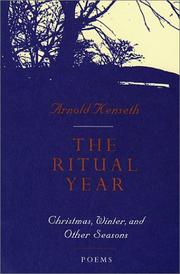
The Ritual Year, Amherst Writers and Artists Press, 1993)
Unknown's avatar

A Cloud of Witnesses: Ruminations on All Saints’ Day

Some thoughts for All Saints Day: How might we picture the presence of the communion of saints with us? “We are surrounded by so great a cloud of witnesses . . .” says the writer of Hebrews. The image is drawn from the stadium where the athletic games were held. The cloud of witnesses is the huge throng of spectators cheering on the competitors, who are admonished to “lay aside every weight and the sin that clings so closely” just as a bicycle racer will try to have the lightest materials possible. This one is a foot race, though, and here Jesus is pictured as the lead runner, the pacesetter, “the pioneer and perfecter of our faith.”

“We are surrounded by so great a cloud of witnesses. . .” In 1980, when I was a number of years younger and many pounds lighter, I ran in my one and only marathon road race, the Paul Bunyan Marathon in Bangor, Maine. This 26-mile race began at the Paul Bunyan statue in Bangor and meandered through adjoining towns until it ended on the oval of the football stadium at the University of Maine in Orono. I will never forget the ending of that race.

You have heard about the “loneliness of the long distance runner.” There’s truth in that phrase, for even when you are physically prepared for these long races there is a mental and emotional side that is quite daunting. The first half of my race was fun and at about mile ten or twelve I was euphoric, but around mile twenty I began to run out of gas and I had to struggle to keep on running. A solitary debate began in my mind: “Can I finish?” “Should I quit?” “Will this cramp go away, this ache subside, this tiredness abate?” By the time I hit that oval track in the stadium at Orono I was just glad to be finishing. And then a strange thing happened. I was pulled out of my reverie by the sound of cheering, and, since I knew that my wife and her parents were the only ones present at the race who knew me, I wondered who the cheering was for. I looked ahead and saw that there was no one else on the track. What’s more, many of the cheers were naming me by name, “Way to go, Rick!” “You can do it, Rick!” which puzzled me still more.

What it was, of course, was the cheering of the other runners who had finished ahead of me. With my race time of three hours and forty–seven minutes there were scores of other runners ahead of me and there were many other spectators and they all had a program sheet with the names and numbers of the runners and I had my number pinned to my shirt. Those cheers were wonderful for my morale, and I straightened my shoulders a bit and quickened my step and put on a little burst of speed for that last lap.

I carry that image in my mind as the very image that the writer of Hebrews wants to evoke here. The communion of saints are the ones who have finished the race before us. They are in the stadium seats watching us, they have finished the course, and now “from their labors rest.” We in the church militant are engaged in the same task as they were and they cheer us on, encourage us, support us, and call us by name. They are the great cloud of witnesses.

The word “witness” has a nice double meaning. It can mean merely spectators, which carries through the athletic metaphor of the passage. But witnesses here are more than passive spectators. They are those who bear witness to the truth they have known. Keep in mind that the Greek word we have translated as “witness” is martyr. During the early generations of the church so many witnesses sacrificed their lives for their faith that in time the word “martyr” took on that additional meaning.

So these witness who surround us are not idle spectators. Do any of you remember the comedian Flip Wilson of “The Church of What’s Happening Now!”? He once said, “I’m a Jehovah’s Bystander. They asked me to be a Witness, but I didn’t want to get involved.” So the cloud of witnesses not only supports us by their presence, they bear witness to the truth of God they have known

This is an excerpt from my sermon “Mystic Sweet Communion.”

Unknown's avatar

Karl Barth on “What is Preaching?”

In addition to various places in his monumental and magisterial 14 volume Church Dogmatics, where Karl Barth addresses preaching directly, he also left us a fine little book on homiletics and some anthologies of sermons. With these in hand we may explore his views on preaching.

What is preaching? That is the question that preoccupies Barth throughout Homiletics (Westminster/ John Knox Press, 1991.) Barth begins the book with what is really an extended essay on the history of eighteenth and nineteenth century German hermeneutics, entitled “The Nature of the Sermon: A Historical and Dogmatic Sketch.” He critically examines in turn the theories of David Hollaz, Frederich Scleiermacher, Alexandre Vinet, Christian Palmer, C.I. Nitzsch, Johannes Bauer (with a surly nod at Albrecht Ritschl), Karl Fezer, and Leonhard Fendt. Let us look at each in turn and see the evolution which sets the stage for Barth’s own definition of preaching.

Hollaz was an orthodox dogmatician whose definition of the two–fold task of preaching (investigation and application of the text) raises questions of form for Barth. Schleiermacher, the most brilliant theological exponent of the new Romanticism, understood preaching as the articulation of the shared spirituality (as some might say today) of the congregation. The preacher . . .“steps forward to project his innermost self as a subject of shared observation that has been prompted by God, in order to lead them to the sphere of religion, where they feel at home so that he can instill his sacred feelings: He expresses divinity, while in holy silence the congregation follows his inspired speech.” (From On Religion, quoted in Barth on p. 23.) Barth rightly asks whether “the self–presentation of the pious feelings of the congregation is really preaching as Schleiermacher thinks?” (p. 25)

We see the next unfortunate and inevitable mutation in the evolution of homiletics in the theories of Vinet, a disciple of Schleiermacher, who believed preaching to be a special sort of rhetorical speech whose decisive character was its “spiritual”(that word again) content, and who posited (logically enough based on his assumptions) that a biblical text does not have to be the basis for such discourse.

The next theorist, Christian Palmer defines the task thus: “To preach is by living witness, and in the name of God, to offer the salvation which appeared and is present for human beings in the person and work of Christ.” Barth thinks Palmer claims too much for the “living witness,”that is, the preacher. Palmer, like Hollaz and Schleiermacher, allows the preacher to maintain control over what is proclaimed. To Barth “the offer of salvation” sounds too sacramental and “overmuch is ascribed here to the preacher.”

Barth goes on to commend many features of the theories of C. I. Nitzsch, whose definition is: “A sermon is the ongoing proclamation of the gospel for the edification of the congregation of the Lord, a proclamation of the word of God through texts of holy scripture which take place in a living relationship to contemporary circumstances through called witnesses.” (p 27). Barth likes the fact that Nitzsch, unlike Schleiermacher, who had dissolved the distinction between preacher and congregation and preacher and subject matter, understands that the subject matter of preaching is different from humanity “in the plight from which it has to be rescued.” (p 29) But Nitzsch falters when he ascribes some special religious attitude to the preacher as a requisite part of preaching.

Barth dismisses Johannes Bauer as a regression from Nitzsch to the total subjectivism typical of this period under the spell of Ritschl, Troelsch, and the history of religion school.

If you will pardon a personal digression, it was in reading this material that I was reminded once again how ill-prepared I was for preaching and pastoring, not to mention for the dialogue with fundamentalism that began my ministry, by my theological education. That education was informed on one side by the therapeutic verities of Clinical Pastoral Education (CPE) (certainly helpful in certain contexts) and on the other side by the critical social theory of James Luther Adams and Max Stackhouse (also helpful in many contexts), which had a direct genealogical line from Troeslch. I was given psychology and sociology, but no theology worthy of the name, and certainly no handle on what it meant to be a preacher. My clergy mentor admonished me at my ordination to be a “minister of the Word of God” but it was years of intellectual struggle before I had a clue as to what that meant.

To return to Barth’s history of preaching we come to Karl Fezer. He is the first of the theorists to abandon the principle of the superiority of the preacher over the subject matter and Barth, after some small criticisms, is most approving. For Fezer, God is now the subject of the process. Fezer understands that God gives us himself in the work of scripture, and this notion is centered on the atonement.

Leonhard Fendt, earns some praise from Barth because his notion of preaching, like Fezer’s but unlike Bauer’s, takes God seriously. Barth breaks Fendt’s definition down into nine constitutive elements.

Barth then offers his own definition in two formulas which are to be in dialectical relationship to one another:

1. Preaching is the Word of God which he himself speaks, claiming for the purpose the exposition of a biblical text in free human words that are relevant to contemporaries by those that are called to do this in the church that is obedient to its commission.

2. Preaching is the attempt enjoined upon the church to serve God’s own Word, through one who is called thereto, by expounding a biblical text in human words and making it relevant to contemporaries in intimation of what they have to hear from God himself.

In both the history of the theories of preaching that he offers and in his definition of preaching, Barth is attempting to identify preaching that, as he said of Palmer, “takes God seriously” as the subject of preaching, that is, as the one who addresses both the preacher and the congregation through scripture.

It is interesting to read Barth’s anthology of sermons Call for God (Harper Collins Publishers, 1993) to see examples of how Barth’s theory of preaching takes shape in actual sermons. In reading them I had, as I have had before when reading Barth, the sensation of glimpsing a different world, the “strange new world of the Bible” as Barth once called it (in The Word of God and The Word of Man) and of being addressed very simply by a different word than the world speaks, and realizing it isn’t just a word, but the Word of God.

In Barth’s sermons “religion” isn’t explained or taught, rather the hearers are addressed by the God who both speaks and acts in his Word. For example in the sermon “What Remains” he tells about the nature of the address that confronts us in the scriptures. He says, “But let us ask once more; What kind of word is it? Where is it decisively spoken in such a way that we can hear it? I will try once more to answer quite simply: God has said his Word simply by doing what it says. What happened was that he appeared and worked and acted in our midst as our God.” (p. 60.) Here we see Barth work out in sermons that which we see worked out in the Church Dogmatics, the identification of revelation with event. “ . . . his Word tells us what he has done. It is no mere word. It is loud and clearly perceptible to everyone in the Christmas event . . .” (p. 60.)

Barth’s theology has been the single most significant influence (besides scripture) on my ministry . It may well have allowed me to remain a minister at some key junctures in my many years in ministry. As a struggling believer I found great solace and also great challenge when I ceased to be an observer of religion and was faced with the personal question of my own faith as one addressed by God. As a newly-minted minister I found the task of weekly preaching to be terribly agonizing. It was then I started reading Barth, beginning with the little book The Word of God and the Word of Man. Clearly the questions Barth was asking were mine as well, “What is preaching?” and “where does the preacher derives his or her authority?” His critique of Schleiermacher and theological liberalism spoke to my own sense of the bankruptcy of my liberal religious background and much of my theological education, which had understood “religion” (whatever that is) to be some special sensibility that humans have that needs to be nurtured and cultivated and that in some sense is identical to our highest aspirations and deepest emotions.

Reading Barth I was able to gain again the joy of discovery of a living God that is “God with us”, a joy that I had known as a child, but was distilled out of me by years of exposure to the post-enlightenment world-view of my education, not least by Post-Bultmannian seminary professors for whom texts were seen more as the pieces and parts of a puzzle and not a Word of Life. I have to say that reading Barth right out of seminary was tantamount to a conversion. Ever since then my preaching has been that of one who stands under the Word of God, rather than as a religious expert that dispenses divine truth or sings the lyrical theism of liberal religion. Reading texts this way has enabled me to develop what Paul Ricouer has described as “a second naivete.”

One can see in both Barth books that preaching means being addressed by texts, and then by grace finding in the struggle with the text that one is addressed by God. I have found great help in sorting out the authority question by a simple reflection on Barth’s threefold understanding of the Word of God: the written word of scripture, the spoken word of preaching, and the Word of God, Jesus Christ. I often begin my sermons with the following prayer: “Gracious God, we pray that through the written word, and through the spoken word, we may behold the living Word, even your Son our Lord, Jesus Christ. Amen.”

Hear an example of how Barth addresses the hearers in this portion of the sermon “What Remains”: “Whoever does the will of God—and that means whoever hears the Word of God and holds fast to it as he listens—whoever allows what it creates within him to take root and grow—that is a little faith, a little hope, a little love—such a man remains at this moment and will remain too forever.” (p. 65) Here in one sentence is promise, exhortation, ethics, humility, and hope.

I think Barth’s approach to preaching and the hermeneutic that lies behind it have revolutionary implications for the practice of ministry in local congregations. It calls into question the prevailing therapeutic and managerial models of local church life, and invites ministers and congregations to take themselves seriously as those who are addressed by God in his Word. And more than addressed, congregations are constituted, called, gathered, sustained, empowered, in fact have no authentic life of their own apart from the life given them by God in his Word. To take such a God seriously demands a congregation that studies scripture in all seasons, that takes prayer seriously, that risks putting an end to “the sin of bustle” (the phrase is P.T. Forsyth’s) so that they might hearken to the particular call of God to their time and place.

Such a community and such ministers will take sermon preparation seriously as demanding time, study, research, prayer and a kind of deep reflection impossible for the modern pastor whose vocation is conceptualized in professional terms as a primary caregiver. One piece I have added to my sermon preparation over the years is the lectionary bible study with members of the congregation. When we sit down together to struggle with the texts new understandings emerge, new insights into the text are shared. In addition the community raises the context to provide the relevance of which Barth speaks in his definition of preaching as . . .“expounding a biblical text and making it relevant to contemporaries. . .” But the most important piece of that definition is the next phrase: “in intimation of what they have to hear from God himself.” ( p. 44) That is the key to authentic Christian preaching.

(These reflections are based on a paper I submitted during my doctoral studies to Professor George Hunsinger at the Bangor Theological Seminary at Hanover, NH, on February 8, 1993.)

Unknown's avatar

Ambassadors of Reconciliation

The theme for today’s meeting is reconciliation. It’s a big word for Christians, for it lies at the very heart of our identity. From the beginning the biblical story makes it clear that we humans are at enmity with God and with each other. The harmony of a God–given paradise quickly gives way to disobedience and death. Adam and Eve soon separate from God and their offspring soon have blood on their hands.

And still the mark of Cain can be seen in the human family, as Tsutsi’s and Hutus, Irish Protestants and Catholics, Muslims and Hindus, Arabs and Jews, Bosnians and Serbs murder each other each day. In our own land great rifts remain between blacks and whites, hostility to aliens grows daily and guns seem to be the problem–solving method of choice for many.

We are increasingly a tribal culture: each of us preferring the enclaves of those who share our ideas, our class, our skin color, our ethnic heritage, our prejudices. In the business community, downsizing produces a culture of survivors, a bunker mentality that fractures community, creativity and innovation. In politics the infighting and rhetoric of abuse so dominates that the final victor is unable to govern effectively. Even in the church we are a fractured people, separated by walls of our own making, walls of race and sex, of creed and ideology. We meet in our small caucuses and interests groups and label those unlike ourselves, building ever higher and more complex walls to keep us apart from each other.

The biblical word for all this is sin, which means separation from God and one another. It would seem that from a human point of view there is no reconciliation. Yet it is into this broken and estranged world that the Word of God breaks forth with the message of reconciliation. “Hear the good news!” God declares. “While we were yet sinners Christ died for us!” What we cannot do for ourselves God has done for us.

The Christian story is a story of reconciliation and its very center is the cross of Christ, where God’s reconciling work is accomplished. In fact, the Greek word we translate as reconciliation also means atonement, at-one-ment, the bringing together of that which was separated. The biblical story is quite clear that the basic rift is between God and us and that our inhumanity to each other is a symptom rather than a cause. That rift is not something we can overcome by ourselves, but God could and did. On Calvary all the hatred and enmity of the world were nailed to the bloody cross with Jesus, and in that saving event Jesus represented us to God and represented God to us in a freely chosen act of obedience which is an atonement for the sins of the whole world. As John the Baptist said of Jesus at his baptism, “Behold the lamb of God who takes away the sins of the world.”

The Easter faith we profess is that God has come among us in Jesus Christ, and has died and been raised for us so that we may now live a new kind of life. “If anyone is in Christ,” Paul says, “there is a new creation: everything old has past away; see everything has become new! All this is from God, who reconciled us to himself through Christ, and has given us the ministry of reconciliation; that is, in Christ God was reconciling the world to himself. Not counting their trespasses against them, and entrusting the message of reconciliation to us. So we are ambassadors for Christ, since God is making his appeal through us; we entreat you on behalf of Christ, be reconciled to God. For our sake he made him to be sin who knew no sin, so that in him we might become the righteousness of God.”

This reconciliation was no abstraction for the church in the first century. A church comprised of Jews and Gentiles struggled to be reconciled against the weight of hundreds of years of custom and tradition reinforced by numerous religious laws. The potential for division was enormous and we can see the working out of it throughout the New Testament where the issues get joined. Must Gentile converts to Christianity be circumcised? Do they have to observe the dietary laws of Judaism? We see the separation of rich and poor in 1st Corinthians, where the rich come and eat the supper for the communion before the poor can arrive.

Which is to say that it has never been easy to be the church, the community of reconciliation.. Reconciliation means hanging in there with those you would just as soon write off, but can’t because they belong to Christ as you belong to Christ and so they are your brothers and sisters in Christ. The church is to model for the rest of the world the reconciliation that God intends for the whole world. That is why it is such a scandal when the church itself is divided.

I believe our own United Church of Christ is in for a very difficult struggle for the next generation. We are no longer a homogeneous church but exhibit a dizzying variety of folks, many who come from other religious traditions. The United Church of Christ means many different things to different people. There are many issues in contention among us at this time, including such core questions as what theology is appropriate for our church and what language shall we use to express our faith in liturgy and hymnody. Feelings about these issues are very strong. There seems little room for compromise between the opponents. Who will be the winners and the losers? A friend of mine who is a historian at Harvard tells me that the German Reformed Church, one of the predecessor bodies in the United Church of Christ, endured fierce debate over their liturgy in the 19th century, but somehow they stayed together. Can we stay together in covenant?

From a human point of view, it seems doubtful. And yet, how can we be a voice and witness to reconciliation in our society, to schools and businesses, to our decaying cities and streets of wrath, to marriages and families in turmoil and children at risk if we cannot live among ourselves? How are we to be ambassadors of reconciliation if our own household is at enmity?

The challenge before us for the days ahead and for a long time to come is to be the church, to live in such a way that we are a living witness to the message of reconciliation that has been given to us. This means tolerating a fairly high level of conflict for a long time. It will test our faith. We will need the gifts that God’s Spirit sends to the faithful. It will require that we tell the truth in love. It will require soul–searching and the capacity to give and accept forgiveness. In other words, it will mean being the church, which was never easy and isn’t easy now.

Formerly we may have regarded some people as our enemies and opponents, and perhaps they are as the world sees it. But from now on we are to regard no one from a human point of view, because if we believe our own gospel then “by God” there is a new creation, the old has passed away, behold the new has come. So we entreat you, my brothers and sisters in Christ, by the power God gives you “be reconciled to God” and be the church, the community of the reconciled. And be the church as hard as that is and as long as it takes, which may be a long long time. Which is perhaps why, before Jesus left the disciples, he promised to be with us even to the end of the age. Amen.

(A sermon to the Berkshire Association, United Church of Christ, Annual Meeting on April 21, 1996, meeting at First Church of Christ (UCC) in Pittsfield, Massachusetts, where I was, at the time, the Pastor.)

Unknown's avatar

Another Lifeline: Lesslie Newbigin

Bishop Lesslie Newbigin (1909-1998) was a Church of Scotland missionary to India who became a bishop in the Church of South India, an unlikely vocation for a Presbyterian minister. His writings on missiology, theology and culture, and ecumenism have been widely influential.

I had the privilige of meeting him in Britain in 1989. Years later a wonderful Indian couple, Selvyn and Christobel, were part of our church life in Pittsfield after 9/11 for several years before going back to India. They were from Tamil Nadu (once Madras) where Newbigin had served. Christobel’s father was a minister in the Church of South India, so I asked her if she knew Lesslie Newbigin, and she smiled brightly and said, “He baptized me.” The world is sometimes smaller than we think.

Here are some thoughts on Newbigin’s remarkable book The Gospel in a Pluralistic Society, Eerdmans, 1989, I first wrote in 1993 for George Hunsinger:

When the Barbarians had sacked Rome, Christians were accused of having undermined the empire. Augustine wrote City of God as a refutation of that charge, and as a Christian interpretation of history, since the fortunes of that history and the fortunes of Rome were no longer understood to be identical. The full implications of Post-Constantinian Christianity have been allowed to be repeatedly deferred because of the linkage of Christianity with Post Roman European and North American culture and their impressive successes in a whole variety of human endeavors. That culture has, however, since the Enlightenment, had an increasingly smaller and less significant place for Christian revelation. Newbigin’s book recognizes the fact that the reigning world view that has grown out of the Enlightenment can no longer be the carrier of Christian truth or of an adequate Christian view of history, for the simple fact that this world-view (he calls it by Peter Berger’s term “plausibility structure”) is itself a faith, an alternative interpretation of history.

This general thrust is not new, of course, as many Christian thinkers and scholars have been grappling for some time with imagining what post-enlightenment Christianity might look like. I have been watching this discussion from the parochial sidelines for many years; Peter Berger in Sociology, Hans Frei in hermeneutics, George Steiner in Literary Criticism, and George Lindbeck in Systematics (just to name a few) have all spoken to the problem. The problem is that the Christian story is no longer “our story” as every working pastor knows “up close and personal” from teaching confirmands and their parents, and from trying to preach the Christian faith to people who increasingly can’t believe it (not won’t, but can’t), because it is literally “nonsense” from the perspective of the plausibility structure within which they view their world. It is a conversation that will be going on for a long time, but so far no one has come up with the definitive answer.

Newbigin suggests we unmask the reigning plausibility structure, cease to judge the Gospel by it, and instead let the Gospel be that from which we judge all things. It is a suggestion with a distinctively Barthian flavor to it, though Barth is hardly mentioned in the book. The Gospel in a Pluralistic Society (and other things Newbigin has written) have a freshness about them that comes in part, I think, from his freedom from the academy, which, after all, is where the reigning plausibility structure reigns most thoroughly, and from his forty years as a missionary in India where he was forced to think about the place of the Christian revelation apart from its cultural linkage in the West, whereby he was able to get out from under the plausibility structure enough to name it as yet another ideology or competing faith. So as Augustine imagined Christian history cut loose from Rome, Newbigin imagines Christian history cut loose from “modernity” and the ideology of “Pluralism.” I can’t recall when I have read something so wide-ranging that seems to be so faithful to the contours of the biblical narrative.

Newbigen makes an eloquent case that the learned spokesmen and spokeswomen of contemporary Christianity who argue against making exclusive claims of truth on behalf of the Gospel are in fact not making Christianity more available to their contemporaries, as they often argue, but are embracing an alternative view of history, an alternative faith actually, and in so doing are selling their birthright for a mess of pottage.

To judge the gospel by the reigning plausibility structure is to betray it, for the gospel itself is a view of history that calls into question every other way at looking at human history and destiny. Newbigin utilizes some of the ground-breaking epistemological studies of Michael Polanyi to call into question the reigning plausibility structure. Polanyi understands that science, rather than being some “objective” value-neutral method above and beyond any external authority is itself an authority with its own canons and dogmas. “The authority of science is essentially traditional.” (Knowing and Being, p 66, quoted in Newbigin p 430.)

Likewise, in Newbigin’s discussion of “the logic of election” he contends that Pluralism’s rejection of particularity is based on faulty presuppositions. “As Alasdair MacIntyre has shown (Whose Justice? Which Rationality?), it is an illusion to suppose that there is available to us some kind of pure rationality existing in a disembodied state and therefore capable of passing judgement on all the various ways of grasping truth developed in particular socially embodied traditions of rational discourse .” (p 82)

To take but one example of how this works let us look at the interpretation of a biblical text. According to the reigning plausibility structure a text is best understood from some outside perspective, an archimedean point from which the observer can make sense of it. From this point of view we examine the text, Newbigin says, but the text doesn’t examine us (George Steiner’s book Real Presences is an eloquent articulation of how we have become estranged from art by this inability to “enter” it.)

Newbigin uses the now well-known example of Karl Barth “as he sat under his apple tree in Safenwil, when he discovered to his astonishment that the Apostle Paul was not only addressing his contemporaries in Rome but was actually addressing Karl Barth, and an answer was required.” (p 98)

Newbigin might say that we have tried to understand the gospel from the point of view of the world, when in fact the world must be understood from the point of view of the gospel. He in no way rules out dialogue and discussion with other faiths and points of view, but let us be clear that we have a position which makes claims for itself, which can not be denied by deciding in advance that all views are equally valid. That is of course just what the ideology of pluralism asks of those who come to the discussion.

One of the dogmas of the ideology of pluralism is the refusal to consider the question of truth; even some Christians are now asking that truth questions be put aside for the sake of some elusive unity. Newbigin wants to claim that the Christian religion is the truth, not a truth, one among many. This of course flies in the face of the reigning plausibility structure, challenging perhaps its most widely held dogma, that in “private” matters like religion there can be no truth.

How can a sophisticated, educated man who has lived and thought globally for several decades hold such a view? Here I will let him speak for himself:

“It has become customary to classify views on the relation of Christianity to the world religions as either pluralist, exclusivist, or inclusivist, the three positions being typically represented by John Hick, Hendrik Kraemer, and Karl Rahner. The position which I have outlined is exlusivist in the sense that it affirms the unique truth of the revelation in Jesus Christ, but it is not exclusivist in the sense of denying the possibility of the salvation of the non-Christian. It is inclusivist in the sense that it refuses to limit the saving grace of God to the members of the Christian Church, but it rejects the inclusivism which regards the non-Christian religions as vehicles of salvation. It is pluralist in the sense of acknowledging the gracious work of God in the lives of all human beings, but it rejects a pluralism which denies the uniqueness and decisiveness of what God has done in Jesus Christ. Arguments for pluralism and inclusivism usually begin from the paramount need for human unity, a need hugely increased by the threats of nuclear and ecological disaster. We must surely recognize that need. But the recognition of the need provides no clue about how it is to be met, and certainly does not justify the assertion that religion is the means by which human unity is to be achieved. The question of truth must be faced.” (Newbigin, p 183)

Another of the dogmas of pluralism is the separation of morals from public life. Newbigin critiques such an idea as basically false, for how can the commitments and affirmations that one lives by personally fail to affect the commonweal? Newbigin says, (against Munby’s idea of the secular society) “The way societies behave, and the policies they accept, will be a function of the commitments the members of the society have, the values they cherish, and—ultimately—the beliefs they hold about the world and their place in it.”( Newbigin, p 218) Again the notion that there can be a separation between the public and private is based on an ideology that separates personal life from history. It is a faith: “The secular society is a pagan society.”(p. 220)

Newbigin argues for a view of the Bible as universal history, not as merely a sectarian story for a peculiar people, but the story for all people. He supports this claim by arguing for Israel and the church to be seen in terms of election to fulfill God’s intention for all humanity, and, finally, for Jesus Christ to be understood as the clue to history. In spelling this out he articulates an interpretation of history which is congruent with the biblical narrative.

Jesus Christ, “the clue to history” is the clue as well to the church’s mission. Since we need not be ashamed of the particularity of God’s way with the world, we can abandon the liberal reductionism that tries to distill Jesus’ ethics out of the particularity of Jesus’ person. With the coming of Jesus the kingdom of God can no longer be construed as a formal concept “into which we are free to pour our own content in accordance with the spirit of the age. The kingdom of God now has a name and a face: the name and the face of Jesus. When we pray, ‘Your kingdom come,’ we are praying, or ought to be praying, as the early church did, ‘Maranatha: Come, Lord Jesus.’ The fact that liberal Protestantism separated these two, was willing to talk about the coming of the kingdom but not about the coming of Jesus, is a sign of betrayal.” (p 134)

Newbigin decries the conflict between those who see the purpose of the church as the preaching of the gospel of salvation and those who see it as the doing of God’s will of righteousness and peace in this world. He says, and I agree, that this conflict is profoundly weakening the church’s witness. He suggests both parties would benefit from renewed focus on the new being in Christ, the “prior reality, the givenness, the ontological priority of the new reality which the work of Christ has brought into being.” (p 136) A renewed appreciation for the cross of Jesus Christ and its cosmic implications is what is needed. The cross, of course, has been a scandal from New Testament times, and is a particular scandal to those forms of liberal Protestantism that have tried hardest to accommodate themselves to the reigning plausibility structure. I have called the cross the “lost chord” in liberal Protestantism (in my work on P.T. Forsyth), and with Newbigin believe its recovery is the only hope we have of being found faithful to the gospel.

Newbigin’s book has any number of implications for parish practice, for he believes in the congregation as hermeneutic of the gospel,

“ . . . I confess that I have come to feel that the primary reality of which we have to take account in seeking for a Christian impact on public life is the Christian congregation. How is it possible that the gospel should be credible, that people should come to believe that the power which has the last word in human affairs is represented by a man hanging on a cross? I am suggesting that the only answer, the only hermeneutic of the gospel, is a congregation of men and women who believe it and live by it.” (p 227)

That statement sums up a good deal of what I believe about and practice in parish ministry. I worked for three decades in local churches to accomplish just what he prescribes: the local church as “hermeneutic of the gospel.” Preaching, first and foremost, teaching adults and children, catechesis of new members, new Christians and confirmands, evangelism, mission and stewardship are all pieces of this.

Newbigin also offers encouragement to ministers as missionaries to a alien culture, even a formerly Christian one like mine. As a minister I came to recognize that I could not look to the world for approval and support, for inasmuch as I am faithful to the gospel the world will be an adversary. That the congeniality of culture Protestantism was available to my predecessors in ways I will never know is something I do not regret, since their temptations are also not mine.

A final implication of Newbigin’s position is that no movement or cause outside the church is worthy of our uncritical acceptance and support. They can never be the bearers of the meaning of history:

“It does not require much knowledge of history to recognize that, with all its grievous sins of compromise, cowardice and apostasy, the church outlasts all these movements in which so much passionate faith has been invested. In their time each of these movements seems to provide a sense of direction, a credible goal for the human project. The slogans of these movements become sacred words which glow with ultimate authority. But they do not endure. None of them in fact embodies the true end, the real goal of history. That has been embodied once for all in the events which form the substance of the gospel and which—remembered, rehearsed, and reenacted in teaching and liturgy— form the inner core of the Church’s being. To commend this gospel to all people in all circumstances, to witness to it as the ultimate clue to the whole human story and therefore to every human story, can never be unnecessary and never irrelevant, however much it may be misunderstood, ignored or condemned.” (p 138-139)

For me this was one of those books, from one of those people I have called lifelines.

Unknown's avatar

Rome Disses Canterbury: A Sad Time for Ecumenism

Ecumenism is in my DNA.

When I was growing up my father worked for the National Conference of Christians and Jews for fourteen years (technically interfaith, I know, but with strong ecumenical bonds). From my early nurture in the Episcopal Church I was taught that all Christians are Catholic since catholicity is one of the marks of the church named in the creed (“One, Holy, Catholic, and Apostolic.”) I learned that the divisions in the church were the result of human sin, and that we were to work for overcoming them and finding our God-given unity. We prayed (from the Book of Common Prayer) for God to overcome “our unholy divisions.”
I remember the excitement generated when Pope John the 23rd promoted “aggiornamento” that was a feature of the ground-breaking Second Vatican Council. The “windows came open for awhile” a Jesuit friend once said to me.

I recall a sermon in the late nineteen-sixties when our rector enthusiastically reported a historic service in San Francisco where Eugene Carson Blake and Bishop James Pike propose a process leading to the eventual union of the Mainline churches(which became the Consultation on Church Union: COCU.)
As a young adult I joined the United Church of Christ in part because of their great history of ecumenism, and their commitment to be a uniting church. I was ordained by the UCC and served for a dozen years as their representative on the Massachusetts Commission for Christian Unity (MCCU). There, I met wonderful, faithful men and women representing the whole spectrum of Christian communions. One highlight was I got to meet and talk with Johannes Cardinal Willebrands, one of the the great Roman Catholic ecumenists.
I studied the World Council of Churches Baptism, Eucharist, and Ministry(BEM) document carefully, and used it in both my local ministry, and in my A Course in Basic Christianity.
So I was dismayed this week to read the reports about Pope Benedict offering “traditional” Anglicans the opportunity to come into the Roman Catholic Church with the promise of “Anglican Rite” status. My first response was sadness. The Vatican is basically telling the Anglican Communion that they are not really a church. I thought of Rowan Williams, the Archbishop of Canterbury, someone I truly admire, having to sit there in a press conference and pretend he and his church weren’t getting disrespected.
The whole incident represents a giant set-back for a multi-generational ecumenical dream shared by many Christians from all communions, rooted in Christ’s own prayer to God the Father “that we may all be one.” That dream won’t die, of course, because the unity of the church is God-given, and in God’s own time and way it will be fulfilled. But silly me for thinking I might see more manifestations of it in my lifetime.
And how sad for those who will have to leave their church home. How will it all play out? The priests get to keep their wives but leave their parishes? And which Anglican rites will they be allowed to use? The Eucharistic theology in the various Books of Common Prayer is decisively Reformed in character, and has indigestible nuggets of anti-Roman polemic in it. My former Episcopal colleague Father J. Michael Povey writes astutely about this on his blog with the post Which Rites?
Whenever the church of Jesus Christ splits, it is a scandal. It weakens the church’s witness to the world. And when people leave their communion for another, it diminishes the diversity within that communion. The worst thing for a church is to be a bunch of like-minded people. I have often had to swim against the stream of my own denomination, but as my friend Gabe Fackre has always reminded me, “there are no safe harbors.” That is, there are no ecclesial utopias this side of the kingdom of God.
Here in Massachusetts many of the new members in Protestant churches are former Roman Catholics who come for one reason or another. We welcome them and extend them hospitality in our congregations as we should, because they are our Christian brothers and sisters. But to me it has always been bittersweet to see someone leave their church home, and it is a breach of ecumenical etiquette to bad mouth other communions.
I am guessing that the Vatican believes they are holding out an olive branch to the disaffected Anglicans. But the way it was done signals that any real Roman Catholic/Anglican dialogue based on mutual respect is finished for the foreseeable future. And if even they who share so much can’t work for common ground, what chance is there for us “separated brethren?”
So it is a sad time for ecumenism.
Unknown's avatar

Calculating the moral cost of war

(The following is a pastoral letter that I sent to my congregation at First Church of Christ in Pittsfield, Massachusetts, in the time between 9/11 and the lead up to the Second Gulf War with Iraq. It grew out of my ruminations about the story of Jonah. I just came across it and thought it worth revisiting, although events have surely moved on in the eight ensuing years.)

Since the ancient city of Nineveh in Assyria is located in modern Iraq, and we are preparing for a possible war with Iraq, the story of Jonah caught my eye. I know many of us get nervous when religion and politics get mixed up with each other. Many believe that religion and politics should be kept completely separate, which is pretty much what Jonah believed, so perhaps this story has more to tell us than we first imagined. Jonah wanted it both ways: to worship Yahweh, and hate the Ninevites. So Jonah would just as well see Nineveh burn as repent. Jonah’s theology was good, but one can have correct theology and still not know the ways of God. Jonah said “I knew that you are a gracious God and merciful, slow to anger, and abounding in steadfast love.” But for Jonah this was not an affirmation, but a complaint. The Ninevites were his enemy, and he liked it that way. That is why he ran away from God when God called him to preach to the Ninevites.

Jonah just doesn’t have enough imagination to understand the Ninevites as anything but the object of his hatred. Through the instruments of sea and storm and living creatures, most notably the famous vomiting whale, God brought Jonah to Nineveh. God commanded Jonah to walk through Nineveh and tell the people, “Forty days and Nineveh will be overthrown!” And that suited Jonah just fine. But then things went wrong for Jonah. Because the Ninevites actually did repent. They put on sackcloth and ashes, even the animals, which makes for a somewhat comical picture.

It’s amazing. Jonah uttered seven or eight words of the Lord, depending on your translation, and the people believed God, and repented. Would that all preaching were so easy! But Jonah was not happy. He has predicted the destruction of Nineveh, and it didn’t happen. So he became angry with God.

Jonah’s anger at God is more like childish disappointment. There is something almost innocent about it, but no less dangerous for being so. Getting angry with God is a time-honored biblical practice. Moses, Job, David, and Peter all did it. And we do it, too. Maybe not in so many words, but often we prepare for the worst with a kind of relish, and are surprised when it doesn’t happen. That is what happened to Jonah. He is angry with God because he has been surprised by grace.

Jonah’s sin is a common sin—because God is more merciful than we are. At some level, humans like to hate. It is hard for us to admit it, but there is something darkly delicious about hating an enemy. And whom do we hate? Usually we hate those who are different from us. They are “the other” who conjures up in us fear. That is why the terrorists hate us. We are different and a threat to their way of life. Real security can never be merely military, but will arrive only when hatred and fear are overcome by respect and understanding. That takes time and patience. It takes generations. War doesn’t help the process.

Now our current enemy, Saddam Hussein, is a bad character. He unleashed chemical weapons against the Kurds in the north of his country. His sin is treating his own people as things that are expendable, as abstractions toward political ends, chiefly his own power and glory.

>Now we as a nation must be alert to the danger of being drawn into a similar mind set, of turning the Iraqi people into abstractions. The so-called “regime change” we are demanding is an abstraction that permits us to deny the horrible truth that tens of thousands of Iraqis, and who knows how many Americans, would most likely die making that happen. We employ euphemisms to make such harsh realities easier to face. For example, “collateral damage” means the injury or death of innocent civilians during war. But collateral damage is not an abstraction if it’s your loved ones who are killed. Since we are engaged in a long-term battle for the hearts and minds of a generation of young Muslims, it would seem to me that we would want to avoid inflaming passions with an ill-considered war with murky objectives.

I am not a pacifist, and I am not one of those people who believe America is always wrong. I know that there are times when, sadly, one must fight against evil and tyranny. It could be Saddam Hussein’s threat to the world is so grave we must go to war to stop him. But that argument has not been made persuasively, at least not to me. I have many questions: Why him? There are other unsavory dictators we could pick, some with weapons of mass destruction. Why now? We left him in power after the Gulf War because we thought a weakened Hussein was better than the alternatives. But do we really expect a leader with Jeffersonian principles to take over? Some of Hussein’s chief domestic opponents are Islamists sympathetic to Al Queda. Is that what we want to take his place? Isn’t Al Queda the actual enemy we face? With Pakistan and Afghanistan so precarious, do we really want to destabilize the region with an attack? Do we want to be the first Americans in history to go to war without being attacked first? Why not let UN inspectors go in and see what they can find! Can we afford to act unilaterally against the consent of our allies and in the face of world opinion? What will war do to our already staggering economy? Can we afford the 100 to 200 billion dollars that this war will cost? Who is asking these questions?

But, in the end, if we must go to war, I want us to be morally aware that it is a sin, even if a necessary sin to stop a greater evil. And as a Christian, I do not want us to go to war because we hate. For hate mongering always seems to accompany war mongering. First you make your enemy an abstraction, and then you can feel justified in the killing. After Pearl Harbor my father said that he could fight, but he wouldn’t hate, while he watched the whole country being drawn into hatred of all Japanese.

Notice how the enemy we hate changes over time. When I was a boy we hated and feared the Russians; now they are our friends. The Iraqis were our friends when they were fighting Iran, and we gave them weapons. The Islamists who spawned Al Queda were our allies against the Soviet Union in Afghanistan. Do these people change? Does their national character go through a great shift? Do we turn a switch and suddenly enemies become friends? Why is it that so many of our foreign policy decisions fall victim to the law of unintended consequences?

I believe that many of the world’s problems are a failure of imagination, the same failure of imagination that made it impossible for Jonah to rejoice in the salvation of the Ninevites. If we can only see people as abstractions to hate and fear, then all problems seem to require a military solution. Rowan Williams, the new Archbishop of Canterbury, said recently: “If all you have are hammers, everything begins to look like a nail.”

Jonah had his theology straight, but he was clueless about the ways of God, of the largeness of God’s love, the wideness of God’s mercy. He saw everything through the eyes of Jonah. But God had a different plan and a different program. Let us beware of seeing the world only through the eyes of America. Let us beware of worshiping an idol of our own making, a national god who blesses only America. Let us allow the true God to open our eyes to experiences of amazing grace as we let the idols we worship fall away.

For that is where we often experience grace, in the gap between our little gods, and our narrow little plans, and the merciful God and his wide and vast plan. Jonah is angered because his little bush dies, and God says, “You are concerned about a bush . . . and should I not be concerned about Nineveh, that great city of a hundred and twenty thousand, and also many animals.” God’s care and concern is for the whole creation over which he has sovereignty and exercises freedom.

Let us not fool ourselves about war: the loss of life, the environmental degradation, the horror and cost involved. And what about the moral cost? I have said since 9/11 that our real enemy is hate. Let us pray that we will not succumb to hate those whom God counts as his children, and who fall under his concern and care every bit as much as we do.

Unknown's avatar

Why I love Wisconsin

Thanks to Google Analytics and other widgets and whistles I can see where the visitors to my blog come from. On days when I have too much time on my hands (like when the Red Sox don’t advance in the playoffs, for example) I can entertain myself by analyzing the patterns of visits.

The state with the most visits is, as one might expect, Massachusetts, where I live and move and have my being, as do many of my friends and family. Other states with good representation include some of the adjacent New England states, Maine, especially, where my brother and his family live.

But one demographic that has been a surprise is the number of visitors I get from Wisconsin. Now I do have some family in Wisconsin, and a number of friends, which might account for some of it. But I have another theory about why I get so many visits from Wisconsin. My blog is mostly about theology and secondarily about food, and Wisconsinites apparently like both theology and food.

Here’s the evidence. I first noticed a big spike in Wisconsin traffic after I posted my first recipe (for chicken enchiladas) and I figured this was because it was laden with cheese. I don’t think of Wisconsin as a hotbed of Tex-Mex cusine, but apparently the cheese carries the day, for the same thing happened when I posted my shrimp saganaki recipe (also laden with cheese.) Two of my Facebook friends reposted the saganaki recipe, both from Wisconsin. Coincidence? I don’t think so. So food in general and cheese in particular seem to be a factor. Not much Wisconsin traffic on my mussels recipe, but then again, not many mussels there either.

Now I know that Wisconsin folks like their chow, and they have some good chow to like. And it is not just the cheese, although that is a wonderful thing. They have a whole pork fat love thing going for them, too. I once went to Mader’s, a German restaurant in Milwaukee, and ate a pork shank that could be barely contained on a platter nearly as big as home plate. And for Christmas my Wisconsin in-laws sent us this applewood smoked bacon from Nueske’s that makes it hard to eat any other bacon ever again (but I force myself.)

I’ve been visiting Wisconsin since my college days in the sixties when I went to Coe College in nearby Iowa. My first trip was with the Coe choir, when we did a concert in Janesville. We stayed with host families, and my roommate and I stayed with some lovely people of modest means, and it was clear that the bed we shared was our hosts’ and they had slept on a couch to extend us hospitality. That kind of hospitality impressed me, and I still think of Wisconsin as a hospitable place.

I’ve been back there several times since college days. When my brother-in-law went to Badger U to get his law degree I returned to Madison to visit for his graduation (he reminds me that I commented that I didn’t recognize the place without the smell of tear gas in the air) and I came back a few years later for his marriage as he settled down there to stay. I had my first beer and brats dinner there with him. He’s become such a Wisconsinite that he’s even abandoned his once beloved Patriots for the Packers, but I guess “when in Rome” and all that.

Anyway, I think my theory about food and theology makes a certain sense. First of all, Wisconsin is a farming state, and so good food is an important part of it’s life. To celebrate this they have lots of “fests” in Wisconsin: Oktoberfest, Summerfest, German Fest, Irish Fest, Festa Italiana, not to mention Cheese Days, and the ever-popular Brat Days in Sheboygan.

And the interest in theology makes sense, too, as 85% of the population are Christian, of which 55% are Protestant and 29% are Roman Catholic. And the Christians in Wisconsin aren’t theologically lazy latitudinarians like so many of us here in New England, but folks who approach doctrine with a certain rigor, like the Lutherans, who make up 23% of the population. Lutherans care enough about doctrine to split over it sometimes, so there are three good-sized Lutheran tribes there.

Even my own United Church of Christ, which comprises but 2% of the population of Wisconsin, displays significantly more interest in theology there than in most places I know.

So to all my Wisconsin blog readers who enjoy good food and good theology, thank you for your support, and keep up the good work. On Wisconsin!

Unknown's avatar

A George Herbert Poem about PRAYER

The Welsh Metaphysical poet George Herbert (3 April 1593 –-1 March 1633) is one of my favorite poets who deals with religious themes, my other favorites being Isaac Watts, John Donne, and Gerard Manley Hopkins.

Herbert was a well-educated man who became an accomplished poet and noted orator. He served in parliament for two years, but in his late thirties gave up secular life to take holy orders in the Church of England. He spent the rest of his short life as the rector of a small parish, Fugglestone ST Peter with Bemerton St Andrew, in Wiltshire near Salisbury.

He was known as a faithful pastor to his flock, unfailing in his care of the sick, to whom he brought the sacrament, and to the poor, to whom he provided food and clothing. He himself was in poor health and died of tuberculosis just three years after his ordination. Here is one of his poems about prayer:

PRAYER the Churches banquet, Angels age,
Gods breath in man returning to his birth,
The soul in paraphrase, heart in pilgrimage,
The Christian plummet sounding heav’n and earth;

Engine against th’ Almightie, sinner’s tower,
Reversed thunder, Christ-side-piercing spear,
The six daies world-transposing in an hour,
A kinde of tune, which all things heare and fear;

Softnesse, and peace, and joy, and love, and bliss,
Exalted Manna, gladnesse of the best,
Heaven in ordinarie, man well dress,
The milkie way, the bird of Paradise,
Church-bels beyond the stars heard, the souls blood,
The land of spices, something understood.

(Herbert, George. The Poetical Works of George Herbert. New York: D. Appleton and Co., 1857. 61-62.)

Unknown's avatar

Prayer for a Retired Pastor

In the several months since I started this blog I have had quite a number of visits from people doing a Google search for “Retired Pastor.” Many of them are looking for things to say at a retirement for their pastor, a farewell sermon or a prayer. Instead they have found things like long treatises on eschatology, rants about the Red Sox, and borscht recipes.

Never being one to want to disappoint I decided to write a prayer for a retired pastor. I may be retired, but I can still write a prayer. So here it is. I started out writing a rather generic one with (name) and (his/her), but it came out eerily disembodied. So I fell back on an ancient practice, and called my retiring pastor Theophilus, the addressee of Luke’s Gospel and the Book of Acts, a name that translates from the Greek roughly as “friend of God,” or “beloved of God.” Since I never knew Theophilus I just wrote the kind of things that I would have liked to have been prayed when I retired, so in a sense this prayer is, at least partly, for myself.

Prayer for a Retired Pastor

Almighty and ever-living Father, before whose face the generations rise and fall, we give you thanks and praise for all the blessings of this day, and for all the ways, in season and out of season, that you provide for us.

In this season, on this day, we invoke your Holy presence upon this congregation as it gathers in memory and hope to thank and bless this, your servant, Theophilus, at the conclusion of his active ministry.

We give you thanks for those early promptings of your gentle Spirit that stirred his heart to consider this holy calling. As “young men shall see visions and old men shall dream dreams,” we praise you for the persistent vision that led him through long years of service as a minister of your Word.

We thank you for bestowing the necessary graces upon him for carrying out the work to which you called him. Through trials and temptations your eternal presence strengthened and comforted him. In the dry seasons you provided him with living waters to restore his soul. Your unseen hand supported him with the courage needed for the struggles to make real the love of Jesus Christ by word and deed. In the face of disappointments you surprised him again and again with unexpected joy.

Lord God, without whose daily grace none could stand, we earnestly entreat you now to forgive Theophilus all his shortcomings and failures in your service, and to endow him with a calm mind and a peaceful heart as he concludes his days of active service. Remind him that your ways are not our ways, and your thoughts are not our thoughts, and that the seeds he sowed and planted and watered during his ministry often only bear fruit in your good time, unseen and unknown except by you.

Our times are in your hands, O God. Bless Theophilus now in this new season of his life and this new chapter in his calling, that his remaining years may be full and fruitful, and assure him of his place, by your grace, among the great cloud of witnesses, living and dead, who have witnessed to your truth and lived out your love. And when his days come to an end grant him the gift of peace and the assurance of everlasting life, through Jesus Christ our Lord. Amen.