Unknown's avatar

Doubting with Thomas: Ruminations on John 20:24-29

“How can I believe in God” asked Woody Allen, “when just last week I got my tongue caught in the roller of an electric typewriter?” Allen is humorously raising the question of how a good God allows bad things to happen.  He raises the question about religious knowledge when he says, “I am plagued by doubts . . . if only God would give me some clear sign; like making a large deposit in my name at a Swiss bank.”

That makes us laugh, but who among us has not been troubled by questions and doubts at some time in our life. I think that the story of “doubting Thomas” is probably in the Gospel of John because, even in the early generations of the church, faith in the Risen Christ was not an automatic thing. Faith was hard to come by and hard to keep in those days just as it is today. So Thomas is a stand-in for all the doubters then and now.

The problem was that Thomas was not present the first time that Jesus came to the disciples, and he won’t accept their claim that Jesus is alive unless he can see him with his own eyes and touch him with his own hands.

The disciples had been hiding. They had bolted the door and were listening for the dreaded sound of footsteps on the stair when suddenly Jesus was among them. He stood there in their midst and he told them to breathe in his breath, his holy breath and spirit, so that they could go out into the world again and perform his holy work.

Thomas is told of this event, but he says that, “Unless I see in his hands the print of the nails, and place my finger in the mark of the nails, and place my hand in his side, I will not believe.” And a week or so later Jesus does appear to them again and this time Thomas is there, and he sees Jesus and touches the wounded hands and side, and only then can he say, “My Lord and my God!”

Jesus replies to Thomas, “Have you believed because you have seen me? Blessed are those who have not see and yet believe” which refers to every generation since then which cannot see Jesus but relies on the testimony of those like John and Mary Magdalene who did see.

And yet often we remain like Thomas. We do need some evidence. Roughly two thousand Easters have taken place since Thomas’s day, two thousand years’ worth of people proclaiming that the tomb was empty and the dead Christ alive among us to heal, sustain and transform. But in one sense it is not enough. If we are to believe in his resurrection in a way that really matters in our lives and in the life of the world, we must have some experience of it.

And so it is that when and where people believe in the resurrected One, they have in some sense seen him, or at least known him, sensed him. If we are not to see him and touch him as Thomas did, we still must know him.

For now as then, it is not Jesus’s absence from the empty tomb that convinces us, but his presence in the midst of us.  Easter is not the celebration of the absence of his body from the tomb, but his living presence with us now.

So how do we know him when we can’t see him or touch him? In Luke’s Emmaus story the disciples knew him in the breaking of the bread, and we still know him in the supper he told us to continue in memory of him. And it is not just his memory we know but his real presence.

We may know him in the Word while reading the story in the Bible or hearing a sermon. We may know him in moments of prayer, in moments of deep need or dark despair, or in moments of great joy, such as a baptism. We may know him in service with others, in the joys and challenges of living in the church, which is his body. We may know him by a sick bed or in the hour of trial over a life-changing decision. There are many ways to know the risen Christ, but touching the wounds of his body, as Thomas did, is not one of them.

So we walk by faith and not by sight. Our faith lives among our doubts. “Doubts,” says Fred Buechner, “are the ants in the pants of faith. They keep it alive and moving.” It is often our doubts that get us thinking and moves our faith to a more mature level. In some real sense we never stop being Thomas the doubter.

Life is complex and mysterious, many questions and concerns do not lend themselves toward easy answers. Yet it is precisely there in the complex world where faith must live if it is to be faith at all and not mere wishful thinking. But that is precisely where we still meet the living Christ, in the real events and commonplaces of daily life. An apocryphal gospel that didn’t get into the canon supposedly written by Thomas himself depicts Jesus as saying, “Cleave a piece of wood and I am there. Lift up the stone and you will find me there.” Which is to say there is no place on earth or in our lives too remote or outlandish for the One who came to save us all.

So we must again and again look for the risen Jesus in the ordinary day to day events of our lives. And we look for him amid our doubts. Unlike Thomas we do not get to touch him. But we can know him, and in the end we really do walk by faith and not by sight. But our faith in him is not blind faith. Faith is trust, and we generally trust only those whom we have experienced as trustworthy.

If we believe that Jesus is alive it is because at some time in our life he has made himself known to us. If we have not touched him, he has touched us, so that we have been able to say, as Thomas did when he touched that wounded side and held those ruined hands, “My Lord and my God.” Amen.

(This is an excerpt form a sermon I preached on April 14, 1996, entitled “We Walk by Faith.”  Picture:  Caravaggio, The Incredulity of St. Thomas)

Unknown's avatar

“Witnesses to the Resurrection” Church scandals and the faithful who stay


My friend Tony Robinson, author, speaker, preacher, and peripatetic traveler for the good of the church, is an acute observer of what is going on in our world.

I heartily recommend his website Anthony B. Robinson, and especially the page called “What’s Tony Thinking?”  A few days ago he posted some good thoughts from Peggy Noonan on the Roman Catholic clergy sex abuse story.  He wrote:

“I am becoming a fan of Peggy Noonan’s Saturday columns in the Wall Street Journal. This week she wrote on the Catholic clergy sex abuse troubles concluding by saying, “There are three great groups of victims in this story. The first and most obvious, the children who were abused, who trusted, were preyed upon and bear the burden through life. The second group is the good priests and good nuns, the great leaders of the church in the day to day, who save the poor, teach the immigrant, and literally, save lives. They have been stigmatized when they deserve to be lionized. And the third group is the Catholics in the pews–the heroic Catholics of America and now Europe, the hardy souls who in spite of what has been done to their church are still there, still making parish life possible, who hold high the flag, their faith unshaken. No one thanks those Catholics, sees their heroism, respects their patience and fidelity. The world thinks they are stupid. They are not stupid, and with their prayers they keep the world going, and the old church too.

One might say the same of many “heroic laypeople” in all sorts of congregations and communities of faith amid failures of leadership and scandals and disarray among higher ups. So many good people keep on keeping on in the face of disappointment, deceit and challenge. They are the witnesses to the resurrection.”


That last observation is a particularly wise one, I think.  I can remember sometimes looking out at the congregations I have served after a particularly nasty fight over something ephemeral and wondering, “Why do they even bother to come back every Sunday?  There must be more here than meets the eye.”  And, of course, the answer is that there is!

As somebody once said about Noah’s ark: “If it wasn’t for the storm outside,  one couldn’t stand the stench inside.”   Still, Tony is just right.  These faithful are living witnesses to the resurrection.

Unknown's avatar

Spring busts out in the Berkshires, but “Nothing Gold Can Stay”


T. S. Eliot wrote that “April is the cruelest month,” but it was another poet that better described our Berkshires today.

After recent rains the season’s first really hot day brought out the early buds, as well as lawn rakers and walkers out taking the air after a long winter indoors.

The Forsythia bloomed since yesterday, and the branches are full of the delicate gold that a week from now will be the green leaves of spring.

Our great New England poet Robert Frost described such days in his poem:

Nothing Gold Can Stay

Nature’s first green is gold,
Her hardest hue to hold.
Her early leafs a flower;
But only so an hour.
Then leaf subsides to leaf.
So Eden sank to grief,
So dawn goes down to day.
Nothing gold can stay.

Robert Frost
(October 1923, The Yale Review)

(Photo:  R. L. Floyd)

Unknown's avatar

Eastertide Ruminations on Committal Practices around Cremation


My mother died young at age 53 in 1967, and by her request was cremated. There was a moving memorial service for her at our little church, but the “cremains” remained in a box inside a cardboard box on my father’s dresser for years, since my bereft and broken-hearted Dad either didn’t know what to do with them, or just couldn’t part with them.   Some good pastoral care would have been helpful.  For years I felt no sense of place to pay my respects to my mother or grieve or do whatever one needs to do at a graveside.

Many years later my Dad remarried a wonderful woman named Virginia, and my Mom’s ashes went along with him to his new household.  He was blessed with ten very happy years with his second wife, and then in 1983 he himself died at the age of 69.  My wife and I were privileged to be with him for a couple weeks at the time of his death, although I had left for a few minutes to have a swim in the ocean when he actually died.  When I saw my wife standing quietly on the shore I knew he was gone.

Later that week I received a phone call that from anybody else but a gracious soul like Virginia might have been extremely awkward.  We were preparing for my Dad’s graveside committal (unlike my mother, he had chosen to be buried), and Virginia asked me and my sister and brother, “What should I do with your Mom’s ashes?”  He had held onto them all those years.

So we all huddled and decided they should go into the ground alongside my Dad’s body and that’s what we did. So my sister, brother, my Dad’s wife, and I saw both my parents committed to the ground in “The sure and certain hope of eternal life,“ despite the fact that they had died 17 years apart.   And it probably wasn’t with those words since it was a Quaker cemetery (Virginia was a Quaker and my Dad had become one), and Quakers are short on liturgy.  Nonetheless, now we have a place, even if it is far from where we live.

We know their remains are just that, but rituals and sacred sites have their place in our lives.  Once in answer to a question about multiple spouses in heaven, Jesus said that “when the dead rise, they will neither marry nor be given in marriage, but are like the angels in heaven,” so I anticipate in faith that God will sort it all out on the Great Day of Resurrection.

Cremations were rare back in 1967, and my mother was a practical Christian woman with a proto-Green streak.  Today cremations are much more common, but our committal practices have not caught up with that reality.

A friend of mine sent me a link to today’s Christian Century blog. There is a moving and instructive article by Thomas Lynch called The holy fire, Cremation: A practice in need of ritual.  Lynch is a writer (a good one) and a funeral director, and I recommend that every pastor should read this piece, which can be found here.

Unknown's avatar

The Resurrection is not a metaphor: “Seven Stanzas at Easter by John Updike”


A few years ago, a friend of mine, a college professor, was driving by a local Lutheran Church and saw in big letters on their sign, THE RESURRECTION IS NOT A METAPHOR!

Those who read this blog know my love for the work of John Updike, one of our best Twentieth Century Christian novelists. His poetry is pretty good, too.  Here’s his take on the wise Lutherans’ signboard.


Seven Stanzas at Easter
by John Updike


Make no mistake: if He rose at all

it was as His body.

If the cells’ dissolution did not reverse, the molecules reknit, the

amino acids rekindle,

the Church will fall.

It was not as the flowers,

each soft spring recurrent;

it was not as His Spirit in the mouths and fuddled eyes of the

eleven apostles;

it was as his flesh: ours.

The same hinged thumbs and toes,

the same valved heart

that – pierced – died, withered, paused, and then regathered out of

enduring Might

new strength to enclose.

Let us not mock God with metaphor,

analogy, sidestepping transcendence;

making of the event a parable, a thing painted in the faded credulity

of earlier ages:

let us walk through the door.

The stone is rolled back, not papier mache,

not stone in a story,

but the vast rock of materiality that in the slow grinding of time will

eclipse for each of us

the wide light of day.

And if we will have an angel at the tomb,

make it a real angel,

weighty with Max Planck’s quanta, vivid with hair, opaque in the

dawn light, robed in real linen

spun on a definite loom.

Let us not make it less monstrous,

for in our own convenience, our own sense of beauty,

lest, awakened in one unthinkable hour,

we are embarrassed by the miracle,

and crushed by remonstrance.

– John Updike, “Seven Stanzas at Easter,” in Telephone Poles and Other Poems (London: Andre Deutsch, 1964), 72–3.
(Photo by David Macy:  Easter, yesterday, North Haven, Maine)

Unknown's avatar

On Easter Day, on Easter Day

On Easter Day, on Easter Day
The angel rolled the stone away.
Let all good Christians sing and pray
On Easter Day.

On Easter Day, on Easter Day
A new creation came to stay
To take the sting of death away
On Easter Day.

On Easter Day, on Easter Day
Christ came among them, so they say,
And shared his story on the Way
On Easter Day.

On Easter Day, this Easter Day,
We come to worship, sing and pray,
And share his presence, come what may
On Easter Day.

©Richard L. Floyd, 2004

(Picture: Resurrection by Matthias Grunewald, Colmar, France)

Unknown's avatar

“He descended into Hell.” Ruminations on the Work of Christ between Good Friday and Easter

One of the most problematic phrases in the Apostles’ Creed for many people today is the assertion that Jesus “descended into Hell” (descenit ad inferos in the original Latin.)

Some congregations just omit it, others alter it. Some say he descended “to the dead, ”which seems to me to be redundant after we have just said, “He suffered under Pontius Pilate, was crucified, died, and was buried.” The United Methodist Church omits it altogether. It doesn’t appear at all in the Nicene Creed, although there is a long tradition of iconography in the Eastern Church of the “Descent into Hell.” The Athanasian Creed contains it.

For this post I am going to skirt the complex question of what the term “hell” even means.  For many believers today the phrase means nothing more that the agony of Jesus’ death on the Cross, a metaphorical Hell. It was certainly at least that. I think it is means more.

It must be admitted that the Scriptural evidence is slender. Among the texts used are: Ephesians 4:7-10., 1 Peter 3:18-20, and 1 Peter 4:6. None of them are without ambiguity.

But the belief that Jesus descended into Hell is an early one in the church. A creed from Syria in the Third Century says that Jesus was “crucified under Pontius Pilate and departed in peace, in order to preach to Abraham, Isaac, and Jacob and all the saints concerning the end of the world and the resurrection of the dead.”

The early doctrine based on this phrase is “The Harrowing of Hell,” attested to by several of the early important Church Fathers, including Tertullian, Origen, and Hippolytus. Later Ambrose of Milan (who may have been the principle author of the Apostles Creed) refers to it.

The thrust of the doctrine can perhaps best be stated by the current catechism of the Roman Catholic Church which asserts: “In his human soul united to his divine person, the dead Christ went down to the realm of the dead. He opened Heaven’s gates for the just who had gone before him.”

Since I generally operate out of what I call “a hermeneutic of trust” for both Scripture and the ancient traditions of the church, the first questions I ask are why is it there? And what does it mean?

The obvious answer is that there are three days between the death of Jesus on Good Friday and his Resurrection on Easter. So where was he and what was he doing?

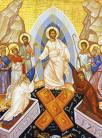
My answer to both those questions is a simple one.  It seems to me the descent into Hell functions theologically to show the scope of God’s saving work in Jesus Christ. Eastern icons often show the Resurrected Christ rising out of Hell dragging Adam and Eve with him, one with each hand.

Whether it is symbolized by this deliverance of our original forebears, the preaching to Abraham, Isaac and Jacob, or to all who died before the first Good Friday, his descent affirms that there is no place, even Hell, where Jesus’ saving work cannot go, no corner of the cosmos untouched by his atoning Cross. This reminds me of the words in Psalm 139, where the Psalmist asks God, “Where can I go from your spirit? Or where can I flee from your presence? If I ascend to heaven, you are there? If I make my bed in Sheol, you are there. (Vs. 7, 8.)

This is the love that will not let us go.  This is what Jesus died for.

To end this meditation I share an irreverent contemporary prose-poem sent to me from a friend of mine, which imagines Jesus waking up in Hell:

Goodtime Jesus
by James Tate

Jesus got up one day a little later than usual. He had been dreaming so deep there was nothing left in his head. What was it? A nightmare, dead bodies walking all around him, eyes rolled back, skin falling off. But he wasn’t afraid of that. It was a beautiful day. How ’bout some coffee? Don’t mind if I do. Take a little ride on my donkey, I love that donkey. Hell, I love everybody.

Unknown's avatar

Good Friday: “Sometimes it causes me to tremble!”


“Sometimes it causes me to tremble” is a line from the refrain of the well-known spiritual, “Were you there when they crucified my Lord?” The trembling comes upon the witness to Jesus’ crucifixion, and like many hymns and spirituals puts the singer or hearer in the role of a witness to the event.

This is a particularly modern approach, an existential one we might say, where the “religious affections,” to use Jonathan Edwards’ term, are profoundly moved by contemplating Jesus on the cross.

But there is another parallel tradition as ancient as the New Testament that sees in the death of Jesus not merely a profoundly agonizing event which moves the witnesses, then and now, but also as an event that changes the whole world, even the natural world.

In theology talk we would call the Cross of Jesus a “cosmic and eschatological” event, meaning that its implications were both universal in scope and ultimate in time.

We see some of this imagery already in, for example, the Gospel of Mark, our earliest Gospel, where he describes the earth darkening at the hour of the crucifixion, and the veil of the temple being torn in two. (Mark 15:33 and 38)

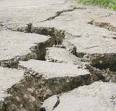
Matthew’s account says even more of this kind of thing: “The earth shook and the rocks were split.” (Matt. 57: 21b)  Luke adds that “the sun’s light failed.” (Luke 23:45)

P. T. Forsyth once got at the cosmic implications of the Cross by saying that the very atomic structure of the universe was changed by this event. Whether he meant this as science or as a metaphor, either way it points to the vast repercussions of the moment when “They crucified my Lord.”

Earlier generations were more able to see in such an event, not the merely personal and individual, where our time seems to want to safely relegate all religious phenomena, but the cosmic.

Here’s an example of such a cosmic view from Frances Quarles, a Seventeenth Century poet, which refers to a trembling that shook not just the believer, but the earth itself.  He doesn’t ignore the personal. On the contrary, he asks, if these senseless things can tremble so, “Shall I not melt one poor drop to see my Saviour die?”

The Earth Did Tremble
“The earth did tremble: and heaven’s closed eye was loathe to see the Lord of Glory die.
The skies were clad in mourning, and the spheres forgot their harmony;
The clouds dropped tears.
The ambitious dead arose to give him room; and ev’ry grave did gape to be his tomb.
The affrighted heav’n sent down elegious thunder;
The world’s foundation loosed, to lose their founder;
The impatient temple rent her veil in two,
To teach our hearts what our sad hearts should do:
Shall senseless things do this, and shall I not melt one poor drop to see my Savior die?
Drill forth my tears and trickle one by one till you have pierced this heart of mine, this stone.”
Frances Quarles, 1592-1644
Unknown's avatar

Maundy Thursday Ruminations about Jesus’ vocation and ours with help from Dietrich Bonhoeffer


The Passion narrative is “thick,” and no day in the church year has more going on in it than today.

First of all we have the Lord’s Supper, which I believe, along with many scholars, contains authentic words of Jesus, in which he tries to give his disciples an interpretive framework for understanding the meaning of his upcoming death.

Luke describes that immediately after the Supper “a dispute also arose among them about who would be the greatest,” which suggests that Jesus’ interpretive framework had gone right over their heads. (Luke 22:24)  This is neither the first nor the last time that the church didn’t get it.

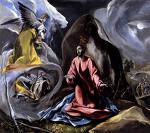
Then, Luke tells us, they all left the Supper and took a postprandial stroll to the Mount of Olives, where Jesus goes off by himself, a “stone’s throw away” and prays to the Father, “If you are willing, remove this cup from me, yet not my will, but yours be done.” (Luke  22:42)

When the church later came to assert the doctrine of the two natures of Christ, that he was “truly human and truly divine,” few episodes in the Gospels show his human nature better than this small episode.

We have seen throughout this Gospel (Luke) how Jesus has been steadfastly intent on his vocation to go to Jerusalem and die.  At one point in the story (Luke 9: 51) we are told that, “he set his face toward Jerusalem,” a quote loosely based on Isaiah 50:7, where the Psalmist says he has set his face “like a flint.”  That’s a pretty strong image of determination.

Yet here, in this prayer, he ponders in prayer to the Father if there might be some way to get out of his calling.  It is not a long moment, for immediately he says, “yet not my will, but yours be done.”

It may not be a long moment, but it is a significant one, because it seems to me that no Christian vocation, and I don’t mean merely that of the ordained, is without the temptation to find a shortcut, an easier way, certainly a way that avoids a cross, either, as in this case, literally, or in most of our cases, metaphorically.

Dietrich Bonhoefffer, one of our modern saints and martyrs, wrestled mightily with his conscience about his decision to participate in a plot to kill Adolph Hitler.  The plot failed, and he was executed by the Nazis for his part in it just days before the war ended.  Whether you support his decision (many Christian pacifists, for example, do not) you must admit the integrity and courage of his act.  It was, as well, an obedient act, as was Jesus’ decision for the cross.  This is at the heart of Christian vocation, where Jesus calls each and every Christian to, “Take up your cross and follow me.”

But how do we know how to do that?  Where are we called to be, and what are we called to do? After all, the word vocation means calling.  And where are we to find our particular cross to take up?

Bonhoeffer himself provides a template.  He once wrote, “Either I determine the place in which I will find God, or I allow God to determine the place where he will be found.  If it is I who say where God will be, I will always find there a God who in some way corresponds to me, is agreeable to me, fits in with my nature.  But if it is God who says where He will be, then that will truly be a place which at first is not agreeable at all, which does not fit so well with me.  That place is the cross of Christ.” (Meditating on the Word,  p 44–45).

There is much more still to take place in the story on this Holy Thursday, but in this small anguished moment of hesitation,  we get a glimpse of the human struggle to be faithful to the hard road of Christian vocation, what Bonhoeffer called the “The Cost of Discipleship.” The alternative to vocation, I think, is self-deception.

(Picture: The Agony in the Gardenby El Greco)

Unknown's avatar

Can Judas be saved? Ruminations on his role in the drama of Redemption.

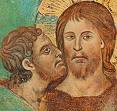
Judas Iscariot, one of the Twelve Apostles, and the one who betrayed Jesus with a kiss, has become a byword in English for a betrayer.

None of us is a stranger to betrayal.  It is a particularly painful experience because it comes at the hand of someone we trusted; someone we thought would look out for us;  someone we loved, and believed loved us.  We must consider that one of the sufferings that constitute Jesus’ passion must have been that he was betrayed by one of his close friends, a member of his inner circle.

For my Holy Week devotions this year I have been reading At The Cross:  Meditations on People Who Were There by Richard Bauckham and Trevor Hart (IVP, 1999), two fine scholars from the University of St Andrews.  I highly recommend it.

Their meditation on Judas is particularly insightful.  Although they admit that Judas’ deed was a dark one (“there is no getting Judas off the hook”), they assert the paradox that his betrayal was a necessary act:  “The structure of the Gospel plot demands it.”

And it is quite true that Jesus speaks repeatedly, not only that he will experience death, but that he will “be given up” to death.  So Judas is the instrument of that happening, and therefore an important player in the narrative of the passion, what I like to call “the drama of redemption.”

But though Judas plays his part in the drama, the Christian tradition has pretty consistently painted him to be an utterly despicable character. I have been ruminating on this, since it raises many questions, some of which I will leave to others to address.

But with the help of Bauckham and Hart, I have two thoughts to share about his role.

The first is Judas’ solidarity with all of humanity.   We are all, to some degree or another, betrayers.  There are the big betrayals, of course, like marital infidelity or financial shenanigans like the recent ones by Bernie Madoff.  But there are also the little daily betrayals where we break trust with those we love and care for, and in this case Judas is not so different from all of us.  His sin is different in degree and not in kind.

My second thought follows from the first, and that is whether Judas can be saved?  The Christian tradition has generally said no.  Perhaps I have fallen under the spell of Karl Barth’s alleged universalism, but I believe in a God whose mercy is so vast that there might be a place for Judas in it.

I don’t make the move to dogmatic universalism, because the separating of the “sheep from the goats” is God’s job and not mine. I think I have also been influenced by a fine dissertation I read this summer by Jason Goroncy, in which he asserts convincingly that the trajectory of P. T. Forsyth’s theology should (but doesn’t) lead him toward dogmatic universalism, a belief that all will ultimately be saved.  I still don’t know whether I am there yet, but I have been ruminating about the “love that will not let me go.”  As a theologian of the cross and the atonement I would be the last to limit its power and scope.  Who can say where the saving work of Jesus Christ ends?

Is this another scandal of the cross?  It just might be.  Have you noticed that in many of our theological discussions about who is in and who is out with God, we naturally gravitate toward the extreme cases: Hitler, Stalin, and, of course, Judas.  This lets us off the hook.  But it shouldn’t.  “All have sinned and fallen short of the glory of God.”

One of the most powerful and poignant moments for me every Holy Week is when I come to the line in the passion hymn Herzliebster Jesu where the congregation sings, “I it was denied thee, I crucified thee.”  That pretty much settles for me the ever vexing question of who killed Jesus.  Yes, the Romans, but they were stand-ins for all of humanity.  Still, from the cross Jesus forgives his murderers, and by extension, us.

So if I can be saved, can Judas be saved?  I am not the one to say, but I am intrigued by what Bauckham and Hart do in their meditation. They end with a poem that speaks to this very point, an “imaginative construal between Judas and Jesus in death, which ironically brought Judas much closer to his master than any of the other disciples, as they hung on their respective trees.”  I am reassured that I am not the only one who sometimes has to turn to a poet when the language of theology reaches its outer limit:

The  Ballad of the Judas Tree

In Hell there grew a Judas Tree
Where Judas hanged and died
Because he could not bear to see
His master crucified
Our Lord descended into Hell
And found his Judas there
For ever hanging on the tree
Grown from his own despair
So Jesus cut his Judas down
And took him in his arms
“It was for this I came” he said
“And not to do you harm
My Father gave me twelve good men
And all of them I kept
Though one betrayed and one denied
Some fled and others slept
In three days’ time
I must return
To make the others glad
But first I had to come to Hell
And share the death you had
My tree will grow in place of yours
Its roots lie here as well
There is no final victory
Without this soul from Hell”
So when we all condemn him
As of every traitor worst
Remember that of all his men
Our Lord forgave him first

by D. RUTH ETCHELLS

These mediations are particularly significant to me since they were developed for a Good Friday service at St. Andrew’s, St. Andrews, Scotland, very near to where we lived, and where we sometimes worshipped, during our sojourn there in the Spring and Summer of 1995.  Alas, we left a year too early to hear them there, as they were done in 1996 and 1997.

(At The Cross:  Meditations on People Who Were Thereby Richard Bauckham and Trevor Hart, InterVarsity Press, 1999)