I ended my ruminations on the death of Osama bin Laden yesterday with this quote: “I’ve never wished a man dead, but I have read some obituaries with great pleasure.”
Last week I enjoyed getting to know a fellow United Church of Christ pastor named Eric Elnes at a Colorado mountaintop retreat. On Friday Eric inconvenienced himself to get up early and drive me a couple of hours to the Denver airport to get me home. In the car we had a fascinating conversation that touched on things as diverse as video games and the possibility of post-mortem salvation.
Darkwood Brew is broadcast on-line via streaming video each week. The episodes take place in an informal studio/coffee-house setting. Each week a topic from scripture is developed that runs through the entire episode.
The teaching is in short bursts and accessible to laity, but it is by no means simplistic (Eric himself has a Ph.D. in Old Testament from Princeton Theological Seminary). Each episode is punctuated with some incredible jazz by Chuck Marohnic and his band “The Brew’s Brothers.” These are professional jazz musicians, and the music itself is worth checking out the site.
The episodes are designed so that small groups watching remotely can pause at intervals and share in the discussion.
Typically on an episode there is a live Skype visitor to weigh in on some aspect of the days theme. I saw an episode on Galatians with NT scholar Beverly Gaventa from Princeton via Skype. Good stuff.
The pacing on Darkwood Brew holds your attention and the discussions, though dealing with serious topics, are often lighthearted and full of humor. This weeks episode (May 1) deals with the “Doubting Thomas” story in John’s Gospel and features a Saturday Night Live type faux infomercial for a diatery supplement called Certitude. Very funny.
The production values of this site are very high, but in no way slick. I typically have an allergy to Christian media, but I’m telling you Eric and his team are doing an amazing piece of ministry and evangelism here.
So check out Darkwood Brew. Their motto is “You May Not Like It.” I’m guessing you will.
The death of Osama Bin Laden stirred up so many emotions in me I have been having trouble sorting them out. I recalled the horrors of 9/11, the innocent victims and their families, and some of the same grief and sadness I felt back them flowed over me again.
I also thought of how this one man helped make my country a more fearful place. I thought of waiting in long TSA lines in airports, and I thought of the shame of Abu Graib and waterboarding, and the two wars we engaged in because of him (one of them quite mistakenly.) I think of not only those who died on 9/11 but also of the thousands of innocents who subsequently died in Iraq and Afghanistan as victims of war.
And I ruminated that in some very tangible ways Osama Bin Laden succeeded in diminishing my country, at least for a time.
And so, watching the reports of the mission on CNN (as entertainment) was at first thrilling, but later unsettling. I watched the Mets and Yankees fans chanting USA, USA, and people pouring into the streets to celebrate.
I understood the celebrations, but they also bothered me. I imagined that the families of the victims were not cheering USA, USA in the streets, because Bin Laden’s death doesn’t bring back their loved ones.
As the various responses to Bin Laden’s death came in I waited for a word from people of faith that might help me.
One of the first was from Presidential aspirant Mike Huckabee, a Baptist pastor, who has obviously not read Rob Bell’s book Love Wins because he said, “Welcome to hell, Bin Laden!”
That wasn’t helping me any. I thought the Vatican got it better with this:
“Faced with the death of a man, a Christian never rejoices, but reflects on the serious responsibility of each and every one of us before God and before man, and hopes and commits himself so that no event be an opportunity for further growth of hatred, but for peace.” (Mutatis mutandis, the Vatican missed the memo on inclusive language.)
I was convicted by the statement that “a Christian never rejoices.” Since there were thousands of Christians celebrating in the streets at that very minute I understood that the Vatican’s statement was prescriptive and not descriptive. And so I long for a day when that is true of all of us, Christians, Muslims, Jews and all others, when we rejoice in the death of no one.
So it is the rejoicing that troubles me. The death of this man who attacked us and killed so many innocent victims is not the primary issue for me; it’s the excessive celebration (and unbridled patriotism) that unsettles me.
I pray for a more peaceful world, one where the hatred that fueled Bin Laden (and often the response to him) will melt away, and no more innocent victims need die and none need to be afraid.
Am I glad he is dead? In the end my own position is close to what Clarence Darrow expressed when he said: “I’ve never wished a man dead, but I have read some obituaries with great pleasure.”
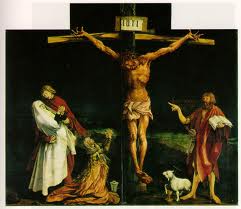
One of the perennial questions about the meaning of Christ’s atoning death is “was it an expiation or a propitiation?” In other words, was the atonement performed towards us, or towards God? Both “expiation” and “propitiation” are terms used of sacrifice, but expiation implies a sacrificial taking away of some sin or offence (i.e. “Christ died for our sins”), whereas propitiation implies assuaging the anger or injured honor, holiness, or some other attribute of God.
An expiation changes us, taking away our sin, whereas a propitiation changes God, satisfying whatever needed to be satisfied. These are not mutually exclusive, obviously, but different atonement theories will stress one or the other. For example, in Abelard’s theory, nothing is offered to God, the atonement is a demonstration of God’s eternal love, whereas in Anselm’s theory the atonement is an offering to God, reconciling sinful humanity to God. The former risks, among other things, falling into subjectivism and failing to take God’s anger, honor, or justice seriously enough. The latter is criticized chiefly for turning the anger, honor or justice of God into a third thing beyond the Father and the Son, a necessity to which God is somehow obligated.
A further criticism of propitiation language is that it promotes views of atonement that have elements of punishment in them, thereby making its view of God morally objectionable. There is always a danger when the justice or wrath of God is separated from God’s love.
But do we have to choose between expiation and propitiation? Aren’t they both rightly part of a full-orbed understanding of the cross? Theologian George Hunsinger seems to think so, and in his fine book on the Eucharist, offers this useful analysis:
“God’s wrath is the form taken by God’s love when God’s love is contradicted and opposed. God’s love will not tolerate anything contrary to itself. It does not compromise with evil, or ignore evil, or call evil good. It enters into the realm of evil and destroys it. The wrath of God is propitiated when the disorder of sin is expiated. It would be an error to suppose that “propitiation” and “expiation” must be pitted against each other as though they were mutually exclusive. The wrath of God is removed (propitiation) when the sin that provokes it is abolished (expiation). Moreover, the love of God that takes the form of wrath when provoked by sin is the very same love that provides the efficacious means of expiation (vicarious sacrifice) and therefore of propitiation.” (George Hunsinger, The Eucharist and Ecumenism: Let us Keep the Feast. Cambridge: Cambridge University Press, 2008: 173-4.
It also keeps us from a careless separation of God’s love and wrath, and helps us realize that God’s love is not some avuncular tolerance, but holy love. God doesn’t tolerate our sins, but takes them away.
(Some of the above is excerpted from my When I Survey the Wondrous Cross: Reflections on the Atonement , Pickwick, 2000, Wipf and Stock, 2010)
Fast food icon Ronald McDonald shocked the political world today by announcing his intention to seek the Republican nomination for president in the 2012 election. Early poll numbers have been impressive, as Mr. McDonald’s celebrity quotient and name recognition are off the charts.Political analyst Robert Blake says, “Basically, no one can beat this guy on his celebrity, now that Liz and Michael are dead and Tiger is on the ropes. Maybe Oprah could do it if she was interested, but hey, this guy’s got the numbers!”
Major GOP leaders say they are interested in his candidacy, and representatives of the evangelical right say that some of his previous indiscretions can be overlooked and that he has changed on some major policy positions. Also he is working on overcoming earlier allegations that he is “a clown.”
(Note: None of this is intended to be a factual statement.)
Several of my “friends” have posted this on Facebook:
“Remember when teachers, public employees, Planned Parenthood, NPR and PBS crashed the stock market, wiped out half of our 401Ks, took billions in TARP money, spilled oil in the Gulf of Mexico, gave themselves billions in bonuses, and paid no taxes? Yeah, me either.” (I can’t trace the original source)
It is catchy and captures the frustration many share about the inequalities in America and the basic unfairness of the way things are getting played out.
What is puzzling to me is that while my first response to this was that it was a more liberal Democratic sentiment, some of my more conservative friends, even some Tea Partiers, have reposted it.
What can account for this? Somehow Americans on both sides of the political spectrum and in both political parties understand themselves as victims of powers and forces larger than they are.
This makes for a reactionary politics that values blame, undervalues compromise, and makes actually governing difficult. Which perhaps is why a pragmatist like President Obama is attacked by both the right and the left, and why we have seen such swings in the mood of the electorate in the last two elections.
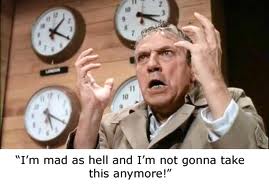
Nobody is happy with the way things are. Everybody is like Howard Beale in Network, “I’m mad as hell and not going to take it any longer!”
But there is no agreement on whom to blame: is it Wall Street? Public sector unions? Big government? The richest Americans? The undeserving poor? Illegal immigrants? The list goes on.
Republicans and Democrats alike seem more interested in the other guy getting the blame for what goes wrong than actually accomplishing good for the country.
So in keeping true to my thesis that we are a blame society, who do I blame? First, I blame us, the electorate, for being lazy and shortsighted, self-centered and ignorant about how government works. And, as a reflection of us, I’m blaming our politicians and their unyielding partisanship in the face of big problems and issues. Where are the Moynihans and Fullbrights of yesteryear who could reach across the aisle? Is anybody else longing for some statesmen (of both sexes)? For some bi-partisanship? Or just some grown ups?
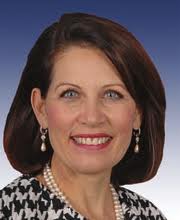
Rep. Michele Bachmann (R.Minn.), who has been reported to have Presidential ambitions, told prospective voters in Manchester, New Hampshire, “What I love about New Hampshire and what we have in common is our extreme love for liberty. You’re the state where the shot was heard around the world in Lexington and Concord.” Those battles were actually fought here in the Bay State.
This is not the first time that Bachman has gotten confused about our history. A few days before her rebuttal to President Obama’s State of the Union address she gave a rambling and highly revisionist speech in Iowa that touted the freedoms of immigrants when they arrived in America. She said then that: “It didn’t matter the color of their skin, it didn’t matter their language, it didn’t matter their economic status.” She also praised the founder fathers (including John Quincy Adams) who she said “worked tirelessly until slavery was no more in the United States.”
Many of the founders, including George Washington and (famously) Thomas Jefferson in fact owned slaves, and while she was right that Adams fought tirelessly against slavery he was not a founder. And the Constitution itself, which she considers a sacred document, defines a slave as 3/5 of a person.
This “three-fifths compromise” of 1787 is found in Article 1, Section 2, Paragraph 3 of the United States Constitution: “Representatives and direct Taxes shall be apportioned among the several States which may be included within this Union, according to their respective Numbers, which shall be determined by adding to the whole Number of free Persons, including those bound to Service for a Term of Years, and excluding Indians not taxed, three fifths of all other Persons.”
You would think that a leader of a movement that calls itself the “Tea Party” after the BOSTON Tea Party would know something about our early history. Boston is in Massachusetts.
But as Jillian Rayfield wrote in her blog today in The New Republic, “I’m starting to wonder if the Republican policy of recruiting its female political talent heavily from the beauty pageant circuit may not have some downside after all.” I didn’t say that, but it’s something to ruminate on.
The head of National Public Radiohad to resign this week because one of her fund-raisers told some prospective donors that many in the Tea Party were “seriously racist.” The donors were actually plants and made the statement public. Oops! It was clearly an unwise and impolitic thing to say, especially as NPR was facing a funding vote in a Republican led Congress, but it was hardly a lie. There have been well documented examples of racist rhetoric and signs at Tea Party rallies, and some of the animus against President Obama seems racist.
So all this got me ruminating, and I decided, as yet another one of my high minded public service efforts, to share some other “opinions” that could get you in trouble:
As the late great Daniel Patrick Moynihan is reported to have said, “Everyone is entitled to their own opinions, but they are not entitled to their own facts. ” If you want to get your facts straight, here are a couple of good web sites: http://factcheck.org/ and http://politifact.com/truth-o-meter/
Washington Post reporter David Broder died yesterday, and he was known to be a strict fact checker. Would that there were more like him.
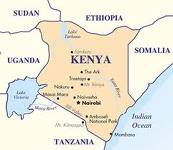
So let’s not be too hard on poor Mike Huckabee for saying that President Obama was born in Kenya. I don’t know about you, but I always confuse Kenya with Hawaii. They’re both far away and they both have hot climates. Yeah, I know one is an island and one isn’t (I can’t remember which) but they are practically the same.
And his mistake is not really his fault since Huckabee didn’t get taught geography when he was a kid growing up in the Duchy of Grand Fenwick (see note below) because of Fenwickian proto-Republican budget cuts.
Besides, he wasn’t really putting down the President by saying he was born in Kenya. After all, think of the foreign policy and national security experience the President got from keeping an eye on the Russians across the Bering Straits, or is that someone else?
Huckabee is surely right that a history of foreign travel is a big liability for an American politician. We know George W. Bush hardly ever traveled, so there you go.
(Note: “The Duchy of Grand Fenwick is no more than five miles (8 km) long and three miles (5 km) wide and lies in a fold in the Northern Alps. It features three valleys, a river, and a mountain with an elevation of 2,000 feet (610 m). On the northern slopes are 400 acres (1.6 km2) of vineyards. The hillsides where the ground is less fertile support flocks of sheep that provide meat, dairy products and wool. Most of the inhabitants live in the City of Fenwick that is clustered around Fenwick Castle, the seat of government. About 2 miles (3 km) from the City of Fenwick is a 500 acre (2 km²) Forest Preserve that features a 20 foot (6.1 m) waterfall and attracts many birds that the nation claims as its own native birds.[1] The Duchy, ruled by Duchess Gloriana XII, is described as bordering Switzerland and France in the Alps. It retains a pre-industrial economy, based almost entirely on making wool and Pinot Grand Fenwick wine. It takes its name from its founder, the English knight Sir Roger Fenwick who, while employed by France, settled there with his followers in 1370. Thanks to Sir Roger, the national language is English.” Wikapedia)
(Note 2. One of my readers e-mailed me to correct me that Mike was actually born in Hope, Arkansas. Well that does it for his presidential hopes, since we have had lots of presidents from Kenya and Hawaii but none from Hope, Ark.)
The assault on unions now taking place in Wisconsin and elsewhere seems to me to be part of a larger war in which the enemy has been defined as our great public institutions (of which we were once so proud), our schools and our cities and especially government at all levels. All this in the name of an “economic responsibility” that is anything but responsible if it robs great masses of people of a decent wage, a sound education, and the kind of community services that make life livable.
In an address at Amherst College in 2007 entitled “A Great Amnesia,” the incomparable Marilynne Robinson said, “Now we speak of the great mass of people as workers who must be conditioned and pressed toward always greater efficiency, toward accepting lives they do not define or control, lived in service to some supposed greater good that is never in any humane or democratic senses their own good or their children’s good.” (Harpers Magazine, May 2008)
If we balance budgets on the backs of our workers, our teachers, our firefighters and police, we will be creating a meaner and less equitable society.
The “Tea Party” movement went to the polls in droves last November to demand fiscal responsibility. Is what is taking place in Wisconsin really what they wanted? There is a tale making the rounds on the Net: “A unionized public employee, a Tea Partier, and a CEO are sitting at a table. In the middle of the table there is a plate with a dozen cookies on it. The CEO reaches across and takes eleven cookies, looks at the Tea Partier and says, “Look out for that union guy — he wants a piece of your cookie.”
I am glad the workers in Wisconsin are putting up a fight. Some things are worth fighting for.