Unknown's avatar

“Finding the Perfect Church”

No perfect church“But we have this treasure in clay jars, so that it may be made clear that this extraordinary power belongs to God and does not come from us.” —2 Corinthians 4:7

After I retired from active pastoral ministry my wife and I were ecclesiastically homeless for a few years. We went to church, but we couldn’t commit to one.

We sometimes felt like Goldilocks at the Bears’ residence. One congregation had good preaching, but not so great music. Another had terrific music, but the sermons were on the light side.

This period was an unhappy time in our lives, for we are serious “church nerds” and needed a church home. We knew there was something unfaithful about “church shopping” and being, to use Eugene Peterson’s phrase, “tourists and not pilgrims.”

The problem was there was no perfect church. Thomas More coined the word Utopia in 1516 to describe a perfect society on a fictional island in the Atlantic Ocean. Utopia in Greek means “not a place.”

There has never been and there never will be Utopia. There is no perfect congregation, just the ones we’ve got, full of imperfect people that God loves and calls to be the church. And we knew ourselves well enough to realize that if we ever found the perfect church, as soon as we joined it, it wouldn’t be perfect anymore.

Prayer: Holy One, bless us all in your church with your extraordinary power, that through your imperfect people, your perfection may shine brightly for the world to see.

(This is my United Church of Christ Daily Devotional for April 9, 2016. To see the original go here. Meme is used courtesy of the UCC.)

Unknown's avatar

Coming Soon: A New Bible Study on Romans

RomansP1I am pleased to announce that the Bible study on Romans that Mike Bennett and I have been working on for so long can now be ordered through UCC Resources and will ship on March 1.
Romans, Part 1, Romans 1-8 and Romans, Part 2, Romans 9-16 are titles in the United Church of Christ’s LISTEN UP! Bible Study series.

Romans, Parts 1 and 2 are not ground-breaking new works of original Biblical scholarship, but rather teaching tools to be used by small groups in Bible studies. A leader’s guide is included in every workbook.

Mike and I together bring over a half-century of experience as pastors leading Bible studies in local congregations. Romans Part 1 and 2 brings our knowledge of how to make Bible study come alive.

Behind these studies we bring our own understanding of Romans from a lifetime of engagement with this important book. Mike has been influenced by two important commentaries on Romans by Professors at his alma mater Yale Divinity School, Leander Keck and David Bartlett. Mike is also a contributor to the Feasting on the Word series. Continue reading

Unknown's avatar

“Lost in Wonder, Love, and Praise”

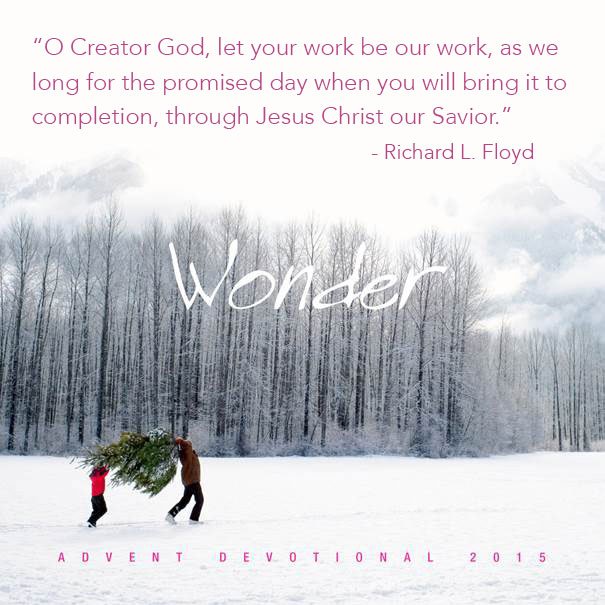
Wonder

“Finish, then, Thy new creation!”

“We know that the whole creation has been groaning in labor pains until now; and not only the creation, but we ourselves, who have the first fruits of the Spirit, groan inwardly while we wait for adoption, the redemption of our bodies.”— Romans 8: 22-23

The Advent hope recognizes that there is something unfinished about God’s creation. In today’s passage Paul employs the metaphor of childbirth, the “whole creation groaning in labor pains,” to describe the ongoing process of creation.

Our United Church of Christ Statement of Faith testifies to the two calls of God, the original creation (‘God calls the worlds into being”), and the new creation in Jesus Christ (“God calls us into the church”).

It is humbling to imagine that we have some part to play in the completion of God’s work, in our lives, in our communities, and on this earth we share with all God’s other creatures.

The Advent hope invites us to actively share in the reconciling, restoring, healing and saving activity of the living God. Such hope points to a promised future when the whole creation will finally be completed, a vision captured by the last verse of the great Charles Wesley hymn, “Love Divine, All Loves Excelling:”

“Finish, then, Thy new creation;

Pure and spotless let us be.

Let us see Thy great salvation

Perfectly restored in Thee;

Changed from glory into glory,

Till in Heav’n we take our place,

Till we cast our crowns before Thee,

Lost in wonder, love, and praise.”

Prayer: O Creator God, let your work be our work, as we long for the promised day when you will bring it to completion, through Jesus Christ our Savior. Amen.

(This is my devotional for today from “Wonder” the 2015 Advent Devotional from the United Church of Christ’s Stillspeaking Writers’ Group. Photo: The Pilgrim Press, 2015)


Unknown's avatar

“The God of the Far Off” Toward the Ministry of Inclusion

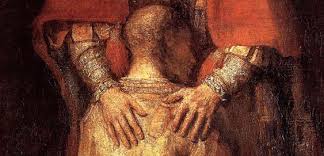
Prodigal sonWhat an extraordinary week this has been for our country! The great Swiss theologian Karl Barth liked to admonish the church that it must read both the Bible and the newspaper, because we Christians live in the world.

And what a week of news it was! There were two historic Supreme Court decisions that will change our national life in significant, and in my opinion, profoundly positive, ways.

On Thursday, by a 6-3 decision, the Court upheld the Affordable Care Act, which makes health care available to all Americans.

And on Friday, by a 5-4 decision, Marriage Equality became the law of the land.

The reason I am here before you instead of our pastor Brent Damrow is that he is in Cleveland at the General Synod of the United Church of Christ, representing the Massachusetts Conference. I am sure he will have stories to tell about the celebrations taking place there, as our national church has been a long and tireless advocate for equal rights for the LGBT community and a supporter  of marriage equality.

I believe that these two historic Supreme Court decisions share a common idea, and that is the idea of “inclusion.”

And a third extraordinary event in our national life also happened on Friday. President Obama climbed into the bully pulpit in Charleston, South Carolina to give the eulogy for the Honorable Reverend Clementa Pinckney, the pastor of the Emmanuel AME Church who, along with eight of his congregants, was murdered by a gunman while attending a Bible study at the church on June 17.

President Obama gave a stirring eulogy for Pastor Pinkney, but he was addressing not only those present, but also the nation. I’d like to share with you some excerpts of his eulogy:

The alleged killer could not imagine how the city of Charleston . . . .the state of South Carolina, how the United States of America would respond — not merely with revulsion at his evil act, but with big-hearted generosity and, more importantly, with a thoughtful introspection and self-examination that we so rarely see in public life.

Blinded by hatred, he (the alleged murderer) failed to comprehend what Reverend Pinckney so well understood — the power of God’s grace . . .

This whole week, I’ve been reflecting on this idea of grace . . .

According to the Christian tradition, grace is not earned. Grace is not merited. It’s not something we deserve. Rather, grace is the free and benevolent favor of God as manifested in the salvation of sinners and the bestowal of blessings. Grace.

As a nation, out of this terrible tragedy, God has visited grace upon us, for he has allowed us to see where we’ve been blind. He has given us the chance, where we’ve been lost, to find our best selves. We may not have earned it, this grace, with our rancor and complacency, and short-sightedness and fear of each other — but we got it all the same. He gave it to us anyway. He’s once more given us grace. But it is up to us now to make the most of it, to receive it with gratitude, and to prove ourselves worthy of this gift.

Martha and I were driving to Onota Lake in Pittsfield for a walk on Friday when the President’s eulogy came on the radio. We got to the parking lot at the boat ramp, but we didn’t get out of the car. We sat in the car until it was over, and when it was over I had tears streaming from my eyes.

The President was addressing the painful facts of racial relations in today’s America. He mentioned that in response to the massacre at the church the Confederate flag had been taken down in the South Carolina capitol and elsewhere. That flag, he said, was a symbol of our nation’s “original sin,” slavery.

The president had both the Bible and the newspaper in mind as he gave this incandescent speech. I don’t know of such a theologically astute presidential address since Abraham Lincoln’s second inaugural.

And once again I would argue that inclusion is the big idea that binds all these events together. Inclusion.

I believe in the power of ideas to shape societies, and, as my teacher, mentor and friend, Max Stackhouse taught me, to examine where they come from and what they mean. So I want to do a little bit of that with you today about the idea of inclusion. Continue reading

Unknown's avatar

“Taking the Long View” Reflections of a Retired Pastor

Presiding(This is a talk I gave to “The Saints” which is the United Church of Christ retired clergy group in the Connecticut Conference of the UCC. The talk was in Cromwell, CT on May 14, 2015)

I’d like to thank you for inviting me to be with you today. I have great respect for ministry as a high and holy calling, and I enjoy the company of ministers. I am proud to be a minister, and this year is the 40th anniversary of my ordination. And it is good to be in the Connecticut Conference. I never served here, but my daughter, Rebecca Floyd Marshall, is an ordained minister here in CT, serving in Westport. If you bump into her at a Conference meeting introduce yourself.

My talk today is entitled “Taking the Long View” which was the title of a UCC STILL SPEAKING Daily Devotional I wrote for March 14 of last year. I see it was re-printed in your newsletter. I’m going to share with you some of my personal back-story behind the writing of this particular devotional.

I began the devotional with an anecdote about Ralph, a congregant of mine in my first church, who owned an apple orchard: “I drove over to see Ralph at his hilltop orchard a week after I had presided over his wife’s funeral and burial. He was well into his nineties and they had been married for seven decades. I was all of twenty-seven. It took me awhile to find him, because he was out planting apple trees. He seemed glad to see me and said, “You may wonder why I am planting trees that I will never live to see bear fruit. But it’s what I have always done, and I am not going to stop now. There were apple trees in this orchard when I came here that somebody else had planted, and there will be apple trees here after I’m gone.”

I’ve held onto Ralph’s words for forty years, and lately they have helped me as I think about what it means to be a retired minister. That hasn’t been easy for me. Because when I left my role as a pastor it seemed, at first, and for a long while, like the loss of my calling as a minister. Now I have come to realize that, although I am no longer a pastor of a congregation, I am still a minister. When I turned 65 the UCC Pension Boards mailed me a good little book by Paul Clayton entitled Called for Life (Perhaps you all got one, too). I love the play on words in the title, and I do believe we are “called for life” in both senses of the phrase.  Continue reading

Unknown's avatar

“Just as I am”

ABBY“Our iniquities you have set before you, and our secret sins in the light of your countenance.” —Psalm 90: 8.

Having the light of God’s countenance shine on us sounds like a good thing, but today’s passage has the unsettling implication that we have no secrets from God.

Who among us can feel entirely comfortable with that kind of scrutiny? Is God really like a Santa Claus character who “sees you when you’re sleeping” or a prying parent who stalks your Facebook page?

The Scriptures again and again refer to God’s closeness and intimacy with our lives. Psalm 137 asks rhetorically, “Where can I go from your spirit? Or where can I flee from your presence?”

I don’t know about you but I do a bit of hypocritical compartmentalization in my spiritual life. I want God to be close, but I don’t want God to see the less pleasant aspects of my life, what the Psalmist calls “secret sins” (and some are not so secret.)

I once saw a prayer that said, “O God, help me to be the person my dog thinks I am.”

But the good news is that God doesn’t love just our idealized selves, the dog’s view of us, or our well-crafted on-line persona. God loves us just as we are, and loves us too much to let us stay that way.

Prayer: You have searched me and known me, O God. Let your unconditional love change me into the person you want me to be.

(This my Daily Devotional for today in Re-Lent, the 2015 Lent Devotional from the UCC STILLSPEAKING  Writer’s Group)

Unknown's avatar

Daily Devotional: “Once We Were Strangers”

“Once We Were Strangers”

Richard L. Floyd

“You shall also love the stranger, for you were strangers in the land of Egypt.” —Deuteronomy 10:19

The various summaries of the law in the Bible include strangers as people to be especially cared for. Whether we call them sojourners, immigrants or aliens they need help because they are frequently socially powerless.

So God’s people are commanded to care for these special ones. Our passage today reminds the Israelites that they had once been strangers in the land of Egypt. They knew how it felt to be treated unfairly. This memory was an abiding feature of their identity as a people, and they were admonished never to forget it.

My own family is a microcosm of our nation of immigrants. My forbears fled here to escape persecution or sometimes just to seek a better life. My grandfather’s people, French Huguenots, fled religious violence in the 17th century. My wife’s Greek grandparents escaped “ethnic cleansing” in Turkey. Her Jewish grandfather was a Holocaust survivor, and his family came here after the war. Such refugees were called “displaced persons” or DP’s.

These are our stories, not merely here in America, but throughout the world. There are still many “displaced persons” among the human family. They face unique challenges every day.

God regards them with special care and so should we, for we too were once strangers, far from home.

Prayer: Let us love the strangers among us as you do, O God, and never let us forget that we were once like them.

R.L. FloydAbout the Author 
Richard L. Floyd is Pastor Emeritus of First Church of Christ (UCC) in Pittsfield, Massachusetts, and author of A Course In Basic Christianity and When I Survey the Wondrous Cross: Reflections on the Atonement. He blogs at richardlfloyd.com. This is from the United Church of Christ StillSpeaking electronic Daily Devotional. The original can be found here. To subscribe for free and receive these daily by e-mail go here.

Unknown's avatar

Ash Wednesday: “You won’t despise a broken heart!”

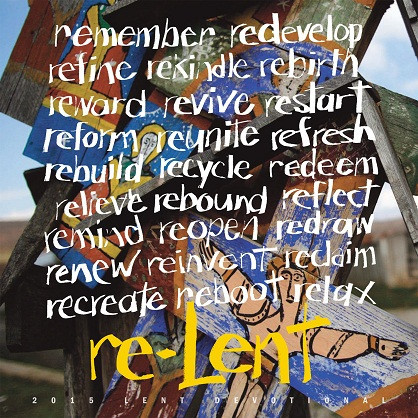
Re-Lent_-_web_large

“The sacrifice acceptable to God is a broken spirit; a broken and contrite heart, O God, you will not despise.” Psalm 51:17

The ashes of Ash Wednesday remind us of our mortality; the one pre-requisite for resurrection is death, something we will all face in time.

But literal death is not all there is to death. Throughout the New Testament “death” is not merely the cessation of mortal life, but also a power that insinuates itself into the living of our days.

Lent is the season that invites us to consider the spaces and places in our lives that are dead. To ask ourselves where has this “power of death” touched us? What is dead in our relationships, in our church, in our society? What is dead within us, where we once had life?

This kind of scrutiny is never easy. It is painful to acknowledge death and the denial of death is strong within us.

To see the dead places within and without us can break our hearts. But our text today says that this very condition of heartbrokenness is a sacrifice acceptable to God.

Because once we open our eyes to the ways the power of death has hold over us, and feel sorrow and remorse (which is what contrition means) God meets us there and can begin to ready us for the promised new life.

Prayer: Accept our broken spirits and contrite hearts, O God, as an acceptable offering to you, and take away the power of death from our lives.

(This is from Re-Lent the United Church of Christ Daily Devotional for Lent 2015. I also wrote a Lenten hymn of the same name which can be found here.)

(Picture. The cover to Re-Lent is also a poster available for purchase that can be ordered here.)

Unknown's avatar

Remembering Willis Elliott: theologian and gadfly

Willis ElliottMy dear friend and colleague Willis Elliott has died. Scott Paeth’s FB post today captures some of the essence of Willis:

“For those who did not know him, he was the often-insightful/often-infuriating gadfly of the United Church of Christ, and a long-time participant in the Confessing Christ group. He died old and full of years”

I met Willis at the very first Craigville Colloquy back in 1984. He spoke at dinner about the “Christian Connection,” the often overlooked piece of the four-church merger that became the United Church of Christ. I thought, “Who is this guy?” Smart, articulate, funny, and insightful. He had a full white beard like Santa Claus, and I thought he was really old, but that was thirty years ago so what did I know?

Later we had him at my congregation as a speaker and with his wife Loree a guest in our home. He was a brilliant, multi-lingual polymath, a former fundamentalist, and at times as difficult and uncompromising as Jeremiah. If there had been a shop that sold iron yokes, Willis might have purchased one. But he could also be an encouraging mentor. Years ago I did a presentation at the MA Conference annual meeting and afterward he made a point to come up and thank me. He also said, “I didn’t know you had it in you!” That was Willis.

In the 1990’s he was one of the founders of Confessing Christ in the United Church of Christ, along with Gabe Fackre, Fred Trost, Jim Gorman, Leslie Zeigler, Barbara Clemons, Bennie Whiten, Herb Davis, Andy Lang, Ted Trost, myself and many others. “Confessing Christ” was an invitation to “joyous theological reflection and serious theological work” on behalf of the ministry and mission of the United Church of Christ.

For years we had our Confessing Christ annual meeting at the church I was serving in Pittsfield, MA, and I got to know Willis well. He was one of the least compromising people I have ever known, and the least career oriented. He had been the librarian and Old Testament Professor at New York Theological Seminary, and before that had served on the national staff of the UCC.

He was a deeply committed Christian, reading the Bible every day in the original languages. His “Think-Sheets,” free of an editorial hand, were challenging, quirky, often brilliant, and, just as often, maddening. They always made you think.

In his latter years his eyesight waned, but he kept up a lively correspondence and participation on the Confessing Christ list-serve conversation.

The “thickness” of the conversation in the United Church of Christ, and the great church, will now be poorer for the loss of his voice, but he had no doubt, and neither do I, that he is now numbered among the great cloud of witnesses. I thank God for him.

Unknown's avatar

The Shepherd Window: “Lost and Found”

church-window4-224x300

When I was growing up my family went to the Church of the Holy Communion in Norwood, New Jersey. It was a little church, built in the neo-Gothic style so beloved by Episcopalians. It had a cloister that connected the church with the parish house. Years later, when I had sabbaticals at Oxford and Cambridge, I felt right at home among the grand stone piles.

When I was in second grade a classmate of mine died in a sledding accident, and his family donated a memorial window to the church in his memory. That window helped shape both my faith and my theology.

Here is a piece I wrote about it for today for the United Church of Christ’s Still Speaking Daily Devotional:


“Lost and Found”

By Richard L. Floyd

“Which one of you, having a hundred sheep and losing one of them, does not leave the ninety-nine in the wilderness, and go after the one who has been lost until he finds it? When he has found it he lays it upon his shoulders and rejoices.” – Luke 15:4,5

When I was in the second grade a boy in my Sunday school class named Kim was killed when he overshot the mark on his sled, went into the road, and was hit by a car. Nobody I knew had ever died before and his death left quite an impression on me. I remember my mother and father sitting me down and telling me the sad news.” Read more