Unknown's avatar

Adam Desnoyers’ Thanksgiving

Adam Desnoyers is a wordsmith extraordinaire, a winner of an O’ Henry Award for best short story, a putative novelist, a creative writing professor at the University of Kansas, and a valued part-time employee of  Harbour Lights, a hipster townie/student bar in Lawrence, Kansas. In the interest of the kind of transparency you have come to expect from this blog, I need to admit that Adam is also my nephew and godson.

He writes periodic blurbs for Harbour Lights, which he posts on Facebook. His most recent one is about Thanksgiving, and, since I was with him on Thanksgiving when he wrote it, I can attest that it is (mostly) fictional, though none the less funny for being so. So for all of you who have survived the messy and comical goings-on of your families at Thanksgiving,  enjoy:

No one saw the dog hop up and lick the turkey so you made sure you got a cut from the other side. Aunt Myrtle burned a Virginia Slim hole in the loveseat when the weight of the day had her dozing off. Cousin Dane had been waiting in a Black Friday line since Tuesday; got incarcerated for events occurring somewhere between Hosiery and Electronics. Mikey floated him bail. Bro-in-law Tyler left the linen closet full of dirty diapers and Hot Pocket sleeves. Darlene neglected to mention the weed in the pan of muffins. Hugh emptied your Ativan prescription but left you one because he’s thoughtful. Morgan announced she’s preggers again. Your mother tried really hard. Nobody has seen the cat. You haven’t really lost the weight, mostly you’re just dehydrated. Eddie says during the Rapture you should come to his house, he’s got a year of Hungry Mans and light beer. The athletes left it all on the field. You wonder if you really married the right person. Linda and Frank promise things will be different this time around. Sometimes there’s this tightness in your right lung. You never know if the bright one’s a star or a planet. One place never changes–well, maybe just a little right now, but soon it will stop. HARBOUR LIGHTS.

Unknown's avatar

Commandment takes beating in Tampa: “Lies, Damn Lies, and Republican Convention Rhetoric”

Mitt Romney is a Mormon and Paul Ryan is a Roman Catholic so they will differ on how to number the Ten Commandments, but they both violated the one that says, “Thou shall not bear false witness against thy neighbor.”

Ryan went first with these obvious lies:

1. He claimed the President had “More debt than any other president before him, and more than all the troubled governments of Europe combined.” It just isn’t true. When he took office the national debt was 10.6 trillion dollars, and is now about 15 trillion. How much of that is his?  President Bush increased the debt by more than 5 trillion dollars during his two terms. President Obama has increased the debt by less than 1 trillion. The two Republican wars have been expensive, but the Bush tax cuts have been more so.

2. Ryan blamed the president for the credit downgrade last August, even though the ratings agency that made the downgrade blamed Republicans for refusing to accept any tax increases as part of a deal.

3. Ryan blamed the president for the failure of the Bowles-Simpson compromise plan, when in fact it was Ryan who persuaded other House Republicans to scuttle the plan.

4. Ryan blamed the president for the closing of a General Motors plant in his hometown of Janesville, Wisconsin, but the plant shut down in December 2008, before Obama even took office.

5.  Ryan claims that “$716 billion, (was) funneled out of Medicare by President Obama,” a deliberate distortion of the Affordable Health Care Act savings by eliminating inefficiencies, when Ryan’s own plan for Medicare includes these same savings.

6. Ryan, an admirer of Ayn Rand, the high priestess of self-reliance and contempt for the poor and weak, said in his speech: “The greatest of all responsibilities is that of the strong to protect the weak,” and “The truest measure of any society is how it treats those who cannot defend or care for themselves.” Yet his budget has Draconian cuts in social programs for the poor and unwell. At the same time Ryan would give richest citizens and corporations $3 trillion in tax breaks.

Governor Romney is not as big a liar as Congressman Ryan, but that is damning with faint praise. He started his speech with one of the biggest whoppers in political history (what Andrew Sullivan called the big lie):

Four years ago, I know that many Americans felt a fresh excitement about the possibilities of a new president. That president was not the choice of our party but Americans always come together after elections. We are a good and generous people who are united by so much more than divides us.

Now anybody who has picked up a newspaper or watched a legitimate TV news source (which eliminates Fox) knows that the President was met by a partisan wall of Republican non-cooperation from his first week in office. The GOP decided that they would put making the President look bad above the good of the country.  And they didn’t even bother to hide their contempt for him, as when Mitch McConnell pronounced that his party’s  primary goal was the President’s defeat: “The single most important thing we want to achieve is for President Obama to be a one-term president.”

I don’t ever remember such open contempt for a sitting President, which I ascribe (at least partly) to racism, I am sad to say.

So Governor Romney’s rewritten narrative that “Americans always come together after elections” is an egregious lie.

But there were other lies in his speech, including these

  •  “Unlike President Obama, I will not raise taxes on the middle class.” This isn’t true, but according to the nonpartisan Tax Policy Center, Romney’s own tax plan would increase the tax burden on middle- and low-income Americans if it is to be revenue neutral, as Romney promises.
  •  “His trillion-dollar cuts to our military will eliminate hundreds of thousands of jobs, and also put our security at greater risk.” These cuts are hardly “his” (President Obama’s) as they result from an agreement between House Democrats and Republicans unless they can agree on other ways to cut spending.
  •  “His $716 billion cut to Medicare to finance Obamacare will both hurt today’s seniors, and depress innovation – and jobs – in medicine.” These “cuts” are actually reductions in future Medicare spending, and they are to providers, not Medicare recipients. They also extend the life of the Medicare program, which is perhaps why Paul Ryan has included them in his own budget plan.
  •  “Today more Americans wake up in poverty than ever before.” This one is factually true, but misleading. The poverty rate, a far fairer gauge of poverty under the president, was 15.1 percent in 2010. That’s the highest since 1993, and it’s nothing to be proud of. But it’s 7.3 percentage points lower than the 1959 poverty rate.
  •  “The centerpiece of the President’s entire re-election campaign is attacking success.” This is a reference to the President’s now famous “You didn’t build that” speech, which was taken out of context, his point being that you need help to be successful.  (Source: CBS News fact check)

Both Ryan and Romney know they are not telling the truth about the president. Where there are political differences let there be vigorous debate, but let the lying stop. Daniel Patrick Moynihan once said, “Everyone is entitled to his own opinion, but not his own facts.” And God said, “Thou shalt not bear false witness against your neighbor.”

Unknown's avatar

Aurora and the violence that breaks God’s heart

I briefly considered ruminating on the Aurora shootings here and then quickly backed away from what is already a media show of vast proportion. After all, what is there to say?

But then I came upon a little pastoral and theological reflection that said everything (and more) that I would have wanted to say.

My friend and United Church of Christ colleague Howard H. (Skip) McMullen has written a poignant and moving reflection on the love and solidarity of God with human suffering on his fine blog To Speak Now of God.

Here’s an excerpt:

“The Christian faith is built upon the conviction that God has acted, and continues to act in the midst of humankind’s repeated lapses into senseless violence.  God joins us in our tears and grief, yes.  The first heart broken on Friday morning was God’s.  But God has done more than that, physically bearing the worst that humanity can dish out, and rising from it, to make a way for us to withstand the darkness and become bearers of the light.”

I hear echoes of P.T. Forsyth here. Skip’s cross-centered theology comes from his long years of pastoral experience. To read the whole post go here.

Unknown's avatar

The 27th Massachusetts Convention of Congregational Ministers Barth Session for Pastors

The 27th Massachusetts Convention of Congregational Ministers Karl Barth Study Session for Pastors will gather Monday, June 11 and Tuesday June 12 at the First Church and Parish in Dedham.

We will read in Church Dogmatics IV/I, Chapter XIII “The Subject Matter and Problems of the Doctrine of Reconciliation” Section 57: “The Work of God the Reconciler” #2 “The covenant as the Presupposition of the Doctrine of Reconciliation” (Pg 22-66 small print 54-66, 22-34)

Our leader will be the Professor Karlfried Froehlich, retired from Princeton Theological Seminary.  His is a church historian who studied with and was examined by Barth in Basel.  Prof. Froelich has an interest in Coccejus a Reformed theologian of the Federal Theology basic to the New England Way. Being a Lutheran, he will not be putting new labels on the same old stuff.

Our afternoon sessions will take up issues Christians now face in the Middle East.

In hopes of avoiding traffic we will begin at 9:30 am. Lunch will be provided at noon. The afternoon sessions will conclude at 2 pm. You are cordially invited to dinner at the Dedham Parsonage. We gather at 5:00 pm and feast at 6.

Thanks to the Massachusetts Evangelical Missionary Society the cost for these two days remains at $50.  Maximum Participation is 15 participants.

Register by sending your contact information to The Rev. Rali M. Weaver, 670 High Street, Dedham, MA 02026. Or by emailing raliweaver@dedhamuu.org

Questions may be asked by calling 617 459 5979

Unknown's avatar

Under the Green Canopy: Hiking The Appalachian Trail in the Berkshires

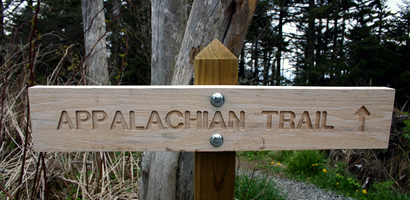
When I told Harold my title for tonight’s paper he suggested it might be about a wedding! A great guess, but no, the paper is actually about my experiences of hiking on the Appalachian Trail in the Berkshires.  “Under the Green Canopy” refers to the lush green foliage overhead when you are on the trail.  The AT is also sometimes called the “Green Tunnel” by thru-hikers.

I first encountered the Appalachian Trail over fifty years ago in western New Jersey as a Boy Scout at camp No-Be-Bo-Sco.  The camp, which is still going strong, sits alongside Kittatinny Ridge, near the Delaware Water Gap.

I went to camp there for several summers and we scouts hiked sections of the nearby AT. The trail skirts the opposite shore of Sand Pond. I have many memories of that lake; I came to camp as a beginner and learned to swim there, eventually earning my lifesaving merit badge, and when I was fourteen swam the Mile Swim there. I didn’t appreciate that the nearby trail was so special.

It was as a Boy Scout that I first learned to love hiking and camping. I know that when one thinks of New Jersey it does not conjure up pictures of beautiful forests and hills, but that is just what that part of northwestern New Jersey is like.  If you don’t believe me you can visit. The camp is private, but years ago it ceded hundreds of acres to the Delaware Water Gap National Recreation Park and one can hike the trails there, including a portion of the AT.

Eventually one of the Scout leaders at camp must have told me that the trail went all the way from Georgia to Maine, and that some people hiked the whole thing in one season. From then on it was a dream of mine to thru-hike the trail, a dream I long deferred and have finally abandoned now that I’ve reached the age where one likes to sleep in one’s own bed.

Nonetheless, the AT has been a valued part of my life ever since those Boy Scout days.  I met up with it again when I moved to New England to go to graduate school in 1971. I hiked portions of it with my future wife in the White Mountains in New Hampshire in the early 1970’s, and later with my brother in the 1980’s.

Then when I moved to Maine Martha and I took church youth groups hiking and camping on and near Mt Katahdin, which is the northernmost terminus of the AT.  I have run across the trail here and there through the years while hiking in Connecticut and Vermont.

But it has been during these last thirty years during which I have lived in Berkshire County that I have become most familiar with the trail, especially since 2000 when my hiking life took another turn.

It happened like this. In late September of 2000 I was a spectator for the Great Josh Billings Runaground, the Berkshires’ famous fun triathlon. I had been training all year to be a participant, but the month before I took a bad tumble on my bike and was on the disabled list.

As I was sulking on the sidelines with my arm in a sling, a good friend of mine approached me and asked me how I was doing.  “Terrible,” I said, “I’m jumping out of my skin for lack of exercise because I can’t ride my bike.” He replied, “Well, I belong to a hiking group and you’re welcome to come along. It’s a bunch of old guys and won’t be very challenging for somebody in as good shape as you are, but, hey, if you want to come we’re hiking tomorrow and I’ll pick you up.”

So the next day I landed with my friend at the trailhead to the AT in Tyringham, not far from Tyringham Cobble.  I saw some old friends, met some new ones, laced up my boots, and off the group went at such a fast pace that I was yo-yoing off the back for awhile.

And that was my introduction to the other men’s group I belong to which has Monday in its name, “The Monday Mountain Boys” (although to be strictly factual the name didn’t come about until a year later when the wives named us).

I liked the group so much that even after I rehabbed my body and fixed my bike the following year I kept hiking with them on Mondays, and I still often do. The hikes take us all over Berkshire County, but more than any other venue we hike the Berkshire section of the AT.

Those of us who live here tend to take for granted this iconic trail that wends it’s way through the length of our county. The entire AT in Massachusetts, some 90 miles of it, is here in Berkshire County.

Its official name is The Appalachian National Scenic Trail, but everybody calls it the AT.  It is (more or less) 2,174 miles long and travels the spiny ridgeline of the Appalachian Mountains. It extends between Springer Mountain in Georgia and Mount Katahdin in Maine.

It winds its way through the states of North Carolina, Tennessee, Virginia, West Virginia, Maryland, Pennsylvania, New Jersey, New York, Connecticut, Massachusetts, Vermont, and New Hampshire. And of the fifteen states it passes through only in Massachusetts is the entire trail in a single county.

The making of the Appalachian Trail was a vast undertaking. How did such a project come to be? To answer that question we need to back up and have a little history lesson about mountain hiking and trail-making.

Our story really only begins around 1830, since hiking for recreation and leisure is a fairly recent development in the history of humankind.

The earliest settlers to this part of the country brought with them the attitudes of Europe, where mountains were viewed chiefly as obstacles to travel. In a famous example, Martin Luther kept diaries of his trip from Germany to Rome in 1510 without mentioning a word about the scenery, which would have included a good portion of the Alps.  And when the first English settlers reached the Berkshires they called them “the horrid hills.”

That view was widely shared. Mountains were dangerous places afflicted with unpredictable weather, wind and rain and snow and thunder and lightning.  The paucity of Indian artifacts on mountains indicates that Native Americans avoided them as well, perceiving them as places where larger powers and forces best not tampered with dwelled.  During Darby Field’s historic climb of Mt Washington in 1642 he could convince only one of his Indian scouts to approach the summit with him.

But Field’s ascent of Mt. Washington back in the 17th century was very much an anomaly.  Most of the Northeastern mountains didn’t have their first known ascent for more than a hundred years later. Mt. Mansfield in Vermont was first climbed in 1772 and Mt. Katahdin not until 1804 to give just a couple of examples.

It wasn’t until well after the Revolutionary War that men (and some women) took to the mountains in any numbers, and only during the 19th century that hiking became a leisure pastime, and mostly (as I mentioned) after 1830.

That may surprise us since for us the mountains are so firmly fixed as sublime objects of beauty. But the “purple mountain’s majesty” of Katherine Lee Bates’ song is a product of the 19th century imagination. Now that the land was tamed and settled, a movement arose that sought out the experience of wilderness as a retreat from urban life.

At the same time that Romanticism was taking hold in Europe, as a reaction to the harshness of the Industrial Revolution, there was in America a new aesthetic appreciation for the natural world.  The mountains were no longer seen as dangerous, but as beautiful and soul refreshing. We can see this change in the writings of the time, in the essays of Emerson, the poetry of Whittier, the travel journals of Thoreau, and the idealized backwoods novels of Cooper.

These changing attitudes were soon followed by changes in transportation that made the mountains easier to reach. Where once a mountain climb was the pastime of the well to do and their paid guides, with the coming of the railroads the urban masses could now get to the country and did. Mountain tourism had begun.

By the end of the 1840’s Berkshire County had better rail service than we have today. Pittsfield was connected to the Hudson River in the west and to Springfield in the east, and in 1842 the Housatonic Railroad connected Bridgeport, Connecticut with W. Stockbridge.

The mountains became popular places to visit for leisure and recreation, and this new rail access created the fad of going to mountaintops. In the decades before the Civil War mountain vacation centers and summit houses sprang up throughout New England.

The Berkshires were something of an exception, as no major resorts were built here and there were few public accommodations. This was because it was the time when the great stately homes (called “cottages”) were being built as the wealthy came to enjoy the natural world in their own way (and with their own kind).

In many places in New England bridle paths were cut to reach the summits of mountains, and urbanites would travel by horse or carriage to see the vistas.  But the summit house trend in New England ended as quickly as it began, and by the mid 1870’s many of the properties were abandoned or poorly maintained.

But hiking prevailed and more and more trails were cut throughout the region. One of the very earliest was the Hopper Trail, still in use today, which was cut to the summit of Mt. Greylock in a single day by an energetic (and obviously large) group of Williams College students in 1830.

After the Civil War hiking clubs sprang up throughout New England.  An early club here in Berkshire County was the Alpine Club of Williamstown founded in1863 by Professor Mark Hopkins of Williams College. This club was coeducational from the beginning. One young member was Samuel Hubbard Scudder would later play a role in establishing the Appalachian Mountain Club in the 1870’s.

A later Berkshire hiking club was the Pathfinders or the “Leg-It” Club, based in Stockbridge and full of worthies like sculptor Daniel Chester French.

By the turn of the 20th century a new big change was just around the corner. Just as the railroads had fueled the 19th century hiking boom it was the coming of the automobile in the new century that finally set the stage for the building of the AT.  One of the great ironies of this whole story is how decisive new transportation technologies were for changes in foot travel.

The automobile made remote trailheads easier to reach, and sadly true wilderness harder to find. The future environmental impact of greater numbers of trail users was yet unperceived, and the hiking boom continued unabated.

The auto was also instrumental in a new focus on long distance trails, and talk of connecting existing trails to make a long-distance trail began.

Many New England trails were being connected to one another to allow longer trekking, and various dreamers and big thinkers envisioned a great long trail following the spine of the Eastern mountains.

It is hard to say exactly when the AT was born, but the October 1921 publication of “An Appalachian Trail: A Project in Regional Planning” by Benton MacKaye in the Journal of the American Institute of Architects is often recognized as the birth for the Appalachian Trail.

And if anyone deserves the title of “the father of the AT” it is MacKaye. He had a somewhat utopian vision for a series of work and farming camps along the ridges of the Appalachian Mountains, with a great trail connecting them, from the highest point in the North (Mt. Washington in New Hampshire) to the highest in the South (Mt. Mitchell in North Carolina). But MacKaye’s focus was not on hiking or the trail itself, but on a communitarian retreat from the city life and work.

MacKaye, a regional planner, promoted his idea within his large network of friends and colleagues in Washington, New York, and Boston.

Although MacKaye had the vision it was others who did the actual work to make the trail a reality. New York newspaper columnist Raymond Torrey organized a work crew to cut the first AT-specific miles in Harriman–Bear Mountain State Park under the leadership of Maj. William A. Welch.  It was Welch who expanded the goal to “Maine to Georgia,” and designed the diamond shaped marker still in use on the trail today.

More organization was need so the first Appalachian Trail conference was convened in 1925. Their stated purpose was to organize “a body of workers (representative of outdoor living and of the regions adjacent to the Appalachian range) to complete the building of the Appalachian Trail.” An organization of that name was formed, and Maj. Welch was named its first chair.

Real headway began when a retired Connecticut judge, Arthur Perkins, and a young federal lawyer in Washington, Myron H. Avery, took charge of the efforts as a hiking-focused cause.

Perkins died in 1932, and Avery carried on the work. Avery is an important figure in this story. He led a small corps of activists, numbering perhaps 200, in identifying and blazing routes.

They established local clubs from Pennsylvania to Georgia, set standards for the trail, and published guidebooks and maps.

They also negotiated with national parks and other federal agencies for land use and rights of way.  It is extraordinary that a totally volunteer effort could accomplish such an undertaking.

But it wasn’t always pretty, and Berkshire County is a good example of how difficult it was to put all the pieces together and get everybody to work together.

Massachusetts got an early start, but was one of the last states to finally complete the trail.

Benton MacKaye was from Massachusetts and his article about an Appalachian Trail in 1922 immediately inspired nature writer Walter Pritchard Eaton to outline a route through the Berkshires.

Eaton’s route was not the one we have today. It started by using existing trails on Mt Everett and going in a northeasterly direction until October Mountain Forest, much as the trail does today.  North of that, however, his trail went west, south of Pittsfield, and then went along the ridge of the Taconics all the way to Mt. Greylock. From there he proposed following the Bellows Pipe Trail rather than the ridge to its west that the trail follows today.

Eaton organized some Berkshire schoolboys to work on the trail, but the effort sputtered and didn’t get much traction until 1928 when the Berkshire Hills Conference, a tourism organization, created a three-man Trails Committee.  Eaton represented the south end, Archie Sloper represented the north and Mt Greylock, and Franklin Couch of Dalton represented the middle.

Couch was a popular civic leader who was a scout leader of a large Boy Scout troop in Dalton and the hill-towns. He was our member Charles Sawyer’s fathers scout leader. Under Couch’s leadership, from 1928 to 1931 the Berkshire Hills Conference group cut a nearly complete trail from Connecticut to Vermont.

The Williams Outing Club and a Williamstown school principal named John B. Clarke cut trails in the north. Sloper and some local Boy Scouts cut the southern flank of Greylock. Couch and his Boy Scouts cut trails around Dalton. A Pittsfield man S. Waldo Bailey cut much of rest. But they never quite finished it.

So far this was a purely local effort, but in 1931 the Berkshire Chapter of the AMC, which despite its name was dominated by leaders from Springfield and the Pioneer Valley, started sending work crews to the AT independently from the locals.  Without communication between the two groups they worked at cross-purposes, cutting different routes and even taking down markers from the other group.

As you can imagine the involvement of “outsiders” didn’t go down well and a schism ensued between the groups.  Eventually, in 1931, Myron Avery from the Appalachian Trail Conference (ATC) made two trips to the Berkshires to see if he could resolve the problem.

He didn’t. He may well have made it worse. Avery may have misread the situation, but in any case he ended up siding with the Berkshire Chapter of the AMC, who were then given authority for the trail.

Spurned by the ATC, Couch and the other actual builders of much of the trail withdrew.

The Berkshire Chapter of the AMC finally completed the Trail during the years 1932 to 1935. But the alienation of the locals made it hard to get workers for trail maintenance and the Berkshire portion of trail fell into disarray.

Between 1937 and 1940 two groups stepped up to rescue the trail, the Mount Greylock Ski Club, and Metawampe, the faculty outing club of U. Mass in Amherst. (The story of this schism is told in detail in Waterman’s Forest and Crag, p. 498-503)

The story of the problems in the Berkshires hints at what it took to get the whole trail completed with volunteers. After all, the Berkshire section in only 90 miles out of more than 2000.  Any of you who have served as selectman of a small town or on a church board knows what it is like to get things accomplished with volunteers. The Berkshire story is just one of many in how this monumental trail got built.

But finally the entire AT officially opened on August 14, 1937. It faced challenges from the beginning.  Born during the Great Depression and in a few years came the start of World War II, when gas rationing limited travel.

The end of World War II brought opportunities to fix the trail, but also brought new challenges in the form of rapidly expanding residential and highway development.

At this time nearly half the AT was still either on roads or used rights of way on private property that newly affluent people wanted for vacation homes.  The battle between public use and private property has continued throughout the life of the trail.

In 1948 Earl V. Shaffer, a Pennsylvania veteran who said he was “walking off the war,” reported to a disbelieving Avery at the ATC that he had just walked the entire length of the trail in a single journey of less than five months.  Shaffer had become the first successful thru-hiker of the AT.  He would do it twice more, in 1965 and in 1998, 50 years after his first time.  He was 79, the oldest person to accomplish it, a record he held until 2004.

Ironically, the founders of the AT had never envisioned an individual hiking the entire trail in a single season, and had dismissed the idea as a stunt. A popular one it turns out. Now every year thousands attempt a thru hike. Only about 1 in 4 finish it, about 600 a year in the past several years.

By the early 1960’s the popularity of the trail had outrun the capacity of its volunteers to run and maintain it. Long established rights of way were being lost to development and a crisis was looming.

Another important figure in this story is Stanley A. Murray, who would become the ATC’s second-longest-serving chair. Murray worked to both reenergize the ATC (by building up its base of individual members), and also to revive the idea of the federal government’s protecting of the AT and its surrounding lands from adverse development. This was something that both MacKaye and Avery had advocated.

On October 2, 1968, President Lyndon B. Johnson signed into law the National Trails System Act (NTSA), creating within the national park and forest systems a new class of public lands, national scenic trails, with the AT and the unfinished Pacific Crest Trail the first to be so designated.

States were encouraged to acquire lands for the AT, and the National Park Service (NPS), with administrative responsibility for it all, and USDA Forest Service authorized to do so. The ATC soon hired its first two employees.

In March 1978, President Jimmy Carter signed into law amendments to the NTSA directing federal agencies to move forward and authorizing almost $100 million from the Land and Water Conservation Fund for that purpose.

The most complicated public-land acquisition program in history was begun; NPS formed an AT Project Office and special AT Land Acquisition Office.

The ATC had to manage what would become more than 250,000 acres of public land, an estate with one of the greatest troves of natural and cultural resources in the entire national park system

In July 2005 the Appalachian Trail Conference changed of its name to Appalachian Trail Conservancy, still volunteer-based.  The cooperation of volunteers with state and federal agencies has allowed the trail to flourish despite unprecedented use never foreseen by its early founders.

What began as an ad hoc enterprise by a loose collection of regional and local volunteers is today a large and efficient organization of cooperation between volunteers and agencies.

The result of which is that the AT is currently protected along more than 99 percent of its course by federal or state ownership of the land or by right-of-way. Each year an estimate of more than 4,000 volunteers contribute over 175,000 hours of effort to maintain it.

I’ve said a lot about the history and organization of the AT, but not much about the trail itself. So let me offer a highly selective and impressionistic picture of the trail as I have experienced it.

Here in Massachusetts the AT enters our southern border from Connecticut at Sages Ravine. Sages Ravine has a series of falls and cascades that are beautiful in any season, but spectacular when there has been a lot of rain or snow melt. Since most of the AT has been logged at one time or another it is rare to see old growth forest, but there is some at Sages Ravine.

This southerly most section of the trail is also one of the most challenging for the hiker, as the trail takes one over numerous rock faces, many of them during climbs. It was near here the very first day I hiked with poles that I lost my footing on a rock face and broke one of my new poles.

The trail goes through the beautiful Race Brook Falls before it climbs to Mount Race, which has lovely open views of  the southern Berkshires and Connecticutt. The trail then climbs to the highest peak in the southern Taconic Range, Mount Everett (2,602 ft.).

Descending from the summit the trail skirts the edge of Guilder Pond (where I usually have a swim in the hot weather) and then climbs along a rocky ridge before descending steeply to Jug End Road and down to the Housatonic River Valley.  If you make this descent in the fall after a rain you are likely to slip and slide all the way down on the wet leaves.

The trail crosses Rt 7 south of Great Barrington and meanders in a general northeasterly direction through East Mountain, Beartown, and October Mountain State Forests.

There is a Shelter at Upper Goose Pond that has a caretaker during the hiking season.  It was here I met a German engineer who had quit his job and come over to thru-hike the AT. North of here the trail goes over the Massachusetts Turnpike on a footbridge

The Trail goes by Finnerty Pond, where one of the weirdest of my AT experiences took place. Several of us Monday Mountain Boys were sitting on logs having our lunch when we heard someone coming towards us on the AT from the North loudly reciting what I thought was Shakespeare.  The sound got louder and louder as the hiker approached until a young man finally emerged and greeted us. It wasn’t Shakespeare but “The Rime of the Ancient Mariner” by Samuel Taylor Coleridge. It turns out this solo thru hiker was doing the International AT, with extensions north into Canada and South of Georgia. He carried a poetry anthology with him, and at night he would memorize poems and recite them aloud on the trail. He said, “It also alerted any black bears to his coming.”

Before the trail passes through the town of Dalton there is one of my favorite parts, from Kirchener Rd to Grange Hall Rd which takes you over Warner Hill, a small outcropping with beautiful views to the North and Mt Greylock. At this point you are just East of the City of Pittsfield.  I once met a couple of thru-hikers at Warner Hill who were waiting to get picked up by the sales staff at Eastern Mountain Sports at the Berkshire Mall in Lanesboro so they could buy new boots.

Another curious thing I have noticed at Warner Hill.  You have to step off the AT and walk a few feet to see the nice view.  Sometimes you will see thru-hikers make the turn and never look up. In fairness they are fighting time and the weather, but sometimes miss the sights.

North of Warner Hill is Kay Wood Shelter, one of the 15 huts and shelters in the Berkshire part of the AT, and named after an active AMC volunteer from Dalton who was once in a Bible study with me.

The trail goes through Dalton towards Cheshire to another of my favorites, Cheshire Cobble, a large outcropping with good views of Mt Greylock and the Hoosic River Valley.

In the town of Cheshire the AT crosses the Ashuwilticook Rail Trail, crosses Rt 8 and climbs along the ridge of the Greylock massif before reaching the summit of My Greylock, the highest point in the state at 3,491 feet. As at Sages Ravine another rare old growth forest may be seen on parts of the Hopper nearby.

Another interesting fact about Mt Greylock is that for thru-hikers coming from the south it is the first sub-alpine region they will have seen since Mt Rogers in VA. Mt Greylock has a large sub alpine region, the only such forest in Massachusetts, extending down to 3,000 feet, which in the south would be far from the sub-alpine cutoff. This is a result of Mt Greylock’s powerful prevailing westerly winds, as the summits along its ridgeline rise approximately 200 feet to 650 feet higher than any other peak in Massachusetts.

From the top of Mt Greylock you get clear views in all directions. To the South you can see Pittsfield’s two lakes, Pontoosic and Onota (less than a mile from my house) and Bosquet Ski Area and South Mt. To the East you can see the town of Adams and the Hoosic Range and all the way to Mt Wachuset on a clear day. To the North you can see Williamstown and the Green Mountains of Vermont (and Mt. Monadnock in NH to the NE). To the West you can see the Taconic Range and New York State.

From the summit of Greylock the trail quickly descends to the valley within 2 miles of North Adams and Williamstown, before ascending again through the Clarksburg State Forest to the Vermont state line where it connects with the Long Trail.

The Berkshire Chapter of the Appalachian Mountain Club still maintains the trail throughout Massachusetts. Volunteer trail-masters are each assigned a portion of the trail that they are responsible for looking after. They walk the trail, noticing fallen trees, water problems, and erosion. The pick up litter and organize work groups.

Another group that looks after the trail are the AMC Ridgerunners, a group of about thirty young adults who travel the length of the AT and serve as ambassadors and educators, as well as unofficial cops with no legal authority.  They use instead the “authority of the resource” to educate rather than scold the errant hiker walking off trail or washing dishes in a stream. They also carry some first aid supplies, which I have availed myself of after skinning a knee near Mt Everett.

What else needs to be said about the AT? Well, for one thing the trail is more frequently hiked from South to North. These northbound hikers typically begin in early April and finish in late summer or early fall.  Southbound hikers typically begin in June.  Northbound hikers are called NOBO (Northbound) or GAME (Georgia to Maine) and southbound hikers are called SOBO or MEGA. The entire trail is blazed with 2 by 6 inch white paint blazes. In my Boy Scout days there were metal markers, but they are rare today.

As mentioned hikers who attempt to complete the trail from end to end in one season are called “thru-hikers,” while those who complete it in separate trips are called section “hikers.” “Flipfloppers” complete the trail within 12 months using an alternate itinerary.

Thru-hikers are often given trail nicknames called trail names.  These are often whimsical. A friend of mine from the Monday Mountain Boys who is wiry and a fast hiker was known as “Slimfast.”

Some people bring their dogs on the trail, but dogs are not allowed in the Smokies or in Baxter Park in Maine and must be kenneled during those portions of the trail. Guide dogs, however, are permitted and in 1990 a hiker named Bill Irwin, who is blind, hiked the trail with his dog Orient.

What is the future of the AT? To a great extent it has been a victim of its own success. The backpacking boon of the last quarter of the 20th century to our time has put more people on the trail than were ever imagined. In heavily traveled areas such as the White Mountains erosion from overuse can easily be seen. The advent of hiking poles has added new holes along the trail. Volunteers work tirelessly to maintain the trail, rerouting worn areas, limiting access to endangered portions. The tension between access to the trail and its conservation is a constant struggle.

As my story comes to an end let me put in a word that hiking on the trail is far superior to hearing a paper about it. From the hardiest thru-hiker to the most leisurely dog walker the AT offers great opportunities to get outdoors and enjoy all its benefits.

The section from Kirchener Rd. to Warner Hill can be walked in less than half an hour with one of the best views in the county. As we have seen, it took many people to put this great trail together, and it still takes many volunteers to keep it maintained. We are in their debt.

(This paper was delivered to the Monday Evening Club on March 12, 2012)

Unknown's avatar

The Cross and Violence: A Rumination

Is the cross of Jesus Christ implicated in the violence of our world? More specifically, does the church’s theology of the cross, expressed in its various views of atonement, contribute to fostering violence?

The English word “atonement” was made up by the pioneering translator, William Tyndale, when he translated the Bible into English. It was retained by the King James Bible translators and has made its way into common usage. It literally means “at-one-ment,” the bringing together of that which was separated. It translates several Hebrew and Greek words that are also often translated as “reconciliation,” depending on the context. And that which was separated and needed to be brought together was twofold, the estrangement of enemies needed to be reconciled, and the estrangement of the holy God with the sinful and broken world. The way the cross functions to effect these reconciliations is the Christian idea of atonement.

But do ideas of the atonement foster violence? It is a question that arises out of my own experience in the church. In 1995 when I was living in St Andrews, Scotland, and working on what would later become my book on the atonement, “When I Survey The Wondrous Cross:” Reflections on the Atonement, I wrote an essay on some of the objections to the idea of substitutionary atonement. At the end of the chapter I made note that there were some critics who felt that the cross itself was an emblem of violence, but I didn’t really address this view in depth, because frankly, I thought it was a fringe view without much merit. I still do.

But the view that the cross itself is a cause of violence has been gaining traction in the last decade or so. There have been a spate of books addressing the issue, and in recent years I am hearing ordinands and new ministers repeating these views to the effect that the cross is not, as the church has always claimed, “good news,” but is instead “bad news.”

Let me share a couple of anecdotes. The first was at an ecclesiastical council a few years ago. The candidate told us that she didn’t believe in substitutionary atonement. “Fair enough,” I replied, since there have been some dubious ideas under that banner. “But what do you then make of the death of Christ?” “Christ’s death,” she said, “was the price he paid at the hands of the powerful for his advocacy of an inclusive community.” Admitting that it is at least that, I asked, “Then does the cross have any meaning for salvation?” “No!” she said.

My second anecdote took place in a seminar on the atonement I gave several years ago to United Church of Christ (USA) ministers. During the Q and A time it became clear to me that many of the ministers were uncomfortable with talk of the cross, and some found it offensive. One young man, a bright newly-minted UCC minister said, with some passion, “No good thing came from the cross.”

This rejection of the cross is not new; there have always been critics of the cross as far back as the New Testament. For example, Paul wrote to the Corinthians: “We proclaim Christ crucified, a stumbling-block to Jews and foolishness to Gentiles, but to those who are the called, both Jews and Greeks, Christ the power of God and the wisdom of God.” (1 Corinthian 1:23)

But what is troubling to me is that the attacks on the cross in recent years come from within the church. It comes from seminary professors, and increasingly from pastors. This should concern us, as such teaching and preaching against the cross confuses the faithful and saps the church of the vital nerve center of the faith that is so needed to meet the challenges of our age, including the problem of violence.

That violence has been done in the name of the cross cannot be denied. It isn’t hard to conjure up images of the misuse of the cross as a symbol of violence: the crusaders’ cross on the tunics of invading soldiers in the Middle Ages, the Good Friday pogroms of Eastern Europe and Russia where mobs of Christians would periodically terrorize Jewish neighborhoods, or the burning crosses of  the Ku Klux Klan in the American South.

These and other examples would seem to implicate the cross in the world’s violence, and in racism, anti-Semitism, and imperialism.

But the whole argument against the cross hinges on the important distinction between whether the cross, in and of itself, is a cause of violence, or whether when violence is done in the name of the cross, it is a betrayal of the cross’s true meaning.

I will be arguing for the latter, that where the cross is used to justify or induce violence it is a betrayal of the cross, which is the very center of God’s story of redeeming love to humankind.

Jesus’ crucifixion itself is, of course, a horrific act of violence, but Christian faith, from its early days, has interpreted it as a divine act of reconciliation. My own view, influenced by my St Andrew’s tutor Richard Bauckham, is that the first Christians understood Jesus’ death from the very beginning as an atoning, sacrificial death, and that was expressed in the earliest church’s pre-Markan proclamation that then shaped the written Gospels we have today. This view runs counter to the often-received line that Paul hijacked the faith and created a theology of the cross that was missing from the church’s earliest proclamation.

I argued in my atonement book that ideas of sacrifice and substitution are both biblical and necessary to fully express the radical nature of this divine act of love. Now there are various nuanced and sophisticated discussions about the precise nature of the atonement, and for that I would refer you to my book. My more focused mission when I speak in congregations has been as a witness to the cross in the mainline church, where the crucial center of the Christian story is in danger of being lost.

For we need to keep the whole Christain story in view when we look at any part of it, and I think that is one of the problems that some of the critics of the cross have, in that they focus on the cross, wrenched out of its larger narrative.

So while I am interested in theories of atonement, and want stronger rather than weaker arguments around the “what” of the cross, I want always to view it within the larger Christian story. In that story Jesus Christ, who died on the cross “for us and for all humanity,” must be seen as the One who is “the same, yesterday, today and tomorrow,” and who, as the divine Word, was at the beginning of creation, and will be at the end, on the Day he comes to judge the living and the dead.

But let us be clear that the cross is not just any part of the Christian story, but the very center and climax. And by the cross I mean more than just Golgotha, but, like Paul, I use “the cross” as a kind of theological shorthand to describe the whole saving center of the story as shown in the life, passion, death and resurrection of Jesus.

In that story I see an act of God, who does for us what we cannot do for ourselves, saving us from sin and death. Therefore, my view is that the work of Christ on the cross is constitutive for salvation and not merely illustrative of it. And it is this high view, with its lineage back to St. Anselm, which is particularly under attack from the critics of the cross.

So let me briefly share with you the views of those who consider the cross bad news, then let me to tell you why I think that they are wrong, and finally let me tell you why the word of the cross is good news indeed.

Why some critics of the cross consider it to be “bad news”.

As I have said, I believe that those who do violence in the name of the cross misunderstand and betray it’s true meaning. But I also consider the critics of the cross to misunderstand its true meaning as described in scripture and tradition.

The chief criticism is that the cross is an act of violence against Jesus by God. One of the chief proponents of that view is Professor Dolores Williams of Union Theological Seminary in New York. She has argued that the church should replace the cross with the mustard seed as the primary Christian symbol, because she views the cross as a symbol of violence, especially violence against woman and children.

Mennonite theologian Denny Weaver, another critic of the cross, sums this view up it like this: “The motif of Jesus as the substitute object of punishment, which assumes the principle of retribution, is the particular image that feminists and womanists have found very offensive. It portrays God as the chief exacter of retribution. God punishes — abuses — one of God’s children for the sake of the others. And the Jesus of this motif models passive submission to innocent and unjust suffering for the sake of others.” (Weaver, Violence)

The objection here, so the argument goes, is that Jesus’ obedience to God the Father in accepting the cross demonstrates passivity and submission, and in so doing encourages the acceptance of violence against women by men.

A related charge made by some liberation theologians, such as James Cone, link substitutionary atonement specifically to defenses of slavery and colonial oppression, using ideas of submission, passivity and sacrifice to keep oppressed people in their place.

“Delores Williams calls the Jesus of substitutionary atonement, the “ultimate surrogate figure.” After depicting numerous ways in which black women were forced into a variety of surrogacy roles for white men and women and black men, Williams says that to accept satisfaction or substitutionary atonement and the image of Jesus that it supplies is to validate all the unjust surrogacy to which black women have been and still are submitted. ”

“Such examples show that atonement theology that models innocent, passive suffering does have specific negative impact in the contemporary context.” (Weaver, Violence)

Why the critics are wrong

These views seem to me to say more about the suspicions of the writers than the actual biblical narrative and the atonement theories that are their conceptual representations. After all, if you are looking in the wrong end of the telescope, everything will look small. They are looking at the social consequences of the misuse of Biblical and theological texts, but they are not looking at the texts themselves.

So what I think is needed is a theological interpretation of the cross that takes seriously the complexity of the scriptures. To do that there are some features that are necessary that I find missing or inadequate in the views of the critics of the cross. I have identified 7.

1. Many of the critics do not have a robust view of sin. It was human sin that caused Jesus’ death and Jesus himself “became sin” to save us from sin. That is, he who was sinless died a sinner’s death by the law of his own people, for according to Deuteronomy 21:23 “cursed be the one who hangs from a tree,” a verse Paul quotes in Galatians 3:13.

So it was human sin that killed Jesus, the same sin that we all know in our own lives. Condemned by the twin pillars of the highest civilization of the time, Roman law and Jewish religion, Jesus was crucified by humanity, not at its worst, but at its best.

So the crucifixion wasn’t an aberration, but the kind of event that happens routinely in our fallen sinful world. And this is why the endless debate over who killed Jesus misses the point of the narrative, for when the fingers get pointed, the great Lenten chorale Herzleibster Jesu has it just right, “I it was denied thee, I crucified thee.”

Lest you think this is a gloomy view let me be quick to say that I believe that God’s grace is greater than our sin, but that is no excuse to pretend that sin is not real or powerful. Many pastors have had to defend the prayer of confession in their liturgy against those who say, “I don’t feel I am a sinner.”

Toward the end of my ministry I started replying to that, “Well, then the Gospel is a solution for a problem you don’t believe you have.” In much the same way, many of the critics of the cross see only evil structures and systems, but they do not see the human sin in all of us that is complicit in them. So God’s act of redeeming love on the cross to save us from sin and death is a solution to a problem they don’t recognize.

2. The critics often conflate violence with evil. A good deal of the world’s violence is evil, and I agree that it would be a better world if we tried non-violent solutions to most problems. I ceased to be a pacifist many years ago as Max will attest, but I still have what I call “a preferential option for the non-violent.”

But as Reinhold Niebuhr taught us, there are times and places when only force will stay the hand of evil against the innocent victim. For example, in 1995 if the 400 armed Dutch UN peacekeepers in the so called “safe zone” at Srebrenica had been authorized to use force against the Serb ethnic cleansers, the genocidal murder of 8000 Bosnian men and boys might well have been prevented. Which reminds us that sometimes even non-violence can be complicit with evil.

3. In a similar vein many of the critics of the cross romanticize non-violence. Denny Weaver, author of The Non-violent Cross, raises non-violence to such an exalted place in his theology that it becomes, in Willis Elliott’s phrase, “Salvation by non-violence.” Here the principle of non-violence is used to judge even God’s behavior, so that the violence of Jesus’ cross rules it out as a loving act of God.

This romanticism of non-violence is utopian. It doesn’t take account of the facts on the ground, which is the power of sin and death. God’s victory doesn’t come cheap. God defeated sin and death on the cross at great cost to himself. The horrific violence of Jesus’ cross reflects the real world we live in. In a utopian world, a letter to The New York Times might have fixed it. But in our world, it took considerably more.

4. The critics don’t take Jesus’ Jewishness seriously enough. When we look at the cross theologically we must keep before us that it is Christ who died for our sins, not just any man, but the Jewish messiah. We need to be reminded that Christ is not Jesus’ last name, but the title given him by his followers, a title previously reserved for the figure of God’s anointed, the messiah.

The pre-Markan proclamation that lies behind the New Testament is a thoroughly Jewish interpretation of the death and resurrection of Jesus. That is why the New Testament has so many echoes from the Old Testament.

Why is Jesus’ cross different? Crucifixions were a commonplace in the ancient Roman world, but the significance of this particular cross was the claim that it was God’s anointed who suffered and died. It was their own traditions that allowed these Jews to understand Jesus’ death as an atoning sacrificial death. For example, one of our earliest passages in the New Testament is 1 Cor. 15: 3ff where Paul rehearses the gospel that had been handed down to him that “Christ died for our sins in accordance with the scriptures.”

And the reason it could be understood thus was because the Hebrew scriptures contained stories such as the binding of Isaac in Gen. 22, the description of a suffering servant in the Servant Psalms in Isaiah, especially Isaiah 53, and passages like Psalm 22, which is the source of Jesus’ words from the cross, “My God, my God, why has thou forsaken me? Without this Jewish context the cross is hard to understand properly.

5. The critics don’t take the Trinity seriously. Doctrines are “conceptual redescriptions of the biblical narrative” (Frei).  The doctrine of the Trinity understands the whole Christ event within the inter–dependence of the divine persons. Jesus’ very human experience of being abandoned by the God he called Father, in which he endures the condition of the sinner before God, can be viewed as arising from a Trinitarian act in history, an act to which the Father intentionally sent him and which in obedience Jesus accepted. The cross is, therefore, a Trinitarian act of mutual consent in love between the Father and the Son in the Holy Spirit.

This goes a long way to countering the charge that the cross is a symbol of violence, exploitation or even child abuse.  If you start with a big G god and a human Jesus you have a nnitarian god. But Christians do not know such a god without Jesus. And such a unitarian God, one who requires the sacrifice of the human Jesus is problematic, to say the least. But if we understand the obedient death of the Son as in some real sense a loving act in which it is God who dies for us, we move away from these problems.

The critics also say that substitutionary atonement means God is punishing Jesus. P. T. Forsyth made an important distinction here. He says the cross is penal, in that Jesus, though innocent, voluntarily takes on the sentence that we deserve. But though the cross is penal, it is not punishment, since Jesus is innocent. “For what would the Father punish him? And how could the Father punish the Son, with whom he is always well pleased.”? (Forsyth)

6. The critics have too limited a canon. Like Marcion, the second century heretic who made up his own canon, Luke is their favorite Gospel. Marcion had one Gospel and ten letters of Paul, and no Old Testament, since he believed the God of the Old Testament was a different (and not very nice) God.

The modern critics of the cross often share Marcion’s love for Luke, but not for Paul, who (after God the Father) is their chief villain, for Paul’s cross-centered Gospel. We all have favorite Gospels, and I love Luke as much as the next person, but the thickness of the biblical story is partly a result of the richness and complexity of the canon.

7. Finally, the critics have an inadequate eschatology of the cross. Again we must understand the cross within the framework of Second Temple Jewish monotheism, with its energetic eschatological expectations for a future return of God and his messiah.

The God of Israel was expected to act in the future. Second Isaiah, for example, expects a new exodus, which will show decisively God’s identity as creator and ruler of all things. The first Christians, who had experienced this new exodus in Jesus, understood that God was continuing the story, and “a new narrative of God’s acts becomes definitive for his identity.” (Bauckham, p 71.) The God who acted in the Exodus had now acted again in the cross and resurrection of Jesus.

When the church included Jesus, a human being, humiliated and exalted, into the identity of God, they were saying something radically new about the identity of God. In the dying and rising of Jesus, God had done a new thing that could only be adequately described in the language of Old Testament eschatology. It was the restoration from exile, the new creation, the healing of the rift between God and Israel and more. The sign that Pilate put over Jesus’ head on the cross read, “King of the Jews.” Who could the king of the Jews be other than the messiah of God? Meant by Pilate as a joke, the church could see the truth of it in light of their new faith that in Jesus Christ God had once again acted decisively as expected.

Why the cross is “good news”

1. The cross is the death of ideology. It provides the critical principle which de–centers our preoccupation with both individual and corporate concerns. It calls into question any ideology that would use the Gospel to further its own ends.

The cross provides the church with a anti-ideological bias that protects the Gospel from being blown about by any number of contemporary cultural winds, or co–opted by any number of alternative faiths, religious and secular. The cross also protects the church from both utopianism and cynicism, because it keeps in view that the resurrected one remains the crucified one.

Likewise, the cross helps the church to understand its life and discipleship in other ways than by the canons of success and power that the world so values. It teaches the church to recognize its true hope in the God who raised the dead from the illusory hopes the world holds out for both individuals in the face of death and for human history in the face of futility.

So the church is able to live in real hope only because the cross has taught it where properly to look for hope. Christian hope lies beyond all human endeavors and accomplishments and beyond all possibilities inherent in the natural world. Christians love the world God made and for which his Son gave his life, and we work and pray to make it more like the kingdom to come. At the same time, we know that our true hope lies only in the God who raised the crucified, who is the God who raises the dead. Such hope transcends both personal death and cosmic futility.

2. The cross shows God’s solidarity with all human suffering including suffering caused by human violence. On the cross Jesus suffers an agonizing death, but perhaps more than his physical suffering was the anguish he experienced by the total abandonment of the One he called Father, which he expresses when he cries out from the cross, “My God, my God, why have you forsaken me.” (Psalm 22:1, Matthew 27:46))

In this experience of abandonment Jesus knows solidarity with all human suffering, and if we take his divine nature seriously then God knows this, too, and in some sense experienced it on our behalf, and by doing so redeemed it, which we can only see in Easter hindsight. So not only did Jesus suffer (which is what passion means) but his suffering and death are not incidental to the glorious story of divine atonement and human redemption but quite literally crucial.

Now some of the critics charge that the cross exalts human suffering, and encourages people to accept it. We must admit that suffering, in and of itself, is not redemptive, and so we should be careful not to romanticize suffering. But suffering is such a universal feature of the human condition that surely it must be good news to know that our God understands our suffering, and in Jesus, was himself “a man of sorrows and acquainted with grief.” (Isaiah 53)

3. The cross models forgiveness. From the cross Jesus prays, “Father forgive them, they know not what they do,” and in doing so embodies the loving mercy of God.

This radical forgiveness is the only power that can break the cycles of revenge and retribution that fuel so much of our world’s violence. One of the most powerful moments of Christian witness in my lifetime was when Pope John Paul the Second forgave the man who had shot him, Mehmet Ali Agca. The Pope was shot and seriously wounded in 1981. In 1983 he visited his assailant in prison and spoke privately with him for about 20 minutes. He later said, “What we talked about will have to remain a secret between him and me. I spoke to him as a brother whom I have pardoned and who has my complete trust.”

How ironic it seems to me that the word of the cross is being accused of causing violence, when its message judges and condemns violence

4. The cross is all about God’s love. When we look at the passages in Scripture that speak of God’s love, they more often than not reference the cross as the chief evidence. For example, John 3:16: “For God so loved the world, that he gave his only begotten Son, that whosoever believeth in him should not perish, but have everlasting life.” Or Romans 5:8: “God demonstrates His own love toward us, in that while we were yet sinners, Christ died for us.” Or Romans 8:31, 32: “If God is for us, who can be against us? He who did not spare his own Son, but gave him up for us all—how will he not also, along with him, graciously give us all things?”

And not just in Scripture, but in our traditions, too, we see a cross-centered understanding of God’s love. So the Heidelberg Catechisms beloved first question, “What is your only comfort in life and death?” is answered thus: “That I belong– body and soul, in life and in death—not to myself, but to my faithful Savior, who at the cost of his own blood has fully paid for all my sins…so that everything must fit his purpose for my salvation… he also assures me of eternal life….”

Far from being the cause of violence the word of the cross is God’s love at work, and only that love offers healing and wholeness to our broken world.

It is true that the word of the cross is not a word everyone will hear. As Paul wrote to the Corinthians: “For the message about the cross is foolishness to those who are perishing, but to us who are being saved it is the power of God . . . For Jews demand signs and Greeks desire wisdom, but we proclaim Christ crucified, a stumbling-block to Jews and foolishness to Gentiles, but to those who are the called, both Jews and Greeks, Christ the power of God and the wisdom of God. For God’s foolishness is wiser than human wisdom, and God’s weakness is stronger than human strength.” (1 Cor. 1:23ff)

(Note: This address was given at the First Congregational Church UCC in Stockbridge, Massachusetts on Palm/Passion Sunday, April 1, 2012. It is essentially a re-working of my paper “The Cross and Violence: Is the Word of the Cross Good News, or is it Bad News?” delivered at the 25th Craigville Theological Colloquy, July 2008. I have shortened it and edited it for a lay audience, eliminating most citations and footnotes. The original can be found here.

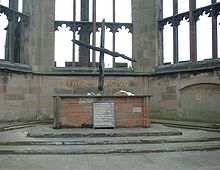
(The photo is of the burnt wooden cross at Coventry Cathedral after it was burned by bombing in WWII)

Unknown's avatar

Rowan Williams returning to playfulness

Rowan Williams, the Archbishop of Canterbury, has announced he will step down at the end of the year. He has been leader of 77 million Anglicans for a decade during a particularly fractious period.

So who can blame him for wanting a different kind of life?

Why is he moving on?

I returned to his own writings for some hints and clues.  In his insightful 2000 book, Lost Icons: Reflections on Cultural Bereavement, he speaks about how we have become, in his words, a “non-playful society.” In an essay on “Charity” he writes,

The skewed character of work in our society is intensified all the time by the lack, the thinness or the impotence of the remaining social rituals that embody charity.  In such a situation, these surviving practices that point to the social miracle bear too heavy a load, and buckle out of shape, becoming prolongations or displacements of, or compensations for the destructive-compettive activities of non-playful society. Things are not helped by the intensity of media attention: sport, from football to chess, is defined in the media as what-professional-others do. For the professional, there is need, spoken or unspoken, not only to win within the terms of the game, but also to win in terms of the rewards that publicity can confer, the odd and fragile ‘goods’ that are supposed to go with celebrity.  For the mass audience, this has largely ceased to be their ritual: it is something enacted for their entertainment, rather than an activity that might affect their own modes of behaving and understanding themselves. (p 62-63)

As I watched the NCAA tournament last night, part of the annual spectacle we Americans call “March Madness,” I was struck by how deadly serious these young men were. They played basketball, but there was little that seemed playful about it. There is truth in Williams’ observation that as sports becomes ever more serious and commodified the rest of us are deprived of the rituals of playfulness, except as spectators (and consumers.)

Williams has lived long enough with celebrity under the glare of the media. He has done his part.

But we have not heard the last from him. He is one of our finest theologian, an astute social critic, and a first-rate poet. Freed from the burdens of the primate’s office I expect he will grace us, both church and world, with new contributions.

But perhaps what he seeks most is play.

Unknown's avatar

Grace among the bedpans

Pastors spend a lot of time in hospitals. There they meet their congregants in trying moments, ill or hurt, facing or recovering from procedures that frighten and confuse. The most formidable lay pope, the one who thwarted your every dream at the last trustee’s meeting, now looks diminished in a “johnny” gown. Even in the best of hospitals the smell of mortality is ambient.

Which is why hospitals are such fertile spaces for grace to make an appearance, and why ministers do well to be present there as often as they can. Most people get better and come back into the life and flow of the congregation, but they will not forget that in one of life’s delicate moments you were there, and through you, their congregation was there, and through you, by grace, God was there.

Once again my late friend Arnold Kenseth, a Congregational minister who died in 2003, captures the truth of this in another of his exquisite poems:

In the Hospitals

In the hospitals trussed up to blood;
Or heaving breath so that the pulse can count,
The heart re-beat; or leaving the damp food
Untouched; or stuffed into the oxygen tent:
The sick, sexless as death, are fondled by
Machines, are stroked, pummeled, impaled, and Oh!
Ecstasies in the valley of the shadow,
The morphine murmur under the lost sigh!

And I think how we may die down down down
In the needle haze, in the white mercy
Of nurses, after the seance of x-ray,
Our souls stringed, buttocked in the bleak nightgown;
How dignity, dreaming, passion, faith, all
Will need God to retrieve them as we fall.

Arnold Kenseth (Seasons and Sceneries, Windover Press, 2002)

Unknown's avatar

The Use and Misuse of Faith in Politics

On Tuesday I wrote this on my Facebook wall:  “I want all my Facebook friends to know that as a committed Christian I deplore the political hijacking of my faith by ignorant, intolerant, racist and misogynistic extremists.”

As of this morning I have received 34 “likes” and about a dozen approving comments.  But I was uneasy about it.  Those of you who know me know that though I rant pretty easily about this and that I do my best to avoid self-righteousness.  And part of what I deplore these days is the tone of political discourse, and I worried that my frank cry of the heart was yet another ideology-driven screed.

I am no happier when liberal Christians become “the left wing of the Democratic party at prayer” than I do when evangelicals become “the right wing of the Republican Party at prayer.”

I was also pleased to see that some of my “likes” came from conservative evangelical friends.  And many of them came from young adults in my children’s generation.  That is heartening.

My sister-in-law Annette, a faithful Roman Catholic, wrote this comment:

I gather that you love the sinners but hate the sins of willful ignorance, intolerance, racism and misogyny. But do we really love these sinners? And what do we do, as faithful, for or with these sins? We are sinners, too, by other measures. I’m feeling confused. It’s Lent and I’m breaking this down for my daughter with an intellectual disability and some things don’t add up when I look at the fundamentals.

She got right to my uneasiness, because I know myself to be a sinner as well, and not only by other measures, but even by the very sins I deplore in “the extremists.”

“Love the sinner, but hate the sin” is the proper Christian admonition, but here Annette is savvy, too, as she knows how hard this is to do with any consistency.

To keep such self-awareness from becoming a counsel of despair I find comfort in the Reformation insight simul justus et peccator, that we are at the same time sinners and justified by God. “Redeemed sinners” is the way I like to think of it.

And something I had to learn in three decades of pastoral ministry is that there are some people who are just plain unlovable, so you have to turn them over to God who does love them.

But where I come down in the end is that just because we know we are sinners too, and perhaps share in some of the same sins, we are not exempt from speaking out about the things we deplore.

And I would assert that intolerence, racism and misogyny should be deplored by all people of good will, religious or otherwise, liberal or conservative, Republican or Democrat.  And the use of these sins to raise fears for political gain is a double sin.

Unknown's avatar

Happy St. David’s Day: Cymru am byth!

Like many Americans whose families have been around for generations I am of mixed national ancestry.  But my surname, Floyd, is Welsh. It is the same name as Lloyd, which is a variation of the Welsh word llwyd or clwyd, which means “grey.” The double-L represents “the voiceless alveolar lateral fricative of Welsh,” and was sometimes also represented as fl, yielding the name Floyd. It is not a sound you can make in English.  It sounds something like a soft cough or gently clearing your throat.

Did you know that?  Now you do, and since we are talking about Wales let me wish you a happy St. David’s Day with one of St. David’s graceful admonitions:

“Be joyful, and keep your faith and your creed. Do the little things that you have seen me do and heard about. I will walk the path that our fathers have trod before us.”

St. David was a sixth century Welsh bishop who became the patron saint of Wales.  I have been to the charming cathedral named for him in St. David’s, Pembrokeshire.  It was built in a hollow near the sea so the Vikings couldn’t see its spire from their ships.

Tonight I will raise a glass to St. David and that estimable Welshman Rowan Williams, the Archbishop of Canterbury, and one of our best contemporary theologians.  The Welsh do make a single malt, Penderyn, but since I have none I will be raising Scotch.