

A week ago I posted one of my favorite quotes from Annie Dillard. My friend and former Baptist colleague (former colleague, not former Baptist) Ashley Smith commented (on my Facebook Page): “Dillard is one of my favorites as well; I’ve read Holy the Firm over and over, and used these quotes more than once in preaching and writing.”

And she found it. Thanks Ashley!
It’s from the essay “An Expedition to the Pole” in Dillard’s volume Teaching a Stone to Talk:
“On the whole, I do not find Christians, outside of the catacombs, sufficiently sensible of conditions. Does anyone have the foggiest idea what sort of power we so blithely invoke? Or, as I suspect, does no one believe a word of it? The churches are children playing on the floor with their chemistry sets, mixing up a batch of TNT to kill a Sunday morning. It is madness to wear ladies’ straw hats and velvet hats to church; we should all be wearing crash helmets. Ushers should issue life preservers and signal flares; they should lash us to our pews. For the sleeping god may wake someday and take offense, or the waking god may draw us out to where we can never return.” (Annie Dillard, Teaching a Stone to Talk. Harper and Row, 1982)

An Appreciation: Thomas Merton and Karl Barth
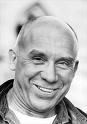
Thomas Merton and Karl Barth died on this day in 1968, Barth in Basel at the age of 82, and Merton in Bangok, Thailand at the age of 53. They couldn’t have been more different, but they both were powerful influences on me.
I was a sophomore in college when they died, and I doubt that I had ever heard of either one of them. It must have been a year or two later, during a time of great personal soul-searching, that I first read Merton’s New Seeds of Contemplation. It was at the height of the Vietnam war, and I had recently resigned from Air Force ROTC, left college to work in New York, and was applying for Conscientious Objector status.
I was also seeking authentic voices about God, and Merton, along with others such as Dorothy Day, Abraham Heschel, and Daniel Berrigan, spoke powerfully to me.
William James speaks about the natural mysticism of adolescence, and I suppose I was no different. I didn’t just want to read about God, I wanted to know God. Merton’s popular autobiography The Seven Story Mountain portrays a troubled young man who finds peace with God through contemplation and ends up happy in a Trappist monastery.
There was a deep romantic mysticism in Merton’s writing that resonated with my own search for God. Much like poet Gerard Manley Hopkins, another convert to Roman Catholicism, Merton sensed God all around him in the natural world. I wouldn’t have known it then, but reading this passage from Merton today I hear echoes of Hopkins (“The world is charged with the grandeur of God”):
“By reading the scriptures I am so renewed that all nature seems renewed around me and with me. The sky seems to be a pure, a cooler blue, the trees a deeper green. The whole world is charged with the glory of God and I feel fire and music under my feet.”
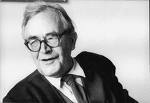
I discovered Karl Barth several years later, not in seminary as one might expect, but in my first pastorate. The challenge then was not to know God, but to figure out what this God might want to have me say to his people from week to week. I didn’t dive right into the monumental Church Dogmatics, but started with smaller works, the wonderful Word of God and Word of Man, and Evangelical Theology: An Introduction.
If Merton, the Catholic, found God in contemplation and in nature, Barth, the Protestant, found him elsewhere. Barth’s God was the wholly Other, who breaks into our world through the revelation in Jesus Christ as attested in Scripture. There was no natural theology here, and Barth saw religion itself as a false alternative to faith. He said, “Jesus does not give recipes that show the way to God as other teachers of religion do. He is Himself the way.
I had a group of young pietists in my first church, and it was Barth who gave me the language of Christian faith with which to speak with them.
I rarely read Merton anymore, but I owe him a debt for writing words that brought me closer to God at a critical time in my pilgrimage. I still read Karl Barth all the time and find new delights each time. Both deserved to be remembered by the church on this day.
(Jim Gordon wrote a thoughtful response to this post on his blog Living Wittily. I commend it to you. Find it here.)
“On the Death of Karl Barth” by Jack Clemo
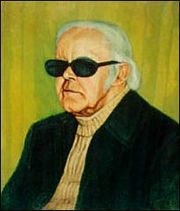
December 10, 1968 was a day of loss for the church of Jesus Christ, as two of her intellectual giants, Karl Barth and Thomas Merton, died within hours of each other.
On this eve of the forty-first anniversary of their deaths I offer this poem by the late British writer and poet Jack Clemo (1916-1994). Clemo, who was from Cornwall, became deaf as a young man and blind around the age of forty. His poem is entitled:
He ascended from a lonely crag in winter,
His thunder fading in the Alpine dusk;
And a blizzard was back on the Church,
A convenient cloak, sprinkling harlot and husk—
Back again, after all his labour
To clear the passes, give us access
Once more to the old prophetic tongues,
Peak-heats in which man, time, progress
Are lost in reconciliation
With outcast and angered Deity.
He has not gone silenced in defeat;
The suffocating swirl of heresy
Confirms the law he taught us; we keep the glow,
Knowing the season, the rhythm, the consummation.
Truth predicts the eclipse of truth,
And in that eclipse it condemns man,
Whose self-love with its useful schools of thought,
Its pious camouflage of a God within,
Is always the cause of the shadow, the fall, the burial,
The smug rub of hands
Amid a reek of research.
The cyclic, well-meant smothering
Of the accursed footprints inside man’s frontier;
The militant revival,
Within time and as an unchanged creed,
Of the eternal form and substance of the Word:
This has marked Western history,
Its life’s chief need and counter need,
From the hour God’s feet shook Jordan.
We touched His crag of paradox
Through our tempestuous leader, now dead,
Who plowed from Safenwil to show us greatness
In a God lonely, exiled, homeless in our sphere,
Since his footfall breeds guilt, stirs dread
Of a love fire-tongued, cleaving our sin,
Retrieving the soul from racial evolution,
Giving it grace to mortify,
In deeps or shallow, all projections of the divine.
(From The New Oxford Book of Christian Verse, Edited by Donald Davie, 1988, p 290-291)
“Described with such grace:” the writing of Annie Dillard

Another of my favorite writers is Annie Dillard, whose wonderful Tinker at Pilgrim Creek earned her the Pulitzer Prize at age 27. That book features vivid descriptions of a closely-watched natural world, the kind of thing Gerard Manley Hopkins might have written had he been an essayist.
Like Hopkins, Dillard became a convert to Roman Catholicism, a move she once admitted in a interview had an inevitability about it. She has a rare appreciation for the mysteries that surround us every day, and the gift of words to bring them alive on the page.
In a later book, Holy the Firm, she demonstrates that she also observes the inside world of the human soul as well as the outside world of Tinker Creek. Here is an excerpt:
“I know only enough of God to want to worship him, by any means ready to hand. There is an anomalous specificity to all our experience in space, a scandal of particularity, by which God burgeons up or showers down into the shabbiest of occasions, and leaves his creation’s dealings with him in the hands of purblind and clumsy amateurs. This is all we are and all we ever were; God kann nicht anders. This process in time is history; in space, at such shocking random, it is mystery.
A blur of romance clings to our notions of “publicans,” “sinners,” “the poor,” “the people in the marketplace,” “our neighbors,” as though of course God should reveal himself, if at all, to these simple people, these Sunday school watercolor figures, who are so purely themselves in their tattered robes, who are single in themselves, while we now are various, complex, and full at heart. We are busy. So, I see now, were they. Who shall ascend into the hill of the Lord? Or who shall stand in his holy place? There is no one but us. There is no one to send, nor a clean hand, nor a pure heart on the face of the earth, nor in the earth, but only us, a generation comforting ourselves with the notion that we have come at an awkward time, that our innocent fathers are all dead—as if innocence had ever been—and our children busy and troubled, and we ourselves unfit, not yet ready, having each of us chosen wrongly, made a false start, failed, yielded to impulse and the tangled comfort of pleasures, and grown exhausted, unable to seek the thread, weak, and involved. But there is none but us. There never has been. There have been generations which remembered and generations which forgot; there has never been a generation of whole men and women who lived well for even one day. Yet some have imagined well, with honesty and art, the detail of such a life, and have described it with such grace, that we mistake vision for history, dream for description, and fancy that life has devolved. So. You learn this studying any history at all, especially the lives of artists and visionaries; you learn it from Emerson, who noticed that the meanness of our days is itself worth our thought; and you learn it, fitful in your pew, at church.” (Holy the Firm, Harper and Row, 1977)
Rick’s Braised Beef Short Ribs

We got our first blanket of snow the other day here in the Berkshires, so it was time to make some comfort food. Cold weather always gets me thinking about stews and braises, and one of my favorites is beef short ribs, which are the ends cut off the prime rib. They’re relatively cheap to buy and really easy to make. I don’t have the recipe my mother used to make them with, but I know it involved painting them with ketchup, and it may have had dried onion soup mix (remember that?) in the braising liquid. Whatever was in them they were a treat.
Here’s my version:
3 lbs meaty beef short ribs
2 tbs olive oil
1 good-sized yellow onion, coarsely chopped
1 carrot, coarsely chopped
1 stalk of celery, coarsely chopped
¼ tsp dried thyme
2 bay leaves
1 cup beef stock
½ cup hearty dry red wine
Salt and pepper to taste
Preheat oven to 350 degree F. Salt and pepper the ribs. In a Dutch oven or oven-proof pot with a cover heat the oil over medium high heat and brown the meat on all sides, being careful not to burn it. Do this in batches and don’t overcrowd the pot. Also, dry the ribs with paper towels so they will brown properly.

When they are nice and brown, remove the ribs to a plate, turn down the heat to medium and add the chopped vegetables, stirring until they take on some color.
Add the stock and wine and bring to a boil, stirring to get any browned bits from the bottom of the pot. Add the thyme and bay leaves and return the ribs to the pot. Cover the pot and put it in the oven for two hours. The meat should be tender and almost falling off the bone. Remove the ribs to a plate and cover with foil to keep warm. Put the pot back on the top of the stove, and reduce liquid over medium high heat until it thickens a little bit to a syrupy consistency (you may not need to do this.)
I like to put a rib on each plate over mashed potatoes with a few spoonfuls of the rich braising liquid, but this is nice to over polenta or rice. Some green beans (or a salad) and some crusty bread and you have a simple and comforting meal.
For a wine pairing I suggest any hearty dry red. This is humble dish and needs a sturdy humble wine. I served our current Italian house red with this, MasciarelliMotepulciano d’Abruzzu, which is also the wine in the braising liquid. Enjoy.
“The Relevance of Analog Philosophies in a Digital Age”

One of my regular ruminations is about how new communications technologies help shape us. Another one is how the middle has fallen out of so much of our discourse in society, as shown by the new levels of partisanship in politics and the rise of popular wing nuts on both the left and the right. And certainly we witness this in the church, where one is either considered a liberal or a fundamentalist. So I was intrigued when I received this post from my old college friend Bill Graff from his home in Taipei, where he suggests that the binary nature of our new communication technologies may be exacerbating the trend toward the extremes:
“When you and I were kids/young adults, our parents always accused us of being too impatient. If you recall, oodles of printer’s ink were given to the first ‘television generation,’ and what seemed to ‘old farts’ the desire of their children to have the world fixed in the same time frame as a sitcom, about 30 minutes.
Now, however, technology has provided for something even quicker and faster than the old-fashioned ‘glass teat:’ instant digital communications (and it’s logical outcome, social networking). I have nothing but praise for the minds who created this artificial nervous system.
But one (of many) of the unintended consequences seems to be the loss of ‘middle ground.’ Digital systems know ‘1’ or ‘0,’ true or false, black or white, saturation and cutoff, and can evaluate multiple functions and terms in fractional microseconds.
Analog systems tend to create a lot of ‘well maybe. . .’ which is incompatible with expectations of many contemporary young folks. This tendency to react rather than think shall create many new challenges. It will continue to be important to keep ‘the middle’ (moderating, middle class, middle earth, middlefish pond, etc.)” (William Graff, personal post)
On Christian Writing and Writers

A few years ago, when my son was at Pomona College in California, I flew out there for a parents’ weekend, and one day I was driving around in the LA sprawl and spotted an enormous Christian bookstore, so I stopped and parked and went in. And I had the strangest experience there, because I am both a Christian and one of the most bookish people on earth, and yet I didn’t see a single author I recognized in the store. Not one. There were Bibles there, of course, but not the black leather-bound ones I have, but ones in denim and calico, and with names like The Soccer Mom’s Bible and The Disgruntled Teen Bible (I made that up, but it wasn’t a stretch from what I saw there.)
I wasn’t really expecting to find a lot of Karl Barth or P.T. Forsyth, but there wasn’t even any C. S. Lewis, Madeleine L’Engle, Philip Yancey, Tony Campolo, Eugene Peterson, or John Stott, card-carrying evangelicals all.
And it dawned on me that certain Christians live in a parallel intellectual universe to the one I live in. These were “Christian” books, and it got me to ruminating on whether the whole idea of a Christian book is a good one.
Remember the old joke that said: “Military justice is to justice what military music is to music.” Is it possible that “Christian books are to books what military music is to music?” I admit that I am a literary snob, and a theological one, too, but isn’t there some standard of aesthetics that faithfulness requires of our art and literature, even if we disagree on just what that standard is?
I once got into an argument about music in church in which I argued that Christian worship demands good music, and my interlocutor said there is no such thing as bad or good music, just personal preference. I couldn’t disagree more. And it is not like I am wedded to one kind of music. I enjoy lots of kinds of music, but it has to be good music. Likewise I like all kinds of literature, but it has to be good.
I know I will probably get hate mail for saying this, but I didn’t like the Jan Karon “Mitford Series” because it seemed too preachy and contrived. My beloved Aunt Tia (now deceased so I can say this) was always pushing these books at me because they were “so Christian.” “You’ll like them,” she said, “because they describe a clergyman and his life with his congregation.” I guess it never occurred to her that being a pastor for thirty years I may have known all that I wanted to know about a clergyman and his congregation. And the clergyman in these books, while charming, seemed too good to be true, which is a bad thing in art and literature which demands, above all, truthfulness.
So I wonder if there can be such a thing as a Christian writer? There are writers who are Christian, and even deal in Christian themes, but I read them because they are good writers. I am thinking of Annie Dillard, Marilyne Robinson, and John Updike, to name but a few. And there are books that have Christian themes like John Irving’s A Prayer for Owen Meany and Graham Green’s The Power and the Glory, although I have never heard either of the authors described as a Christian writer. Frederick Buechner writes luminous non-fiction devotional and theological books, but his novels, like The Book of Bebb, are never preachy or contrived.
What all these writers share is that they tell a story, and you don’t feel like you are reading a religious tract. In their novels the themes of religion are woven into the fabric of life, as religion is itself in our lives; it’s not a separate thing.
For example, I never thought of Charlotte Bronte’s Jane Eyre as a “Christian” novel, and yet when George Hunsinger asked our theology class to look for themes of “providence” running through the book it jumped out at me that Bronte, the parson’s daughter, was indeed spinning out a Christian theology. But what makes it worth reading is that it is so well written, just as Marilynne Robinson’s Home may have Christian themes running through it, but it is a book worth reading because it is a good book.
Good literature, like all good art, never descends to propaganda, even for a worthy cause such as Christ and his church. Let us be wary of Christian books.
Poised for “the Extraordinary Moment:” Frederick Buechner on Advent
 Advent is an expectant season when we are poised for what Frederick Buechner calls “the extraordinary moment.” He employs, among others, the image of an orchestra conductor at the moment before the first notes are played.
I have in my mind’s eye Leonard Bernstein, who was a regular visitor to Tanglewood, where the Boston Symphony Orchestra has their summer home just down the road from here. I recall how he would stride out of the wings (even at the end of his life when he needed oxygen between pieces) to thunderous applause. Before he dropped the baton he would gather the full attention of both the players and the audience. There was that moment before the extraordinary moment that Buechner describes:
“The house lights go off and the footlights come on. Even the chattiest stop chattering as they wait in darkness for the curtain to rise. In the orchestra pit, the violin bows are poised. The conductor has raised his baton. In the silence of a midwinter dusk, there is far off in the deeps of it somewhere a sound so faint that for all you can tell it may be only the sound of the silence itself. You hold your breath to listen. You walk up the steps to the front door. The empty windows at either side of it tell you nothing, or almost nothing. For a second you catch a whiff of some fragrance that reminds you of a place you’ve never been and a time you have no words for. You are aware of the beating of your heart . . . The extraordinary thing that is about to happen is matched only by the extraordinary moment just before it happens. Advent is the name of that moment.” (Frederick Buechner, Whistling in the Dark, pp. 2-3)
“Now the First of December was covered with snow”

December caught me by surprise today. We left last Tuesday to go to my brother’s in Maine for Thanksgiving, with a stop in Boston on the way back to see Martha’s folks and pick up our son at Logan Airport as he returned from London. We got back late Sunday night.
It was all good, but exhausting, and yesterday I just zoned out. I stayed up late last night to watch the Pats get a whuppin’ from the Saints (that’s American football for my international friends.)
This morning I woke up to see the first snow of the season, and thought, well, it’s the last day of November so that’s about right. I blogged on being ill-prepared in Advent, but still didn’t realize I’d lost a day until I posted and noticed the blogpost indexed in DECEMBER!
I recall all those crazy years in local church ministry when the First Sunday of Advent fell in November, and came hard after Thanksgiving. Now I can’t even keep track of the date
The snow on the ground this morning reminded me of a line from the James Taylor song Sweet Baby James:
“Now the First of December was covered with snow
And so was the Turnpike from Stockbridge to Boston
Lord, the Berkshires seemed dream-like on account of that frostin’”
Whenever James Taylor comes to Tanglewood and sings that song (and he always does) a big roar comes out of the crowd when he gets to that line about the Berkshires. We even have some dear friends who named their baby James after that song. I have many warm memories of all the James Taylor concerts we heard and saw over the years camped out on the lawn at Tanglewood when our children and the neighbor’s children were all growing up together. One of those children is all grown up and the mother of baby James.
And now it is the first of December after all. The snow has stopped, and is melting, but for a time the Berkshires did indeed “seem dream-like on account of that frosting.”
Ill-prepared in Advent
Over the years I have had several dreams in which I was ill–prepared for something important. These were anxious dreams, much like the kind that actors have about not remembering their lines. The most vivid of these dreams for me was one in which I was in the chancel of some church at a large formal church service of some kind. It wasn’t the church where I was serving, and it was in a way too, in the manner of dreams.
It was a little bit of my church, other churches I have served, the Cathedral of St. John the Divine (where I was baptized), and for good measure probably several English Cathedrals and college chapels as well. In this dream there are a number of dignitaries there from a wide variety of churches. There is a Roman Catholic cardinal and an Orthodox primate, and a bunch of bishops and leaders of other churches.
And I seem to be in charge of this service. But the cause of my great anxiety is that I can’t remember, or perhaps never knew, why we are there, and I don’t know what the order of service is or what I am suppose to say and when. People are milling around and things are supposed to start, but I am unprepared. It is the kind of dream you wake from in a sweat and are relieved to know that is was just a dream.
My dream serves as a parable for the coming of God. It is a big event, a wonderful occurrence, and yet it also occasions a personal crisis for us because we know that we are all ill–prepared for it.
That is what the prophets are saying to us in Advent, that when God comes, we stand in a crisis. Because the advent of God is never merely an event in time and history. It doesn’t just happen in some vague future, it happens in my future, in your future. The season of Advent is really about this expectation, and preparation for the coming of God into our lives now, more than it is a mere remembrance of Christ’s birth and preparing for Christmas as it has become widely understood.
Or to put it another way, what if the event we celebrate at Christmas was suddenly and dramatically fulfilled? What if suddenly there was peace on earth, goodwill among people? What if all the visions of the prophets happened in a instant, swords beaten into ploughshares, the lion and lamb dwelling together, enemies reconciled? What might have to change about our world for us to be prepared for that?
What would have to change about our lives, our way of doing things, our laws and institutions, our morality and ethics, our commerce and industry, our politics and international relations?
People who wouldn’t dream of driving without a tool kit in the car, or of cooking without a fire extinguisher in the kitchen, never consider what preparations might be necessary for their souls, their communities and their society before the coming of God and his kingdom. Might we find ourselves as ill–prepared for the kingdom as a fish is ill–prepared to live out of water?
If the kingdom of God of which the prophets spoke suddenly dawned, how many of us would be prepared for it? The world will be turned upside down, says Isaiah. “Every valley shall be lifted up, and every mountain and hill be made low; the uneven ground shall become level, and the rough places a plain.” The blind shall see, the lame shall walk, the downcast shall smile and laugh, the poor shall be filled with good things, and the rich shall go away empty. The first shall be last and the last first on the great and terrible day of the Lord.
In the same way Jesus told parables to warn his hearers that they were ill–prepared for the kingdom. He said the kingdom is like a wedding feast to which those who are invited didn’t come, so those who were not invited are welcomed.
He said the kingdom is like when the foolish maidens neglected to keep their lamps full of oil and had to go to replenish them, so that they were locked out of the house when the bridegroom arrived.
He said the kingdom is like when the master goes on a trip and puts you in charge and unexpectedly returns to discover that you’ve been partying, drinking his single malt scotch, and listening to his Pink Floyd albums on vinyl instead of looking after the property.
I know I am ill-prepared in Advent.
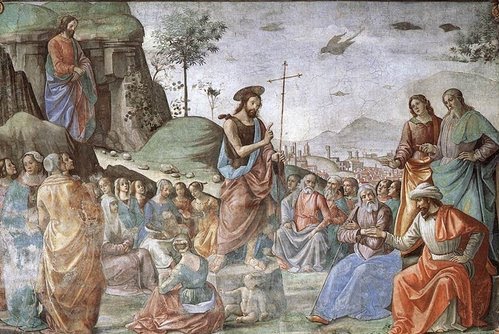
(Picture: “John the Baptist” by Domenico Ghirlandaio)
 When I Survey . . .