Unknown's avatar

“Taking the Long View” Reflections of a Retired Pastor

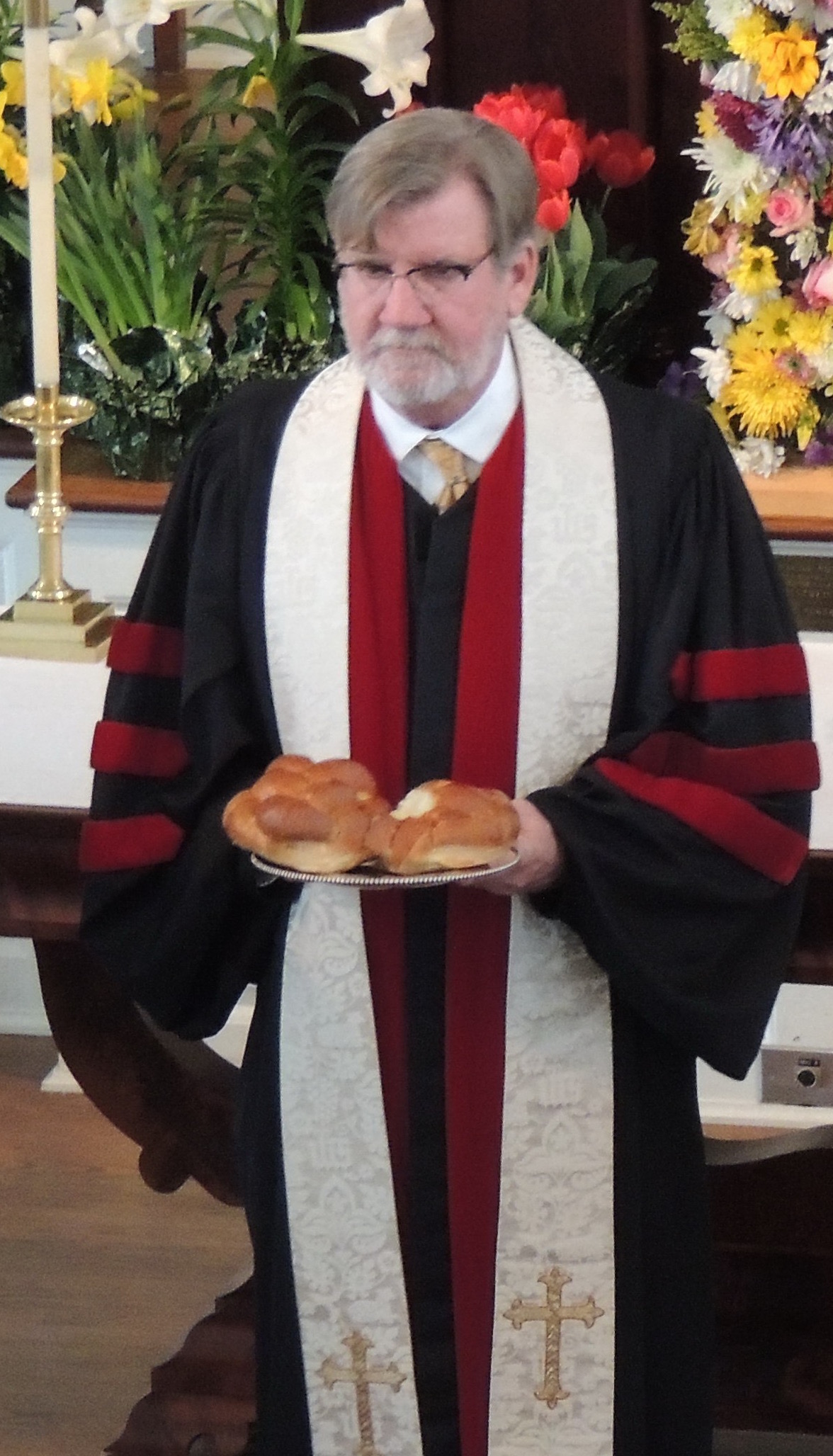
Presiding(This is a talk I gave to “The Saints” which is the United Church of Christ retired clergy group in the Connecticut Conference of the UCC. The talk was in Cromwell, CT on May 14, 2015)

I’d like to thank you for inviting me to be with you today. I have great respect for ministry as a high and holy calling, and I enjoy the company of ministers. I am proud to be a minister, and this year is the 40th anniversary of my ordination. And it is good to be in the Connecticut Conference. I never served here, but my daughter, Rebecca Floyd Marshall, is an ordained minister here in CT, serving in Westport. If you bump into her at a Conference meeting introduce yourself.

My talk today is entitled “Taking the Long View” which was the title of a UCC STILL SPEAKING Daily Devotional I wrote for March 14 of last year. I see it was re-printed in your newsletter. I’m going to share with you some of my personal back-story behind the writing of this particular devotional.

I began the devotional with an anecdote about Ralph, a congregant of mine in my first church, who owned an apple orchard: “I drove over to see Ralph at his hilltop orchard a week after I had presided over his wife’s funeral and burial. He was well into his nineties and they had been married for seven decades. I was all of twenty-seven. It took me awhile to find him, because he was out planting apple trees. He seemed glad to see me and said, “You may wonder why I am planting trees that I will never live to see bear fruit. But it’s what I have always done, and I am not going to stop now. There were apple trees in this orchard when I came here that somebody else had planted, and there will be apple trees here after I’m gone.”

I’ve held onto Ralph’s words for forty years, and lately they have helped me as I think about what it means to be a retired minister. That hasn’t been easy for me. Because when I left my role as a pastor it seemed, at first, and for a long while, like the loss of my calling as a minister. Now I have come to realize that, although I am no longer a pastor of a congregation, I am still a minister. When I turned 65 the UCC Pension Boards mailed me a good little book by Paul Clayton entitled Called for Life (Perhaps you all got one, too). I love the play on words in the title, and I do believe we are “called for life” in both senses of the phrase.  Continue reading

Unknown's avatar

“Better Late Than Never” Reflections on women in ministry.

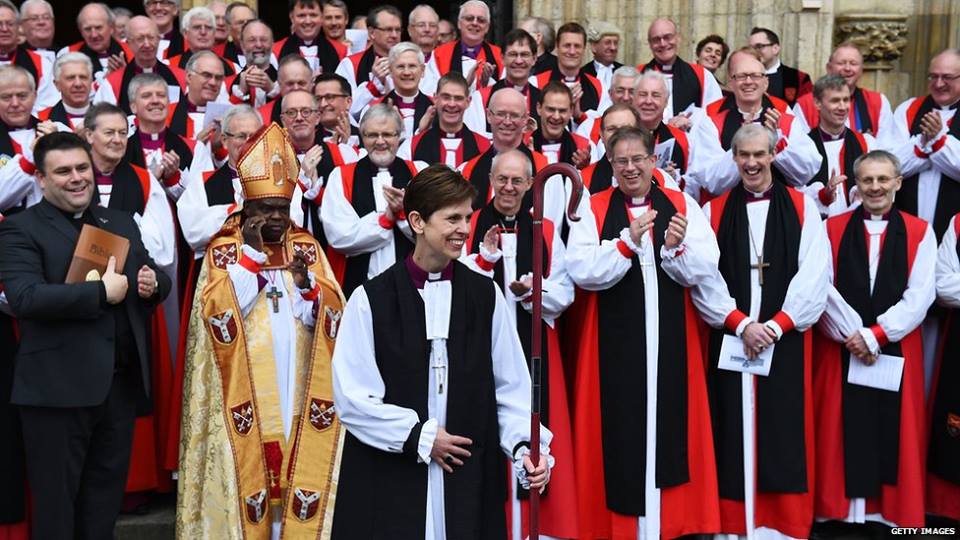
C of EI find myself profoundly moved at the news that today the Church of England has consecrated their first woman bishop, Libby Lane.

I am old enough to remember when there were few women in ministry. In fact, in the Episcopal Church of my youth there were none. No bishops, no priests. Not one.

When I was in seminary, one of my teachers was Emily Hewitt, one of the first women “irregularly” ordained into the Episcopal Church, a very inspiring presence. I recall thinking, “This brilliant women is teaching me about ministry, and people are telling her that she can’t do it herself.”

As a young man I migrated to the United Church of Christ, which had done better on this issue, but still I had few women colleagues early in my ministry. I remember with great affection and respect two pioneering women ministers in the UCC: Gladys York from Maine and Catherine Chifelle, from Massachusetts, who later became a congregant of mine in Pittsfield. They served small congregations where they were faithful and well-loved.

My second call was to be the associate minister at Hammond Street Church in Bangor, Maine, where Ansley Coe Throckmorton was the senior minister. I don’t know whether it was true or not, but we were told that Ansley was the first woman senior minister of a “tall steeple” church in the UCC. I was proud of serving with her, and got to see close up some of the challenges she faced from folks who didn’t want to recognize the authenticity of her ministry.

This year is the 40th anniversary of my ordination. I would mention all the wonderful women who have been my ordained colleagues through the years, but I might forget somebody. I also supervised several women seminarians in field education, much to my benefit. I give thanks for them all.

Then several years ago my own daughter came home for Thanksgiving and announced that she was going to seminary to discern a call to ordained ministry. She is now ordained and inspires me all the time.

The church is an intrinsically conservative institution. That is not all bad. We don’t move too fast most of the time, and that is both the beauty and the bane of the church.

But it took, it has taken, way too long for the church to recognize the God-given gifts of the women among us. And there are still wide swathes of the church where women’s gifts are undervalued, unappreciated and unrecognized.

Thank God that is changing. I pray it will change more and more.

Today the Church of England took an important step. The truth is that it has come very late in this particular game. And it is not the last step that needs to be taken. Not by a long shot.

But perhaps today we should all just celebrate and be glad at what took place.

Unknown's avatar

Can the Church Survive the Decline in Worship?

KazMy Massachusetts colleague Kazimierz Bem, Pastor and Teacher of the First Church in Marlboro, doesn’t think so.

He had a wise and thoughtful post yesterday on faith street.com called Christianity Cannot Survive the Decline in Worship.

Here’s an excerpt:

The church is not made holy by the work it does — Protestants should understand that better than anyone. Rather, it is Jesus Christ and his cross that make us holy. Our service can never replace it, copy it, or perfect it. Our service can only be our response in gratitude for what God has done for us. As the great Congregational theologian Peter T. Forsyth once wrote: “The greatest product of the Church is not brotherly love but divine worship. And we shall never worship right nor serve right till we are more engrossed with our God than even with our worship, with His reality than our piety, with his Cross than with our service.”

For the whole article go here. I heartily recommend it. Kaz even quotes P.T. Forsyth. Well done!

Unknown's avatar

Norwood Days: We All have to Start Out Somewhere

OLYMPUS DIGITAL CAMERAWe all have to start out somewhere.

I was reminded of that today when a friend sent me a funny clip about church from Saturday Night Live and I immediately recognized that it had been filmed at the little church I grew up in.

I had seen rumblings about this on the Norwood Facebook page, that there had been a film crew at the Church of The Holy Communion, a beautiful Episcopal church in Norwood, a small town in Bergen County, NJ.

Both my parents were raised in Congregational churches (and my Mom was for a time a Methodist), but when my Mom beat the dust of the Midwest off her heels and moved to New York City she became an Episcopalian. Both my parents were, for a time, librarians at General Theological Seminary, an Episcopal school in the Chelsea section of Manhattan.

They lived on the Upper West Side when I was born, which is how I came to be baptized at the Cathedral of St John the Divine, which if you’re keeping track of things like this, is the world’s largest Gothic cathedral.

Before I started school we moved to Closter, New Jersey, a little town in Bergen County across the George Washington Bridge from Manhattan. My Dad was a commuter at the time, working downtown as the photo and caption editor for the Religious News Service, the public relations arm of the old National Conference of Christians and Jews.

While in Closter we attended the little church in Norwood, where my brother Bill was baptized, a very early memory of mine. My father, never baptized, was then a grumpy agnostic, and from him I learned to take both faith and doubt very seriously. My mother was devout and active in the church.

We moved to Norwood when I was in fifth grade, and then were within walking distance of our church.

I am sure there was sin, gossip, and the sundry pettiness that plagues every congregation of humans, but I felt loved and accepted there, and the fact that I ultimately became a Christian minister speaks well of their care and nurture for and of me.

The rector was a gentle, ancient man, Mr. (always “Mr.” as he was low church) John Foster Savidge. He had an odd way of speaking that I assumed was some kind of special ecclesiastical patois. Only years later did my Dad tell me he had CP and a resulting speech impediment. He was very kind to me, and one time when I was about 11 he came to call and neither of my parents were home. He treated me with great respect and dignity, and told me about his trips to England. Years later I had my own times living in Oxford and Cambridge.

His successor was The Reverend Robert Maitland, who was ironically more blue collar but also more high church and always “Father” Maitland.

It was under his care that I was confirmed. He was a very down-to-earth guy, much a contrast from the patrician Mr. Savidge.

When I was in high school my mother was diagnosed with colon cancer. In those days cancer was an unmentionable and few adults talked to me about the prospect of her impending death. One was my beloved basketball coach, John Shine, and the other was Father Bob Maitland. He took me to lunch at the Red Coach Inn (any Bergen County folks remember that?). He showed me what a minister could be.

My Mom did die during my first weeks at college at the age of 53. Fr. Maitland presided at the service at the Church of the Holy Communion, to a packed house as only those who die too young can bring out. I was having none of this God who snatched away the most important person in my life.

But years later after a long and arduous faith pilgrimage (which is another story for another day) I came back to the church and to a calling as a minister, although in a different franchise.

So the Church of the Holy Communion remains one of my landmarks, a holy place. And since I always (usually) love SNL the confluence of these two made my day.

The little clip was a trip down memory lane. I took voice lessons from the organist, Walter Witherspoon, and saw the organ near where I stood for my first recital. I saw the lovely stained-glass windows. I wrote recently about the window dedicated to a  Sunday School classmate of mine who died in a sledding accident when I was in the second grade.

It has been years since I have been back there, but I thank God for the place and the people, mostly now in the church triumphant, that were there in my growing-up days.

Unknown's avatar

“By Their Groups Ye Shall Know Them”: Celebrating Max L. Stackhouse

Max Stackhouse FlyerWe had a very moving day today, as we celebrated Max Stackhouse at First Congregational Church, United Church of Christ,  in Stockbridge, Massachusetts, first in our morning worship, then followed by a first-rate public lecture on Public Theology by his former student, Dr. Scott Paeth, one of the editors of a new anthology of Max’s writings, Shaping Public Theology (Eerdmans, 2014). It was not lost on many of us that we were hearing about Public Theology in the congregation where Jonathan Edwards was the second pastor and Reinhold Niebuhr was a member.

Max, and his wife Jean, are well-loved, long-time members of this congregation, and many friends, former students, and colleagues were there. There was very special music from some of Jean’s colleagues at the New England Conservatory, and a beautiful letter/tribute was read from Yo Yo Ma, a board member of BITA, who was unable to be there because he was performing in Cleveland. It was a red letter day. Thanks to my pastor Brent Damrow for putting it all together and for giving me the opportunity to say a few words. Here they are:

“By their fruits ye shall know them.”

Matthew 7:20

 Max’s mentor, James Luther Adams, liked to expand on Jesus’s words “By their fruits ye shall know them” to say, “By their groups ye shall know them.” For me to list all the groups, societies, and institutions Max has founded or been active in would use up all my allotted time this morning

So I’d like to highlight two groups that Max and Jean created here in the Berkshires. When they moved here they planned monthly gatherings of the United Church of Christ clergy and their families in their home on Sunday nights. We’d all share a potluck supper, and then the children would retire to watch a video (Willy Wonka and the Chocolate Factory was a favorite), and the weary pastors and spouses would go to the living room and enjoy friendship and good conversation.

The very first time we went there I firmly instructed my kids during the car ride to address Max and Jean as “Dr. and Mrs. Stackhouse.” When Max greeted us at the front door he knelt down low and said to them “We lived in India, and in India the children call grown-ups Auntie or Uncle, so you can call me Uncle Max.” Andrew nodded soberly and said, “OK, Dr. Stackhouse.” Those gatherings were a blessing to me and to my family, and to many clergy colleagues.

You all know about Max and Jean’s wonderful organization The Berkshire Institute for Theology and the Arts (BITA) that brought together artists, lay people, pastors and scholars for discussions, performances and fellowship. Again Max and Jean opened their home for a meal to the participants.

I mention these to illustrate the commitment that Max (and Jean, too) have to bringing people together to think and talk about important matters, and to share their life with others. Wherever they have lived or traveled around the world, and that list is also huge, they have made deep friendships and countless connections with all sorts of people.

I must confess that in addition to being my teacher, mentor, colleague, and friend, Max is also “a voice in my head.” I think Scott (Paeth) and other former students of Max will recognize how the Stackhousian voice lingers long after the studies are over.

What does this voice say? Well, to take just one example, Max, who is the son and grandson of Methodist preachers has an allergy to hyper-individualistic religion. “Pietism” is the word he uses to describe such impulses.

“Pietism” is a perennial danger for Christians and a regular feature of American religion, where the emphasis is on me: my faith, my experiences. So the Stackhousian voice in my head sometimes says things to me like, “Be careful, Rick, that your faith doesn’t become too individualistic, too private, because faith, though personal, is not private. Your faith is about you, but it’s not all about you.”

Some view a congregation as a collection of beautiful cut flowers collected as in a vase. The beauty is in the individual spirituality, which each person brings to make a beautiful bouquet.

Max, or at least the Stackhousian voice in my head, rejects that view. For Max participation in a congregation is more corporate and organic than that. He might prefer to think of us more like a tree with common roots.

He wants us to think of ourselves as bound together by shared covenants and commitments that are thicker and more transcendent than the sum total of our individual spiritualities. Which is to say that our personal faith is shaped, formed, strengthened and enriched in life together as a congregation.

He wants us to always be asking big questions, such as, “What does it mean to live life together under God?” “What does it mean to be the body of Christ?” He wants us to think about important words such as covenant and vocation.

He believes that out of this shared life and these deep conversations comes a world-transforming Christianity, like that of our Reformed and Puritan forbears, that helps shape our larger community and society.

You can read in Max’s many books the arc of his Christian Social Ethics, but you can also clearly see in his life and commitments the embodiment of his thinking, the caring for peoples and societies by attending to the way they organize themselves and by how they think about who they are together under God.

I give thanks to God for Max’s part, and Jean’s too, in my life and the lives of my family, and also in the life of this congregation. Amen.

(For a podcast of the whole service go here)

Unknown's avatar

“Our eyes are on you”

AT

“We do not know what to do; but our eyes are on you.” – 2 Chronicles 20:12

“It took many years in the ministry for me to be able to say, “I don’t know what to do,” but it was something of a turning point for me. . .  There is often a certain kind of functional atheism that creeps into the way we do business in the church. We might open our meeting with a prayer, but we fully expect to take care of business ourselves.” (From today’s Daily Devotional) Read whole post

(Photo: Appalachian Trail in S. Egremont, Massachusetts. By R.L. Floyd)


Unknown's avatar

“From Here to There and Back Again” The Journey from Text to Sermon

On the other hand

“For as the rain and the snow come down from heaven,

   and do not return there until they have watered the earth,

making it bring forth and sprout,

   giving seed to the sower and bread to the eater,

so shall my word be that goes out from my mouth;

   it shall not return to me empty,

but it shall accomplish that which I purpose,

   and succeed in the thing for which I sent it.”  (Isaiah 55:10-11)

The title for today’s gathering was announced as “Getting from There to Here.” As I reflected on it I wondered if perhaps “getting from here to there” might be more apt. “Here” being the text in front of you, to “there, ” the sermon. That works.

But as I thought more about it I saw the wisdom of  “from there to here.” From “there,” “the strange new world of the Bible,” to “here,” the world we live in. And I thought of some of the various locutions we have used over the years to capture this movement from text to sermon, such as “from text to context” or “from Word to world.”

Then I considered the many ways I have approached the writing and preaching of sermons, and I realized this movement from text to sermon was more dialectical and less linear than any of these ways of speaking about it.

As I thought about it, the more I liked the sub-title of The Hobbit, which as you may know is “There and back again.” So perhaps “here to there and back again” is more like it.

From here to there and back again describes a journey that is not just a straight line, but rather more like a journey without a  map or even a predetermined end. And I like this way of thinking, because it captures how I have experienced sermon preparation in my four decades as a preacher.

I start with a Biblical text, and then I live with that text throughout the week on my journey, revisiting it and wrestling with it and worrying it until I begin to hear something of the voice of God in it, and by then the contours of the journey begin to show themselves, as do even the purpose of the journey and it’s destination.

The process seems to take on a life of its own, which is another way of saying that the Word of God is alive. I like today’s Isaiah text where God uses the agricultural metaphor of rain and snow watering the earth and making it produce to describe the way his Word works, “It shall not return to me empty, but it shall accomplish that which I purpose, and succeed in the thing for which I sent it.”

And I want to say a bit about what I mean when I say “the Word of God,” which can mean one thing or another, even sometimes one thing and another, or even three things depending on the context.

One way of thinking about this that has helped me comes from Karl Barth. He wrote about the threefold understanding of the Word of God.  First, there are the written words of the Bible, then there are the spoken words of the preacher, and finally, and most importantly, there is the living Word, Jesus Christ.

This living Word is mediated through both the written words and the spoken words. The prayer I began my sermon with today is based on this idea: “Through the written word, and the spoken word, may we behold the living Word, even Jesus Christ our Lord.”

And that is not to say every text needs to be understood Christologically (although it can be), as in the text we have from Isaiah today. But to say there is a living Word is to say that whenever we hear the Word of God as direct address to us, it is the same Word of the same God, who came to us and for us and became the Word made flesh.

So when I talk about the Word of God in sermon preparation, it may be a reference to the text itself, the words, or to the proclamation in the form of a sermon, the Word preached, or to both, but the goal of the journey is, through the finite human words of the text, and the finite human words of the preacher, to transcend this finitude to hear the living Word of God. And I believe this is the primary task and challenge of preachers, and of the church, for that matter.

Let me say a little bit more about the words of the text and the words of the preacher as the Word of God. I think of them by analogy to the doctrine of the two natures of Christ. Jesus is truly human and truly divine, not half and half or some other percentage.

And in much the same way (although not identically) the words of our Scriptures, the Old Testament and the New Testament, are truly human and truly divine. Human in every way, written (and edited) by human beings, and truly divine through the agency of the Holy Spirit of God who inspired the writers to write them, the same Holy Spirit the church invokes when we read them.

And the same thing can be said about the words of the preacher. A sermon is not written in some special spiritual words, but in the same human words that we use in everyday speech. Since everyone in this room is a preacher I don’t have to belabor the point that we are all human, even all-too human. Yet the Holy Spirit that inspired the writers of Scripture is the same Holy Spirit that inspires the preacher, and the same Holy Spirit that the church invokes and invites as it prepares to hear the Living Word of God from the frail words of scripture and the frail words of the preacher.

This is admittedly a high view of preaching, and some might say it claims too much for the preacher. I would say quite the opposite. It is the views of preaching that put emphasis on the personality and performance of the preacher that claim too much for the preacher.

The claim that the preacher is to be a minister of the Word of God is much like the church’s understanding of the celebrant at the eucharist. The principal was established early in the church during the Donatist controversy. The Donatists were heretics, so the question arose whether the baptisms they performed were valid. And the church agreed that “the efficacy of the sacrament does not depend on the sanctity of the celebrant.” So the preacher may be more or less gifted with the homiletical arts, but it is not those gifts that are decisive. What is decisive for the preacher is that he or she has been set apart to deliver the church’s proclamation, so that the church may hear in it the living Word of God. It is not about the preacher. It is about the church hearing the Word of God.

This is a (nearly) sacramental view of preaching, that the preacher should say what the sacrament shows. And in both cases neither the preacher nor the celebrant has control over the Holy Spirit of God, as if we somehow could control God. No, Christ is not truly present in the sacrament nor truly alive in the preached Word because we invoke his name, but rather because he himself commanded us to do these things and promised to be present with us when we did.

So with this high view before us, and a text in front of us, how do we get from there to here or from here to there and back again?

The first thing I want to say about approaching a text is the expectation that God will speak through it. Which is to say that the high view I propose operates out of trust. I think it was Richard Hayes who wrote about a “hermeneutic of trust.” For decades we have been talking and hearing about “a hermeneutic of suspicion,” and that has had its place as an corrective to the Scriptures being misused as instruments of oppression and injustice, “texts of terror,” as my teacher Phyllis Trible so eloquently called them. But there has been a heavy price to pay for the widespread “hermeneutic of suspicion” that has so pervaded the academy for decades, in that many preachers now reflexively distrust the texts.

And I think it is sometimes necessary and appropriate to distrust a text, but it shouldn’t be where we start. Sometimes distrusting a text along the way will lead you to the Word of God.

So the text is in front of us. Perhaps it is an assigned text from the lectionary. I like that, because I can be a lazy sinner who is inclined to make my favorite texts do tricks for me, but that is just me.

Perhaps the Bible is open on our desk, perhaps it is on our computer screen or smartphone, but there it is. First things first: read the text.

Read it in expectation that God’s Word can be heard in it, but don’t rush to decide what it means or even what it has to say. Texts need time. They need to be listened to. I have always described my sermon preparation as inhabiting a text. Living in it.

Another good way to think about it is to “stand under” the text so as to understand it. And the preacher stands under the text along with the rest of the church.

I am really talking about hermeneutics now more than the homiletical side of things. So you all know the various ways to worry a text into view. Read it in the original languages if you have them. Read it in several translations. Look up any key words or phrases in a Bible Dictionary. Take a stroll through some commentaries. Find out its genre and its original context. In other words do your homework. I once preached a sermon that involved Herod, and added “you remember him from the Christmas story.” My dear friend Luther Pierce, a retired UCC minister, shook my hand at the door and said, “Good sermon, Rick, but you conflated Herod the Great with Herod Antipas. Different Herod.” Oops!

So once you’ve done your due diligence and you have the text in your grasp, reflect on the context. Those of you who were preaching in the weeks after 9/11 may recall that the Common Lectionary texts were from Jeremiah and Lamentations, texts we had all avoided in the past because they are horrible cries of despair for the destruction of Jerusalem. All of a sudden after 9/11 texts about the city of devastation and the burning tower became eerily contemporary.

Which is to say contexts change. The immediate context of any preacher is the life of the congregation, and when I talk of inhabiting a text, I am referring to going about one’s pastoral duties with the text in mind. From here to there and back again.

Then there are the larger contexts of the communities in which we live and the country and world we are a part of. Sometimes contexts demand our attention.

We rarely get the kind of compelling clarity about the relationship between text and context that we got after 9/11, but keeping the text in mind as we think about the multiple contexts will often show us the way to go, the particular context that needs to be addressed by the Word of God.

The dialectic of the journey of text to context and context to text means straddling two worlds with the hope we can find in them the same story.

I had the privilege of preaching my daughter’s ordination sermon back in June, and afterwards Mary Luti said, “I like the way you went back and forth from the story in the scriptures to your story now.” And her comment made me realize that I preach that way because to me it is the same story.

I immediately thought of Hans Frei’s The Eclipse of Biblical Narrative, a wonderful and important book. Frei’s thesis is that prior to the Enlightenment Christians inhabited the Biblical Story. They understood it as their story. They were part of it. The Enlightenment changed that as we held the story at arm’s length like any other observable phenomenon.

The task of the preacher is to repair the breach; to make the Christian Story our story again. I am reminded of Bruno Bettelheim’s book, The Uses of Enchantment, where he argues for the re-enchantment of the world for children through fairy tales.

Letting the words of scripture and the words of the preacher be the Word of God for God’s people requires a similar kind of re-enchantment. It means the church realizing that the Story isn’t just back there, but is still going on and we are characters in it.

Let’s look quickly at our Isaiah text for today to see how this might be done. The text is from Isaiah of the Exile and the context is a people who have no reason to be hopeful, since they have lost the three pillars of their identity, their temple, their land and their nation.

The promises made to their ancestors Abraham, Isaac and Jacob seem null and void. Their prospects seem dim, their possibilities few.

Into this context God speaks through the prophet. “My ways are not your ways, my thoughts are not your thoughts.” “You know that rain and snow we sometimes get in the desert? That is what my word is like. It will not come up empty. It will make happen that which I promised.”

And that is what the Word of God sounds like.

And when we hear this story, can it speak to us, where our prospects seem dim and our possibilities few? Can it speak to a declining church too often eager to call it a day? Can it speak to a nation full of grave injustices and inequalities? Can it speak to a world of death and terror?

When Isaiah speaks the Word of God to the exiles he lets them see what can’t be seen, and makes them believe what they can only know by trust in the one who speaks to them. The Word makes them part of the story again, the story that began at the beginning when God said “light” and there was light, the story that saw their ancestors freed from bondage, the story that seemed to come to an end, but now God says to them, “No, it’s not ending. Not at all. I will lead you through the desert of your journey into my own future.” And what will it be like? It will be like this:

“You shall go out in joy, and be led back in peace; the mountains and the hills before you shall burst into song, and all the trees of the field shall clap their hands. Instead of the thorn shall come up the cypress; instead of the brier shall come up the myrtle; and it shall be to the Lord for a memorial, for an everlasting sign that shall not be cut off.”

And let the people say: Amen.

I preached this sermon at the New England Pastor’s Meeting of Confessing Christ, West Boylston, Massachusetts, on September 26, 2013.

Unknown's avatar

“Hearing God’s Word from Unexpected Places”

Celtic cross

 But the Lord said to me: Do not say ‘I am only a boy; for you shall go to all whom I send you, and you shall speak whatever I command you.’  Jeremiah I.7

It is good to be back with you. I so enjoyed being here on Epiphany Sunday for Pastor Mike’s installation. It was cold then. It is not cold today. I have a small confession to make. Mike e-mailed me “We don’t wear robes in the summer.” And I e-mailed him back, “Can I wear one. I’m kind of a robe guy.” So I brought a robe and a stole up here to Dover, but then I realized I was preaching about opening oneself to new experiences and insights, so I’ve decided not to wear one. You know, to walk the walk as well as to talk the talk. I am also wearing a blue shirt for the first time in forty years, because I’m kind of a white shirt guy, too. So I’m really being daring today.

Will you pray with me:

Gracious God, through the written word, and through the spoken word, may we behold the Living Word, even your Son our Lord, Jesus Christ. Amen

I was just twenty-six years old when I graduated from seminary and became the pastor of the Congregational Churches of West Newfield and Limerick, Maine, just over the border and up the road about an hour from here. That was nearly forty years ago.

I grew a beard to look older and wiser than my years, but I’m pretty sure it didn’t fool anyone. I’ve learned a thing or two about the ways of the world and the church and myself, but when it comes to the ways of God I still stand in awe before the mystery of it all as much as I did back then.

But I will tell you one thing I have learned. You have to be open to hearing the voice of God from unlikely people and in unexpected situations. This is a humbling truth, and there is a kind of Socratic inversion about it. Remember how Socrates said of himself: “I am the wisest man alive, for I know one thing, and that is that I know nothing.”

Likewise, the people who think they always know what God is saying tend to be the ones least open to hearing from God, and are therefore the least knowledgeable.

Because if we decide in advance where and when and through whom God will speak, we severely limit our capacity to hear from God.

There are many reasons we close our minds and hearts to those through whom God speaks.

Perhaps we think someone is too young to speak for God. In our Old Testament reading today, Jeremiah tells God just that, that he is too young to be a prophet. God rebukes him, saying: “Do not say ‘I am only a boy; for you shall go to all whom I send you, and you shall speak whatever I command you.’” Jeremiah I.7

I remember when I was young being frustrated that older people often found it hard to see me as someone with something to say because of my age. Now that I am not so young, I have to resist the impulse to dismiss the insights and wisdom of the young, and to tell the truth, I find myself more and more learning from those who are younger, which is an ever-expanding group.

My twenty-nine year old daughter, Rebecca, was just ordained to the ministry in June. I have heard her preach several times now, and, if I do say so myself, she is pretty good. But sometimes when I am listening to her, my mind is saying, “How can this be? Is this my daughter? I remember the day she was born as if it were yesterday.”

And you have a daughter of this church being ordained soon, Emily Goodnow, a schoolmate of my daughter’s from Yale Divinity School. And perhaps some of you who watched her grow up in this congregation wonder, “How can this be? I remember when she was just a girl in Sunday school.”

Recall when Jesus went to his home synagogue to preach his hearers said, “Isn’t this the carpenter? Isn’t this Mary’s son and the brother of James, Joseph, Judas and Simon? Aren’t his sisters here with us?” And they took offense at him.” (Mark 6:3)

His youth and their familiarity with him kept them from hearing him.

What else keeps us from hearing God speak to us? It wasn’t so very long ago that the conventional wisdom in the church was that preaching the Word of God was a man’s vocation. There are still Christians that believe that.

When I was growing up there were no women ministers in my church or in my experience. When I was at Andover Newton one of my teachers, Emily Hewitt, was one of the first 11 women ordained in the Episcopal Church. It caused quite a stir at the time.

As I was preparing this sermon I wondered what she was doing. So I Googled her, and I discovered that she later went to Harvard Law School, became a lawyer, and is now the Chief Judge of the United States Court of Federal Claims. Why would the church want to deprive itself of the talent of someone like her?

But for a long time we did keep women from using their gifts and talents. It was a widely accepted convention.

For example, and I am really dating myself now, but when I started my ministry in Maine, there were only male deacons, who served communion. The women, called deaconesses, set up the communion and cleaned up after. That was the way it had always been and it was accepted. But we went through a change. We saw the basic unjustness of this arrangement, and we changed it.

And so we changed our ideas about who could preach the Word of God, and now women ministers, and very talented ones like Rebecca and Emily, are a commonplace in our churches.

When John Robinson, the pastor of the Pilgrims in Leyden, addressed them before they shipped off to the New World, he preached a sermon to them. And in that sermon he said, “God hath yet more light and truth to break forth from his Holy Word.”

This openness to new light and truth is very biblical. Our God was always doing the unexpected. Even the people God chose to speak on his behalf or to carry out his plans were seldom what one would expect.

Think about some of them with me: Jacob was a liar, a cheat, and general scoundrel. He tricked his father, stole his brother’s birthright, and had to leave town in the dark of night. Yet he became the Father of a Nation and was given the name Israel.

Moses, God’s spokesman, said, “Not me, Lord, I’m not a good speaker. God said, “I’ll send your brother Aaron with you. He can do the talking.”

The prophet Jeremiah, who we heard about today, said, “I’m just a boy.”

And Mary, the mother of our savior, was a humble unmarried teenage mom.

These instruments of God go against our human expectations, but God uses all sorts and conditions of men and women to speak and act on his behalf.

And so we have had to expand the circle of those who preach, bringing in women within the lifetimes of many of us in this room.

And we are continuing to expand the circle. For example, in the church where I worship our pastor is gay. And he is married. And he and his husband just last week adopted a baby boy.

And that is new to me. And because of that it have been a bit of a challenge for me to get my mind around, because even a decade ago a gay, married pastor with a child was not part of my experience, or the experience of many for that matter.

Last year, during our interim period, I was praying for God to send us a faithful pastor and preacher. And God did, because this pastor is a rock-solid Christian, born and raised in the church, and I never hear a sermon of his without hearing something of the voice of God in it.

The world around us changes. The contexts in which we preach and hear changes. I am reminded of the story about Will Campbell, the white civil rights leader who marched with Martin Luther King. He was a Southern Baptist, and he was asked if he believed in infant baptism. “Believe in it? I’ve even seen one!”

So once again we have had to expand our thinking about who we think we might hear God’s Word from. We have had to expand the circle.

Because God calls a variety of men and women to speak on his behalf, and they come in a variety of shapes and sizes, races, tongues, and sexual orientations. And the truth is we need to hear from them all.

Because the Word of God doesn’t just drop from the sky. The Christian faith is a mediated faith, coming to us through the words of others. We have the words of the Bible, and the Word of God can be discerned in them, but they themselves are not the Word of God. No, to hear the Word of God we need human interpreters, which is one of the tasks of the church.

One way of thinking about this that has helped me was put forth by the great Swiss theologian, Karl Barth. He wrote about the threefold understanding of the Word of God.  First, there are the written words of the Bible, then there are the spoken words of the preacher, and finally, and most importantly, there is the living Word, Jesus Christ.

This living Word is mediated through both the written words and the spoken words. The prayer I began my sermon with is based on this idea: “Through the written word, and the spoken word, may we behold the living Word, even Jesus Christ our Lord.”

So we need people in the church to mediate the Word of God to us, to make it real for us. And this happens in community and in relationships with real people living real lives, with real talents and struggles. We need all kinds of people, so that you can even hear a sermon from someone like me with a brain injury.

Those of you who were here for Mike Bennett’s installation in January will remember that I preached a sermon called “Ministry is not a Commodity and Ministers are not Appliances.” And in that sermon I said this: “Mike embodies what the great preacher Gardner Taylor was after when he advised preachers “to look beyond the peripheral signs of preaching greatness to the real source of pastoral insight–the common bond with one’s hearers provided by suffering.” And I would expand Taylor’s words to include not only suffering, but all manner of shared life-experience, the kind that happens in community, the kind that happens day to day in the church.

And I said this to you: “If you let him, Mike will share your lives, will rejoice when you rejoice and weep when you weep, and will become your pastor.”

And by all indications it seems that, nearly a year into your relationship together, you are finding that to be true.

But the very best preacher in the world does not make the Word of God alive by himself or herself. For that you also need good hearers, ones open to hearing things that they may not have heard before, that may challenge them, prod them, even make them unhappy or angry.

But by being open to the unexpected, hearers may well hear things that please and delight them, things that make them wiser and stronger and more faithful. And may open them to larger truths, to new wonders, and, above all, to the amazing grace and the vast love of God for us in Jesus Christ our Lord. Amen.

I preached this sermon on August 25, 2013 at the First Parish Church, Congregational (UCC) in Dover, New Hampshire.

Unknown's avatar

An Ordination Sermon: The Secret Sauce of Ministry. A Recipe in Two Parts

Laying on of hands

The Secret Sauce of Ministry
A Recipe in Two Parts

Hebrews 12:1-2
Philippians 2:1-11

As some of you know I like to cook. This time of year, when the weather gets fine, I fire up my grill and do some grilling and barbecuing. And I love to sit on my back porch near the grill with a cold beverage and read cookbooks, of which I have many, or as Martha would say, “too many.”

Many of these grilling and barbecuing books contain recipes for a “secret sauce.” I have been noticing lately that the term “secret sauce” has migrated from its culinary context and is now being employed as a metaphor for that special something that makes things work properly.

For example, I recently heard a journalist talking about “the secret sauce” that would create “a grand bargain” to overcome the Congressional budget impasse. Good luck with that.

So I started to wonder, “ What’s the secret sauce of ministry?”  If I had to come up with a simple recipe for what makes ministry faithful and effective what would it be?

So here’s my recipe, which comes in two parts, which I hope you will take away with you today for your own ministry, whether lay or ordained.

1. The first part of the secret sauce is this: You can’t do it alone. Rebecca couldn’t have come to this day alone, and she can’t do her ministry alone. No one does it alone.

How does one come to know God? And to love God? And to want to serve God?

When I look out at this congregation I see so many here today who have helped to shape and influence Rebecca. I am reminded of the scripture from Hebrews we just heard that says we are “surrounded by a great cloud of witnesses.” The image is from the ancient stadium where the races were held, and the cloud of witnesses are the spectators who cheer the racers on.

This great crowd includes both the living and the dead, “the church militant” and “the church triumphant.”

So among the crowd present in the congregation today are many members of Rebecca’s family, let’s call them “the crowd of the proud.”

In addition to Martha and myself, are Rebecca’s brother Andrew and his wife, Jessica. Rebecca’s maternal grandparents, Art and Marianne Talis, are here. As are several assorted aunties, an uncle, and a cousin.

These family members represent a great line going back through generations of Talises and Beers, Floyds and Laffoons, and, let me tell you, there is a lot of church in these families.

We represent a great ecumenical melting pot, from the Greek Orthodox faith of Rebecca’s grandfather’s forbears, to the German Protestantism of her grandmother.

My mother’s father, Bill Laffoon, a descendant of French Huguenots, was a deacon at his Congregational Church in Wichita, Kansas. His schooling ended with the 6th grade, but saw to it that his two daughters went to college during the height of the Depression.

Granddaddy read his Bible every day, and his speech was sprinkled with scripture verses.

So when I was growing up my mother also had a scripture for every occasion, I thought she was so wise, she’d say, “Sufficient unto the day is the evil thereof.” And, “Do not cast your pearls before swine.” When I went to seminary I discovered that they weren’t original with my mother, but came from Jesus in the Sermon on the Mount.

Years later, Rebecca had the same experience at Yale when she learned where all my wise sayings came from.

On the other side of the family, I think today also of Martha’s grandmother, Marta Beer, which in our family is a family name and not a beverage. My Martha is named after her. She raised three daughters by herself in wartime Germany, and was another great churchwoman.  How proud she would be.

This rich ecclesiastical family DNA has helped to shape and form Rebecca into a minister. They are all part of this congregation today, a part of the cloud of witnesses.

But there’s more. For as grand as Rebecca’s family legacy of ministry is, and as important as family support and nurture is, family alone cannot make a minister.

And so I look around this room and I see many people from Rebecca’s past, a number of the good people of the First Church of Christ in Pittsfield, where Rebecca was baptized and confirmed. I see some of her Sunday School teachers, youth group leaders, mentors and supporters, who have made the trip down here today from the Berkshires.

And when I look around today I also see many other friends, Pittsfield neighbors, UCC and ecumenical colleagues, and folks from the Berkshire Association, who have been part of Rebecca’s life.

I see some of her Wellesley College roommates up in the balcony. I see Yale classmates and New Haven friends, and, of course, all of you from Green’s Farms Church, members and staff, who have so warmly embraced Rebecca in your community, and are now such an important part of this most recent chapter in her life.

There are others, too, I must mention, who are neither related to Rebecca nor have ever met her, who she knows from the books she loves and the scriptures she studies. Those many other witness, men and women of the church:  prophets, apostles, martyrs, evangelists, theologians, reformers, writers and thinkers down through the ages. They are part of this great crowd, too. They were all witnesses to God, and to God’s vast love for us in Jesus Christ.

So all of you here, and all the unseen but present, make up the great cloud of witnesses, who cheer us all on as we go about our several ministries, and especially cheer Rebecca on today. I thank God, for you and for them.

So to take nothing away from Rebecca, who as you know, is a remarkable young woman and certainly gets much of the credit for us being here today, she hasn’t done it alone. Because this ministry business is a team sport, and I have just described to you just how really big the team is.

Nobody gets to ministry alone, and nobody does ministry alone, because you can’t do it alone.

So that’s the first part of the recipe for the secret sauce of ministry.

2. The second part of the recipe for the secret sauce of ministry is this: It’s not about you. To do ministry in the name of Jesus Christ you have to get out of your own way.

What does this mean? Recall how Jesus was always confusing the disciples by saying things like “the one who would gain his life must lose it.” And “The one who exalts herself will be humbled, but the one who humbles herself will be exalted.”

And the disciples never quite understood what he was trying to teach them until after Easter. Their hopes had been dashed on Good Friday as they fled from him and his cross. But after Easter all those things he said made sense. He was showing them a way, a way of selflessness, of servant-hood, a way to be a person for others.

And recall also how our brother Paul kept writing to churches that were fighting, and saying in one form or another, “It’s not about you!”

To the Corinthians he wrote, “What we preach is not ourselves, but Jesus Christ as Lord and ourselves as your servants for Jesus’ sake (2 Cor. 4,5). And a couple of lines later in that same letter he wrote them, “We have this treasure in earthen vessels to show that the transcendent power belongs to God and not to us.” (2 Cor. 4:7).

What was he trying to tell them about ministry? That “it’s not about you.” To be a minister you have to get out of your own way. And the reason that you have to get out of your own way is first to make space for God to work in and through you. And you have to get out of your own way, secondly, to make space for the other, the ones you minister to.

I was with Mary Luti at a meeting the week before last and I told her how excited I was that she would be laying holy hands on Rebecca and doing the prayer of ordination today. I said to Mary, “It is so fitting because it was under your ministry that Rebecca started discerning her call.”

And Mary demurred and said, “I really didn’t do that much.” And I thought she was just being humble. But as I started pondering the recipe for the secret sauce of ministry, I realized she was quite right.

And you know why she was right? Because it wasn’t Mary who called Rebecca into the ministry. Mary was just doing her job, which is how ministry works. Rebecca was a questioning young woman in a pew in Cambridge, and Mary was doing her job, which was to share the God she knows and loves. And Rebecca was in the right time and the right place with the right person, and God’s Holy Spirit works like that, in what seems mundane, but can at the same time be quite marvelous.

Our society cultivates a cult of personality, a cult of celebrity, but ministry is not about that. There are celebrity ministers, but the good ones, the faithful ones, know it is not about them.

The word minister actually means one who represents another. The Europeans use it this way in describing their government officials: the minister for finance, or the foreign minister. These are the ones who represent the government in their particular area of expertise

Likewise, a Christian minister is one who represents Jesus Christ. And representing Jesus Christ means taking the form of a servant. Jesus once told his disciples, “Whoever would be great among you must be your servant, and whoever would be first among you must be your slave; even as the Son of man came not to be served, but to serve, and to give his life as a ransom for many.” (Mt 20:25-28.)

Not to be ministered to, but to minister. Not to be served but to serve.

This is counter-cultural in our self-obsessed society. To tell people to get out of their own way for God and for others is not a particularly popular philosophy today. When I peruse the magazines at the super-market checkout there are titles such as Self, Us, People (meaning famous self-absorbed people) but I don’t see Servant or Ministry magazine.

There was a fascinating interview with director Sofia Coppola in last Sunday’s New York Times about her new movie, The Bling Ring. The movie is based on a true story about five teenagers from the San Fernando Valley in California, who were so obsessed with the culture of personality and the trappings of celebrity that they started breaking into celebrity’s homes and stealing stuff.

They would often just walk in through an unlocked front door, or climb in an open window. They robbed people like Lindsay Lohan and Paris Hilton.

In the course of a nine-month spree they looted more than 3 million dollars worth of jewelry and designer clothes. I found the story shocking, but part of it got me chuckling to myself. Apparently they broke into Paris Hilton’s home six times before she even noticed. “She had so much stuff that it took awhile for her to realize someone had broken in.”

Have you seen the bumper sticker that says, “The one who dies with the most stuff wins?” A better, truer one would say, “The one who dies with the most stuff dies.”

Sofia Coppola said she chose this subject for her movie because she has two small daughters, and she fears for them growing up in this glittery world of celebrity culture, a culture that sends the message that it really is all about you and your stuff. She describes hearing some of her daughter’s 6 year-old friends talking about what they wanted to be when they grew up, and a couple of them said, “I want to be famous.” She asks, “Where does that come from?” I don’t think we knew about that when we were six years old.”

And that is a challenge for ministry these days. I am particularly thinking of parents and youth ministers. How do we raise our children in a society that tells them it really is all about us?

When we were driving through the countryside in France we would sometimes see vast fields of sunflowers as far as the eye could see. The sunflowers would be facing East toward the rising sun in the morning, and as the sun moved through the sky the sunflowers would turn toward it, so that at dusk they would have turned completely toward the West. In fact the French world for sunflower is tournesol, which literally means “turn to the sun.”

Sunflowers do this because they are heliotropic; they need the sun to live. By analogy, we are theotropic, we need God to live, and we are made to bend our love toward God and others. But we too often bend our love toward ourselves, and that is where we get in trouble, for instead of living for God and others we try to love ourselves and control things as if we were God.

And that is what is so beautiful about our second reading today from Philippians; it turns the equation entirely upside down. God in Christ bends toward us, and shows us what love looks like.

The late British theologian Colin Gunton said,

 Sin is for the creature to think and act as if it were the creator. But here in Philippians 2 Jesus is godlike precisely in going the other way.

Here Jesus empties himself even of his divinity to become a servant, “a man for others” as Dietrich Bonheoffer described him.

And it is this humility, this self-emptying, this relinquishing of privilege, that Paul wants the church in Philippi to emulate. He writes them to “let the same mind be among you that was in Christ Jesus.”

The church in Philippi was having one of those squabbles that have been known to happen in congregations, even in our own time. Paul admonishes them to get out of their own way, and have the very same mindset as Jesus, the mindset that led him to empty himself, and in humility take the form of a servant, the mindset that ultimately led to his death on the cross.

But it’s not so easy to have the same mindset as Jesus. Remember those WWJD bracelets, that stood for “what would Jesus do?” Some people criticized those WWJD bracelets for being overly simplistic. Because asking, “What would Jesus do? doesn’t really solve the problem. It usually isn’t that hard to know what Jesus would do. People talk about the hard passages in the Bible, and there are some, but the parts that really challenge and convict me aren’t the parts I don’t understand, but the parts I do. “Love your enemies.” “Feed the hungry.” “Welcome the stranger.”  “Share your possessions.” “Turn the other cheek.” “Take up your cross and follow me.” Just to name a few.

So the hard part, after you figure out what Jesus would do, is doing it.

To “practice what we preach,” to “walk the walk as well as talk the talk” is where we pretty consistently fail, and why we need grace and forgiveness to keep trying. And the good news is that is exactly what we get from our God, grace and forgiveness.

In the cross of Jesus Christ, God does for us what we cannot do for ourselves, and saves us from ourselves, among other things, such as sin and death.

All ministers, you and me, lay or ordained, even Rebecca, fail at being consistently Christ-like. But the wisest ministers know that our ministry is at its most faithful when we realize that it is not about us, when we get out of our own way, as Jesus did, to be a servant, as he was a servant, to serve as he served, to love as he loved, and to be a person for others.

And here’s the beautiful thing: if you follow this recipe you don’t really lose yourself at all, you will actually find yourself. Only the empty can be filled with the new life God wants for us. Jesus said, “I came that you might have life, and have it in abundance.” (John 10:10)

Because this self- emptying doesn’t mean we lose our personalities or our personal identities. On the contrary, when our love bends toward God and others, as those sunflowers bend toward the sun, when we lose ourselves in service, when we live for others, we are most ourselves, our own true best selves as God intended us to be.

Just as Jesus’ exalted lordship is ultimately revealed in his humble servant-hood.

Let us listen to it again:

“Let the same mind be in you that was in Christ Jesus,

who, though he was in the form of God,

did not regard equality with God

as something to be exploited,

but emptied himself,

taking the form of a servant

being born in human likeness.

And being found in human form,

he humbled himself

and became obedient to the point of death—

even death on a cross.

Therefore God also highly exalted him

and gave him the name

that is above every name,

so that at the name of Jesus

every knee should bend,

in heaven and on earth and under the earth,

and every tongue should confess

that Jesus Christ is Lord,

to the glory of God the Father.”

And let the people say: Amen.

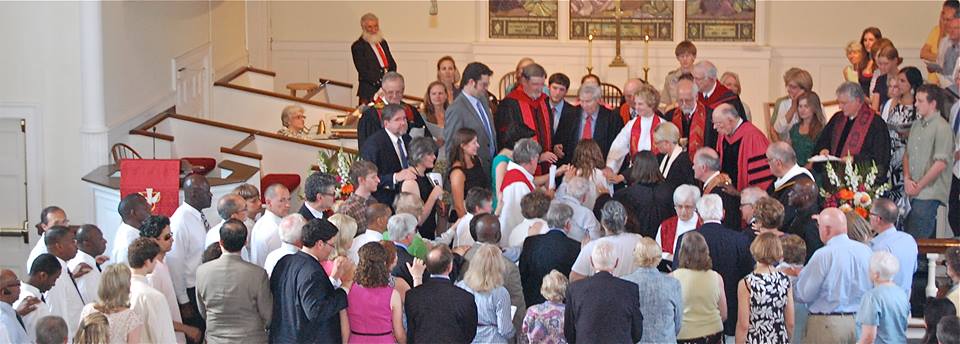
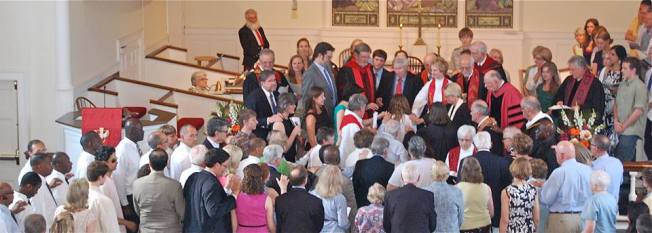
I preached this sermon at the Ordination of my daughter, Rebecca Megan Floyd, on June 9, 2013, at the Green’s Farms Congregational Church, UCC, in Westport, Connecticut.

Unknown's avatar

Retired Clergy in the Pews

Retired clergyI was blessed during my several pastorates to have  a number of clergy sitting in the pews. Some were retired, some were pastoral counselors, and several were seminary professors from nearby schools. With very few exceptions these colleagues were always encouraging and supportive, and I valued their comments, conversation and friendship.

Now I am a pew sitter myself for the most part, except for the odd pulpit supply invitation. I enjoy hearing a good sermon and have been blessed to hear many in recent years.

But not everyone finds the presence of clergy in the pews a blessing (see cartoon above). I have active colleagues who tell me that some of their retired clergy colleagues can be a burden to them, that they know they will be critical of them and they make them nervous.

When this happens it is a failure of a basic kind of collegiality that should prevail among the ordained clergy, the ministry of encouragement. Our role as pew sitters is to support our pastors. We of all people know the nature of the job. And out of that knowledge should come from us a great measure of appreciation for all they have to do. We should be praying for them regularly. We were once where they are and were blessed with elder teachers, mentors, and friends.

I have learned these past few years that it is a difficult transition to go from being regularly in the pulpit for decades to finding oneself in the new role of congregant. It takes patience and humility.

But the thing we retired clergy have in common with the one who now leads our community in worship is worship itself, and the reality that pastor and people stand under the Word of God, and the grace and love that is proclaimed in it. And there is a blessing in being a worshipper without the responsibility of presiding, a chance to open oneself to God’s presence and power without having to wonder if the absent-minded reader will find the right lesson or whether the kids will be so sugared up that they will hijack your children’s message.

So sit back my friends and let the new kids on the block take their turn. As our brother Paul said to the church in Corinth, “I planted, Apollos watered, but God gives the growth.”

(I would give attribution to the cartoonist if I knew who they were. If you know let me know.)

(Update on the cartoon from Dave Macy:

“The cartoon appeared on a Church Pension Group (Episcopal Church) calendar. The cartoonist is The Rev. Jay Sidebotham. From this year’s calendar: “Fr. Sidebotham serves as rector of Church of the Holy Spirit, Lake Forest, Illinois. Before hearing a call to ordained ministry, he worked in New York in the fields of animation, illustration and advertising. (Some would say he is still working in advertising.) He is grateful not only for the opportunity that parish work affords to continue expressing himself through his drawing, but also for the abundant supply of cartoon material that emerges in parish life.””

Thanks, Dave.)