Unknown's avatar

Ruminations on hermeneutics for adult Christian education

When I wrote my A Course in Basic Christianity (which I thought of as remedial catechesis for adults) in 1994 I outlined a set of criteria and assumptions behind my method.  The final assumption dealt with hermeneutics. In reading it now I see how much I was influenced by Karl Barth, Hans Frei and Brevard Childs. It is my hope that these thoughts will be useful to pastors and teachers leading adult education. Here is an excerpt:

“The communal language of the church is irreducible and must be taken on its own terms.  The whole project has been guided by a set of hermeneutical assumptions that inform the way Scripture in particular and theological language in general are treated.   In some respects these assumptions run counter to the assumptions that have guided the modern academic study of Scripture and theology.

Modern approaches to the Bible have been dominated by the historical–critical method.  These were the methods in which I was trained in college and seminary and they continue to yield genuine insights into the truth of the texts.  Nevertheless, I came early in my ministry to regard them as “good servants but bad masters” and I have gravitated toward a hermeneutic that takes the finished text much more seriously.

In a comparable way modern theologians have often accepted the ideologically driven “hermeneutics of suspicion” as the basis for their approach to Christian language.  Again, I have been well–exposed to these approaches and take with appreciation their genuine insights into both the human situation and the history of the formation of sacred texts.  Nevertheless, I find them all seriously flawed as the basis for either constructive theology or hermeneutics and have looked elsewhere for the proper interpretive tools to do my work.
Continue reading

Unknown's avatar

Reflections on The New Century Hymnal

Reflections on The New Century Hymnal
Richard L. Floyd


(Note:  In 1995 the United Church of Christ had just published The New Century Hymnal, which was the first denominational hymnal to take a radical approach to the issue of “inclusive language.” The hymnal was from the first very controversial, and objections to it were raised on both poetic and theological grounds.

In Eastertide of 1996 Confessing Christ sponsored a symposium at the Congregational Church in Boylston, Massachusetts to raise some of the theological issues raised by the language changes in the hymnal. Members of the Hymnal Committee were invited to come and speak, as were people from Confessing Christ.

I was on a panel responding to some of the speakers. I had prepared some remarks, but they have never appeared in print, and I just found them in a computer file while cleaning out an old computer. It is an old battle now, but at the time it was pretty contentious and it was interesting for me now to see what I had to say at the time.)

I’d like to thank Herb Davis and Confessing Christ for inviting me to give some remarks today about my response to The New Century Hymnal.   My friend Ted Trost, who is a historian at Harvard, has reminded me that the German Reformed Church (one of our UCC predecessor bodies) fought bitterly over the language of the liturgy for over a generation and somehow stayed together. Some of you have indicated that you think the UCC is being split over The New Century Hymnal, but I hope that it isn’t so.  I would hope the United Church of Christ can have this extended conversation about the language appropriate for the church to express it faith without ad hominen attacks, “telling the truth in love” for the up-building of the church. Continue reading

Unknown's avatar

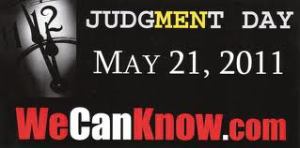
Ruminations about the End of the World on May 21: Howard Camping and William Miller

The final return of Jesus Christ on the last day is an article of Christian belief, but the track record of those who have predicted the day is not good.  In fact, so far, they are batting .000.

And while the predictors were scouring their Bibles for clues they must have missed these texts:

“But concerning that day and hour no one knows, not even the angels of heaven, nor the Son, but the Father only. . .  You also must be ready, for the Son of Man is coming at an hour you do not expect.”  (Matthew 24:36,44)

“But concerning that day or that hour, no one knows, not even the angels in heaven, nor the Son, but only the Father. Be on guard, keep awake. For you do not know when the time will come.”  (Mark 13:32)

So now California evangelist Howard Camping is predicting that this Saturday will be the day. Perhaps he would be well served by the example of William Miller as a cautionary tale. Continue reading

Unknown's avatar

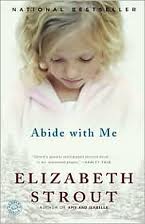
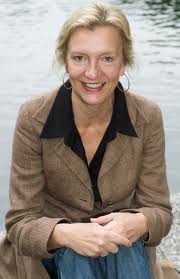
A book review of Elizabeth Strout’s “Abide with Me”

Reading Elizabeth Strout’s Abide with Me reminded me how fiction can sometimes capture the truth of things better than a factual account, just as a fine painting can sometimes be more truthful than a photograph of the same scene.

I heard Strout speak a few years ago at a Bangor Theological Seminary Convocation, and I knew her book was about a Congregational minister in rural Maine, but I only just got around to reading it.  I’m glad I did.

The resonances for me to my own life are striking.  I am not Tyler Caskey, her protagonist, but I did begin my ministry in a couple of very small rural Maine towns that bear a notable resemblance to the fictional West Annett.  And I left those congregations to become the chaplain at Bangor Seminary, which is the model for Tyler’s alma mater, Brockmorton Theological Seminary (a whimsical reference I am sure to my late former colleague, iconic Bangor New Testament Professor Burton H. Throckmorton.)

Like Tyler I married a Massachusetts gal who came up to live with me in the parsonage to much speculation.  There are many differences to be sure:  I started my ministry in the mid 70’s and Tyler in the late 50’s, but things in small town Maine hadn’t changed all that much.

Strout deftly describes the “wheels within wheels” complexity behind the seemingly simple social life of a small Maine town.  The people of West Annett endure the soul-numbing endless winter, and they are unaware of how they have embraced their dearth of possibilities as a virtue.

Strout takes her time. You know from the first page that some bad things have happened to Tyler Caskey and the denizens of West Annett, but she is no hurry to tell you what they are.  Her storytelling is like peeling an onion, and that in itself captures the rhythm of these small towns, where nothing ever seems to happen on the surface when it is really as busy as an ant farm just below.

Tyler himself is a loveable character, too earnest by half, with his love of Bonhoeffer, his tenderness toward his wounded young daughter, and his quiet faithfulness in his daily round. Strout knows her church, and she knows something of the grandeur and misery of the ministry, as the minister can move in a minute from reading the Cost of Discipleship to hearing tawdry local gossip or the sordid confession of a soured marriage.  Her cast of characters will bring a smile to many a rural parson:  the hostile husband reading the paper in the car in the church parking lot, the loyalist who routinely phones Tyler to warn him what’s up,  several variants of antagonists, and the married woman with a crush on the minister as well as a bone to pick.

Strout observes her characters with clear eyes, and her depictions at times just miss being cruel. If you care for these flawed people at all it is because of something like grace, since they are not “good” people in the way that real people  generally are not.  Yet in the end, in keeping with its subject matter, this is a story of redemption.  Strout doesn’t clean up the messiness of life, but she knows that the holy rhythm that runs from Good Friday to Easter isn’t confined to ancient Jerusalem.

I don’t want to give too much away.  Read Abide with Me.  It’s the kind of book that when you finish the last page and close the cover you are already missing the characters.

(Abide with Me by Elizabeth Strout, Random House, 2007.)

Unknown's avatar

Happy 163rd birthday, P. T. Forsyth!

It is not every week that one gets to celebrate the back-to-back birthdays of one’s two favorite theologians, but this is the time. Yesterday we raised a glass to Karl Barth’s 125th birthday and today we raise a glass to P.T. Forsyth on his 163rd birthday.

Who was P. T. Forsyth? Peter Taylor Forsyth was born in Aberdeen, Scotland on this day in 1848 to a family of modest circumstances, educated there through his university years, spent a semester studying in Germany, and became a Congregationalist minister serving in five successive congregations in England. At the turn of the 20th century he became principal of his denominational college in London and proceeded to produce 25 books and hundreds of articles until the time of his death in 1921.

Like Karl Barth his theology was hammered out on the anvil of weekly preaching and pastoring. But he identified the inherent weakness of the human-centered “theology” that prevailed in his time (and dare I say ours) two decades before Barth.

Not everything he wrote translates to our time, but his writings reflect his deep love for the Gospel and his prescient insights in what that Gospel might mean for all manner of human endeavors. At the heart of his thought is the “work of Christ”, what God has done for us that we cannot do for ourselves in the atoning cross of Jesus Christ. Understanding the love of God as “holy love” he called into question the flabby religious sentimentalism of his time in the name of the God who takes sin and evil seriously and has acted to overcome it.

Writing in the early 20th century, years before the two world wars and the holocaust, his was an isolated prophetic voice that we can now see in retrospect understood both the evil that humans can do and the vast love of God acting to redeem and save these same humans “not at their best, but at their worst.”

He is not a household name in the theological world, and he has had scant attention by the academy, but preachers of all stripes know and love his writings. We give thanks to God for him and his labors on behalf of the church on this his birthday.

Unknown's avatar

Happy 125th Birthday, Uncle Karl!


Today is Karl Barth’s birthday. The pastor of Safenwil, the drafter of the historic Barmen Declaration, and the author of the monumental Church Dogmatics was born this day in 1886, and died on December 10, 1968 (the same day as Thomas Merton).

Love him or hate him, if you take Christian theology seriously, you must read him and deal with him. He first came to the world’s attention with his incendiary commentary on Paul’s Letter to the Romans (Romerbrief, second edition, 1922) which Karl Adams described as falling like “a bomb on the playground of the theologians.” I personally consider Barth’s Romans to be one of the most significant and incandescent Christian writings since the closing of the canon.

I have been a pastor for over thirty years and no sermon preparation was ever complete without checking the index to the Dogmatics to see what Uncle Karl had written about the text under consideration. His exegetical rigor, his mastery of the breadth and depth of the tradition, his grasp of the issues confronting the interpreter, and his unflagging faith in the God whose love is revealed in Jesus Christ make him still a singular figure within the church and its thinkers.

So tonight I will raise a glass to Karl Barth (and put on some Mozart), as I give thanks to God for him and his labors on behalf of the church.

Unknown's avatar

Spring comes late and slow to the Berkshires

We had a tough winter here in the Berkshire Hills, tons of snow and only now in May are we enjoying a brief and somewhat damp and cool Spring.  Nonetheless, it is beautiful.  I heard this poem of Gerard Manley Hopkins on the Writer’s Almanac today.  It is one of my (many) favorites of his:

Spring

Nothing is so beautiful as Spring –
When weeds, in wheels, shoot long and lovely and lush;
Thrush’s eggs look little low heavens, and thrush
Through the echoing timber does so rinse and wring
The ear, it strikes like lightnings to hear him sing;
The glassy peartree leaves and blooms, they brush
The descending blue; that blue is all in a rush
With richness; the racing lambs too have fair their fling.

What is all this juice and all this joy?
A strain of the earth’s sweet being in the beginning
In Eden garden. – Have, get, before it cloy,
Before it cloud, Christ, lord, and sour with sinning,
Innocent mind and Mayday in girl and boy,
Most, O maid’s child, thy choice and worthy the winning.

Gerard Manley Hopkins: Poems and Prose (Penguin Classics, 1985)

(Backyard photos by R. L. Floyd)
Unknown's avatar

Who will be saved? Ruminations on Universalism


I haven’t read Rob Bell’s hot new book Love Wins (and I probably won’t) but we theologs owe him a debt for igniting a spark of interest in an old doctrine. When universalism makes the cover of Time magazine something is up (although does anyone actually read Time anymore?) And now newspaper covers consigning Osama bin Laden to hell have aroused more popular speculation.

Next month’s MCCM Barth pastors’ study session will take up the subject, and the Confessing Christ Open Forum list-serv conversation has been talking about it.

So now some thoughtful and edgy posts about the “new universalism” have flown about in the last few days, for example a lively critical one by James Smith here, and responses by David Congdon here, and by Halden Doerge here. Halden invites more serious theological reflection on the subject, so I thought I would put in my two cents.

My interest in the subject was renewed not by Bell’s book, but by a close reading of Jason Goroncy’s St Andrews doctoral dissertation two summers ago. His final chapter posits that the whole trajectory of P.T. Forsyth’s thought (centered around the holiness of God) should have led him to a doctrinal universalism but didn’t (Hope I got this right, Jason, your typescript was lost in my sewer disaster. I hope it will be a book someday!) Jason and I had some good back and forth on this, and he makes a strong case, but I suspect Forsyth knew what he was doing by exercising a theological humility about the final decrees of God.

I must confess that I may have a regional prejudice. Here in New England we have Unitarians and Universalists.  We joke that the former hold that humans are too good for God to consign to hell, and the latter hold God to be too good to consign anyone to hell. The latter is better than the former but neither takes an adequate account of sin and evil. Gabe Fackre has taught me that eschatology (how it ends) must always be in conversation with theodicy (why is there evil?)

What makes the “new universalism” new is that Rob Bell is a card-carrying Evangelical, and his departure from orthodox evangelical notions of salvation and hell are what make him newsworthy. Various stronger and weaker views of universalism have been heard from mainline pulpits for nearly two centuries with nary a magazine cover.

My own view, influenced by Karl Barth, Forsyth and Fackre, is that because of the trajectory of the whole Christian Story (with its center in the atoning cross) we have a right to hope for and pray for a universal homecoming, but this can only be an article of hope and not an article of faith. This brings me short of a doctrinal universalism into what George Hunsinger once described to me as a “reverent agnosticism” about who will be saved. This keeps the proper Reformed safeguards against not taking sin, evil, and the sovereignty of God with utmost seriousness.

For a useful and thoughtful review of the issues see Gabe Fackre’s foreword to Universalism: The Current Debate, (Robin Parry and Chris Partridge, editors, Paternoster, 2003). Here is an excerpt, where Fackre talks about the 1954 World Council of Churches assembly theme, “Christ, the Hope of the World.” (I seem to recall that he was in attendance):

One meaning (of hope) . . .  is the “sure and certain” noun usage. Given Easter, there will be an Eschaton. We need to get that message of hope out to a hopeless world. A second meaning of the word has to do with aspiration rather than accomplishment, the conditional rather than the unconditional. Here hope is often a verb rather than a noun, as in Paul’s comment on Timothy’s possible appearance in Philippi, “I hope there to send him as soon as I see . . .” (Philippians 2:23 NRSV). Karl Barth’s view of the apokatastasis is of the second sort, as in these words from Church Dogmatics IV/3/1: “We are surely commanded to hope and to pray . . . cautiously yet distinctly that. . . His compassion should not fail, and that in accordance with His mercy which is ‘new every morning’ He ‘will not cast off forever.” (Lamentations 3:22f, 31) [478].  Of course this “universal reconciliation”is not a doctrine for Barth as is too often charged. He explicitly denies that: “No such postulate can be made even though we appeal to the cross and resurrection of Jesus Christ.” (477) It is not “an article of faith” but rather an “article of hope” in the second sense of that word. . . .

Of course it is an awkward position, violating the canons of Aristotelian logic. If all the world takes part in Christ’s humiliation and exaltation, as Barth argues, how can it be that everyone is not saved? The logic of Barth’s theology runs up against the firmness of his commitment to the divine sovereignty. At the end of the day, our rational standards are not the last word. Who is Aristotle to tell the majestic God what to do? At work here is a Reformed stress on the divine freedom that trumps our human logic.

So in the end we hope and pray for the salvation of the world, for what Fackre calls a “universal homecoming,” not because we cling to a doctrine of universalism, but because of the God of Holy Love whom we know in Jesus Christ.

Unknown's avatar

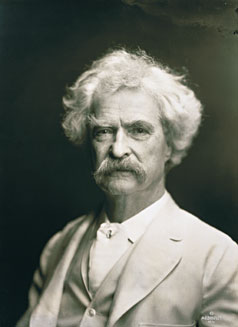
Who said it: Mark Twain or Clarence Darrow?


I ended my ruminations on the death of Osama bin Laden yesterday with this quote: “I’ve never wished a man dead, but I have read some obituaries with great pleasure.”

I said it was by Clarence Darrow, but my sister-in-law just informed me that it has been winging its way around Facebook as being by Mark Twain.
A Google search was inconclusive.  Mark Twain is alleged to have said all kinds of witticisms that he never really said.  Likewise, if Mark Twain isn’t cited it is often Samuel Johnson or Yogi Berra.  But as Yogi once said himself (or did he?), “I didn’t really say everything I said.”
So who said it?
Unknown's avatar

Check out Darkwood Brew: Who knew a mainline congregation could do high-quality online programming?


Last week I enjoyed getting to know a fellow United Church of Christ pastor named Eric Elnes at a Colorado mountaintop retreat. On Friday Eric inconvenienced himself to get up early and drive me a couple of hours to the Denver airport to get me home. In the car we had a fascinating conversation that touched on things as diverse as video games and the possibility of post-mortem salvation.

Eric is the pastor of Countryside Community Church in Omaha, Nebraska, and is involved with a unique and creative on-line ministry called Darkwood Brew, which he describes as “renegade exploration of Christianity’s outer edges.” This isn’t the first time Eric has launched out in new and innovative directions in his ministry.  Some of you may recall Eric’s book about walking across America, Asphalt Jesus:  Finding a New Christian Faith along the Highways of America.
Now there’s Darkwood Brew.  What is it?  Well, it’s a bit hard to describe, but here’s an attempt.  (Better yet, when you are done reading this, go here and see for yourself.)

Darkwood Brew is broadcast on-line via streaming video each week. The episodes take place in an informal studio/coffee-house setting. Each week a topic from scripture is developed that runs through the entire episode.

The teaching is in short bursts and accessible to laity, but it is by no means simplistic (Eric himself has a Ph.D. in Old Testament from Princeton Theological Seminary). Each episode is punctuated with some incredible jazz by Chuck Marohnic and his band “The Brew’s Brothers.” These are professional jazz musicians, and the music itself is worth checking out the site.

The episodes are designed so that small groups watching remotely can pause at intervals and share in the discussion.

Typically on an episode there is a live Skype visitor to weigh in on some aspect of the days theme. I saw an episode on Galatians with NT scholar Beverly Gaventa from Princeton via Skype.  Good stuff.

The pacing on Darkwood Brew holds your attention and the discussions, though dealing with serious topics, are often lighthearted and full of humor. This weeks episode (May 1) deals with the “Doubting Thomas” story in John’s Gospel and features a Saturday Night Live type faux infomercial for a diatery supplement called Certitude. Very funny.

The production values of this site are very high, but in no way slick. I typically have an allergy to Christian media, but I’m telling you Eric and his team are doing an amazing piece of ministry and evangelism here.

So check out Darkwood Brew. Their motto is “You May Not Like It.” I’m guessing you will.