Unknown's avatar

All my hope on God is founded

I’ve been ruminating on this week’s Darkwood Brew theme of “faithfulness,” and its relationship to hope.

When a movie, based on a book, is made, we ask “Is it faithful to the original?”  Or when a copy of a work of art is reproduced its quality is judged by its faithfulness.

This is how I like to think about our faith, as an imperfect reproduction of the perfect faithfulness of God.  This way of thinking puts the focus where it properly belongs, on God.

There is a lovely English hymn with a text by the poet Robert Bridges called  “All my hope on God is founded.”  On one of my English study sabbaticals I first heard it sung by a boys choir in one of the Oxford colleges, and it has been a favorite of mine ever since.

The first verse of the hymn gives expression to what I have been saying about our faith reproducing God’s faithfulness.  The verse says:

“All my hope on God is founded;
he doth still my trust renew,
me through change and chance he guideth,
only good and only true.
God unknown,
he alone
calls my heart to be his own.”

The final line, “calls my heart to be his own,” captures the idea that God’s perfect faithfulness invites us to faith, however imperfect ours must ever be.

William Ames, the great exiled English Puritan of the early seventeenth century, put it like this:

“Faith is the virtue by which, clinging-to the faithfulness of God, we lean upon him, so that we may obtain what he gives to us.”

Or as the hymn says, “(God) doth still my trust renew.” Think of faith as a renewable resource, an everlasting stream flowing from the perfect faithfulness of God.  Through “change and chance” God guides us, and invites us to be full of faith.

(This is the fourth guest post I am blogging for an eight-week series called: “Hope-A Pessimist’s Guide” on Darkwood Brew, which describes itself as “a renegade exploration of Christian faith for the modern world which blends ancient contemplative practices with cutting-edge interactive web technology, world-class music, arts, biblical scholarship, and special guests from around the globe via Skype.”)

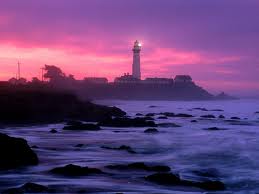
(Photo: R.L. Floyd)

Unknown's avatar

Leaning into God’s Future

In my post a couple of weeks ago I wrote about a kind of “functional atheism” (even in the church) that thinks the future depends entirely on us. Pastor Eric Elnes made this comment:

The term “functional atheism” resonates. Nothing against atheists. It’s just that Christians should be leaning into the trust in God’s existence, power, love, grace, and ability to connect with us more than they often do.

I’ve been ruminating on Eric’s graceful use of the word “leaning” as a useful way to think about Christian hope.

In one sense Christian hope is easy; it is firmly rooted in Jesus Christ.  This was the theme of The Second World Council of Churches assembly meeting in Evanston, IL in 1954: ”Christ— the Hope of the World.”  This was the only WCC assembly ever held here in the United States, and it was at the height of the Cold War. Hope, then as now, was in short supply.

But if there is wide agreement among Christian that our hope lies in Christ, there is disagreement about just what that means.  When I coined the phrase “functional atheism,” I was thinking of my own mainline tribe, who sometimes act as if we can do it all by ourselves if we just try hard enough,  if we work hard enough for peace and justice and the environment.  

That’s all good stuff, but the fact is we can’t make the future by ourselves, and in trying to do so, will eventually burn out and become discouraged.  The problem is that we want the kingdom, but not the king. We think you can somehow distill the teachings of Jesus into a set of values, but you can’t. We need to remember that the first Christians not only prayed, “Thy kingdom come, thy will be done, on earth as it is in heaven” but also “Come Lord Jesus!”

But there is a different danger in Christian hope that wants to abandon this world for a better future one.  That somehow God will just take care of everything without us.  A quick look at the Scriptures should remind us that our God’s activities are mediated through people, willing and unwilling, and do not drop from the sky.  And to abandon God’s good earth is a sin against the Creator.

So some of us hope for too little from God and some hope for too much (or at least the wrong things.)  This is where I think the phrase “leaning into God’s future” is useful.  In the Bible, and especially in the book of Isaiah, the idea of “waiting on the Lord” is a recurring feature.  This sounds pretty passive, and might be mistaken for the position I just described.  But “waiting” in Isaiah is anything but passive.  

In Chapters 40 to 55 Isaiah speaks to a people who have every right to be hopeless.  They have just lost the three defining marks of their mission and identity: their land, their temple, and their king.  They are exiles in a foreign land.  Yet, Isaiah tells them to wait on the Lord. This waiting involves continuing to worship, study and pray. Continuing to be a community that listens for God’s Word and tries to live out the truth as they know it in faith, hope, and love.

Isaiah invites them to “lean into God’s future.”  And that is good advice for people of faith in any age.  In Eric’s words: “Christians should be leaning into the trust in God’s existence, power, love, grace, and ability to connect with us more than they often do.”

(This is the third guest post I am blogging for an eight-week series called: “Hope-A Pessimist’s Guide” on Darkwood Brew, which describes itself as “a renegade exploration of Christian faith for the modern world which blends ancient contemplative practices with cutting-edge interactive web technology, world-class music, arts, biblical scholarship, and special guests from around the globe via Skype.”)

Unknown's avatar

Chicken Little Theology

In his Skype conversation with Eric on Darkwood Brew, author Scott Russell Sanders said that one of the main reasons we so need to hunt for hope today is because it is so easy to become hopeless in this information age.

He made reference to the proliferation of news that stresses us and helps create a climate in which hope is difficult.  There is so much news, and so much of it is bad, because he said, quoting the old newspaper adage, “If it bleeds, it leads.”

I think he is quite right about this, and it got me ruminating on my many years in the church when I experienced what I came to call “Chicken Little” theology.

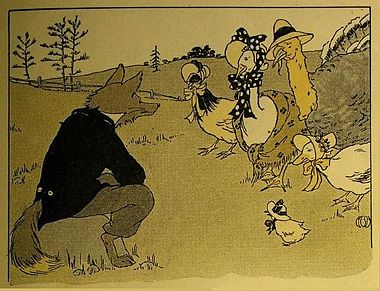
You will recall the folktale, which is told in many versions around the world, about a chick named Chicken Little who gets hit on the head by an acorn and believes that “the sky is falling.” This is clearly not the smartest creature that ever lived, but is a chick of action. Chicken Little decides to go warn the king and on the way meets a variety of other animals with funny rhyming names like Henny Penny and Turkey Lurky, and convinces them all that “the sky is falling.”  In the original versions the animals usually come to a bad end, as in being lured into a fox’s den and eaten, but this was deemed not suitable for small children so in the current versions they are rescued.

Many years ago, in the days before the Great Recession, I was sitting in a church meeting, and I can’t remember for the life of me whether it was a budget meeting or a stewardship meeting, but it doesn’t matter to my story, because either can induce the kind of hopelessness that I began sensing in the room.

Now these were good people, the kind that give generously of their time and their money to make the world a better place, so I want to be clear that the world is not divided into the hopeless and the hopeful.  All of us are prone to bouts of hopelessness at times, but the point I want to make, and I think it is what Sanders was saying, is that hopelessness is often a social phenomenon.

And this is where Chicken Little comes in.  I was sitting at this meeting with all these faithful church people, and the more people talked the more fear there was in the room.  You could sense it, you could almost smell it.  Fear for the future, fear for the congregation’s prospects.

And sometimes a pastor’s job is to remind people who we are and whose we are, so I spoke up and said, “The first words in the preamble to our church (The United Church of Christ) are:  ‘Jesus Christ is the sole head of the church,’ but the way we’ve been talking you might think it was Chicken Little.”  This became known as my “Chicken Little” speech, and after many years the old hands on the committees waited with amusement for it every fall when we did our budget and pledging. 

Chicken Little theology is bad theology.  It misinterprets experience and makes faulty plans based on them.  Chicken Little theology is turning a fallen acorn into the end of the world.  

It is true that some of the things we have to worry about are not trifles like a fallen acorn. That is one of the things I am enjoying as I read Sanders’ book; that he doesn’t flinch at the world’s problems in his hunt for hope.

My first Chicken Little speech came at a time when the economy was robust and the church was getting over twenty percent return on our invested funds. And I remember saying, “If we are talking like this now, what will be saying when times are actually hard?”

And sadly, I was prophetic, because times are now hard.  We have seen that things can collapse such as the stock market and the housing market and the Boston Red Sox (sorry to mention it, but it just happened and is on my mind.)

But such collapses are not the final word about the future.  The prognosticators have a very low batting average when it comes to predicting the future.  One needs a better theology than Chicken Little theology if one is to live one’s life, in all circumstances, full of hope.

(This is the second guest post I am blogging for an eight-week series called: “Hope-A Pessimist’s Guide” on Darkwood Brew, which describes itself as “a renegade exploration of Christian faith for the modern world which blends ancient contemplative practices with cutting-edge interactive web technology, world-class music, arts, biblical scholarship, and special guests from around the globe via Skype.” The book referred to is “Hunting for Hope” by Scott Russell Sanders)

Unknown's avatar

I am not optimistic, but I am hopeful

When my children were teenagers they got hold of my yearbook from senior year in high school and got a big chuckle when they saw that I had been named “class optimist.” They recognize me more as a Murphy’s Law, cup half-empty, kind of guy.  If I were a Winnie The Pooh character I would have to be Eeyore, the gloomy stuffed donkey.

I had forgotten about being class optimist, and to this day it mystifies me how I was chosen.  Perhaps the yearbook staff was being ironic.  I had, then as now, a dark sense of humor.  My favorite movie back then was a Peter Seller’s cynical Cold War comedy called “The Mouse that Roared” about a doomsday atomic bomb shaped like a football.

That year my Mom was dying of cancer, my Dad was losing his business, the town was taking our historic old house by eminent domain to build a school addition.  So there wasn’t much to be optimistic about, and although my lines have often landed in pleasant places in the decades that have followed, I remain always ready for the other shoe to drop.

To make matters worse I have carefully and painfully honed my lack of optimism since high school by becoming a long-time Boston Red Sox fan, the team that is currently in one of the most historic end-of-season collapses in baseball history (as I expected).

So you could safely say that in general I am not naturally optimistic.

But I am hopeful.  And the reason I am hopeful has nothing at all to do with my disposition but has everything to do with God’s character, the God who has chosen to be with us and for us (and I mean all of us), the God revealed in Jesus Christ.

Those of you who know me know that my Christian faith is a cross-centered faith.  Perhaps because of the setbacks of my adolescence when I came back to the faith as a young adult it was through the cross.  It made sense of my life and my world. There on the cross we humans, in the name of religion and politics, murdered the Lord of Glory.

But he didn’t stay dead.  God raised him up, and because of that we Christians now view the hopelessness of Good Friday in Easter light, with the 20/20 hindsight of faith.

We still live in a Good Friday world, as any perusal of the day’s news makes clear, but I am hopeful nonetheless, because I have an Easter faith that God is alive and real and Lord of the future.

We need more hope in the world (and in the church.)  There is a sort of functional atheism, even in the church, that believes it is all up to us, and that is a pretty hopeless thought. We certainly all have our parts to play, but the God who raised Jesus from the dead is the God who is always doing a new thing, so who ever knows what might happen next?  I certainly never expected the Iron Curtain to fall, or apartheid to end in South Africa, not that those incandescent moments in history solved all the problems of their regions or led us to the kingdom of God.  Still, they seem to me signs of unexpected grace.

Optimism, as a sort of hoping for the best, can be a denial of the real. But Christian hope faces the real.   Our hope springs from trust that in the future God will be the same God we have known in the past.  I am always curious to see what God might do next.

So when people ask me how I feel about the future, I say in truth, “I am not optimistic, but I am hopeful.”

(This is the first of eight guest posts I am doing in an eight-week series called: “Hope-A Pessimist’s Guide” on Darkwood Brew, which describes itself as “a renegade exploration of Christian faith for the modern world which blends ancient contemplative practices with cutting-edge interactive web technology, world-class music, arts, biblical scholarship, and special guests from around the globe via Skype.”)

Unknown's avatar

My Sermon after 9/11: “God is our Refuge and our Strength”

(I preached this sermon on the Sunday after the 9/11 attacks. In it I said: “Let us not dignify this event with the term ‘war.’ These terrorists are not soldiers, but criminals and murderers and should be dealt with as such by the constitutional processes of sovereign states and international law. What we need here is not revenge, but justice.” I wonder what the world would look like today if our leaders had not thought of it as a war?)

This is the third time I have been called upon to speak this week, to try to put into words what we are thinking and feeling in response to the extraordinary events of last Tuesday. We had an ecumenical service Tuesday evening at First Baptist Church sponsored by the Pittsfield Area Council of Churches, and on Friday we had a service of prayer and mourning at noon here at First Church in response to President Bush’s declaration of that day as a national day of remembrance. I will say today what I have said on both those occasions, that it is good you are here! It is good to be together with our neighbors and fellow citizens at a time like this, and it is good to be quite intentionally in the presence of God in public worship.

To be together in community and before God is a healthy response. Abraham Lincoln once spoke of the “better angels of our nature.” I think being together before God is responding to the better angels of our nature, and it is my fervent prayer that we Americans will continue to respond to what is best in us, as opposed to what is worst.

We have seen extraordinary acts of courage and heroism in these days. But we have also seen acts of cowardice and mean–spiritedness. Since Tuesday New York City firefighters and police have responded to over ninety false alarms and bomb scares a day in contrast to the typical seven. Throughout our country mosques have been stoned and vandalized. Our Arab–American neighbors fear for their security and safety.

It is often true in history that evil begets evil, and I worry about that now. Hate can spawn more hate. A time such as this is a critical time for us all, individually and as a nation. It is, among other things, a holy time, in that it is a time when we can be in touch with what is deepest and most abiding in our lives. We are at a tipping point that can determine both the path and the direction we will go. Billy Graham at the service on Friday at the National Cathedral said that we can either implode as a nation our show strength. I think that is the choice. And I trust as people of faith we will have the resources that can help us choose the good and not the evil, and to be on the side of life and not death.

We have looked evil in the face this week. We have seen the slaughter of innocents in the thousands. As Mayor Guiliani said on Tuesday night, when the death toll is finally counted “it will be more than we can bear.” It is hard to take in the damage that this act of terrorism has caused, and hard as well, to accept the impetus behind it. It is hard to accept that there are people out there who hate us and want to kill us.

I don’t know about you, but I found it difficult to get much done this week. I found myself in a daze. I kept returning again and again to the TV. I was both repulsed and transfixed by the unfolding events. I couldn’t take my eyes off it. How many times have we seen the pictures of that second plane crashing into the World Trade Center? There have been times when I find myself suddenly choked up, or silently weeping. Wednesday night on TV I saw the changing of the guard a Buckingham Palace, and the British military band was playing the Star Spangled Banner. I completely lost it.

So before we do much else, we all have to somehow take in this act of terror, and acknowledge it and the feelings that go with it. It will require some time, but unless we do take time to absorb the shock of it, we will not be able to do what we are called to do next, whatever that is.

Nancy Taylor, our new Conference Minister and President of the Massachusetts Conference, wrote to all the clergy on Tuesday. Among her reassuring words were these: “I encourage you to pause in the face of the enormity of what our country and our world is just now trying to comprehend. Take time to talk to each other about your feelings; to share how you will address the events of this day with your children; and to allow yourself to cry, pray, and cling to each other and to the God whose heart was the first to break when the first airplane crashed into the World Trade Center in New York City . . . and whose heart is breaking still.”

Take time, she says, and she is wise in saying this. I want to tell you how much her new ministry has meant to me this week. I have never met her, but within hours of the first crash, I had from her a thoughtful pastoral letter, with scripture and prayer. She has been a parish minister and brings those good pastoral instincts to her new position. So I share with you what she shared with me, the admonition to take the time to really face what has happened, and to do it in the context of faith, with scripture and prayer as resources. The scripture Nancy Taylor sent me was the 46th Psalm, which I had already been reading. It is one of my favorites.

“God is our refuge and strength,” it begins, and then it goes on to say, that because God is our refuge and our strength, “we will not fear, though the earth should change, though the mountains shake in the heart of the sea.” Well, the earth has changed, the strong towers have fallen, the nations are in an uproar . . . but WE WILL NOT FEAR!

How can we say that? Only faith can say, “We will not fear.” This is not wooly–headed optimism, or denial of harsh reality, but faith. The reality is that the world is a dangerous place, bad things not only do but have happened to innocent people, the ordinary rhythms of life have been shattered by an extraordinary act of evil, and it is not over. So fear is the sane, natural and honest response to such earth–shattering and life–changing events, and we have known fear, and we have felt fear, felt it in our gut along with anger, sadness, and pain.

So how can faith say, “we will not fear?” We can only say “we will not fear,” if we can say “God is our refuge and our strength” Therefore! We will not fear. The setting of Psalm 46 is a world turned upside down:

“Therefore we will not fear though the earth should change,
though the mountains shake in the heart of the sea;
though its waters roar and foam,
though the mountains tremble with its tumult.”

This is not just trouble, this is TROUBLE with a capital T. The language of the psalm is the language of cosmic upheaval. The waters are the waters of the firmament above and beneath the earth; they are the primordial waters, the symbol of chaos, the tohu wabohu of nothingness. And the mountains that shake into the heart of the sea are not just any mountains, but the thresholds and foundations that hold up the world. In the psalm’s vision the waters above and the waters below, the waters that God pushed back on the third day of creation, threaten to flood back in. The roaring and foaming waters are more than a storm, they are chaos, a sign of all that threatens God’s order.

Many Biblical scholars think Psalm 46 may have been written when the Assyrian King Sennacherib came to conquer Jerusalem in 701, but it hardly matters what the original catastrophe was, the psalm speaks to every catastrophe which is earth-shattering and fear–inducing. The mythologized cosmic TROUBLE of the Psalm is of a kind with all the trouble we see, whether it is Sennacherib at your gates with his whole army or terrorists flying jumbo jets into the World Trade Center and the Pentagon.

Trouble is often where faith is born. We find faith in a God who is our refuge and strength, because only in trouble do we need a God who is our refuge and strength. Frequently it is only when we have our confidence knocked out from under us, that we are we ready for the Word of God.

And so it is that the therefore that comes before “we will not fear” refers to God our refuge and strength. Our lack of fear is conditional; it is trust in God alone, rather than some easy calm of our own devising. It is not the false security of walls or weapons. No missile shield defense system can give us this kind of confidence.

This confidence in God is captured in Martin Luther’s hymn based on Psalm 46: “Ein feste Burg ist unser Gott” which was then put into English by Thomas Carlyle as “A safe stronghold our God is still” and, better known in America, as “A Mighty Fortress is our God” by Frederick Hedge. In any version of the hymn, God the fortress stands in contrast to all strongholds built with human hands. Listen to this: “And though this world with devils filled, should threaten to undo us. We will not fear, for God has willed His truth to triumph through us. The prince of darkness grim, We tremble not for him, His rage we can endure, For lo! his doom is sure, One little word shall fell him.”

We see in Psalm 46 another vivid contrast, that between the roaring, tumultuous waters of chaos and the “river whose streams make glad the city of God.” Where before God restrains the water, here God sends the water for a life–giving purpose. God tames the waters of chaos and makes them bring forth life and peace.

What is the alternative vision to chaos, disruption and desolation? Listen with me: “There is a river whose streams make glad the city of God, the holy habitation of the Most High. God is in the midst of the city; it shall not be moved.” How like John the Divine’s vision of the river of life describes it as flowing from the throne of God and the Lamb. “Then the angel showed me the river of the water of life, bright as crystal, flowing from the throne of God and of the Lamb through the middle of the street of the city.” (Revelation 22:1, 2a)

Nancy Taylor writes, “It seems to me that we Christians, above all other people, are equipped to face the evil and the terror that have befallen us, because we know that there is another world beyond this world, where all weeping and pain shall cease, where evil does not reign, and where we will find ourselves in the warm embrace of our God.”

But God does not ignore evil. At the center of our faith is the symbol of the cross. How significant that our most important Christian symbol is not the scales of justice, nor the tablets of the law, but the cross on which we human beings crucified the Lord of Glory. And it is at the foot of the cross that we can best understand this evil act, for the cross addresses human beings not at our best but at our worst. There, at the cross human evil collided with divine love. There, Jesus stretched out his arms and died, with forgiveness on his lips, that the whole world might come into his loving embrace.

And there, at the cross of Christ, is the power that created and sustains the universe. A power more powerful than evil and hate. Evil and hate killed Jesus, but he didn’t stay dead! Osama bin Laden is a formidable adversary, a rich powerful man bent on evil, but as Luther said of the evil one, “we tremble not for him,” nor for any other terrorist.

Let us be clear about what happened on Tuesday. Terrorists committed mass murder on innocent civilians. There is a lot of talk about war, and it feels like war, and the pictures from the devastation look like war, and it may take the resolve of war to address terrorism. But if this is a war it is only a war in the metaphorical sense of say, the war on poverty or the war on drugs. Let us not dignify this event with the term “war.” These terrorists are not soldiers, but criminals and murderers and should be dealt with as such by the constitutional processes of sovereign states and international law. What we need here is not revenge, but justice.

Their intention was to create terror, to destroy our way of life. And their act of evil can only threaten our way of life, our free institutions, our capacity to travel and meet, and go about our business without fear, if we let them! If we let them make us hate and fear they win. But we will not let them. Because “God is in the midst of the city, it shall not be moved.” God is with the innocent victims in New York and Washington, God is with the relief workers, and God is with us, right here, right now, with you and me in our broken-heartedness, as we face a world forever changed. But we can face it, and we will face it, with character and courage and faith, for God is in the midst of us, our refuge and strength; therefore we will not fear.” Amen.

A sermon preached at the First Church of Christ in Pittsfield, Massachusetts, on September 16, 2001. This sermon was also published in “He Comes, the Broken Heart to Bind:” Reflections on September 11, 2001. Edited by Frederick R. Trost, Confessing Christ. 2001.

Unknown's avatar

Be Careful What You Write For

Those of us who blog and write for publication face a singular temptation. We hone and polish our little masterpiece, and then sit back and wait for the reception, which comes in the form of hits on our blog (maybe it will go viral!), favorable (or not) reviews, attention, controversy (we hope), even (better) attacks. “The blood of the martyrs is the seed of the church.” The worst outcome is nobody notices or cares.

I just watched the Martin Scorsese documentary “No Direction Home” about Bob Dylan (I’m a huge fan of both of them) and the message was loud and clear that Dylan didn’t give a toss about how his art was received, he just put it out there.

The world would be a better place if we all stopped looking at Google analytics and just tried to tell the truth as we know it.

Unknown's avatar

“The Future of Newspapers:” The Third Annual Martin Langeveld Interview

The past two years I have blogged interviews with my friend Martin Langeveld called “The Future of Newspapers.” Martin, a former newspaper publisher, has been tracking this story for several years with regular dispatches from the front on his blog at the Nieman Journalism Lab at Harvard.  He also comments on this story on his personal blog, News after Newspapers. I ended the interview last year with this comment.  “We’ll see if newspapers survive long enough for us to have another interview next year.”  It appears that they are still here, so Martin kindly consented to another round.

RF: In our first interview way back in 2009 you said, “There are many individual newspapers, especially smaller ones, that are still profitable on an operating basis and probably have some life left in them. Eventually, however, I think the daily newspaper will be a thing of the past.”  Do you still think that, and if so, when will they be gone?  Continue reading
Unknown's avatar

The Butler Did It: A Passion for Mystery Novels

As some of you may know, both my parents had master’s degrees in library science from Columbia University. Though my father was only briefly employed as a librarian, it was my mother’s life-long profession, first at the main branch of the New York Public Library, and later in life, at the Wandell Middle School in Saddle River, New Jersey. I didn’t realize as a child that everyone didn’t go to the public library on Saturday mornings as a family, or that it was in any way unusual for one’s mother to bring library books home from work all the time for you to read.

Which is to say that I grew up in an extraordinarily bookish family. Other families’ homes had wallpaper; we had bookcases. On those bookcases were a panoply of the best literature in the English language; the plays of Shakespeare, the poems of Milton, and the novels of Dickens, Austen and the Brontes, to name but a few.

Despite many moves in the forty-one years since I left home I still own some of the books from those shelves. Just glancing at the bookcase near me as I write this I can see well-bound hardcover copies of the following books from my childhood home: The Life of Emerson by Van Wyck Brooks, Bullfinch’s Mythology, Erasmus’ In Praise of Folly, Milton’s Paradise Lost, The Writings of Thomas Paine, Toynbee’s A Study of History, Whitman’s Blades of Grass, Cooper’s Leatherstocking Saga, and Thomas Wolfe’s You Can’t Go Home Again, not to mention Modern English Usage by Fowler and the 1949 Book of Common Prayer, both of which were authoritative on some matters.

From that selection you get the kind of books that predominated in our household, and it wouldn’t be too misleading to say that the Floyd brows were pretty high when it came to books.

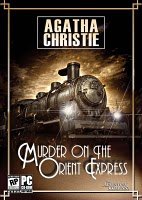
Nonetheless, there was a favorite genre well represented in our home that might not pass the Great Works test, and that was the “Whodunit.” And this is what my paper tonight is about: a personal memoir of my love for mystery novels, a bit of history about this sprawling genre, and finally a barefoot romp through some of my favorites.

Continue reading

Unknown's avatar

Meeting an on-line friend in the flesh: my travels with Jason

For the last five years or so, I have been in on-line correspondence with Jason Goroncy, a young theologian from Australia who teaches in New Zealand.

What brought us together was a shared interest in P.T. Forsyth, the great British theologian from the turn of the last century.

Jason had a blog entitled the P.T. Forsyth Files that I frequented, where he had posted PDF’s of Forsyth’s main books.  Along the way I noticed the high quality of both the look and the content of the blog, which he renamed Per Crucem Ad Lucem (“from the cross to the light”) after the inscription on Forsyth’s grave in Aberdeen.  Per Crucem Ad Lucem became my favorite blog to visit.

When I first discovered his blog Jason was at St Mary’s College at the University of St Andrews working on his PH.D. on Forsyth.  I knew the place well as my family and I had enjoyed a splendid sabbatical there in the spring of 1995, and while there I worked with Richard Bauckham on the Christian understanding of atonement, in what would become the bulk of my little book When I Survey the Wondrous Cross: Reflections on the Atonement.

So I knew about Jason from his blog, and eventually he knew about me from my book.  He tracked me down via my friend Cliff Anderson, the curator of Reformed Collections at Princeton Theological Seminary, who was a fellow blogger with me at Confessing Christ, a United Church of Christ renewal movement.

Eventually, I offered to read Jason’s dissertation and he accepted my offer, and I spent a good deal of the summer of 2009 doing just that.  You can get to know someone pretty well by a close reading of their dissertation, and Jason and I went back and forth by e-mail almost weekly throughout that summer.

I also started my own personal blog in 2009, Retired Pastor Ruminates, and Jason was gracious in promoting it on his blog and using some of my posts on ministry with his students.

In time I invited him to visit us here in Pittsfield anytime he was nearby. And so it came to pass that this winter he registered for the annual Princeton Karl Barth Conference earlier this month, and I suggested he spend some extra time at one end or the other to see us in the Berkshires.

So Jason took the plunge to stay with folks he had never met, and we took the plunge to have him, and the result was a lovely visit and a new dear friend.

Continue reading

Unknown's avatar

Welcome to “When I Survey . . .”

This is an old blog with a new name in a new place.  If you have been a loyal follower of Retired Pastor Ruminates, welcome and I’m glad you found your way over here.  Everything that was there is now here, and I think you will be able to find things easier.

Why the name change? Several friends and colleagues have lately challenged me on whether there actually is such a thing as a retired pastor, and if there is, am I one of them.

I have given this some thought, and have decided that they are right.  Although I no longer serve a congregation I still have a ministry to offer the church in my thinking and writing and conversations. I am not a retired pastor.  It has taken nearly seven years for me to come to this conclusion, but it feels like the correct one.

Why the move to WordPress?  I think it gives the blog a cleaner look and I have more options about what I can do with it.

If you are new to this blog, welcome.  Have a look around and come back often.  As always this is a free blog without ads.