Unknown's avatar

Bridging Two Worlds: the Church and the Academy

As I have written before, my favorite theology blog is Jason Goroncy’s Per Crucem ad Lucem. On his blog today, On the relation between the pulpit and the academy, he has a terrific quote from Charles Partee:

‘[I]f God speaks, and if God speaks in the church, then on some subjects sermons are not popularized products of more basic scholarly reflection. Rather scholarly reflection is an academized product of the more basic proclamation of the gospel … Thus, for the Christian community, sermons are a first-order, not a second-order, activity … As worship is more fundamental in the church than theology, so kerygmatic proclamation is more basic and often more pertinent than scholarly reflection’. – Charles Partee, The Theology of John Calvin (Louisville/London: Westminster John Knox Press, 2008), 46.

I couldn’t agree with this more. I have always had one foot in the local church and one foot in the academy. I served two congregations adjacent to seminaries, and we always had a number of faculty members in the pews. In my church in Bangor I was also the chaplain and sat with the faculty.

I did three term-long research fellowships during sabbaticals at Oxford, Cambridge and St Andrews Universities. I tried to stay current with the leading theology and biblical journals and wrote articles and reviews for several of them. I participated in the Pastor-Theologian Program at the Center for Theological Inquiry in Princeton.

I am comfortable in both worlds, at a lecture hall at Christ Church College, Oxford or at a planning meeting for Vacation Bible School. But my comfort is more that I am, by analogy, bilingual than that they speak the same language. They don’t.

The Partee quote gets at one of the problems that plagues theological education. Once upon a time, seminarians were trained by ministers who were also scholars, but had spent some time serving congregations. Their commitment was to the church and its ministries and they believed in a learned ministry as the means. They were bilingual in being able to speak both church and academic.

There are still wonderful teachers who share these commitments, but sadly, the secular academy is now the model that must be considered, with its emphasis on tenure and publishing. And, at least in America, members of the Academy who represent the theological disciplines are often viewed as quant relics of a bygone day. They don’t get big research grants like their more robust colleagues in the sciences.

This inferiority complex makes them strive harder to be like the cool kids, and the art of theology is then betrayed by a series of niche disciplines dominated by identity politics and other “happy little hyphens” to use Karl Barth’s term of derision.

What is worse is that there seeps into theological education the conceit that what happens in the academy is more important that what happens in the church, and students then become ministers who are ashamed of what should be their life’s joyful vocation.

I can tell you from experience there is a lot of apologizing going on in our pulpits. Instead of hearing the bracing Good News about Jesus Christ and his holy love one often gets an attack on the tradition or an exhortation to do and be better. Sin and death are not the enemy, Christianity itself is, at least the kind practiced by our benighted forbearers who didn’t get straightened out by three years at a divinity school.

And if a commitment to a learned ministry went along with this critical posture there might be something to be said for it. But often, it is the worst of both worlds, a distain for the local church and a laxity about keeping up with the genuine insights of the academy. So no wonder the laity often think of the academy as obscurantist, while at the same time the academy views the faithful as naive. The result is many a pastor who feels, not at home in two worlds, but like a stranger and exile in both.

I have suggested in the past that theological education be removed from the secular academy, but there are drawbacks to this, and it just isn’t going to happen. And there would be much lost if students were deprived of having interlocutors from other disciplines.

I wish I knew how to bridge the gap. I have known many great teachers who did it, such a Gabriel Fackre, Gerald Cragg, Colin Gunton, Alan P.F. Sell, N.T. Wright, George Hunsinger, and Brown Barr, to name but a few.

My New Testament Professor, Krister Stendahl, at Harvard, was a first-rate scholar and a Lutheran bishop. There is a story told about him in one of his preaching classes. One of his students climbed into the pulpit, and before delivering her sermon said, “The text for today comes from the Deutero-Pauline corpus.” Stendahl looked over the top of his glasses, as he was wont to do, and gently said, “The people have come to be fed. Do not give them the recipe!”

He knew that preaching was a first-order activity!

Unknown's avatar

I have a brain injury

I have a brain injury. It is one of the bald facts of my life like being tall or having brown hair. Unlike those facts though, I was not born with a brain injury, but acquired it on August 5, 2000 (see “I Lost My Marbles on the Mohawk Trail”). In my life story that day is a dividing marker. There is the time before my injury and the time after my injury, just as ancient Israel divided its life into before and after the fall of Jerusalem and the Babylonian Exile.

The great thinkers and writers of Israel who gave us some of the best parts of the Bible were preoccupied with why their exile happened. Or more precisely, they asked “What had they done wrong to cause the exile?” Why had God done this to them? As Rabbi Kushner asked in the title of his best-selling book: “Why do bad things happen to good people?”

I honestly don’t ask that question about my accident. I don’t feel guilty about my brain injury. Some things in life just happen that we are powerless to do anything about, and I believe this was one of those things. I don’t believe God throws people off bicycles. And I’m not ashamed about my brain injury, although it has taken me awhile to deal with the strange reactions of many people to my disability.

I bump into people in the grocery store, and they ask me if I am feeling better, and I smile and say I am doing OK, which I am. But the real answer in regard to my brain injury is “no.” I’m not better and, like Humpty Dumpty, I’m not going to be put together again. The task for me is to take care of myself and adjust to my disability from day to day as best I can with a lot of help from my family and my professional caregivers.

So it is what it is. I sometimes grieve for the life I expected to have. I am sometimes sad because I miss my ministry and the purpose and meaning that came with it. But I am unable to do it anymore and that is that. I am grateful for the thirty years I had to do it. I am grateful for my wife and children and family and friends. I am grateful I still have speech and memory, and the cognitive capacities to write and imagine.

And I am one of the lucky ones. Of the roughly 1.4 million who sustain a Traumatic Brain Injury (TBI) each year in the United States 50,000 will die. One of the reason I choose to speak openly about my TBI is there are many of our neighbors out there who have TBI and they are struggling. The CDC estimates over 3 million Americans have a long-term or lifelong need for help to perform their daily activities because of a TBI.

And there will be more. Many returning veterans have TBI from concussive injuries. Many of these heroes will daily struggle to manage stress, control their tempers, solve problems, and deal with life’s emotional issues. Many will have difficulty finding and keeping a job. Many will be unable to work. I am glad that Gary Trudeau has created a sympathetic character with TBI for his Doonesbury comic strip. The more people know about TBI the better.

One of the reasons for better education is that many people with TBI go undiagnosed. Many of these will self-medicate with drugs and alcohol. Untreated and unsupported such people with TBI will have very tough lives, and so will their family and friends.

So I choose to talk and write about brain injury so that more people can know about it, and can seek the support they need. There is support and services for people with TBI. I have been helped by the Massachusetts State Head Injury Program (SHIP). Massachusetts has an active Brain Injury Association, as do other states, and there is a National Brain Injury Association with a good website.

I was recently driving on the highway and saw a billboard from the Brain Injury Association. It pictured a camouflaged helmet, the kind our troops wear in Iraq and Afghanistan. The sign said: “You can’t camouflage a brain injury!” It’s really time we stopped trying to do that.

Unknown's avatar

“At Last”: Jim Rice goes to the Hall

Get out your old Etta James LP, put it on your turntable, and go to her iconic song “At Last,” because Jim Rice is being inducted into the Baseball Hall of Fame in Cooperstown tomorrow, and it’s about time.

This settles years of heated arguments among the citizens of Red Sox Nation, in bar-rooms and around dining-room tables, about whether this would, or should, ever happen.

My son Andrew, who is one of my best friends and has many admirable qualities, has been arguing with me for years that Rice isn’t Hall material. The basis for his position is the tyranny of something called Jamesian statistical analysis, which crunches numbers in new and interesting ways.

But Andrew is innocent of actually ever having seen Jim Rice play, and my argument was based on the old-fashion method of being thrilled to watch a superb athlete on your team come up to bat, something I was privileged to see many a time in the late 70’s and 80’s.

The critics say Rice didn’t have the numbers, that he hit into too many double plays, that he struck out too much, that his career wasn’t long enough, that he wasn’t a great fielder. He did hit into too many double plays, because he hit the ball so hard he couldn’t beat out the throw. And he did strike out a lot, because he had a big swing (so did Babe Ruth). And he didn’t start out as a great fielder in the tricky Fenway left-field, but he became one.

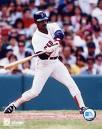
But I’ll give you some numbers: a life-time batting average just under 300 (298); 382 home runs; 1, 451 RBI’s; 8 times on the All-Star team; 2 Silver slugger awards; 1978 AL MVP.

He came up to the big leagues in 1975 with another rookie, Fred Lynn, and the two, nicknamed “the Gold Dust Twins,” set Boston ablaze with their exploits. Lynn ended the season as Rookie of the Year and AL MVP. It could just have well been Rice, who came in second in the ROTY voting and third in the MVP voting. Hit by a pitch in the final week of the season he missed the spectacular ‘75 World Series that the Sox lost in seven games to the Reds. Sox fans have always wondered what the outcome would have been if Rice had played.

In 1978, a year I went to far too many games at Fenway, including the final tragic play-off game against the Yankees when Bucky Dent hit the winning home run into the Green Monster, Rice was about as good as it ever gets. He hit 3.15, and led the league in triples, home runs and RBI’s, the only player to ever do that in the same season.

Rice came to Boston during a time of great racial tension, and played for a team whose management at the time was not known for its advanced views (not to put too fine a point on it.) He was a proud and dignified man, who developed an awkward relationship with the Boston sports press, perhaps the most knowledgeable (and arrogant) in the country. He replaced Carl Yastrzemski, a Boston icon, who had himself replaced Ted Williams, in left field. The comparisons were daily and got under his skin. He stopped talking to certain reporters, some of whom got to vote for the Hall of Fame, and this, in my view, delayed his entry.

But he put up amazing numbers in the pre-steroid era, and was the most feared batter in the game for many years. And I saw him play in many a game, and I can testify that his coming to bat brought energy and anticipation to the Fenway faithful.

This was his last year of eligibility, and a great injustice has been avoided by his induction. I’m glad to see him in the Hall of Fame, where he surely deserves to be. At last!

Unknown's avatar

A Brief Historical Sketch: The Religious Life of the Berkshires during the time of the Mercersburg Movement

Welcome to Pittsfield. I believe this is the first time that the Mercersburg Society has traveled so far from its geographical center of gravity in Pennsylvania to cross into New England.

Since two of the historical traditions that went into the creation of the United Church of Christ are the German Reformed and the New England Congregationalists I thought it might be interesting to explore the question: “What was happening here in Pittsfield during the Mercersburg Movement?

To answer that question we need to go back to the gathering of this church (First Church of Christ in Pittsfield) in 1764, and trace the contours of its life through the tenure of its first eight pastors, which will bring us to 1873, the year John Todd died (pictured, above left.)

Pittsfield was settled late by Massachusetts standards. The Berkshires are naturally isolated (or protected) from the rest of the world by the Taconic range on the West, which you traversed if you came in from New York State and the Hoosac Range to the East, which you climbed if you came up the Mass Pike. When Jonathan Edwards was exiled from Northampton to Stockbridge in 1750 the description of the Berkshire Hills as “a howling wilderness” was not metaphorical. Thomas Allen sometimes referred to Pittsfield as the farthest outpost of Christendom; never mind that for centuries French Jesuits had been up and down the Mississippi, and Spanish Conquistadors had been in Florida and the Southwest, the perception had the ring of truth to this eighteenth century New England Puritan.

The Berkshires have always been insular, politically independent, and somewhat suspicious of the outside world. This area was a hot spot for the insurrection known as Shays’ Rebellion in 1786, and you can still hear locals speak with suspicion of Boston or congregants of the Conference at Framingham. Before the Massachusetts Turnpike came through the hills it is fair to say that New York was a greater influence than Boston, but both were less than proximity would seem to dictate.

In the days of this church’s gathering Northampton was the outpost of civilization which influenced Pittsfield the most. Colonel John Stoddard, a brother to Solomon Stoddard of Northampton and an uncle to Jonathan Edwards, was one of the original grantees of Pontoosic Township, the early name for Pittsfield. Parson Allen himself and four of the “eight foundation men” who gathered the church were from Northampton. On February 7, 1764 these eight laymen signed a document, made up of two parts, a Confession of Faith and A Covenant, which formed a Church of Christ in Pittsfield. Present at that gathering were representatives of other churches, including the Reverend Stephen West of Stockbridge, Jonathan Edward’s successor and The Reverend Samuel Hopkins of Great Barrington, two important figures in the Edwardsean School and the emerging “New Divinity,” which would help to spark the Second Great Awakening around the turn of the nineteenth century. Two months after the gathering of the church, the first pastor, Thomas Allen, age twenty, a newly-minted Harvard graduate, was duly ordained on April 18.

Even in 1764 the foundations of Puritanism were eroding. Jonathan Edwards is the last best example of Puritanism, in much the same way as J. S. Bach is the final flower of the Baroque. In both cases, others would claim the name, but the movement’s best days were behind it. The presence of Samuel Hopkins at the gathering of this church is intriguing. I am inclined to think that the camel’s nose of liberalism was already in the tent of orthodoxy, for Hopkins’s theology was trimming the doctrines of human sin and divine sovereignty to fit his moral and evangelistic vision.

For Hopkins sin was “actual” rather than “original,” and conversion was the result of the active enterprise of the human will. These motifs would be taken still further by the next generation in men like Nathaniel Taylor and Lyman Beecher. It is not hard to see how these impulses would provide fertile soil for the controversial “new measures” of the Second Great Awakening, and later the excesses of Charles Finney to which John Williamson Nevin took such exception.

Pittsfield’s Thomas Allen has become a legendary figure, “The Fighting Parson,” who carried a musket into the pulpit and was chaplain to the revolutionary forces at White Plains and Bennington, where he is reputed to have fired the first shot. He was a fiery Patriot during the war and a fiery Jeffersonian Democrat after it, and continued to harass the Federalist parishioners from the pulpit, so much so that a large number of deacons and members seceded in 1807 and formed and incorporated a Union Parish in 1808. Allen served for 46 years and died in 1810. During his tenure, in 1793, the second meeting house was built, from a Bulfinch design (Some years after this paper was given the first citation mentioning baseball in America was discovered in the Berkshire Atheneum, in a statute prohibiting ball-playing outside the new meeting house.)

Parson Allen was followed by one of his sons, the Reverend William Allen, who resigned in 1817 on the same day as the pastor of the Union Parish to facilitate a reunion of the two congregations. He became Professor of Theology at Dartmouth under the presidency of his father–in–law, John Wheelock, and later he was appointed president of Bowdoin College in Maine.

The Reverend Heman Humphrey was invited in 1817 by the newly reunited church to serve as the third minister of the First Church. You can see his portrait in the church parlor. A Connecticut man and Yale graduate he had studied with President Timothy Dwight, and come from the pastorate of the First Church in Fairfield, Connecticut. A supporter of the revivals Humphrey invited the evangelist Ashahel Nettleton as a guest to the church on several occasions. Humphrey left First Church in 1823 to accept the presidency of Amherst College.

He was succeeded by the Reverend Rufus Bailey, who had a short pastorate of three years, during which time the highlight was the hosting of General Lafayette at a lavish reception in the church. In later years Bailly became President of Austin College in Austin, Texas.

The fifth minister here was the Reverend Henry Philip Tappan. Tappan also had a short pastorate of three years. Like Nevin he was a graduate of Union College in Schenectady, at roughly the same time. Union College was a united effort between the Congregationalists, Presbyterians, and Dutch Reformed. Tappan had done his divinity degree at Auburn Seminary, the new Prsbyterian school in Western New York, and he had been an assistant of Dr. Van Vechten of Schenectady. Tappan left Pittsfield to become Professor of Moral Philosophy at NYU, and later became president of the University of Michigan and the creator of their curriculum.

The Reverend John Williams Yeomans was the sixth minister of the First Church. He graduated from Williams in 1824, with the second honor of his class, Mark Hopkins taking the first. He completed his theological studies at Andover in 1827 and came to Pittsfield in 1831, remaining for over two years. In 1834 he became Pastor of the First Presbyterian church in Trenton, New Jersey, and lived out his days as a Presbyterian. In 1841 he became President of Lafayette College in Easton, Pennsylvania.

The seventh minister, The Reverend Horatio Nelson Brinsmade, came in 1835 and left in 1841 to become pastor of the Presbyterian Church of Newark. New Jersey. He became president of Beloit College in Wisconsin in 1879, the sixth consecutive pastor of First Church to become a college president.

The eighth pastor was the Reverend John Todd, the quintessential nineteenth century man, who was born in 1800, and came to Pittsfield from Philadelphia as a 42 year–old man with several successful pastorates behind him to build his ecclesiastical empire during Pittsfield’s growing period. It was during his tenure and by his impetus that the present Victorian Gothic church (no longer called a “meeting house”) was constructed. He led First Church out of the period of waning Puritanism, disestablishment, and into Congregationalism and the emerging theological liberalism. His “carriage trade” congregation was proud of their “prince of the pulpit” and the new meeting house was the pride of Pittsfield. Todd still contained some lingering vestiges of Puritanism and more than a little Calvinism, but we need to view him as a transitional figure into the period that Yale historian Sydney Ahlstrom calls “The Golden Age of Liberal Theology” (see Chapter 46 in Ahlstrom, The Religious History of the American People. New Haven: Yale University Press, 1972.)

This brings us from the beginnings of the church to its heyday at the time of the waning of the Mercersburg theology. What patterns can we discern? First, that six pastors became college presidents should alert us to the fact that Congregationalism during this period was not a denomination so much as a civilization rooted in the old New England theocracy, but moving well beyond it in scope and substance. The founding of colleges, missionary movements, and other voluntary associations was an important part of the religious impulse of these New Englanders.

Notice too, how many of the pastors of this church either came or went from or to Presbyterian churches and institutions. This period from 1800 to 1850 was during the time of the Plan of Union between New York State and Western Presbyterians and the Consociated Congregationalism of Connecticut. Nothing illustrates this discovery better than the fact that Jonathan Edwards, Jr., a Connecticut Congregationalist became President of Union College, and later was a Presbyterian delegate to the Plan of Union meetings. Keep in mind that there was no Unitarian Schism in Western Massachusetts. Here the influences were not Harvard’s Arminianism, so much as Yale’s New Divinity and the Second Great Awakening, a somewhat different response to the Enlightenment, but one no less shaped by it.

Geography, too, no doubt played a part in this county’s religious traditions. I remarked on the early influence of Northampton, but later both men and ideas seem to flow up the Housatonic from Connecticut. There was some interaction with the Dutch Reformed Churches 50 miles west on the Hudson in Albany and Schenectady, but it was limited by language and ethnictiy. There was a great deal of interaction with Presbyterians during the Plan of Union years. The Congregational Synod of Albany in 1850 was the real beginning of Congregationalism as a denomination as well as the official end of the Plan of Union.

Then Pittsfield saw itself less as on the boundaries of the mission field and more in the thick of things. John Todd’s crowning moment was giving the invocation at the driving of the golden spike in 1869 at Promontory Point, Utah, when the Union Pacific and Central Pacific Railroads met to form the first transcontiinental rail line. The enterprise was no longer the churches of the established order, but the vast new continent that stretched from shore to shore.

The Berkshires place on the edge of New England gave it a front row seat on the expansion to the west in the early years of the nineteenth century. The Second Great Awakening washed over its towns and churches. The modern missionary movement began under a haystack at Williams College in 1806. Shakerism, that very American phenomenom, flourished at Hancock on the edges of Pittsfield. And it was also just over the mountain in New Lebanon, New York, near the mother colony of Shakerism, where, in 1827 Charles Finney met with his theological opponents from New England and defended his new measures. Among the accusers were Lyman Beecher and Asahel Nettleton. Not long after that Finney led a successful revival in Lancaster, Pennsylvania, and, well, you know all about that!

So Pittsfield, and its surrounding county, represent in micrcosm the contours of America’s religious story from Puritanism to the Gilded Age. That story tells of the rise and fall of the evangelical consensus, and the erosian of a vital Reformed Theology. It tells too of the strange failure of the churches of the Congregational Way to maintain themselves as a churchly movement rather than as a loose federation of congregations. I think one strong clue to the question of why a vital theological movement such as Puritanism, for all its contributions to American life, failed to perpetuate itself institutionally in the churches can be seen in this comment by Douglas Horton:

For the first two hundred years of the history of Massachusetts and Connecticut the state in completely Erastian fashion did duty as the denominational framework for the churches: it provided a unifying bond between them. No inter–colony or inter–state, and remarkably few intra–colony and intra–state synods were called in American Congregationalism between 1648 and 1852 because none or few were needed, since the colonial and, later, the state legislative assemblies were available for the discussion of all relationships among the churches. Meetings of ministers and, in the early nineteenth century, of voluntary associations, such as those which launched the American Board of Commissioners for Foreign Missions, provided forums for the fellowship, but the bedrock legislation as to the founding, maintenance, and ministry of the churches was in the hands of the state in Connecticut until 1818 and in Massachusetts until 1834. It is not strange that the overwhelming number of congregations under the Plan of Union in the early part of the nineteenth century became Presbyterian: the wonder is that more of them did not, for when a Congregationalist crossed the Western border of Massachusetts or Connecticut into New York State, he left behind him the primary symbol and organ of connection in Congregationalism  (Introduction to Williston Walker, Creeds and Platforms of Congregationalism, p xiii)

That legacy is still alive in the churches of New England, as it is indeed elsewhere in America, and the insights of the Mercersburg theologians offer much that can correct it.

(This is a paper I delivered to the Mercersburg Society at their Annual Meeting held at the First Church of Christ in Pittsfield, Massachusetts on June 18, 1997. It was published in the Fall 1997 issue of The Mercersburg Review)

Unknown's avatar

Something Old, Something New. (Matthew 13: 52)

When I was a child it was the very foreignness of the church that intrigued me. There I learned about what Karl Barth called “the strange new world within the Bible,” a world where a shepherd boy could slay a giant, where angels appeared and made strange promises, where a virgin could conceive and bear a son, and where a brutal execution was somehow seen in Easter light to be nothing less than the victory of God. I was fascinated by the language.

In those days we “vouchsafed and beseeched.” I wondered what the “seed” of David was. There were weighty Latinate words such as “propitiation” and “incarnation”. There were strange ancient creeds that one said for years waiting to understand them. There were hymn texts that shaped piety and theology. One of my favorites was this one: “Crown him the Lord of love; behold His hands and side, Rich wounds, yet visible above, In beauty glorified: No angel in the sky can fully bear that sight, But downward bends with burning eye At mysteries so bright.”

What was one to make of such language? Long before I had a theology of the atonement I sang those words passionately. I still do. And then there was the music: the strange modal sound of plainsong, the emotion of gospel, the pathos of spirituals, the stately progression of chorale tunes. In my childhood our preachers had other, better gifts, so I learned my faith from singing it and hearing it. I knew this was a different world and in many significant ways a better one than the world I inhabited at Norwood School #2, where the big kids might decide it would be amusing to kick the living daylights out of me at recess. So let me suggest that “enhancing OUR song in the new century” will mean attending to this alternative world. And I think increasingly so, as the values of a global consumer society and the values of the church of Jesus Christ part ways. Walter Brueggemann suggests, rightly I think, that the best biblical analogy for church life today is the Babylonian exile. Christians today live as dispersed aliens in a foreign world. Constantinian Christianity is gone for good. And in America the day is over when the Protestant mainline is seen as the golden thread in the seamless robe of culture. We are increasingly marginal to what really matters in the eyes of the world. Or at least of the Empire. By the Empire I means the official normative construal of the world—the world as seen on TV. For advertising is the liturgy of the Empire. Take Nike’s ads. They hold out the world of the competitive autonomous individual, free from community, free from tradition, free of constraints, and free from fair labor practices. “Just do it!” If you don’t think that is a counter message to the Gospel, listen to this: There is a T-shirt that says: “The meek shall inherit the earth” on the front. On the back it says, “Yeah, right! Just do it! Nike!” Now that’s Babylonian!!

Those of us who are parents of teenagers know the power of this dominant world and its liturgy. But the church at its best offers an alternative liturgy. Brueggemann call it a “sub–version” to the official authorized version of the Empire. For in worship we exiles remember our true home. Recall Psalm 137: “By the rivers of Babylon—there we sat down and there we wept when we remembered Zion. On the willows there we hung up our harps. For there our captors asked us for songs, and our tormentors asked for mirth, saying “sing us one of the songs of Zion!’ How could we sing the Lord’s song in a foreign land?’”

That is the question for the twenty-first century: how do we sing the Lord’s song in exile? And with it the related question: how much Babylonian do we want to let in to the church’s song? When church musicians and ministers of Word and Sacrament collaborate on the congregation’s liturgy there is nothing less at stake than what version of the world the congregation will experience in worship. Will the church’s liturgy create a world where God alone is to be worshipped, where people are treated as people and things as things and we know the difference? The tools we have to work with are words and music. If we are wise we will go about our work like the scribe in the parable, taking out of our treasure something old and something new. Jesus said, “Every scribe who has been trained for the kingdom of heaven is like a householder who brings out of his treasure what is new and what is old.” (Matthew 13:52)

On the one hand we take out something old. The church is a community of recollection. It has a culture, whose roots are in scripture and whose development has grown out of tradition. It wasn’t born yesterday, and for us to think that we are wiser than previous generations just because we came later is the silliest form of hubris. The church is a foreign country and its language takes learning. Some church people today are like American tourists in Paris who resent it when the locals don’t speak English. A tourist bureau can help make the locals more friendly to tourists, but there are limits to how much a culture can be translated. So we need to value what the church has always valued and bring out the best of what is old.

Yet we need to bring out the new as well. “Sing unto the Lord a new song.” After all God is a living God and “there is yet more light and truth to break forth from his Holy Word.” The content of revelation doesn’t change: “Jesus Christ is the same yesterday, today and forever.” But there are always new ways to witness to that enduring truth. There are new works of art, new texts, new music. It has always been that way. The music we now consider part of the canon was once new, and much of it was controversial in its day. Watt’s metrical paraphrases of the Psalms were considered scandalous. Bach’s chorales were considered unsingable. Much of what is new now will not last. The wheat and the tares grow together and time’s harvest will separate them. Over the generations the faithful will retain that which does the job. The ephemeral by its very nature won’t abide. As George Steiner says: “Fashion is the mother of death. Originality is antithetical to novelty. Art that is stupid won’t last.” (George Steiner, Real Presences)

So good liturgy is created by taking in proper measure something old and something new. Which means we are already acquainted with blended worship. Think about it. Let’s say you play a Caesar Franck chorale for a prelude, the choir sings an anthem by Palestrina and one by Virgil Thompson, the offertory is “Rhosymedre” by Ralph Vaughan Williams, and the hymn texts are by Michael Praetorius, Isaac Watts and Carl Dawe. That can take place within the most ordered liturgy and it is still utilizing musical and textual materials from several centuries, countries, styles and traditions.

In other words we do it all the time. The question then becomes, not whether we do it, but how do we do it so that it has integrity for Christian worship? What criteria do we use?

New or old, does it create that alternative world to the world of the Empire? In other words, is it a song of Zion? Or is it just Babylonian? Does it tell the old, old story of Jesus and his love, even if it does it in a new, new way? Can it bring people to faith, to devotion, to worship? Can it warm hearts and change lives?

In other words, the task of choosing our song for the new century takes spiritual discernment. It is a task that takes thought and prayer, knowledge and skill, an appreciation for scripture and tradition and an openness to the creative process. It is a task too important to be left to ministers alone or musicians alone but demands collaboration and collegiality. What is at stake is nothing less than how we see and hear the world which God loves and for which Christ died.

You are a church musician. At some time in your life you were moved to do this. It may have been a long time ago and you may be tired—tired from living in Babylon, speaking Babylonian, even singing Babylonian songs. I am here to remind you that you are a citizen of Zion. You have glimpsed her walls, worshipped in her temple, heard her songs. Don’t forget who you are, even if remembering Zion sometimes makes you weep.

Don’t forget who you are! Because if you forget, and I forget, musicians and clergy, who will sing the songs of Zion to our children? No one! They will learn only Babylonian.

So that is how you know what song to sing. It can be something old, or it can be something new, but sing me one of the songs of Zion. Amen.

A Sermon preached on July 27, 1998 at the United Church Musicians Conference.

Trinity Church Retreat Center, Cornwall, Connecticut.