Unknown's avatar

God’s Ways are not our Ways: Ruminations on Isaiah 55:8-9 for the Third Sunday in Lent.


The Psalm (even thought it isn’t one) appointed for this Sunday is from Isaiah 55, one of my favorite portions of scripture. For those of us who have earned our bread as theologians and ministers of the church, and who sometimes assume an unhealthy knowledge and familiarity with the ways of God, there is a word here we need to hear again and again:

For my thoughts are not your thoughts,

nor are your ways my ways, says the LORD.

For as the heavens are higher than the earth,

so are my ways higher than your ways

and my thoughts than your thoughts.

What can we know of God’s ways that are not merely a projection of our own hopes and desires? The God we worship is very often an idol of our own imagination, carefully constructed to advance our interests and causes.

It is just at this point, I believe, that much of Mainline Christianity went off the rails. We started speaking of God in general, and not of God “the Father of our Lord Jesus Christ.”

Even less did we want to talk about the crucified God, a scandal in New Testament times and no less one today (1 Corinthians 1:23 ff).

But if we can know anything about the ways of God, which are not our ways, it is in the Crucified One. For this is the form in which he has chosen to show us himself.

Karl Barth, writing on this subject, writes,

“We have to see what Peter had to see, namely, that there is no flight or escape to another Christ in another and more radiant form, because it is in this (crucified) form that He is the temporal and eternal truth which encounters us. He encounters us in this form, or not at all. But if this is so, we have to accept the total otherness and strangeness and isolation of God in Him and His isolation He speaks remorselessly of the God whose thoughts are not ours, nor his ways ours (Isaiah 55:8), who is not directed by us, by whom we ourselves must be directed, whom we can only recognize as our Lord and Judge, and before whom we must acknowledge the worthlessness of all our thoughts and beliefs and dreams of what is meant by God or divine. It is of this God that the Crucified speaks. And He does so as this God alone can Himself speak of Himself.” (Church Dogmatics, 4.3.1, p 415-416)

It is this God, the Crucified One, whom we prepare to encounter in the coming weeks of Lent and what is to follow.
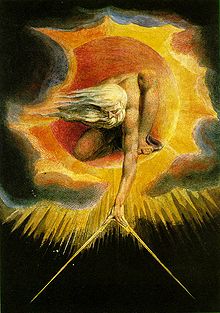
(Picture: William Blake, The Ancient of Days)
Unknown's avatar

Ruminations on “Moby Dick” as Theology

My always astute friend Jim Gorman once suggested that my book, When I Survey the Wondrous Cross: Reflections on the Atonement (its subject matter being an unlikely topic coming from the generally optimistic American Protestant Mainline), might have something to do with the fact that I live in gloomy New England, and more specifically in the Berkshires of Western Massachusetts, where Herman Melville lived during the years he wrote Moby Dick.

In fact, Melville lived right here in my town of Pittsfield at the time, on a farm named “Arrowhead,” a few miles from where I am sitting.  “Arrowhead,” which is still very much here, is now a museum, and the home of the Berkshire Historical Society. It is well worth visiting.

Many years ago I gave a lecture at “Arrowhead” on theologian Reinhold Niebuhr, another Berkshire resident, and I recall being struck by the irony of speaking about theology’s best 20th Century interpreter of human sin in the home of fiction’s best 19th Century writer of sin’s power and perplexity.

Moby Dick remains one of those books that you can come to again and again to find more and more about the human condition, not to mention whaling practices (which is why so few actually get through it.) I once mentioned to my old friend Roger Linscott, now sadly gone, that I had read Moby Dick(more than once), and he came as close as a gentleman can to calling me a liar. I have often thought Moby Dick has not been given the attention it deserves by theologians, so I was pleased today when I read Australian Theologian Ben Myers always thoughtful blog Faith and Theology. His post, “A note on Unwritten Books,” is a busy scholar’s daydream about the books he would like to write if he ever has the time.

Here’s what he had to say about one of them: “A book on Melville’s Moby Dick as the great anti-theodicy, Nature’s shattering reply to Paradise Lost. (Frankly, it baffles me that more theologians have not written on Moby Dick – though Catherine Keller is an outstanding exception.)”

It baffles me, too.

I really do hope that he, or someone, writes that book, and if someone does, I’ll be the first one lined up to read it (My English teacher friend Bob Barsanti from Nantucket will be right there with me, I’m guessing).  We need for Melville what Elton Trueblood did for Abraham Lincoln in his 1973 book, Abraham Lincoln: Theologian Of America’s Anguish.  Like Melville, Lincoln was unchurched, but I consider his Second Inaugural Address to be one of the greatest theological writings in our nation’s history.

For those of you who didn’t spend whatever youthful fortune you may have had to acquire a theological education, theodicy is that branch of theology that addresses (or tries to) the problem of evil in the world, and how God can be justified in the face of it.  A good recent example is David Bentley Hart’s astute The Doors of the Sea, which he wrote after the great tsunami that wreaked havoc in Asia a few years ago. By calling Moby Dick “the great anti-theodicy,” and “Nature’s shattering reply to Paradise Lost” I am guessing that Ben Myers shares my wariness about theodicy in general, and all attempts to say too much about why God does what God does. I hope he might say more about that.

Ironically, we have as our appointed Old Testament reading for this week Psalm 55, where in verse 8, God says,

“For my thoughts are not your thoughts,
nor are your ways my ways, says the LORD.

”I am guessing from Myers’ limited comment, and from my familiarity with Moby Dick, that he might agree with that sentiment, and therefore with me.

Ironies abound here in Pittsfield about Melville. One irony is that he lived on Holmes Road, named after the novelist Oliver Wendell Holmes (and not the famous jurist of the same name, who was his son), who was arguably the most popular and highly esteemed novelist of his day. Does anybody but miserable English Ph.D. candidates in search of a suitably obscure dissertation topic ever read Holmes today?  I suspect not. So here was Melville, who it must be admitted was not entirely unknown, for he had written some exotic best sellers many years before about his travels in the South Seas as a young man, laboring away in near obscurity over a book that was, at publication, almost universally panned.  That book is now considered by many, including me, as a top candidate for the “Great American Novel” (I think Mark Twain’s Huckleberry Finn has a claim as well.)

“The Great American Novel,” I might add, is as hard to locate and pin down as Ahab’s white whale, and has taken on some of the same mystique among those of us who still read books.

Another irony, it seems Melville was hardly known here in Pittsfield at the time.  I served for 22 years as the Pastor of the First Church of Christ in Pittsfield, which had been the town’s founding Puritan Church in 1764 (you couldn’t get a town charter in the theocratic Massachusetts Commonwealth without establishing a Congregational Church.) Today it is a just another lively but perennially struggling mainline church with a beautiful (but too big) building to maintain, but it was not always so.

By 1850, when Melville bought “Arrowhead,” First Church had long been disestablished (in 1833), but still remained the community’s premier religious institution. Puritanism as a movement was pretty much gone by 1850, and what replaced it in Pittsfield was a “carriage trade” church at the outset of the Gilded Age. Puritanism had been economically successful in New England, and the new generation of the privileged wanted to show off their newfound wealth (unlike their Puritan forbears.) First Church Pastor John Todd had commissioned a grand granite Gothic Revival church to be built in 1853 to replace the white clapboarded Bullfinch Meeting House (damaged by fire in 1851). There were many prominent, even famous, citizens, now forgotten, in the membership of First Church, but Melville was not among them, as he was not a churchgoer. I have found no mention of him during those years in either the church or town annals. It was as if he never lived here.

This is not too surprising, as he was known by the few who knew him a loner. He was also seriously broke and most likely depressed, although depression hadn’t been discovered yet, at least not by that name. He was also certainly a great disappointment to his family, and especially to his wife, who was the daughter of a very distinguished jurist, later to become the Chief Justice of the Massachusetts Supreme Court. By most accounts the marriage was not a happy one in the Pittsfield days. There were rumors of madness, alcoholism, and spousal abuse. The only bright spot seemed to be his friendship with Nathaniel Hawthorne, who championed him, and to whom Melville dedicated Moby Dick.

Still, even the popular and influential Hawthorne couldn’t get him back into solvency. The first run of Moby Dick (there were only three thousand copies printed) didn’t sell out. He never had a commercially successful book for the rest of his life.

He live at “Arrowhead” for thirteen years, and it was here that Moby Dick was written. They say his vista from the windows of “Arrowhead” looking north toward snow-covered Mount Greylock gave him the visual inspiration for the great white whale.

Moby Dick to my mind is one of the most incandescent and perplexing books ever written. Parts of it are magical and riveting; others are tedious. But it raises questions about the way our world is that have seldom been matched in their depth of insight.  Theological issues and images bristle throughout.

John Todd may have been the preeminent churchman of his time in Pittsfield, and Oliver Wendell Holmes the preeminent author, but Melville, perhaps despite himself, may well have been the most astute theologian.

But that book remains to be written.

Unknown's avatar

A Son’s Remembrance of His Mother on her Birthday: Frances Irene Floyd 1914-1967

Today is my mother’s birthday.  She was born on this day in 1914, and died on September 18, 1967 at the age of 53 from cancer.  She died too young.  She would have been 96 today.

Her older sister outlived her by 40 years. She’s died now too, as has my Dad, so there is hardly anyone who even remembers her. But I do.

She most likely wouldn’t have died in this day of regular diagnostic tests and improved cancer treatments.  But in the 1960’s cancer was considered by most people to be a death sentence, and usually was.  Her doctor told us she had it, but asked us not to tell her, because the news would be so emotionally devastating she might lose hope.  So in addition to having to deal with her dying, we had to lie to her.  She was a smart woman and finally figured it out and made us tell her.

I was eighteen when she died.   She was told by her doctor in September of 1966 that she had about three months to live, and she said  “Nonsense, I will live to see my daughter and son graduate (from college and high school respectively) next spring, and she did, although she was in a wheelchair.  My sister was engaged to be married, and the date was moved up to early September in the hopes she could participate.  She couldn’t, since she was in the hospital dying.

That day, my Dad, my kid brother, and I left immediately after the reception, still in our morning suits, full of champagne punch (at least I was), to visit her in the hospital with a fist full of Polaroid photos to show her of the wedding.  She was delighted, but didn’t have much energy to enjoy them.

A few days later I said my goodbyes to her (though far too much remained unsaid) and then I traveled 1400 miles away to go to college.

Two weeks later she died, and I came home for the funeral.  No single event in my life as her early death has had such an impact on the rest of my life.

I often think of her on March 4.  She said it was the only day of the year that was a command (“march forth!”), and when she was a kid she thought she was a big deal because she was born on Inauguration Day, but Congress moved that to January in 1933, so she lost that distinction.

Though I often think of her on her birthday, it sometimes isn’t until later in the day.  Some years I have forgotten it completely, and later in the week realized that I was sad on that day for seemingly no reason.  But the heart often knows better than the mind.

Mostly I think about what she missed.  She never knew my wife, and my son and daughter.  She never knew I graduated from college or became a minister.  She never met any of her seven grandchildren or my brother’s wife.  She was cheated.

Her short life was in many ways remarkable for a woman of her generation.  She was born in Oklahoma City and grew up in Wichita, Kansas, where she went to college, a rare thing for women in the 1930’s.  She became a librarian, one of the few vocations open to women back then, along with teachers and nurses.  After graduation she got a job at the Wichita Public Library.

She was a dreamer and what we once called a bookworm. She always had her nose in a book, and expanded her rather conscribed universe through her imagination.  Her parents were good people, pious Midwestern Protestants, and she lived at home with them throughout her mid-twenties, as unmarried women were expected to.

But she wanted more out of life.  She dreamed about far off places she had read about in books.  She dreamed of the England of Jane Austin and Dorothy Sayers.  And like many Americans in her day from the cultural hinterlands she dreamed of New York City, then in its heyday, where Dortothy Parker and James Woolcott could exchange bon mots in the Algonquin Club.  It was a far cry from Wichita.

By her late twenties she was considered an “old maid,” most likely never to be married.  She wasn’t accepting any of this.

So she decided to change her life.  Against her parents’ wishes she applied to Columbia Library School (now sadly gone),  arguably the best in the country, and when she got in, she went.  She packed her suitcase and took the train by herself to New York, and got a room at the International House near Riverside Church and never looked back.

She loved New York.  Like so many people who go there she had big dreams.  She wanted to be a writer, and scribbled short stories in her spare time.  I have many of them. They are not particularly good, overly self-conscious and somewhat formal in style, but they are interesting and really not bad.  She was a good writer, but she tried others’ voices and never found her own.  She used to joke that she had rejection slips from all the best periodicals.  One of her grandsons is a writer and won an O’Henry Award a few years ago for one of the years’ best short stories.  She would have liked that.

When she graduated from Columbia she got a job at the New York Public Library on Forty-Second Street, and went to work every day between the storied lions. There she got such a good reputation for cataloguing books that she was asked from time to time to do it for the Library of Congress.

She became an Episcopalian, which I expect didn’t go down too well with her folks back in Wichita, in a day when anti-Catholicism was still an ugly feature of much of Protestantism, though to be fair, I never heard any of it from them.

She met my Dad, a handsome intellectual Bostonian, while she was working at a summer job at the University of New Hampshire, where he was teaching while a Ph.D. candidate back at Columbia.  They discovered they both lived in New York, and when they got back to the City they started dating, and eventually married.

I am the second of their three children.  My sister and I were born in New York City and my kid brother was born in New Jersey, where we moved when my parents realized that New York wasn’t a terrific place to raise kids, especially when you had limited means.

Church was important to my mother and she was on the altar guild and worked on the annual bazaar, and baked pies for the Bake Sale, and if we were lucky she might make one for us.

I thought of her the other day when I was in church. It was an Episcopal  Church and the rector, who was celebrating, is a woman, as is the  associate priest, as were the two acolytes. So the communion table was surrounded by women, and no one thought a thing about it.  My mother would have like that, although in her day it would have been a complete flight of fancy to imagine it.

She was a proto-feminist in a quiet way.  My sister went to Vassar when it was a women’s college, and my mom was very proud of her.  Nearly thirty years later my own daughter graduated from Wellesley College, and I thought of my mother on that day, too, although she would have been equally proud of my son’s graduation, for she was nothing if not fair.  And what would she make now of my daughter going to divinity school?

When we were growing up in the suburbs she took a job as a librarian in a middle school nearby.  Her students loved her and she encouraged them all to read, read, read.  I suspect she often quietly overlooked a library fine on an overdue book if it was a hardship for the student’s family to pay it.

Last spring I wrote a paper about my love of mystery novels, another passion she passed on to me.  I mentioned her in it and got this remarkable anonymous comment: “If your mother was the Mrs. Floyd who was the Wandell librarian in the ’60s, I remember her! She was wonderful. In fact, I use FLOYD as a password on book-related websites (what greater homage?).”

I have now outlived her by 7 years, and she has been gone from my life for so long I can’t recall her voice, and I can remember her appearance mostly from old pictures.  I sometimes glimpse something of her in the faces of my daughter and my two nieces, and see inklings of her ways when they labor at crossword puzzles or slaughter one another at Scrabble.

I woke up in the wee hours this morning and started thinking of her and tears welled up in my eyes, even though she has been gone 43 years.  So I guess I still grieve.

But mostly I am grateful for the years I had with her. She gave me words, books, music, a dry sense of humor and above all, faith.   She also gave me a lively sense of the communion of saints, and makes me acutely aware of our connection to those who have gone before us and help make us who we are.

So here’s to you Mom.  Happy Birthday!

(Photo: L. C. Floyd, Mom and my brother Bill,  1954)

Unknown's avatar

Should the church ever hitch its wagon to one political party?

My post on Monday, “Pastors aren’t Prophets: Some Unsolicited Advice for Newly-Minted Ministers,” got some good discussion going, both on my site, and particularly on Jason Goroncy’s always lively blog site “Per Crucem Ad Lucem.”  I also received quite a lot of e-mails about it.

But there were concerns.  One concern about my post was that I was arguing on behalf of a Constantinian church in a post-Constantianian age. That may be partly right.  I am not one of those people who think the Constantinian church was an unmitigated evil (stand in Chartres Cathedral sometime and think about it), but I do concede that it is now gone in many places, and fading fast in most others.  So we do need new models, and the emerging church, while interesting, isn’t it.

When I left seminary (in 1975) I served one congregation (I had two) that was the only religious institution of any kind in this little town of 400 souls.  It was, by necessity, a chapel to its community, and it felt a real mission to that community’s well-being and to every member in it of any persuasion or none.  When I went to the hospital I asked at the desk for the town census and not the church’s to make my visits, and was expected to.

I think that there is a lot of truth to the slogan “let the church be the church” and not to have the church running around doing errands for the society.  But Christians do live in societies, and in addition to being signs of the kingdom of God, albeit imperfect ones,  our congregations have responsibilities to them.   I don’t think it is our Lord’s intention that we let them fall apart around our ears.

At the same time I think the idea of a Christian nation, popular here in America in some quarters, is a really bad idea.  In fact, it scares me to death, because I am not sure that their definition of “Christian” would include me or most of the church people I know. And I have lived in Europe for long enough to know that state churches are a millstone around the neck of the Gospel.

Most small town and village congregations I know have an authentic Christian ministry within their communities, and I want to affirm that.  I have been as critical of “Culture Protestantism” as anyone, but ecclesiology, like most of life, is complicated.  The hill-town churches haven’t got the memo yet that the  Constantianian era is over, and most of them are not reading Stanley Hauerwas and John Milbank.

Another second critical concern about my post was that I was saying that the church should not be prophetic, which would shock those who have known me for any length of time.  What I was warning about is the romantic idea of the pastor as the solo, heroic prophet. I was worrying that new ministers might think this is their primary role, and as I think I made clear, I don’t believe it is.  But that doesn’t mean that pastors have no prophetic role at all, or that the congregation doesn’t have one as well.

The prophetic role is part of Jesus Christ’s vocation, and by extension, the congregation’s.  The pastor’s role is to equip the saints for their ministry, which includes the prophetic one.  And any faithful preacher who is breaking open the Word of God from Scripture each Sunday is inevitably inviting many questions that have profound political implications.

But you must realize that the context out of which I am writing is a politically polarized America where both parties tend to claim that God is on their side. And so, most conservative Christians are Republicans, and most mainline Christians are Democrats.

I think this is bad for the church.  My ideal congregation contains steadfast ideological foes who disagree on hot-button issues, but, because they are baptized and must walk to the table together to share the bread and cup, have to deal with each’s other’s humanity as well as their own on a regular basis.  And maybe deal as well with their own spiritual blindness and sin.

But that isn’t happening very much, at least not here.  More likely we gather up the like-minded who then congratulate ourselves for not being like those other benighted Christians.   And the continuing trend of denominations to find ideological niches as their primary identity is a scandal.  Our primary identity is found in Jesus Christ, and only there.

I notice that more and more websites of congregations in my own denomination have dropped the first sentence of our preamble, “Jesus Christ is the sole head of the church,” for  the more  user-friendly “Everybody is welcome here.”  I like the fact that everybody is welcome in our churches,  and can think of no other way to be the church.  But that is a fruit and not a root.  The root is that “Jesus Christ is the sole head of the church,” which is why everybody is welcome here.

A church that defines its identity by fruits and not by roots is cutting itself off at the source and will eventually wither and die. Or else survive as a kind of social club.  So I worry that our marketing strategies just might kill us as a church.

I got ruminating about this, and went back and found a paper I wrote in 1989 on the Ecclesiology of P.T. Forsyth, who has shaped me profoundly.  His church was almost completely aligned with one party, and he warned them about it.

I found the following nugget, which if nothing else, confirms my opinion that, as the French say, “the more things change the more they stay the same,” although they say it in French so it sounds better.

Take careful notice of the last sentence at the end of the page. I wrote:

“What is the relationship between a church whose source and goal is redemption and the society in which it finds itself?” Forsyth refuses to identify the church with any particular form of society. The church outlasted feudalism and Forsyth expects it to outlast democracy.  “Christianity is not bound up with any particular scheme, dream, or programme of social order.  Its essence is redemption as forgiveness or eternal life, and the Kingdom of God as flowing from these.  And the eternal life can be led under almost any form of government.”  (Forsyth, Socialism, the Church, and the Poor,  p. 6)

 Forsyth is not in favor of the church identifying itself as church with a particular political party or ideology, although individual Christians can and should be involved in political life.  But when Christianity gets involved with ideologies it is not as a passive recipient or an uncritical cheerleader, but as that which has its own charter and goal, its own life and energy given by God in the act of redemption in the cross of Jesus Christ.  Forsyth writes,

‘Discuss Socialism by all means on its economic side.  Let Christian people descend from their impatient idealism, and harness their resentful pity to discuss the economics of the position more and more.  But do not forget that Christianity has the right of moral criticism on every scheme of economics or fraternity, because it represents the greatest moral, fraternal, and international force that has entered history as yet.  Fraternity means the unity of the race, and the race is one only in God, and in His Christ.  The Church is not committed to any theories or classes of Society which do not rest on that.  And it is not to be sneered at if it refuses to place itself wholly on one side or the other of a mere economic, social, or political question and stake its Lord’s fortunes there.  It is bad for a Church, and it might be fatal, to be only on one side in a civil war . Forsyth, “Socialism, the Church, and the Poor,” p. 33.

 ( Excerpt from Richard L. Floyd.  The Cross and the Church: The Soteriology and Ecclesiology of P. T. Forsyth. Andover Newton Review, Volume 3, Number 1,1992.)

(Photo:  A Bridge to Cross, Windham, Maine)

Unknown's avatar

Pastors aren’t Prophets: Some Unsolicited Advice for Newly-Minted Ministers

Too many of our new pastors in the mainline church leave the ministry after a few years. There are many reasons why this happens, but for whatever reason, it is not good.  It’s bad for them and bad for the church, and it is bad stewardship to train someone who only serves a short time.

Some of these ministers should never have been ordained in the first place, and the gatekeepers didn’t do their due diligence. Some were lacking the necessary “gifts and graces” for ordained ministry, which doesn’t mean they didn’t have a different and effective ministry in the church.

There are far too many sad situations where a ministry fails for one reason or another, where hopes are shattered, and a young (or not so young) person is saddled with a financially crippling debt for the years in seminary they paid for in loans.

Being a pastor of a church is a hard job.  I was one for thirty years.   Despite the nonsense being promulgated by the “experts,” faithful pastoring is not a matter of working a certain number of hours (or “units” as they are now sometimes called.) It’s a vocation that takes up most of your waking hours,

When a congregant really needs you, it doesn’t matter whether it is your day off. If you asked me how many seasoned pastors are burned out to one degree or another, I would say, “All of them, if they are really doing their job.” That is why pastors need to exercise radical self-care, pray constantly, and accept the fact, that not being yourself God, you cannot do all that is demanded of you.

Now I readily admit that there is some truth to the whole boundary/take care of yourself/take time for yourself movement. But like all partial truths it is not the whole truth. The church once had a useful word, now much out of favor, for when one piece of the truth gets blown out of proportion.  The word is heresy

One of the modern heresies (but by no means the only one) of the contemporary mainline church, is that you can have something akin to a normal 40 hour a week professional life and be a faithful pastor.  It isn’t true.  A pastor’s life, and the life of the pastor’s family is necessarily involved in the community of their congregation in season and out of season.

Sometimes, even often, it is wonderful; other times it isn’t.  That’s the way it goes.  It isn’t the Canyon Ranch spa.  I often say being a pastor is the best vocation there is, but perhaps the worst job.  If you are not called to it, it is something you really don’t want to do

When I started as a pastor thirty-five years ago I was well trained and well educated and didn’t have a clue what I was really supposed to do. I learned quickly. One of the things I learned was that you have to love your congregants, even the unlovable, of which there are far too many, and who take up a good deal of your time.  If and when you find yourself loving them, you know you are on your way to really being a pastor.  Some of them you will just never learn to love, and you have to turn them over to God, who does.

I had been a anti-war and civil rights activist in college and seminary, and had gone to jail for my causes, but when I got into the pastorate I learned very quickly that you can’t be a prophet until you have earned the peoples’ trust. This means years of marrying and burying and sitting by sick beds and in hospital rooms. If you do this well they may be ready to hear hard truths from the pulpit. They may not. Certainly Isaiah’s prophecies fell on deaf ears.

New ministers who have grown up in the church have a leg up, because they know its rhythms and customs,its “grandeur and misery.”

But today many of our ministerial candidates haven’t grown up in the church. Some of them turn out to be our best ones, but they are at a disadvantage. They don’t know the church’s music and it’s well-worn liturgies. They don’t know the joys of a community strawberry festival on a warm spring day, or the energy and agony of a capital-funds campaign to get a  new boiler.

They often come to seminary or divinity school in a process of self-discovery, which is fine. Most of us did that to one degree or another. I recall from seminary that the ones who knew they wanted to be a minster since the age of six were best avoided, and probably needed therapy.

Now seminary is a good place to learn many useful things, like that David didn’t write all (or perhaps any) of the Psalms, that the Scriptures are thick and have a literary history, and that the heresies we see around us are as old as the church.  If one is lucky, you’ll find a mentor or two, and be able to intern in a healthy church who will love you and teach you what it means to be the church.</div

What seminaries are not good at (because its not really their job) is forming men and women into Christians, much less teach them how to be faithful pastors.  Christian formation is primarily the church's job, not the schools, although they can help out.

There are many fine teachers and students in these schools, and I don’t want in any way to impugn their integrity or their faith.

At the same time, we are seeing too many newly-minted pastors who come to seminary, not only to find themselves, but with a passion for a social cause or causes, which is fine.  I certainly had mine. In seminary the flame of their passion is often fanned by others who share it, which is also fine.

But if all you know of the faith is what you learn in divinity school you are at a distinct dis-advatantage. And if the main reason you accept a call from a congregation is to promote your passion and cause then your soul is in danger, and so is the life of a congregation. Because the congregation you go to may or may not share your passions. It can be dangerous either way.

If they agree with most of your views, be they liberal or conservative, the temptation is to self-justification and self-righteousness, and a tendency to see sin and evil as “out there” in your ideological adversaries, and not also in your own heart and soul. Then the great insight expressed by the Reformers' axiom simul justus et peccator, that we are at the same time justified and sinners, is lost. This danger in the mainline church can exist in some ministers for their entire careers and they will never even know it.

The other temptation is perhaps more dangerous, at least in mainline churches. That is to go to your first congregation where they don’t share your passion for your social cause or causes, and you scold them for it. You do not learn to love them, and they do not learn to love you, and eventually your ministry fails.

Typically we are too polite to ever actually fire anyone (although it does happen), but there are other ways to get you to leave, the best one being to so discourage you that you lose heart and leave. Some, too many, of our new pastors actually seek out this kind of martyrdom, and when they are inevitably cast out, they can then turn and say how stiff-necked and hard-hearted their congregation was. But my sympathy for them is limited. Congregations can be stiff-necked and hard-hearted and even abusive. This is nothing new. Just go read Exodus or First Corinthians.

But congregations can be also be wonderful, supportive, gracious, and long-suffering, especially if they sense you are really trying to be their faithful pastor.

The late great Bill Coffin, a prophet himself, once told a bunch of us young ministers (about 1972) a story (which my version here will be only a loose approximation) about one of his students from Yale.

The young pastor was in hot water for his deeply prophetic views and fiery pulpit pronouncements on social issues (it was Vietnam time, and the nation was deeply divided.) The lay leaders wanted to fire him. As the discussion heated up, one of them, a banker, prominent member and very conservative, stood up and said, “You can’t fire him, he’s our pastor. It’s true that he’s a real pinko, and I can’t stand most of the stuff he says from the pulpit, but when my wife was dying he came to see her every day. He’s staying.” And he did. Bill went on to say that if you are a faithful pastor, your flock will give you great freedom to pursue your passions, be it peace and justice work, or collecting butterflies.

A dear rabbi friend of mine who is well up in his eighties told a bunch of us a powerful story last week. He had been an army chaplain in the Korean War, and, perhaps because of that, he was a firm supporter of the Vietnam War. But when our National Guard opened fire and killed some students who were peacefully protesting the war at Kent State University in 1970, he had a change of heart, and he changed his mind. And on the next High Holy Days in the fall, when he preached to the biggest congregation of the year, he apologized to them and asked them to forgive him, admitting that he had been wrong about the war. This story brought brought tears to my eyes. He had been their faithful rabbi by then for fifteen years, and he stayed for another dozen or so. The Vietnam War by 1970 was very unpopular, especially here in what until last December was sometimes called by conservatives “The Peoples Republic of Massachusetts.” I am sure that many of his congregants had been hearing sermons they didn’t agree with for some time. But he had earned the right. And when he finally repented publicly, he was indeed a prophet with the full attention of his people. From then on, when he spoke out against the war, he had every ear.

So at the right time and place you can sometimes be both a prophet and a pastor. But you’d better be a pastor to the people first, because that is your primary calling. If you just want to be a prophet, I suggest you go work for a political action organization.

(Addendum:  Since yesterday several of my interlocutors have reminded me that the prophetic office is one of the roles of the whole congregation, and I heartily agree.  One of the roles of the pastor is to equip the saints for that office (along with their priestly and royal ones) as the body of Christ.  What I was addressing was the lone clerical prophet, a romantic notion that is now in vogue.  If the preacher is faithful there will be all kinds of political implications in the Word broken open for the people.  But our pulpits are too often merely a platform for an overtly political agenda, and the texts then just become window dressing.  But you can’t say it all in one post, although I often try.)

(Photo:  The Prophet Jeremiah, Michelangelo, the Sistine Chapel)
Unknown's avatar

On the Writing of Hymn Texts: “Always Trust Your Ears!”


This morning I preached for the first time in 2010 to the little Berkshire hill-town congregation at the Federated Church of Charlemont, while their pastor was on a mission trip to Nicaragua. It was a gracious experience in so many ways, and a homecoming of sorts, since it was my seventh visit there as a guest preacher since 2007.

It was also there that I led my very first worship service after my sudden retirement from disability in 2004, which was a deeply moving experience.  I have a warm spot in my heart for country churches. I started my ministry back in 1975 in two little village churches in rural Maine, and I always feel at home in churches like them, especially this one.

For a country church Charlemont has extraordinary music. The gifted organist and choir director, Esther Haskell, who is a school librarian at her day job, does a masterful job, and sometimes it seems like nearly half of the congregation is in the choir. The composer and arranger Alice Parker, who needs no introduction to many of you, also worships in that congregation, and has worked closely with Esther to make congregational singing an important part of their worship.

For some weird reason, soon after my brain injury in 2000, I suddenly started writing hymn texts. I can’t recall ever writing a poem in my life before, and I have certainly never had any training, but these texts started tumbling out of me in the early morning hours after many a sleepless night, often complete and in meter needing few if any changes. I’ve told this to various of my neurology specialists, and they have no explanation for it, and it might just be a coincidence, but I don’t think so. Maybe Olive Sacks would be interested!  The human brain is a marvel and a mystery. Take good care of yours.

So on this February 13, I posted a Lenten hymn text that I wrote back in 2004, not long before I had to pull the plug on my 22 year pastorate. It is called “You Won’t Despise a Broken Heart.”

The text is very much in the spirit of Lent, but the last verse ends on an Easter note, based on the church’s practice of counting the Sundays as being “in” Lent, but not “of” Lent, which is why the forty days don’t add up, if you’ve ever wondered about that.  And the closing Easter note in the text is also appropriate because every Sunday of the year, even in Lent, is a celebration of the Resurrection.

So far, so good.  But when I went to post it,  I counted all the syllables to make sure it was truly in Common Meter (C.M.), which is 8.6.8.6.  To my dismay I discovered that a couple of the lines in one of the verses didn’t add up. I liked the hymn the way it was, but I wanted it to be metrically correct, so I added a couple of words to make the numbers come out right before I posted it. But the changes definitely took something away from the poetry, and I never liked them.

When I spoke by phone with Esther earlier in the week she had suggested that it might be an appropriate hymn to sing today for this Second Sunday in Lent,  which pleased me.  But she gently suggested that a few minor changes be made in one of the verses to make it more singable, and I knew what she was going to say before she said it.

The changes she suggested were, of course,  to eliminate the “corrections” that I had made, and I told her so, and about my worry that the lines wouldn’t have the right number of syllables. She has been an English teacher in Amherst and taught poetry there for many years.

“Always trust your ears,” she told me. I ask her how one shows that when it is just a written text without music. She said, “I’ll ask Alice!” And she did. The answer was simple. Just write it out, and when it is sung (if you have trusted your ears) the music will tell the congregation how to sing it. (If the music and text are shown together, as in a hymnal, then you divide the words up with special hyphen-like marks that probably have a name, but I don’t know what it is.)

Unlike some of my other hymn texts, this one has never had an original tune written for it, and since I left the pastorate shortly after it was written, I had never heard it sung.

But this morning I did!  Esther and Alice suggested the lovely Scottish tune “Crimond” for the music, and that is what we sang, and I really loved it. So I have gone back to my post of February 13 and restored the text to its original form, and the recommended tune is now “Crimond.”  You can find the hymn text here.  And it is not (yet) commercially copyrighted (nobody gets paid, in other words), so if you want to use it this Lent in worship, be my guest.

And so it was that I learned an important lesson about writing hymn texts: “Always trust your ears!”

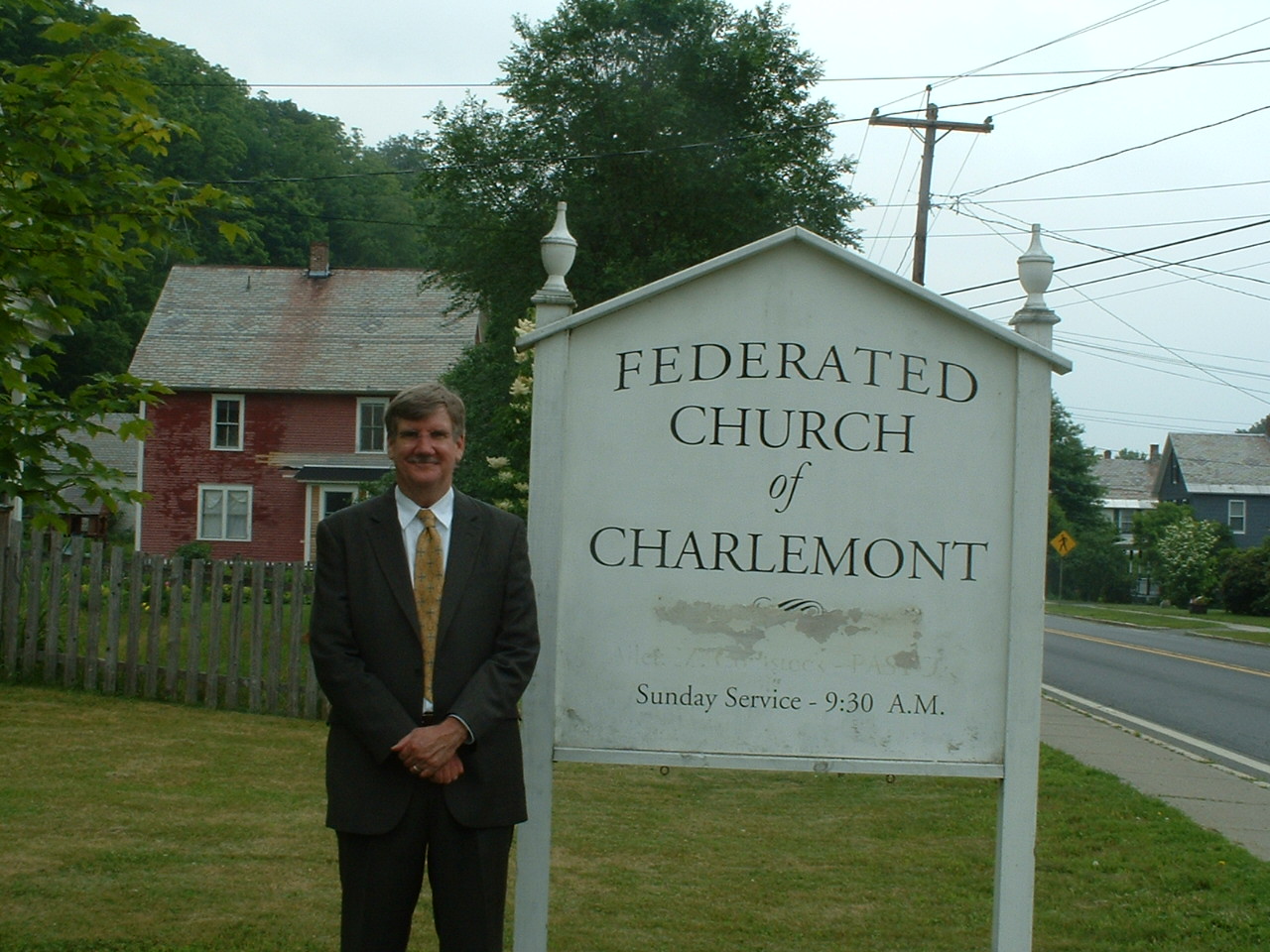
(Photo by M. T. Floyd of R. L. Floyd, Charlemont, MA, Lent 2007)

Unknown's avatar

Why did Jesus refer to Herod as “That fox” in Luke 13:32”?

Here are some more of my background thoughts for preaching on Sunday’s Gospel text for the Second Sunday in Lent: Luke 13:31-35.

I have been wondering why Jesus told the Pharisees “Go and tell that fox for me . . .” after they had warned him to leave town because of Herod. Why call Herod a “fox”?

Herod was the tetrarch (meaning “ruler of a fourth,” for the kingdom was divided) of Galilee, in whose territory Jesus was active. We all know about Herod the Great, the one who was in power when Jesus was born and who slaughtered the innocent children after the Magi told him about the Christ child, but this is his son, Herod Antipas.

What do we know about him? Well, when Jesus calls him “that fox,” he is not saying that he is as sly as a fox, although he might well have been. No, Jesus is actually insulting him, for a fox is an unclean animal in the Israelite holiness codes. We need a little history lesson to know why Jesus thought Herod fit to be insulted in such a way.

Though Herod often tried to appear the pious Jewish leader, he had more than a few problems maintaining the loyalty of his Jewish subjects. His first problem was his very authority. He had been put in power by Caesar Augustus, the Roman Emperor, in 4 BC. And then in 17 AD, to honor his Roman overlords, he build a grand new capital city named Tiberius, after the current emperer, only to discover that it was built on top of an old Jewish cemetery. No pious Jew ever entered it, and it was inhabited almost exclusively by Greeks and Romans.

Then he also had serious women problems. He divorced his first wife, which had been a political union, as she was the daughter of an Arab ruler, in order to marry Herodius. She had been the wife of his half brother, also called Herod just to confuse us.  It was not unheard of in those days to marry the ex-wife of one’s brother, but she was also the daughter of another half-brother, Aristobulus. Marriage to one’s niece was also permitted, but marriage to a woman who was both one’s sister-in-law and ones’ niece was irregular, or as my kids might say, “sketchy.”

It was this Herod who had John the Baptist killed. John had been a persistent critic of Herod for his dubious marriage and his general immorality. The Gospels say he had John killed because he had promised his daughter Salome anything she wanted if she danced for him, and John’s head on a platter is what she wanted. The historian Josephus wrote that Herod’s subjects believed that the war that broke out in 36 AD with the Arabs (recall the first divorced wife), and the subsequent Arab military successes, were divine punishment for Herod’s many transgressions.

So for these reasons, and for the fact that he let his daughter dance in public, which was considered a shameful act, the readers of this story would have understood that Herod Antipas was an unrighteous man and an unfit ruler.  No pious Jew would ever have let his daughter dance in front of strangers.

In short, Herod Antipas was an unsavory and unscrupulous puppet ruler of the Romans, and certainly not one to be trifled with. Jesus would have had every reason to have been afraid of him. This is the gist, I think, of the Pharisee’s warning to Jesus to stay away from him. They were no friend to Jesus, but most likely were even less enamored of Herod Antipas. Jesus was in danger from Herod, and so he left for the countryside, not because he was afraid of Herod, but because “his time had not yet come.”

Jerusalem, which figures prominently in this passage and in the larger story, was part of the Roman province of Judea, which is why Jesus, as the creed says, “suffered under Pontius Pilate‚” the Roman procurator. Herod’s role in turning Jesus over for trial to the Romans, as described in Luke, is much debated by historians. Most likely the reason was that Jesus was active in his district. But it was smart for someone who was attracting crowds as Jesus was to keep clear of Herod.  An unpopular puppet ruler with a tenuous grip on power was then, as now, someone to be afraid of.

(Picture: Salome Dancing before Herod by Jacob Hogers (1630-55). Rijksmuseum.

Unknown's avatar

Fear or Faith? John Calvin on Psalm 27:3


After Karl Barth’s Church Dogmatics, John Calvin’s Commentaries were probably my most thumbed through books while I prepared for preaching over the years.  I gave mine away to a younger pastor friend when I retired, but was pleased to be able to find them on-line, albeit in an old English translation that is perhaps not the best.

Though Calvin is much maligned as a general grump and meanie in modern popular culture, his sermons and commentaries on scripture, quite to the contrary, are more often than not, full of faith, hope, and love.  Here is an excerpt (verse 3) from his commentary on Psalm 27, which is the appointed psalm in the New Revised Common Lectionary for this upcoming Second Sunday in Lent:

Though armies should encamp. He infers from his former experience, as I have already mentioned, that whatever adversity may befall him, he ought to hope well, and to have no misgivings about the divine protection, which had been so effectually vouchsafed to him in his former need. He had asserted this, indeed, in the first verse, but now, upon farther proof of it, he repeats it.  But when he declares, “My heart shall not fear,” this does not imply that he would be entirely devoid of fear, — for that would have been more worthy of the name of insensibility than of virtue; but lest his heart should faint under the terrors which he had to encounter, he opposed to them the shield of faith. Some transfer the word translated in this to the following verse, meaning that he was confident that he would dwell in God’s house; but I am of opinion that it belongs rather to the preceding doctrine. For then does faith bring forth its fruit in due season, when we remain firm and fearless in the midst of dangers. David, therefore, intimates, that when the trial comes, his faith will prove invincible, because it relies on the power of God.” (John Calvin, Calvin’s Commentaries, Volume 8, Part 1, translated by John King)

Good stuff, don’t you think? It still speaks today to our fears.  I especially like: “Under the terms, camps and armies, he includes whatever is most formidable in the world.” So though the names and faces of the powerful people who hold the world in thrall will change, the truth remains: “Although all men should conspire for my destruction, I will disregard their violence, because the power of God, which I know is on my side, is far above theirs.”

The Good News here is that the principalities and powers of this age, and any age, are ultimately subordinate to the power of God, though as the rest of the Psalm amply shows, they manage through their subordinates (in this case “the army encamped about him”) to give the Psalmist (let us call him David, as Calvin does) and mutatis mudandis, us, plenty about which to be afraid in the short run.

This faith in the power of God, as he writes, is not the complete absence of fear, as in a more Eastern religious calm through meditation and detachment.  No the fears are quite real.  So I particularly love this: “But when he (David) declares, “My heart shall not fear,‘ this does not imply that he would be entirely devoid of fear, — for that would have been more worthy of the name of insensibility than of virtue.”  Am I wrong to detect some dry humor there?  Calvin humor, who knew?

So faith always lives in the midst of our fears, but it is that same faith that knows “when the trial comes, our faith will prove invincible, because it relies on the power of God.”

Unknown's avatar

More Ruminations on Luke 13:31-35 for the Second Sunday in Lent


A friend of mine said today that the preaching resource he is looking at has at its theme for this Sunday, “sacrifice,” and then it admonishes us to have Jesus be our model of sacrifice.  He said he was suspicious of this, and I think he is quite right to be suspicious of sacrifice (at least ours) in this passage.

Because Jesus’ vocation is utterly unique. Yes, it will end in an atoning sacrifice that is nothing less than an obedient and holy act of the Triune God, but that is his calling and can’t be ours in quite the same way.  So no matter how important our own sacrifices are for Christian faith (and they are), they must not obscure for us the critical fact that Jesus is not merely the apotheosis of human sacrifice, rather he is “doing a new thing.”  And he knows this must take place in Jerusalem, as the final culmination of the ancient promises, about which we get a glimpse with Abram in the OT lesson in Genesis 15: 1-18.

And, contrary to some commentators, I don’t see the Pharisees as particularly Jesus’ friends here. I see their warning more like, “Galilee is Herod’s turf, he’s the big kahuna around here, so you’d better lay low, or bad things will happen to you.”

So Jesus goes on the lam in the countryside to carry out his ministry until it is his time to go to Jerusalem, not because he is afraid of Herod, but because he doesn’t want his plans thwarted before they are completed.

And the obvious foreshadowing of the Palm Sunday triumphal entry this early in Lent should keep our eyes fixed on the larger narrative, which is that Jesus will indeed in his own good time travel to Jerusalem, and he will die an atoning sacrificial death, that among other things, will replace the sacrifices of the temple, which is in part why it must take place here.

So Jesus isn’t afraid, but disciples ancient and modern are fearful for him, even those of us who know how the story turns out.

Psalm 27 asks, “The Lord is my light and my salvation, whom shall I fear?”  It is a good question.  And then the Psalmist proceeds to list quite a few things to fear. And there are always quite a few things to fear in our world.  Faith always takes place among those fears, and, as in Psalm 27, it is often hard to know whether faith or fear will get the upper hand, the final word.

So we are all fearful disciples, and one of the things we are fearful of is the full import of Jesus’ vocation and death and its implications.  Yet in Psalm 27 the Psalmist finishes with hope that he will live to see the promise fulfilled.  And more and more, as I get older, I think our faith is properly understood best eschatologically or it risks dissolving into moralism.  We don’t get to see it all.  We see“ through a glass darkly.”

Yet though we must wait to see the promises fulfilled “in the land of the living,” we do see enough in Jesus Christ to proceed in faith, which in many ways, is the opposite of our myriad fears.

(Photo by R.L. Floyd.  Snowfall at Dawn.  This morning)

Unknown's avatar

Ruminations on Luke for the Second Sunday in Lent with the Help of Cyril of Alexandria


I am doing one of my rare preaching appearances this week, so I have been ruminating on the lessons for the Second Sunday in Lent.

The New Revised Common Lectionary Gospel reading for this week is Luke 13: 31-35, and imbedded in the passage is a curious foreshadowing of Jesus’ triumphant entry on Palm Sunday.  He tells them, “Jerusalem, Jerusalem, the city that kills the prophets and stones those who are sent to it! How often have I desired to gather your children together as a hen gathers her brood under her wings, and you were not willing! See, your house is left to you. And I tell you, you will not see me until the time comes when you say, ‘Blessed is the one who comes in the name of the Lord.” (NRSV)

In the rhythms of this penitential season we still have weeks to go before we hear these words again. So what are we to think of this coming so early in Lent?

One of my homiletical disciplines over the years has been to see what the church fathers (and a few mothers) had to say about it. A great resource for the preacher who is interested in seeing what this long and deep tradition of the church has to say about particular passages in Scripture is the series Ancient Christian Commentary on Scripture, edited by Thomas Oden, and published by IVP, which, regrettably, only started turning up toward the very end of my active ministry.

There’s some good stuff here. For example, on this week’s Gospel there are excerpts from Augustine, Ephrem the Syrian, and Cyril of Alexandria.  Here’s what Cyril (366-444) had to say in a homily on this text:

“And I tell you, you will not see me until the time comes when you say, ‘Blessed is the one who comes in the name of the Lord.” What does this mean? The Lord withdrew from Jerusalem and left as unworthy of his presence those who said, ‘Get away from here.”[The Pharisees had just told him to flee Herod] And after he had walked about Judea and saved many and performed miracles which no words can adequately describe, he returned again to Jerusalem.  It was then that he sat upon a colt of a donkey, while vast multitudes and young children, holding up branches of palm trees, went before him, praising him and saying, ‘Hosanna to the Son of David. Blessed is the one who comes in the name of the Lord.’  Having left them, therefore, as being unworthy, he says that when the time of his passion has arrived, he will barely be seen by them.  Then again he went up to Jerusalem and entered amidst praises, and at that very time endured his saving passion on our behalf, that by suffering he might save and renew to incorruption the inhabitants of the earth.  God the Father has saved us by Christ.”  (“Commentary on Luke, Homily 100,” from Ancient Christian Commentary on Scripture, Vol. 3, IVP, 2003)

In these early days of Lent, the readings from Luke’s Gospel keep reminding Christians of Jesus’ unique vocation, which will lead ultimately to his atoning death on the cross (and his ultimate vindication on Easter).  If we let our gaze wander too far from this heart of the Christian Story, Lent risks becoming a vain exercise in legalism (just dos and don’ts) and various forms of self-justification.  The Church Fathers generally kept their eye on the whole story and its center at the cross of Christ; not so much focus on what we need to do for God (not that we should forget that), but on what God has already done for us.