Unknown's avatar

Ruminations on Burnout: “Should clergy really be ‘working?’”

Clergy burnout is a hot topic now. My two most popular posts of late have been been Pastors in Peril, and the snarky satirical Ten Highly Efficient Strategies for Crushing Your Pastors Morale.

And when the New York Times notices religion at all it is usually some aspect of it that is aberrant or weird, but, lo, there have been a couple of articles this month on clergy burnout. For a compendium of recent articles on burnout in the media and blogosphere you can go here to Jason Goroncy’s ever-dependable site Per Crucem ad Lucem, where he is doing a series on clergy burnout.

It is a vast topic to cover, but here is one of my small ruminations:

I think the whole category of “burnout,” although quite real, is also a bit of a red herring. All the articles agree that clergy are overworked. And when cast in terms of “work” that is undoubtedly true. My question is simple: “Should clergy really be working?” Or to put it another way, “When did what clergy do come to be understood as work?” Clergy have always been busy doing what clergy do, visiting the sick, attending to the dying, preaching and administering the sacraments and the scholarly preparation for same. The “work” clergy are now expected to do is a category drawn from the industrial and post industrial West, and seen in terms of their terms of efficiency, productivity, and professionalism.

I submit that this is a category error, and that the expectations of this category are one of the causes for burnout. On reflection I realize that an embarrassing amount of the “work” I did in my over thirty years in pastoral ministry was designed to give the appearance of being effective, productive and professional, to my congregants, the greater community, and to myself.

And I think many clergy share this loss of confidence about their core identity and engage in “the sin of bustle” (P.T. Forsyth) to convince the world that they are useful, valued, and worthy of the high social status to which they aspire.

Years ago one of my GE manager types got on my oversight board and hounded me into doing detailed hourly logs of what I do as part of a compensation review (I know this sounds like Dante, but it really happened.) I was insecure enough to hold my doubts and my tongue, and dutifully filled them out, but a good deal of the time I found myself in comic reflection. For example, when I was thinking about whether Paul’s radical theology of justification in Romans led to antinomianism while soaping up in the shower, was I “working?”  Or am I working right now while I ruminate, for I have no position and am not being compensated for it?

My point is that the role of clergy is not something you put on and take off like a cloak. The clergyperson was once the “the parson” (person), and embodied the church in some way. We reject that model because it was patriarchal and hierarchical, and with good reason, but we have lost something as well. Ordination was never about the intrinsic qualities of the ordained. All the way back to the Donatist crisis the church asserted, “The efficacy of the sacrament does not depend on the sanctity of the celebrant.”

That is to say that ordination was never about the gifts and graces of the ordained, no matter how impressive. Rather ordination was the church conferring authority and its requisite graces on the ordained for the good of the church. When we lost the model of embodiment for clergy we turned to function, and looked around for models from the society. That is where we are today. Now there have been many good things to come out of the professionalism of the clergy, but much has been lost.

It seems to me no accident that the declining mainline clergy are much more preoccupied with compensation and various “work” related protocols than the more robust evangelical and Pentecostal churches. In my own United Church of Christ we have compensation recommendations based on seniority, experience, size of congregations, and all the measures that corporate America would value. The result of this is that we have priced many small congregations out of full-time ministry, and discouraged  many talented clergy who feel called to serve these churches from doing so.

We also have guidelines for how many hours (divided into parts of days called “units”) that pastors should be “working.” Like so many things in our churches these suggestions are right-minded but wrongheaded. Because ministry can’t be cut into tranches like pate.

The category of burnout is a symptom of what happens when you take on these models. If your criteria for “success” is efficiency and productivity you will always fall short, because ministry is neither efficient nor productive in the terms of the world.

The real measure of ministry is faithfulness, because the ministry belongs to God, and God is famously difficult to evaluate. Paul said, “I planted, Apollos watered, but God gives the growth.” Ministry is about planting and watering. We seldom see our results.

The attempt to quantify the “work” of ministry fails before it begins, because it is based on a secular model. Look at how we talk about it: The pastor goes to the “office” (not the study), and keeps “office hours.” And how is the pastor deemed “successful?” By how much money is raised? By how many new members are brought in? Are these the real measure of the dominion of God?

How many faithful mainline ministers in demographically unfruitful vineyards have cast a covetous eye on thriving churches in more fertile spots? Or at their evangelical brothers and sisters? How many have secretly perused a brochure for a Willow Creek or Schuller workshop on church growth when the door to their “office” was closed. And how many have accepted growth strategies and practices that neither their hearts nor their theologies truly believe in?

This is some of the climate in which clergy burnout, by whatever name, flourishes. Because if one ceases to believe in the integrity and importance of what you are doing, than it doesn’t take too much “work” for it to seem like too much. And conversely, clergy who know what they are doing and love doing it would seldom describe their busy lives by the word burnout. Paul describes his various trials and tribulations, which could match any modern pastor for being overworked and undervalued. But he saw his ministry as a sharing in the ministry of Christ, including his cross, and rather than being burned out he could rejoice in his afflictions.

So it is not just about how much a cost we pay to do our ministry, for faithful ministry always comes with a personal cost, but whether we believe in what we are called to do, and know what we are doing and why we are doing it.

It is like the old joke about the pilot who comes on the intercom and announces to the passengers, “I’ve got some good news and some bad news! The good news is that we are making great time. The bad news is that we are lost.”

The good news is that clergy are working harder than ever. The bad news is that they are burned out. Because when you don’t know what you are doing, you don’t know when you have done it.

Unknown's avatar

Religious Freedom: Which narrative will prove true?


Americans are justly proud of our freedoms, and near the top of the list is freedom of religion. The first amendment to the Constitution prohibits the government from making any law “respecting an establishment of religion, or prohibiting the free exercise therof.” Article VI prohibits religious tests for public office. A rich diversity of religious faiths, unprecedented in human history, have lived together in our land and shared a vision of America as a safe social space for the free practice of religion.

That is the dominant national narrative, but it is only half the story. If you look at the history of our country closely you can’t help but notice a counter-narrative, one in which religious bigotry is as American as apple pie. For example, the “nativist’ movement which arose in the 1840’s in response to an influx of Roman Catholic immigrants from Europe. It culminated in the (aptly named) “Know-Nothing Party,” who ran the former President Millard Fillmore for President (he lost.)

The result of this climate of fear was a disgraceful period that saw periodic mob violence, churches burned down, and some Catholics killed. The rhetoric was alarmingly similar to some of what you hear today about immigrants, that they threaten the culture of the country, and about Muslims, that their religious beliefs are incompatible with the American way of life.

In the 1920’s the anti-Catholics, including the Ku Klux Klan, claimed that Catholicism was incompatible with democracy. At that time, the response of the Catholic Church was that the nativists didn’t represent American values as much as they did, since the Catholics believed in freedom of religion. They had a point.

Roman Catholics today are in the mainstream of American life, and constitute the largest Christian denomination in the country by far. It is hard for young people to imagine the rancor created by the presidential campaign of Al Smith, a Roman Catholic, in 1928, or of John F. Kennedy in 1960. In the dominant narrative those ugly nativist impulses in our national psyche have been put behind us.

Sadly, this seems not to be so. The perfect storm of a national immigration crisis and a recession have rekindled atavistic tendencies to fear and hate the Other. In the case of immigration this is not generally cast today in primarily religious terms, as many immigrants are Catholic.

But the raging debate over the proposed Islamic Center in New York shows that religious bigotry lives on. Is every one who opposes the building of this center a bigot? Certainly not. But the conversation is salted with enough starkly anti-Muslim rhetoric to disturb anyone who believes that freedom of religion is a cherished feature of our national identity.

In American life we do not have to like all religions, or believe that they are all true, but we do have to allow them the same freedoms we have to their beliefs and worship practices. The current debate, cravenly inflamed for political purposes, is really about which narrative will be found to be true about us. Are we peaceful, tolerant and generous, or are we fearful, hateful and selfish? Will we be American patriots, touched by “the better angels of our nature?” Or will we be “Know Nothings?” These questions hang in the air.

(Picture:   Roger Williams)


Unknown's avatar

New poll: One out of Four Americans is not paying attention!


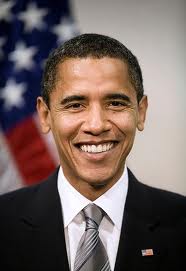
Against all the facts, 25 % of Americans believe that President Obama is a Muslim, according to a new poll. It is hard for me to find the words to express how discouraging that piece of information is.

I have it on good authority from reliable personal contacts that President Obama and his family were members and regular attenders at Trinity United Church of Christ in Chicago, which happens to be the largest congregation in my denomination, the United Church of Christ.  Yes, that is a Christian Church.  The members of such churches are Christians.

The Obamas would probably still be members there if Jeremiah Wright, the former pastor, hadn’t got off his talking points and scared many of the electorate during the campaign.

That the Obamas have not found a church home in Washington, D.C. may be a result of the painful memories of the Wright incident, when the 24/7 news media scoured Wright’s sermons for evidence against the candidate. That some of the phrases they took out of context sounded very much like the kind of thing that many of us preachers have often said from the pulpit made them sound no less scary when played back on Fox “News” (sic).

Like Supreme Court nominees who do best to have no record to derail their nomination it may be prudent for a president of the Untied States to detach himself from church membership to avoid defending every jot and tiddle spoken from the pulpit of his church.

The irony now is that the Obama campaign nearly got derailed when the media portrayed his Christian pastor as being a loose cannon, but apparently a good 25% percent of the electorate never even heard about it. Or maybe they forgot, which is even more discouraging. So I don’t know, I must conclude that one in four Americans is just not paying attention.

But one thing I do know for sure, the right wing demagogues, and the benighted citizens who pay attention to them can’t have it both ways. President Obama can’t be BOTH a Christian with a dangerously unstable former pastor and be a Muslim. He just can’t.

Unknown's avatar

Ten Theses about Interim Ministry

1. The chief purpose of long interim ministries is to provide a regular supply of jobs for ministers who are unwilling or unable to take a settled pastorate.  This is not a good thing.  Although a good interim minister can be a gift to a congregation, he or she is no substitute for a settled pastor.  Interims work to contract, they often don’t live in the communities they serve, and they are not going to stay.  It is a different kind of ministry, and the longer a church has an interim minister the longer it is deprived of the covenantal relationship that comes with having a called and settled minister.

2. During my 40 years in the ministry the length of interim ministries has expanded from a few months to two or three years (or more.) Meanwhile settled ministries are getting shorter, so the only difference seems to be less accountability on the part of the interim minister. Many seem to prefer it that way.

3. Interim ministers were once typically retired experienced pastors who preached, did pastoral care, and kept a light hand on the organization while the congregation sought a new settled pastor.

4. Today, interim ministers lead elaborate congregational self-studies, change the structures, rewrite the by-laws, and generally move the furniture around in ways that were once considered to be the job of a settled leader.

5. The reason that the extended length and the frenetic re-shuffling of interim ministry is justified as necessary is because the leave-taking of a pastor is considered to be such a trauma that only expert interim leadership can help the congregation heal from it and prepare for new leadership. It is true that there are such traumatic situations, such as the death of a pastor, cases of clergy abuse or misconduct, or where there has been profound conflict. These situations may well call for extended interims. But the new model for interim ministry assumes that every transition needs such a long and intense interim. They do not. Why then are all interims expected to be so long? See #1.

6. The model for much interim ministry is a family system model where congregations are seen as dysfunctional systems and the former pastor (actually called the BFP “beloved former pastor” in some interim training) is seen as the problem. Sometimes this is true. Usually it is not, but the one-size-fits all template is demeaning to former pastors who have served faithfully. One must wonder if it can be possible that every pastor’s predecessor was incompetent, lazy, controlling or evil.

7. Long interims frequently dissipate the momentum of many church programs, make the congregation feel adrift, lose the allegiance of many long-term members, and often leave the new settled pastor with a much-diminished congregation. This scorched-earth policy allows for little continuity between pastorates, and means the new pastor often must “re-invent the wheel” in a new setting.

8. Interim ministers have their own networks, and often work outside the existing judicatory processes. They can and often do function as a free-floating class of paladins for hire that raises fundamental questions about the meaning of ordination and the accountability of the ordained.  Ordaining someone to interim ministry is a (new) practice that needs serious scrutiny.

9. Because the models of interim ministry are derived largely from psycho-social systems theory and/or corporate management models they have little regard for the church’s own grammar of how to be church. These interim models are very thin on the ground when it comes to theology. This mirrors a general trend in ministry toward professional identity over the ancient churchly arts of soul-craft and ministry of the Word of God.

10. Lay persons in leadership during a time of pastoral transition are well-advised to carefully query potential interim ministers about their model of interim ministry. Question the assumption that every church needs a two or three year interim. Maybe you do, but ask why? Ask if the interim is planning on doing a lot of restructuring, and if so, why? The congregation should decide what it needs from an interim, and not hire an interim to tell it what it needs from him or her. An interim is just that, an interim who gets you through a period to allow the “search and call” process to take place. The rule of an interim should be like a doctor: “Do no harm.” A good interim will leave a small footprint.

Unknown's avatar

Disability and Grace

Ten years ago tomorrow I went over the handlebars of my bicycle and landed on my head. I have written about that day elsewhere.  Since that time I have been grappling daily with being brain injured.  Of course, before that day I grappled daily with being human, an enterprise that continues, but brain injury complicates it considerably.

In fact, “a complication” has been a useful way for me to think about brain injury.  My injury is, of course, in common parlance, “a disability,” and the Social Security Administration has recognized mine as such. It is a credential I would have preferred not to have needed, but it makes me officially disabled.

Yet, I don’t really think of myself as a disabled person, any more than I think of myself primarily as a white person, an ordained person, or a male person. All these realities inform my identity but do not, even in the aggregate, constitute it.

I have always had an allergy to identity politics, and question whether it is helpful for one to think of oneself as primarily identified by race, gender, sexual orientation, or for that matter, disability. If pressed for an identity I would pick a really big one, such as “created in the image of God,” and its new creation correlate, baptism. I say this because I believe that any identity that ignores our relationship with God is bound to be too narrow, and lead to some form of self-deception.

But I understand why people with disabilities often choose to make their disability a primary identity, because other people certainly use disability as a social marker, just as they do for race and gender. If you are in a wheelchair or walk or speak differently that will be part of what defines you. And many people can’t look beyond the obvious. People have a fear of disability, that if that can happen to you, it could happen to them. I think there is also a tendency to distance oneself from the disabled by blaming them for their disabilities.  They must have brought it on themselves by bad behaviors. This helps us maintain the illusion that we can have control over protecting ourselves from becoming disabled by being careful. And sometimes it is true that persons acquire disabilities from poor life choices, but most times that is not true.

My disabilities are largely hidden, since I am able to walk and speak. Nonetheless, enough people in my community know about my accident and its aftermath that I find myself in awkward social situations where people aren’t sure how to approach me. My memory is largely unimpaired (and was good to begin with), but the assumption is that brain injury is largely about memory loss, so I find myself in these painful (and sometimes comical) encounters in the supermarket where people are trying to tell me a story but filling in huge amounts of unnecessary back-story (like the names of their kids that I baptized and have known for over twenty years.) Others talk really slowly and enunciate carefully, and I must resist the temptation to say, “I’m brain injured, not stupid.”

Many people just want me to recover and be better, though I will always have a brain injury. “How are you doing?” they ask empathically and I really want to say fine, but, of course, I am not fine, so I resort to something like, “I am doing OK.” Sometimes I say, “For a man in my condition, I’m in great condition.”

A lot of dealing with injury is self-care, and it is frustrating how much of my time and energy goes into just keeping healthy. There are many things I could once do but now cannot. One of the reasons I resist disability as a primary identity is the temptation to use it as an excuse to do less than I can. For I can still do many things, and need to do them, even when it is hard. The daily challenge is to find the sweet spot between too much and too little activity, and of course, when you live with others, this balance is not always completely under your control. Sometimes I choose to overdo just because the thing I choose is important enough to me to pay a price for several days. But I can only do so much of that or I risk my health, which is easier to protect than to restore.

There is also a level of dependency involved with disability that is very hard for me. I rely on my wife and children and family for love and support and a great deal of care-giving. So in some very real sense my injury is a family affair, something that has to be factored in to all our interactions. I want to be strong and brave and independent, but have to face my reliance on others. The positive part of this is that I often experience their care for me as grace, that is, as something freely given though undeserved. And I am often in awe of their patience and forbearance with me, for I am not always the easiest person to be around, especially when I am tired, which is much of the time.

Even before the accident I was powerfully moved by the pathos at the heart of the Christian story: how God’s power is made manifest in the weakness of the cross of Jesus Christ. I have recounted often before that my mother died when I was 18, and that my return to Christian faith as a young adult was the result of a struggle to make sense of a world where such losses (and others) take place.  It shouldn’t be a surprise that I became a theologian of the cross, which I see, not as a symbol of violence and brutality, but as the place where God’s reconciling love encountered human sin and overcame it.

These last ten years have made me more acutely aware that faith lives in the midst of weakness. Disability has sharpened that awareness for me, but one doesn’t have to be disabled to experience human weakness. As a pastor for over thirty years I learned that people undergoing a crisis of loss or humiliation could often hear the good news of the Gospel in  fresh new ways, or even for the first time. In such moments God speaks. Perhaps only when enough of us is cleared out of the way to silence our own voices can there be the space for us to hear God.

My injury and its deficits also complicate my spiritual life, and that too, has made me aware of faith as a gift that I can’t create in myself. “Grace,” I once heard James Forbes say, “is where you find love in full bloom in a climate where it is too cold to grow.” I’m not very good at faith anymore, so it seems even more of a grace when it is there at all.

During my long ministry I was privileged to spend many hours with the aging and dying. They have been my teachers, helping me prepare for my own aging and dying, and also for disability, which shares many of the same features of limitation and loss. In all these challenges of living one relinquishes features of your previous experience of living. This is painful, but faith can enable us to exercise “a holy relinquishing,” that is literally “graceful.” I have been blessed to witness this again and again among those who retain a wonderful dignity in the face of the indignities visited upon the old, the sick and the dying.

Ultimately, grappling with the complications of disability (or just humanity through its life stages) exists within a horizon of hope. This too, is a gift of faith. I have stood at hundreds of funerals and proclaimed, “‘I am the resurrection and the life,’ said the Lord,” and that promise gives me hope.

I don’t know what that new reality will be like, but I cling to bits of Scripture that give us hints and clues. Paul says, “For now we see through a glass, darkly; but then face to face: now I know in part; but then shall I know even as also I am known. ”(1 Corinthians 13:12)

The scripture that speaks to me most about disability comes from the vision of John the Divine as reported in the 21st chapter of Revelation. John looks up and sees a new heaven and a new earth, and a New Jerusalem coming down from God out of heaven. He says, “God shall wipe away all tears from their eyes; and there shall be no more death, neither sorrow, nor crying, neither shall there be any more pain: for the former things are passed away.”

I take comfort from this promise that God’s ultimate intention for us is a community where we don’t suffer pain or death or loss.  That would have to include disability. No more sleepless nights, no more depression, no more chronic pain, no more anxiety and fear, no more shame. No more of all the things that beset us in this earthly life. Quite a vision!

This horizon of hope often allows me to bounce back from my set-backs, to experience forgiveness for my failings, to face the challenges and complications of each new day, and to enjoy the quotidian little (and sometimes not so little) graces that visit me unbidden and unexpected.

Unknown's avatar

When Theologians Order Apple Pie


Not long ago I had a lovely lunch with my wife and my daughter at The Student Prince, the iconic German restaurant in Springfield, Massachusetts. After I had completed my würst plate, the waitress asked me if I would like dessert, and I said, as I patted my stomach, “The spirit is willing, but the flesh is weak.” She said, “Excuse me?” My daughter, who is a student at Yale Divinity School, shot me a look, and said, “She didn’t get your biblical reference, Dad.” “No thank you,” I quickly added, “I’m full.”

I don’t know why I do this. My family is habituated to my obscure asides. My own family of origin was a biblically literate outfit, and biblical references were sprinkled liberally into our conversation. Perhaps I am nostalgic for a day gone by. I started ruminating about Hans Frei’s The Eclipse of Biblical Narrative; his magisterial account of how we got from a society where people place themselves within the Biblical story to a society where most people don’t even know it. That got me thinking about one of Stanley Hauerwas’ probing questions: “What story do you tell yourself after you have told yourself you have no story?” Or something like that.

That got me thinking about what Stanley might have said to the waitress: “What kind of apple pie do I order after I have told myself there is no apple pie?” And, just like that, a new game was born called “When Theologians Order Apple Pie.”

Please feel free to add your own examples. Here are some of mine.

Waitress, “Would you like dessert?
Reinhold Neibuhr: “The apple pie here isn’t as good as people think it is!”

Waitress: “Would you like dessert?”
Karl Barth: “Yes . . . and no.”

Waitress: “Would you like dessert?”
Rudoph Bultmann: The widespread belief that it was an apple that tempted Eve is not in the text, which merely says fruit. It could have been a date or a pomegranate. We don’t know, but the mythic form of the pericope suggests it doesn’t matter. Do you have anything with dates?

Waitress: Would you like dessert?”
Marcus Borg: I know that the apple pie here isn’t really apple pie, but I believe it might be satisfying nonetheless.”

Waitress: “Would you like dessert?”
Walter Brueggemann: “I will eschew the apple pie, which symbolizes the hegemony of the American Empire, from which the church is, or should be, in exile. Just black coffee.”

Waitress: Would you like dessert?
Mary Daly: I choose to call you, not a waitress or a server, for those are demeaning andro-centric and hierarchical signifiers. You are a “pie BRINGer.”

Waitress: “Would you like dessert?”
Paul Tillich: “The apple pie represents our eternal human longing for a pre-lapsarian Eden, despite the obvious fact that apple pie cannot be turned back into apples.

Waitress: “Would you like dessert?”
Jonathan Edwards: “We can see in a piece of apple pie the deep essence of God’s love, a reflection of the love each of the persons of the Trinity have for one another. But, no, just a glass of water for me, thanks.”

Waitress: “Would you like dessert?”
P.T. Forsyth: “Whenever I eat apple pie, I am reminded that God the holy Father acted decisively in the atoning cross of Jesus Christ to overcome the great breach between God and humans caused by our sin. Do you have any shortbread?

OK, kids, you get the idea.  All you theo-bloggers and bored theological grad students who read too much and don’t have anybody that’s interested, here’s your chance to shine.  I want to see Rahner, Van Balthasar, Aquinas, Anselm and the Cappadocians before the week is out.  Best entries get to buy a piece of apple pie for themselves.
Unknown's avatar

My Top Ten Reasons why Anne Rice would hate the United Church of Christ:


When writer Anne Rice recently said she’s done with church, the UCC Office of Communication in Cleveland started a Facebook page called “You’d like the UCC, Anne Rice.” But I am convinced that they are wrong, and here’s why:

1. We are not the Roman Catholic Church. Yes, we Reformed Christians do believe that we are included in “the one, holy, catholic and apostolic church” of the Creed, but don’t bet the farm that Anne Rice thinks that. When she says she is done with “the Church” she knows just what church she is done with. When Philosopher George Santayana said he didn’t believe in God, he clarified by saying, “And the God I don’t believe in mother’s name is Mary.” Anne isn’t looking for liberal Protestantism.

2. She would love all our social views, but hate our religious ones. Yes, we affirm science and tolerance toward women and gays, and affirm birth control, and other progressive stuff. She would like that. But she would hate our distrust of authority, our shoddy theology, our aversion to dogma, our rejection of the cross, our sloppy liturgies, our tortured language. She would do better to search the database for subscribers to the New York Times or the New Yorker or join a book group.

3. We use grape juice at communion. C’mon.

4. We’re a tiny franchise. The Roman Catholic Church has 1.1 billion members. We have 1.1. million members (about half what we had when I was ordained) and are shrinking fast.

5. We are afraid of the Dark Side. Anne is a writer of Gothic vampire novels. What would she think of our chirpy optimism. How the church of Calvin and the Puritans came to have such a sunny view of human nature is one of those great imponderable mysteries, but Anne would hate it.

6. She would have nothing to push back against. Anne likes to fight with authority, but we don’t have any worth fighting with. She would hate that.

7. She would miss the thick texture of the Roman Church for our trimmed down decaffeinated Protestantism. Think about it: no Veneration of Mary, no stations of the cross, no fasting during Lent, no confession. Anne wouldn’t like it.  She just wouldn’t.

8. Our meeting houses have too much light. Anne is a “Gothic” novelist. Guess what kind of architecture she wants in her place of worship? Trust me on this one.

9. She would hate the New Century Hymnal. Why? Because she’s a writer and respects authorial intent and felicity of language.

10. She might get tired of hearing about how great we are because of our enlightened social views, and actually want some Christianity.

Unknown's avatar

Anne Rice repudiates Christianity (again)


So Anne Rice, who was raised a Roman Catholic, but repudiated it and became a bestselling pop writer about vampires (as everybody knows), later decided that Christianity was, after all, pretty great, and wrote a bestseller in 2008 about her return to the faith. Cool. Everybody is entitled to change her mind. Glad to have you back, Anne.

Not so fast! Now she has decided that Christianity isn’t so great because of all the hateful toxic human stuff that flies under it’s banner, and so she has repudiated it again, which is fine, since we all change our minds from time to time, and God knows she has a point.
But, unlike the rest of us, Anne doesn’t have the luxury of nobody caring what she thinks, so she comes off, at least to me, as fickle and maybe not quite as serious and committed as one would hope.

Then my crowd, the United Church of Christ, which never misses an opportunity to brand itself as the Christian equivalent of the unCola, launches a publicity campaign to say, “Hey Anne, you’d love us, cause we’re cool and don’t hate science, gays and women, and are very welcoming and all (and practically don’t sin, except for our really big self-righteous thing.) So come join us.”

I’m troubled that our faith has became part of a big public relations campaign within the culture of celebrity.  It is true that the Christian brand has been degraded by sinners, but, alas, there is no one else left to represent it.

Unknown's avatar

A visit to Olana, home of Frederic Edwin Church


I have lived in the Berkshires since 1982, but had never visited Olana, the spectacular home of landscape painter Frederic Edwin Church, until yesterday, despite it being only an hour away by car. We live just a few miles from the border of New York State, but for some reason it acts as some sort of invisible force field so that we go in that direction to see the sights far less frequently than those here in Massachusetts.

But I knew about Olana, because a few years ago I had heard an interesting paper given about it at the Monday Evening Club by Ron Trabulsi.  When the members came to comment on his paper I think I was the only one in the room who hadn’t been there, so I resolved to go.

And I’m glad I did, because Olana is well worth a visit. It is a fascinating place with a fascinating story.  Frederic Church (1826-1900) was a New Englander who came to the Hudson River Valley when he was eighteen to study with Thomas Cole, the English-born American artist who is generally considered the founder of the influential Hudson River School of landscape painters.

Church was able to be a painter because he came from a prosperous family. His father was a silversmith and watchmaker in Hartford, and his grandfather had founded the first paper mill in the Berkshire town of Lee, about ten miles south of where I write this.

Like Cole, Church painted lush atmospheric landscapes of the American frontier. These suggested something mystical about the young country’s land and water and air, and they were very popular. After a trip to South America Church painted a landscape of a scene in Ecuador he called “The Heart of the Andes” (1859, now in the Metropolitan Museum of Art in New York.) He took this painting on tour and sold tickets to see it. Eventually he sold it for $10,000.00, the highest price for an American painting at that time.

But these big spiritual landscapes were in time to fall out of fashion to the, you guessed it, Impressionists, and Church put more and more of his attention to the development of Olana, which is itself a work of art.
He had the time, the talent and the money to make his home into a life project.

He knew the site for he had sketched from the place that was to be Olana back in 1845, when he was studying with Cole. In 1860, just prior to his marriage to Isabel Carnes, he purchased the 126 acre farm near the town of Hudson and overlooking the Hudson River. He built a cottage, laid out an orchard and gardens, and dredged a lake out of a marsh. In 1869 he purchased a wood lot on the top of the hill, and this is where he would build Olana, an eclectic villa incorporating several styles of architecture.

Olana is a unique blend of Victorian architectural features with Italianate influences and Moorish decorative motifs. When Church would travel his painterly eye would be attracted to some design feature that would later make it’s way to Olana.   He traveled to Mexico later in life, and brought ideas he had seen there into the decorations.

Olana is hard to describe because it is so eclectic (even eccentric).  The thing that holds it all together is Church’s own painterly vision and decorative sensibility.

Olana is now run by the New York State Office of Parks, Recreation, and Historic Preservation.   They have a good web site to describe how to visit.  You can only see the inside of the main house on a tour, which you should do. Several of Church’s paintings can be seen, as well as some by Cole.

The grounds are also lovely, as Church shaped them by his own designs. Take a picnic and sit by the lake. There is an extensive system of trails and carriage paths, so bring your walking shoes.  The whole visit was an experience of a day gone by.

(Photos by R. L. Floyd)
Unknown's avatar

George Hunsinger receives Barth Award


Congratulations to George Hunsinger, who has been awarded the 2010 Karl Barth Award conferred by the Protestant Church in Germany. It couldn’t have gone to a more deserving recipient. George is to my mind one of the outstanding “doctors of the church” in our time, and certainly one of the best teachers I have been privileged to have.  The Statement of the Jury cites his work as an interpreter of Karl Barth, his excellence as a theological teacher, his ecumenical commitments, and his political engagement, especially his campaign against torture.  The full text  is printed below:

Explanatory Statement of the Jury regarding the decision to confer the 2010 Karl Barth Award of the Union of Evangelical Churches (UEK) in the Evangelical Church in Germany (EKD) to Professor Dr. George Hunsinger, Princeton, USA

With George Hunsinger’s work we honor his interpretation of Karl Barth’s theology and the political testimony that resulted from it as well as his achievements as a teacher of theology.

George Hunsinger has dedicated decades of his theological work to the interpretation of Karl Barth’s theology in the American context. His introduction, published in 1991 “How to read Karl Barth: the shape of his theology“ (German translation 2009) has become standard literature in the US. As the director of the Center for Barth Studies in Princeton, from its foundation in 1997 until 2001, he produced a collection of studies on various political, theological and ecumenical aspects of Karl Barth’s theology (“Disruptive Grace”, 2000). In his illuminative explanation of the approach and logic of Barth’s thoughts Hunsinger reveals their relevance for present day issues. He proves to be not only a sophisticated interpreter but also a challenging partner in the theological and political debates of our times. Hunsinger reminds us with Karl Barth that: “The event of Jesus Christ is not only a past fact of history, but also an event that is happening in the present here and now, as well as an event that in its historical completeness and full contemporaneity is also truly future.” For Hunsinger, to learn from and with Karl Barth also means to be free from “Barthianism” and to engage in new ways, for example in ecumenical dialogue.

George Hunsinger’s theological achievements are linked to his critical view of the present and to his political engagement. For decades he has been active and most effective in the defense of Human Rights. He has always warned against the resolution of political conflicts through military means. In 2006 he initiated the National Religious Campaign against Torture (NRCAT). What then began as an appeal by 150 Christian, Jewish, Muslim and other people of conscience in Princeton became one of the most important NGO’s in Washington DC. Hunsinger refutes all attempts to legitimate torture as self defense in the context of the “War against terror”. His argument is that “torture is the ticking bomb!”. To accept torture would itself be the explosive that destroys democracy.

By awarding him the Karl Barth Award the Union of Evangelical Churches (UEK) also wants to honor George Hunsinger’s merits as a theological teacher in the full sense of the word. As an ordained minister of the Presbyterian Church George Hunsinger not only taught the Bible in his congregation but he was also involved in creating the “Presbyterian Study Catechism” of 1998. This Catechism combines the explanation of the traditional elements of the Christian faith with comments on their social and political implications. Hunsinger thus overcomes the false alternative between “traditional faith” and “progressive politics” and thereby becomes a bridge builder between liberal and conservative Christians. He teaches that “the chief criterion of social witness is conformity to the enacted patterns of the divine compassion as revealed and embodied in Jesus Christ”.

The UEK thanks and honors George W. Hunsinger for his exemplary theological thinking, for his political testimony and his ecclesial teaching in the sense of a truly “generous orthodoxy”, a world-oriented interpretation and practice of Church Dogmatics.

Bishop Dr. Hans-Jürgen Abromeit, Greifswald Director

Dr. Hans-Anton Drewes, Basel Professor

Dr. Christiane Tietz, Mainz June 15, 2010