Unknown's avatar

Ministry is not a Commodity and Ministers are not Appliances: An Installation Sermon

Dire StraitsI am very glad to be here to celebrate with you the covenant between you and Mike as you begin your ministry here together. Today feels like a homecoming of sorts for me since I began my own ordained ministry 38 years ago, just an hour up the road from here in Northwest York County, Maine.

I was privileged to worship with you this morning, and inspired and humbled by the atmosphere of worship here in this congregation. As we like to say, “We had church today!”

I was also impressed and gratified to discern the obvious affection you already have for Mike and his family after just a few months in life together.

This afternoon I want to think aloud with you about what shape your ministry together might take in the years ahead. I was at a meeting with Mike about a month ago, and we all went around the room and introduced ourselves, and Mike introduced himself as the Pastor and Teacher of the First Parish Church in Dover, New Hampshire. Mike knows that I like that title better than senior minister, first of all because it has a nice old fashioned New England feel about it, but more importantly, it better defines the role of minister as I see it. And understanding the role properly will go far in Mike and you succeeding as pastor and people.

So let me say, first of all, what ministry is not. Ministry is not a commodity. Unfortunately, the search and call process does commodify ministry for both pastor and congregation, and perhaps it has to, but it is a very bad model for ministry.

The very term “installation” further confuses the matter. It occurs to me that the word installation sounds as if what we are doing this afternoon is plugging in a major appliance! And to add to the metaphor, a little later in this service Mike will get not one, but two charges. Let’s be playful with the image of installation for a minute.  I picture a giant cardboard box arriving at the front door. In my imagination the appliance store delivery guys look something like the cartoon characters on the old Dire Straits video, “Money for Nothing:” big burly guys in sleeveless T-shirts with visible tattoos, chomping on the butt-ends of cigars.  “Where do you want it?” they ask.  “How ’bout right over here by the outlet so it can get a charge. It’s a beauty, isn’t it?  much more efficient than the old one, and with many new features. Here’s the operating manual.  It comes with a one year warranty.”  Just about the time of your annual meeting. You get the idea!

I suggest that we regard that little flight of imagination as a cautionary tale for ministry. Because in contemporary America we tend to think of everything as a commodity, which then can be bought and sold. So it is a temptation for churches to think of their new minister as the new and improved model. And equally tempting for ministers to buy into that expectation. Who doesn’t like to be thought of as valuable and more worthy than others?

I caution you not accept that image. Mike is a gifted pastor, smart, well trained, well read, committed, personable and resourceful. But he is not a major appliance! It is precisely because of his vast talents, which make him especially vulnerable to being perceived, and perceiving himself, as a valuable ministerial commodity. And, like most temptations, there is just enough truth in it to give it appeal. For in fact, from a human point of view, Mike is a valuable ministerial commodity, in an age where both the supply and morale of talented clergy are low.

So how shall we think of the role of minister, of pastor and teacher?  In the Fourth Chapter of Paul’s First Epistle to the Corinthians he tells the church how to regard his ministry among them: “Think of us in this way, as servants of Christ, and stewards of the mysteries of God.” The word translated as “servant” here is peculiar to Paul in the New Testament, and, in the common tongue, it was the name given to slaves on a galley ship. I just saw the movie version of Les Miserables, and I picture the shackled convicts in the opening scene who are pulling a great ship into a slip to be like the galley slaves of Paul’s time. It is a harsh metaphor, or it would be except the master in this case is Jesus Christ.

The second of Paul’s images, and the one I want to focus on today is “steward.” We know this word from Stewardship Sunday, when we pledge our time, talent and treasure; or at least we do when we understand stewardship at its best and not at its worst as a dreary fund raising project.

A steward quite simply was a household servant, a sort of house manager, who looked after things for the master.

What’s Paul’s point in employing this humble job description? Paul was dealing with an early version of the cult of the preacher and the commodifying of ministry. That was the pagan way, as it still is. Preaching was all about skill in rhetoric, reading your audience, moving them, engaging them, entertaining them! And there was competition to see who did it best. So some liked Paul, some liked another itinerant preacher named Apollos, and some liked Cephas, which is just another name for Peter.

Paul rejects this cult of the preacher as unworthy of a Christian community. He himself, he writes them, “did not come proclaiming the mystery of God . . . in lofty words of wisdom.” No, he said,  “I decided to know nothing among you except Jesus Christ, and him crucified.” (1Corinthians 2:1,2)

The good steward doesn’t have to please the crowds, only the Lord, who will ask for an accounting when he comes “to bring to light the things now hidden in darkness.” (1 Corinthians 4:5) That is the only judgment that counts for the minister of God.

But what exactly is it to which the steward has been entrusted? “The mysteries of God.”  The NIV calls them “the secret things of God.” Here’s our first hint about the proper role for a pastor and teacher. As Mike and I know a minister can spend inordinate amounts of time in meetings, making plans, reviewing budgets, and managing all matter of things that none of us ever dreamed about or wanted when we received the call to ministry. So be it, it goes with the territory. These are duties of ministry, but not the role of minister, and it is dangerous to confuse duties with role.

The role of a pastor and teacher is to be a faithful house manager of the divine mysteries, a steward of the mysteries of God. And what are the mysteries of God?

Paul says that the divine mysteries are quite simply the Gospel, the good news of God’s vast love for us in Jesus Christ.

This good news tells us that whoever we are, whatever we have done, wherever we have been, wherever we are going, God’s love will not let us go. This love is as deep as the ocean, as fierce as the cross, as powerful as the resurrection, and as forever as time and beyond time.

The Good News about this love, Paul says, was once hidden but is now revealed by the Spirit, which is a good word for this Epiphany Sunday.

Let us think of the many glorious aspects of this Gospel as the secret things of God, secret in that they are not apparent to the eyes of the world, but only to the eyes of faith.

Now we are at the heart of the role. For it is the pastor and teacher’s responsibility to keep the eyes of the congregation on the horizon of eternity, rather than on the wearying preoccupations of the world. The steward of the mysteries reminds us again and again that the church is not our project, but God’s project. This is not easy. The cult of the preacher is easier and more fun. The cult of the preacher lets us assign success and blame depending how the numbers go. Every pastor is pleased when the numbers, members and money, look good, but the smart ones know they don’t control them. Unlike me, Mike with his economics background, actually understands numbers, and he’ll tend to that part of the job, but again that is a duty and not a role.

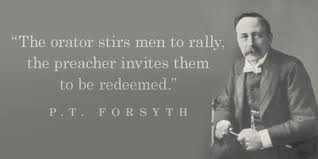
Too many clergy and congregations today are focused on the numbers, how much money and how many people. It’s a great temptation, and it can be deadly for a church because if the pastor is not a servant of Christ and a steward of the mysteries of God, then the congregation may get disconnected from the Gospel, and lose its way. It happens! And when it happens you may find yourself doggedly presiding over a frenetic activism that is all movement and no substance, what P.T. Forsyth once called the besetting sin of the church: “the sin of bustle.”

Too much of what passes for religion is not about what God is doing among us, but what we are doing ourselves. In this regard we have absorbed from the culture the misguided utopianism that thinks humans can control all things. The Czech dissident poet Vaclav Havel called modern utopianism

an arrogant attempt by human reason to plan life. But it is not possible to force life to conform to some abstract blueprint. Life is something unfathomable, ever-changing, mysterious, and every attempt to confine it within an artificial, abstract structure inevitably ends up homogenizing, regimenting, standardizing and destroying life, as well as curtailing everything that projects beyond, overflows or falls outside the abstract project. What is a concentration camp, after all, but an attempt by utopians to dispose of those elements which do not fit in.” (Interview in Times Literary Supplement)

A steward of the mysteries of God looks for height and depth as well as movement. What might that look like here in Dover?  Part of your role, Mike, is to keep the church in Dover a place where God’s story is not an ancient tale, but a present vibrant reality; a place to expect miracles, because the world is full of them for those with eyes to see and ears to hear. There are divine presences in every mundane transaction, and daily epiphanies around every corner. Keep that sense alive here. Gerard Manley Hopkins was right when he wrote, “The world is charged with the grandeur of God.”

A steward of the mysteries of God believes that all things are possible when God is involved, and helps others to believe it too. And when people believe God’s Spirit and power are among them, who knows what might happen?  Do you remember Thomas Merton’s comment about a Shaker chair?  “The peculiar grace of a Shaker chair is due to the fact that it was made by someone capable of believing that an angel might come and sit on it.” (From the Introduction to Religion in Wood by Edward Deming and Faith Andrews, 1966.)

The other piece of the role of pastor and teacher is the context: the congregation and its life together. Mike is gifted in this regard with a great deal of personal authenticity, warmth and humanity.

Are there any homiletic teachers in the congregation today? No, good, because I want to break a rule? Oh, what do I care, I am retired!? So I’m going to be personal and confessional and say that I met Mike about ten years ago during a particularly difficult time in my life, as I was struggling with the challenges of a new disability. Mike’s response to me was so empathic and tender without being in any way condescending. No one has been a better friend to me these last years, no one, and you are and will be blessed to have him as your pastor.

Mike embodies what the great preacher Gardner Taylor was after when he advised preachers “to look beyond the peripheral signs of preaching greatness to the real source of pastoral insight–the common bond with one’s hearers provided by suffering.” If you let him, Mike will share your lives, will rejoice when you rejoice and weep when you weep, and become your pastor. Gardner Taylor continues:

Now you may tickle people’s fancies, but you will never preach to their hearts, until at some place, some solemn appointment has fallen upon your own life, and you have wept bitter tears, and gone to your own Gethsemene and climbed your own Calvary.  That is where power is.’  The power of preaching is “not in the tone of voice.  It is not in the eloquence of the preacher.  It is not in the gracefulness of the gestures. It is not in the magnificence of the congregation. It is in a heart broken, and put together by the eternal God.

In conclusion, despite the fact that we are “installing” him today your new pastor and teacher is not a major appliance, neither is he a ministerial commodity, nor a quick fix or a paid Christian so everybody else doesn’t have to be one. No, Michael Steven Bennett is a minister of Christ’s church, a servant of Christ and a steward of God’s mysteries.

Mike, if you accept that role you will find that it will be shaped by the cross more that by the judgments and expectations of people. But the only judgment that really matters is the one whose ministry it is anyway. Those who remember their identity and their role as steward, who anticipate the return of the master, look forward to hearing the master’s praise: “Well done, good and faithful servant; you have been faithful over a few things, I will put you in charge of many things; enter into the joy of your Lord.” Amen.

(I preached this sermon at the installation of Michael Steven Bennett as Pastor and Teacher of the First Parish Church (UCC) in Dover, New Hampshire on Epiphany Sunday, 2013.

Unknown's avatar

Grace among the bedpans

Pastors spend a lot of time in hospitals. There they meet their congregants in trying moments, ill or hurt, facing or recovering from procedures that frighten and confuse. The most formidable lay pope, the one who thwarted your every dream at the last trustee’s meeting, now looks diminished in a “johnny” gown. Even in the best of hospitals the smell of mortality is ambient.

Which is why hospitals are such fertile spaces for grace to make an appearance, and why ministers do well to be present there as often as they can. Most people get better and come back into the life and flow of the congregation, but they will not forget that in one of life’s delicate moments you were there, and through you, their congregation was there, and through you, by grace, God was there.

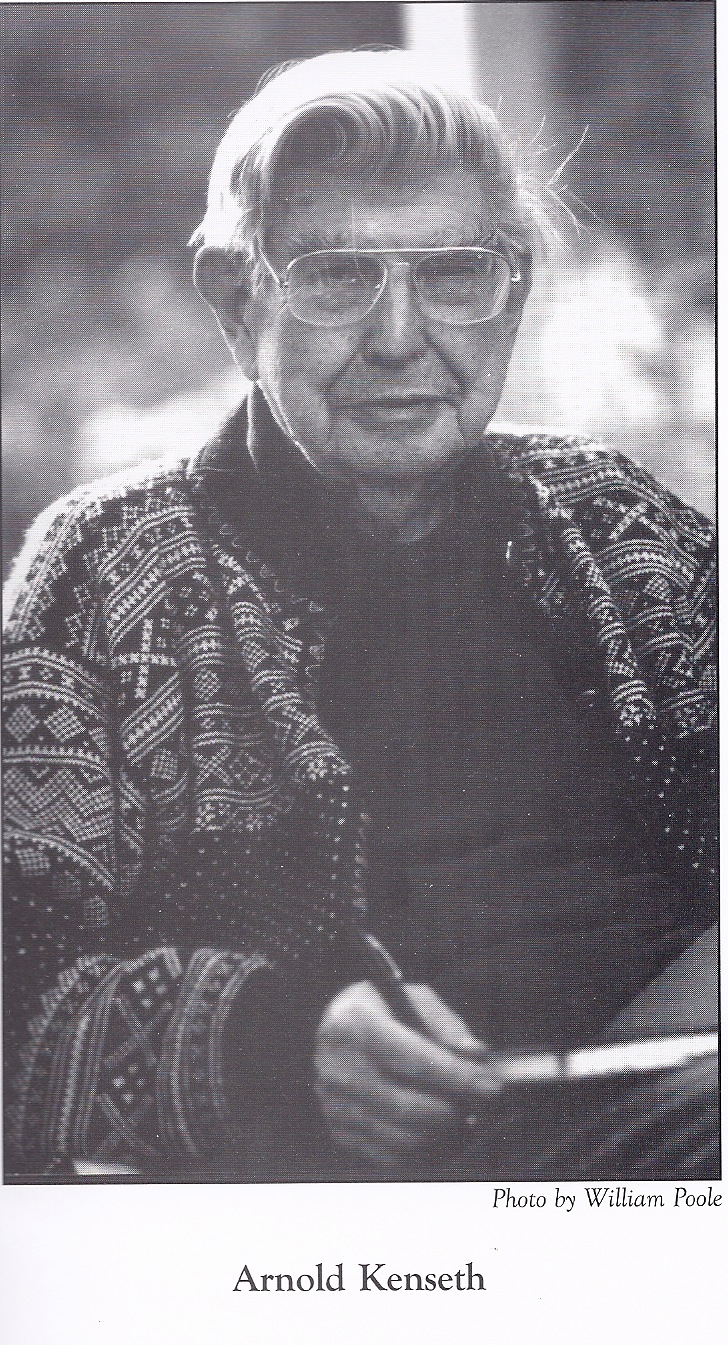
Once again my late friend Arnold Kenseth, a Congregational minister who died in 2003, captures the truth of this in another of his exquisite poems:

In the Hospitals

In the hospitals trussed up to blood;
Or heaving breath so that the pulse can count,
The heart re-beat; or leaving the damp food
Untouched; or stuffed into the oxygen tent:
The sick, sexless as death, are fondled by
Machines, are stroked, pummeled, impaled, and Oh!
Ecstasies in the valley of the shadow,
The morphine murmur under the lost sigh!

And I think how we may die down down down
In the needle haze, in the white mercy
Of nurses, after the seance of x-ray,
Our souls stringed, buttocked in the bleak nightgown;
How dignity, dreaming, passion, faith, all
Will need God to retrieve them as we fall.

Arnold Kenseth (Seasons and Sceneries, Windover Press, 2002)

Unknown's avatar

Do ministers work for the church?

I have written before about my mixed feelings about the “professionalization” of the clergy. The relationship was once more like a marriage covenant than a job.  Lately I notice more and more that the relationship between clergy and congregation is construed as a contractual one borrowed from the corporate world.  And I also note with sadness that this model is at the heart of much clergy/congregation conflict when one or both parties feel aggrieved that the contract is not being properly carried out.  A covenant has room for forbearance and forgiveness; a contract does not.

When I was ordained, the preacher (Dudne Breeze) admonished me to be a minister of the Word of God.  He didn’t admonish me to be the CEO or the COO, or even to be a faithful employee of the congregation.  My job I knew was not to make the congregation flourish but to make the Gospel real.

There were times in my ministry when I had to stand against the majority will of the congregation on behalf of the Gospel.  This is no fun when you have come to love your congregation. Years ago I came across this great letter that P.T. Forsyth (1848-1921) wrote to his new congregation in Cheetham Hill, England.

He made it plain that although they had called him he had a prior and higher call. Can you imagine a beleaguered pastor saying something like this today to an angry board of trustees?

“You have called and I have answered gladly. But it is not your call that has made me a minister. I was a minister before any congregation called me. My election is of God. Paul speaks of ‘a faithful minister of the new covenant’ … The minister of this covenant, therefore, the minister of Christ, has his call, first, in the nature of God and God’s Truth; second, in the nature of man and man’s need. We have on one side the divine Gospel; we have on the other the cry of the human. His call is constituted both by the divine election and the requirements of human nature. Would that some who are sure of their election by God, were as sure of their election by man, and their fitness to adapt God’s truth to human nature. It is not therefore the invitation of any particular congregation that makes a man a minister. It is a call which on the human side proceeds from the needs rather than from the wishes of mankind, from the constitution of human nature as set forth in Christ, rather than from the appointment by any section or group of men. I am here, not to meet all your requisitions, but to serve all your needs in Jesus Christ. You have not conferred on me my office, and I am Christ’s servant more than yours, and yours for His sake. The minister is not the servant of the Church in the sense of any special community or organization. The old Latin theologians used to subscribe themselves V.D.M., Minister of the Word of God,—Minister not of the Church, but of that Christian human nature which our particular views and demands so often belie. A minister may, on occasion, never be so much of a minister as when he resists his congregation and differs from it.” (“The Pulpit and the Age”)

The church could user fewer employees and more ministers..

Unknown's avatar

Ruminations on the Perplexing Task of Ministry: Arnold Kenseth’s “Ordination”

I have been ordained now nearly thirty-six years, and although I can rattle off a pretty coherent explanation of the meaning of ordination my own has never entirely lost a sense of mystery and wonder about it.

My daughter is presently in her final year of divinity school and about to present her ordination paper this week, and I think it was reading hers that got me ruminating on my own.

Being a minister of the church is a living conundrum, as Karl Barth describes it so well in his section on “the Task of Ministry”: “As ministers we ought to speak of God. We are human, however, and so cannot speak of God. We ought therefore to recognize both our obligation and our inability and by that very recognition give God the glory. This is our perplexity. The rest of our task fades into insignificance in comparison’ (The Word of God and the Word of Man, p. 186).

Where prose fails to capture this paradox poetry frequently does better.  I have often turned to the poetry of my friend Arnold Kenseth, who died in 2003, especially the collection of poems he entitled “Reflections of an Unprofitable Servant.” Here’s one of my favorites:

Ordination

I was anointed. A fire. Yes, I tell you.
An adazzle. His rare thump numbed me, awed
Me down to size and up to Him. Prayed, pawed
By the laying on of hands, myself anew
And aloft; I became lion to roar Him,
Eagle to lift Him, donkey to bear Him. I,
In that sunburst, languaged with seraphim,
Promised myself to be (Ha!) His emissary.

I did not, friends, manage much. True, I found
Fluency, but not roar. I have been sparrow;
And though jackass as most, I could not be least
Even for Him.  He was scarlet and vast
And radiant and restful. He sang such sound
I heard the earth unloose itself from sorrow.

(Arnold Kenseth, Seasons and Sceneries, Windhover Press, 2002)

Unknown's avatar

Ruminations on Burnout: “Should clergy really be ‘working?’”

Clergy burnout is a hot topic now. My two most popular posts of late have been been Pastors in Peril, and the snarky satirical Ten Highly Efficient Strategies for Crushing Your Pastors Morale.

And when the New York Times notices religion at all it is usually some aspect of it that is aberrant or weird, but, lo, there have been a couple of articles this month on clergy burnout. For a compendium of recent articles on burnout in the media and blogosphere you can go here to Jason Goroncy’s ever-dependable site Per Crucem ad Lucem, where he is doing a series on clergy burnout.

It is a vast topic to cover, but here is one of my small ruminations:

I think the whole category of “burnout,” although quite real, is also a bit of a red herring. All the articles agree that clergy are overworked. And when cast in terms of “work” that is undoubtedly true. My question is simple: “Should clergy really be working?” Or to put it another way, “When did what clergy do come to be understood as work?” Clergy have always been busy doing what clergy do, visiting the sick, attending to the dying, preaching and administering the sacraments and the scholarly preparation for same. The “work” clergy are now expected to do is a category drawn from the industrial and post industrial West, and seen in terms of their terms of efficiency, productivity, and professionalism.

I submit that this is a category error, and that the expectations of this category are one of the causes for burnout. On reflection I realize that an embarrassing amount of the “work” I did in my over thirty years in pastoral ministry was designed to give the appearance of being effective, productive and professional, to my congregants, the greater community, and to myself.

And I think many clergy share this loss of confidence about their core identity and engage in “the sin of bustle” (P.T. Forsyth) to convince the world that they are useful, valued, and worthy of the high social status to which they aspire.

Years ago one of my GE manager types got on my oversight board and hounded me into doing detailed hourly logs of what I do as part of a compensation review (I know this sounds like Dante, but it really happened.) I was insecure enough to hold my doubts and my tongue, and dutifully filled them out, but a good deal of the time I found myself in comic reflection. For example, when I was thinking about whether Paul’s radical theology of justification in Romans led to antinomianism while soaping up in the shower, was I “working?”  Or am I working right now while I ruminate, for I have no position and am not being compensated for it?

My point is that the role of clergy is not something you put on and take off like a cloak. The clergyperson was once the “the parson” (person), and embodied the church in some way. We reject that model because it was patriarchal and hierarchical, and with good reason, but we have lost something as well. Ordination was never about the intrinsic qualities of the ordained. All the way back to the Donatist crisis the church asserted, “The efficacy of the sacrament does not depend on the sanctity of the celebrant.”

That is to say that ordination was never about the gifts and graces of the ordained, no matter how impressive. Rather ordination was the church conferring authority and its requisite graces on the ordained for the good of the church. When we lost the model of embodiment for clergy we turned to function, and looked around for models from the society. That is where we are today. Now there have been many good things to come out of the professionalism of the clergy, but much has been lost.

It seems to me no accident that the declining mainline clergy are much more preoccupied with compensation and various “work” related protocols than the more robust evangelical and Pentecostal churches. In my own United Church of Christ we have compensation recommendations based on seniority, experience, size of congregations, and all the measures that corporate America would value. The result of this is that we have priced many small congregations out of full-time ministry, and discouraged  many talented clergy who feel called to serve these churches from doing so.

We also have guidelines for how many hours (divided into parts of days called “units”) that pastors should be “working.” Like so many things in our churches these suggestions are right-minded but wrongheaded. Because ministry can’t be cut into tranches like pate.

The category of burnout is a symptom of what happens when you take on these models. If your criteria for “success” is efficiency and productivity you will always fall short, because ministry is neither efficient nor productive in the terms of the world.

The real measure of ministry is faithfulness, because the ministry belongs to God, and God is famously difficult to evaluate. Paul said, “I planted, Apollos watered, but God gives the growth.” Ministry is about planting and watering. We seldom see our results.

The attempt to quantify the “work” of ministry fails before it begins, because it is based on a secular model. Look at how we talk about it: The pastor goes to the “office” (not the study), and keeps “office hours.” And how is the pastor deemed “successful?” By how much money is raised? By how many new members are brought in? Are these the real measure of the dominion of God?

How many faithful mainline ministers in demographically unfruitful vineyards have cast a covetous eye on thriving churches in more fertile spots? Or at their evangelical brothers and sisters? How many have secretly perused a brochure for a Willow Creek or Schuller workshop on church growth when the door to their “office” was closed. And how many have accepted growth strategies and practices that neither their hearts nor their theologies truly believe in?

This is some of the climate in which clergy burnout, by whatever name, flourishes. Because if one ceases to believe in the integrity and importance of what you are doing, than it doesn’t take too much “work” for it to seem like too much. And conversely, clergy who know what they are doing and love doing it would seldom describe their busy lives by the word burnout. Paul describes his various trials and tribulations, which could match any modern pastor for being overworked and undervalued. But he saw his ministry as a sharing in the ministry of Christ, including his cross, and rather than being burned out he could rejoice in his afflictions.

So it is not just about how much a cost we pay to do our ministry, for faithful ministry always comes with a personal cost, but whether we believe in what we are called to do, and know what we are doing and why we are doing it.

It is like the old joke about the pilot who comes on the intercom and announces to the passengers, “I’ve got some good news and some bad news! The good news is that we are making great time. The bad news is that we are lost.”

The good news is that clergy are working harder than ever. The bad news is that they are burned out. Because when you don’t know what you are doing, you don’t know when you have done it.

Unknown's avatar

Ten Highly Effective Strategies for Crushing your Pastor’s Morale

In the past most congregations’ attempts to demoralize their ordained leadership have been haphazard and ad hoc, although still surprisingly effective. In the interest of bringing more rigorous and systematic approaches to these efforts here are some of my modest proposals:

1. Schedule a weekly meeting for your pastor to sit down with the treasurer (or, better yet, the assistant treasurer) to “go over” every business expense. Be sure to inquire if certain expenses are legitimate, such as the purchase of a Marilynne Robinson or Gail Godwin novel from the pastor’s book allowance (“Should we really be paying for your chick-lit?”) Or a long-distance call to a neighboring pastor friend from seminary. Do such expenses really profit the church? And what about this big expense for 14 volumes by this Barth guy? Do you really need all of these? And his title sounds so, well, dogmatic!

2. Plan a regular talk-back session after worship so that members can query the pastor about her sermon, or the worship service, or about anything else, for that matter. It is always good to question why the pastor chose scripture lessons that are so negative, referring to such old fashioned concepts as sin, unrighteousness and repentance. Suggest more uplifting themes in the future. “And, by the way, why don’t we ever sing Christmas carols in Advent?”

3. Make sure to have an annual customer satisfaction survey where every member of the congregation fills out an anonymous questionnaire about their views of the pastor’s performance during the previous year. Make sure all the negative (or ambiguous) comments are read aloud at several meetings, and publish them without attribution in the church newsletter.

4. Vote to hold all meetings in the living room of the parsonage during the winter as a way to save money on heat, but be sure to pitch the idea as good stewardship of God’s creation so your pastor will feel too guilty to protest.

5. Cut the mission budget to balance the budget. Better yet, ask your pastor to choose between a raise in salary or an increase in the mission budget. This would be a good subject for an extended conversation at a congregational meeting. You can never talk too much about clergy compensation at a congregational meeting.

6. Set up a pastoral oversight committee to regularly monitor the pastor’s performance. Focus attention on any negative (or ambiguous) comments from the questionnaire (see # 3). Make sure to put into place measurable metrics and target goals for new members received and money raised. Hourly work logs are always effective as well.

7. Whenever your pastor goes away and returns from denominational meetings or continuing education events never miss an opportunity to ask, “How was your vacation?”

8. Make sure the pastor is made aware of the two biggest complaints, namely, that he is never in the office, and he doesn’t make enough home visits. That the two cannot both be true will not diminish their use as morale crushers.

9. Tell the pastor that there are anonymous complaints that a. your sermons are too long; b. your voice is too soft to be heard (especially by the deaf); c. your spouse is not involved enough (or too involved) in the life of the congregation; d. your child shouldn’t have been given the lead in the Christmas pageant; e. your lawn needs mowing; and f. you were seen in shorts at the supermarket. This is just a sample list. Use your imagination.

10. Constantly compare your pastor to his long-tenured saintly predecessor, with special attention made to his never asking for a raise for himself or his staff.

If your pastor balks at any of these attempts, just mutter words such as “accountability,” “transparency,” “standards,” or “professionalism. Pastors are loath to appear to be against any of these concepts so cherished by the managerial class.

(Picture:  “The Scream” by Edvard Munch)
Unknown's avatar

Pastors aren’t Prophets: Some Unsolicited Advice for Newly-Minted Ministers

Too many of our new pastors in the mainline church leave the ministry after a few years. There are many reasons why this happens, but for whatever reason, it is not good.  It’s bad for them and bad for the church, and it is bad stewardship to train someone who only serves a short time.

Some of these ministers should never have been ordained in the first place, and the gatekeepers didn’t do their due diligence. Some were lacking the necessary “gifts and graces” for ordained ministry, which doesn’t mean they didn’t have a different and effective ministry in the church.

There are far too many sad situations where a ministry fails for one reason or another, where hopes are shattered, and a young (or not so young) person is saddled with a financially crippling debt for the years in seminary they paid for in loans.

Being a pastor of a church is a hard job.  I was one for thirty years.   Despite the nonsense being promulgated by the “experts,” faithful pastoring is not a matter of working a certain number of hours (or “units” as they are now sometimes called.) It’s a vocation that takes up most of your waking hours,

When a congregant really needs you, it doesn’t matter whether it is your day off. If you asked me how many seasoned pastors are burned out to one degree or another, I would say, “All of them, if they are really doing their job.” That is why pastors need to exercise radical self-care, pray constantly, and accept the fact, that not being yourself God, you cannot do all that is demanded of you.

Now I readily admit that there is some truth to the whole boundary/take care of yourself/take time for yourself movement. But like all partial truths it is not the whole truth. The church once had a useful word, now much out of favor, for when one piece of the truth gets blown out of proportion.  The word is heresy

One of the modern heresies (but by no means the only one) of the contemporary mainline church, is that you can have something akin to a normal 40 hour a week professional life and be a faithful pastor.  It isn’t true.  A pastor’s life, and the life of the pastor’s family is necessarily involved in the community of their congregation in season and out of season.

Sometimes, even often, it is wonderful; other times it isn’t.  That’s the way it goes.  It isn’t the Canyon Ranch spa.  I often say being a pastor is the best vocation there is, but perhaps the worst job.  If you are not called to it, it is something you really don’t want to do

When I started as a pastor thirty-five years ago I was well trained and well educated and didn’t have a clue what I was really supposed to do. I learned quickly. One of the things I learned was that you have to love your congregants, even the unlovable, of which there are far too many, and who take up a good deal of your time.  If and when you find yourself loving them, you know you are on your way to really being a pastor.  Some of them you will just never learn to love, and you have to turn them over to God, who does.

I had been a anti-war and civil rights activist in college and seminary, and had gone to jail for my causes, but when I got into the pastorate I learned very quickly that you can’t be a prophet until you have earned the peoples’ trust. This means years of marrying and burying and sitting by sick beds and in hospital rooms. If you do this well they may be ready to hear hard truths from the pulpit. They may not. Certainly Isaiah’s prophecies fell on deaf ears.

New ministers who have grown up in the church have a leg up, because they know its rhythms and customs,its “grandeur and misery.”

But today many of our ministerial candidates haven’t grown up in the church. Some of them turn out to be our best ones, but they are at a disadvantage. They don’t know the church’s music and it’s well-worn liturgies. They don’t know the joys of a community strawberry festival on a warm spring day, or the energy and agony of a capital-funds campaign to get a  new boiler.

They often come to seminary or divinity school in a process of self-discovery, which is fine. Most of us did that to one degree or another. I recall from seminary that the ones who knew they wanted to be a minster since the age of six were best avoided, and probably needed therapy.

Now seminary is a good place to learn many useful things, like that David didn’t write all (or perhaps any) of the Psalms, that the Scriptures are thick and have a literary history, and that the heresies we see around us are as old as the church.  If one is lucky, you’ll find a mentor or two, and be able to intern in a healthy church who will love you and teach you what it means to be the church.</div

What seminaries are not good at (because its not really their job) is forming men and women into Christians, much less teach them how to be faithful pastors.  Christian formation is primarily the church's job, not the schools, although they can help out.

There are many fine teachers and students in these schools, and I don’t want in any way to impugn their integrity or their faith.

At the same time, we are seeing too many newly-minted pastors who come to seminary, not only to find themselves, but with a passion for a social cause or causes, which is fine.  I certainly had mine. In seminary the flame of their passion is often fanned by others who share it, which is also fine.

But if all you know of the faith is what you learn in divinity school you are at a distinct dis-advatantage. And if the main reason you accept a call from a congregation is to promote your passion and cause then your soul is in danger, and so is the life of a congregation. Because the congregation you go to may or may not share your passions. It can be dangerous either way.

If they agree with most of your views, be they liberal or conservative, the temptation is to self-justification and self-righteousness, and a tendency to see sin and evil as “out there” in your ideological adversaries, and not also in your own heart and soul. Then the great insight expressed by the Reformers' axiom simul justus et peccator, that we are at the same time justified and sinners, is lost. This danger in the mainline church can exist in some ministers for their entire careers and they will never even know it.

The other temptation is perhaps more dangerous, at least in mainline churches. That is to go to your first congregation where they don’t share your passion for your social cause or causes, and you scold them for it. You do not learn to love them, and they do not learn to love you, and eventually your ministry fails.

Typically we are too polite to ever actually fire anyone (although it does happen), but there are other ways to get you to leave, the best one being to so discourage you that you lose heart and leave. Some, too many, of our new pastors actually seek out this kind of martyrdom, and when they are inevitably cast out, they can then turn and say how stiff-necked and hard-hearted their congregation was. But my sympathy for them is limited. Congregations can be stiff-necked and hard-hearted and even abusive. This is nothing new. Just go read Exodus or First Corinthians.

But congregations can be also be wonderful, supportive, gracious, and long-suffering, especially if they sense you are really trying to be their faithful pastor.

The late great Bill Coffin, a prophet himself, once told a bunch of us young ministers (about 1972) a story (which my version here will be only a loose approximation) about one of his students from Yale.

The young pastor was in hot water for his deeply prophetic views and fiery pulpit pronouncements on social issues (it was Vietnam time, and the nation was deeply divided.) The lay leaders wanted to fire him. As the discussion heated up, one of them, a banker, prominent member and very conservative, stood up and said, “You can’t fire him, he’s our pastor. It’s true that he’s a real pinko, and I can’t stand most of the stuff he says from the pulpit, but when my wife was dying he came to see her every day. He’s staying.” And he did. Bill went on to say that if you are a faithful pastor, your flock will give you great freedom to pursue your passions, be it peace and justice work, or collecting butterflies.

A dear rabbi friend of mine who is well up in his eighties told a bunch of us a powerful story last week. He had been an army chaplain in the Korean War, and, perhaps because of that, he was a firm supporter of the Vietnam War. But when our National Guard opened fire and killed some students who were peacefully protesting the war at Kent State University in 1970, he had a change of heart, and he changed his mind. And on the next High Holy Days in the fall, when he preached to the biggest congregation of the year, he apologized to them and asked them to forgive him, admitting that he had been wrong about the war. This story brought brought tears to my eyes. He had been their faithful rabbi by then for fifteen years, and he stayed for another dozen or so. The Vietnam War by 1970 was very unpopular, especially here in what until last December was sometimes called by conservatives “The Peoples Republic of Massachusetts.” I am sure that many of his congregants had been hearing sermons they didn’t agree with for some time. But he had earned the right. And when he finally repented publicly, he was indeed a prophet with the full attention of his people. From then on, when he spoke out against the war, he had every ear.

So at the right time and place you can sometimes be both a prophet and a pastor. But you’d better be a pastor to the people first, because that is your primary calling. If you just want to be a prophet, I suggest you go work for a political action organization.

(Addendum:  Since yesterday several of my interlocutors have reminded me that the prophetic office is one of the roles of the whole congregation, and I heartily agree.  One of the roles of the pastor is to equip the saints for that office (along with their priestly and royal ones) as the body of Christ.  What I was addressing was the lone clerical prophet, a romantic notion that is now in vogue.  If the preacher is faithful there will be all kinds of political implications in the Word broken open for the people.  But our pulpits are too often merely a platform for an overtly political agenda, and the texts then just become window dressing.  But you can’t say it all in one post, although I often try.)

(Photo:  The Prophet Jeremiah, Michelangelo, the Sistine Chapel)
Unknown's avatar

A Hundred Lesser Duties: The Marginalization of Preaching

pulpitThe great British theologian P.T. Forsyth often complained that the church was guilty of the “sin of bustle,” by running errands for the culture at the expense of its own unique vocation. Perhaps preachers are the guiltiest of them all when it comes to this, when they avoid attending properly to their high calling of preaching.

Here’s Richard Lischer’s cogent take on what too often happens to preaching today:

Most ministers were “set apart for the gospel”, as Paul says of himself … The preacher’s vocation was once a kind of circle that began and ended in the word. Whatever it was that made you a minister was aimed at its eventual public expression. The minister’s whole existence was concentrated to a point of declaration. Today, however, the circle has been broken.

Our culture devalues proclamation while elevating other associated forms of ministry such as counseling or community work . . .

But the proclamation of the word cannot be professionalized. It has no functional equivalents in secular culture. It cannot be camouflaged among socially useful or acceptable activities. Its passions are utterly nontransferable. The kerygmatic pitch, as Abraham Heschel said of the prophet’s voice, is usually about an octave too high for the rest of society. If you are filling out a job application, see how far it gets you to put under related skills: “I can preach”.

When ministers allow the word of God to be marginalized, they continue to speak, of course, and make generally helpful comments on a variety of issues, but they do so from no center of authority and with no heart of passion. We do our best to meet people’s needs, but without the divine word we can never know enough or be enough, because consumer need is infinite. We are simply there as members of a helping profession. We annex to our ministry the latest thinking in the social sciences and preface our proclamations with phrases like ‘modern psychology tells us,’ forgetting that the word ‘modern’ in such contexts usually indicates that what follows will be approximately one-hundred years out of date. What we lack in specialized knowledge we can only offset in time by making ourselves compulsively available to anyone in need.

I am convinced that no seminarian or candidate sets out to minister with such reduced expectations, and not everyone succumbs to this scenario, but ultimately the marginalization of the word of God fractions it into a hundred lesser duties’.

Richard Lischer, The End of Words: The Language of Reconciliation in a Culture of Violence (Grand Rapids / Cambridge, U.K., 2005), pp. 22-24. (I got this from two of my favorite theo-bloggers: Kim and Jason.)

Unknown's avatar

Where I Ruminate on My Ordination on this its Anniversary

I was ordained to the Christian ministry on this day in 1975 at the Newton Highlands Congregational Church in Newton Highlands, Massachusetts, by the Metropolitan Boston Association of the United Church of Christ. Dudne Breeze, the pastor, preached the sermon, and a good one it was. Jerry Handspicker, my teacher at Andover Newton Theological School and the associate pastor, offered the ordaining prayer, which asked God to endow me with all manner of things for my ministry, and he seemed in deadly earnest. After thirty-four years I now understand why. Jerry, ironically, also presided at the service of thanksgiving for my ministry when I retired five years ago, so he book-ended my three decades of active ministry. We sang “Holy, holy, holy,” and “Be Thou My Vision.” My then girlfriend, now wife, Martha, made me a handsome set of liturgical stoles. Good food was served. There were probably grape leaves.

There were no tongues of fire or other obvious signs and wonders, although the whole event was wondrous to me, and when the clergy laid their hands on me I felt an enormous weight, a feeling about ordination that has never entirely left me.

I got to my first parish in rural Maine and realized soon enough that I didn’t know what I was doing, and that feeling has never entirely left me either. My first congregations (I had two) taught me how to be a minister every bit as much as seminary, and I will always be grateful to them. God blessed me throughout my ministry with wonderful saints of the church who encouraged and sustained me, and put up with me even when I was acting like a damn fool.

Early in my ministry I refused all honoraria, and thereby offended nearly everyone that offered me one. I was shopping for clothes the week before my wedding, and the good Roman Catholic salesman at the haberdashery rang me up with a ten percent clergy discount. I tried to explain all the high-minded reasons I couldn’t accept it and watched his face fall. I called my mentor Fred Robie, the sage of Sanford, who simply said, “My Daddy taught me that when someone gives you something, you say ‘thank you.’” Lesson learned. Would that everything I needed to learn was that simple.

What else did I learn?

  • I learned that a wedding rehearsal is the meeting of two clans, and that at any moment violence might break out.
  • I learned that a pastor needs a tender heart, but a thick skin.
  • I learned that when you are relating to broken people some of their brokenness may get aimed at you. I learned that you aren’t supposed to take this personally, although I invariably did.
  • I learned that the faithful aren’t much impressed by the BEM document, especially if you want to move around the furniture in the chancel.
  • I learned that for some folks it’s not the height, depth, or breadth of a sermon that is decisive, but its length.
  • I learned that exercising discipline around baptism involves water, and lots of it is hot.
  • I learned that what I said in the pulpit and what people heard were not necessarily the same.
  • I learned that sometimes peoples lives were moved and even changed by what they heard even when it wasn’t what I said.
  • I learned to love some difficult people.
  • I learned that around pledging time Chicken Little competes with Jesus Christ as head of the church.
  • I learned that we clergy preach salvation by grace to the people, but act as if it were by works for us.
  • I learned that it is a high privilege to spend time with dying people.
  • I learned that struggling with a text all week, and then breaking it open for the congregation on Sunday sometimes felt like the best job in the world. And sometimes it didn’t.
  • I learned that God is good all the time.

Like everyone else I had my good days and my bad days. And like any moderately self-aware person who prays I know my failings better than anyone except God (and perhaps Martha). But I learned it really is all about grace. I am proud (in a good way) to have been a minister.