Unknown's avatar

“Witnesses to the Resurrection” Church scandals and the faithful who stay


My friend Tony Robinson, author, speaker, preacher, and peripatetic traveler for the good of the church, is an acute observer of what is going on in our world.

I heartily recommend his website Anthony B. Robinson, and especially the page called “What’s Tony Thinking?”  A few days ago he posted some good thoughts from Peggy Noonan on the Roman Catholic clergy sex abuse story.  He wrote:

“I am becoming a fan of Peggy Noonan’s Saturday columns in the Wall Street Journal. This week she wrote on the Catholic clergy sex abuse troubles concluding by saying, “There are three great groups of victims in this story. The first and most obvious, the children who were abused, who trusted, were preyed upon and bear the burden through life. The second group is the good priests and good nuns, the great leaders of the church in the day to day, who save the poor, teach the immigrant, and literally, save lives. They have been stigmatized when they deserve to be lionized. And the third group is the Catholics in the pews–the heroic Catholics of America and now Europe, the hardy souls who in spite of what has been done to their church are still there, still making parish life possible, who hold high the flag, their faith unshaken. No one thanks those Catholics, sees their heroism, respects their patience and fidelity. The world thinks they are stupid. They are not stupid, and with their prayers they keep the world going, and the old church too.

One might say the same of many “heroic laypeople” in all sorts of congregations and communities of faith amid failures of leadership and scandals and disarray among higher ups. So many good people keep on keeping on in the face of disappointment, deceit and challenge. They are the witnesses to the resurrection.”


That last observation is a particularly wise one, I think.  I can remember sometimes looking out at the congregations I have served after a particularly nasty fight over something ephemeral and wondering, “Why do they even bother to come back every Sunday?  There must be more here than meets the eye.”  And, of course, the answer is that there is!

As somebody once said about Noah’s ark: “If it wasn’t for the storm outside,  one couldn’t stand the stench inside.”   Still, Tony is just right.  These faithful are living witnesses to the resurrection.

Unknown's avatar

“The Stones Would Cry Out!” Palm Sunday Ruminations on the Cradle and the Cross


At which end of Jesus’ life should we look for the reason we call him “Lord and Savior?” My friends in the Mercersburg Society put heavy stress on the Incarnation.  Others, such as P. T. Forsyth, insist that we only can understand the Incarnation backwards in time, from the perspective of Christ’s death and resurrection. (See, for example, on this point, a great quote from Forsyth here.)

From my teacher and friend Gabriel Fackre, one of the early and still best narrative theologians, I have learned to be careful not to take any episode of the story to represent the whole.

But I must confess I do agree here with Forsyth, though he has sometimes been criticized as being so focused on the cross that he neglects other parts of Jesus’ life and work.

So what is the relationship between the cradle and the cross?  If one were to only read Marks’s Gospel, the answer is simple, since he has no infancy narratives at all and begins with Jesus’s adutlt ministry.

But for many of us, this is the year of Luke in our lectionaries, and it is well to remember that of all the Evangelists, it is Luke who includes the most infancy material: “the Annunciation,” “the Visitation,”  shepherds and heavenly choirs, etc.  It is no accident we all read Luke at our services on Christmas Eve.  If we read Mark, we’d get home much earlier.

I heard somewhere, I can’t recall where, that “the wood of the cradle is the same wood as the wood of the cross.”  There is much theological truth in that.

So once again I turn to a poet to express deep truths that may elude the prose of the theologians.

Richard Wilbur (1921-) is one of my favorite poets (I have many), and although I have never met him, is my Berkshire County neighbor and a sometimes worshipper at the congregation where I now mostly worship.

A two time Pulitzer Prize winning poet and former Laureate, Wilbur has made a startling but brilliant connection between Christ’s Incarnation and Cross in his poem A Christmas Hymn.

It is often sung to one of several musical settings at Christmas, but the refrain is right from Luke’s Palm Sunday story, and the concluding verse reminds us of the reason for Christ’s vocation that led to Good Friday.  Such a good reminder to keep the whole arc of the story in view when looking at the any of the parts:

A stable-lamp is lighted
Whose glow shall wake the sky;
The stars shall bend their voices,
And every stone shall cry.
And every stone shall cry,
And straw like gold shall shine;
A barn shall harbor heaven,
A stall become a shrine.

This child through David’s city
Shall ride in triumph by;
The palm shall strew its branches,
And every stone shall cry.
And every stone shall cry,
Though heavy, dull, and dumb,
And lie within the roadway
To pave his kingdom come.

Yet he shall be forsaken,
And yielded up to die;
The sky shall groan and darken,
And every stone shall cry.
And every stone shall cry
For stony hearts of men:
God’s blood upon the spearhead,
God’s love refused again.

But now, as at the ending,
The low is lifted high;
The stars shall bend their voices,
And every stone shall cry.
And every stone shall cry
In praises of the child
By whose descent among us
The worlds are reconciled.

(A Christmas Hymnby Richard Wilbur, New and Collected Poems, 1988, Harcourt, Brace, Jovanovich, 1988.)

Unknown's avatar

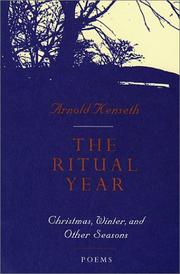
Arnold Kenseth: A New England Poet of the Sacred

Arnold M. Kenseth, who died in 2003, was a Congregational minister and poet. He wrote in 1989,
 “Among the clergy, I’m known as a poet, and among the poets I’m clergy. But by being in New England, being where there are birds and trees and meadows, there’s a very natural marriage between religion and poetry.”

I met Arnold in 1977, when I was still a pastor in Maine. Martha and I were on vacation in Canada, and were camping at Fundy National Park in New Brunswick, which is one of the most beautiful spots in the world. On Sunday we left our tent to find the nearest church and found a United Church of Canada parish in the little fishing village of Alma, right outside the park. The pastor was a Scot and had a bit of a brogue. But the highlight of the morning was when the pastor called up a distinguished looking gentleman from the congregation to give the pastoral prayer.I had never heard anything like this before in my life. The prayer was dignified and reverent and not showy, but the words were so beautifully chosen that I imagined the man must be a poet, as indeed it turned out he was. At coffee hour we approached him and introduced ourselves. It was Arnold. We discovered that we were both pastors in the United Church of Christ in the United States. He served the South Congregational Church in Amherst, Massachusetts, the pretty little town near the University of Massachusetts, where he also taught poetry. I asked Arnold where I could get a copy of some of his prayers and poems, and he told me about Sabbaths, Sacraments and Seasons, published by Pilgrim Press in 1969.

As soon as I got back to Bangor I ordered a copy and it has been a treasured resource ever since. On the back page was some information about the author. It indicated that Arnold had graduated from Bates College. My father graduated from Bates as well, so I asked him if he knew Arnold. Sure enough, they were both in the class of 1937.

Five years later I left Maine to accept a call to be the Pastor of The First Church of Christ in Pittsfield in Western Massachusetts. It wasn’t too long before I attended an event in Amherst, and there was Arnold. I reminded him of our meeting in Alma, and told him how much I loved his prayers and poems. I also mentioned my Dad, and Arnold remembered him warmly (my Dad died shortly after that.) That meeting was the beginning of a friendship with Arnold that involved lunches and long phone conversations and exchanges of letters. He would from time to time send me copies of new poems and books. After he retired I had him come to Pittsfield and preach for me several times.

He told me how he had become a minister. After graduating from Bates with a degree in English, he went to Harvard University as curator of the Harvard College Library Poetry Room. There, he cared for the Edwin Arlington Robinson collection and the Amy Lowell collection. He wanted to write about the relationship between poetry and religion.

It was there that he met the Reverend Samuel H. Miller, another minister once known for his lovely and moving prayers. Miller later became dean of Harvard Divinity School. It was Miller who got Arnold interested in the ministry, and he enrolled in the Harvard Divinity School and received a bachelor’s of sacred theology in 1944. He received his master’s degree in English in 1950, also from Harvard.

He was friends with many of the poets of his generation, including Robert Frost. I have always heard intimations of Gerard Manley Hopkins in Arnold’s poems, but his influences were wide and deep. For his 50th Bates College Reunion, he wrote, “I rejoice in Van Gogh, Henry Adams, Dostoyevski, Chopin, J.S. Bach, Saint Francis, T.S. Eliot, Wallace Stevens, Isaiah, the Gospel of Luke, and Mother Teresa – the light bearers.”

He served as Pastor of the South Congregational Church for 40 years, and was a model for me of a gracious long pastorate. I was privileged to have a visit with Arnold just days before his death, and he was still lucid and gentle and full of hope. If you don’t know this man’s writings I highly recommend them to you. Here’s a sample:

On Easter the great tower of me falls.
I had built it well; my mind had planned it
After being schooled; my will had special wit
To dig me deep foundations, solid walls,
Blocks of moral toughness, windows to see
The enemy, the friend; large rooms, I thought
For light; and storey upon storey me
I raised, and famously my fame I sought.
So driven to prove the world with my estate.
I had not heard Christ on Good Friday die,
His body crooked, broke, and all friends fled.
I had not wept his cause in my carouse.
But now bold bells scatter against the sky,
And Christ is shattering my death, my pride;
As walls, blocks, windows, rooms, my silly penthouse
Spill into the dust I am, my narrow fate.
At last set free from virtue, knowledge, strife,

I mourn, then praise my God, and enter life.

(“Easter” by Arnold Kenseth)

The Ritual Year, Amherst Writers and Artists Press, 1993)
Unknown's avatar

Where I Ruminate on Faith as Following

For me the big one was the bad bike accident, but it could have been any number of other events. Because I think most of us have had at some point the disconcerting realization that our life is not under our control. As a pastor for thirty years I spent a lot of time with people after they had this realization.

A spot shows up on our X-Ray. Our business goes bankrupt. Someone we love gets sick and dies. Someone breaks into our house. Suddenly, we become acutely aware that the world with all its possibilities for beauty and happiness and meaning is also fraught with unexpected shocks, temptations and difficulties.

That is where faith comes in. It seems to me that faith is not primarily belief but trust. Faith is the recognition that we are not in control of our lives, and we can not foresee all the places where our journey will go, but we trust God to lead us and to be with us wherever it goes.

So faith is not self-reliance (that American idol) but God-reliance. It is trusting that the journey has meaning and purpose even when we can not see what it might be. Kierkegaard rightly wrote that “Life can only be understood backwards; but it must be lived forwards.”

Faith, then, is not a possession or a quality we have in and of ourselves. Faith is a trusting relationship we have with the one who does control our lives and who knows where our journey will lead. Barbara Brown Taylor says that faith is “a dangling modifier.” It needs an object to complete it. Faith is always in something or somebody.

So faith looks to God in trust. Abraham is a model for such faith, because he left his comfortable home and went where God led him. He followed the promise even when he couldn’t see the outcome. He trusted the promise-maker to be a promise-keeper. His journey in faith led to him being the father of a great nation, and the one from whose family the redeemer of the world would someday be born. Abraham couldn’t know this, of course, couldn’t see ahead into the future, but still he followed. He trusted God to lead and he would follow.

Likewise the followers of Jesus didn’t know where their lives’ journeys would take them, only that it would take them with him. And when it led to his cross they could see no future, but later came to know that his future and theirs were on the other side of the cross, against all expectations.

So faith follows. We come to God in need with empty hands. The great theologians of the Reformation saw clearly that we are not saved by our virtue or our good works, not by any righteousness we may have, but only by faith. “Faith is the humility of obedience,” says Karl Barth. Faith knows that we are not in control, that we do not know where we are going, that by ourselves we are lost and afraid. When my children were small and we were in a crowded place, they would instinctively reach for my hand. They knew I could be trusted to lead them and keep them safe

So faith trusts God to lead us, not necessarily to comfort and to happiness, for the life of faith is not insulated from life’s pains. On the contrary, we may be led to suffering we might otherwise avoid. But to follow in faith is the only true way to find life’s path, and reach journey’s end as we are meant to do.

Barbara Brown Taylor employs the image of a rope bridge to speak about the journey of faith (I imagine it as one of those scary ones from the Indiana Jones‘ movies):

“Faith is not a well–fluffed nest, or a well-defended castle high on a hill. It is more like a rope bridge over a scenic gorge, sturdy but swinging back and forth, with plenty of light and plenty of air but precious little to hang on to except the stories you have heard: that it is the best and only way across, that it is possible, that it will bear your weight. All you have to do is believe in the bridge more than you believe in the gorge, but fortunately you do not have to believe all by yourself. There are others to believe it with you, and even some to believe it for you when your own belief wears thin. They have crossed the bridge ahead of you and are waiting on the other side. You can talk to them if you like, as you step into the air, putting one foot ahead of the other.” (The Preaching Life, p. 94)

I take comfort that we don’t take that walk alone over the gorge. Abraham is undoubtedly there on the other side. And Sarah, and Peter and James and John, and Mary Magdalene, and St. Francis and Julian of Norwich. I picture Calvin and Luther and Pope John XXIII, Dorothy Day and Mother Theresa. And many others, some of whom I have known myself, that history will never recall. They weren’t perfect, just ordinary men and women who trusted in God and followed him into their future together.

“It takes a lot of courage to be a human being, but if Jesus was who he said he was, the bridge will hold. Believing in him will not put us in charge, or get us what we want or even save us from all harm, but believing in him, we may gradually lose our fear of our lives.” (Taylor, p. 94)

We will no longer fear, even though we know we are not in control of our lives, even though our journey is going to unknown, unseen places. Because he can be trusted with our lives we needn’t fear, only follow.

Unknown's avatar

Where I Ruminate on the Perils of a Palm Sunday Faith in a Good Friday World

There is a kind of decaffeinated Christianity that wants to quickly slide by Good Friday and get right to Easter, as if Good Friday is a morbid and somewhat unfortunate episode that is dwelt upon only by the morbid and masochistic. Or to put it another way, we are tempted to have a Palm Sunday faith, a faith based on a misunderstanding of who Jesus is.

Like the crowd at the first Palm Sunday we are tempted to see Jesus not as he is, but as a projection of our own hopes and desires. We can do this in a number of ways. We can turn Jesus into the supporter of our personal goals, or the upholder of our national ambitions, or our politics, or other ways where he becomes who we want him to be instead of who he really is. “Palm Sunday faith” is when we want a Jesus without a cross so we can have a faith without a cross, a faith without challenge or sacrifice, a faith without testing or struggle. When we do that we turn God into a kind of talisman or lucky charm to bless our projects and our aspirations, when in fact the God of the Bible is a God with his own sovereign purposes.

The problem with a Palm Sunday faith is that we live in a Good Friday world.I believe that Christian faith is essentially a joyful enterprise, but it is a joyful enterprise that doesn’t turn or flinch from the hard truths of the world’s harsh brutalities. So Christian faith without a cross does not show God’s full power to deal with human sin and death. And a faith without a cross will be found feeble and wimpy when the chips are really down.

What do I mean when I say it is a Good Friday world? There is a certain heartbreaking aspect of living that comes to us all. Often we only see it from a distance, as in the war in Iraq, where we have seen pictures both of dead and injured civilians and dead servicemen and women. But to the families of those individuals that heartbreak has come “up close and personal.” And some heartbreak comes to every human life sooner or later.

It is not just in wartime that the powers of sin and death do their heartbreaking work. Which is why there is so much comfort for us in worshipping a God who himself “became a man of sorrows and acquainted with grief.”

And that is exactly it. Our God knows the whole truth about human life. Knows not just the Sunday veneer and the masks of propriety but the dark and sad parts of it all. Knows that life is not a bowl of cherries. And this God not only knows the worst the world has to offer, but he has done something about it. His love is not sentimental love; it is holy love, a love that moves and acts to deal with love’s enemies.

A God who merely comforted the afflicted and bound up the wounded would not be a God who takes on the power of sin and death and evil. That is what the cross of Jesus is all about. God himself confronting human life at is very worst, at its most irredeemable, at a pitiful state execution, where the most powerful forces in the world humiliated and destroyed this humble innocent man.

He took it all on himself, the whole weight of the world’s hate and violence, its guilt and shame, all of it there on the hill at Golgotha. For us: you and me, and not just for us, but for everyone, across the ages. And not just for humans, but for himself, because his own holiness could not tolerate the world’s sin without atonement. And so he made it, not with the blood of rams at the temple, but making the sacrifice himself, spilling his own life out.

And why? Because that is what love does. By its very nature love spills itself out. In the letter to the Philippians Paul says that Jesus even gave up his own rightful claim to divinity, emptying himself, taking the form of a slave, for the cross was a slave’s death.And because of this humble obedience the Father has highly exalted him, and has given him God’s own name. Because “Lord” is the name Israel gave to their God, and to no one else.

But now Jesus is called “Lord.”When we call Jesus “Lord” and take the full measure of his love we will be moving toward a faith that can meet life’s darkest hours and toughest spots. A faith that is able to stand at the foot of the cross. And the world desperately needs people like that with faith like that: faith in Jesus, and in the power of his cross.